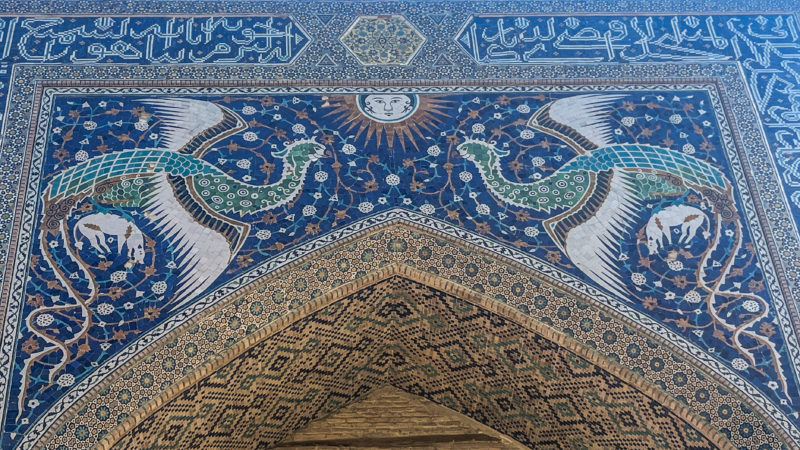
Getting lost in a maze of blue domes, hearing the echo of caravans on sun-warmed stones, sipping hot tea in a shaded courtyard, and letting the golden dust of the desert cling to your shoes. Uzbekistan has that rare gift: it slows you down and reignites your curiosity. There, history is written on façades, light turns ceramics into jewels, and every public square becomes a stage where centuries pass by.
For fifteen days, we moved between brick citadels, Timurid splendor, and trains swallowing the landscape. Like any well-prepared traveler, my friend and I balanced moments of awe with practical considerations, such as tickets secured, cash on hand, insurance checked, so the magic could unfold without unpleasant surprises.
As the destination becomes increasingly popular, tourism is growing fast. Yet guidebooks are still scarce, which is precisely why this article exists.
15-Day Itinerary in Uzbekistan
We spent fifteen days in Uzbekistan at the end of August 2025. The idea was simple: unwind after a busy year. Take our time, wander, savor; and we were right to do so.
At that time of year, temperatures are supposed to drop slightly, but we still experienced peaks close to 40°C. Our days followed a steady rhythm: early wake-up, morning visits, a late breakfast, another stroll, lunch, then a rest or cool break before heading out again in the evening.
This relaxed pace allowed us to truly enjoy the trip. If you’re traveling during peak season (September-October), you’ll likely be able to shorten some stages of the itinerary below.
2 Days in Tashkent
Accommodation: Hotel Inspira-S Tashkent (card accepted)
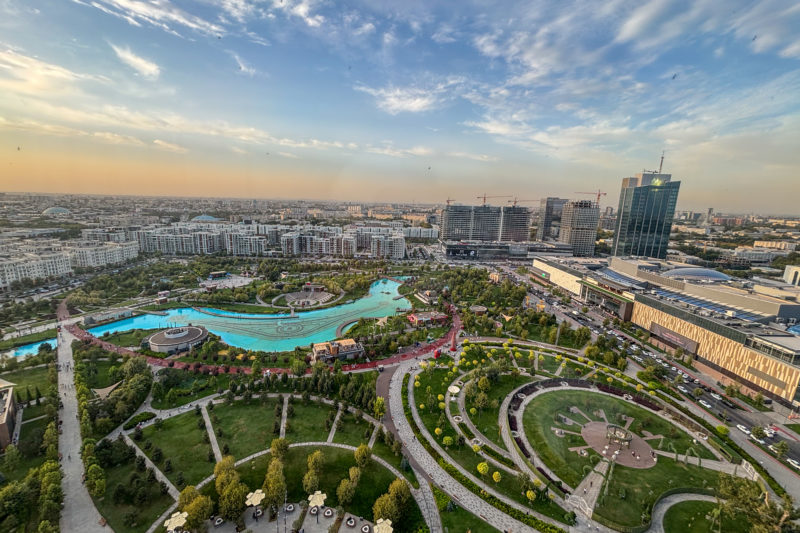
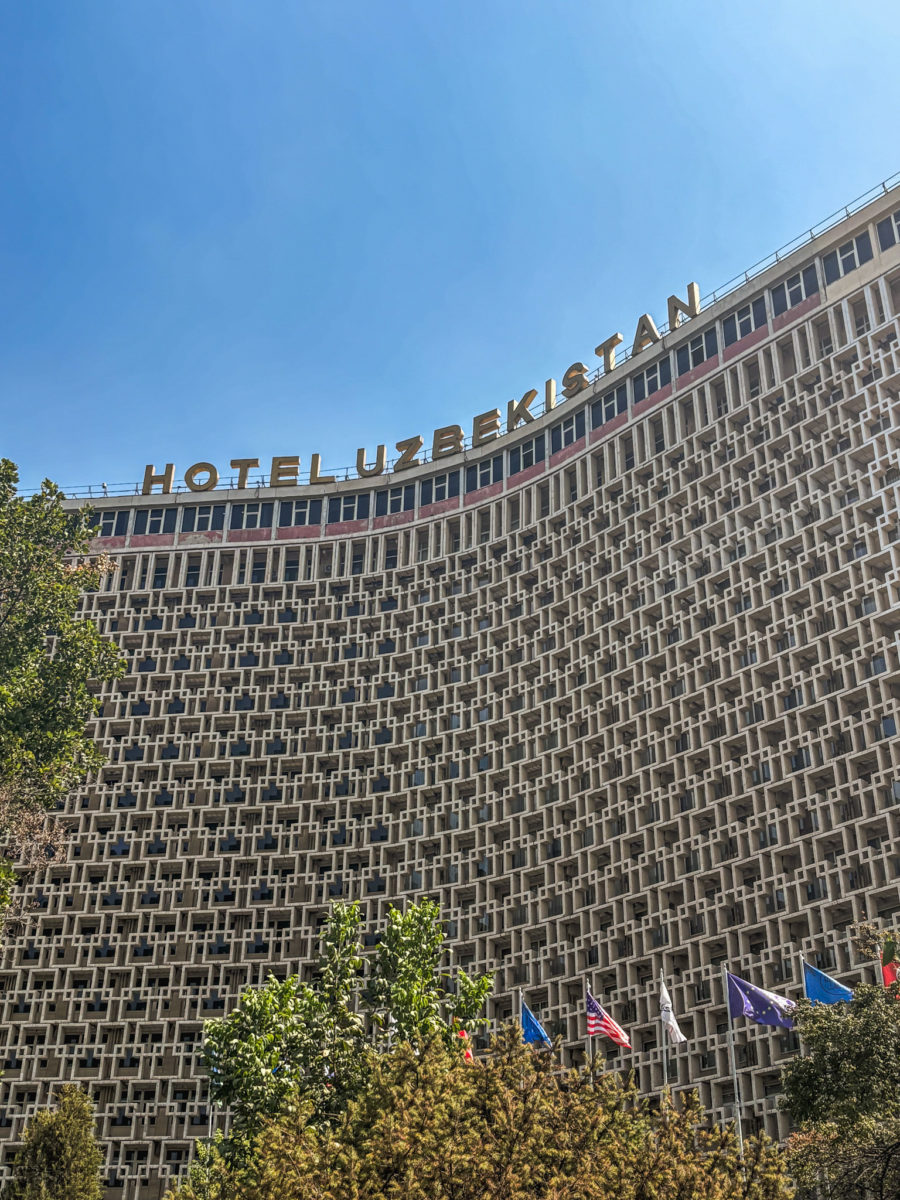
Right out of the airport, Tashkent welcomed us like a city taking a deep breath. Soviet modernity, wide avenues, and green parks offer a gentle introduction before the country’s historical wonders.
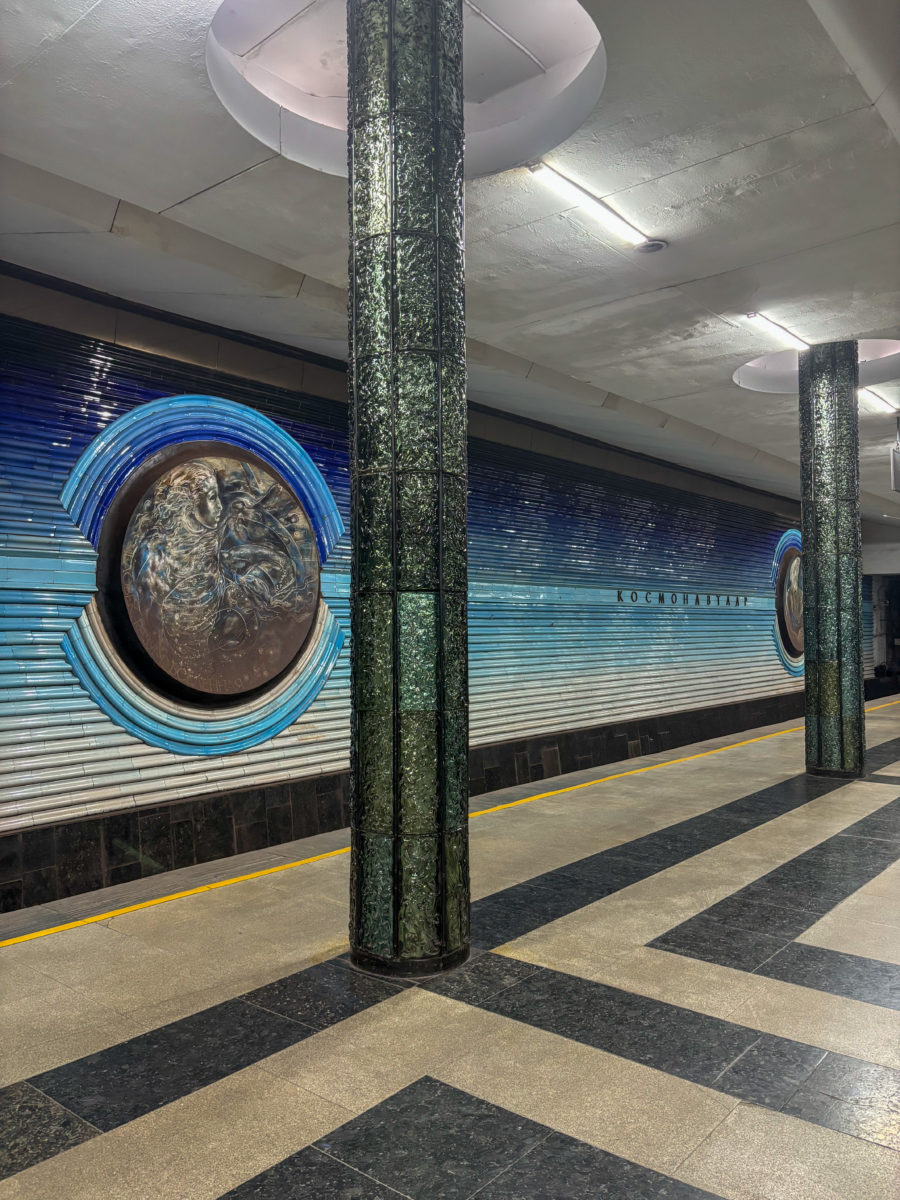
We wandered through the bazaar, tasted Uzbek flavors, and explored a metro system from another era, still running.
3 Days in Khiva
Accommodation: Ornament Boutique Hotel (cash only)
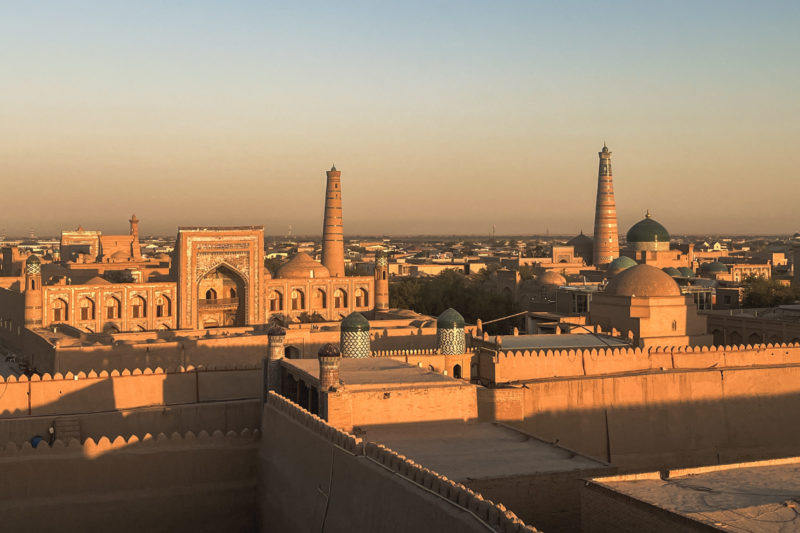
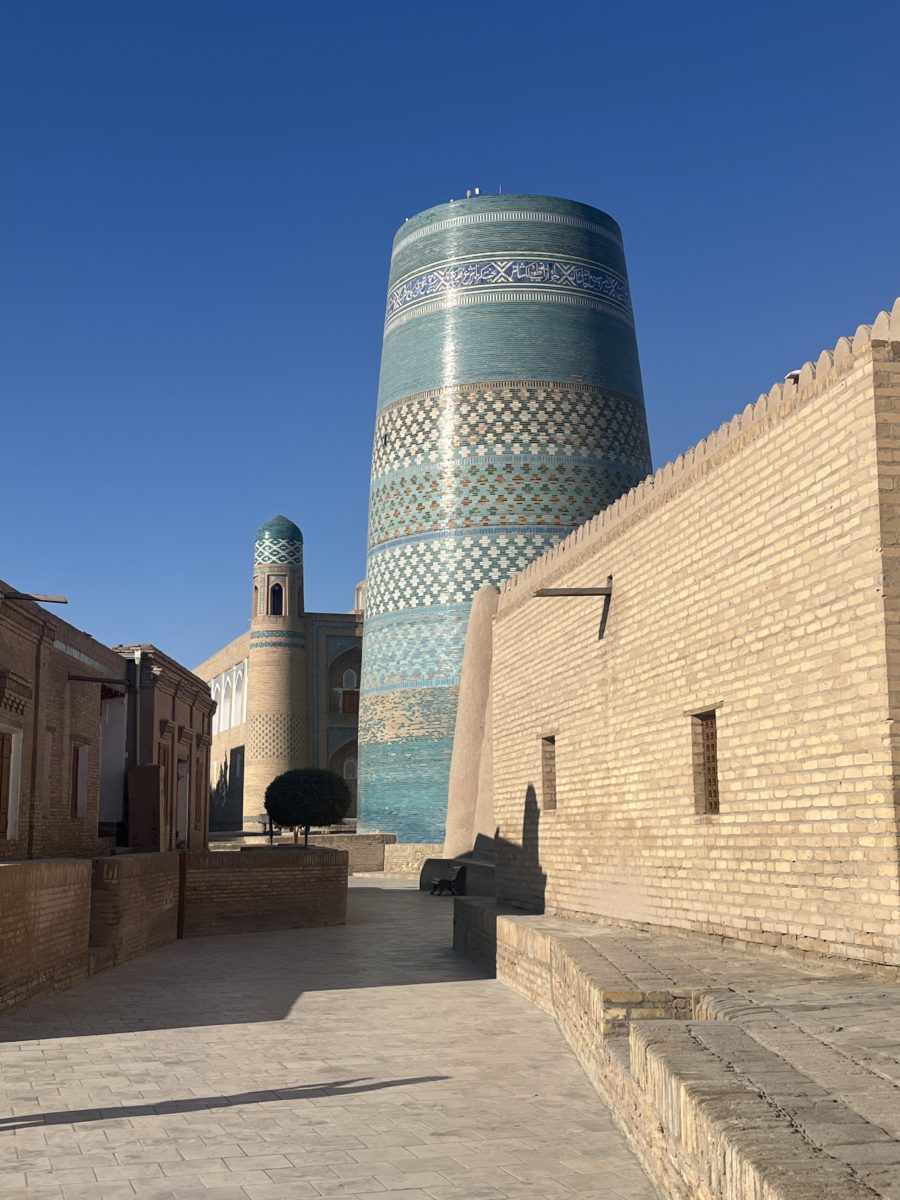
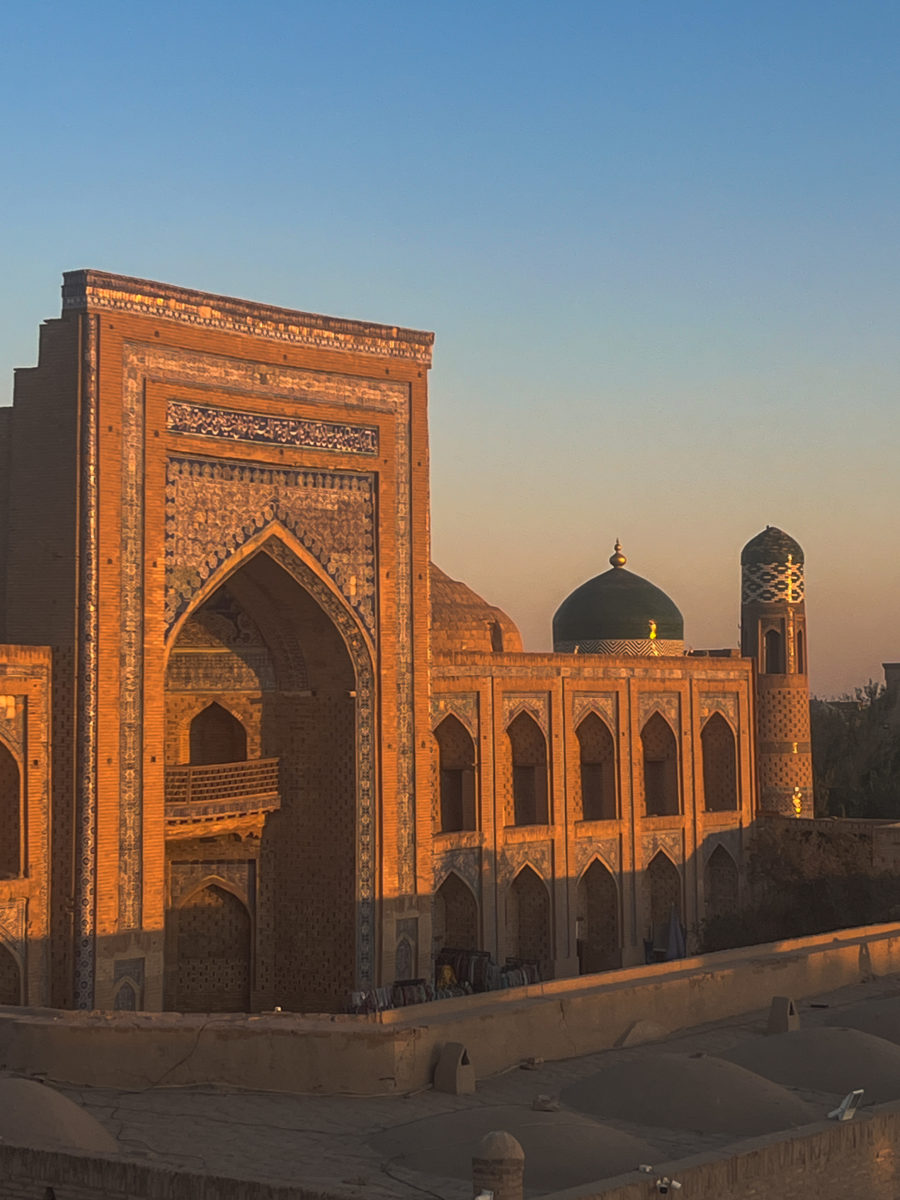
Khiva feels like a frozen-in-time medina, a dreamlike setting of clay walls and turquoise minarets. Its streets whisper stories at every step. Arriving from Urgench airport feels almost theatrical: you pass through the gates, drop your bags, and let yourself be absorbed by the magic of the old town.
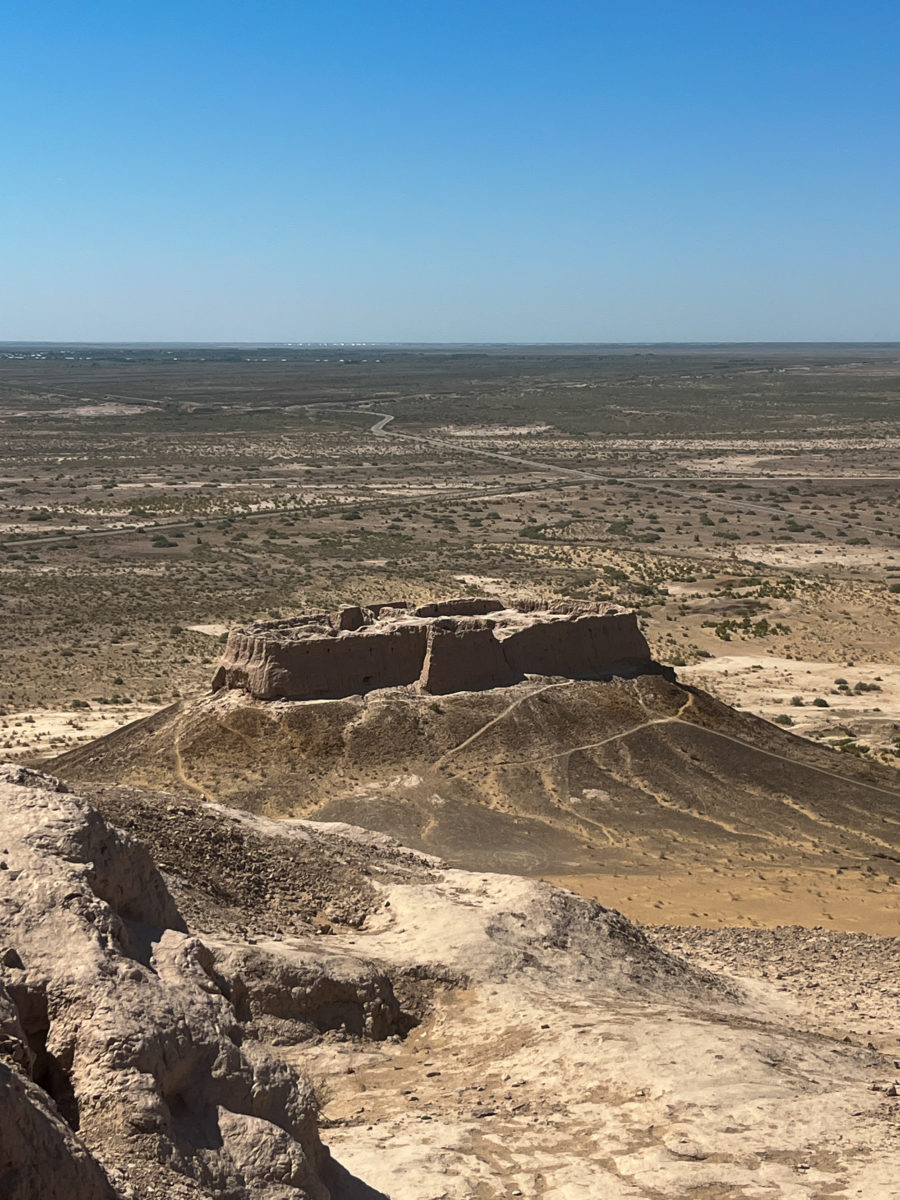
Highlights include wandering the medina, exploring desert fortresses, and simply enjoying the silence.
Khiva invites you to slow down, to observe, photograph, get lost, and simply sit. Here, artisans weave silk, work leather, and the wind blows over the forgotten fortresses of the desert.
3 Days in Bukhara
Accommodation: AIST Boutique in Historical Caravan Sarai XIX Century (cash only – which was not written on our Booking.com booking, therefore we paid by card via partner hotel / feel free to stick to your plan to pay with card, the hotel will try to dissuade you but they had an alternative…)
The journey between Khiva and Bukhara is both a geographical and a temporal transition: you leave behind the dry desert air for the historical softness of Bukhara.
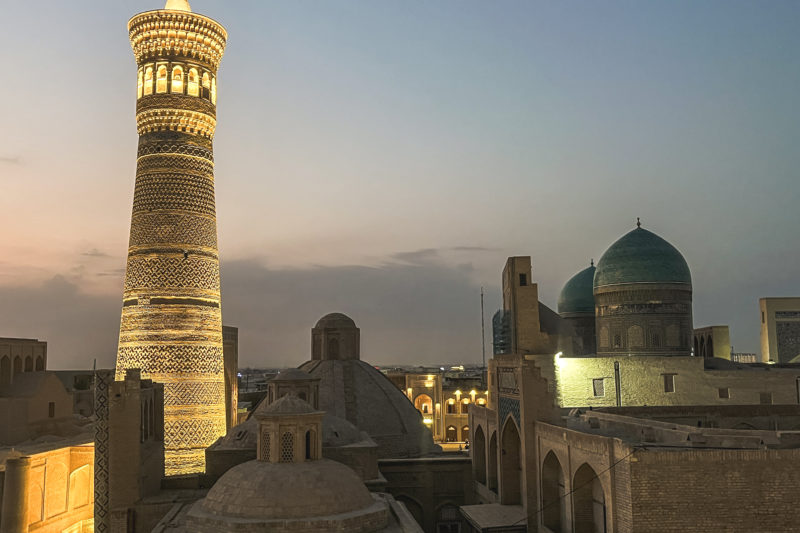
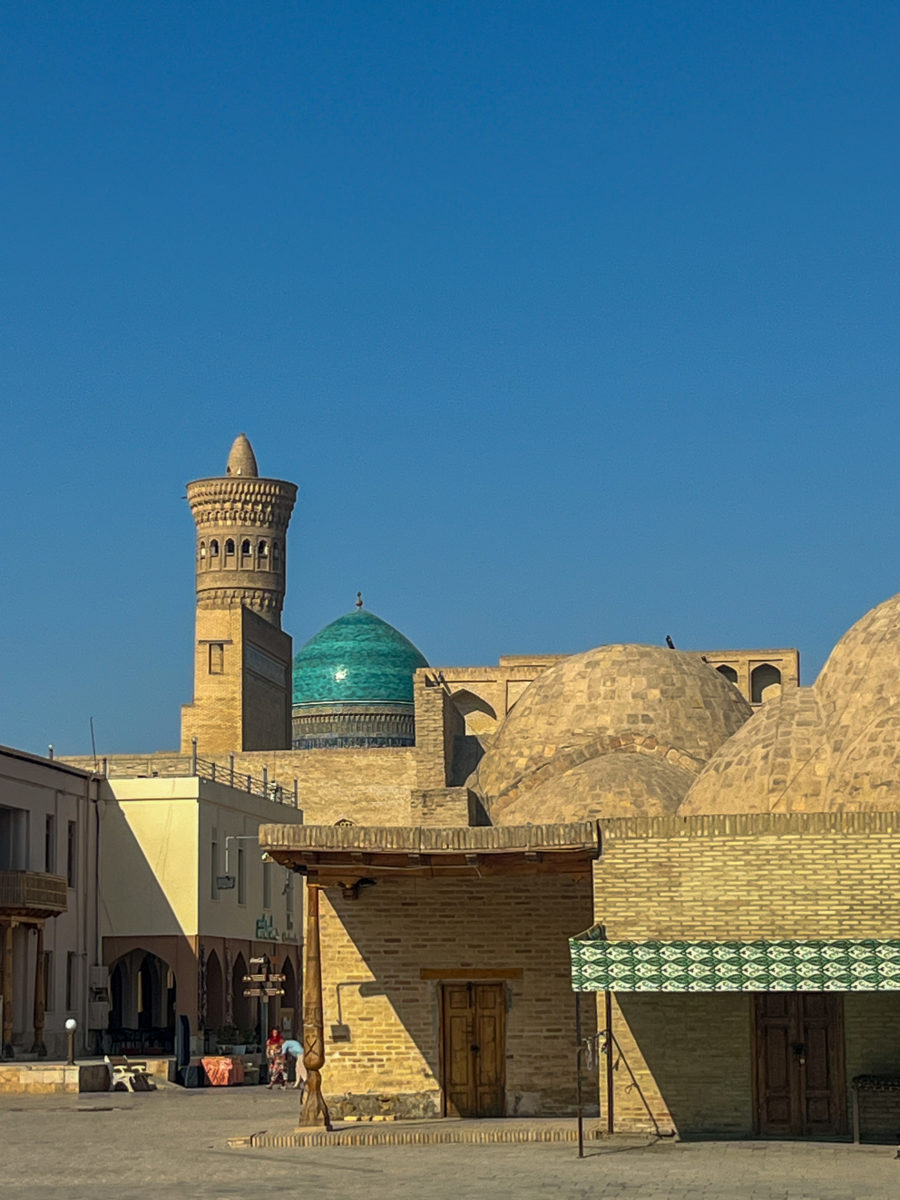
Bukhara has the quiet elegance of an old Silk Road lady: majestic madrasas, blue domes, sandy alleys, and covered bazaars where the sound of artisans’ hammers echoes.
The arrival in the city is gentle, but quite quickly the charm feels less powerful. Perhaps because everything seems more orderly, more oriented toward visitors. After the raw magic of Khiva, Bukhara appears more polished, more restrained, maybe a little too much so.
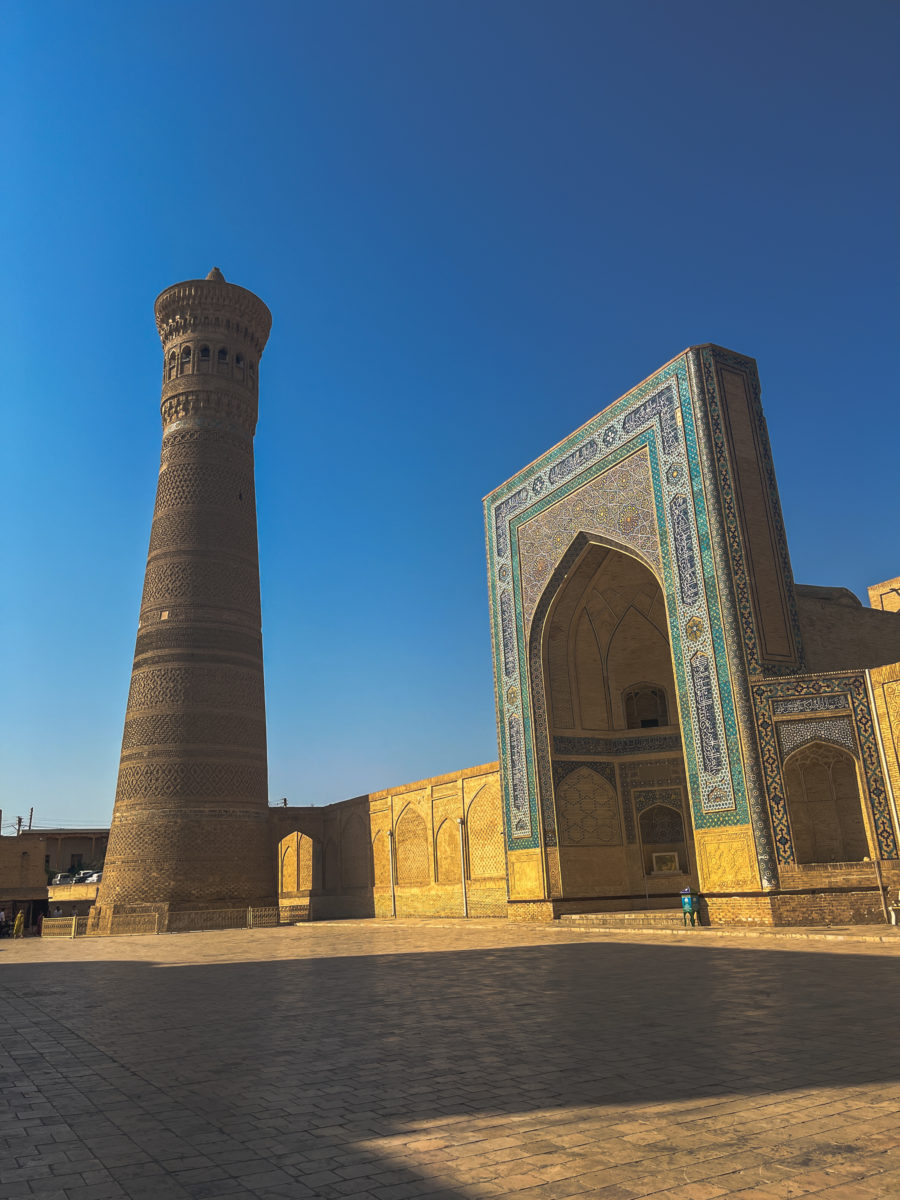
That said, the visits unfold pleasantly: Lyabi-Hauz Square, the madrasas, the Kalyan Minaret, the Jewish quarter. It is a fascinating stop, rich in history and architecture, but for us, it was the one we enjoyed the least (perhaps simply because Khiva had set the bar very high).
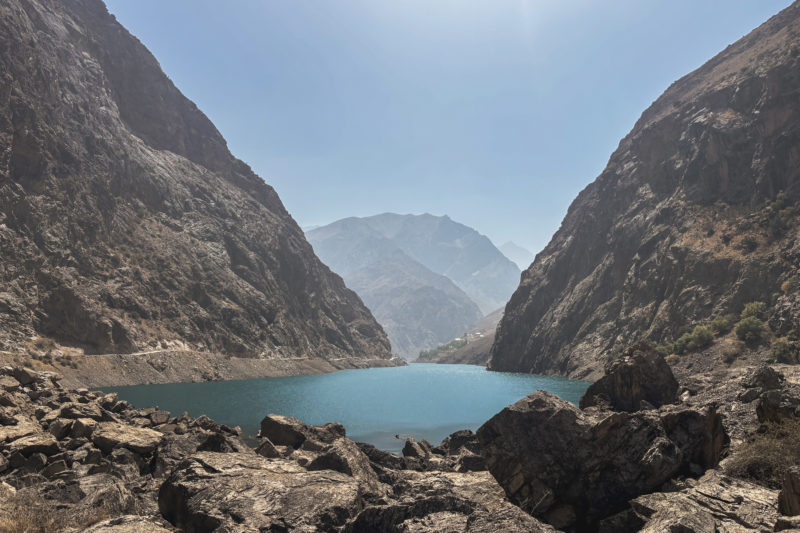
4 Days in Samarkand (including a tour in Tajikistan)
Accommodation: Hotel Samaria Terrace (card accepted – but avoid the massage proposed by the hotel – worst experience in our life)
After the long, bumpy hours between Khiva and Bukhara, the speed of the Afrosiyob train comes as a surprise. In less than two hours, the desert fades away and Samarkand emerges, grand and majestic, amid the ochre plains.
The four days spent there were filled with visits to the Registan, the necropolises, a few workshops, and a day trip into Tajik territory. Samarkand struck me instantly.
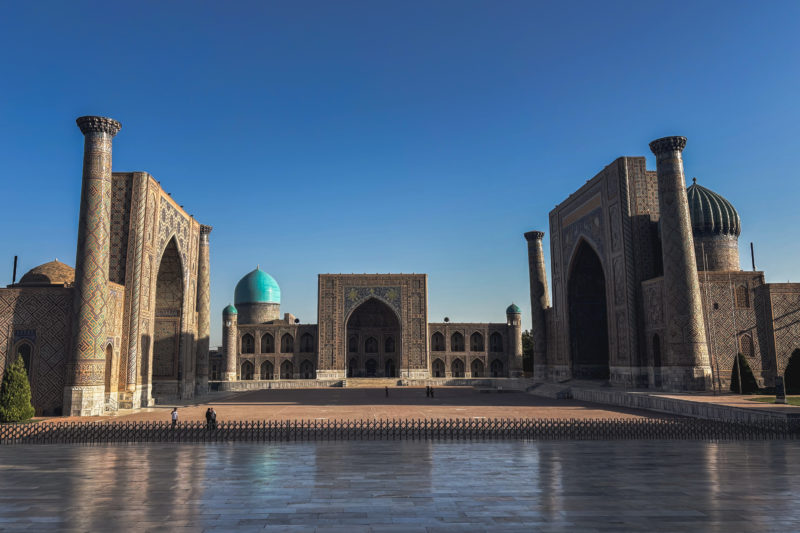
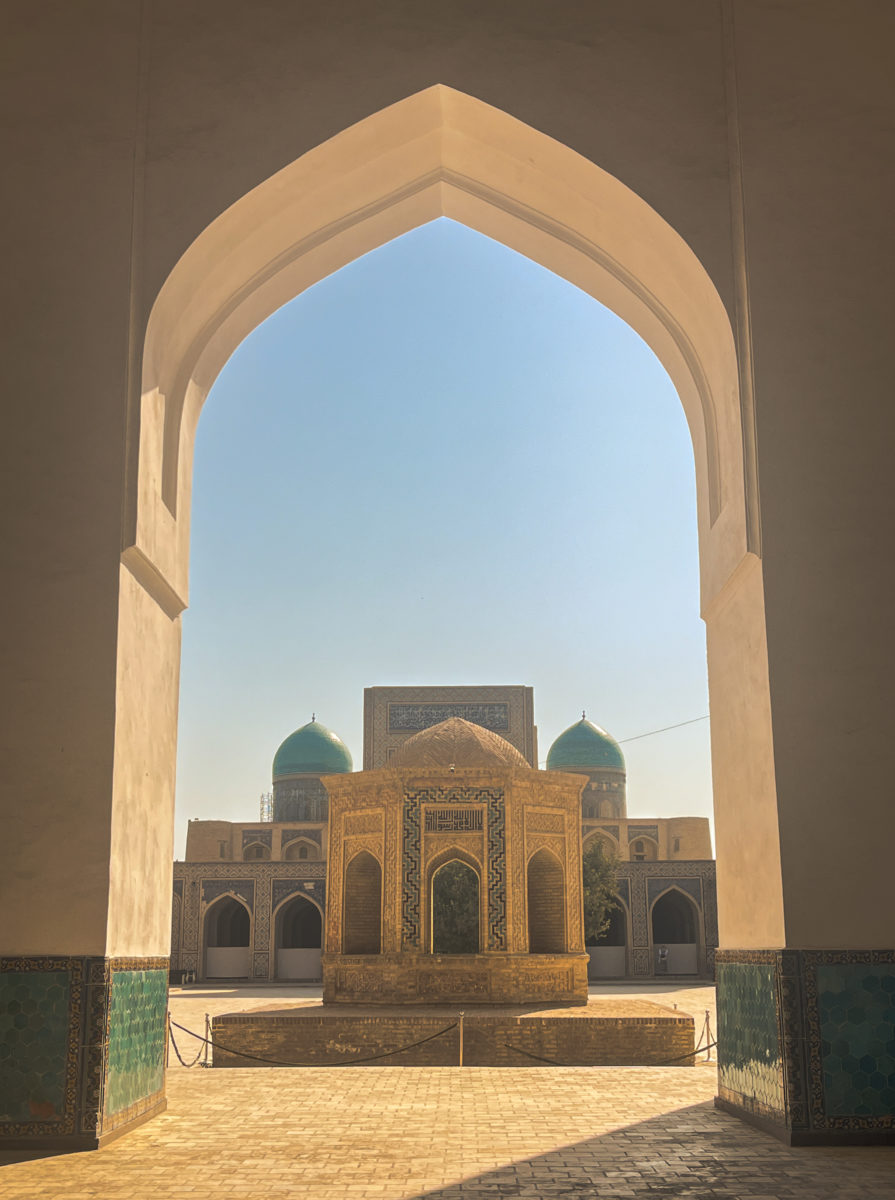
The Registan, with its three monumental madrasas, is a true open-air stage; the profusion of mosaics, blues, and gold is almost dazzling. It feels unreal that such a place is still standing. Samarkand is a fascinating, monumental city, but less intimate: you admire it more with your eyes than you feel it with your heart.
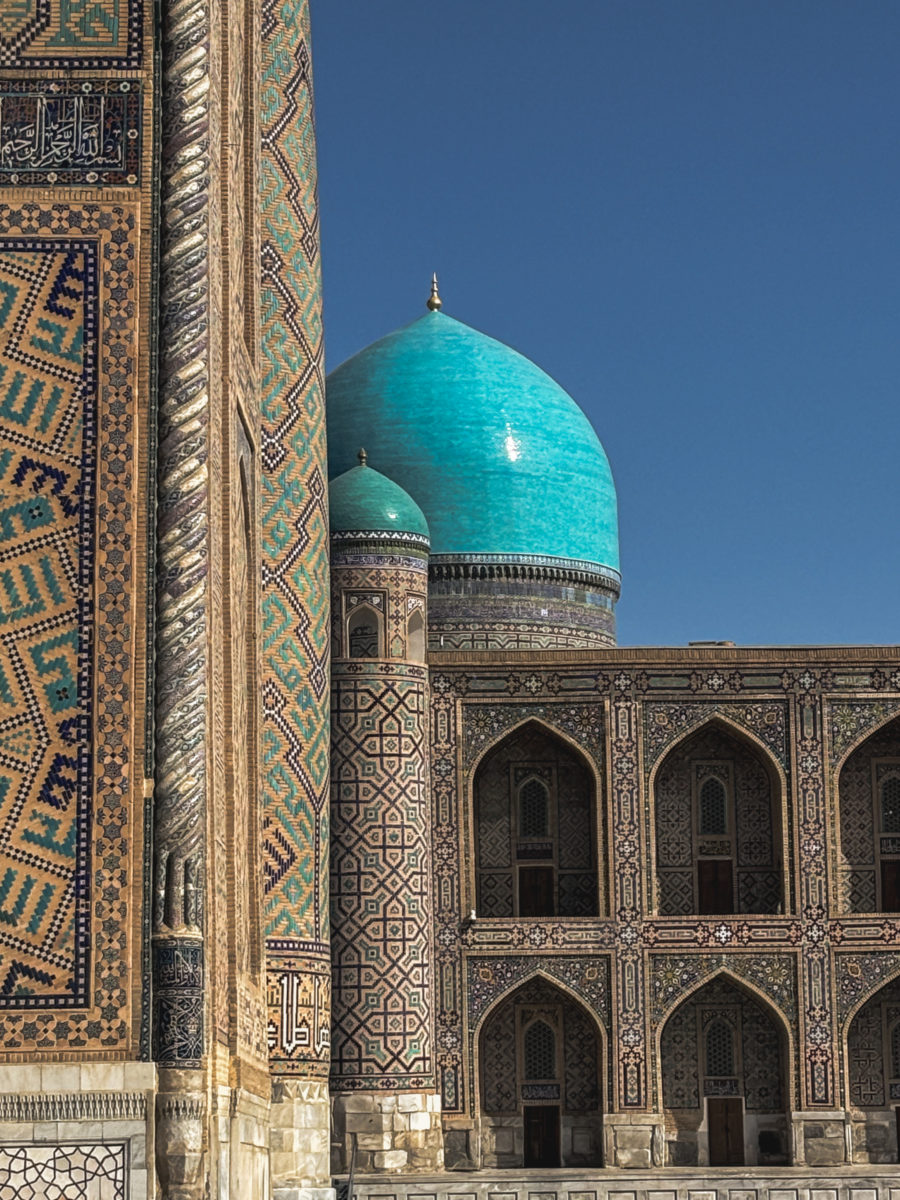
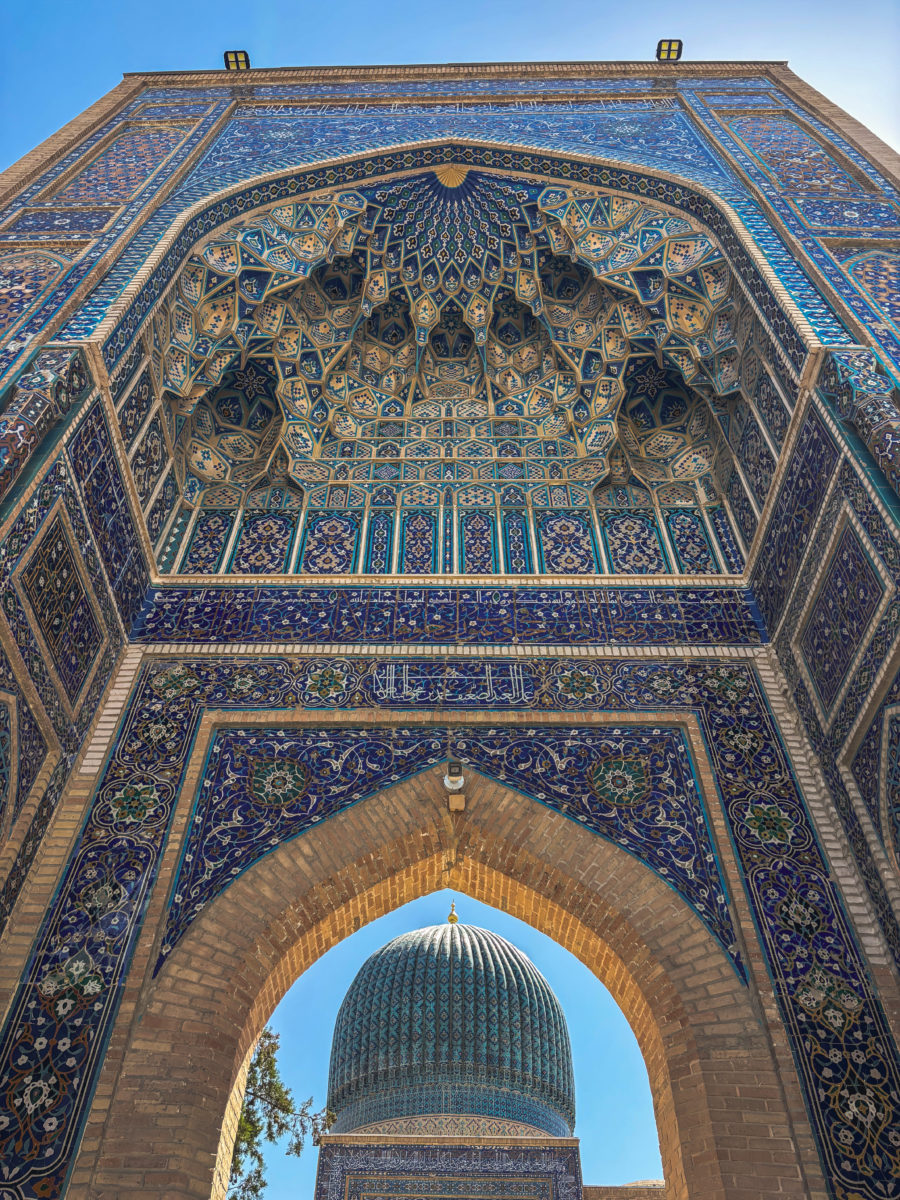
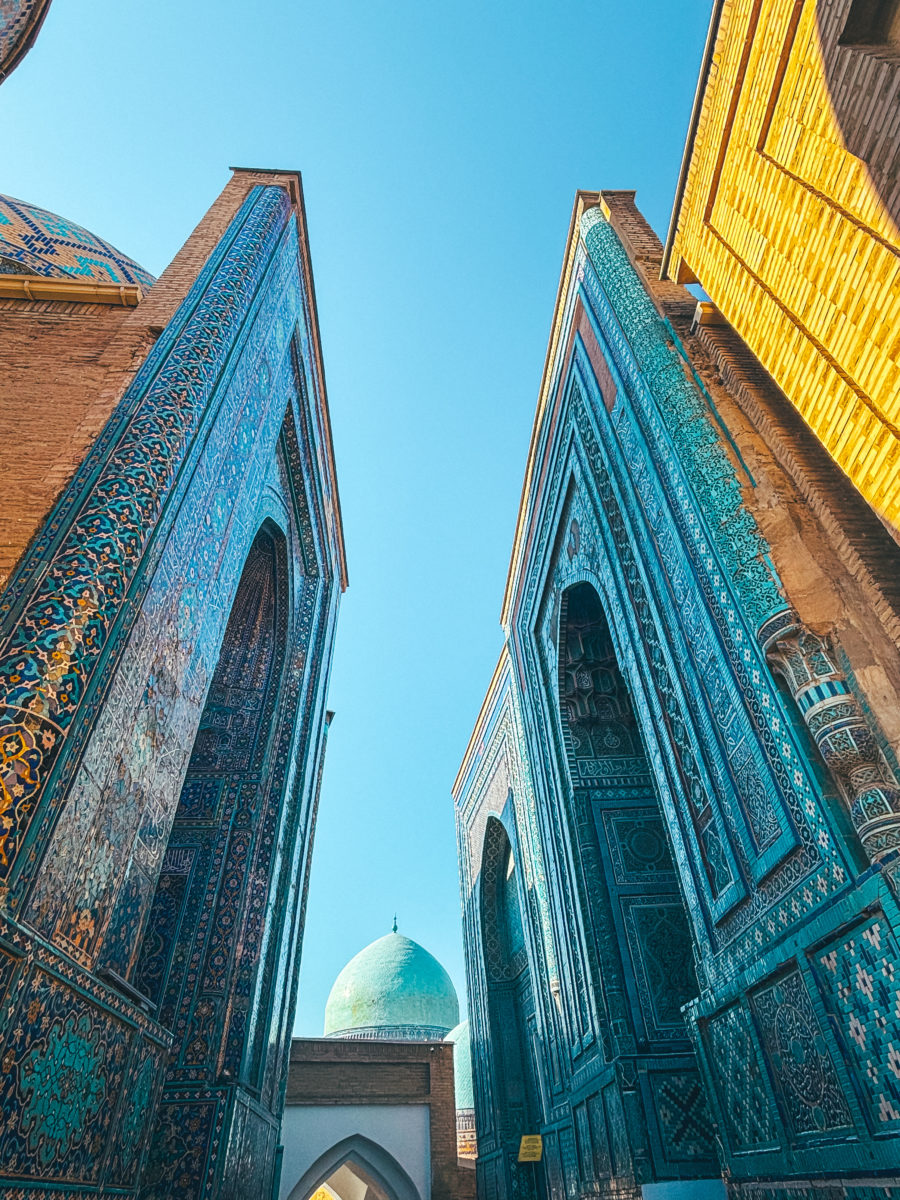
Practical Information on Uzbekistan
Entry requirements
No visa required for Swiss/EU citizens.
Currency
Uzbek som (UZS).
As you may have noticed in the above itinerary, I always specify whether hotels accept credit or debit cards. We were unpleasantly surprised on site to find that some establishments required cash payment, even though our Booking reservations indicated card payment.
As a precaution, we withdrew some US dollars (around $300 for two people) and also exchanged 100 Swiss francs into local currency. We did this exchange directly at the airport. While it’s sometimes possible to obtain certain currencies from your bank or at exchange offices in train stations (often the case in Switzerland), the rates are not always favorable. In our experience, it was more advantageous (and quicker) to exchange money directly on site.
Most restaurants and activities accept card payments. However, it’s always best to check beforehand to avoid any unpleasant surprises.
Language
The country’s official language is Uzbek, but Russian is widely spoken, as Uzbekistan was part of the Soviet Union (until 1992, Russian was taught as the main language in schools). English is still relatively uncommon, especially outside major cities.
Mobile data
We recommend buying a local SIM card or an eSIM upon arrival. We each purchased one at the airport for $15, which gave us unlimited data roaming for our two weeks in the country. Several plans are available, so you can choose the one that suits you best.
Accommodation in Uzbekistan
With the rise of tourism, accommodation options in Uzbekistan are expanding rapidly, especially in major stops such as Samarkand, Bukhara, and Khiva. The rest of the country, including the Fergana Valley and areas near the Aral Sea, remains somewhat apart, with more limited choices.
Most hotels and guesthouses can be easily booked through Booking.com, which greatly simplifies the search. Hotels are required to be registered under the Ministry of Tourism, and most of the places we stayed proudly displayed this as a guarantee of their standards and respect toward tourists. There isn’t really a mid-range option: accommodations tend to fall either into high-end hotels costing over 200 CHF per night or more modest establishments ranging from 15 to 50 CHF.
Overall, we had very good experiences with our hotels (except for the last one near Tashkent airport, which I did not highlight above). Our main challenge throughout the trip was sleeping on mattresses that were a bit too firm for our taste. Depending on the season, be sure to check whether air conditioning or heating is available. Every one of our accommodations had it, which was a real bonus in 40°C heat!
Getting around in Uzbekistan
In Tashkent, public transportation is particularly efficient. The metro, although marked by an aesthetic inherited from the Soviet era with its traditional display boards, is fully functional. It’s also possible to pay directly by bank card at the turnstiles. Buses run regularly, and their schedules can be checked in real time via the Yandex Maps app, making it very easy to get around.
In smaller towns, minibuses known as marshrutkas are a very affordable option. However, their routes can be difficult for visitors to understand. For greater comfort and simplicity, especially in less touristy areas, the Yandex app is extremely convenient. It allows you to easily order a taxi without any risk of miscommunication. As prices are very reasonable, this was the mode of transport we used most throughout our trip.
The Uzbek railway network, which is constantly being modernized thanks to government investment, remains the most practical way to explore the country. There is a wide variety of trains: some, like the Afrosiyob, can reach speeds of up to 250 km/h, while others are older but still perfectly functional. Depending on the schedule and the type of train, you can choose between standard seats or sleeper berths for overnight journeys.
Tickets can be booked directly on the official Uzbekistan Railways website. We had read that it was best to book as soon as sales opened, as tour operators quickly reserve large numbers of seats for their groups, making trains appear fully booked very fast. Booking from Switzerland proved complicated. Fortunately, my travel companion, based in Romania, and I, sometimes in France, eventually managed to book all our journeys, even if not always in the classes we would have preferred.
We had initially planned to travel overnight between Tashkent and Khiva, opting for the last available seats, which were the most basic ones on an old Soviet train. However, accumulated fatigue combined with the intense heat of August 2025 (close to 40°C) led us to change plans and opt for a domestic flight instead. The Tashkent–Khiva route operates daily, but departures are very early in the morning.
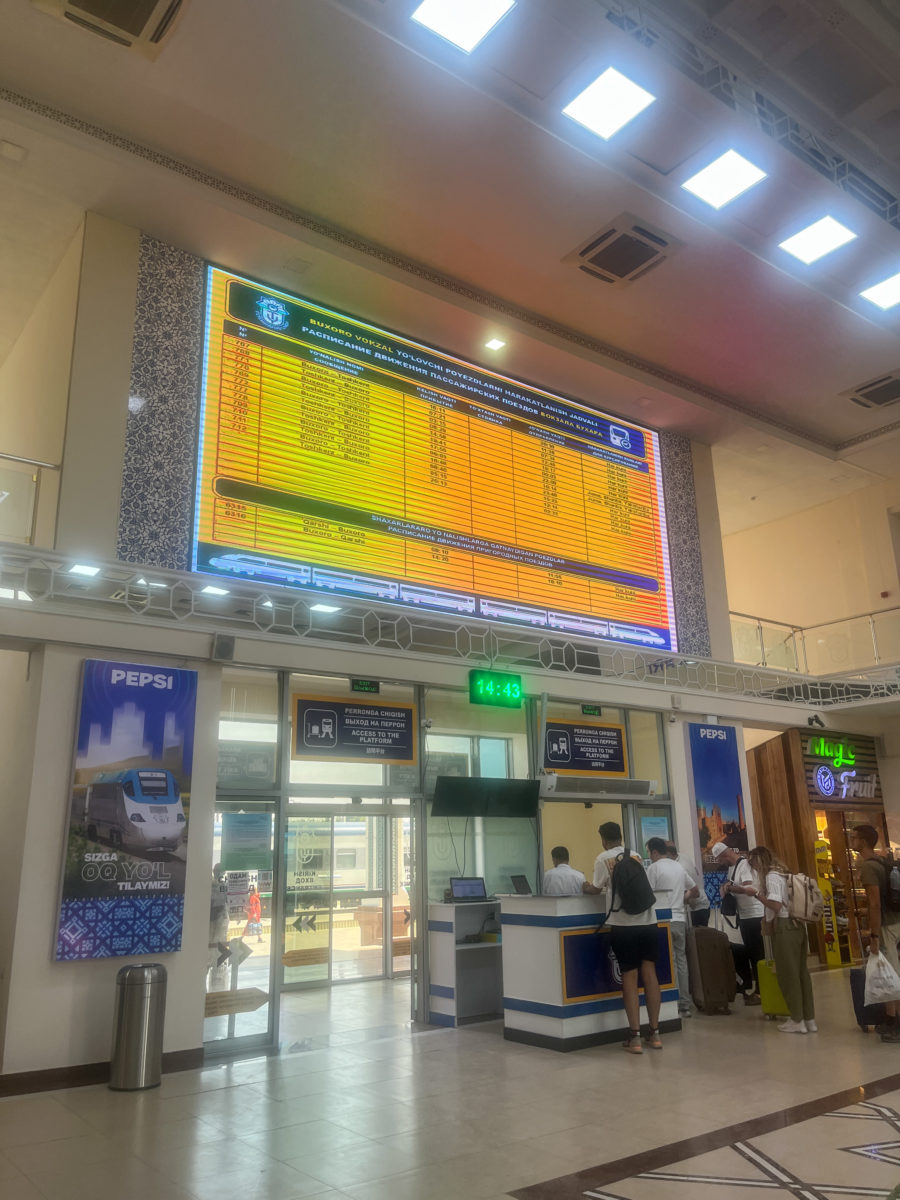

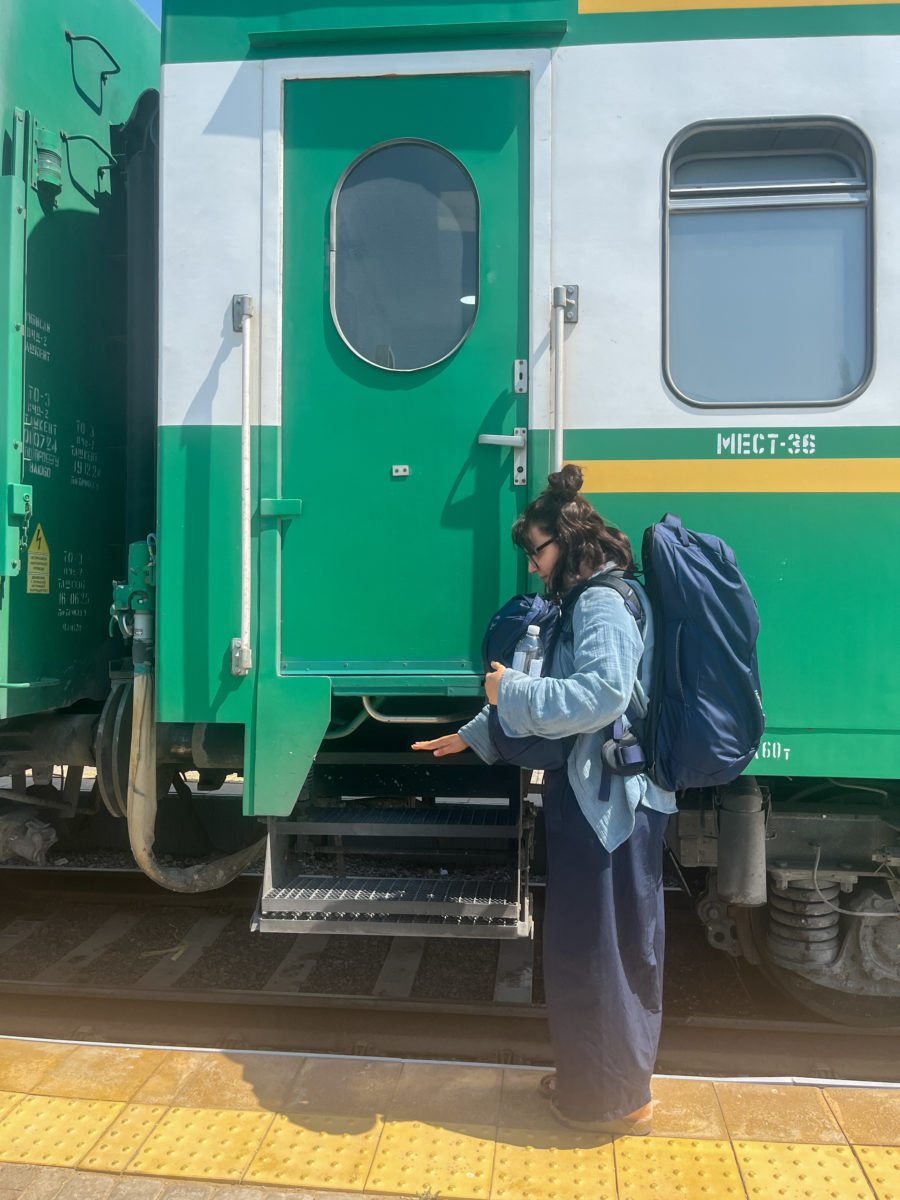
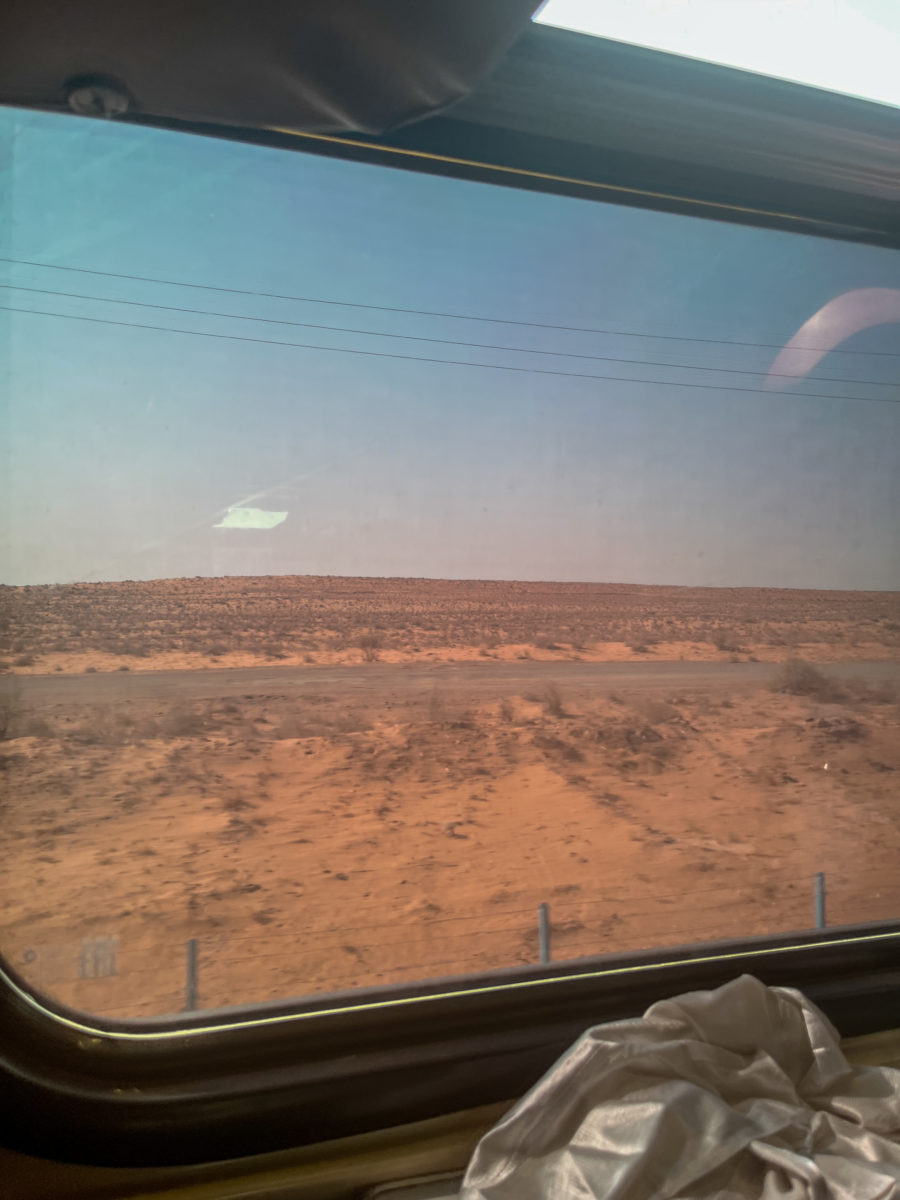
Train Travel in Uzbekistan
Traveling by train in Uzbekistan is a true experience. I wrote the following text during a seven-hour journey, lying in a sleeper train between Khiva and Bukhara:
It hit me. Three hours into the ride, halfway to destination, lying down in a small cabin with no AC, and I’m happy. Genuinely happy. I’m traveling. In the middle of Central Asia. Not like the nomads once did, but in my own way, with my friend by my side, chasing my own ideas of getting lost here.
We’d just spent nearly an hour waiting in the scorching sun, unsure if the train would ever move again – no roaming, no clue where we were, the engine sounding like it had given up. And the smell… well, we shut the door and laughed it off. And now here I am, stretched out, reading, smiling. Not without my usual undertone of stress – that would be utopia for me – but at ease, grounded.
These moments are travel too. Maybe the most important ones. Because beyond what your eyes devour; the beauty, the strangeness, it’s what shapes your soul. Somewhere in this desert, in this overheated train, a little piece of humanity reaches out and fills me.
I wander to the toilets, passing open cabins. Some with tourists, others with Uzbek families. I find myself wondering: Who are they? Where are they going? For these seven hours, we’re bound by the same reality : this train, crossing a vast desert. It makes me think of a book I’ve wanted to read for ages, “Ladies Coupé”- about Indian women traveling by train, how their journeys mold their lives, how solidarity carries them. Stories powerful, raw, and true. Will I ever appear in a book like that? Probably not. I’m far too ordinary. And yet, this life doesn’t feel ordinary at all. It feels wild, chaotic, beautiful.
Everything will be fine. I’ll go back to my book, slip into a fictional world for a while. But I’ll remember this: I lived. Fully, with the heart open.
That’s what happens on a desert train.
Health and safety
Uzbekistan is generally a very safe country, with a low crime rate and a stable geopolitical situation, especially when compared to some of its neighbouring countries.
As two women traveling together, we always felt safe, including while getting around. It is recommended to wear respectful, conservative clothing when visiting religious sites, in keeping with local customs.
The main inconvenience we encountered involved unofficial taxis, often waiting outside train stations or at Tashkent airport. Pushy and sometimes unclear about pricing, they can easily take advantage of travellers. It’s best to decline politely and use an app like Yandex instead, which is both reliable and affordable.
From a health perspective, the main point of caution is tap water. Although locals drink it, it is poorly treated and can cause digestive issues. It’s therefore best to avoid drinking it, as well as ice cubes in local establishments. Extra caution with raw vegetables is also advisable if you’re sensitive (like me!), even though the risk remains moderate. Personally, I did get sick for a few days, which forced me to slow down and stick to a very simple diet (damn those ice cubes in an iced tea!).
Reading on Uzbekistan
Throughout the journey, I read the chapters dedicated to Uzbekistan from the book “Turkestan Solo – One Woman’s Expedition from the Tien Shan to the Kizil Kum” by Ella Maillart, a Swiss adventurer from the interwar period. She recounts her travels across Central Asia in 1932.
Thank you, Ella, for having opened the way before us and for having told it with such strength (even if I don’t always agree with everything she wrote, let’s not forget that society at the beginning of the 20th century had very different social norms.). Nearly a hundred years later, her words still resonate, even though the landscapes, for some, and history above all have evolved.