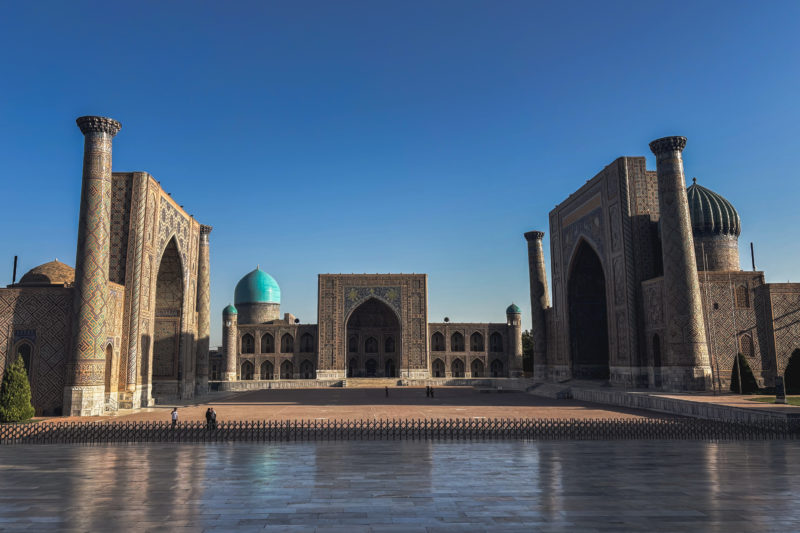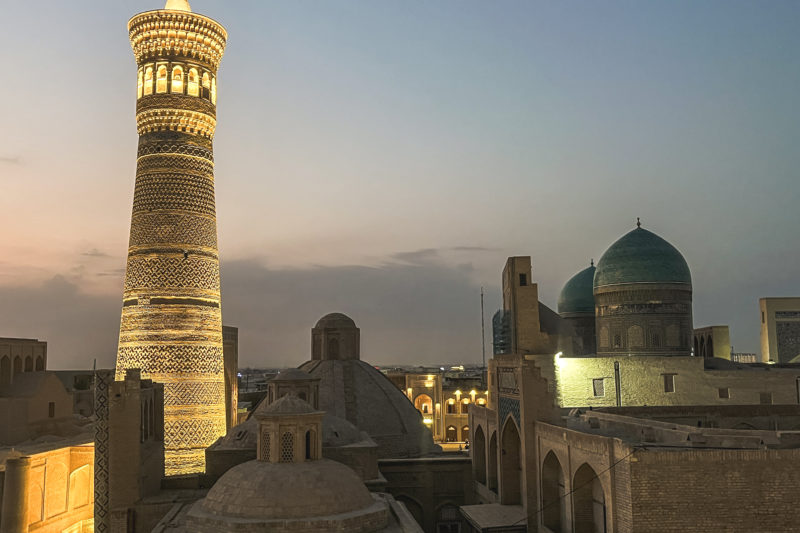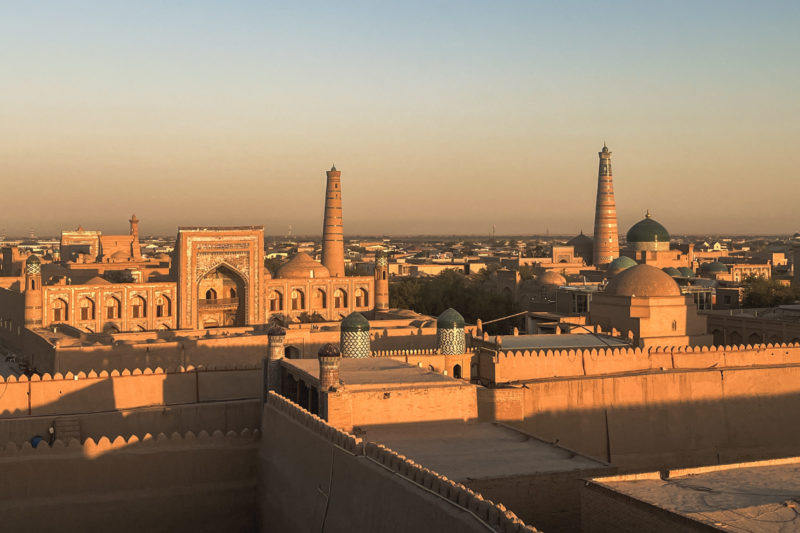
When planning a trip to Uzbekistan, most people immediately think of Samarkand, Bukhara, or Khiva. Tashkent, the country’s capital, is often seen as little more than a gateway before boarding the train to the historic Silk Road cities. That would be a mistake.
With its wide Soviet-era boulevards, spectacular metro stations, bustling bazaars, and ultra-modern districts, Tashkent offers a completely different perspective on Uzbekistan. It is a city of contrasts, where history exists side by side with bold modernity.
We spent our very first day in Uzbekistan here, and it introduced us to an entirely different side of the country.
A City Rebuilt After a Devastating Earthquake
Tashkent’s current appearance is largely the result of one defining event: the devastating earthquake of April 26, 1966. Much of the old city was destroyed, leading to an extensive reconstruction led by the Soviet Union.
The result is a city of broad avenues, imposing apartment blocks, abundant green spaces, and striking Brutalist architecture that stands in sharp contrast to the ancient caravan cities of the Silk Road.
Today, this Soviet identity blends with gleaming new buildings, glass skyscrapers, and ambitious urban development projects.
Chorsu Bazaar: The Beating Heart of Tashkent
No visit to Tashkent is complete without exploring the famous Chorsu Bazaar. In fact, it became our very first stop. Having landed at 7 a.m. and unable to check into our hotel early, we headed straight into the adventure under an already scorching morning sun toward one of the city’s most iconic landmarks.
Beneath its enormous turquoise dome lies a vibrant market where locals still come to do their daily shopping. Dried fruits, fragrant spices, traditional bread, nuts, vegetables, meat, cheese, and local sweets fill the endless stalls with colors and aromas.
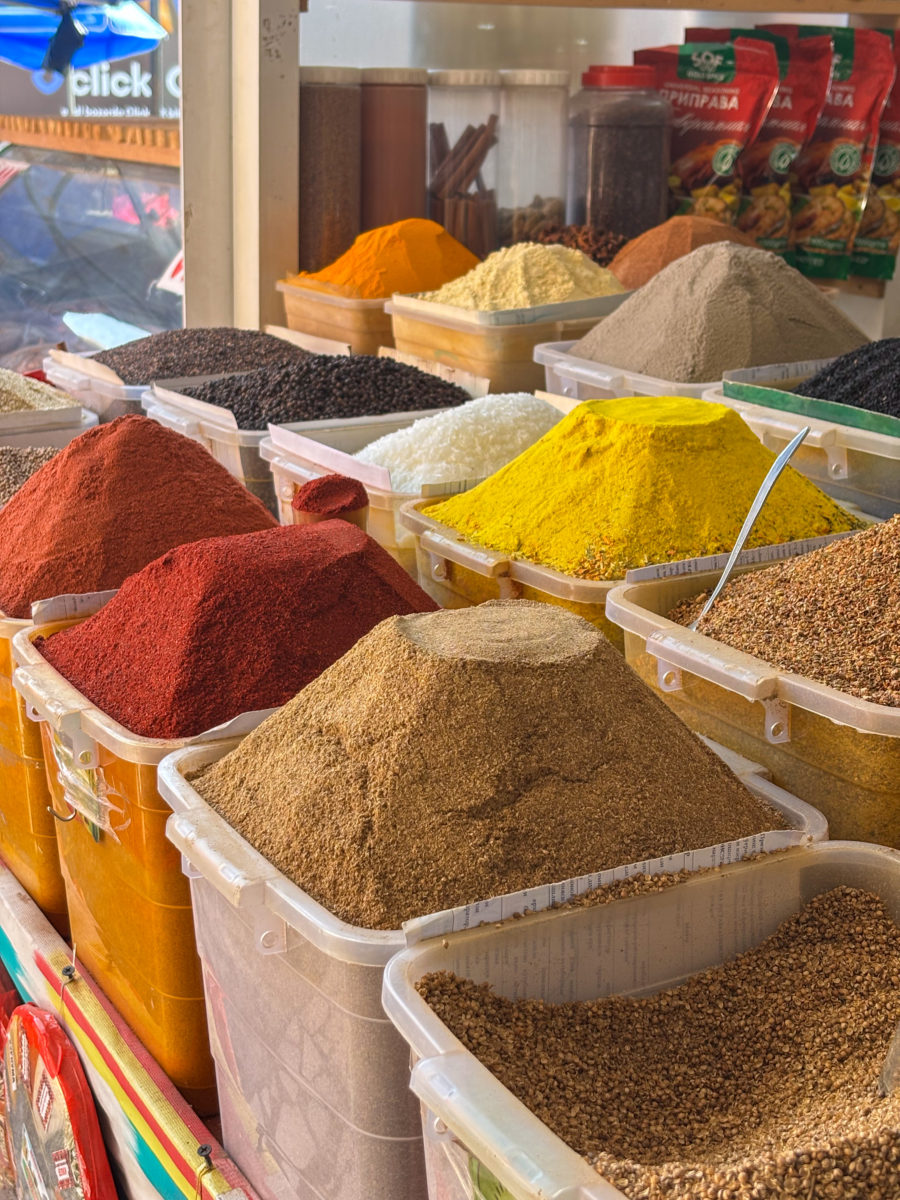
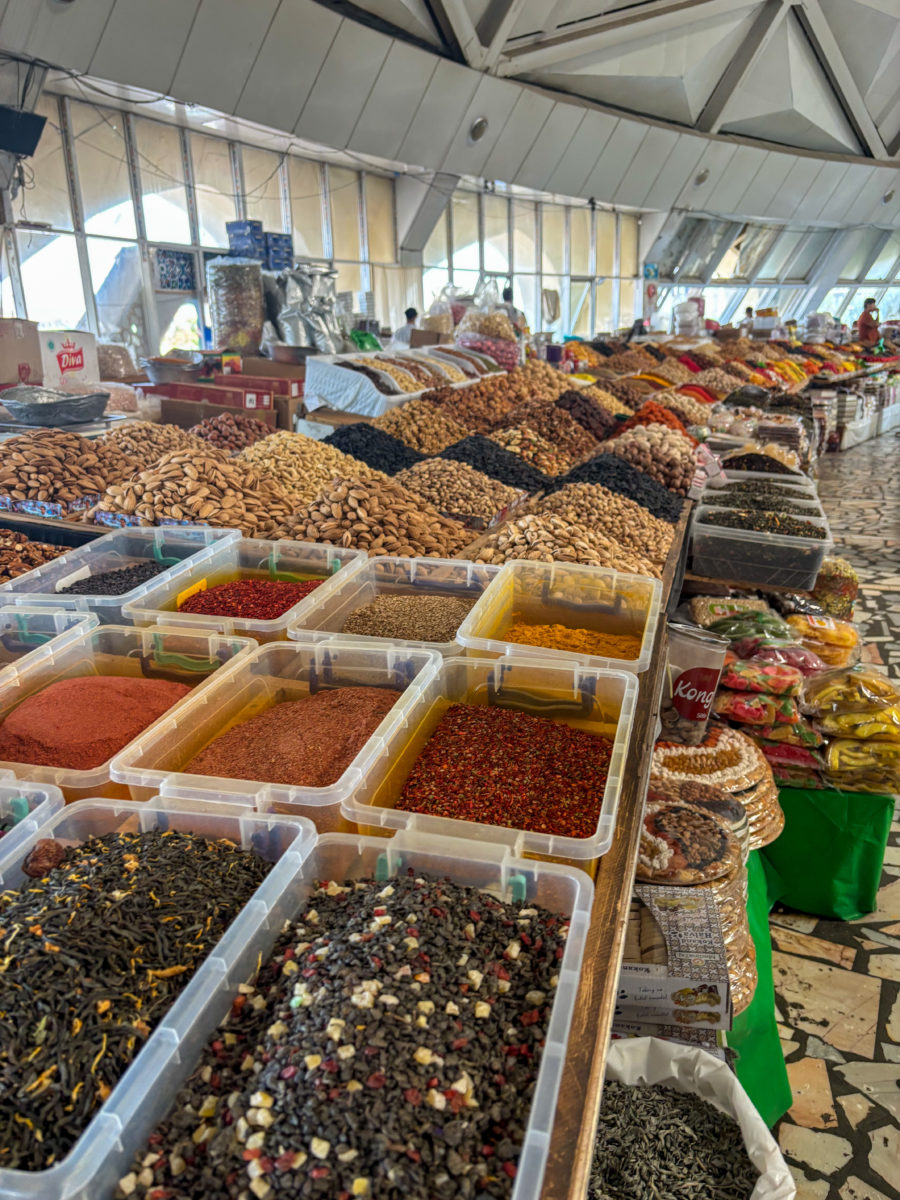
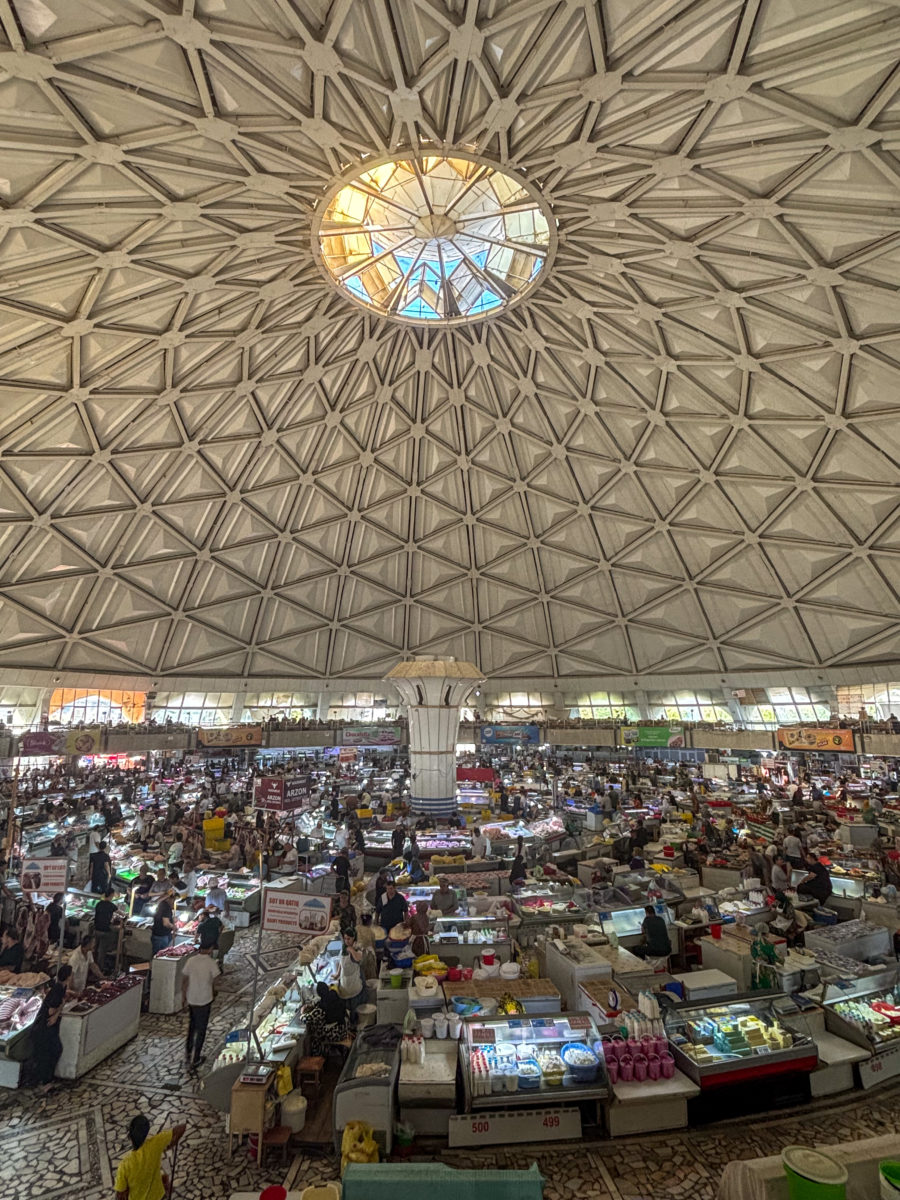
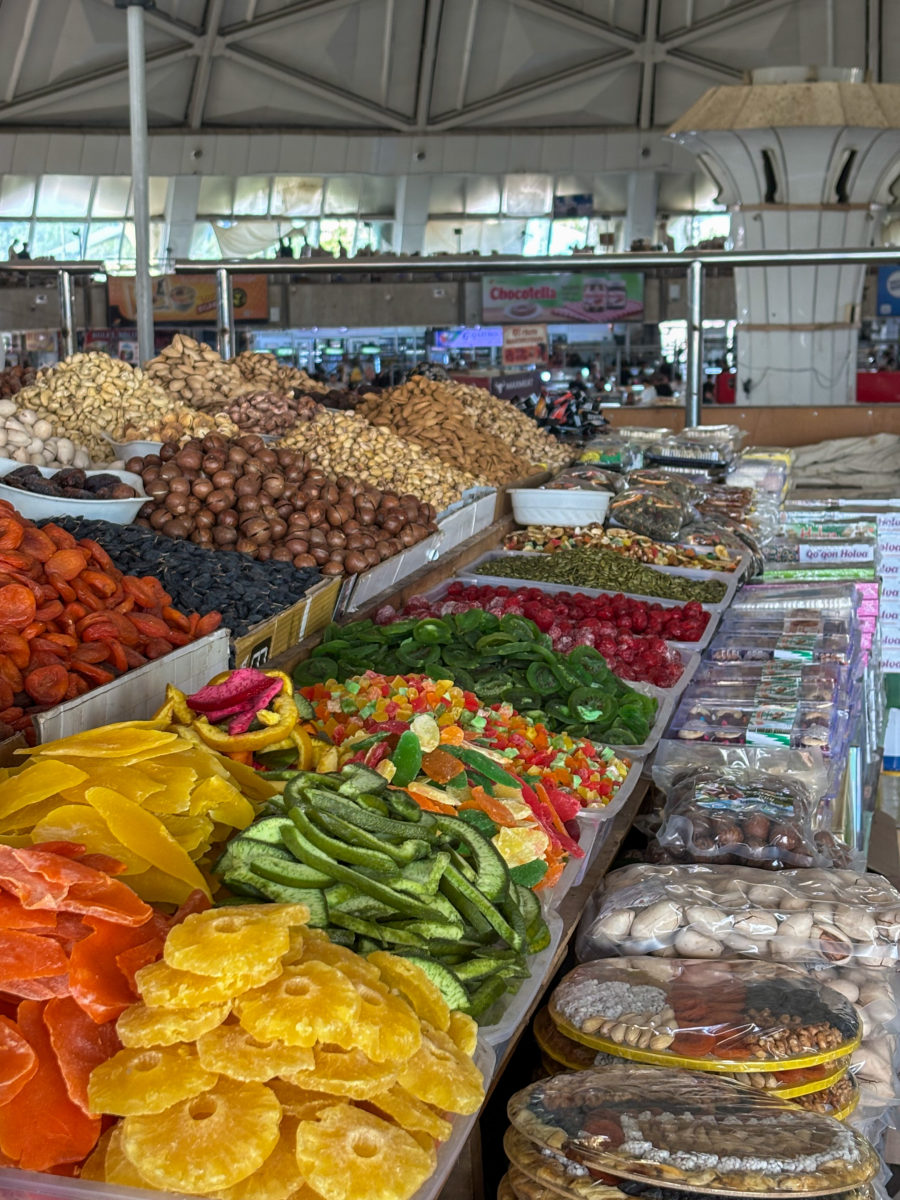
The aromas of spices wake us up more effectively than a double espresso. Then come the butcher stalls, where we are a long way from carefully curated Instagram displays: hanging carcasses, meat being cut right on the counters… At this early hour, you definitely need a strong stomach. And as if the August heat wasn’t enough, we also come across vendors selling traditional fur hats. Just looking at them makes us sweat for them. Respect to anyone brave enough to try one on under that blazing sun.
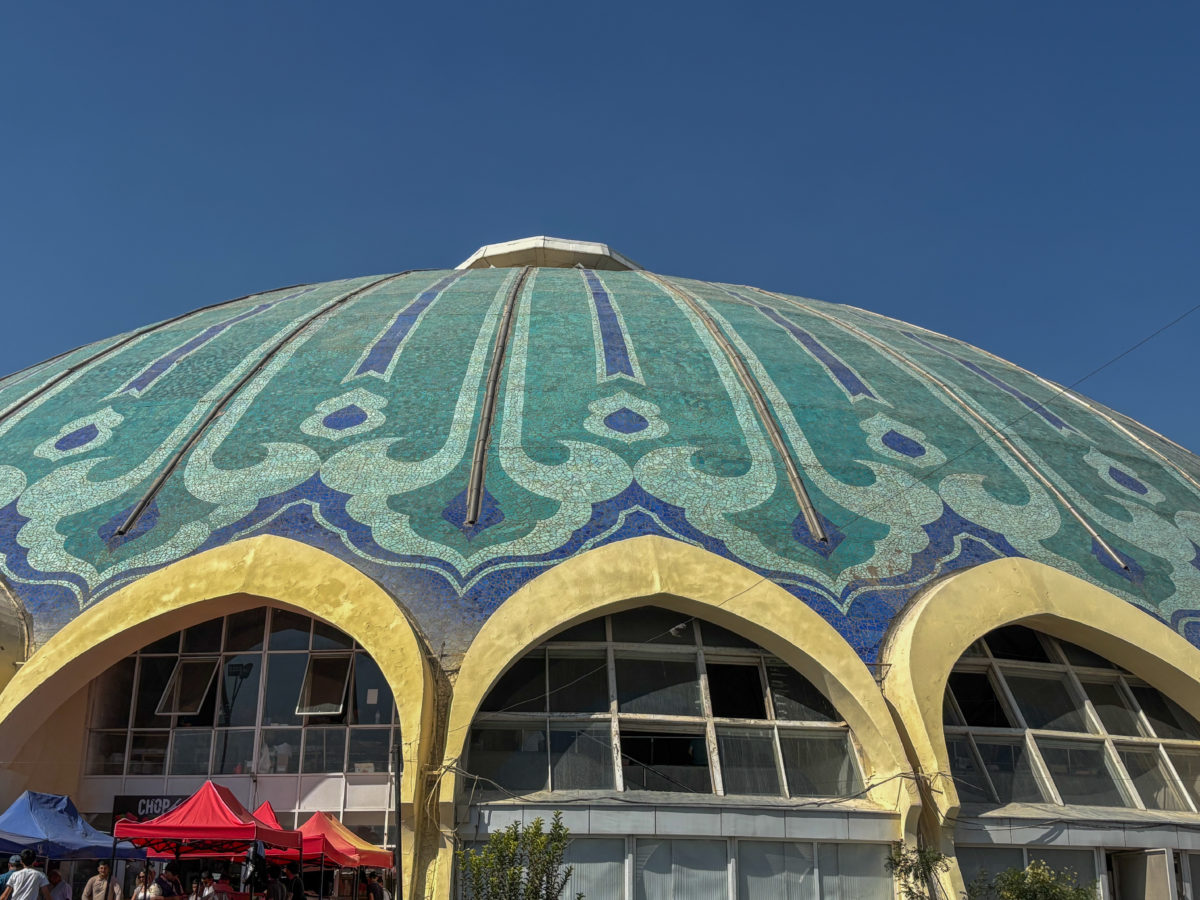
Outside, the market stretches in every direction with specialized halls and vendors selling absolutely everything imaginable. It’s loud (yes, even that early), colorful, generous, and wonderfully alive.
Our Uzbek baptism was officially complete. It was only 10 a.m., we hadn’t slept, but every single one of our senses was fully awake.
The Tashkent Metro: An Underground Museum
If there’s one free activity you absolutely shouldn’t miss, it’s riding the metro. Far more than just a convenient way to move around the city, it became one of our favorite attractions in Tashkent.
For many years, photography was forbidden because the metro was considered strategic infrastructure. Today, cameras are welcome, and for just 12 cents (!) we treated ourselves to underground journeys through stations that feel more like museums than public transport.
Each station has its own architectural identity: monumental chandeliers, marble walls, mosaics, sculptures, Soviet murals, and dramatic lighting. Every stop offers a completely different atmosphere.
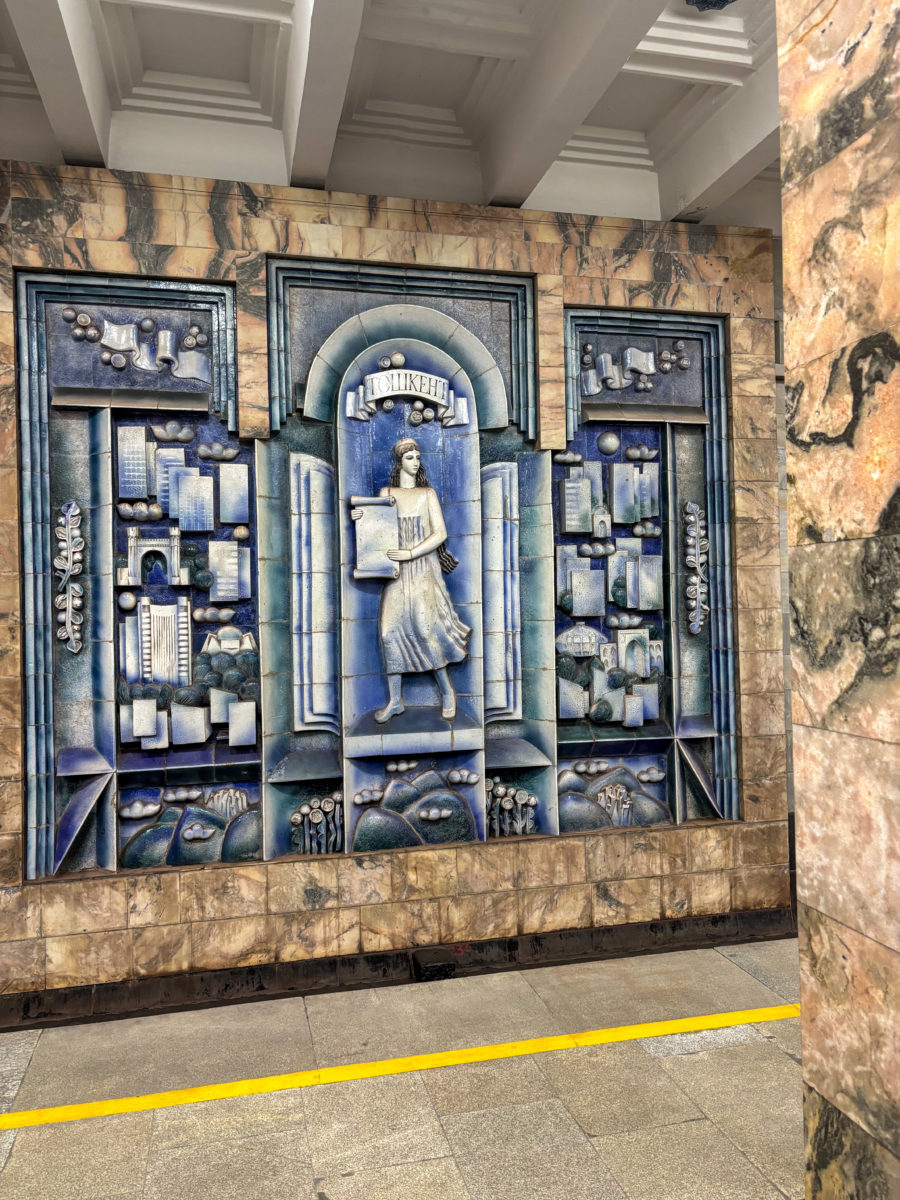
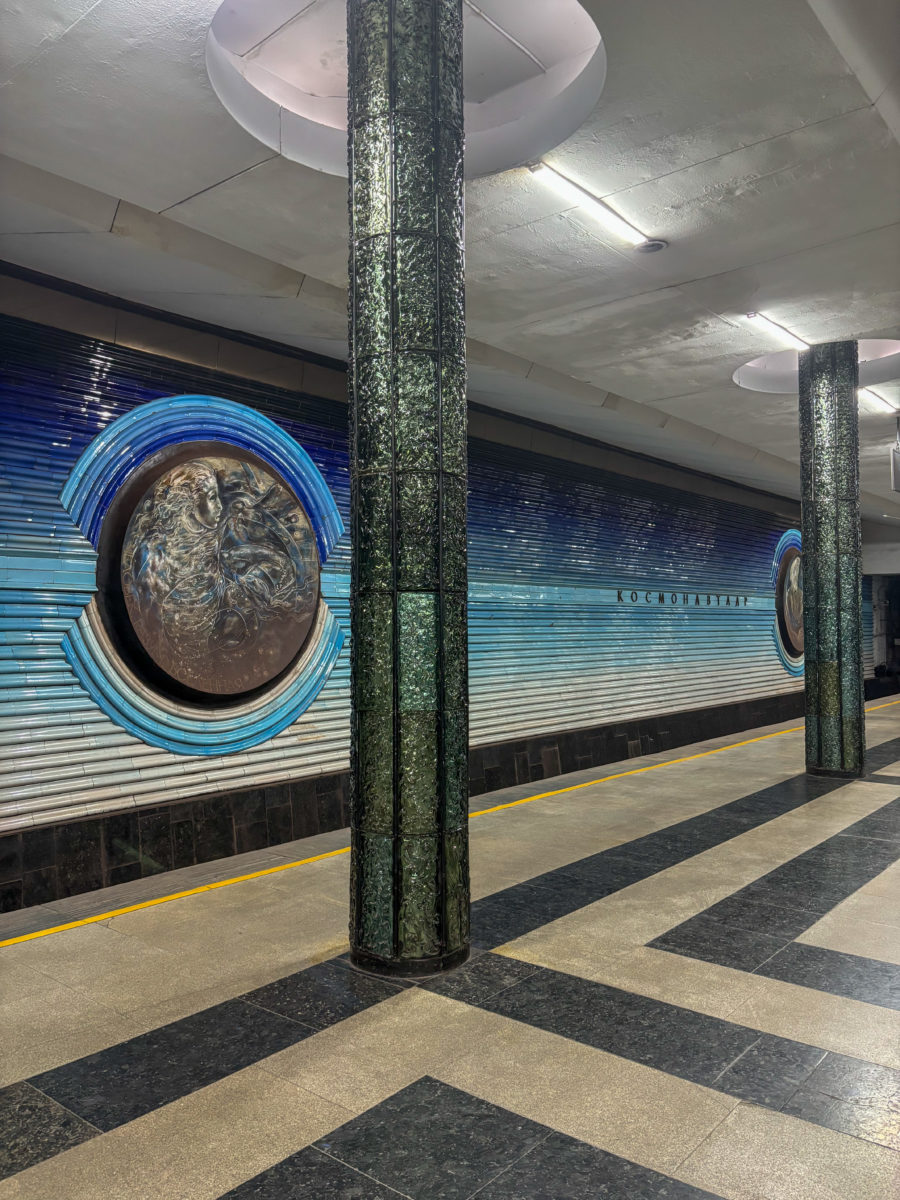
Among the most famous stations are Kosmonavtlar, Alisher Navoiy, and Mustaqillik Maydoni, each telling a chapter of Uzbek or Soviet history.
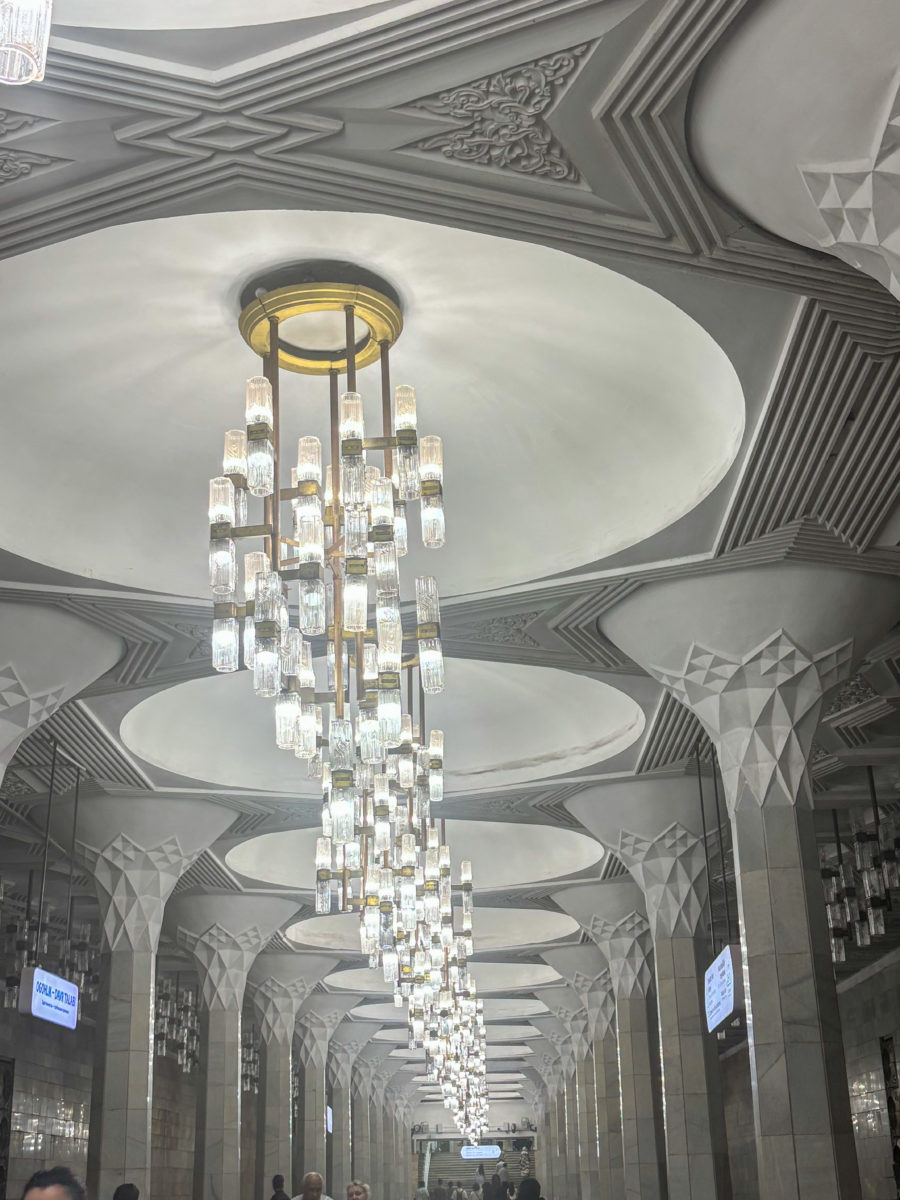
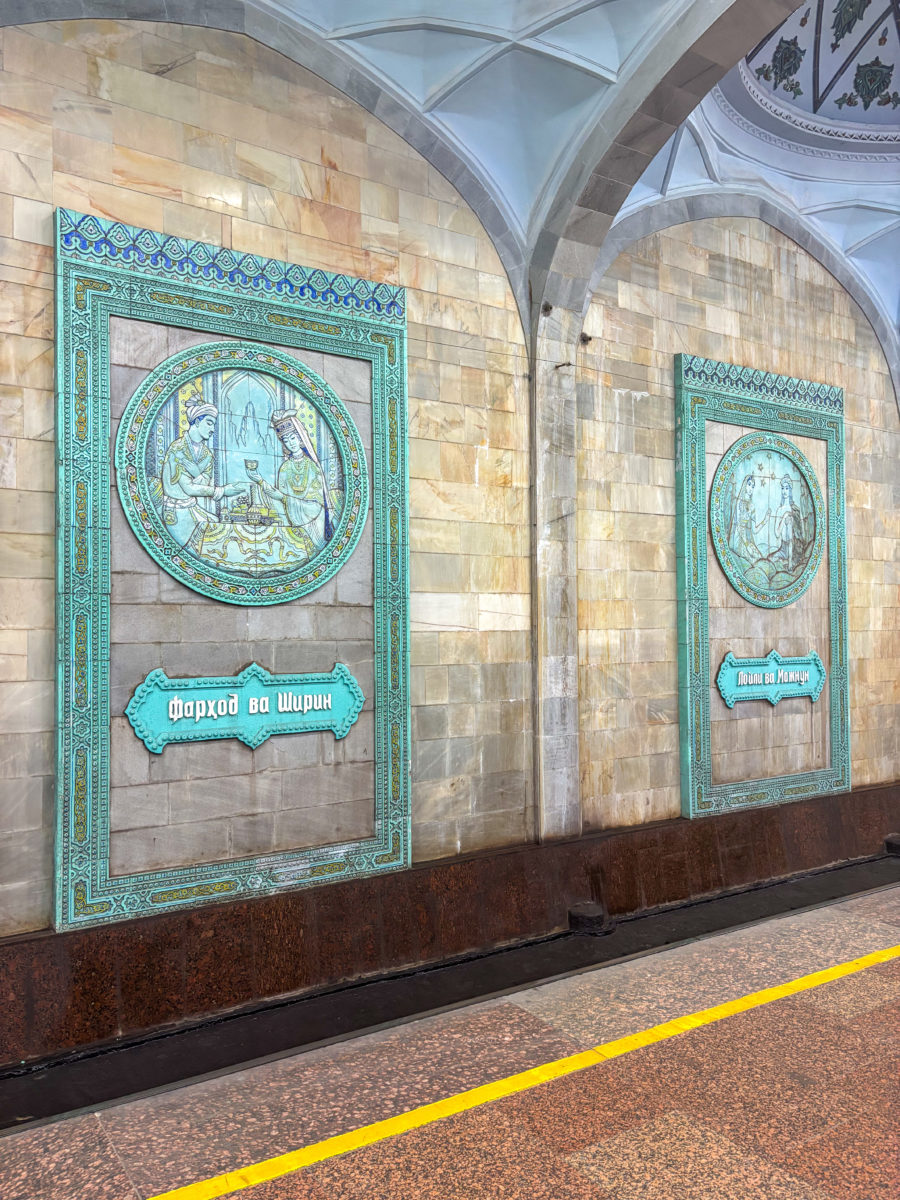
We wandered through them as though we were strolling around an ever-changing art gallery, moving from one world to another while quietly observing everyday local life.
Tashkent City: Uzbekistan’s Answer to Dubai
Perhaps the most surprising aspect of Tashkent is how dramatically the atmosphere changes from one neighborhood to another.
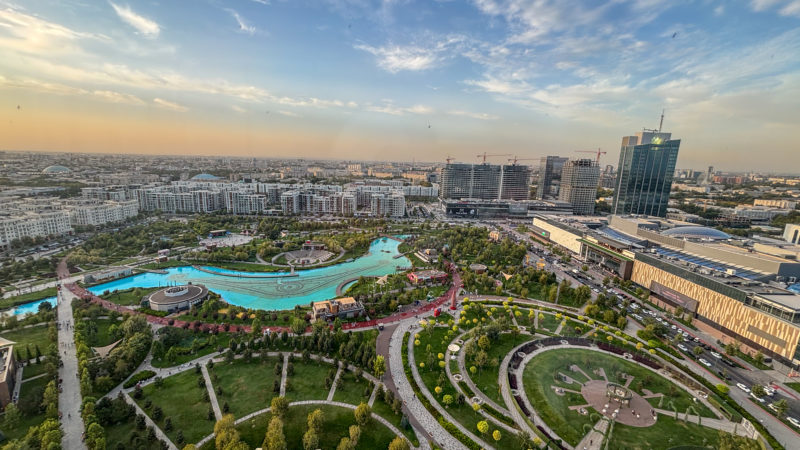
Within minutes, you can move from traditional districts to Soviet apartment blocks before suddenly arriving in what feels like an entirely futuristic city: Tashkent City.
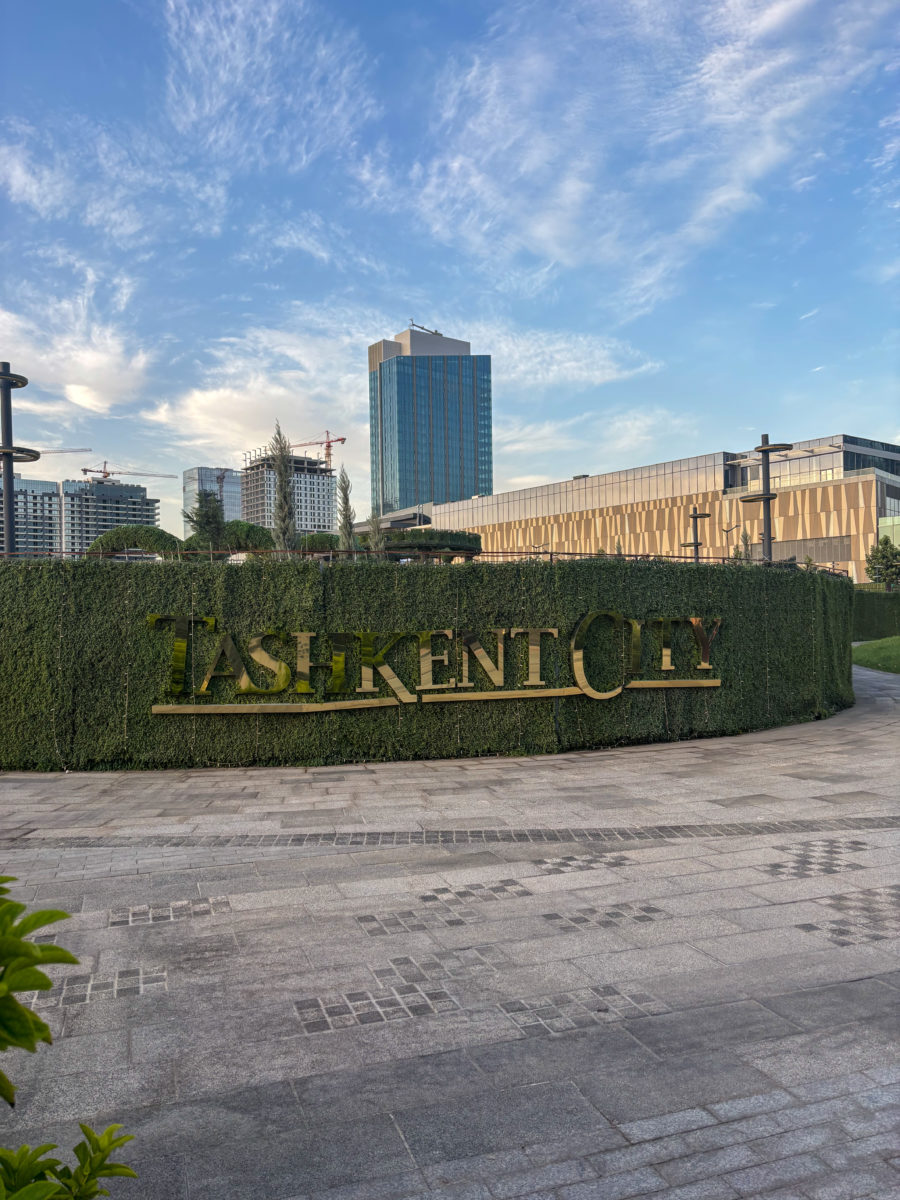
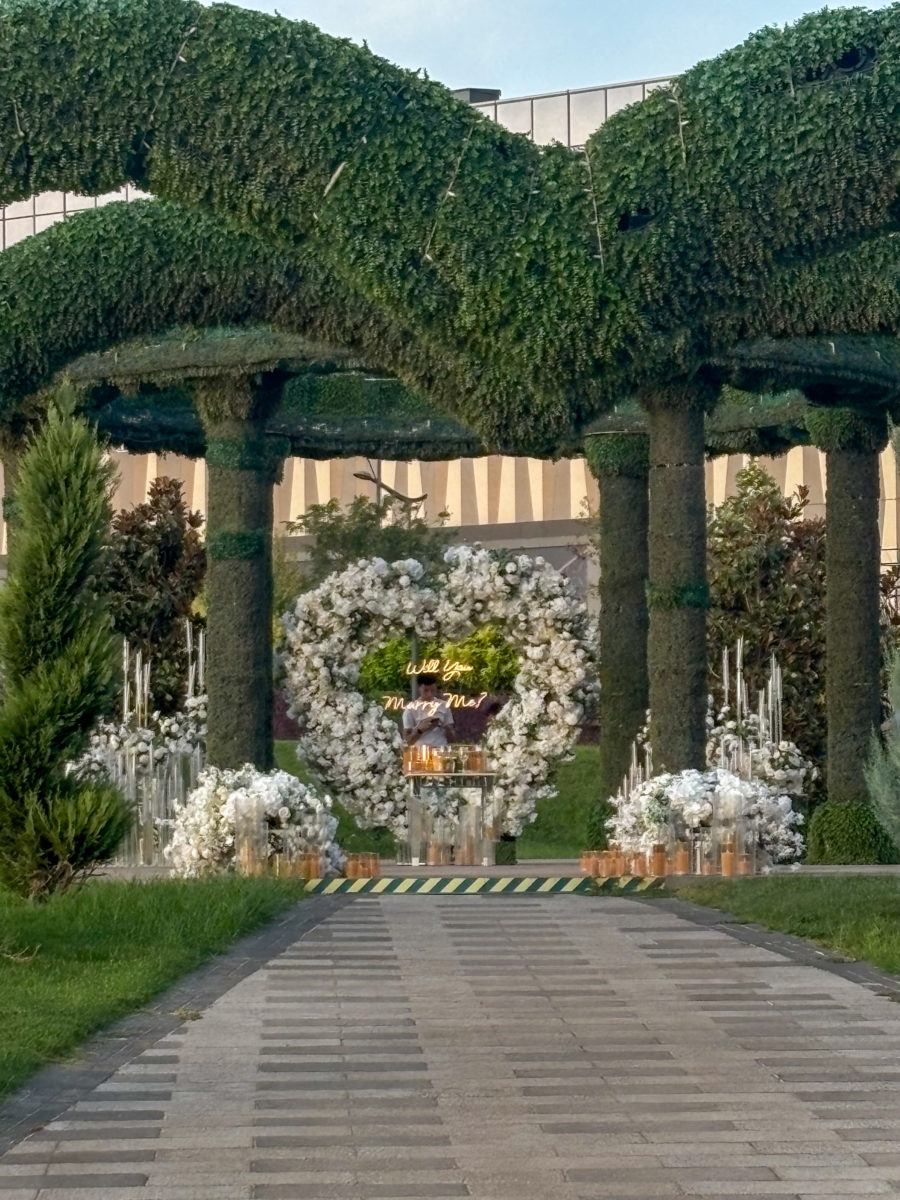
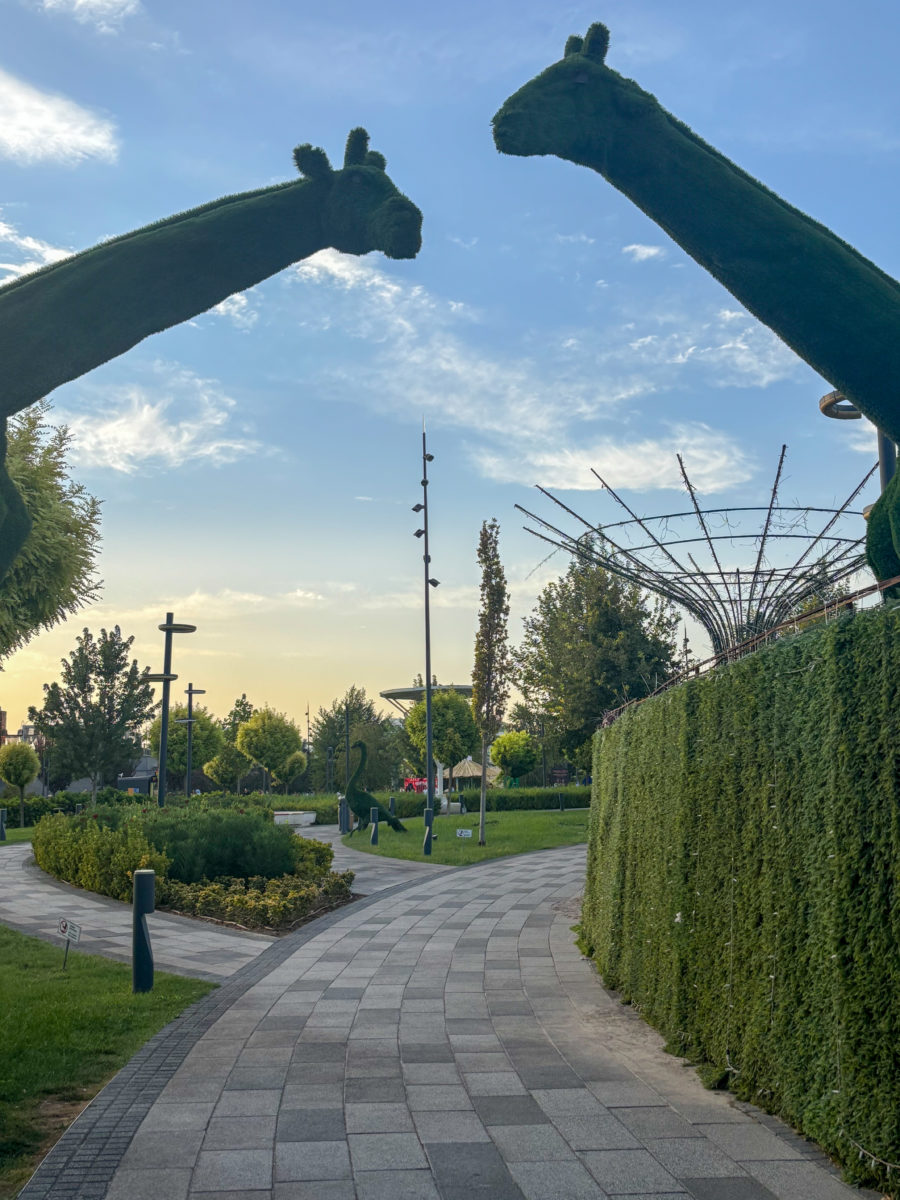
It feels like stepping into another universe, worlds away from the underground metro stations. Brand-new skyscrapers, immaculate fountains, perfectly designed promenades, everything shines, sparkles, and screams “the future.”
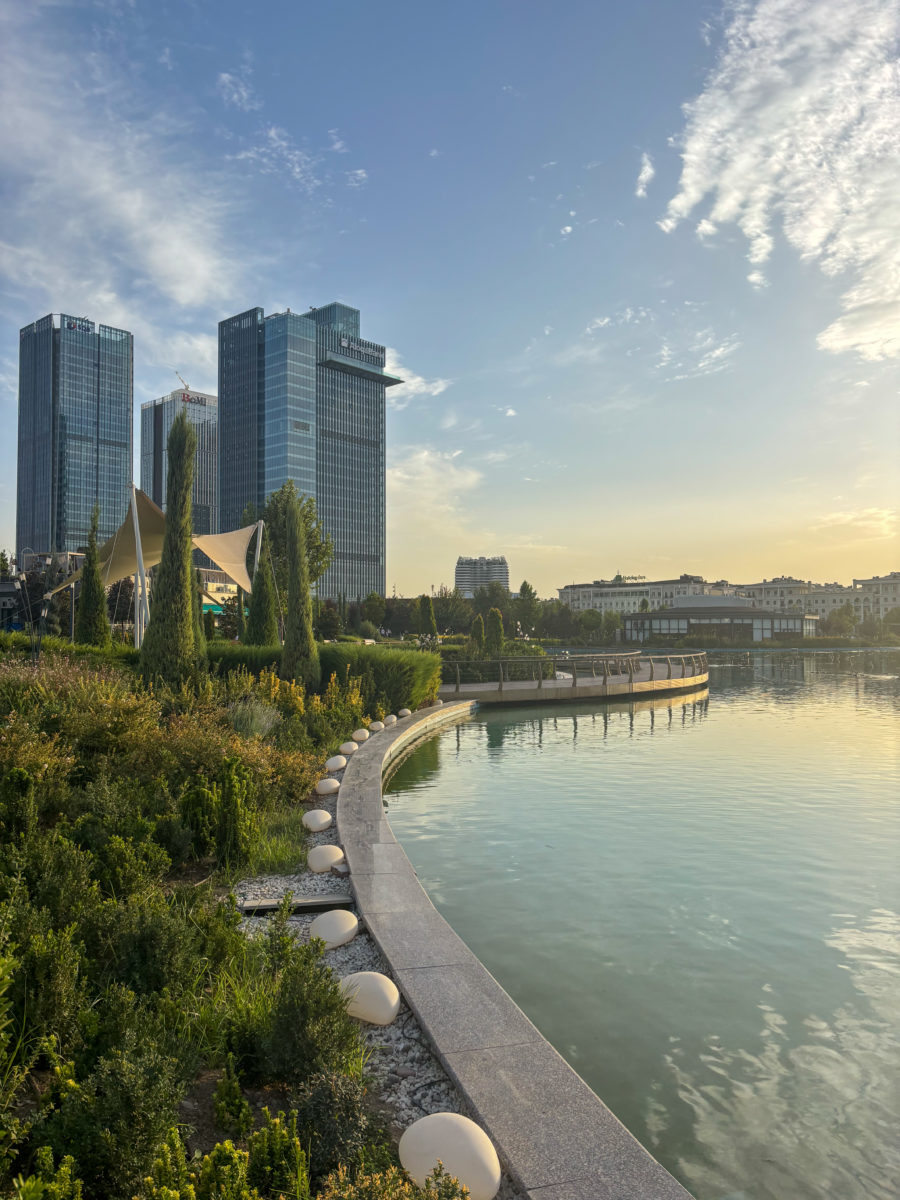
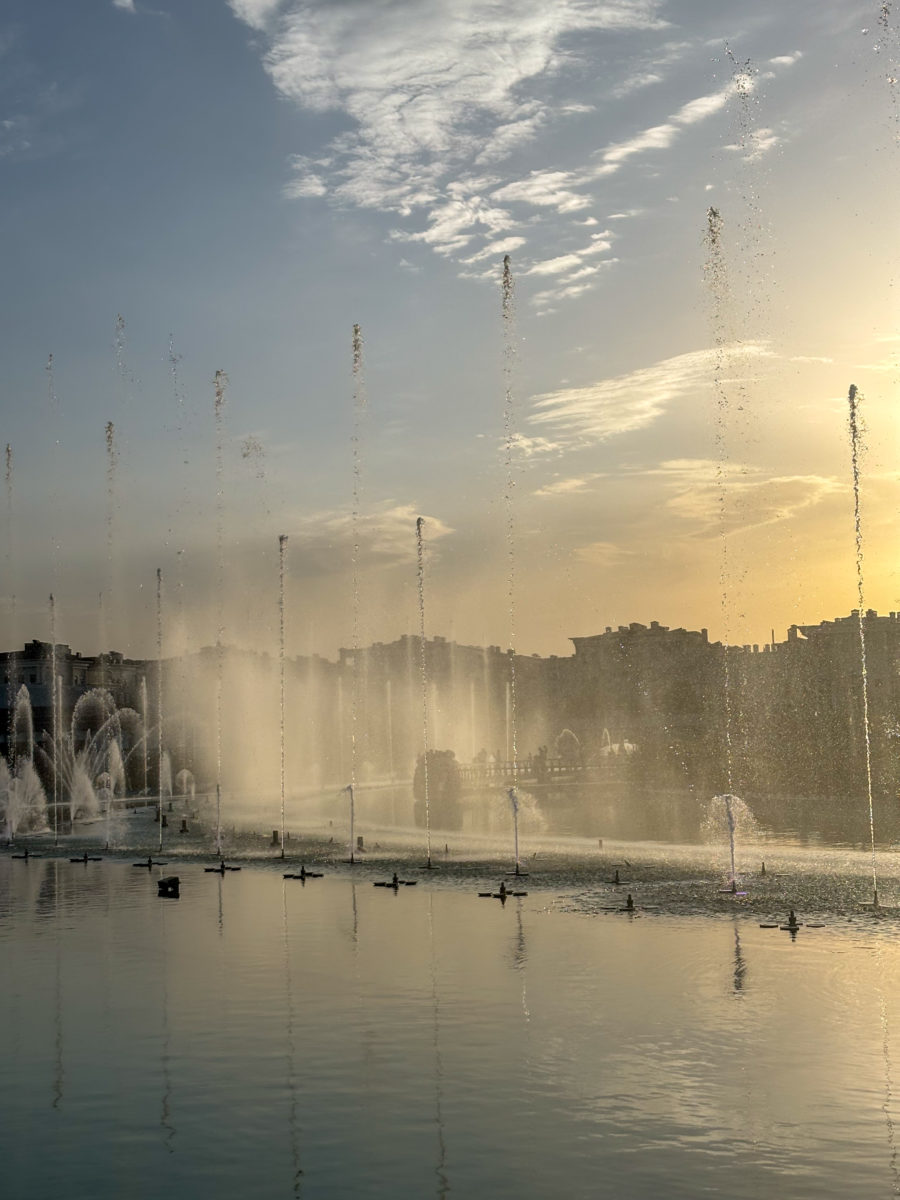
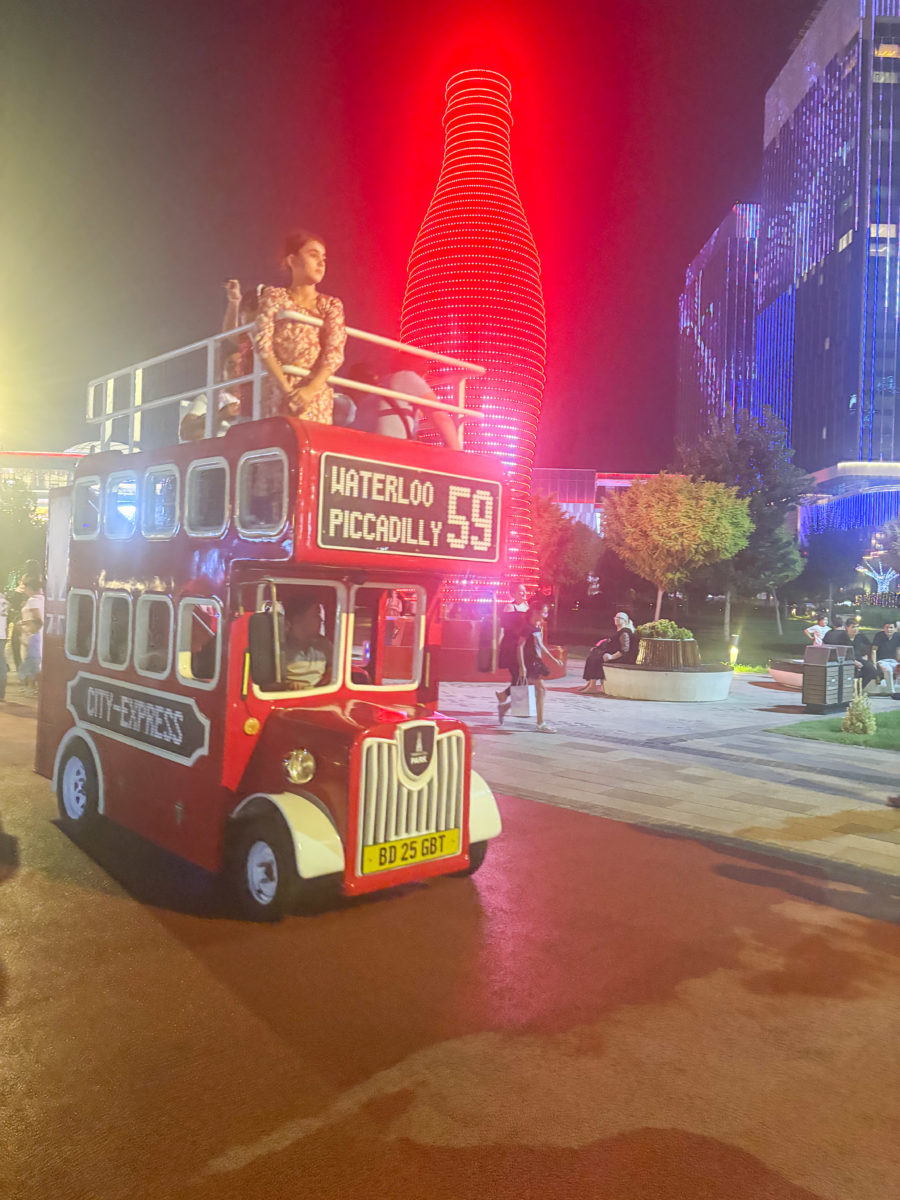
This new district showcases contemporary architecture, wide pedestrian boulevards, office towers, shopping malls, and family-friendly public spaces.
We wandered around wide-eyed, wondering whether we were still in Uzbekistan or standing on a movie set inspired by Dubai. It’s undeniably impressive: ultra-clean, ambitious, and almost unreal.
But honestly? For us, it was simply… too much. Too polished. Too monumental. Too perfect to feel truly welcoming. In the end, it left us with more questions than lasting memories.
ON THE HUNT FOR PLACES OF WORSHIP IN TASHKENT
Like all major cities in Uzbekistan, Tashkent is home to countless mosques and other religious sites, mainly Islamic. Our exploration of this religious heritage, however, began with a rather spectacular fail.
And, for once, it wasn’t because we were trying to sneak into a place of worship without properly checking the access rules. No, the reason was much simpler: the site was undergoing major renovations.
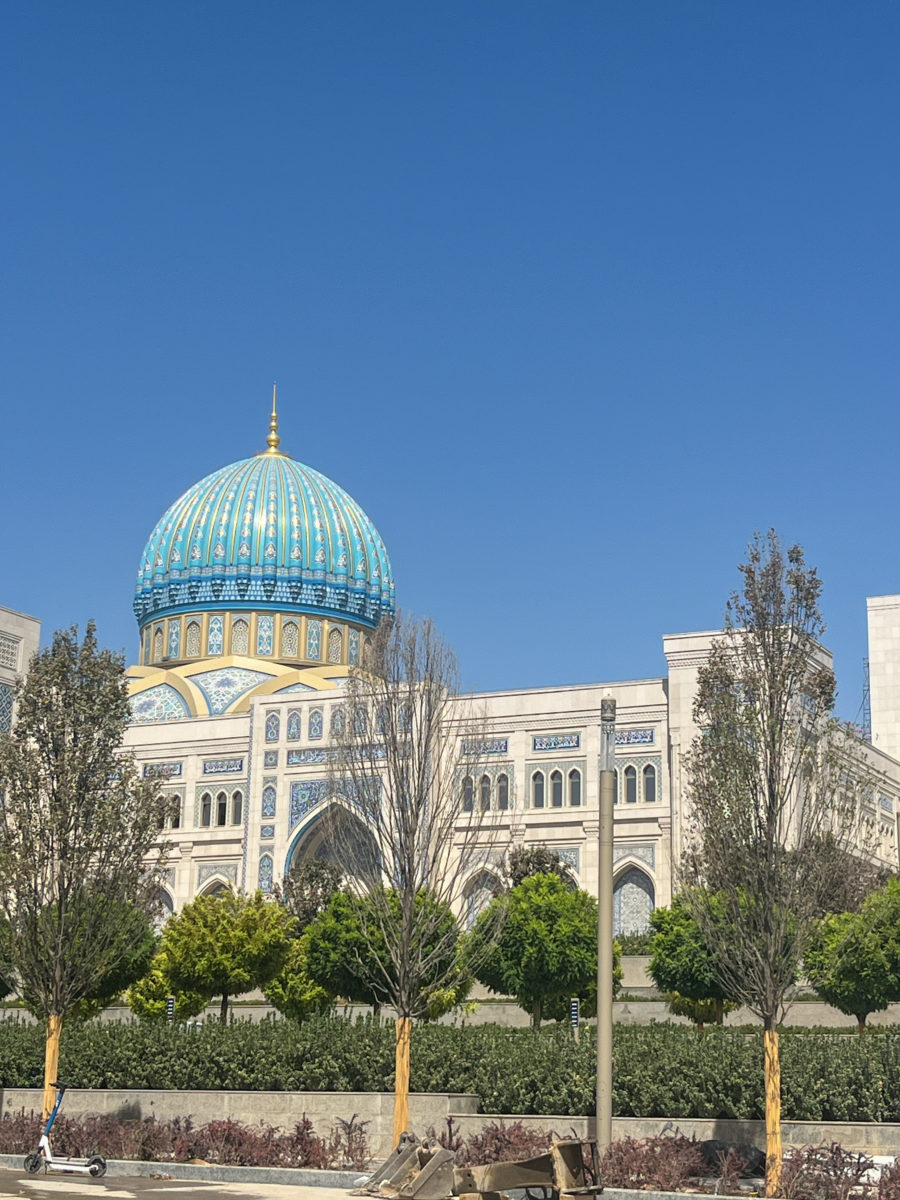
A little context first. Right next to our hotel stands the magnificent Hazrati Imam Complex. It is one of Tashkent’s most important religious centers and a major place of Islamic learning. With its stunning turquoise-blue dome, it had immediately caught my travel companion’s attention. It was impossible not to want to visit.
So off we went, on foot, under a generous 37°C heat.
Except that when we arrived, the scene was… slightly different from what we had imagined. Barriers, excavators, a road completely torn apart: it looked more like the construction site of the century than one of the country’s most iconic landmarks.
But stubborn as we are, we refused to give up. We couldn’t find any information online mentioning that the complex was closed for renovation. So we tried one detour, then another, until we came face to face with a police officer, baton in hand and clearly not in the mood for negotiation.
His verdict was as short as it was final:
“Niet.”
No visit. Everything was closed. Goodbye to discovering what is considered the largest mosque in Uzbekistan. We still managed to sneak in a distant photo under the officer’s rather intimidating gaze. Then, slightly disappointed, we turned around and headed back.
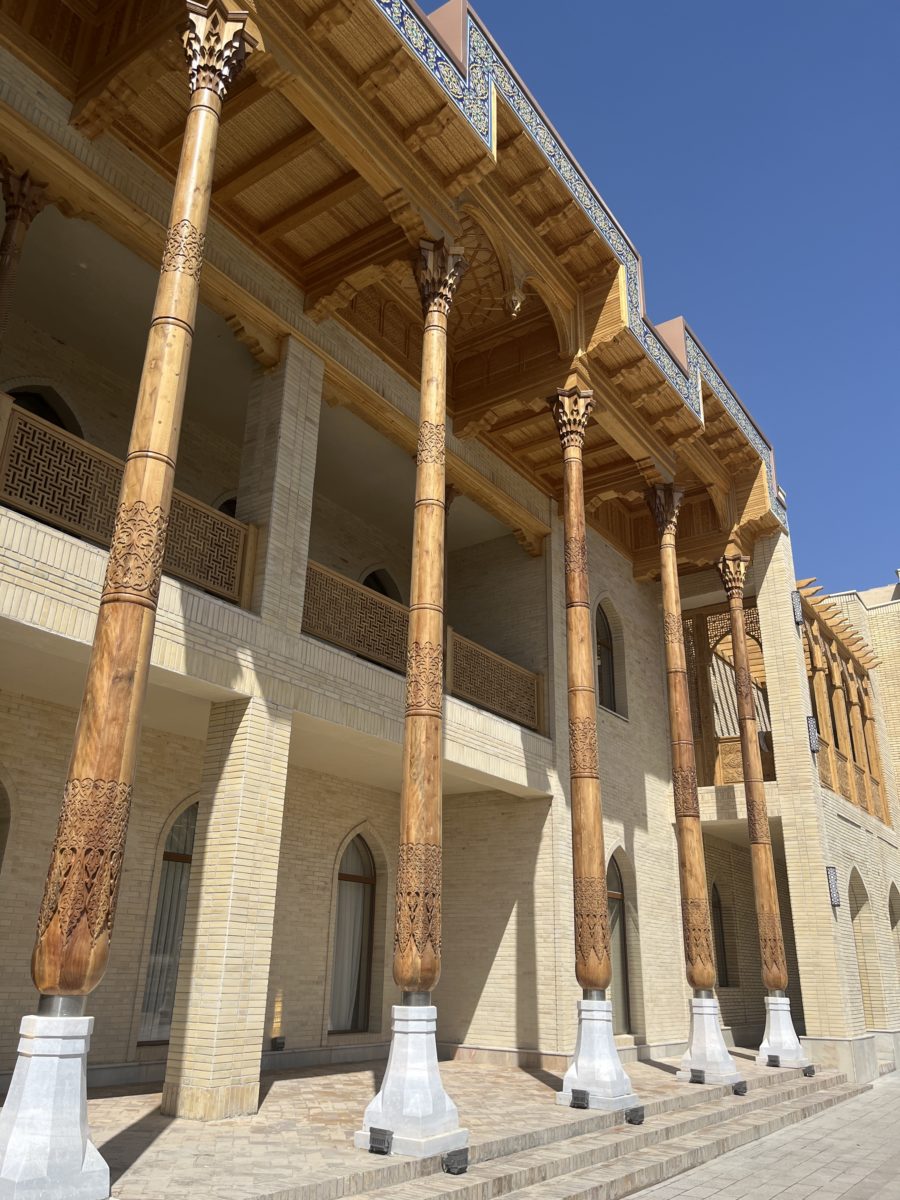
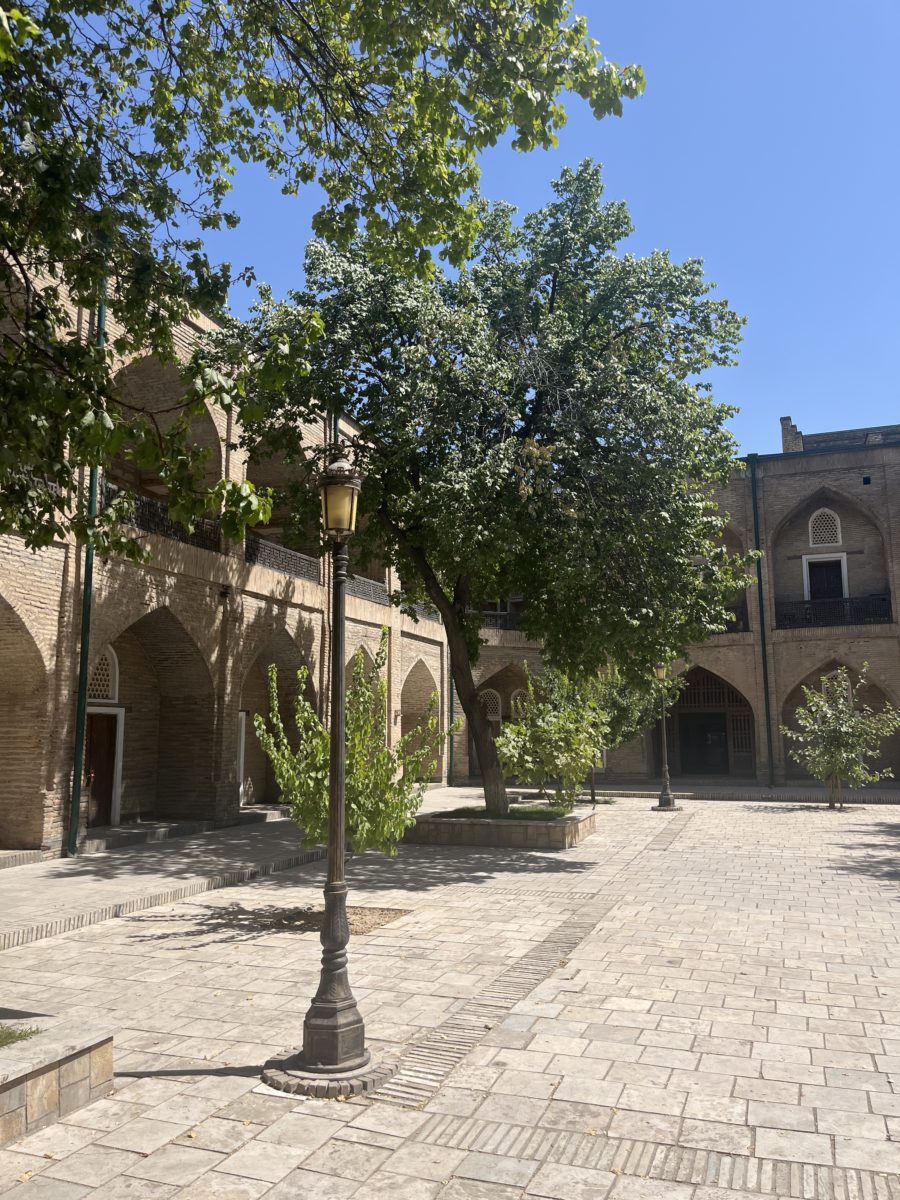
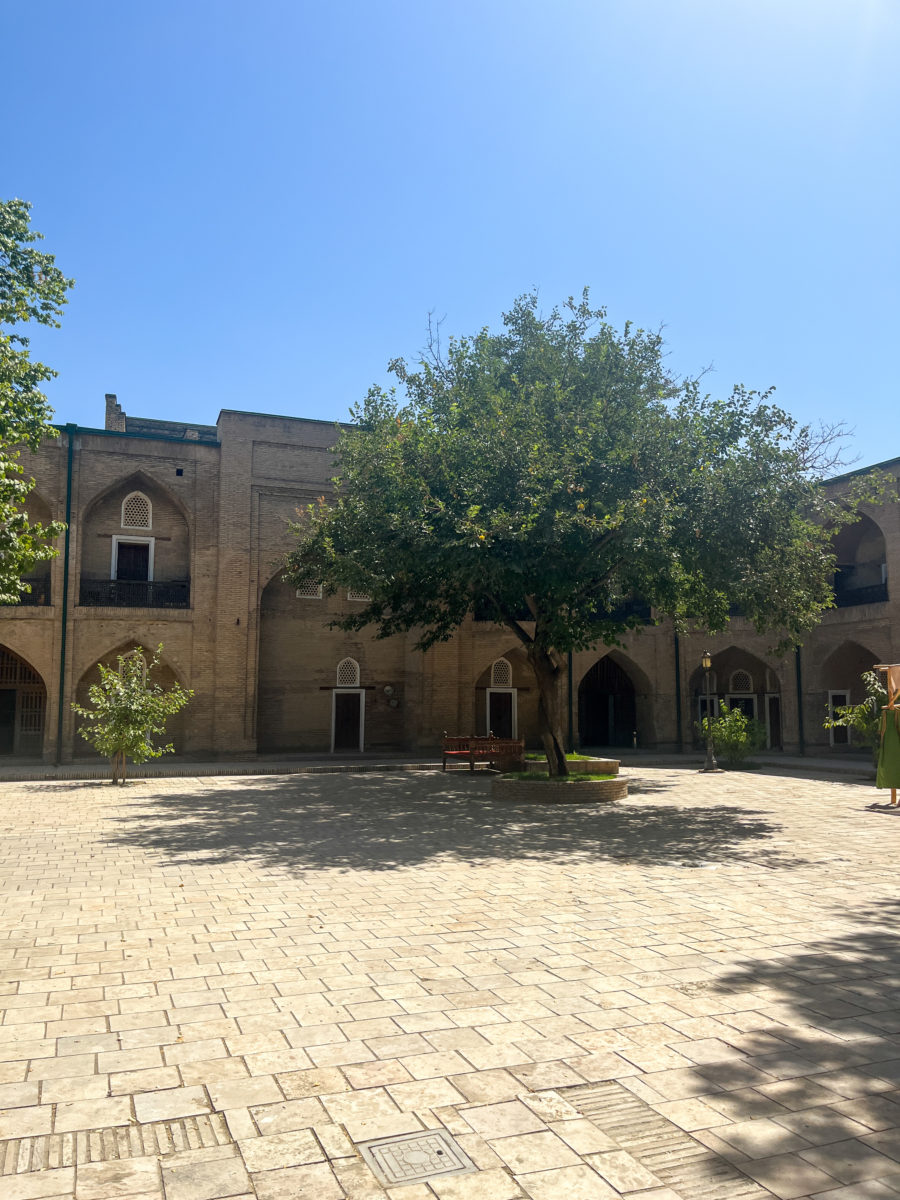
No matter, we jump into a Yandex. I’ll come back to this a little further in the article (Uzbekistan in 15 Days: Itinerary and Practical Tips). We cross the entire city and head towards Tashkent’s oldest madrasa.
The place is charming, admittedly… but the visit takes five minutes, and that’s being generous.
Third try. Back to Yandex. This time, we’re heading to Uzbekistan’s newest mosque. After all, good things come in threes.
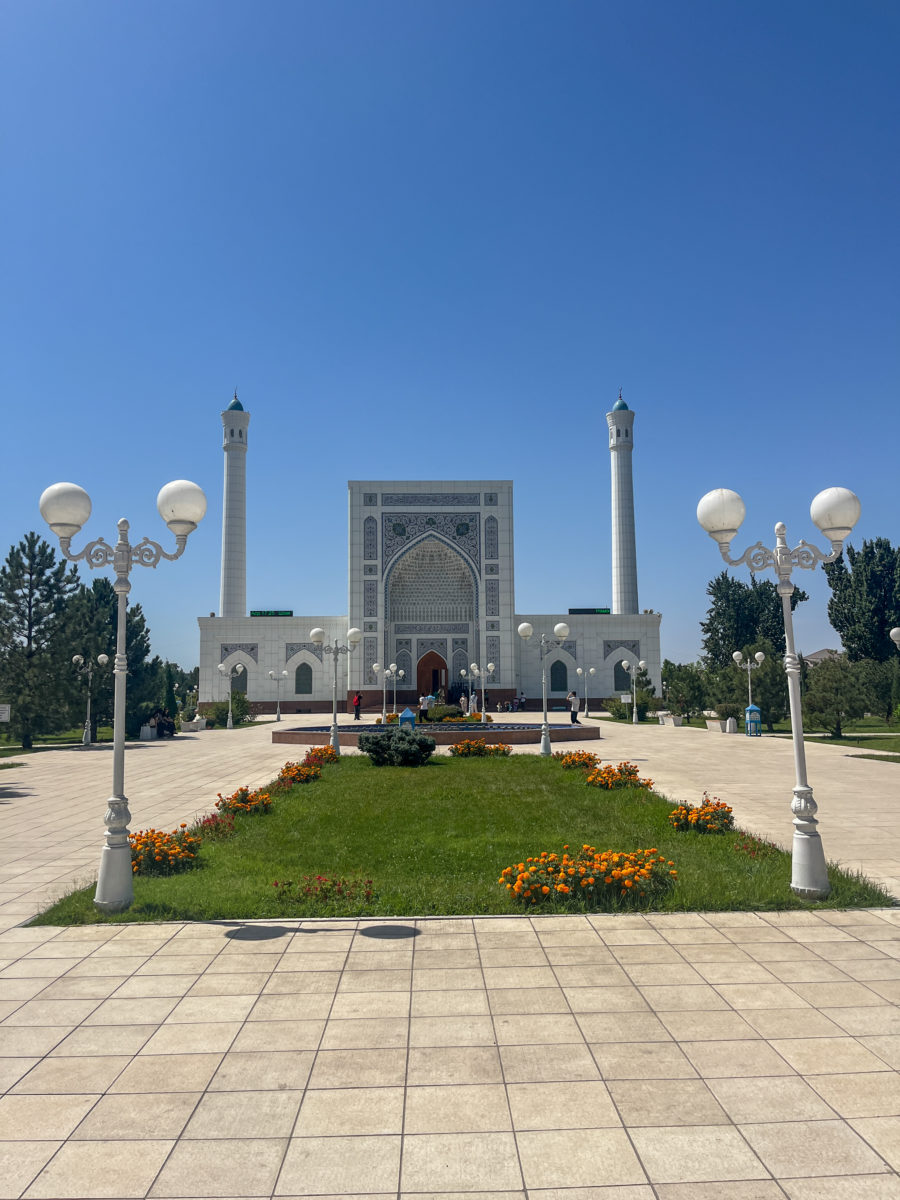
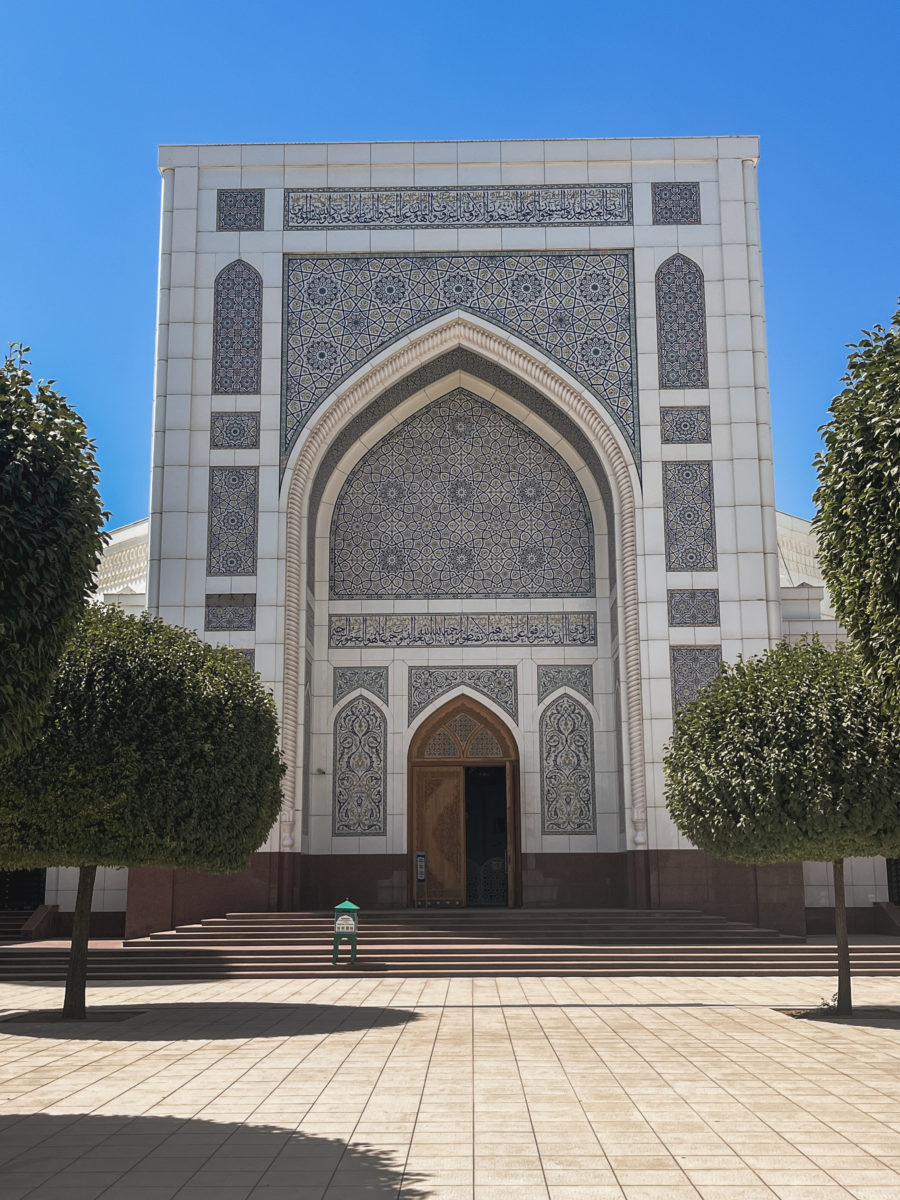
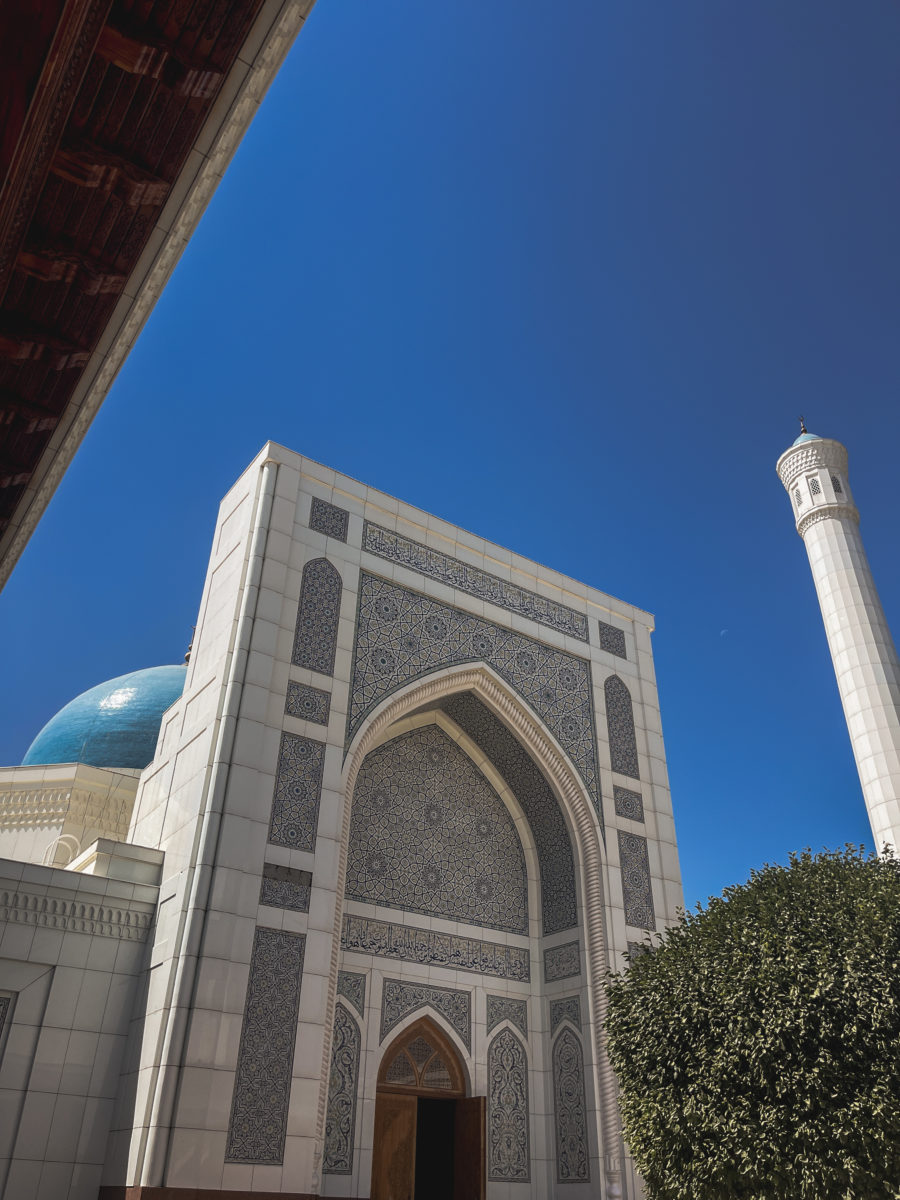
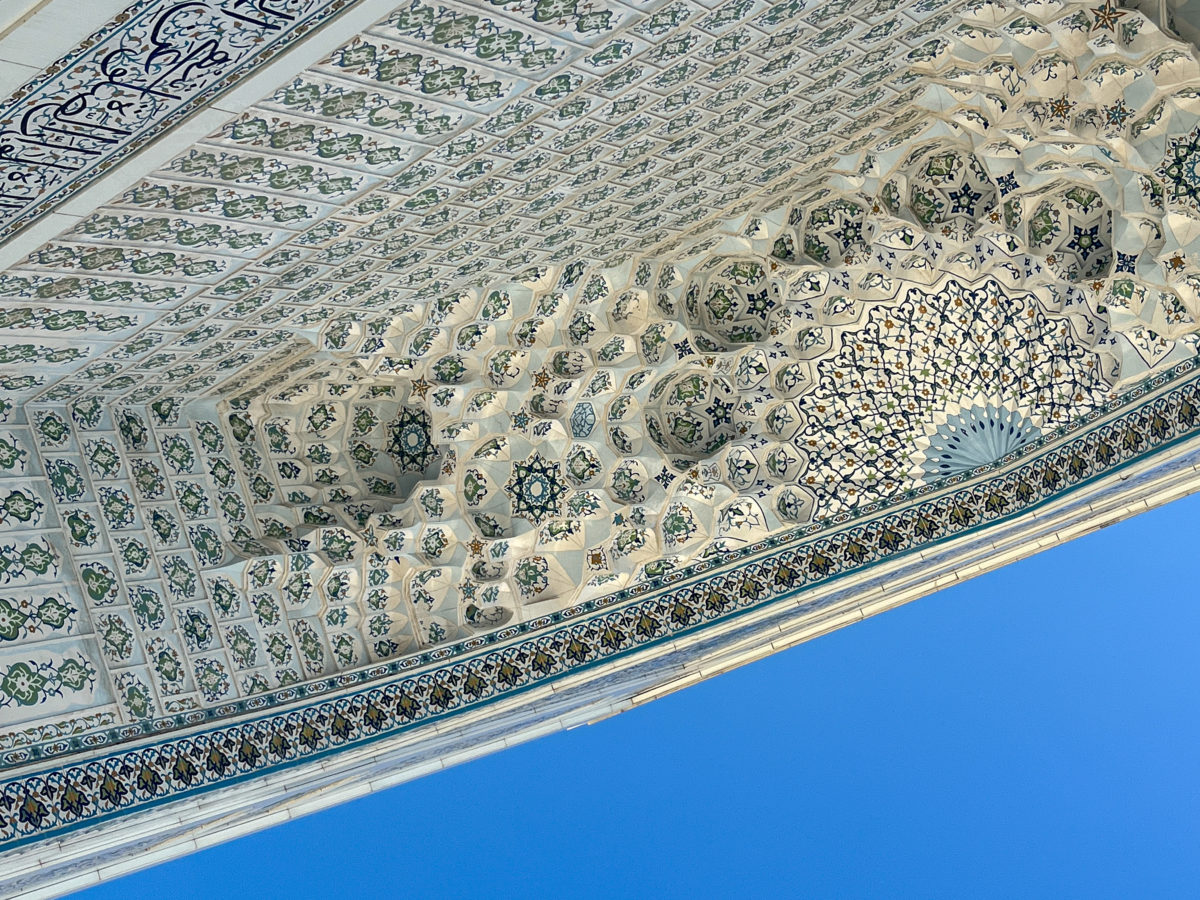
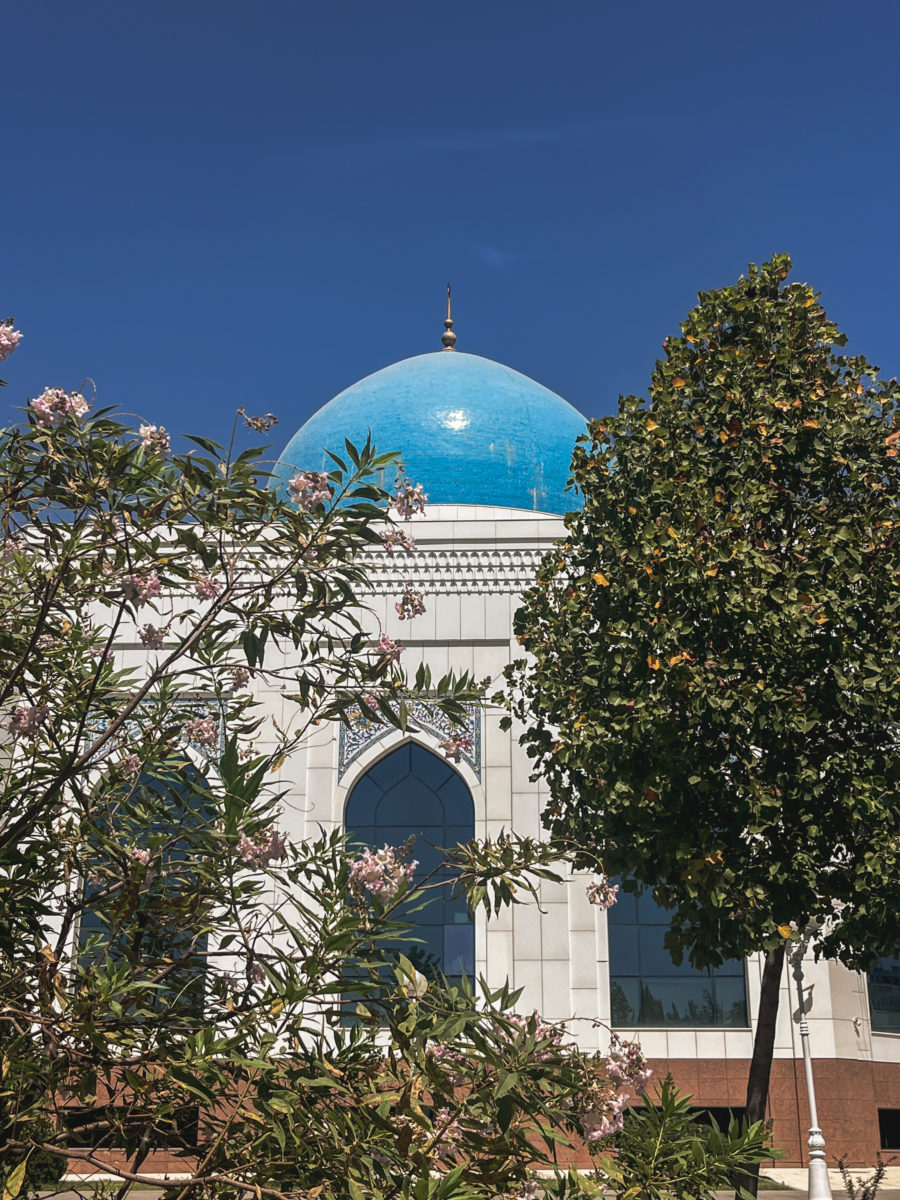
We finally arrive at the Minor Mosque (also known as Minhor), a true highlight of modern Tashkent. After a few more or less inspired detours, we finally bring our mosque hunt to a spectacular close. Entirely clad in gleaming white marble, crowned with an elegant bluish dome, and flanked by slender minarets, the mosque immediately commands attention. Its gardens are immaculately maintained, and the walk along the river to downtown is a wonderful way to wrap up the visit.
A Surprisingly Green Capital
Another pleasant surprise was just how green Tashkent is.
Its broad avenues are lined with mature trees, parks are everywhere, and the abundance of green spaces provides much-needed shade during the intense Central Asian summer. Walking through the city becomes genuinely enjoyable, especially when those leafy streets unexpectedly lead you to some of Tashkent’s iconic landmarks.
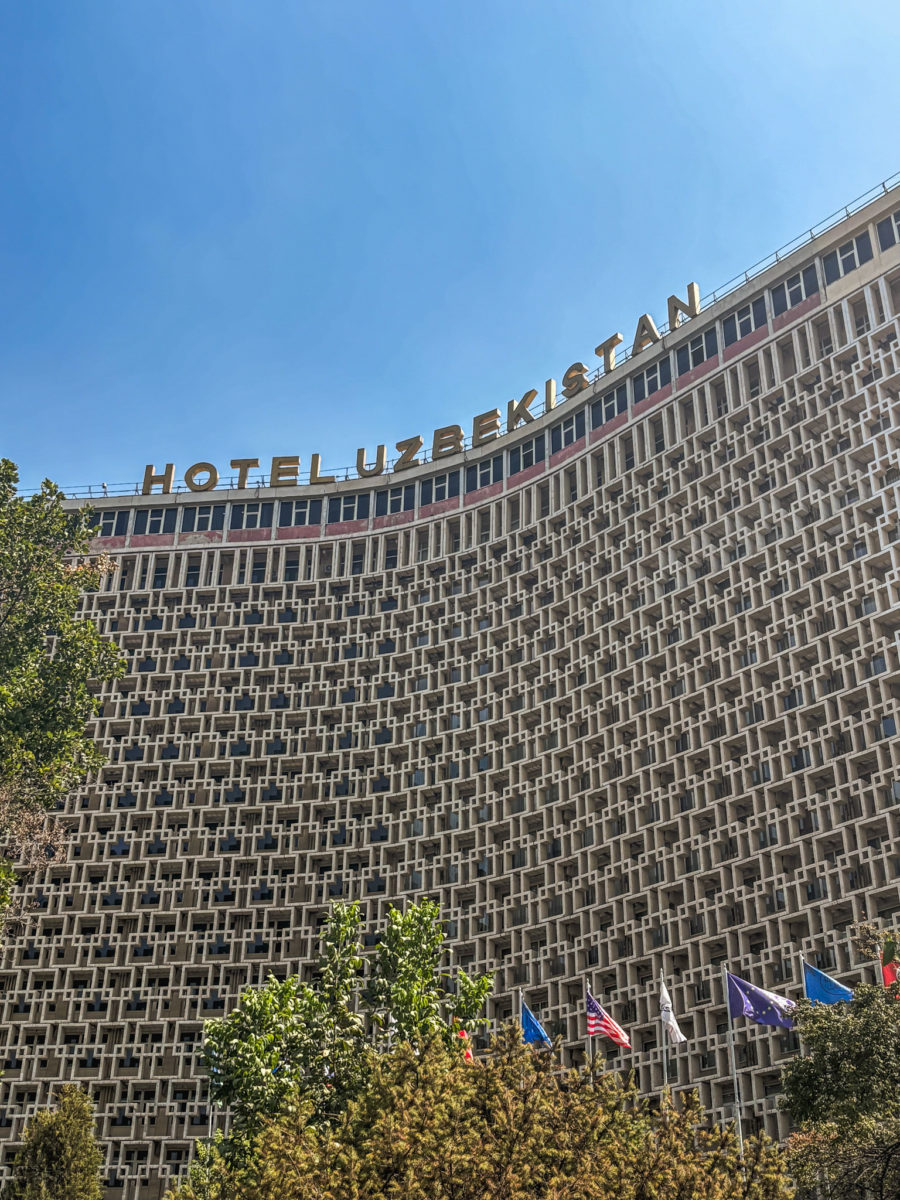
One of them is the famous Hotel Uzbekistan, an unmistakable Soviet-era building whose retro-futuristic façade has become one of the city’s enduring symbols.
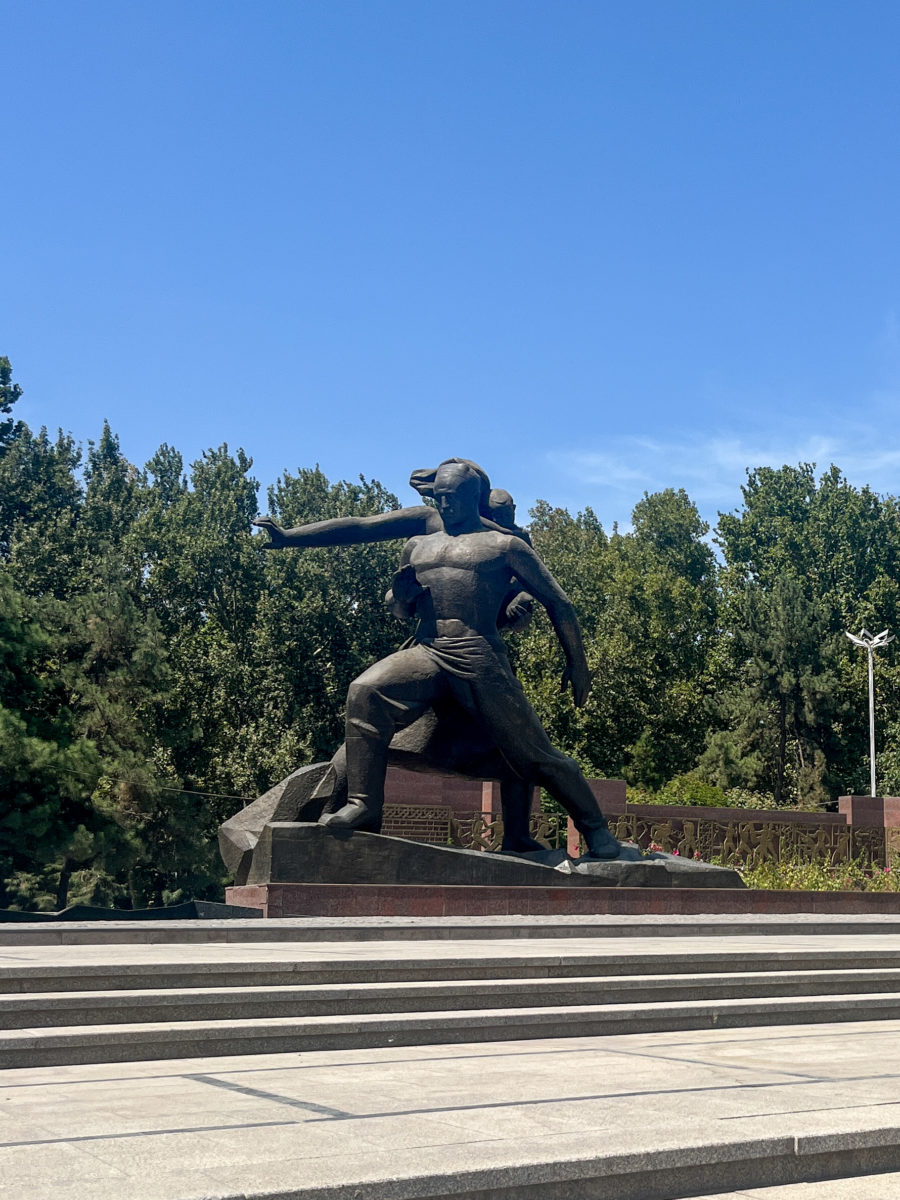
After several kilometers on foot, we reached the Monument of Courage, a moving memorial dedicated to the devastating 1966 earthquake mentioned earlier.
The sculpture depicts a family, a man, a woman, and their child, standing before a giant crack splitting the earth apart, symbolizing both the tragedy itself and the resilience of an entire nation.
From there, we continued to Independence Square, the symbolic heart of modern Tashkent.
At the far end of the vast esplanade, partially hidden behind rows of trees, stands a giant globe topped by a mother holding her child, representing a sovereign and independent Uzbekistan.
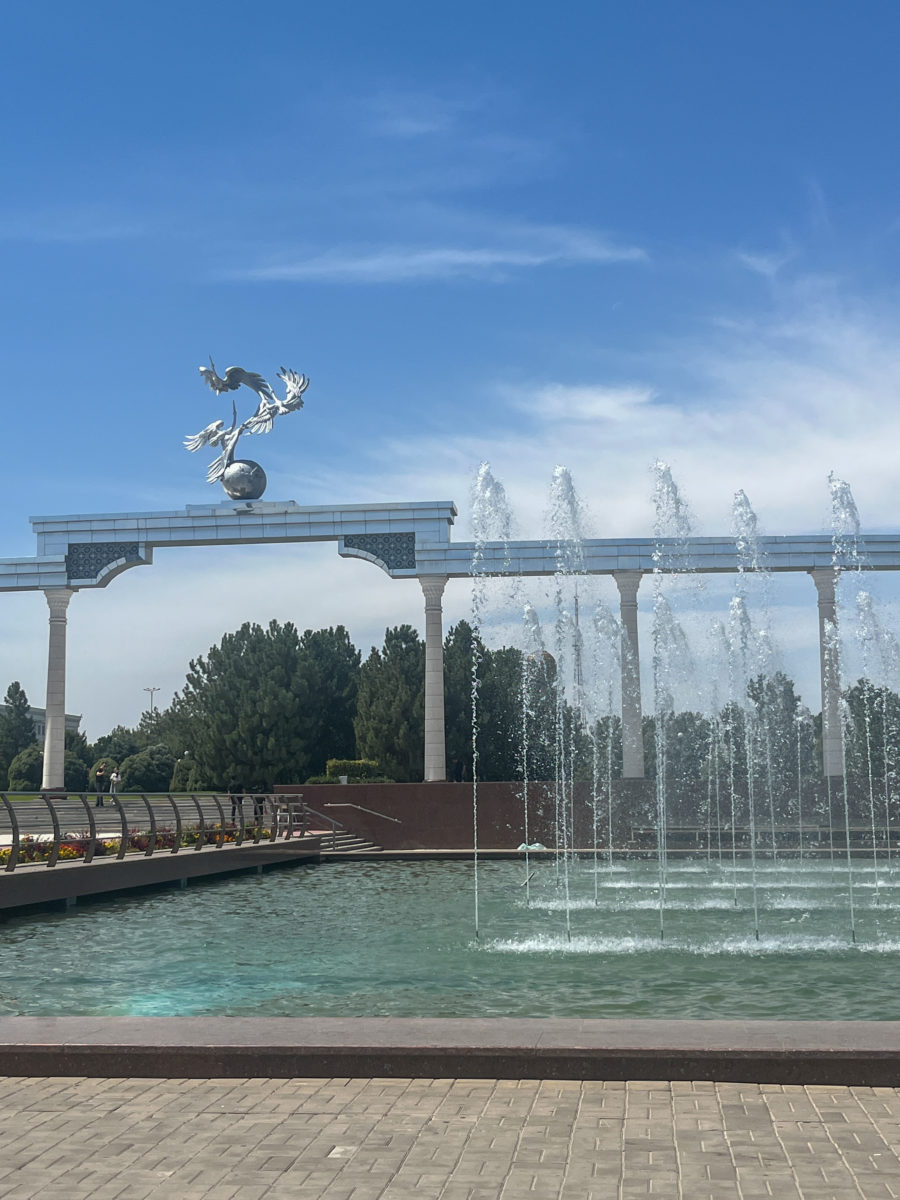
The atmosphere is solemn and deeply patriotic. Yet what truly caught my attention were the magnificent fountains framed by elegant white marble colonnades. Perched above them stand storks, symbols of peace and serenity.
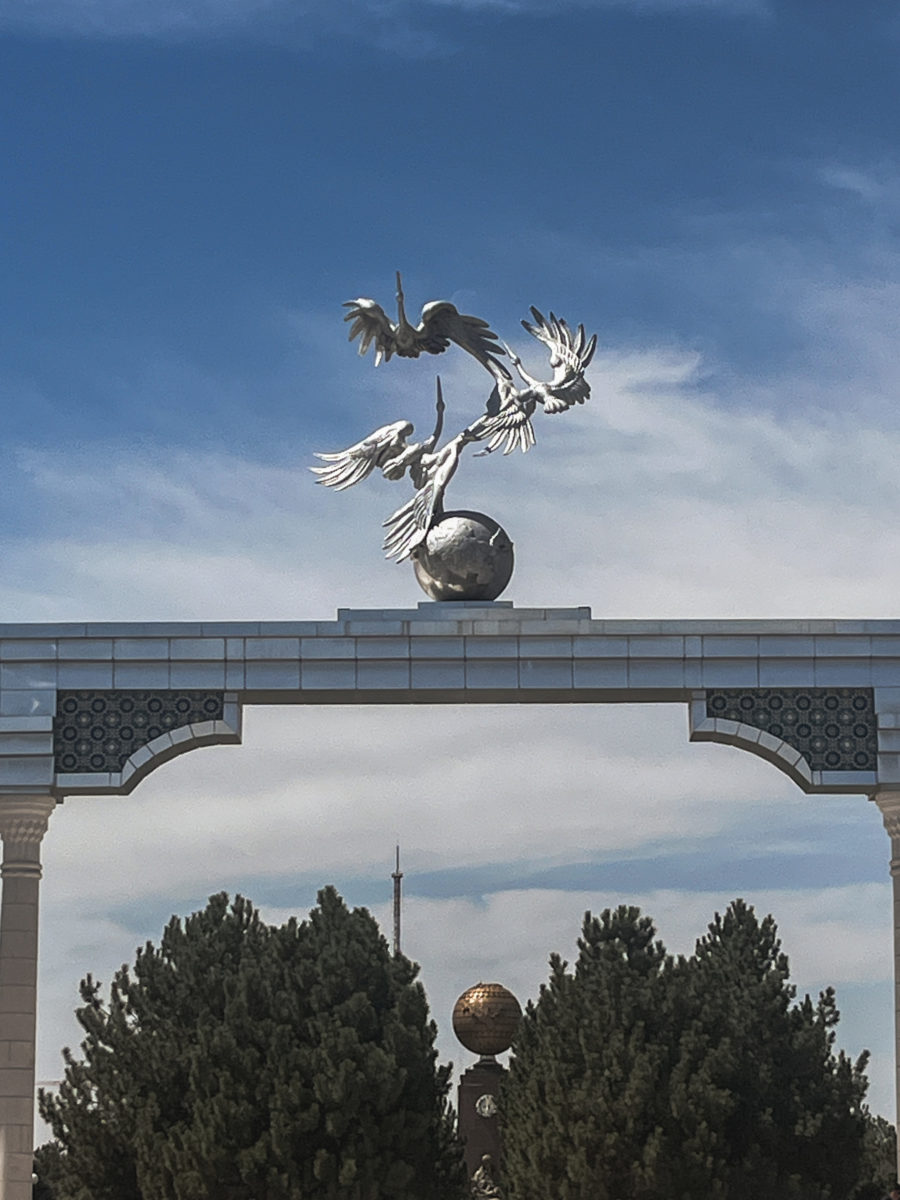
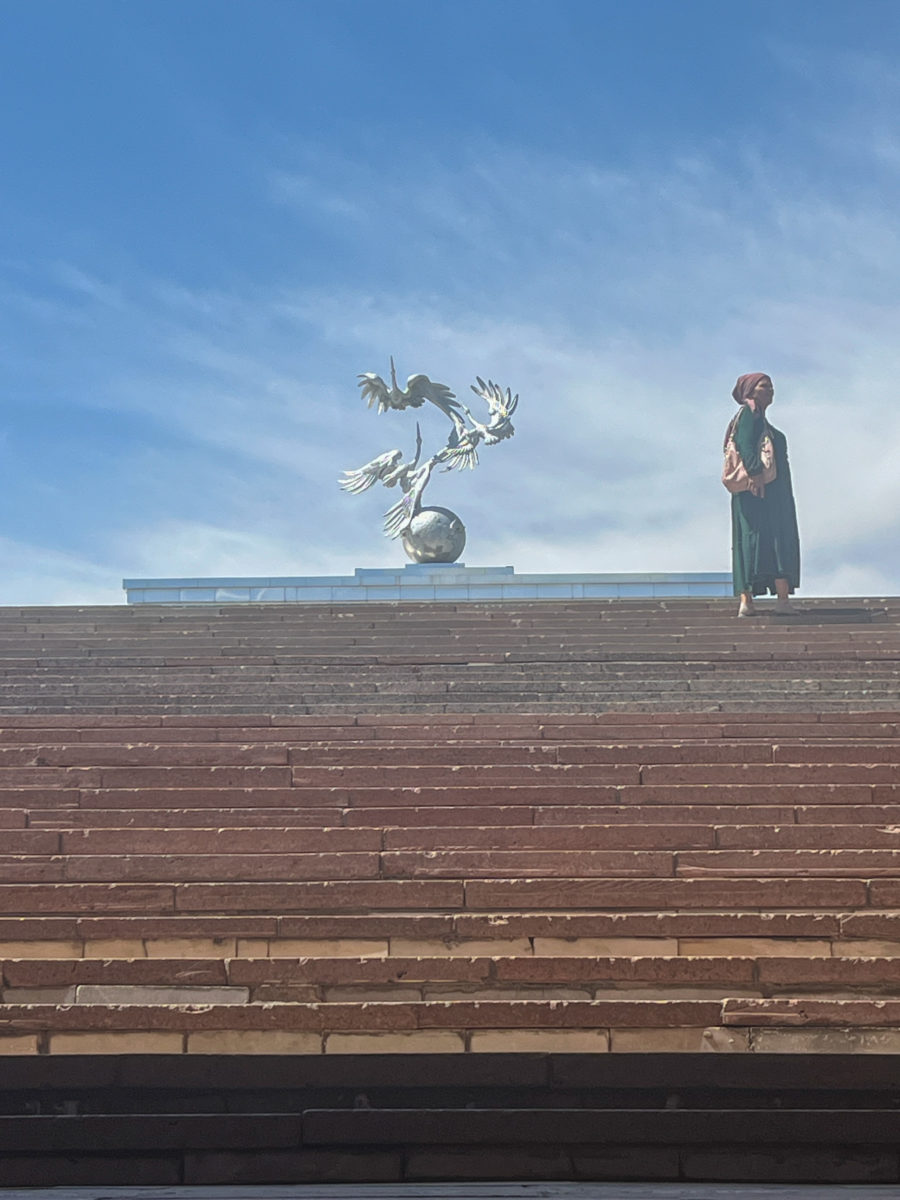
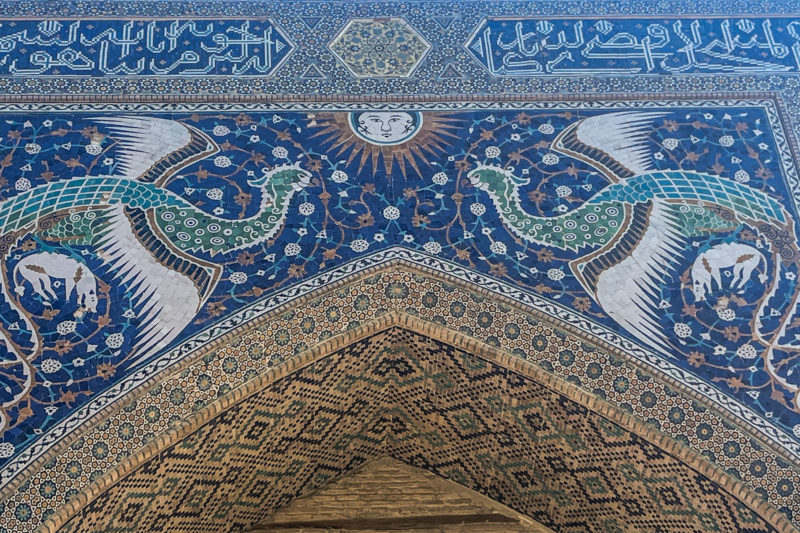
At the center rise two Humo birds, the legendary mythical birds of Uzbek folklore and one of the country’s national symbols. It was here that my fascination with the Humo truly began.
Later in Bukhara, an intricately decorated façade dedicated to this magnificent bird would become my favorite architectural detail of the entire trip.
How Much Time Should You Spend in Tashkent?
Many travelers spend only one night in Tashkent before continuing directly toward Uzbekistan’s famous Silk Road cities. Yet one full day is enough to experience most of the city’s highlights mentioned above.
Tashkent doesn’t possess the timeless oriental charm of Samarkand or Bukhara, but that’s not what makes it special. Instead, it tells a different story: that of a capital rebuilt from disaster, looking confidently toward the future while preserving echoes of its Soviet past.
It is a city of contrasts. Sometimes confusing. Often surprising. But never boring.
Looking back, we remember Tashkent as a fascinating first stop that helped us better understand Uzbekistan before setting off to explore the legendary jewels of the Silk Road.
And if you’re anything like us, you may leave realizing that Tashkent deserves far more than just a quick stopover.