There are cities whose names alone are enough to spark the imagination. Samarkand is one of them.
Ever since childhood, its name conjured up images of caravans laden with silk and spices, conquerors sweeping in from the steppes, and blue domes shimmering beneath the Central Asian sun. Yet nothing truly prepares you for your first glimpse of Samarkand. When you encounter its monumental architecture, mosaics painted in a thousand shades of turquoise, and a heritage stretching back more than two millennia, you immediately understand why this city has become one of the most iconic symbols of the Silk Road.
Founded more than 2,700 years ago, Samarkand is one of the oldest continuously inhabited cities in the world. Alexander the Great conquered it, Genghis Khan destroyed it, and later Timur, better known in Europe as Tamerlane, transformed it into the capital of his vast empire in the 14th century. It was during this golden age that the masterpieces attracting visitors from across the globe today were created.
Samarkand is not merely an open-air museum; it is a living, sprawling, fascinating city where Timurid monuments rank among the most beautiful in the Islamic world.
What to Visit in Samarkand?
While Khiva captivated me with its timeless atmosphere and Bukhara with its commercial authenticity, Samarkand truly left me in awe with its grandeur.
The Registan is undoubtedly one of the most magnificent architectural ensembles I have ever seen, but it was Shah-i-Zinda that affected me most deeply with the extraordinary delicacy of its mosaics.
Here is an overview of the most remarkable sites to discover during a stay in Samarkand.
The Registan, Symbol of Uzbekistan
It is impossible to speak of Samarkand without mentioning the Registan. Words scarcely capture the emotion of emerging onto this legendary square for the first time.
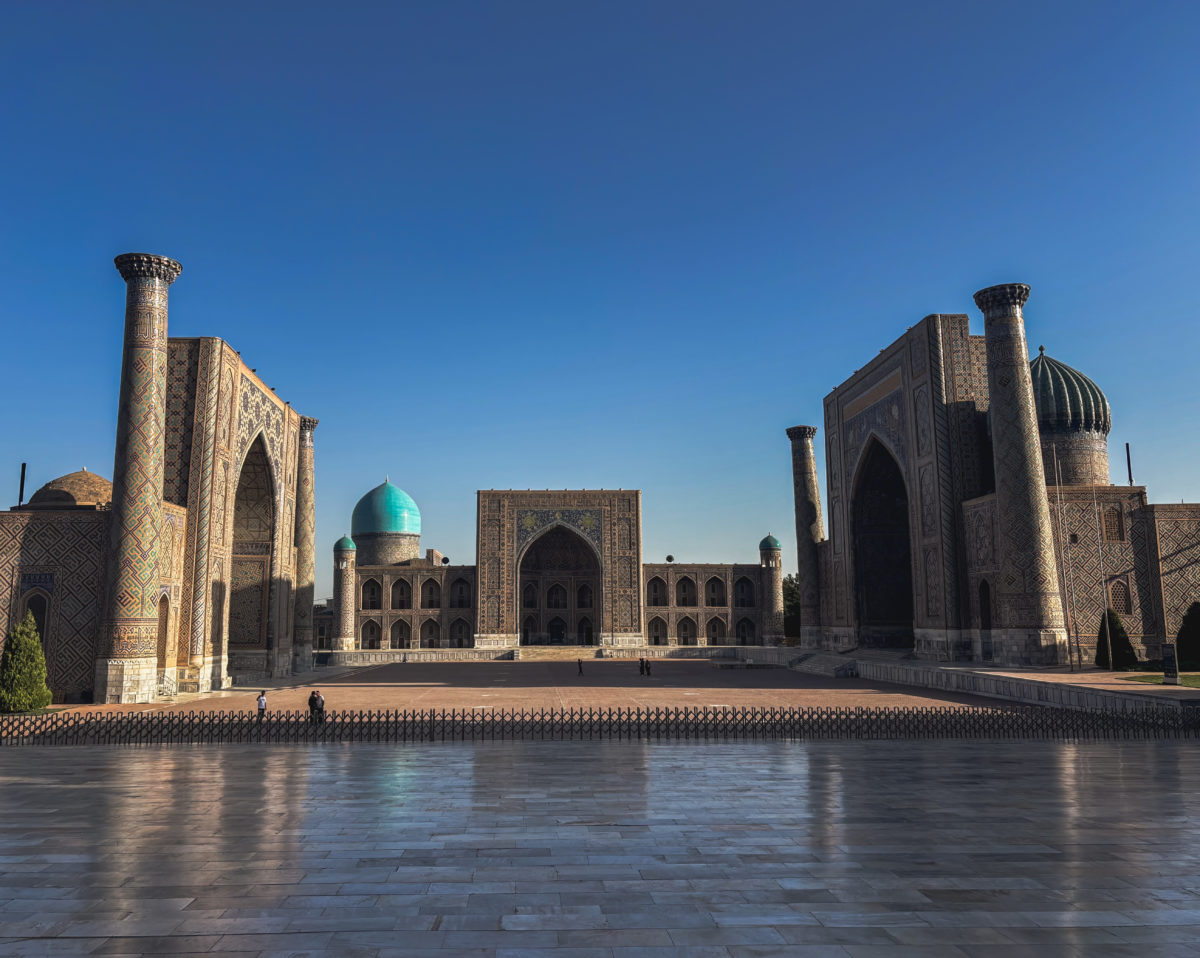
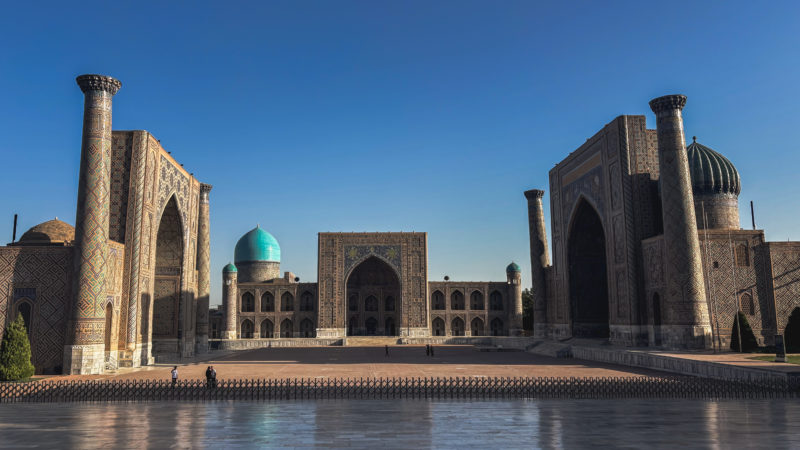
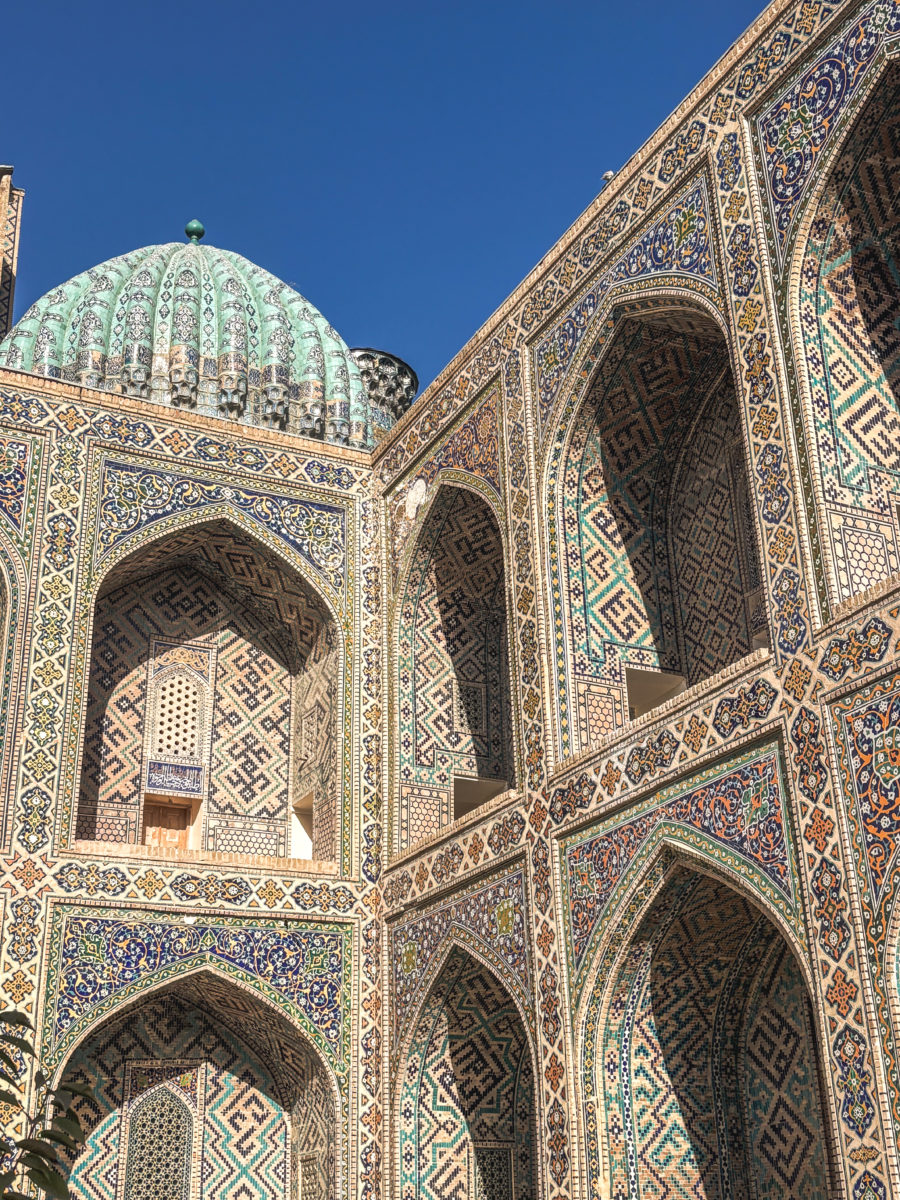
Suddenly, the space opens up, and three immense madrasahs appear before you, like a set from an Oriental fairy tale brought to life. We arrived shortly after dawn, at 7:30 a.m., when the square still seemed asleep, emptied of all activity, as if it belonged solely to us.
For centuries, this square served as Samarkand’s intellectual, commercial, and political heart. Royal proclamations were read here, caravans paused here, and scholars taught mathematics, astronomy, and theology.
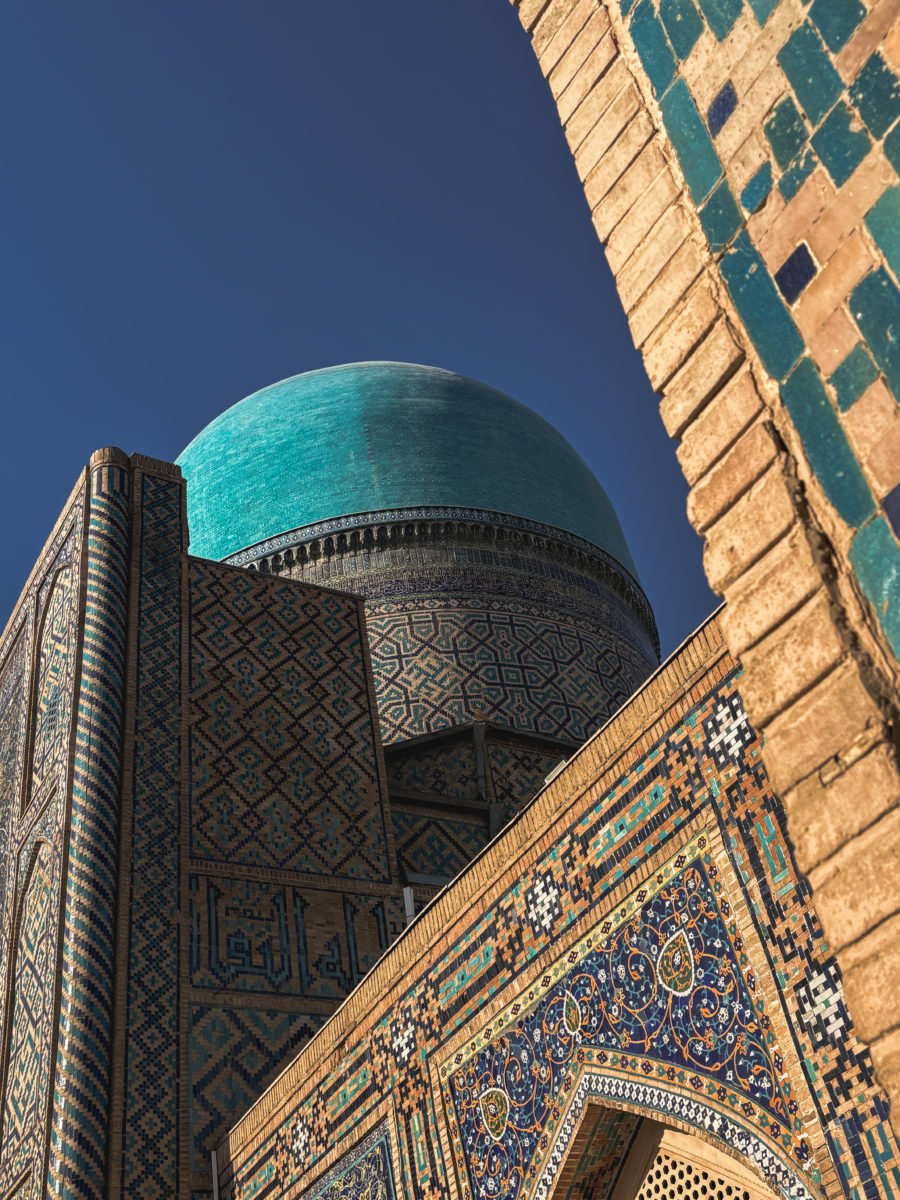
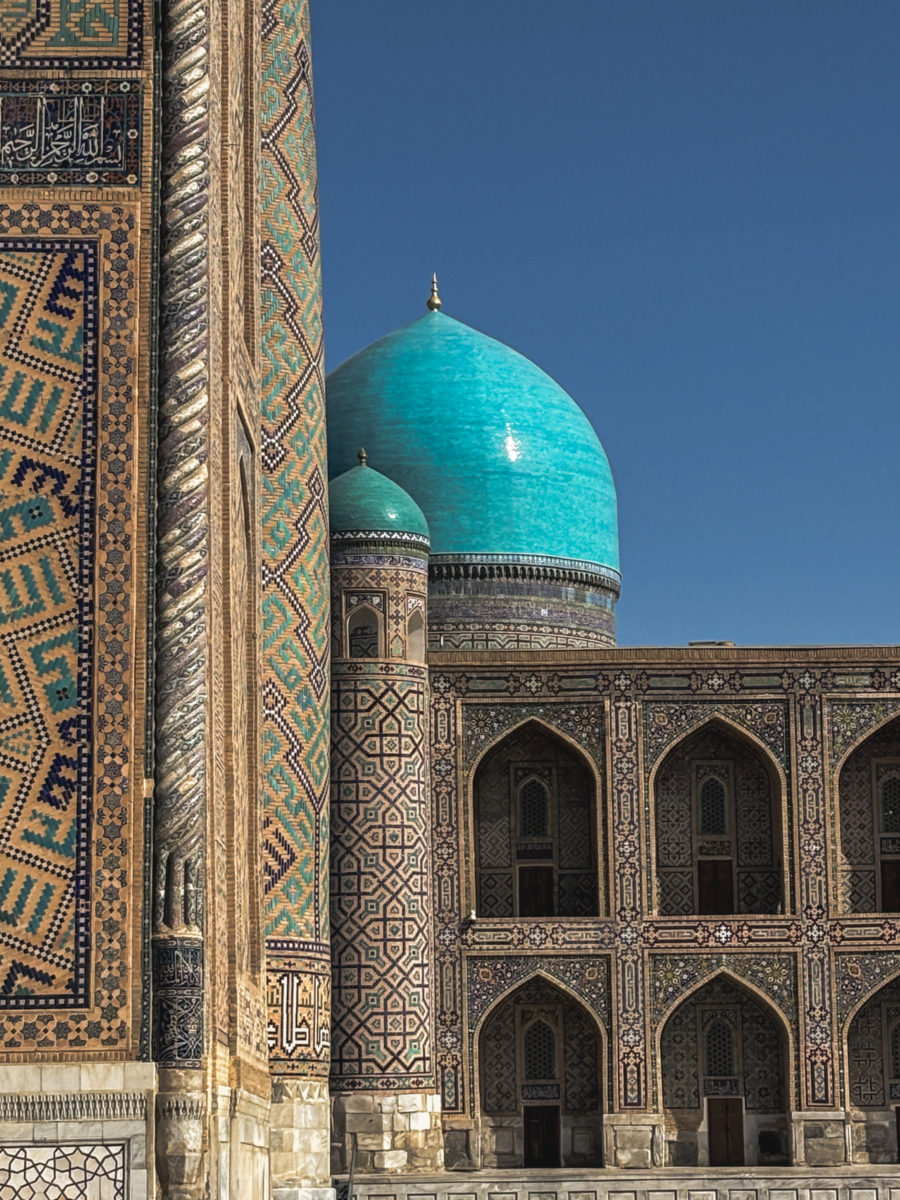
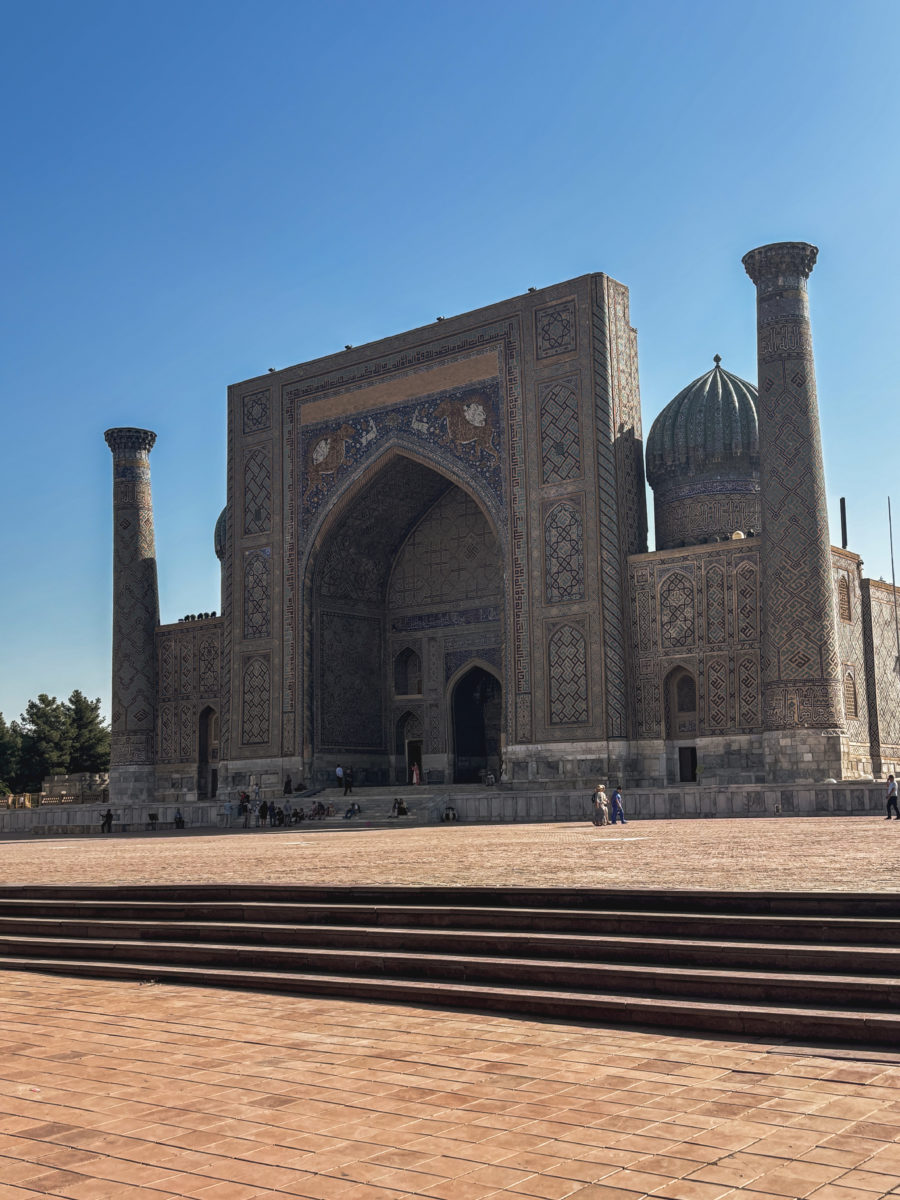
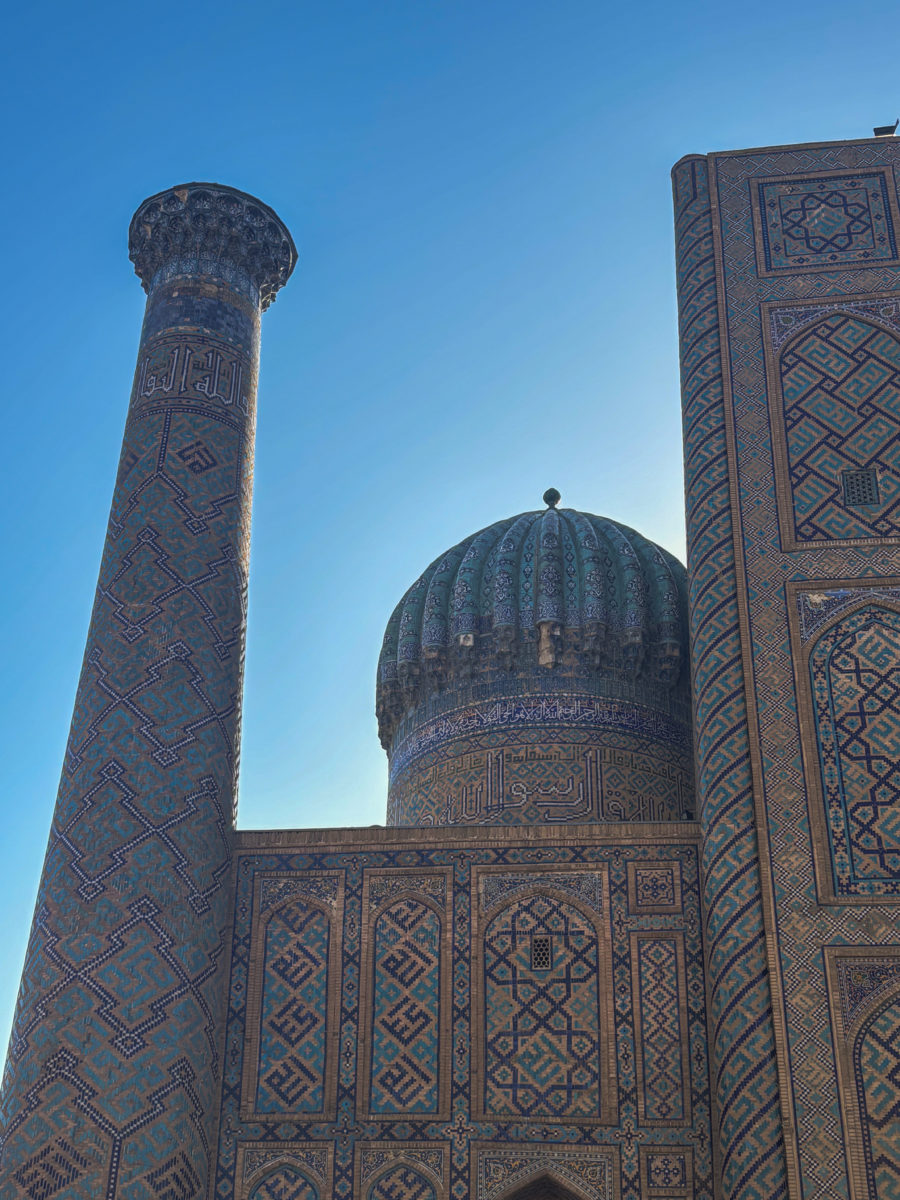
Surrounding the square are three magnificent madrasahs, standing motionless in the early morning light, guardians of a vanished age:
- Ulugh Beg Madrasah, built in the 15th century and the oldest of the three. Its founder, Timur’s grandson, was more scholar than warrior and transformed Samarkand into one of the leading intellectual centres of the Muslim world.
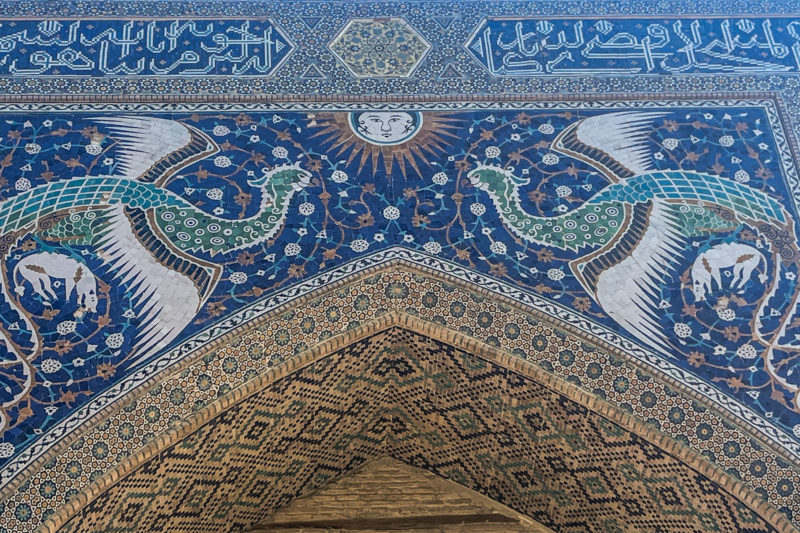
- Sher-Dor Madrasah, famous for its depictions of tigers carrying suns upon their backs, a rare exception in Islamic art.
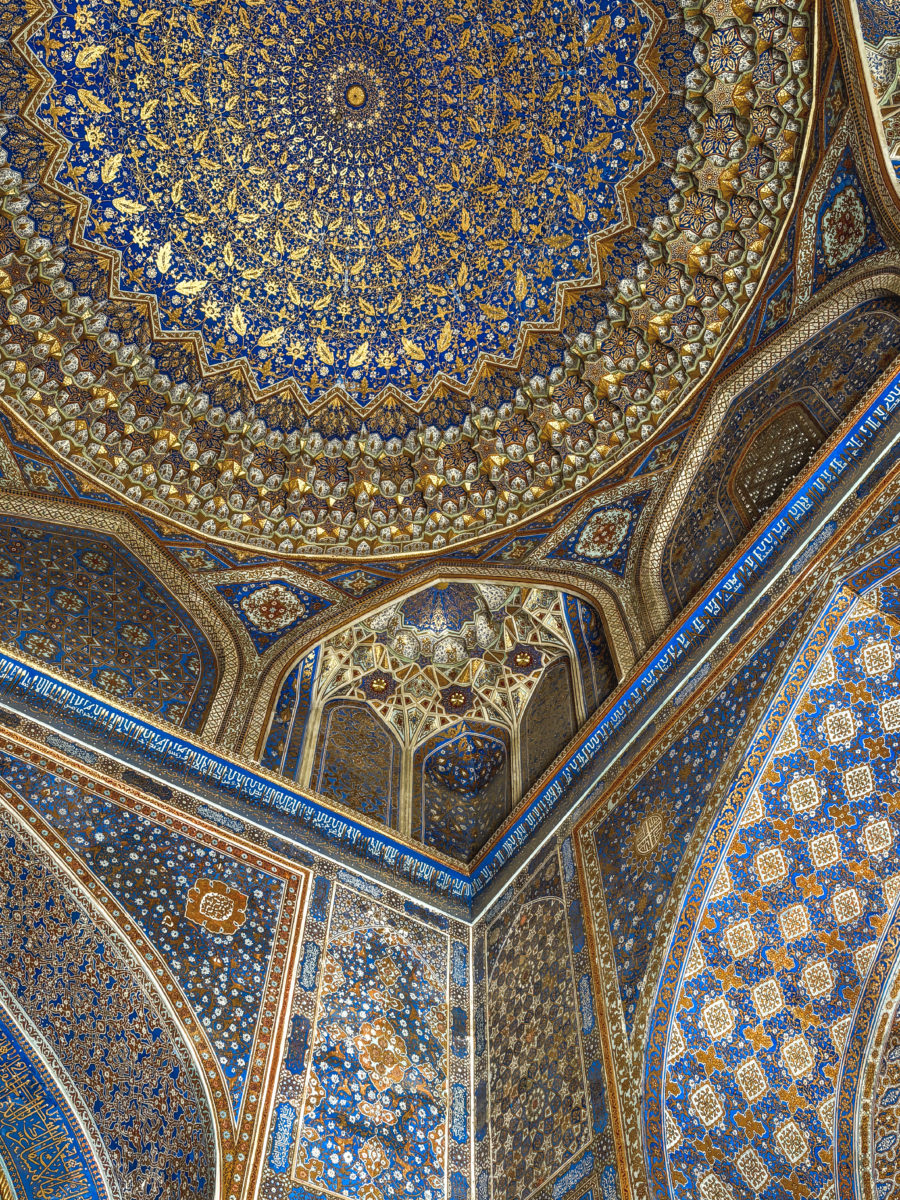
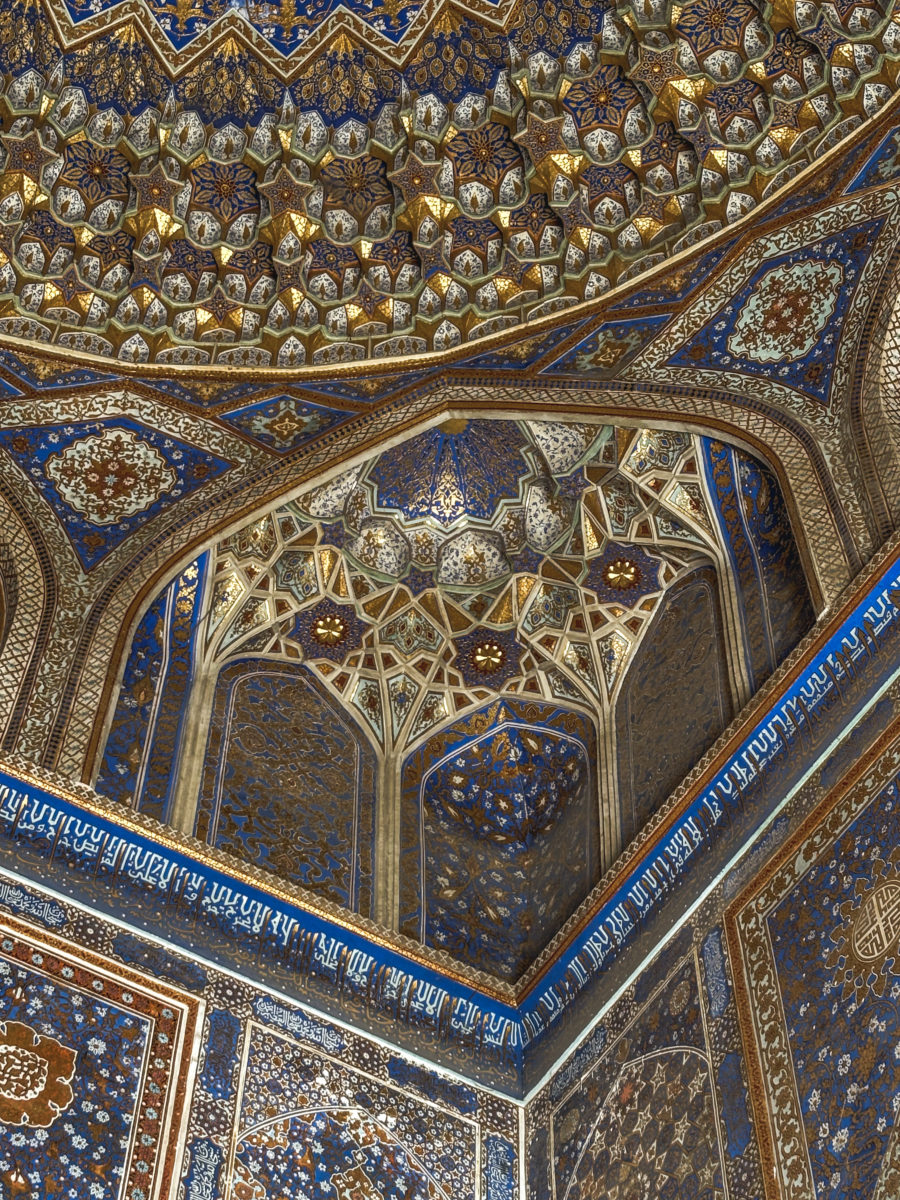
- Tilla-Kari Madrasah, whose gilded interior rivals some of Europe’s finest cathedrals.
We wandered through their deserted corridors, where each tile seemed to hold captive the light of the morning. The echo of our footsteps mingled with the arabesques of the vaults, and the air carried that rare sensation of privilege: contemplating a jewel of the world entirely alone.
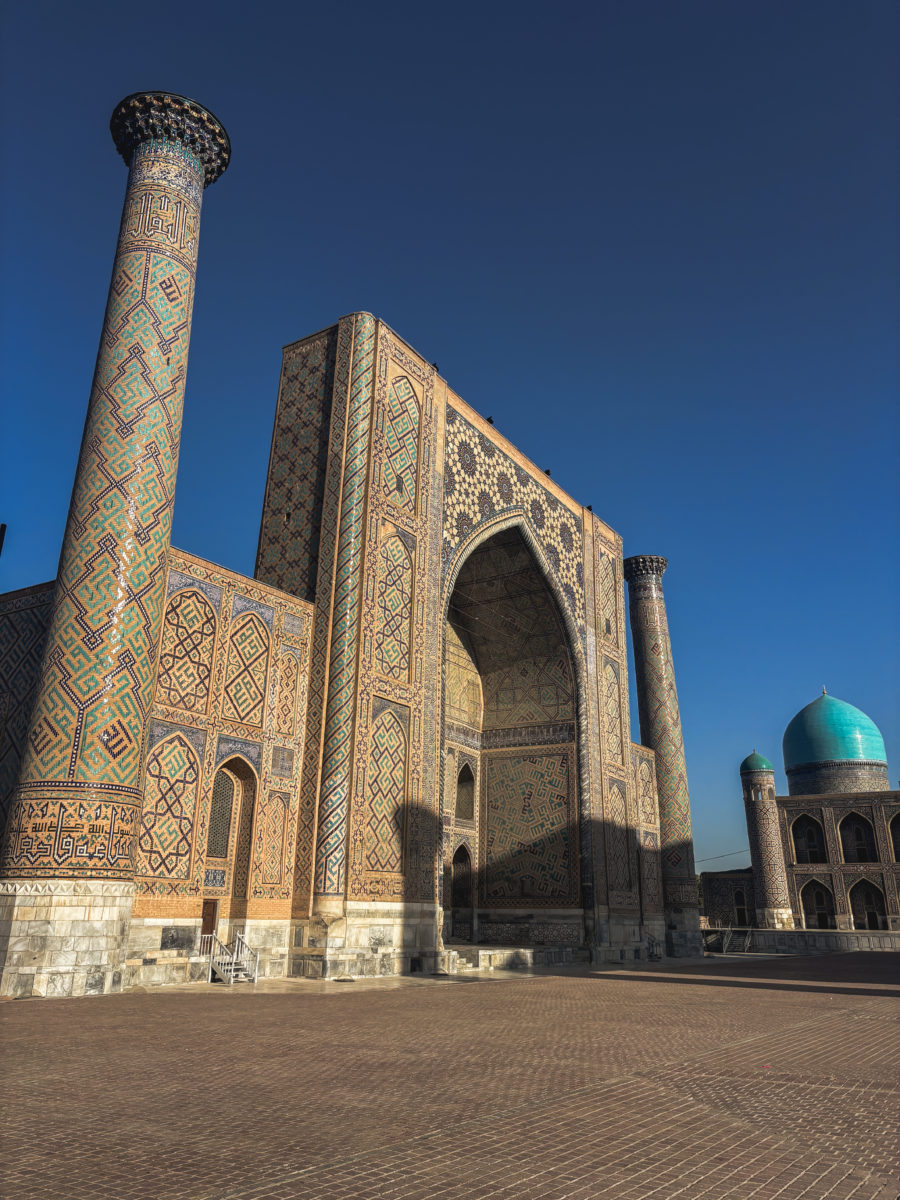
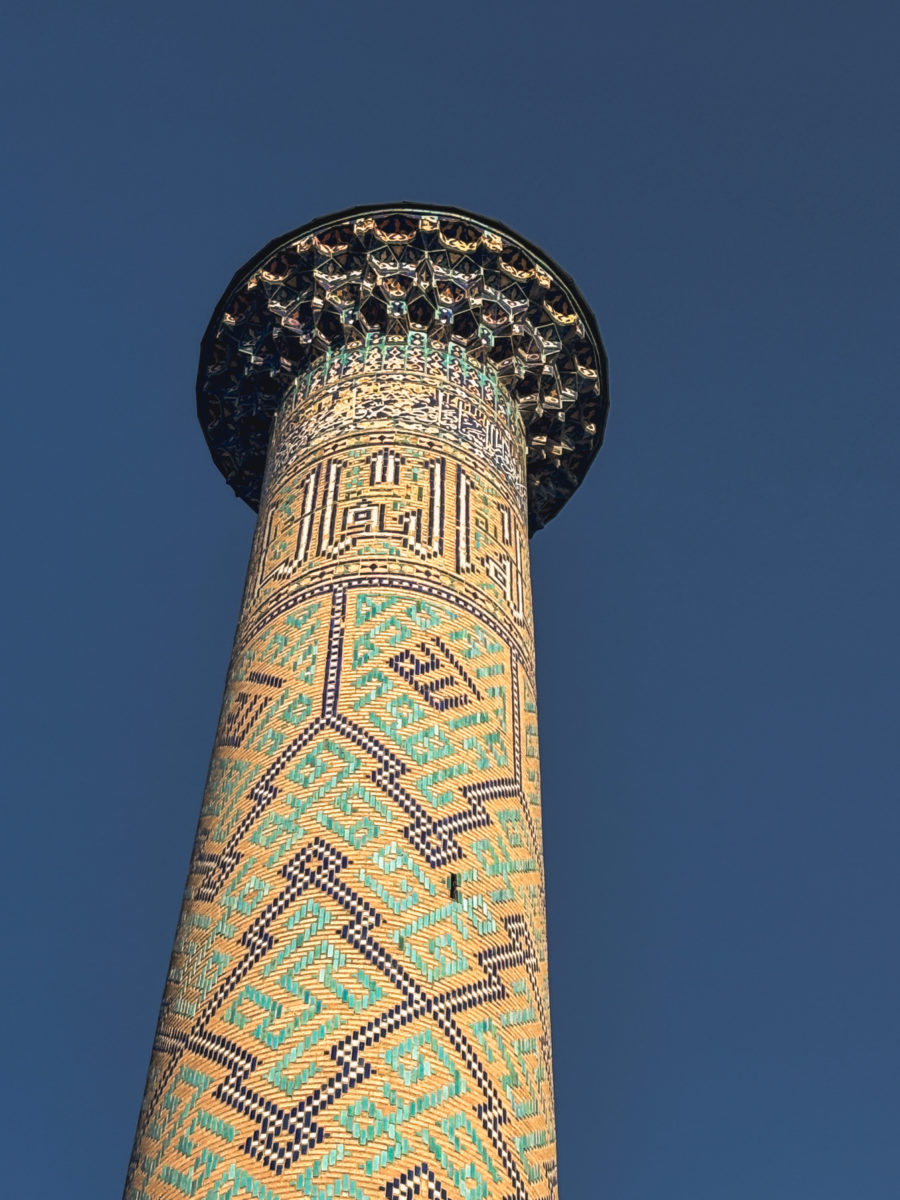
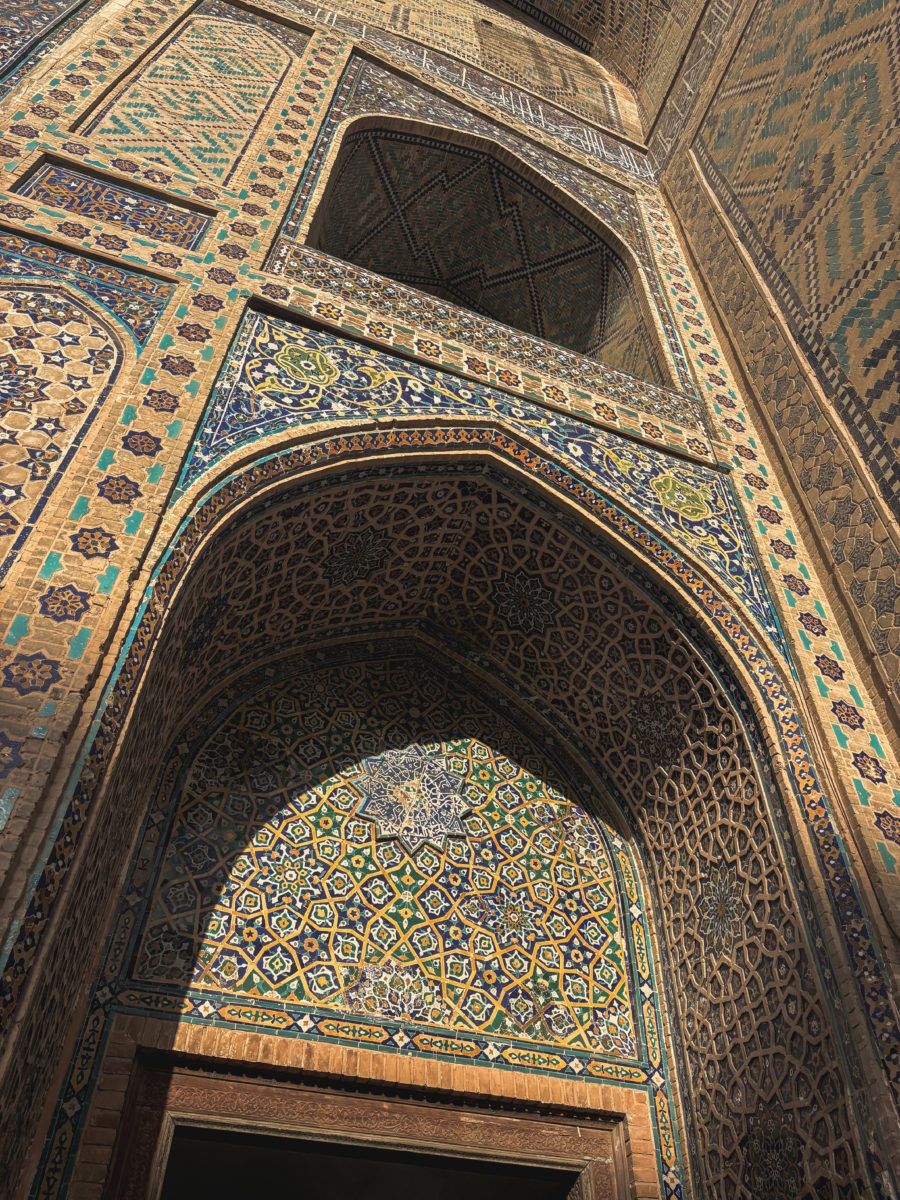
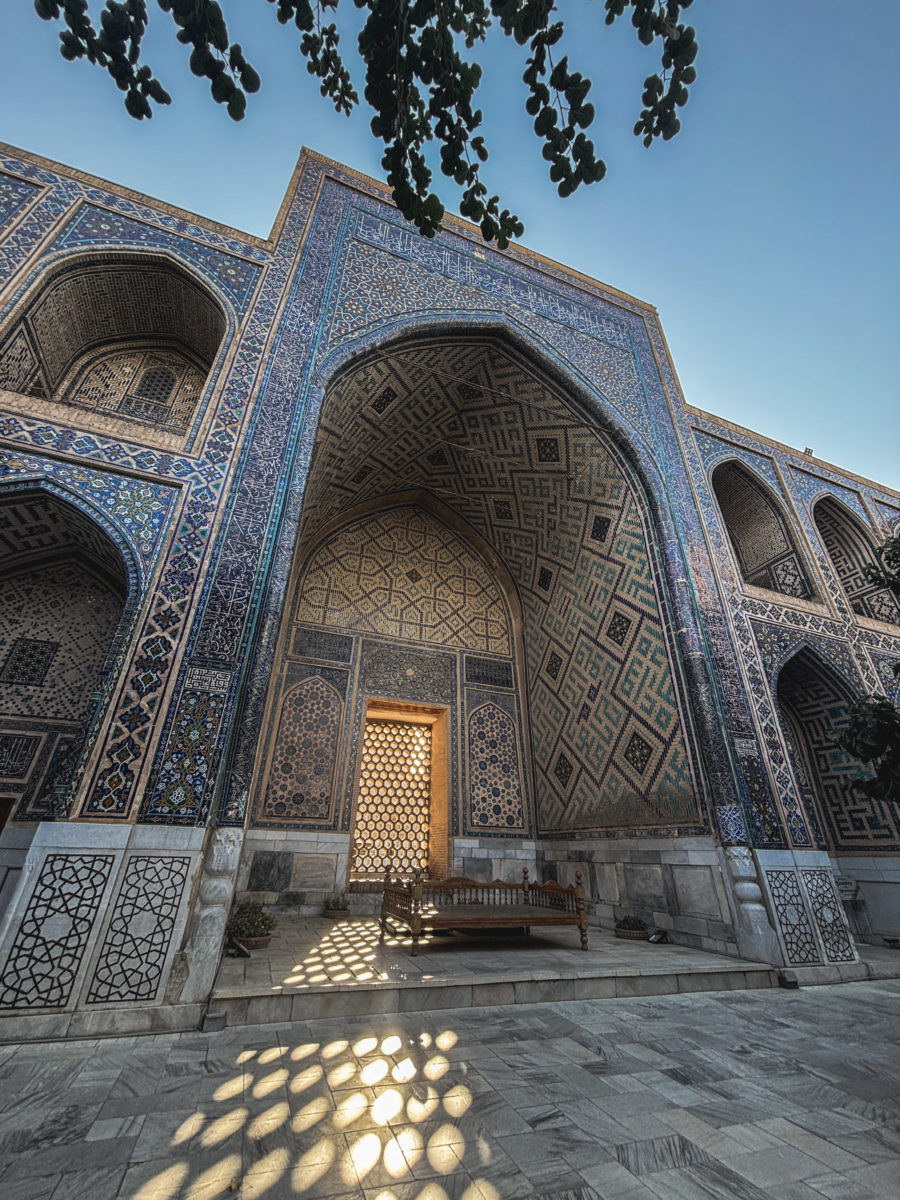
Then, looking up beneath one of the domes, we felt as though we had stepped into a fairy tale: endless arabesques, deep blues, dazzling golds, a celestial ceiling worthy of One Thousand and One Nights. It was simply too beautiful.
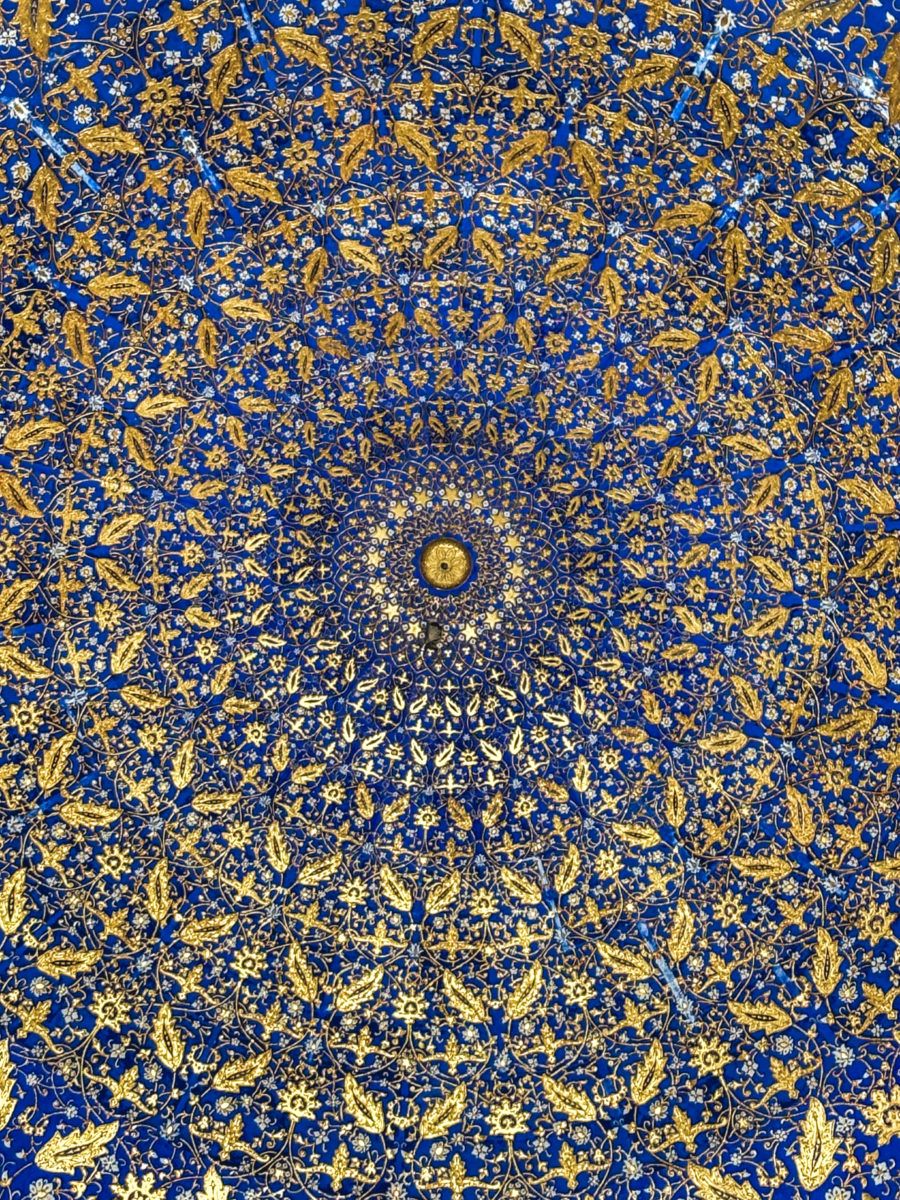
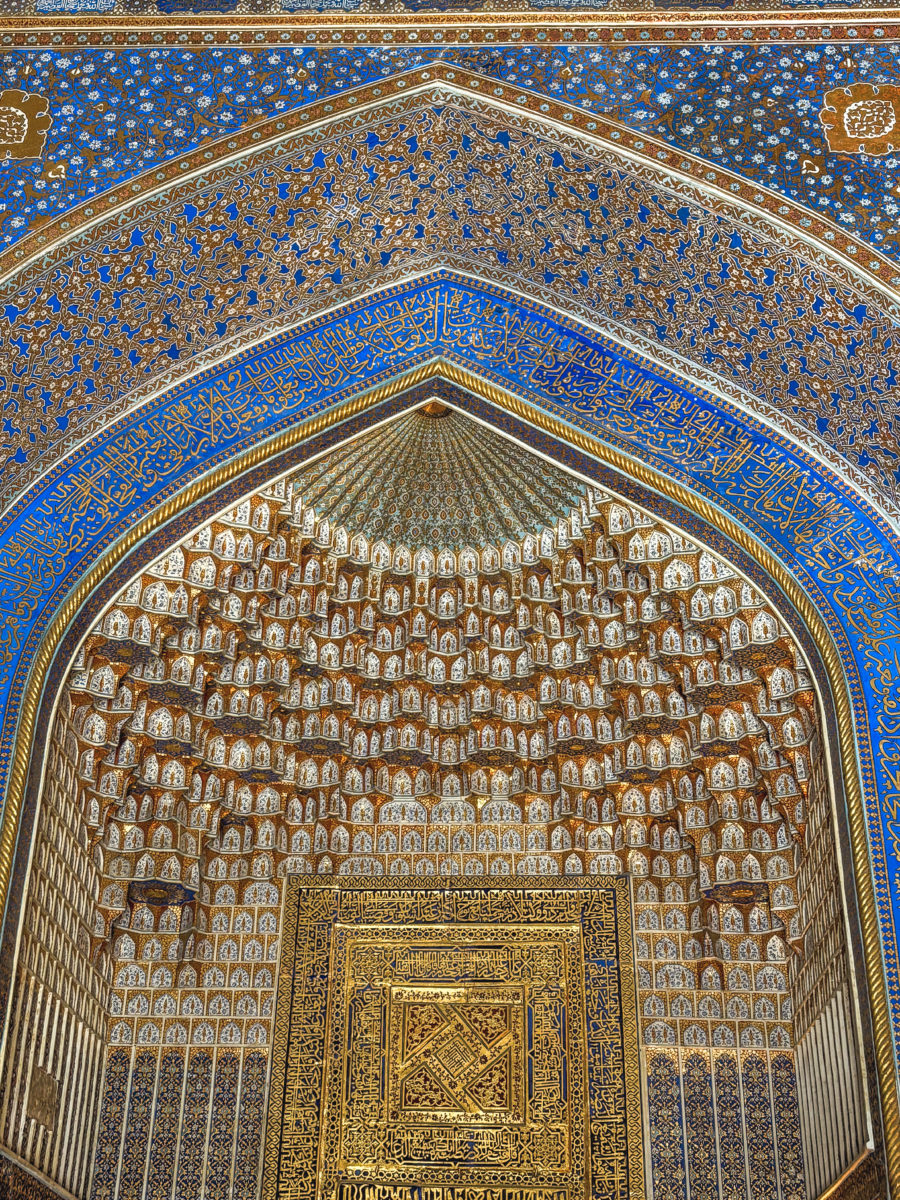
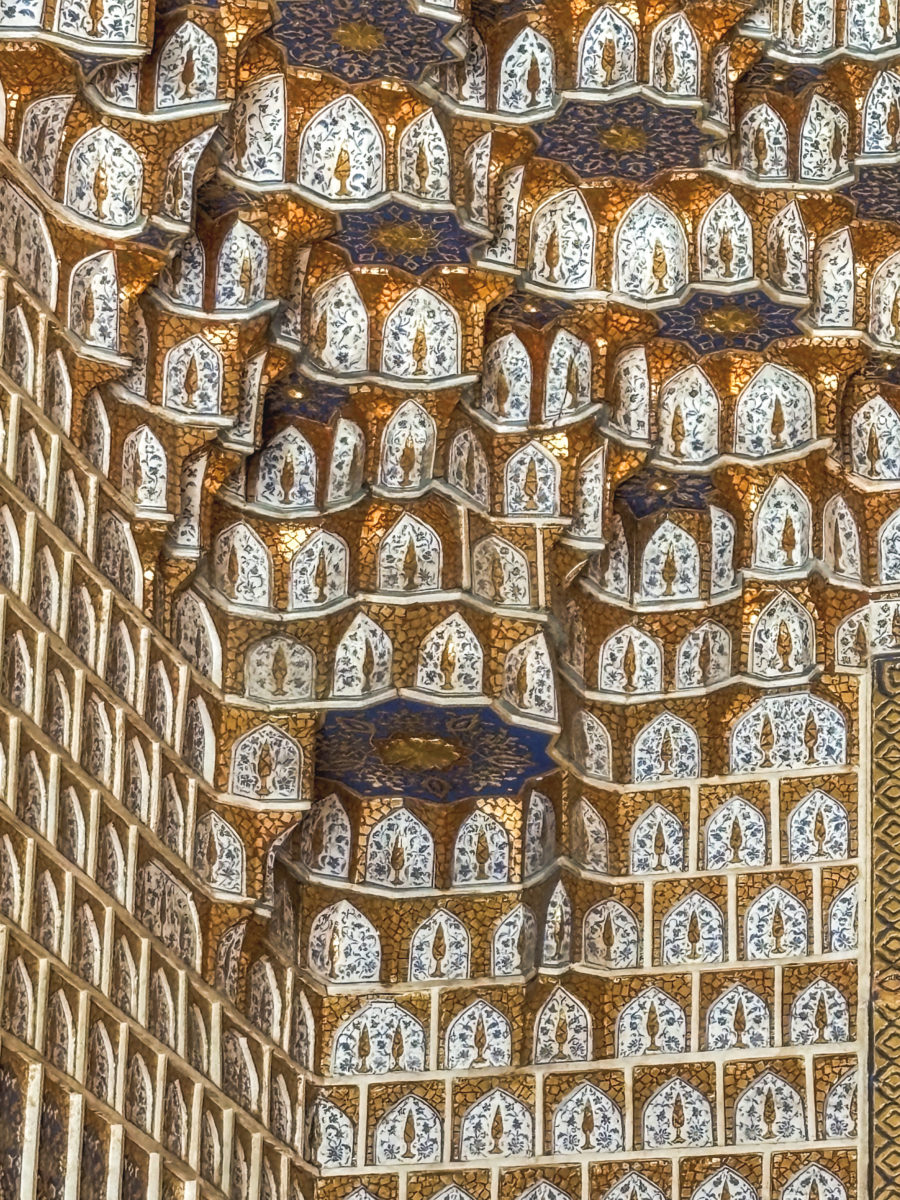
Only one detail brought us back to reality: a café on the upper floor remained closed. Not by misfortune, but because the King of Jordan and his entourage would soon be using it as their private retreat for a few hours. That’s a pity (for us)!
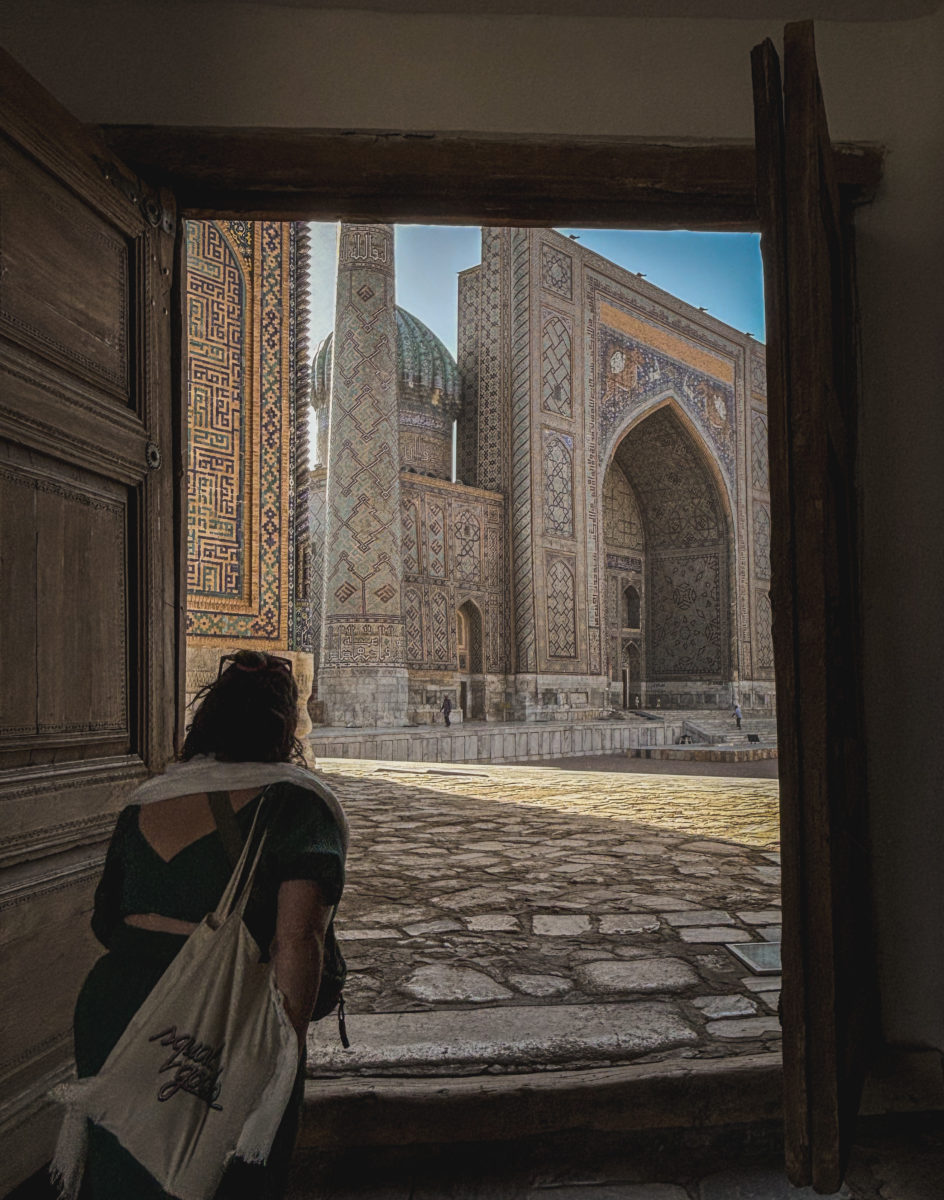
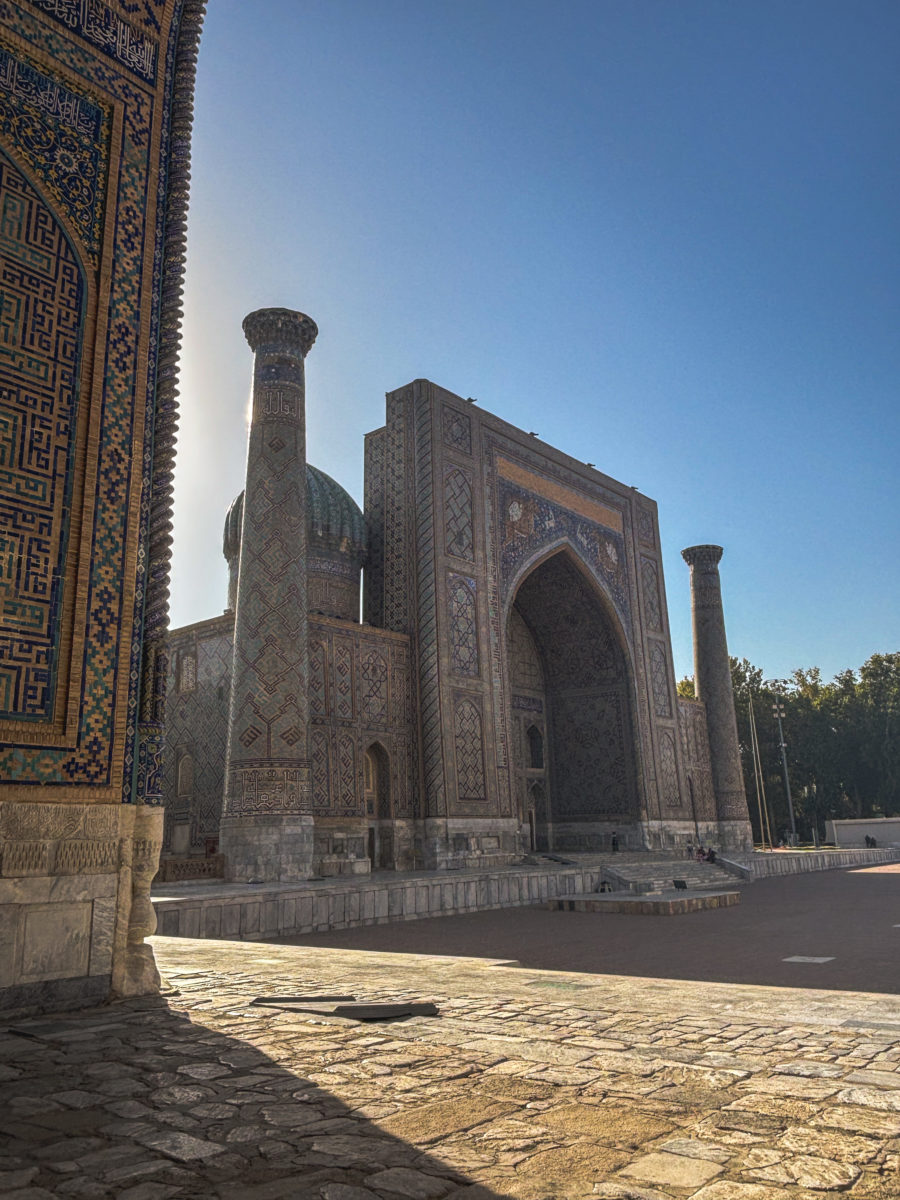
The Registan is breathtaking at any time of day, but many claim it reveals its true magic at sunset, when the last rays of sunlight gently brush its facades. Determined to witness this famous spectacle, I settled onto a bench facing the square.
For nearly two hours, I watched the light slowly evolve across the madrasahs, expecting the mosaics to burst into a blaze of colour. The reality proved somewhat less spectacular than I had imagined, and I must admit to a slight disappointment; though a stage was also being erected for upcoming national celebrations.
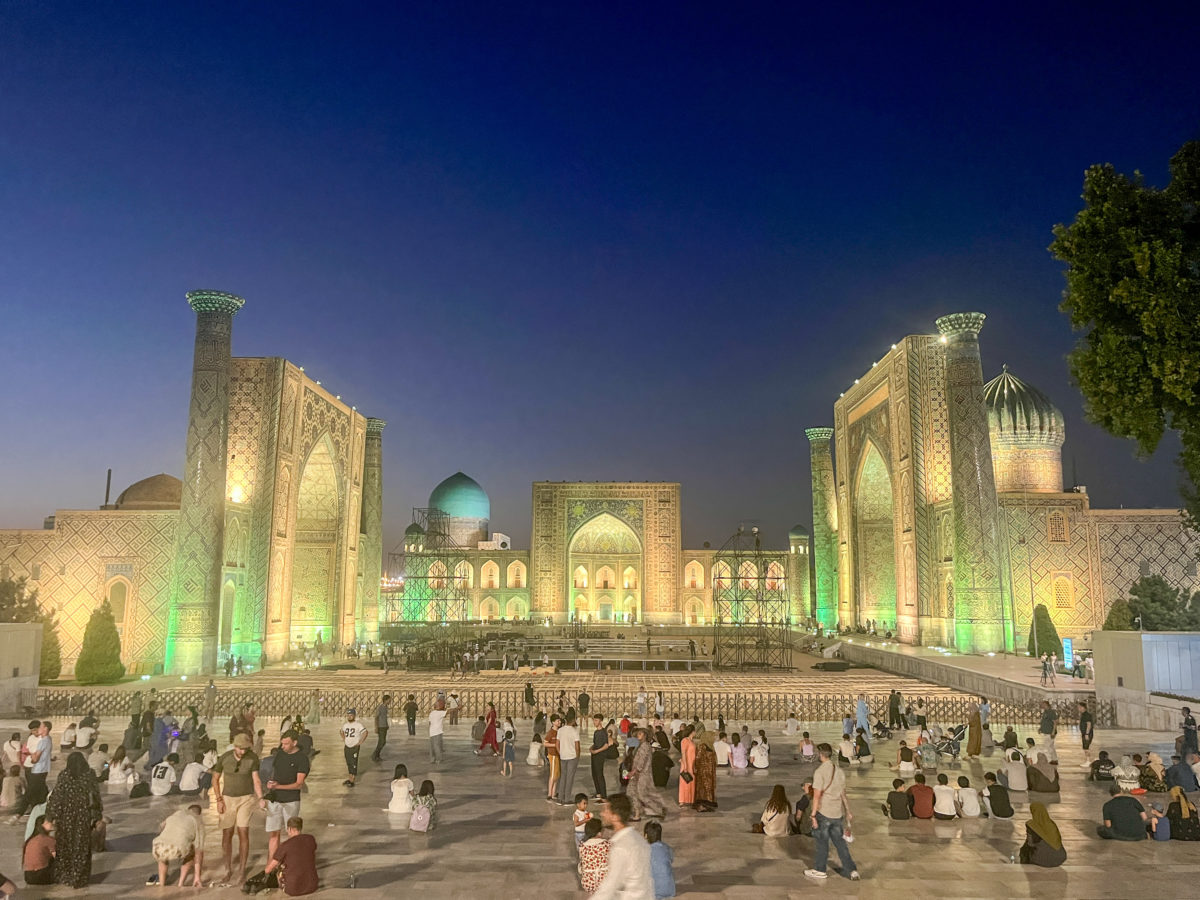
Yet the wait was not in vain. Sitting in the park opposite the Registan, I enjoyed the peaceful rhythm of the evening: families strolling, children playing, and locals gathering to enjoy the coolness of dusk.
Gur-e-Amir Mausoleum
Just a few minutes from the Registan stands the Gur-e-Amir Mausoleum.
Its ribbed turquoise dome rises above the city like a beacon. Here lies Timur (Tamerlane), the conqueror who built one of the largest empires of his age.
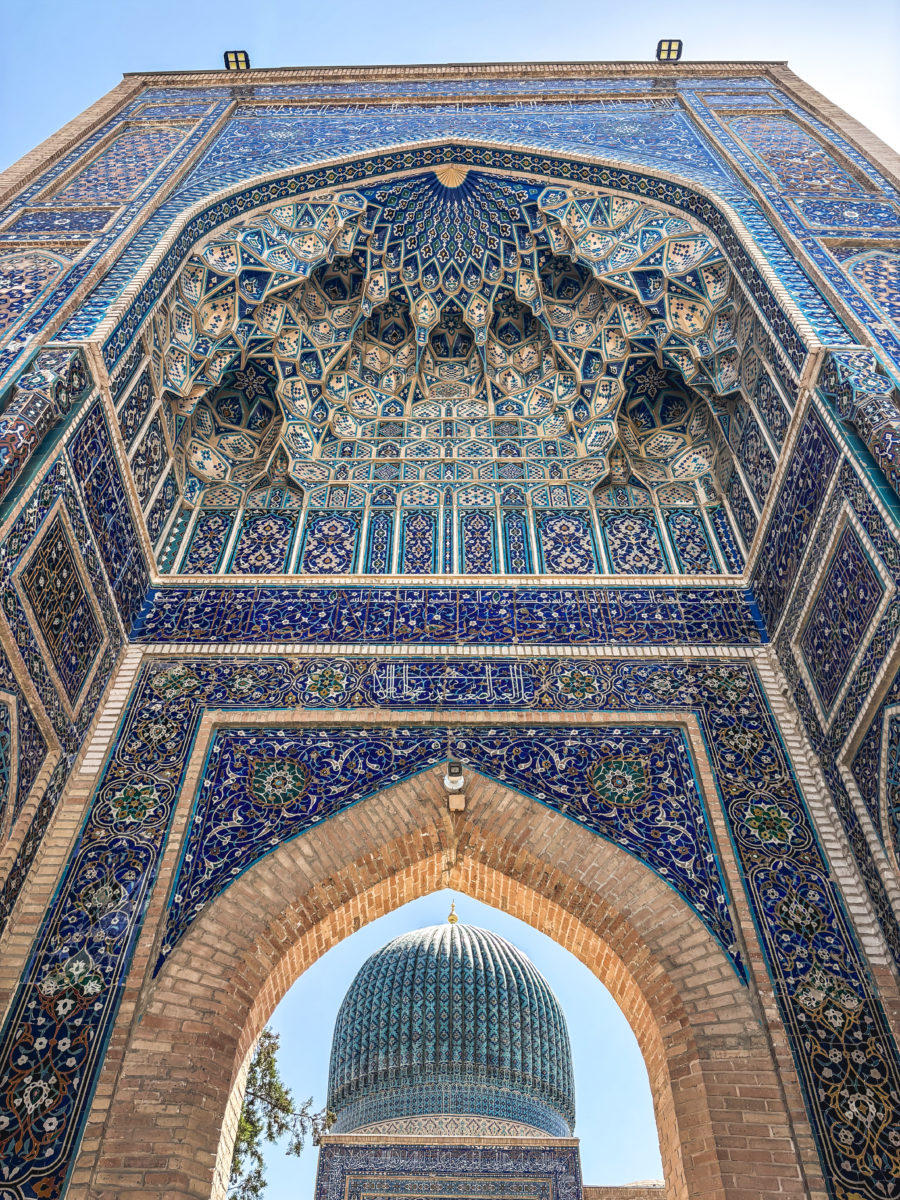
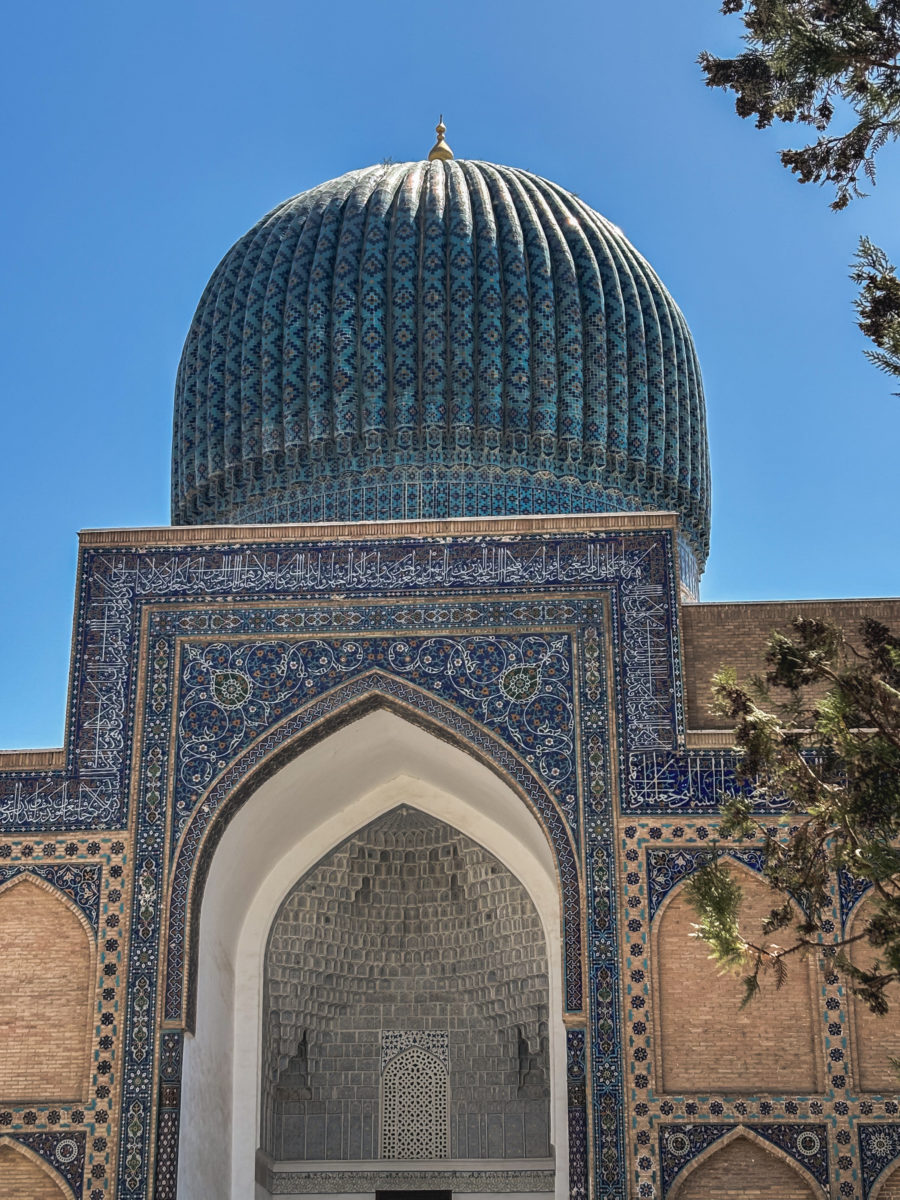
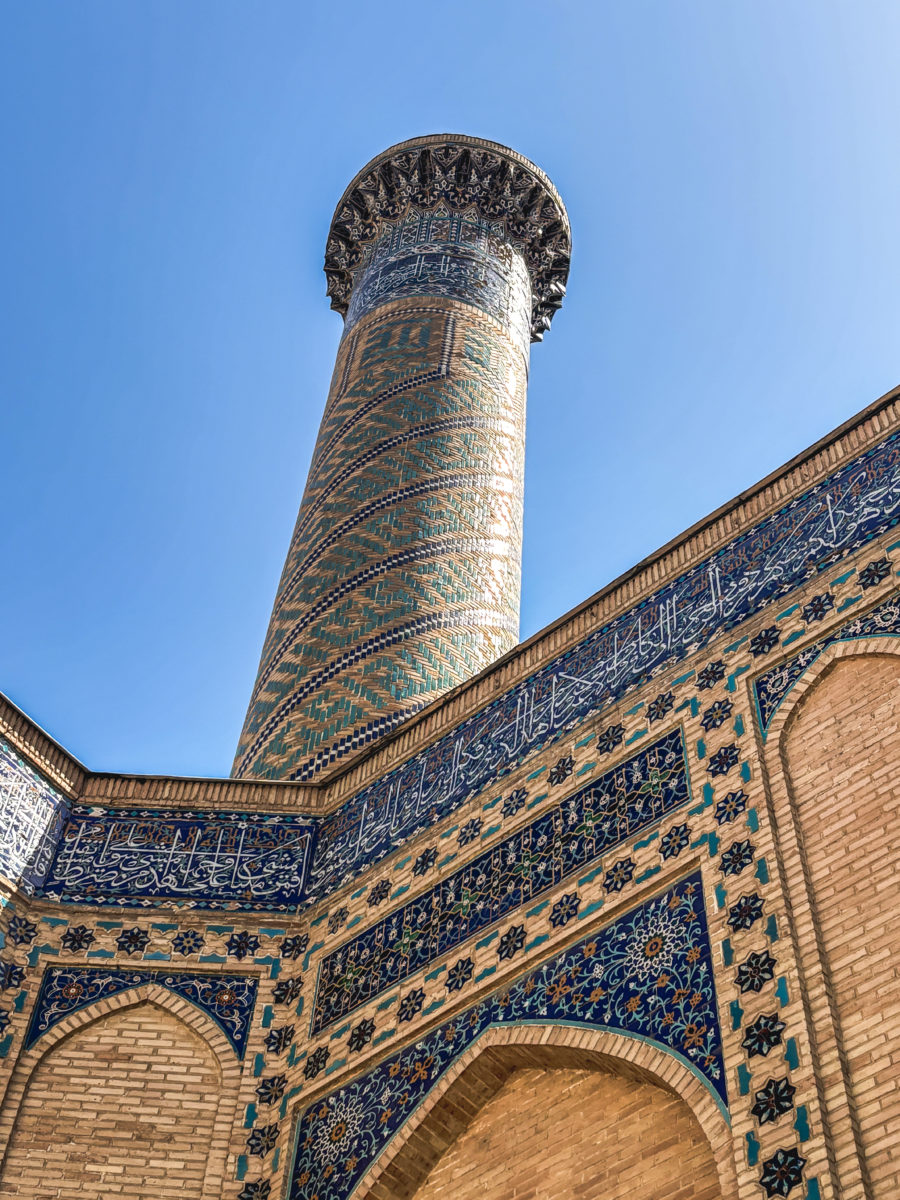
The monument is already magnificent from the outside. Yet the true sense of wonder begins when you step through its doors. Inside, everything dazzles. Walls and dome glow with gold, as though the artisans had wished to grant Tamerlane a residence worthy of an eternal ruler. One momentarily sets aside the history of these ancient tyrants to focus solely on the beauty they left behind.
Patterns repeat endlessly, intertwining and soaring upward until one no longer knows whether one is contemplating architecture or a prayer frozen in light. You feel tiny, swept away by such refined grandeur.
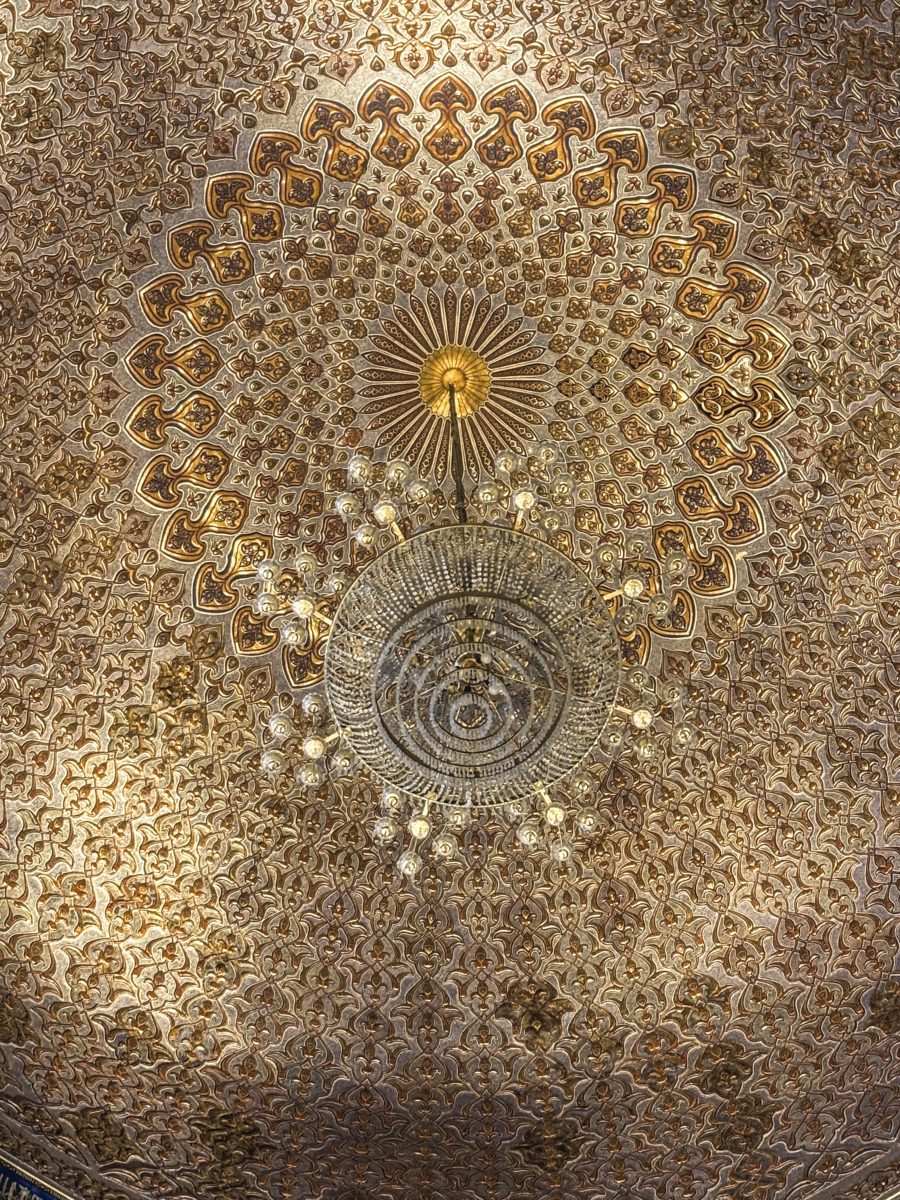
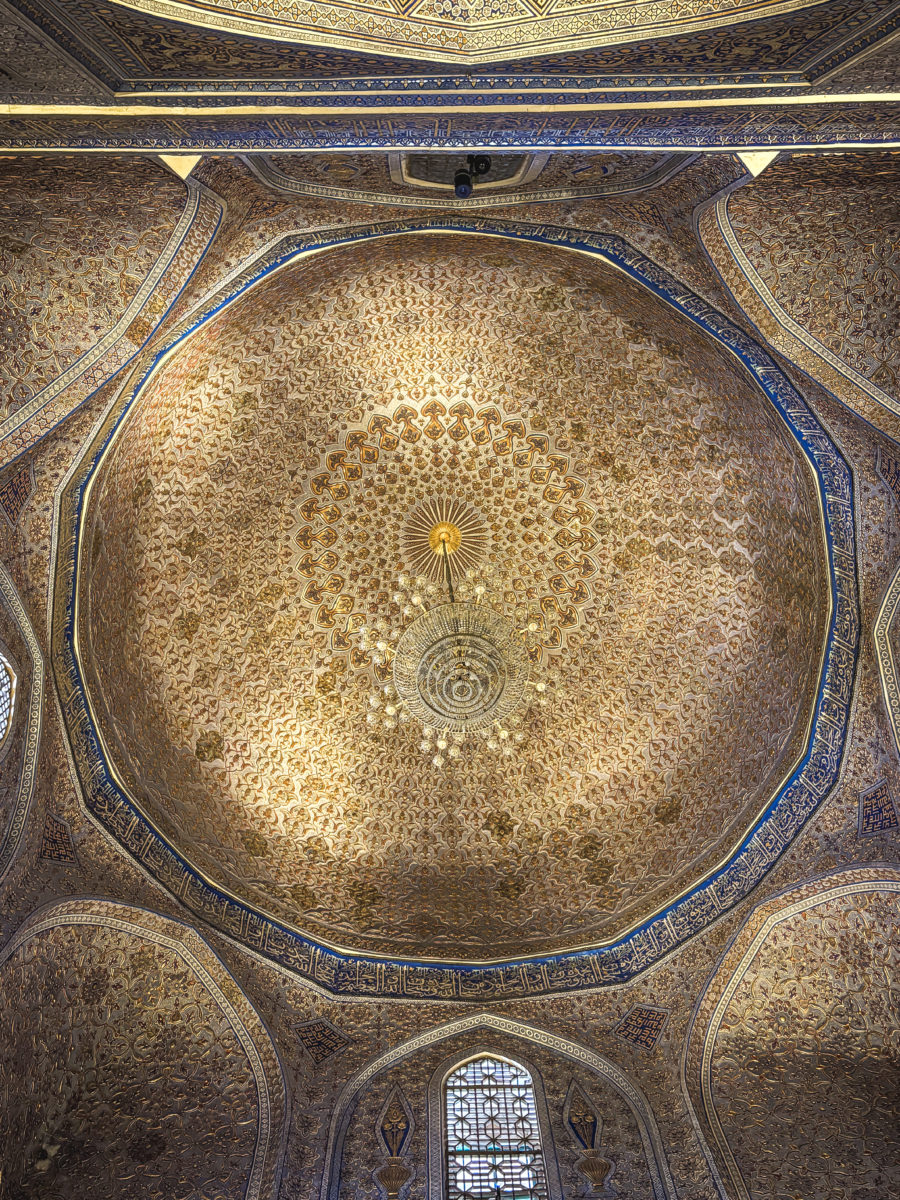
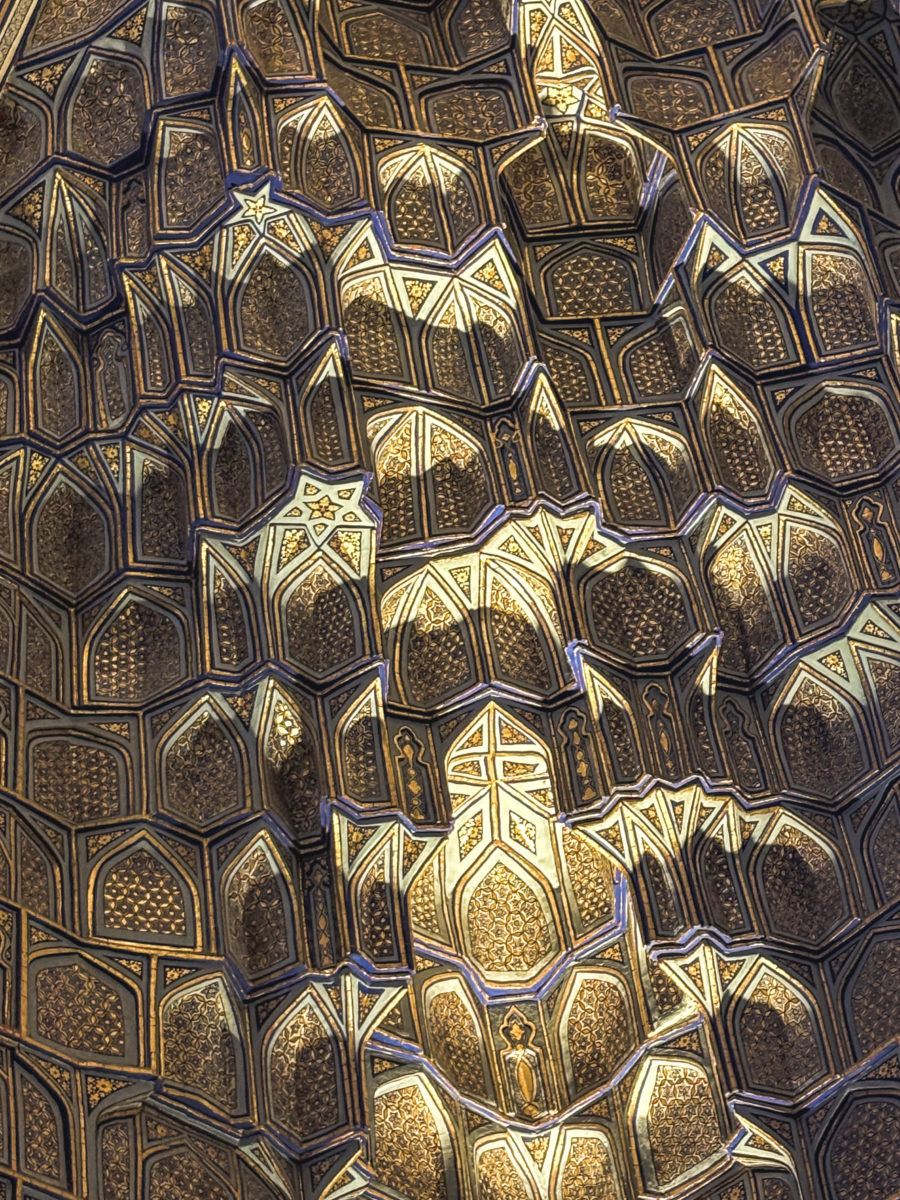
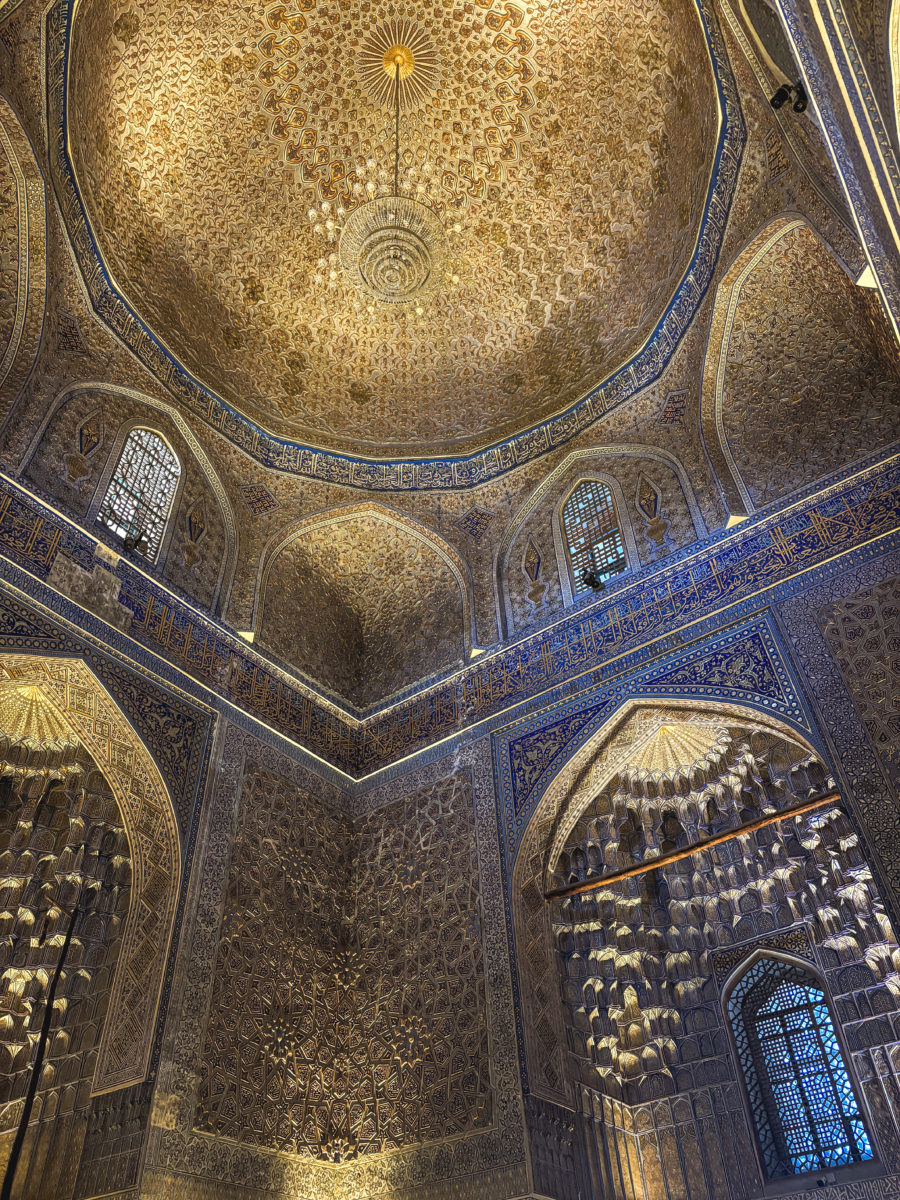
The atmosphere here is more contemplative than at the Registan and offers a deeper understanding of Timur’s significance to the Uzbek people.
Aksaray Mausoleum, A Hidden Timurid Treasure
Only a few steps from the renowned Gur-e-Amir lies one of Samarkand’s lesser-known gems: Aksaray Mausoleum.
Many visitors discover it almost by accident while exploring the surroundings of Tamerlane’s funerary complex.
Built in the 14th century, the mausoleum was intended for Timurid nobles and members of the royal family. Compared to the imposing silhouette of Gur-e-Amir, it appears relatively modest from the outside.
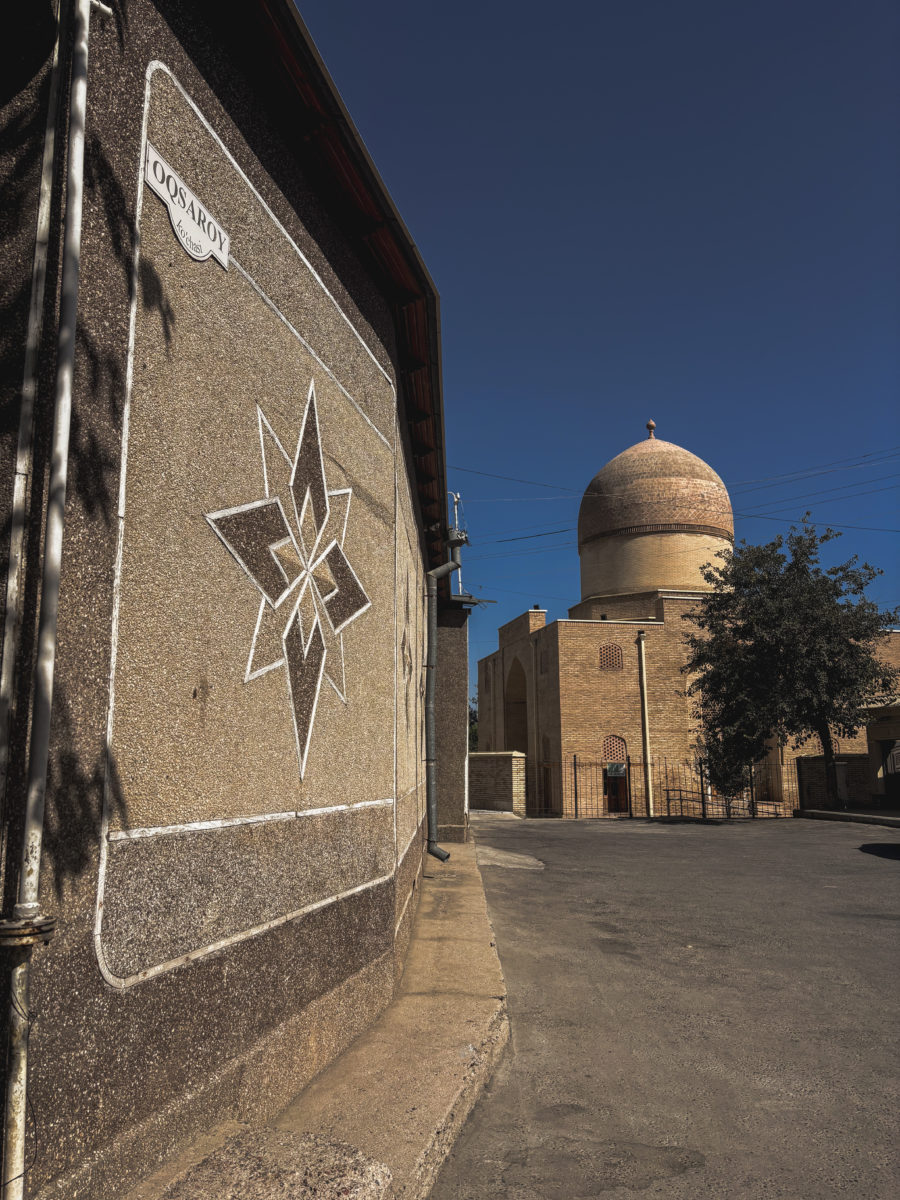
There was no one around, not a single visitor in sight. At the entrance stood a heavy locked gate. Then a smiling man appeared almost out of nowhere and offered to open it for us in exchange for 10,000 sums each (not even one Swiss franc).
The moment we stepped inside, he locked the gate behind us. For a brief second, my imagination ran wild and I pictured the headline of some unfortunate news story. Then I laughed at myself. Welcome to life as a woman in the 21st century (and not only in Uzbekistan)!
Of course, there was no danger awaiting us. Only beauty. Inside, the mausoleum revealed itself as an intimate treasure. Its golden ceiling captures the light in a way that instantly mesmerizes. In some places, the decorations appear less painted than embroidered directly onto the architecture.
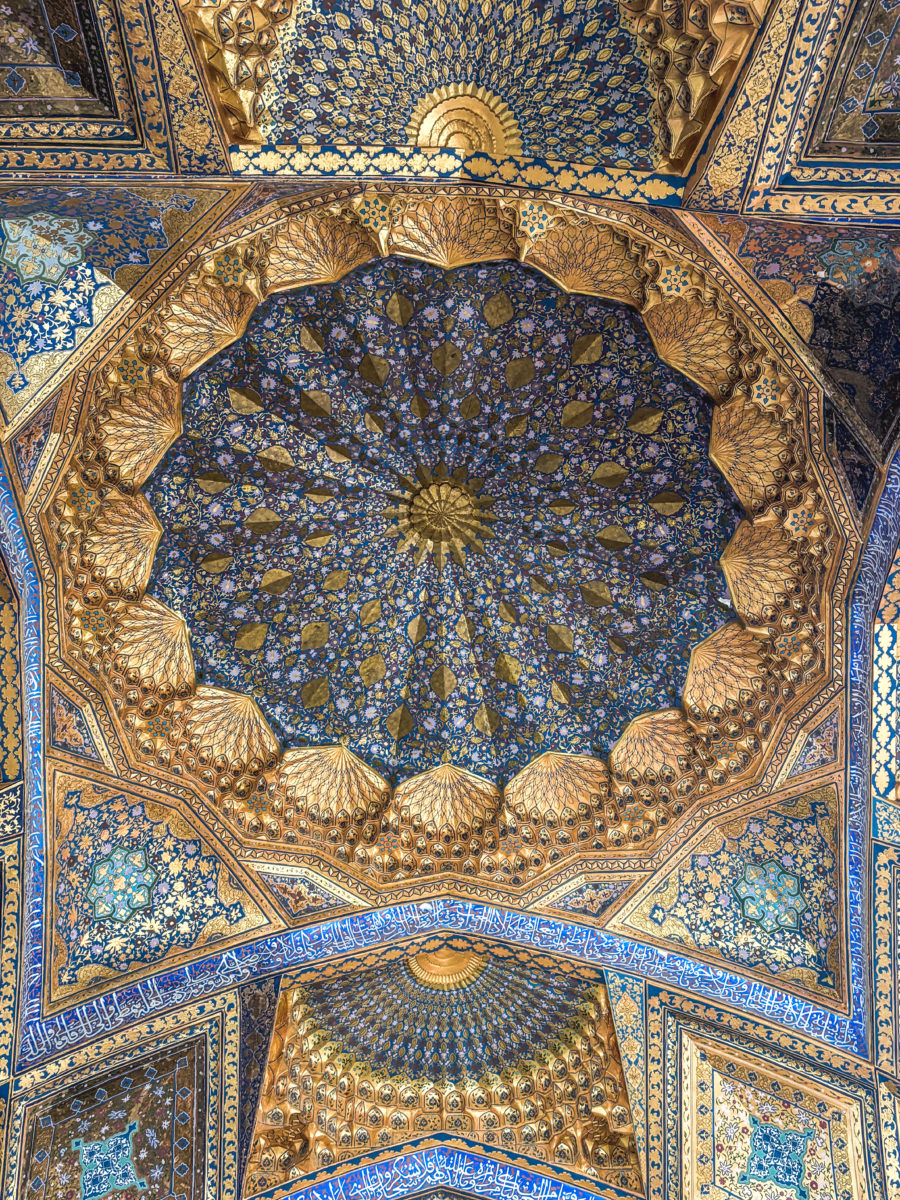
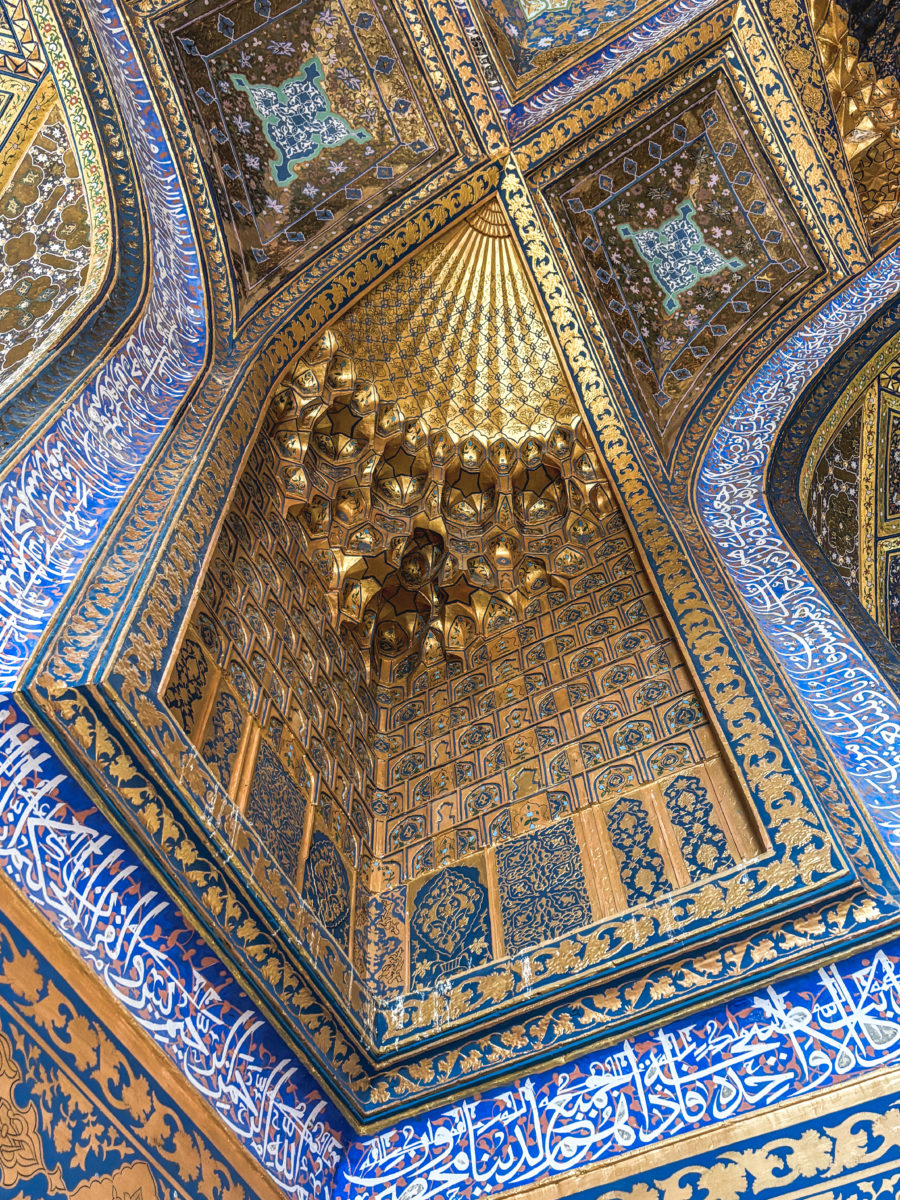
Our impromptu guardian turned out to be incredibly kind. Borrowing my travel companion’s phone, he even filmed a beautiful video of the ceiling for us, as though he wanted to ensure we left with a memory worthy of such a secret place.
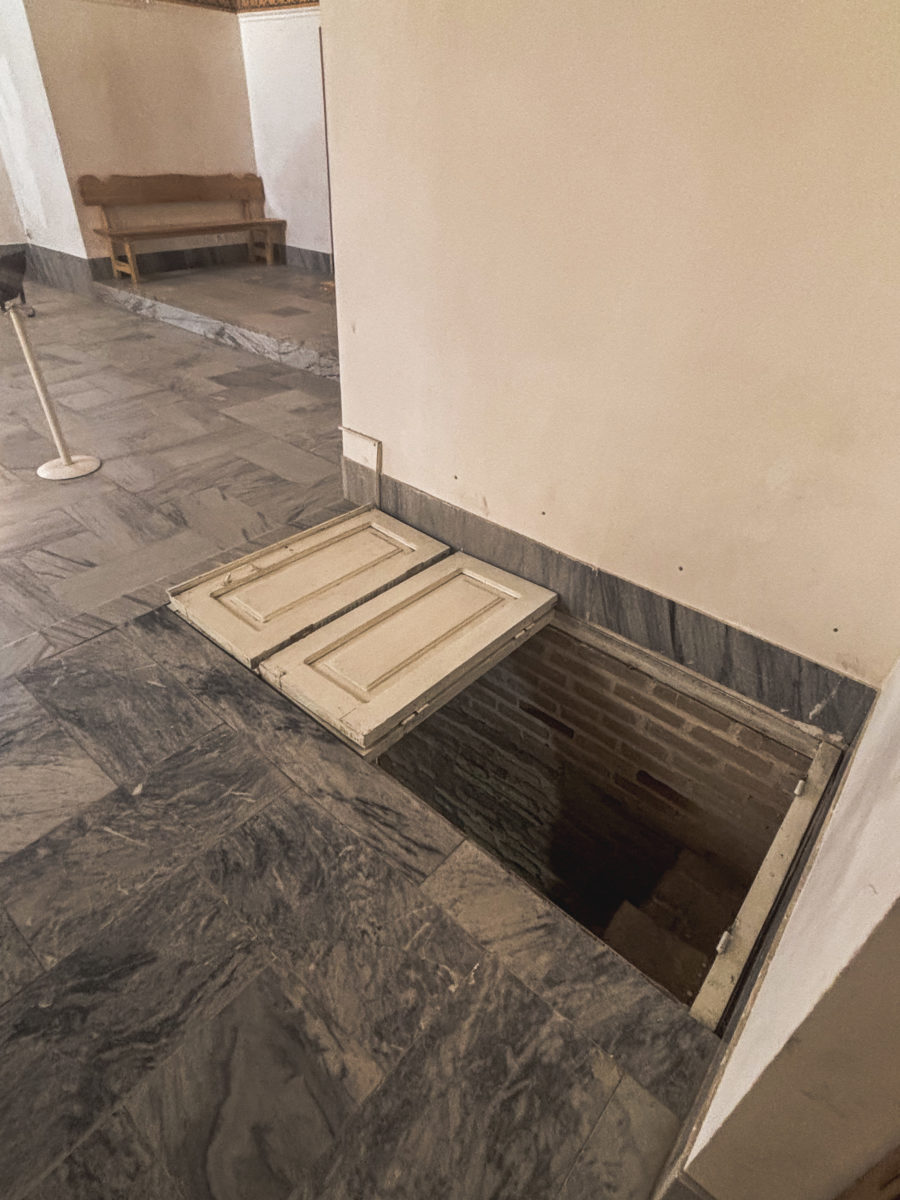
The only proposal I politely declined was his invitation to descend into a dark crypt. At that point, I preferred to let my imagination remain in control. The wonders above ground were quite enough for one day.
What struck me most was the contrast between the crowds at Gur-e-Amir and the tranquillity of Aksaray. Its intimate atmosphere allows you to admire the details without rushing. Here, one senses the more human side of Samarkand, far removed from the monuments built for the glorification of conquerors.
Shah-i-Zinda, Samarkand’s Most Beautiful Site
If the Registan impresses, Shah-i-Zinda touches the soul. Yes, I dare say it.
I would like to find better words, but faced with Shah-i-Zinda, words always feel inadequate.
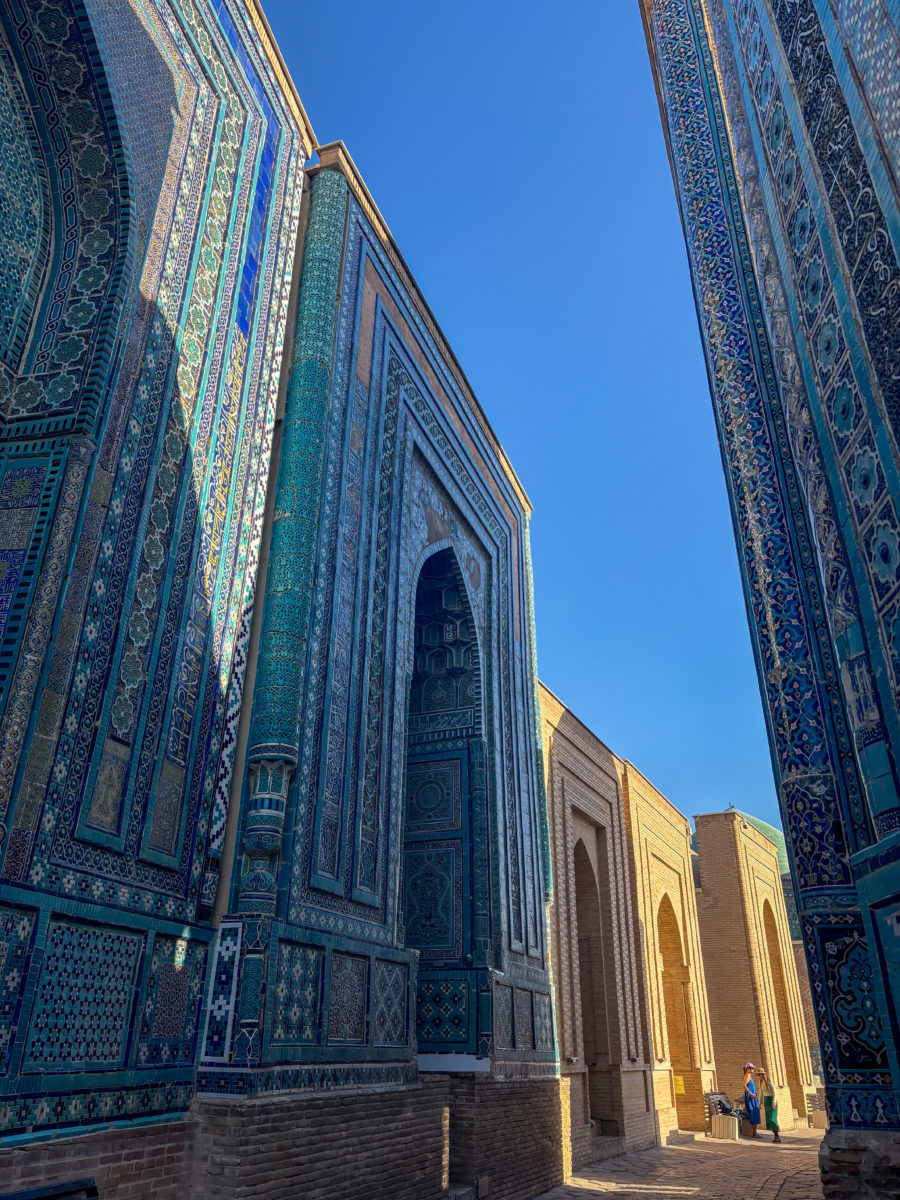
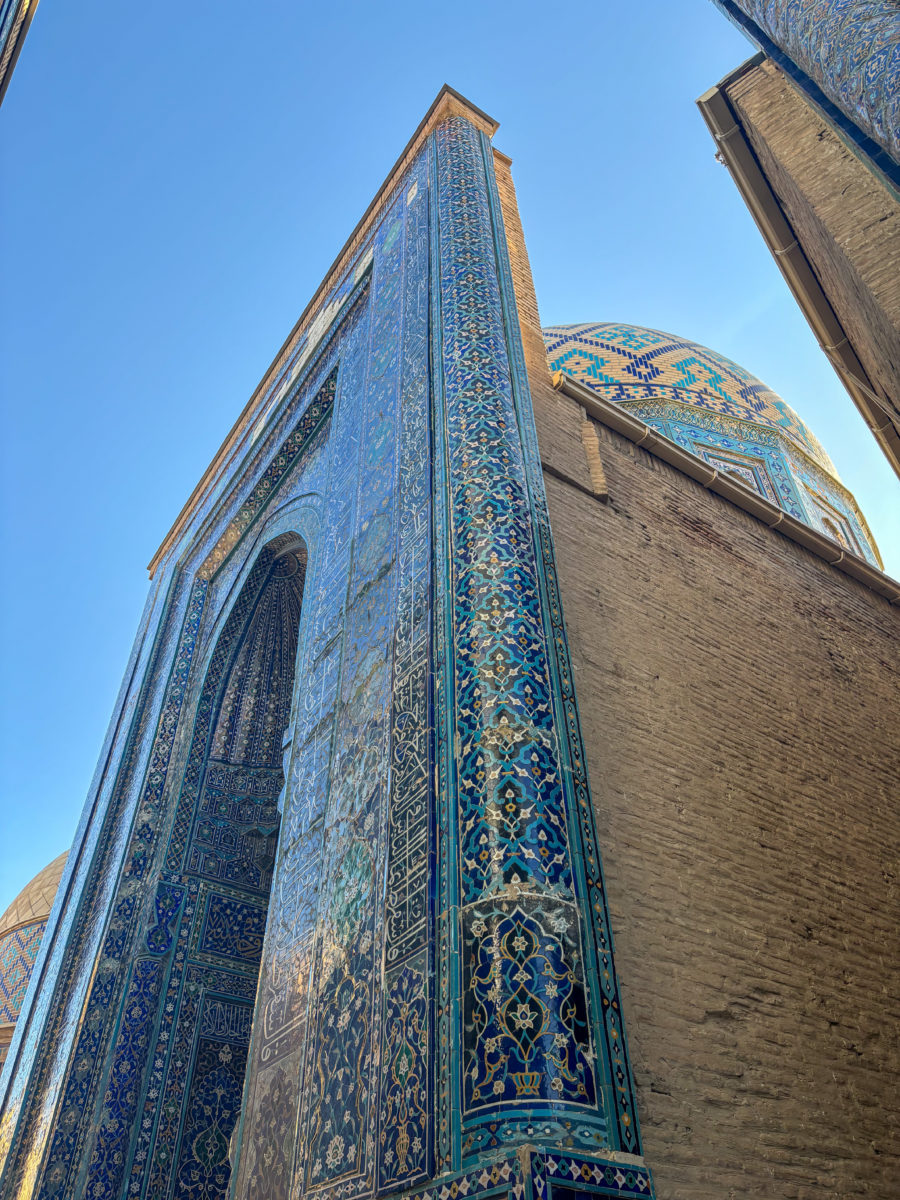
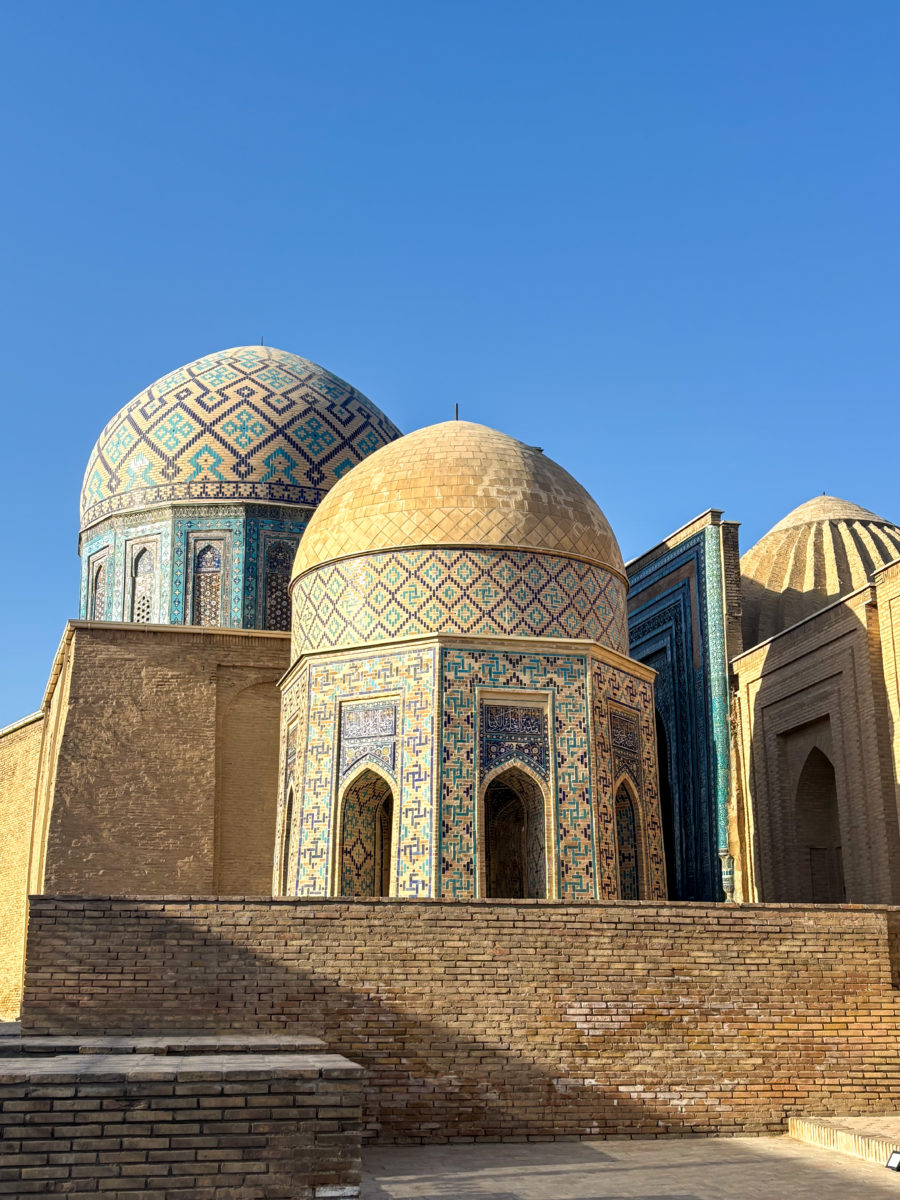
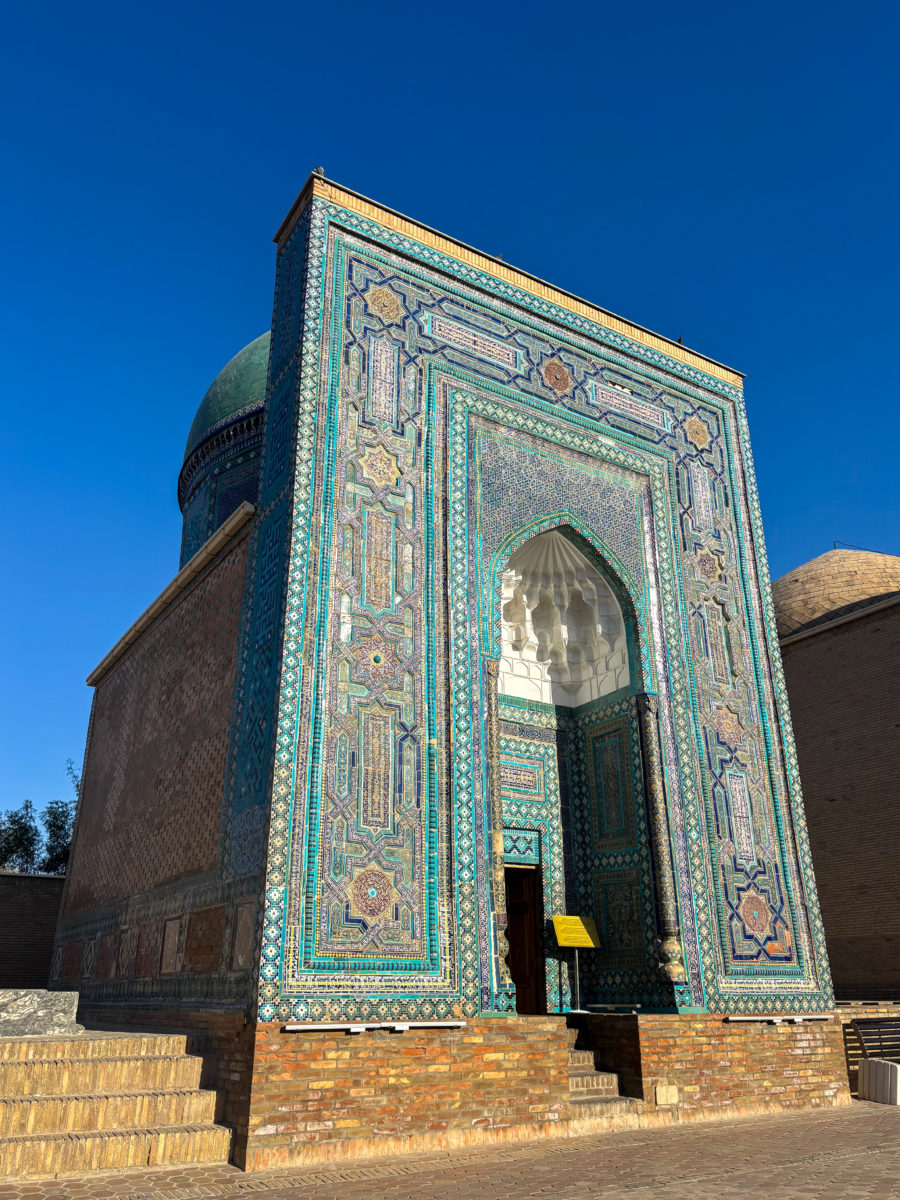
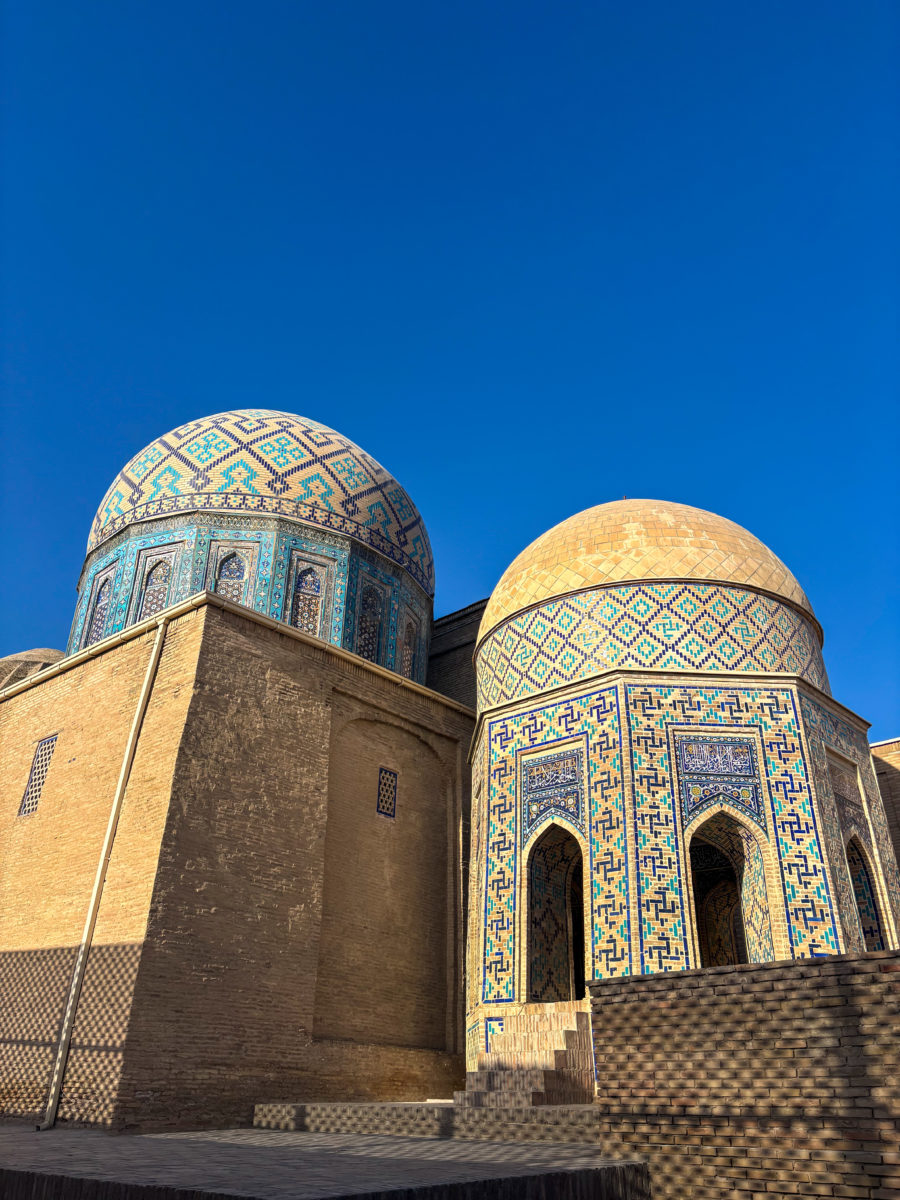
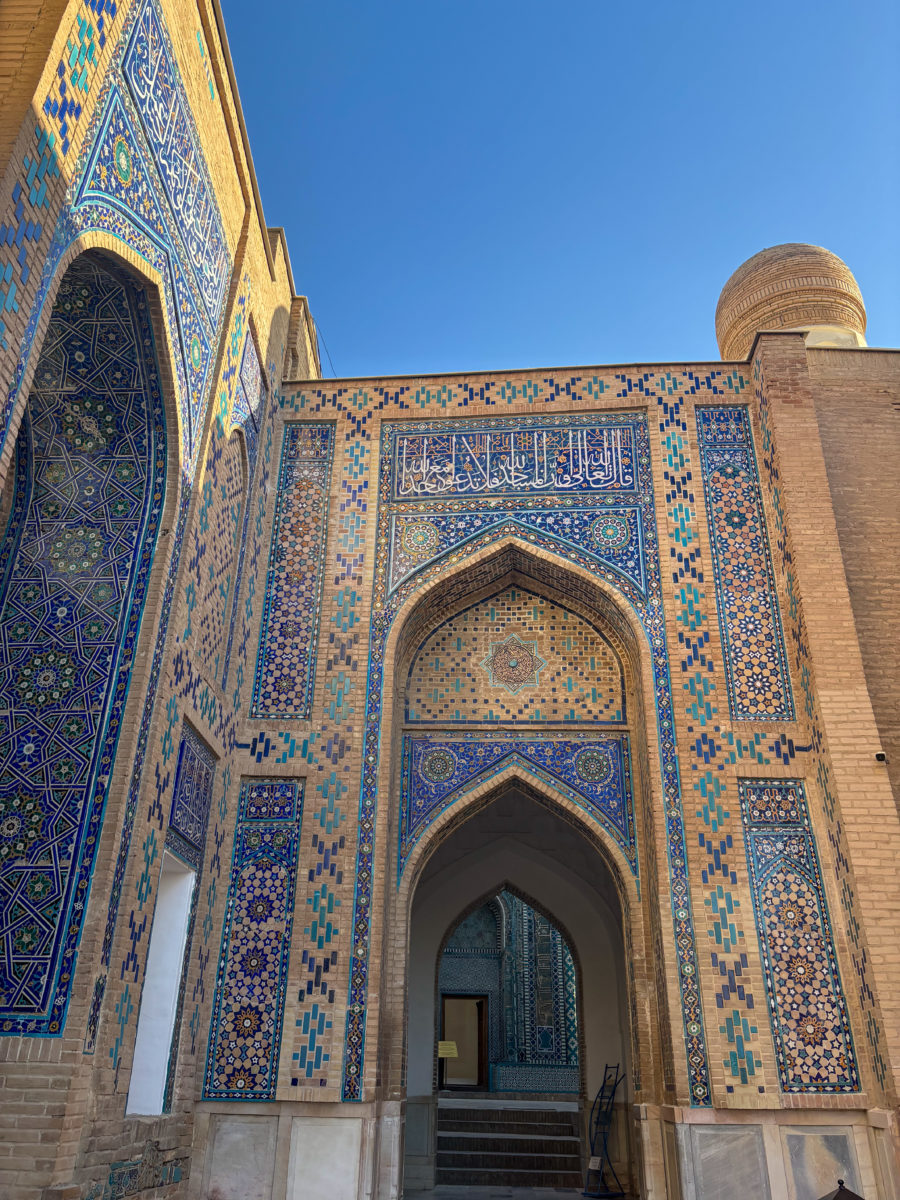
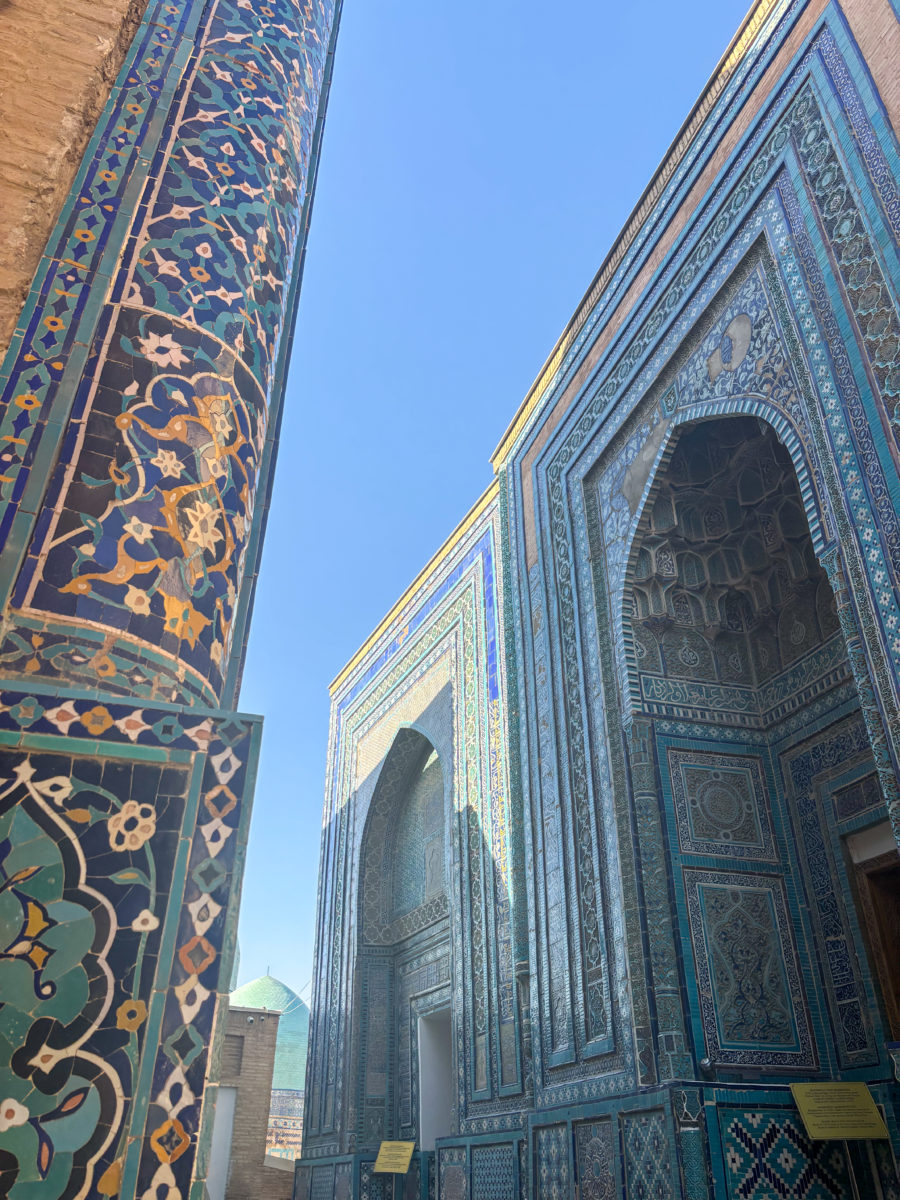
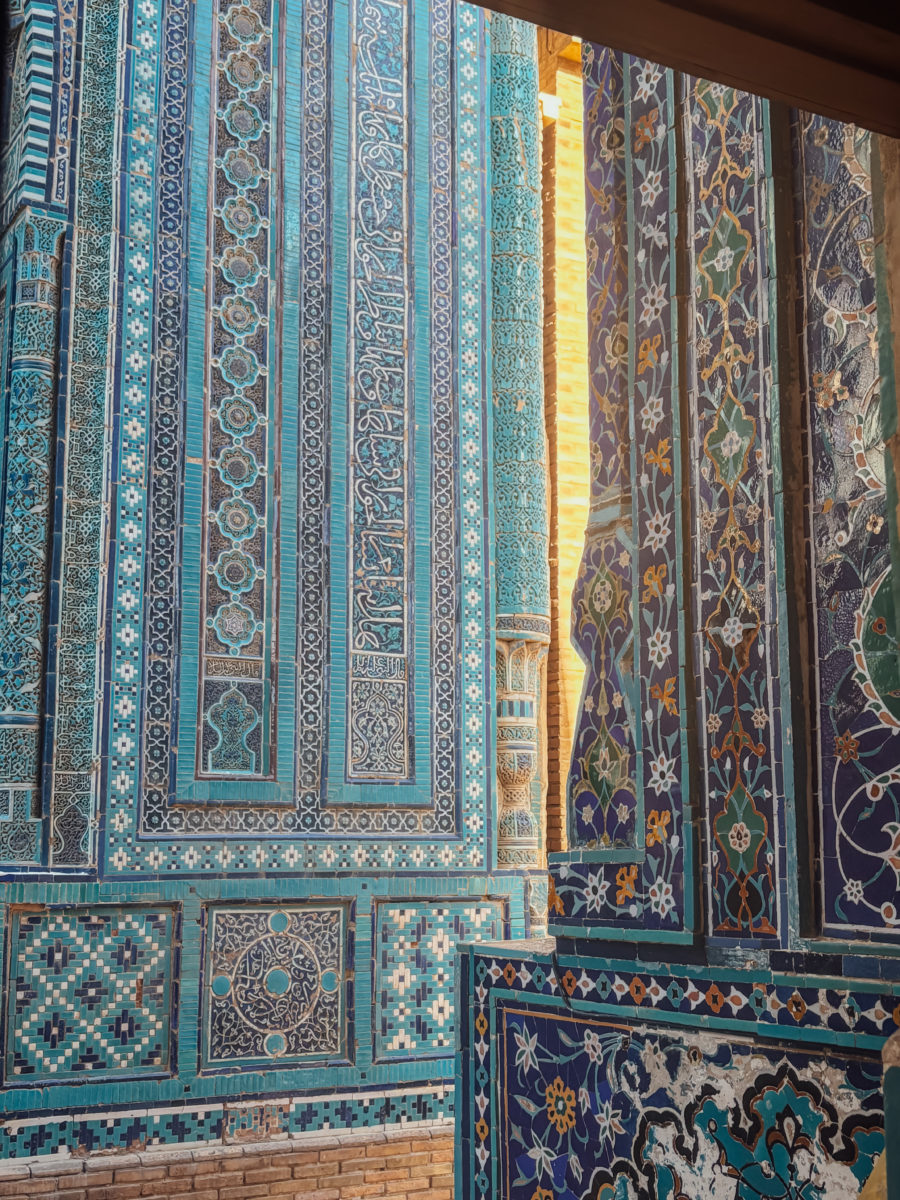
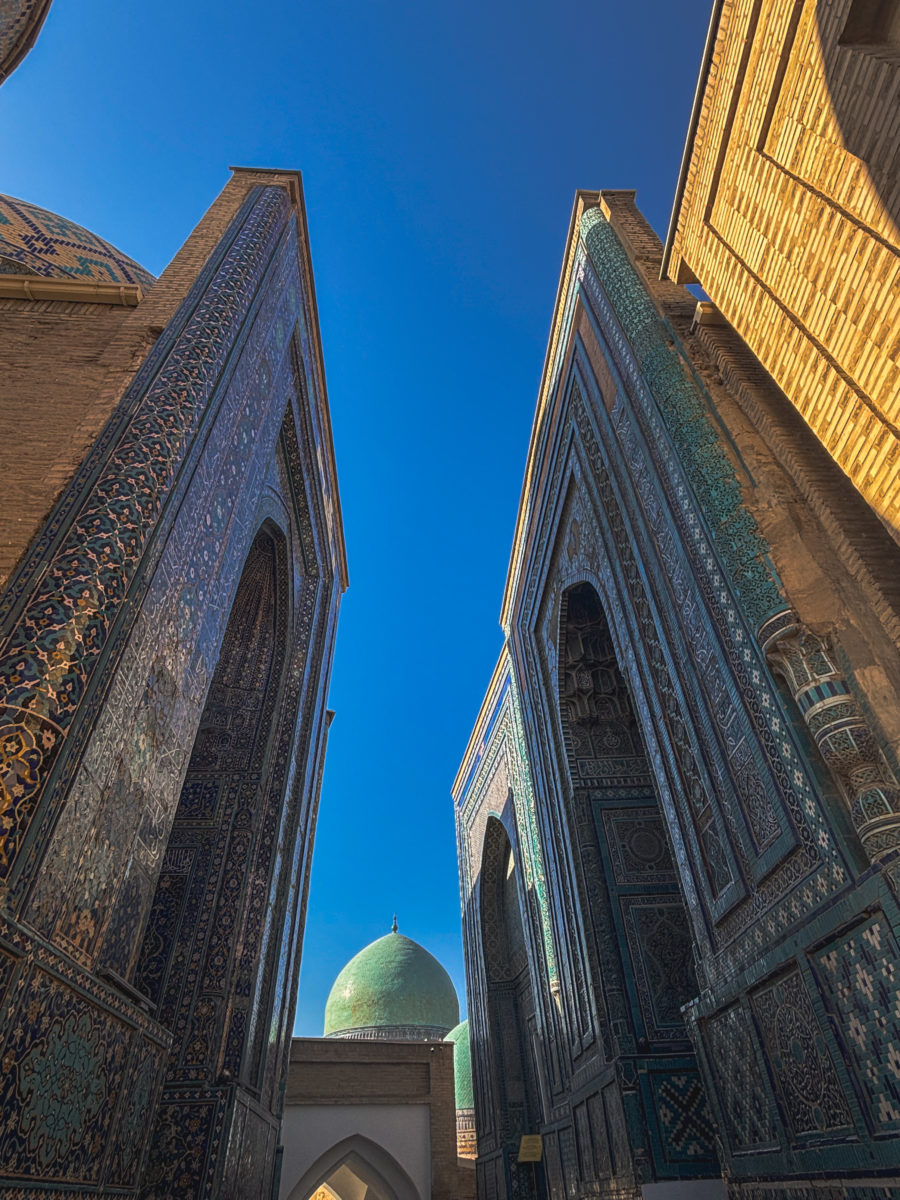
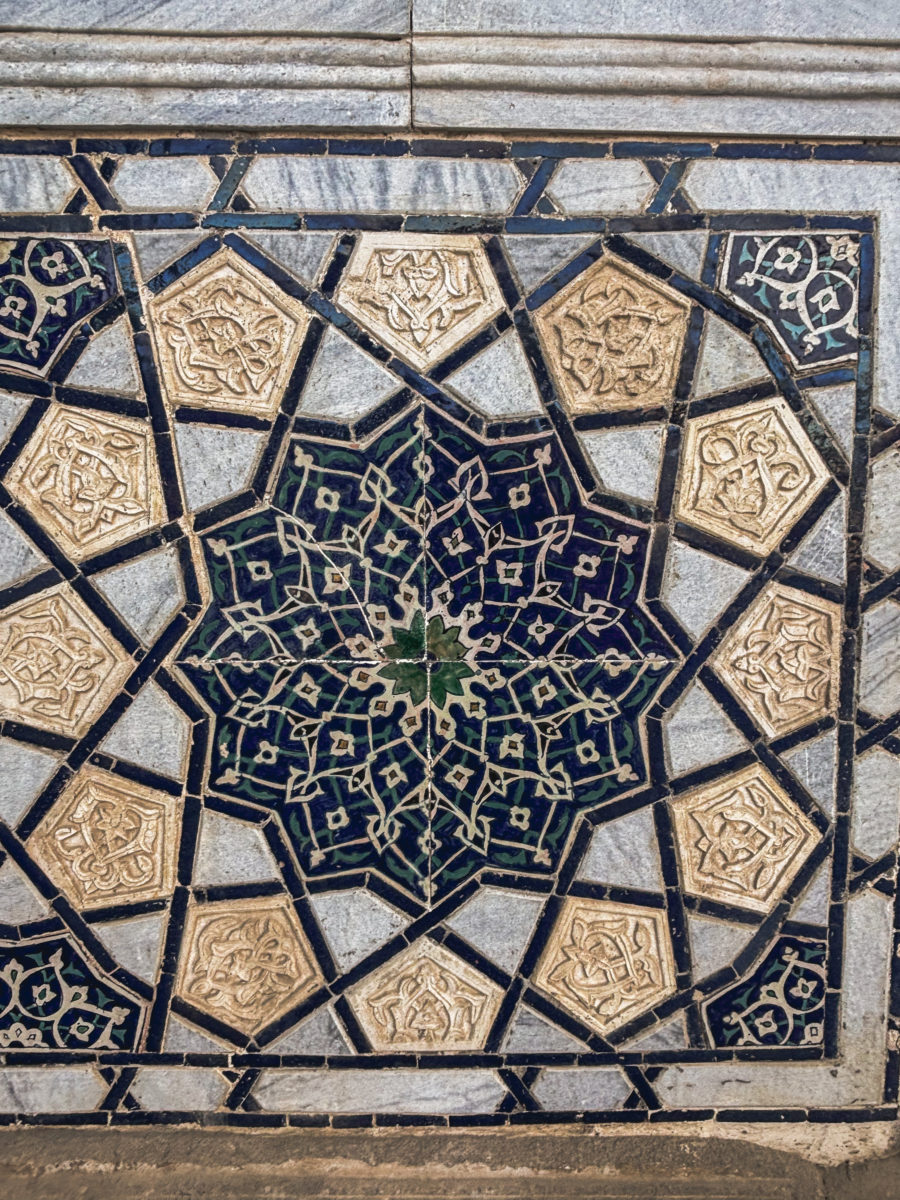
The complex stretches along a narrow lane lined with mausoleums whose facades are covered with some of the finest ceramics ever created in Central Asia. Each tomb feels like a unique work of art.
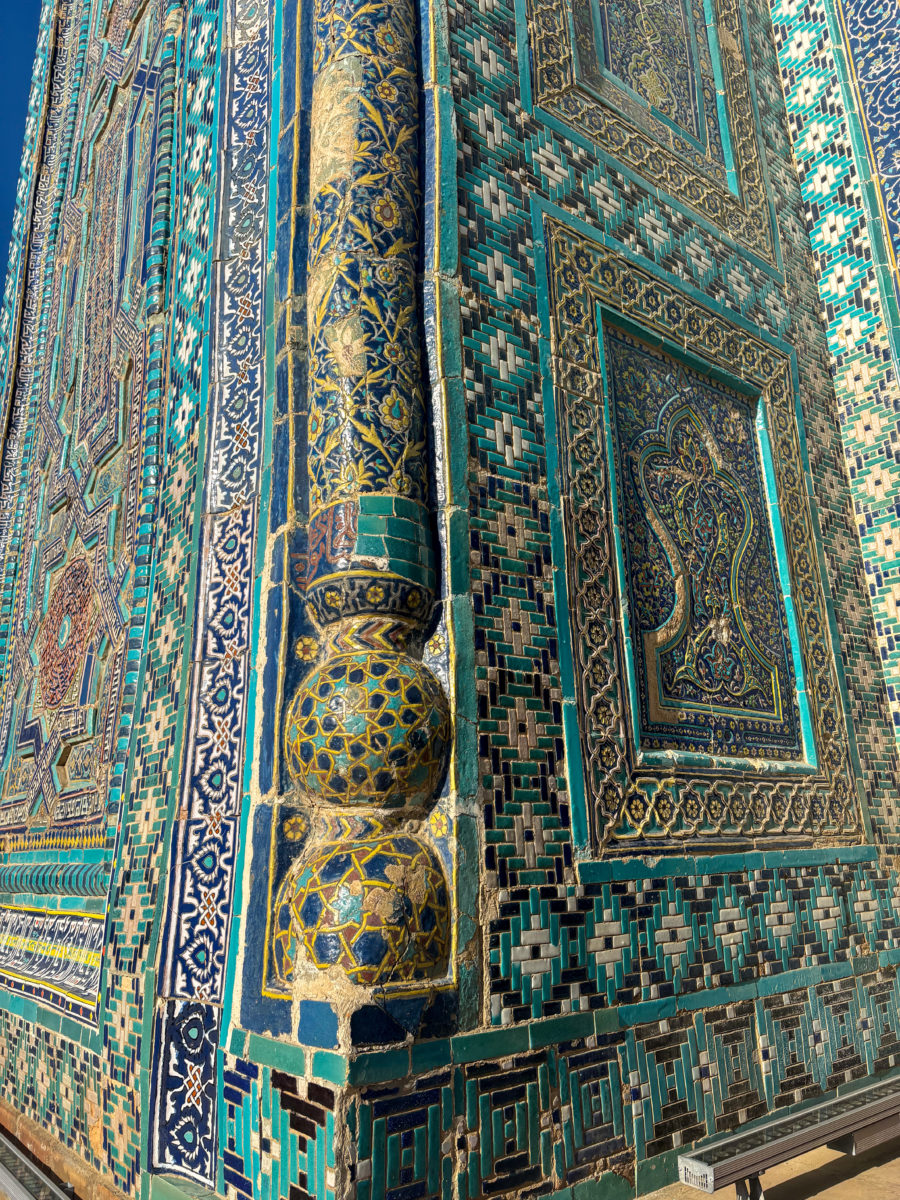
The shades of blue are endless: turquoise, cobalt, azure, sapphire. Under the sunlight, the tiles reflect light with an almost supernatural intensity.
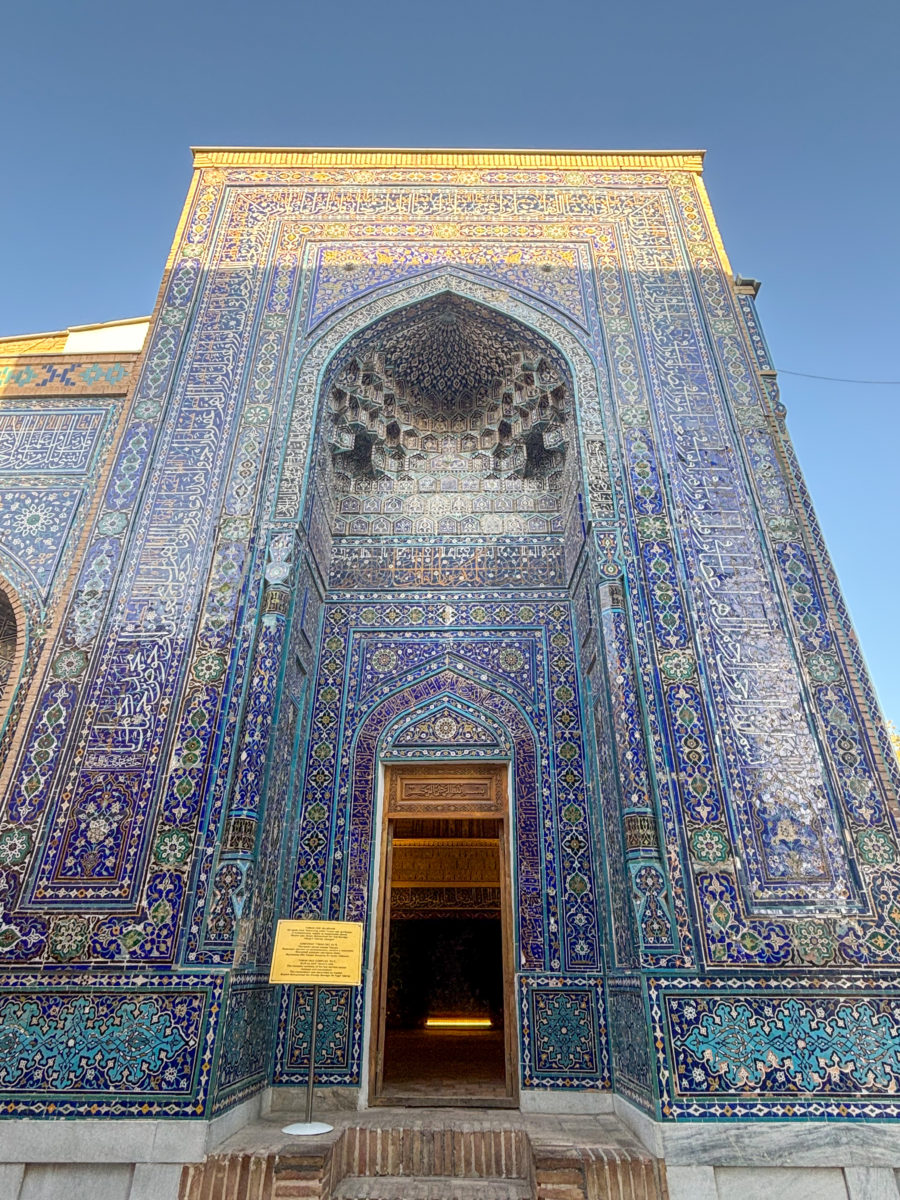
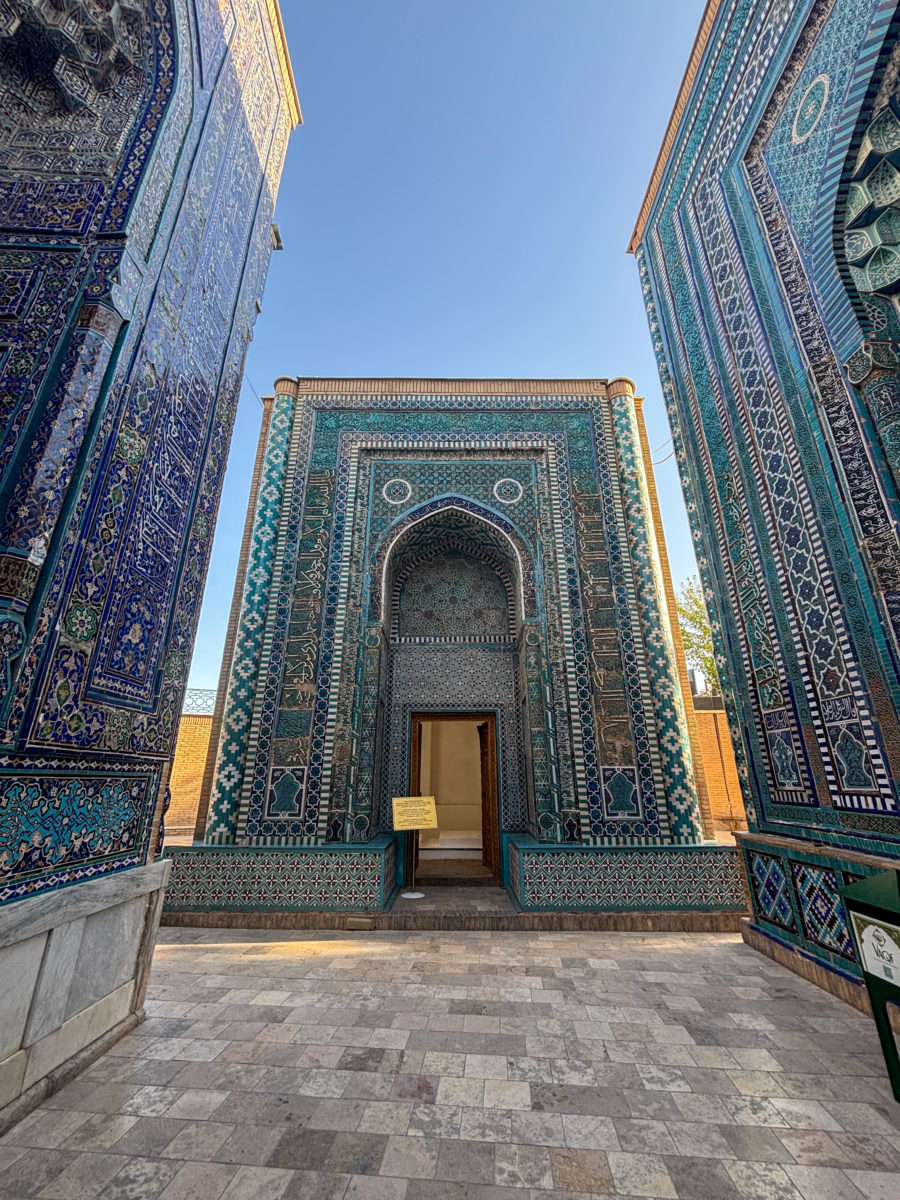
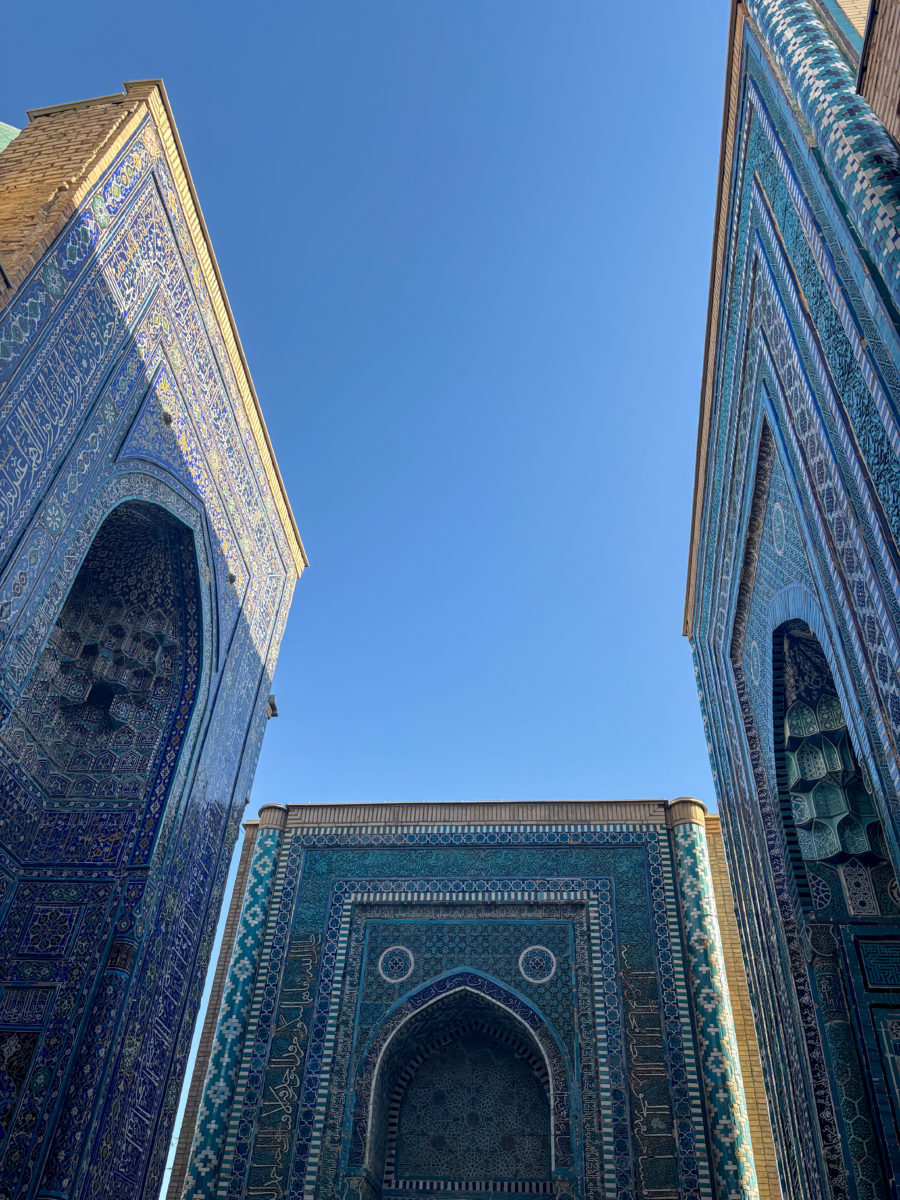
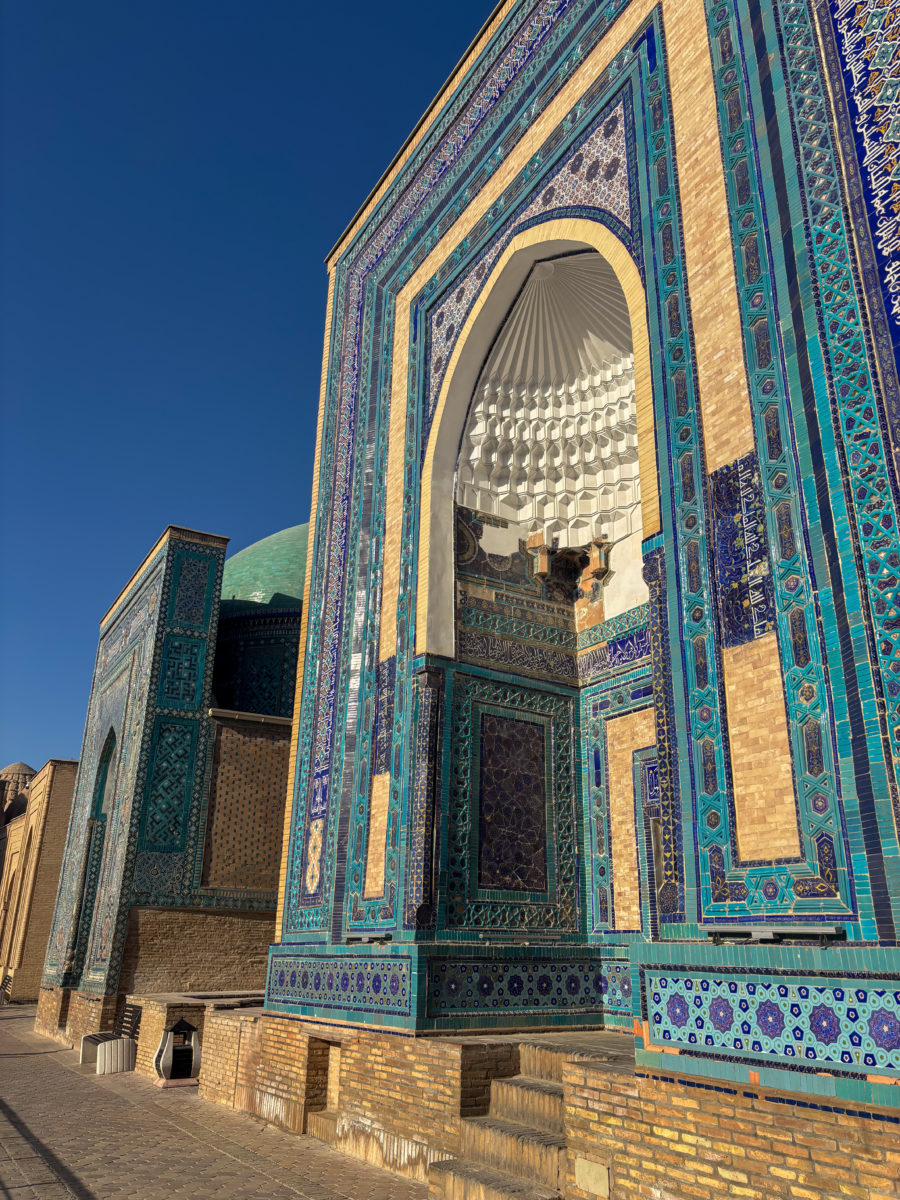
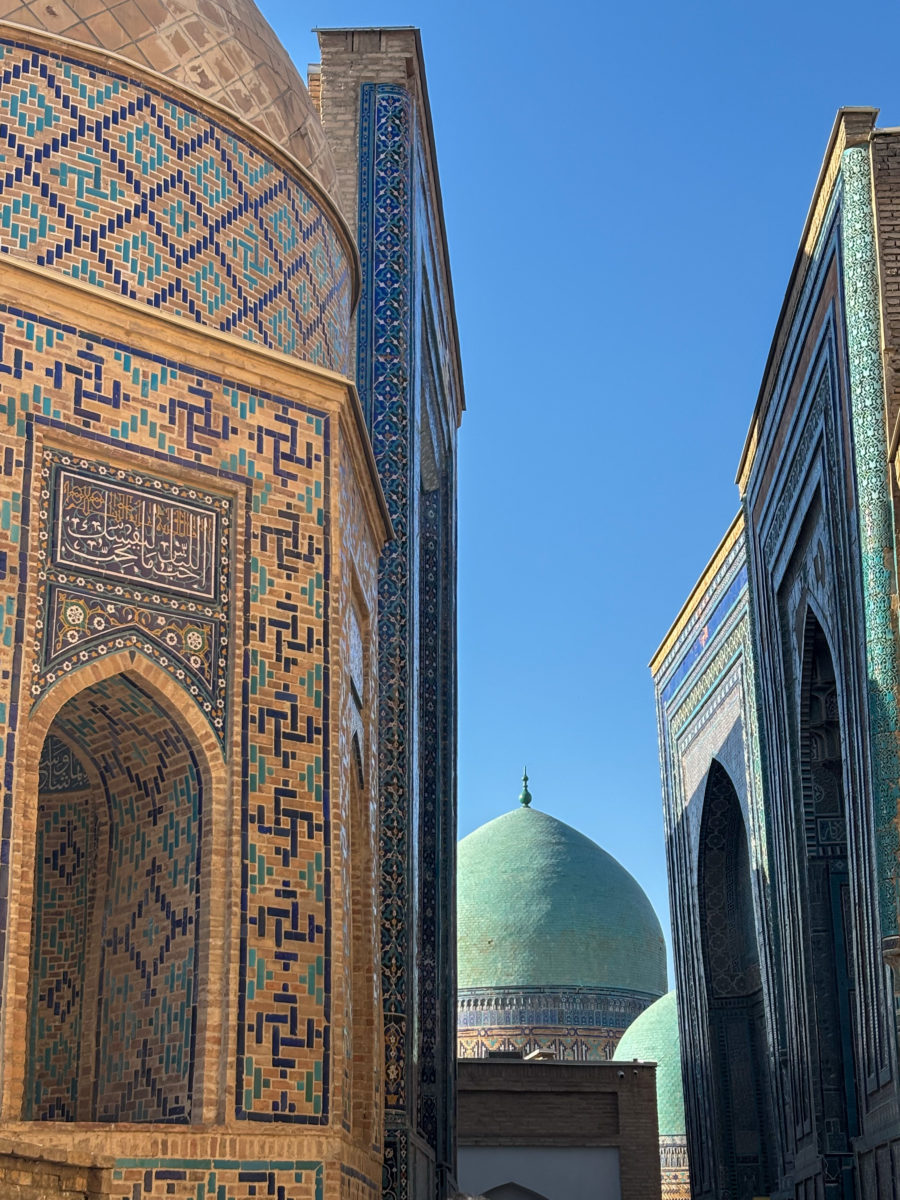
The site is also an important pilgrimage destination. According to tradition, Qutham ibn Abbas, a cousin of the Prophet Muhammad, is buried here.
I spent long moments simply studying the mosaics. The more closely one looks, the more one discovers: new shapes, new patterns, new colours.
Hazrat Khizr Mosque, Protector of Travellers
On the heights of Samarkand, beside Shah-i-Zinda; which can easily be reached on foot, stands the elegant Hazrat Khizr Mosque.
According to tradition, it is dedicated to Khizr, a revered figure in the Muslim world who is considered the protector of travellers and pilgrims.
There is no extravagance here, no golden domes or endless mosaics. The beauty lies in simplicity.
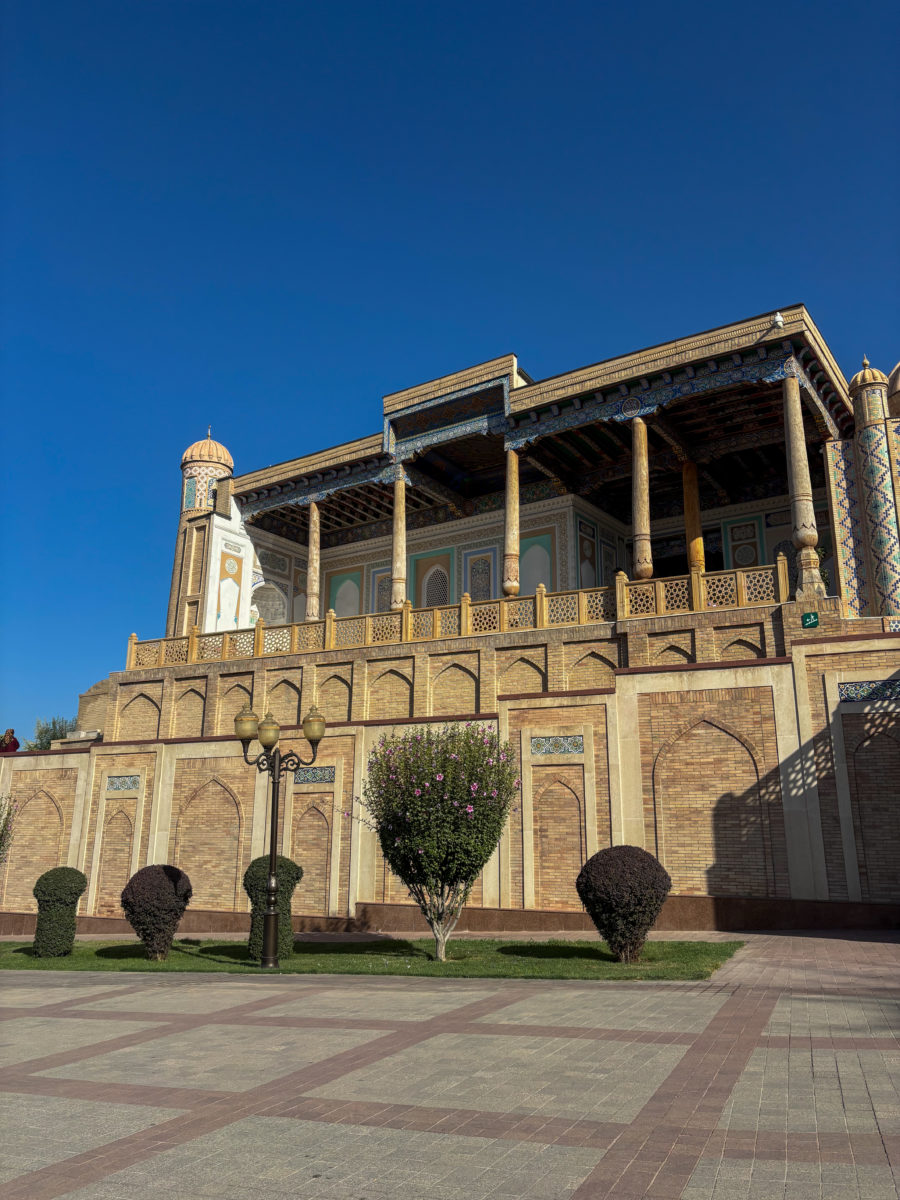
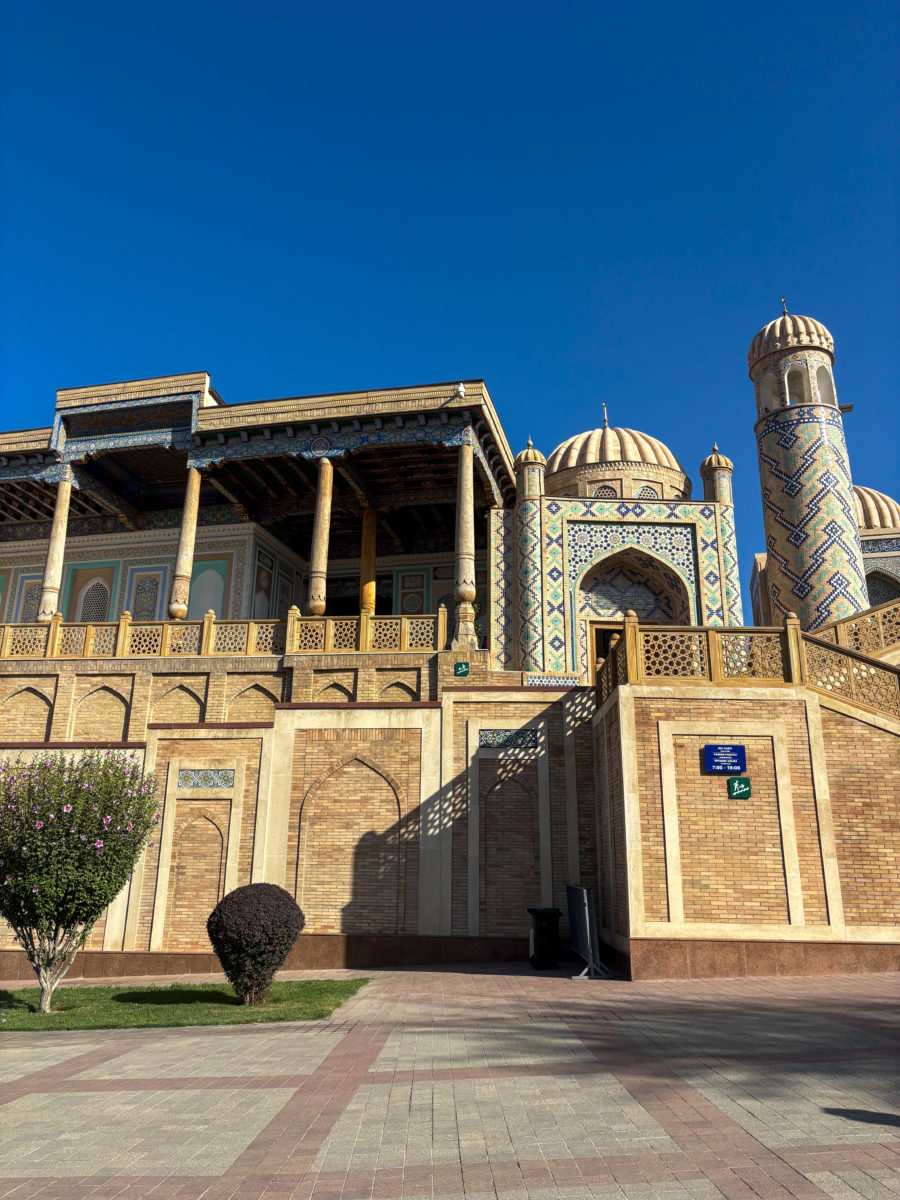
Its pale walls, peaceful courtyard, and delicately carved woodwork invite calm and reflection. One senses that this mosque was not built to impress, but to welcome. Travellers and pilgrims once found here a place to rest, reflect, and perhaps draw comfort before continuing their journeys.
I particularly appreciated the serenity of the site. From its terrace, the view encompasses Samarkand’s blue domes, modern neighbourhoods, and historical remains.
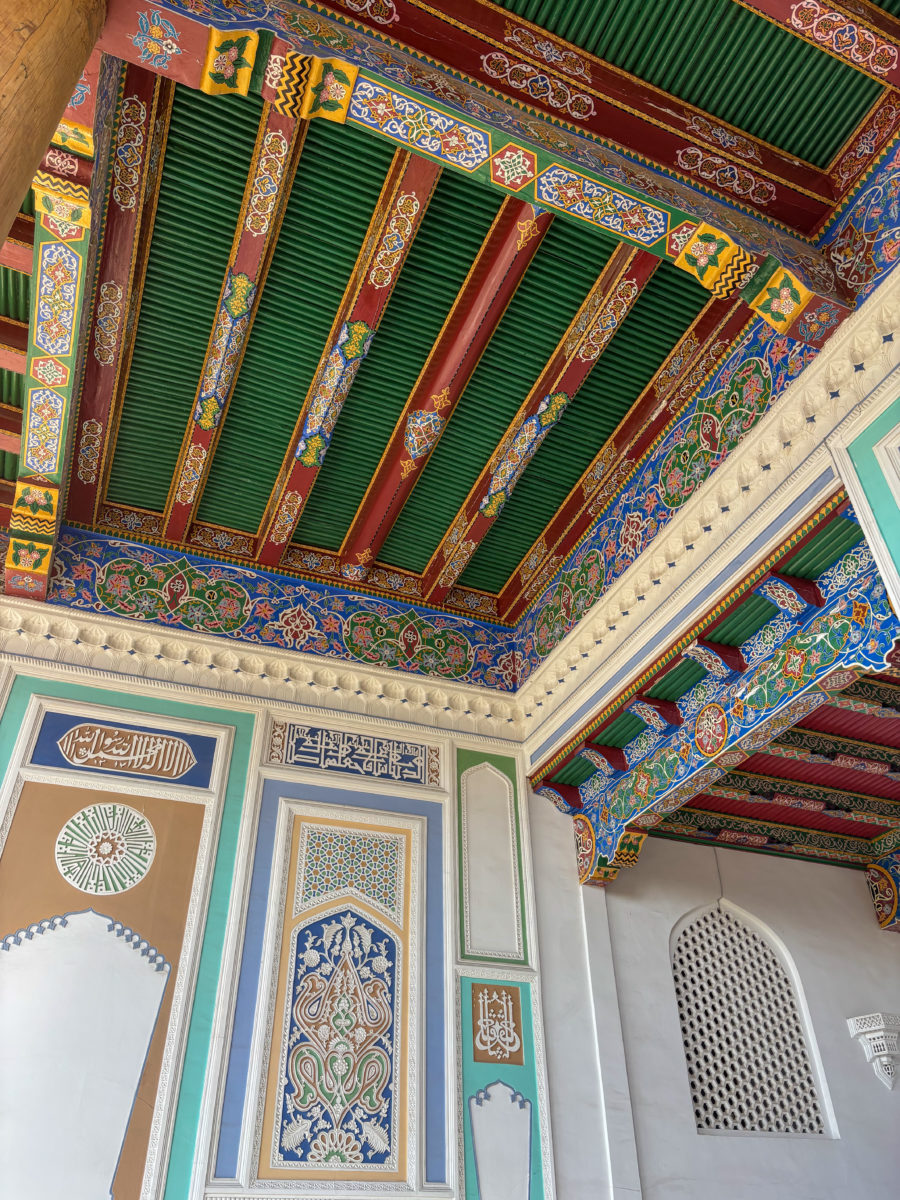
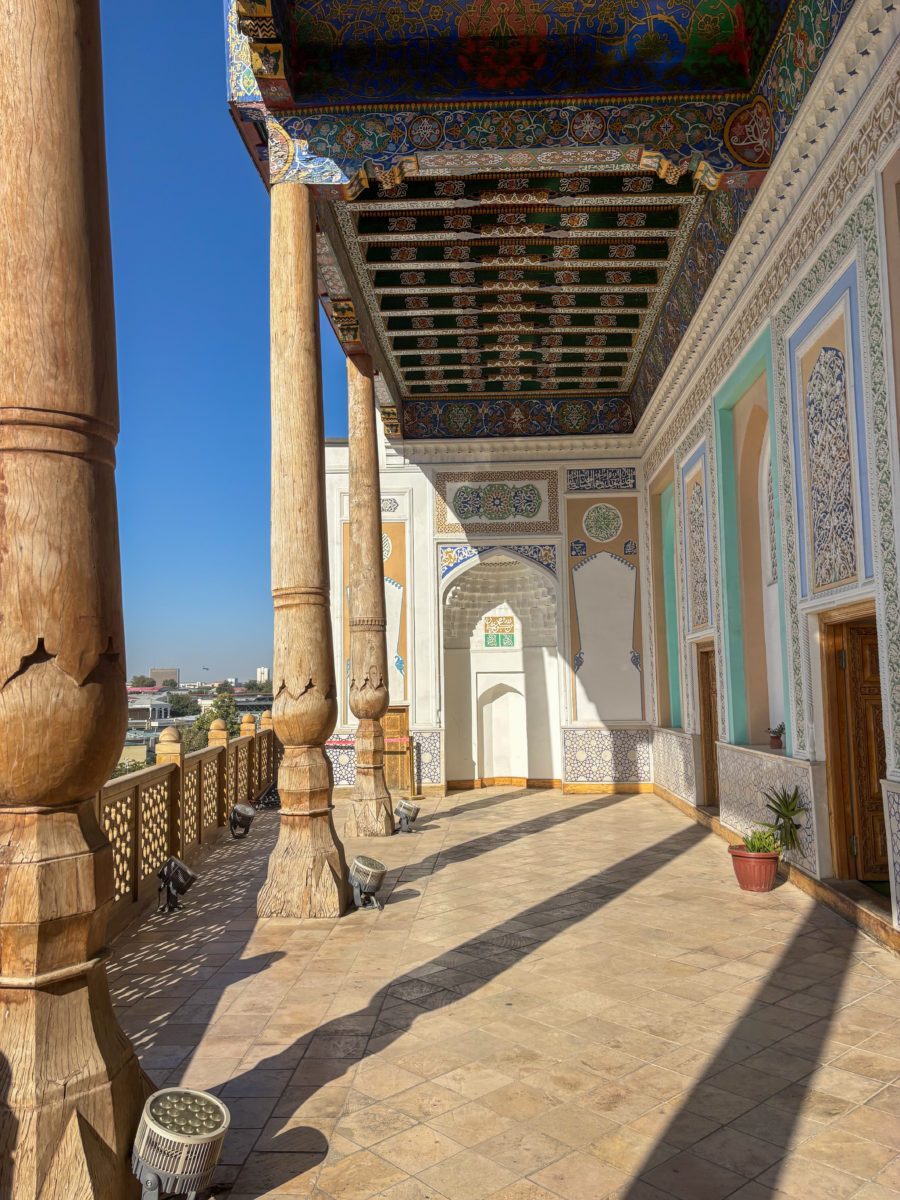
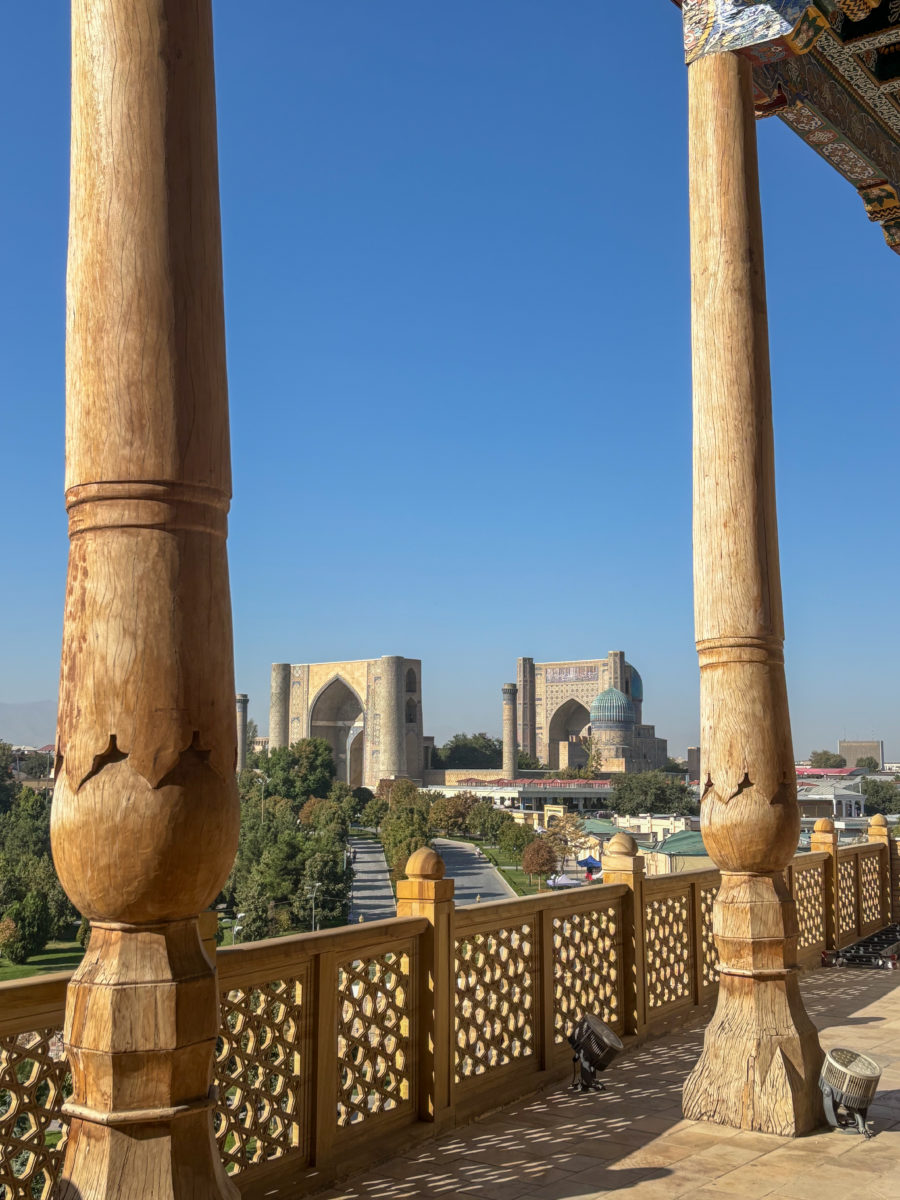
It is the perfect place to pause and take a step back after visiting the city’s most popular monuments.
The mosque also houses the mausoleum of Uzbekistan’s first president, Islam Karimov, whose tomb attracts many local visitors wishing to pay their respects.
Bibi Khanum Mosque
When Timur returned from his victorious campaigns in India, he set out to build the largest mosque in the Muslim world. The result was Bibi Khanum Mosque.
Its sheer scale is astonishing. Colossal and oversized, it perfectly embodies Tamerlane’s boundless ambition.
Many legends surround the monument, but my favourite concerns his beloved wife, Bibi Khanum.
According to the story, she wished to offer her husband the most magnificent sanctuary in the world. Artisans laboured tirelessly, and the architect eventually fell in love with the queen. Before completing the project, he demanded a kiss.
She finally agreed, fearing that otherwise the work would remain unfinished before Timur’s return. The kiss was said to have been so passionate that it left a mark upon her cheek.
When the emperor discovered it, his fury was immense. The architect was executed, and all women in the empire were ordered to wear veils so that no man would ever again be tempted by their beauty.
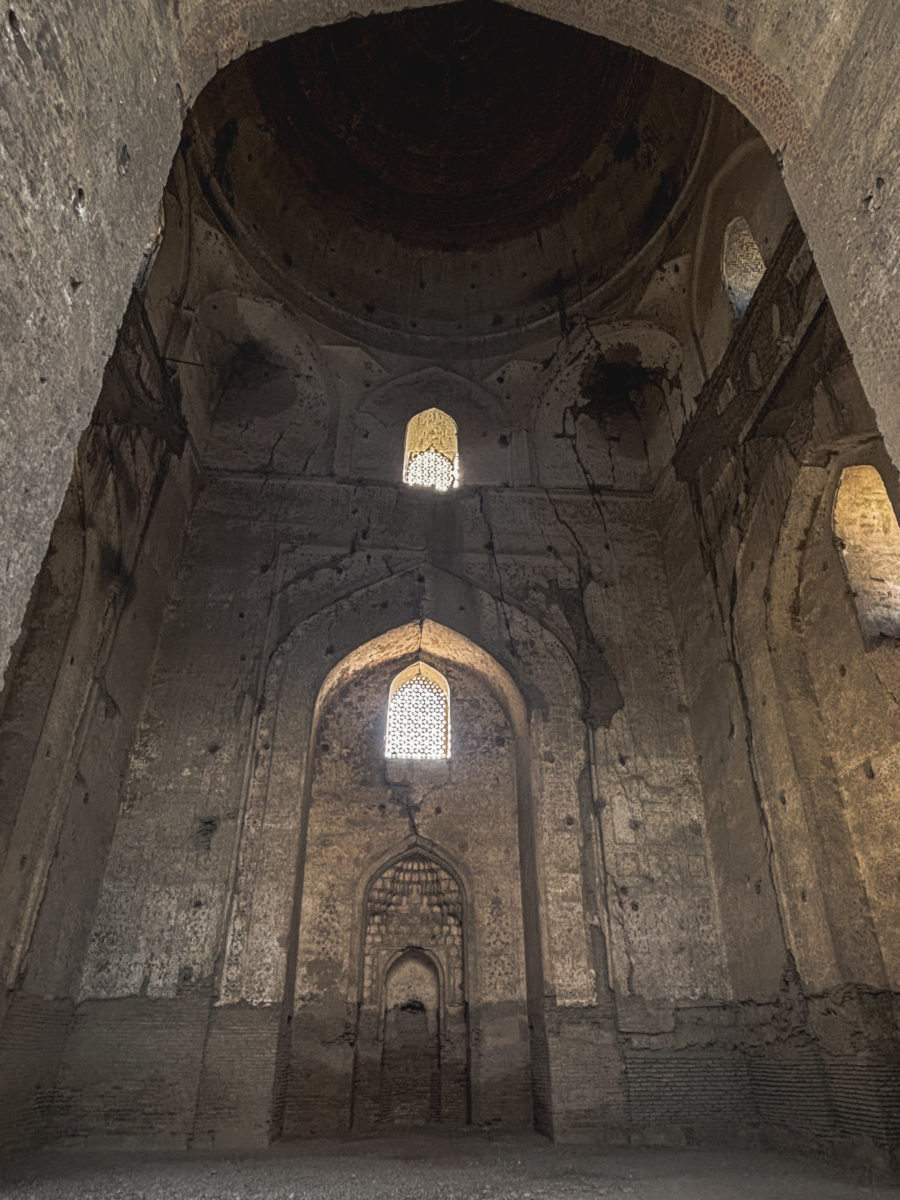
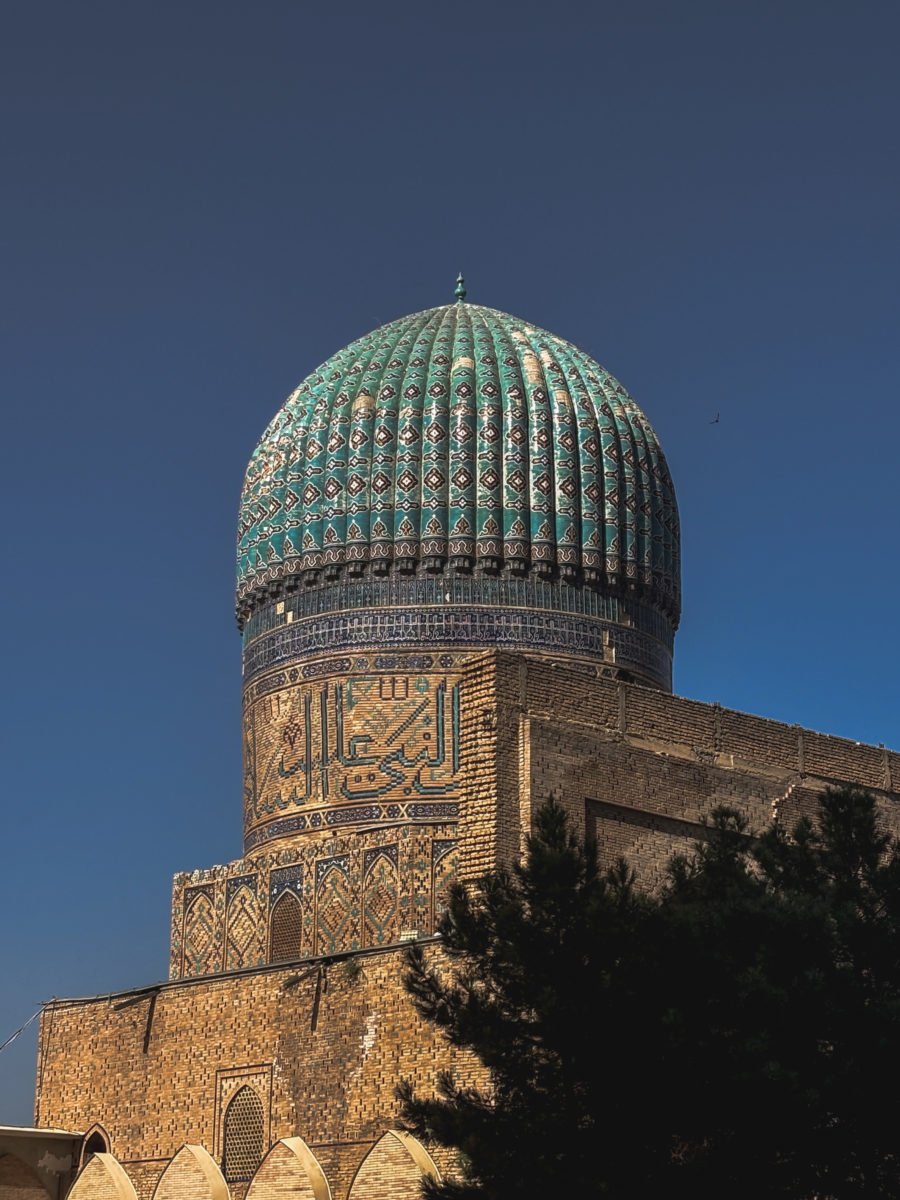
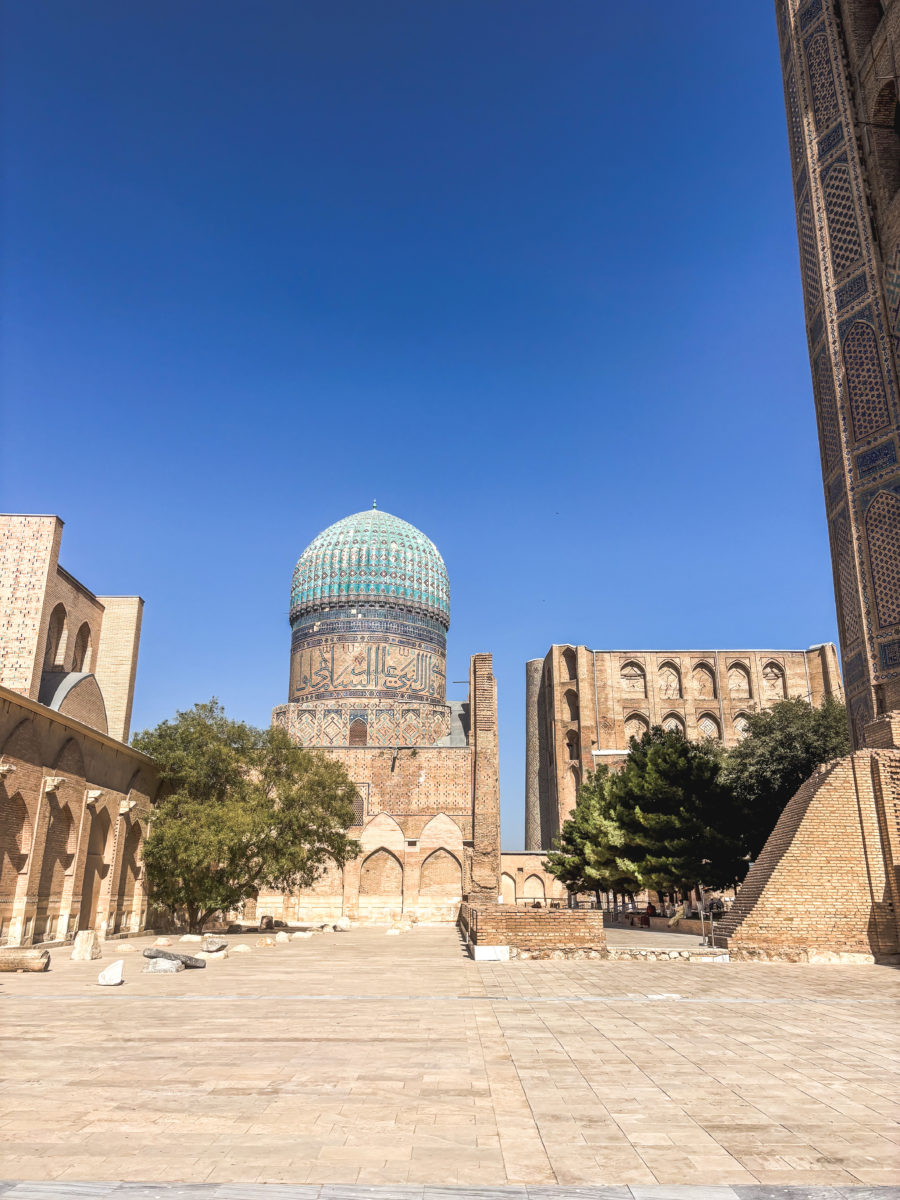
Perhaps it is because of this tragic tale that the mosque moved me less deeply than other sites. Behind its immense domes and monumental scale, one senses the fragility of an ambitious dream built too quickly.
Legend meets history here. Constructed in haste, the mosque soon began to deteriorate. An earthquake at the end of the 19th century completed its destruction. Rebuilt, damaged, rebuilt again, it seems to carry within its stones the echoes of an ambition pursued too recklessly.
Fortunately, the nearby Siab Bazaar restores balance to the experience (although I found it less striking than Chorsu Bazaar in Tashkent). Here there is warmth instead of stone: colourful heaps of spices, pyramids of dried fruits, sweet melons, and genuine smiles.
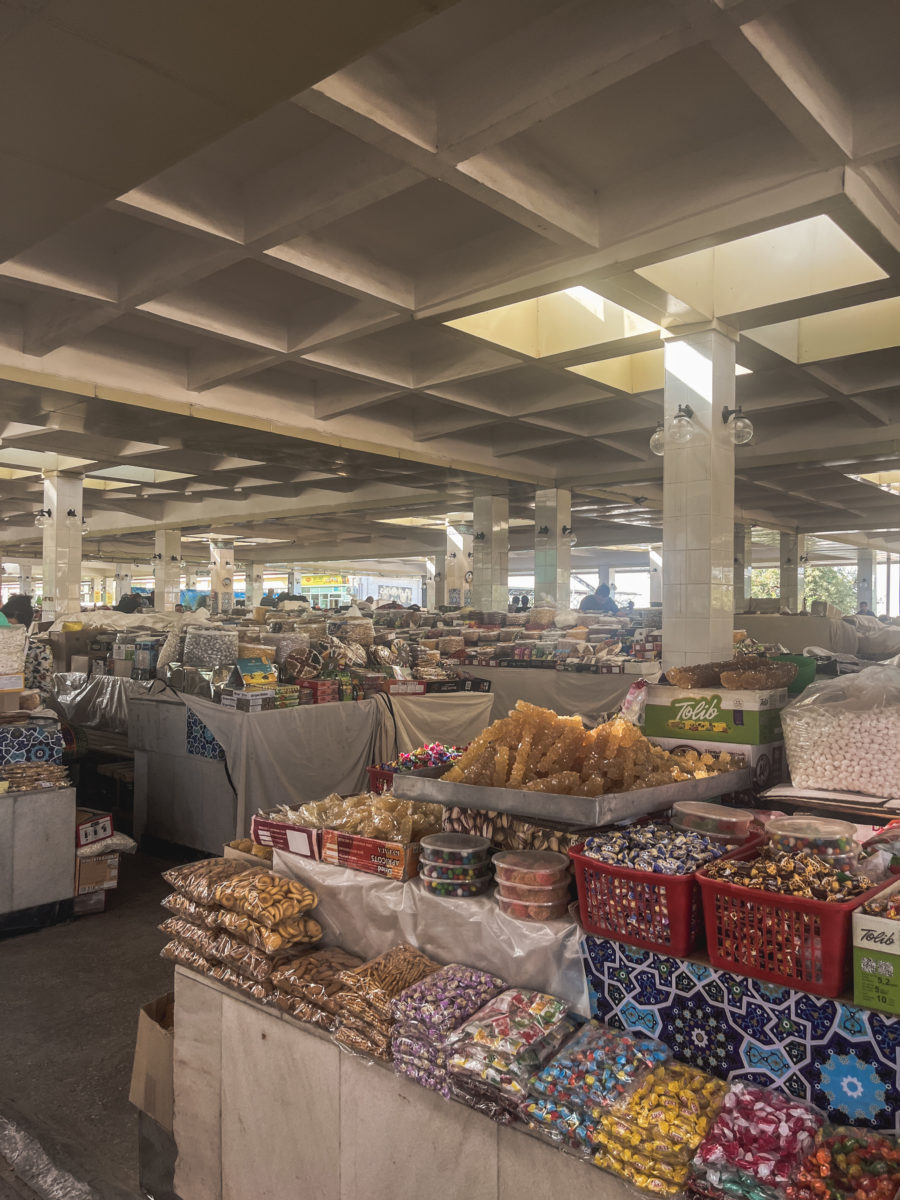
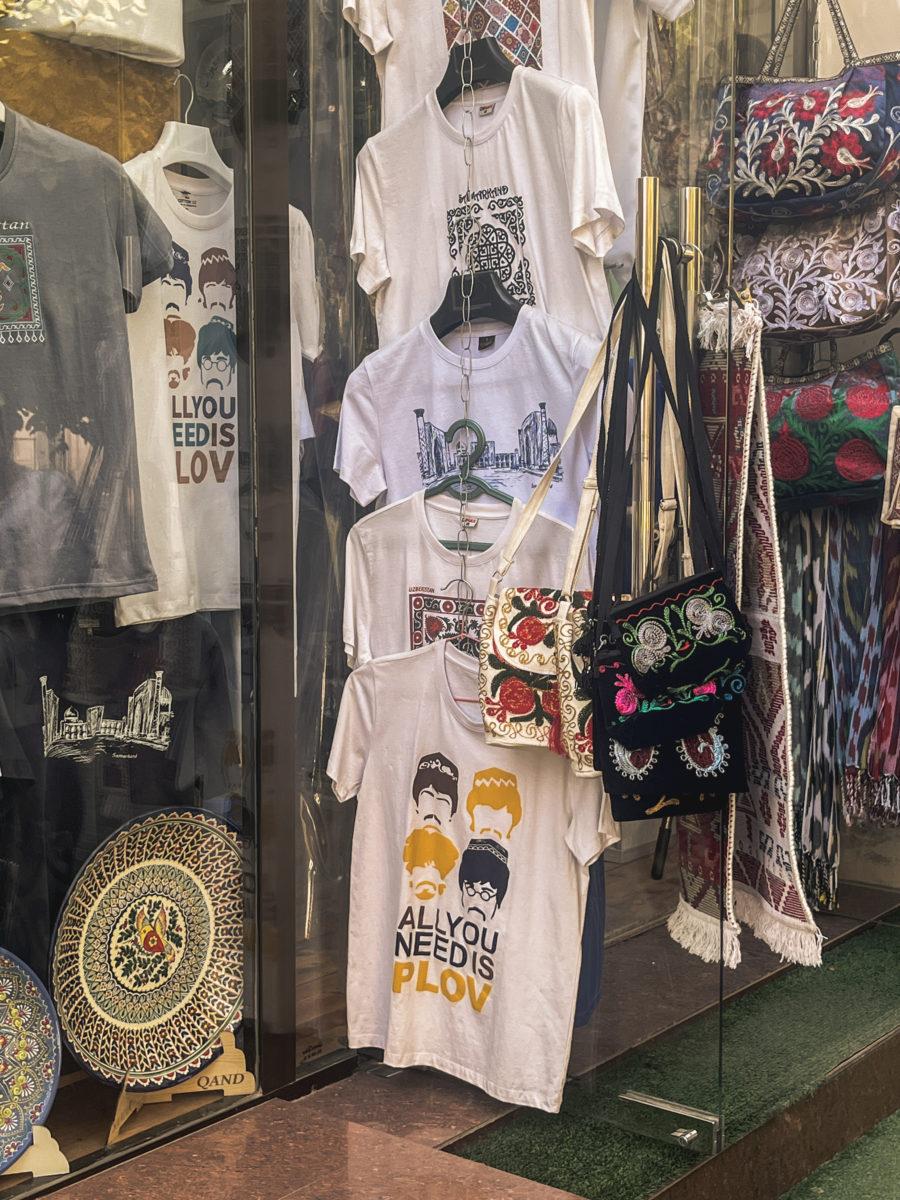
The voices of merchants overlap; bargaining unfolds everywhere (and no, they certainly didn’t fool us!); aromas drift through the air. It is a delightful contrast that restores life and energy to the area and makes an excellent place to purchase souvenirs if you are at the end of your ouzbek journey.
Tried and Tested Addresses
Emirhan Restaurant: Delicious cuisine accompanied by magnificent views over the Registan. We visited twice. During the peak touristic season (August to October), I recommend booking ahead if you’d like a table on the rooftop terrace.
Boulevard Restaurant & Bakery: A place that seems determined to rival France and its pastries. My travel companion was particularly fond of them. Personally, I especially enjoyed the food. We ended up eating here twice as well.
Labi G’or: A traditional restaurant just steps from the Registan. Service is not the best, but the food more than makes up for it.
Café El Merosi: A charming little café attached to the only theatre in Central Asia where performances are still staged in traditional costume.
Café Ula Gevalia: Newly opened in August 2025, this café became our final stop before boarding the train back to Tashkent. The owners are exceptionally welcoming, and the tea selection is delightful.
Samarkand, A City That Stays With You
Samarkand is far more than a tourist destination.
It is a city that has fuelled the imagination for centuries and continues to fascinate all who wander through it.
Its turquoise domes, endless mosaics, monumental architecture, and extraordinary history give it a truly unique identity. Few places in the world make you feel so strongly that you are walking through the heart of a legend.
As I left Samarkand, I understood why so many travellers, from Marco Polo to modern-day explorers, carried away unforgettable memories of this city.
Some cities are visited. Samarkand is experienced.
And as if this journey had not already been rich enough, it also became my gateway to another fascinating discovery: Tajikistan.