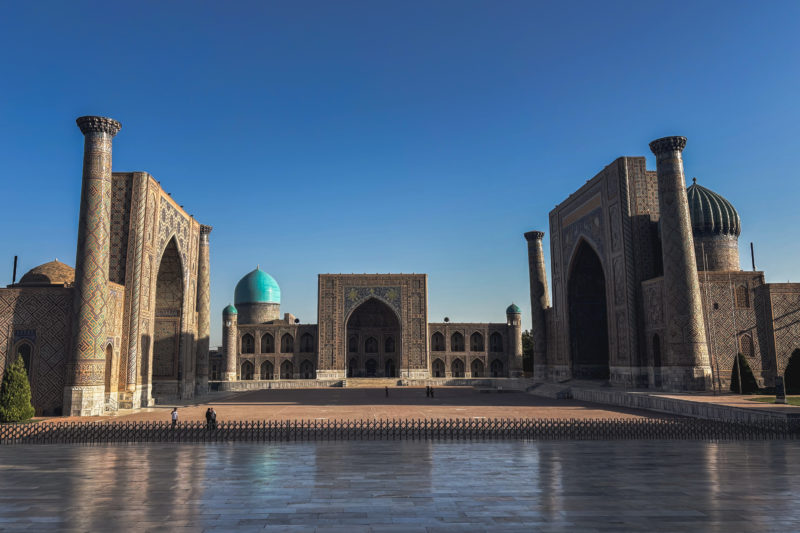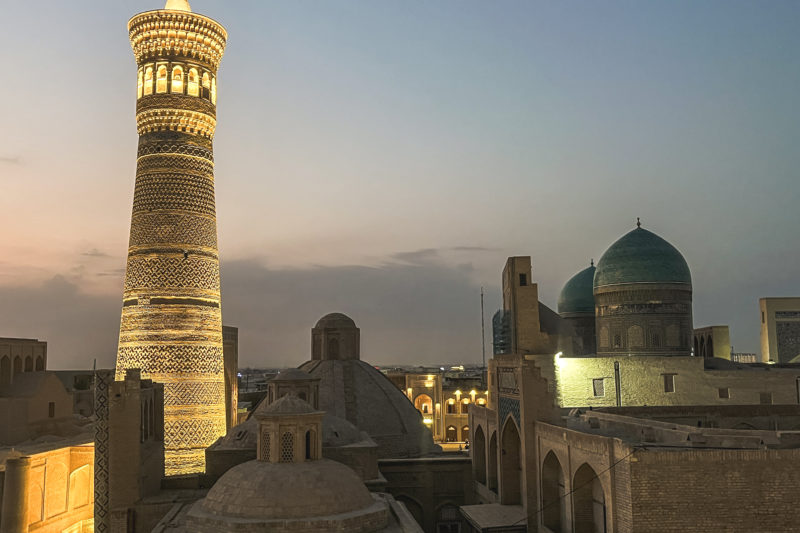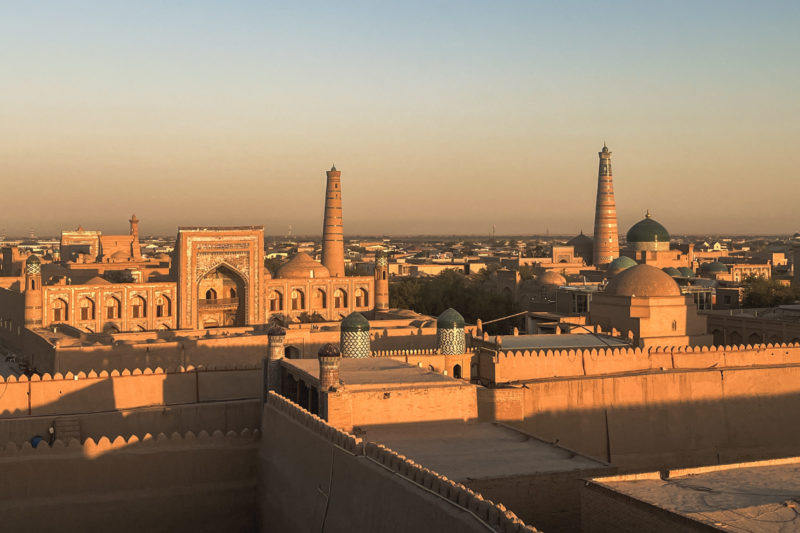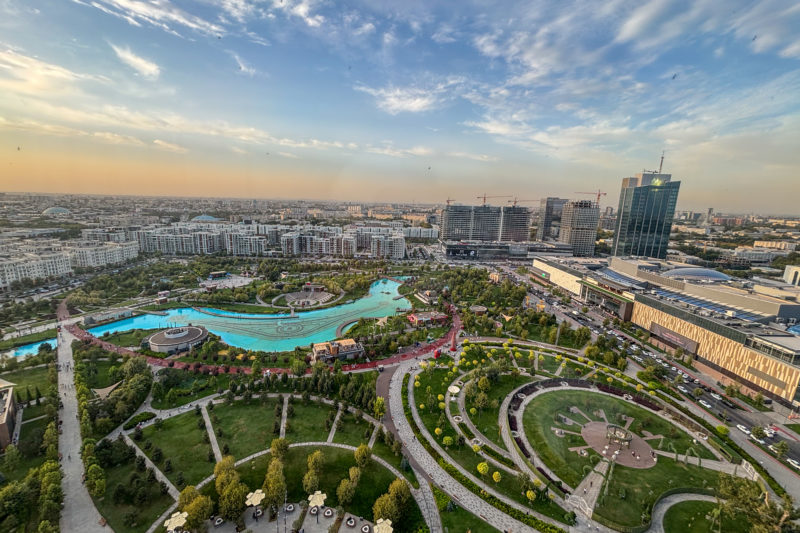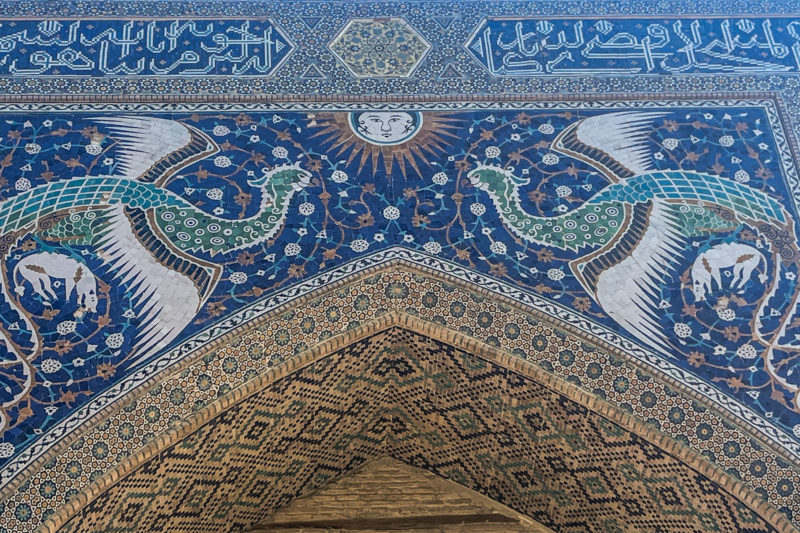
After spending several days admiring the blue domes of Uzbekistan, we decided to leave behind, for a day, the splendor of the Timurid Empire and discover another Central Asian country: Tajikistan.
Barely an hour after crossing the Uzbek border, the scenery had already changed. Large cities gave way to valleys surrounded by mountains, the roads became increasingly winding, and the landscapes took on a wild character that contrasted sharply with the architectural wonders of Samarkand.
Our destination: the famous Seven Lakes (Haft Kul), nestled in the Fann Mountains, one of Tajikistan’s most beautiful natural regions.
Crossing a Border, Entering Another World
Traveling from the historic center of Samarkand to Tajikistan is surprisingly easy when joining an organized excursion. We chose this option and quickly understood why.
The process is straightforward: a driver takes you to the border, you cross on foot, and a Tajik driver awaits you on the other side. At least, that’s how it looks on paper. Reality, however, involves customs formalities.
Without a doubt, it was one of the most surreal border crossings I have ever experienced (alongside the famous Triple Frontier between Paraguay, Brazil, and Argentina). The contrast between the highly procedural Uzbek authorities and the much more relaxed Tajik side is striking.
The highlight? Having to show our passports six times within barely a hundred meters of no man’s land, both at 8 a.m. on the way in and again at 5 p.m. on the return journey. An experience made even more memorable by the fact that Tajikistan became my 50th country visited.
Once back on the road, the change in atmosphere was immediate. Villages appeared more modest, mountains gradually drew closer, and peaks dominated the horizon.
Tajikistan immediately felt rougher, more rural, and less polished than Uzbekistan, although we only visited one region and not the capital, Dushanbe, which may have a more modern (and soviet) appearance comparable to Tashkent.
We were leaving behind palaces and madrasas and entering a world shaped by nature.
Panjakent: Tajikistan’s Gateway and Its Bustling Bazaar
Our first stop was the city of Panjakent and its vast bazaar.
At Panjakent’s market, you quickly learn that onions are king. Here, they are not sold individually but in large quantities, reflecting their importance in Tajik cuisine. Combined with an agricultural system that remains largely traditional and minimally industrialized, the result is a market that feels wonderfully authentic: fresh herbs, sun-ripened fruits, towering piles of spices, and the constant bustle that makes Central Asian markets so captivating.
Our guide explained that much of the pottery sold here is manufactured in Uzbekistan, yet it often bears a distinctly Tajik symbol: the cotton flower. It is a perfect illustration of the close ties that continue to bind these two countries. Following the collapse of the Soviet Union and the drawing of new borders, many Uzbek families found themselves living in Tajikistan and vice versa. Languages, traditions, cuisine, and even family identities continue to transcend administrative boundaries established only a few decades ago.
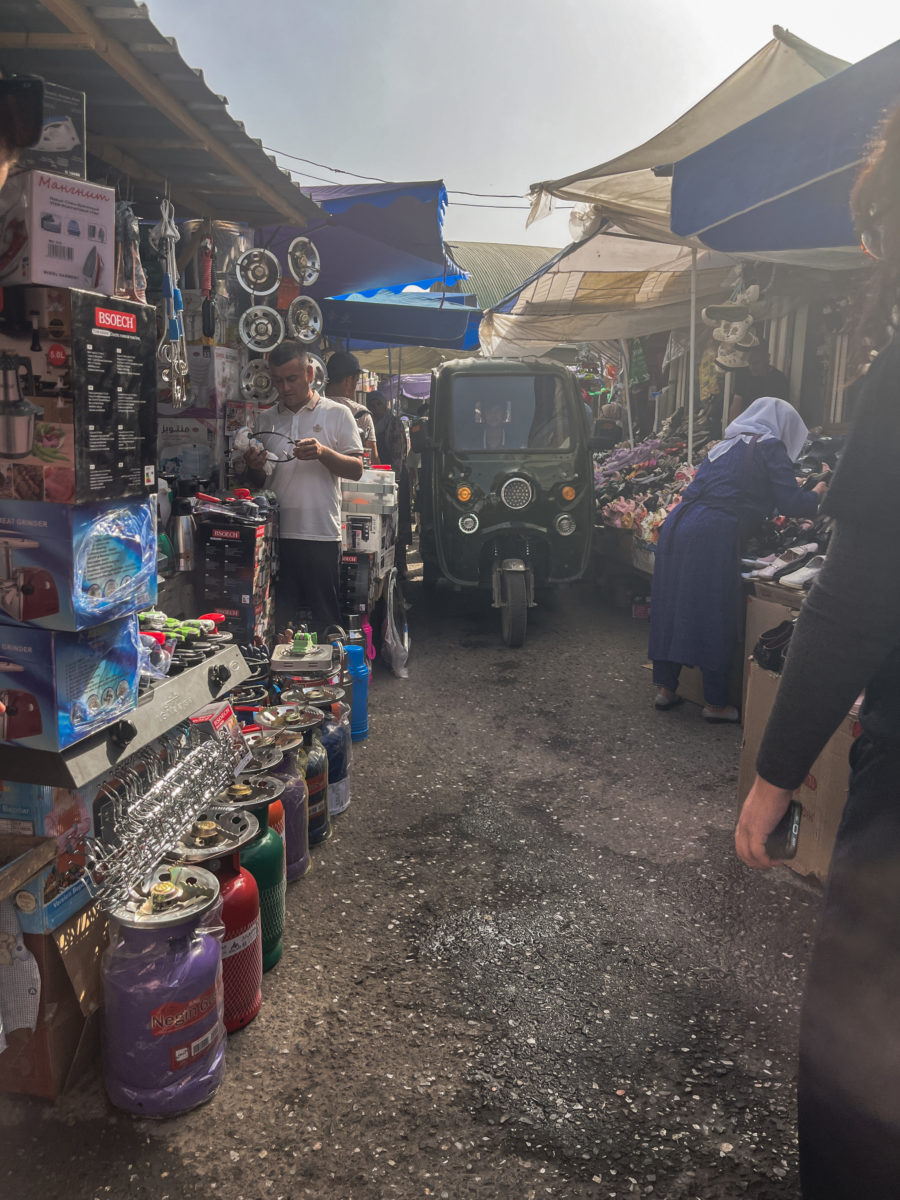
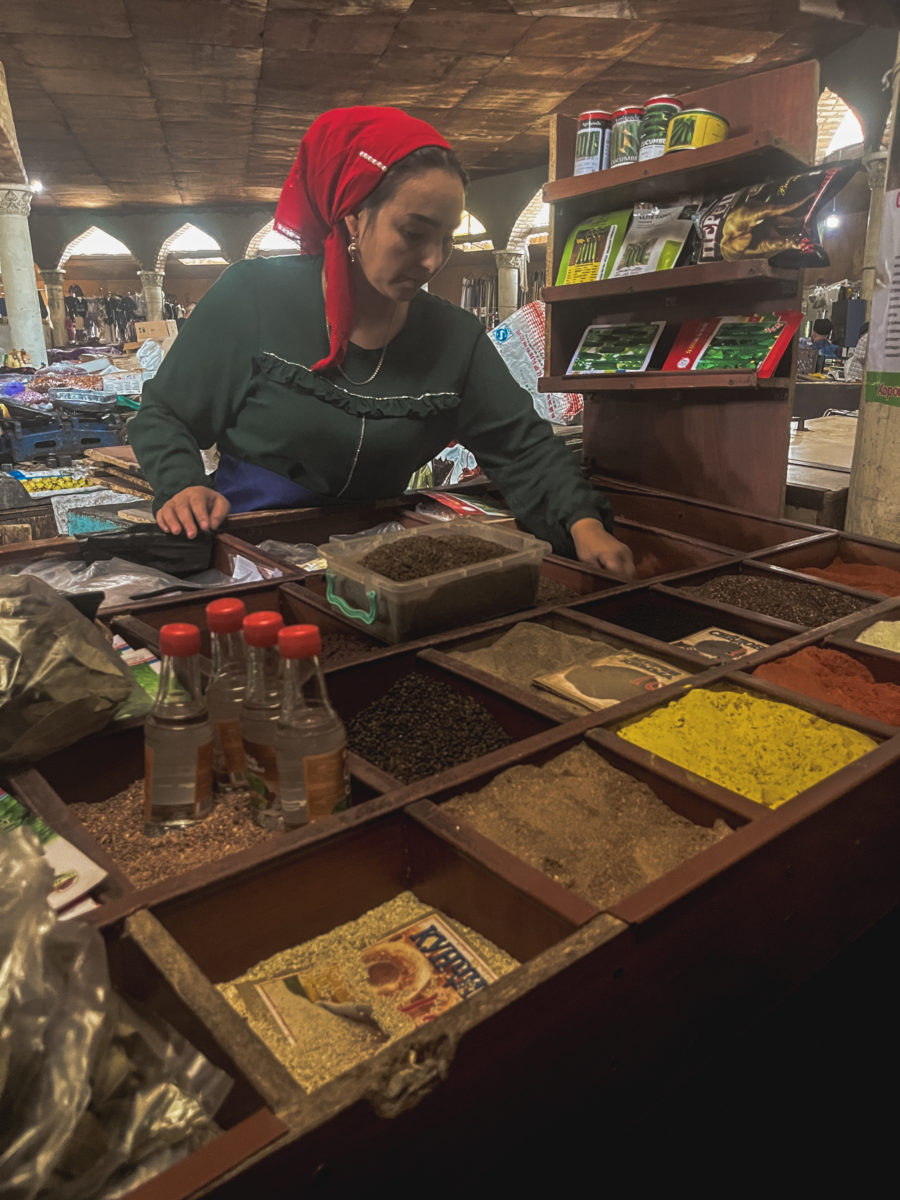
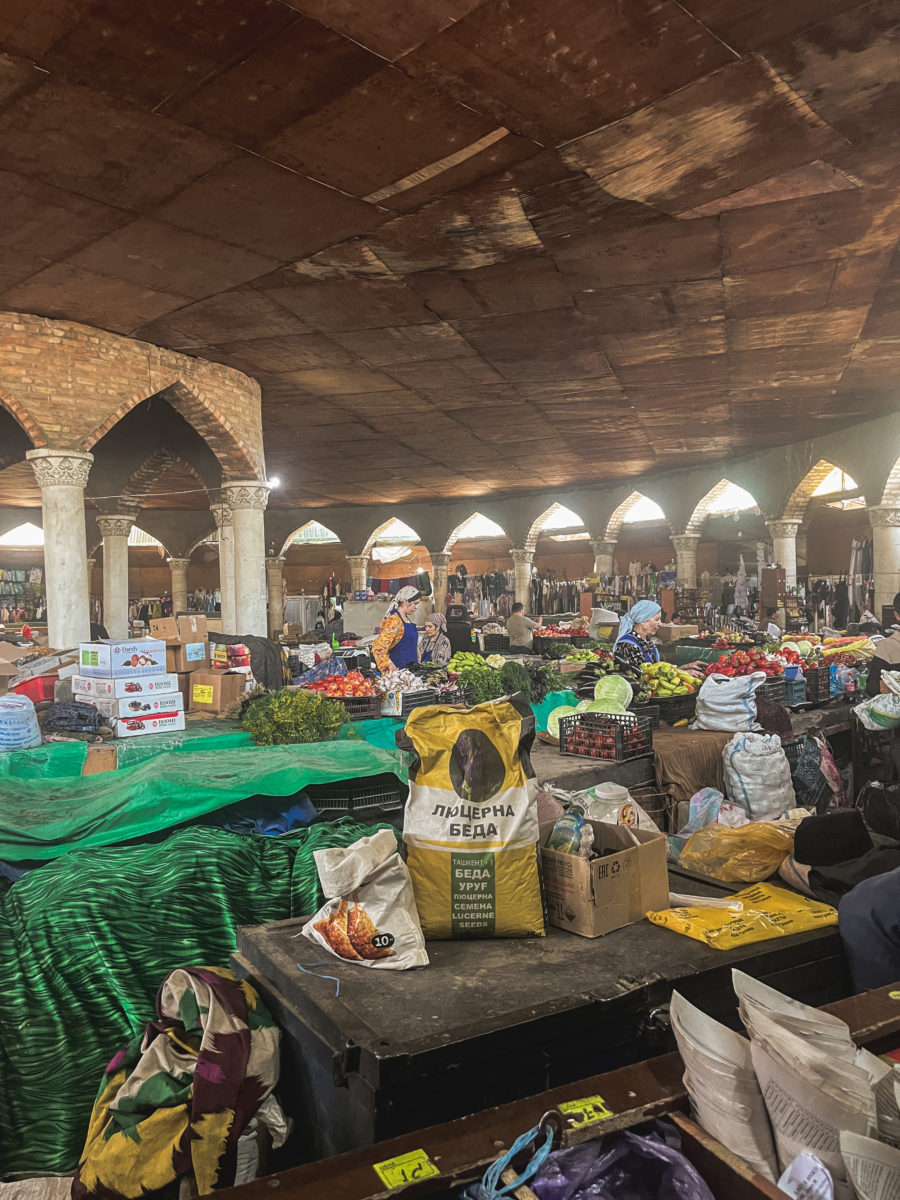
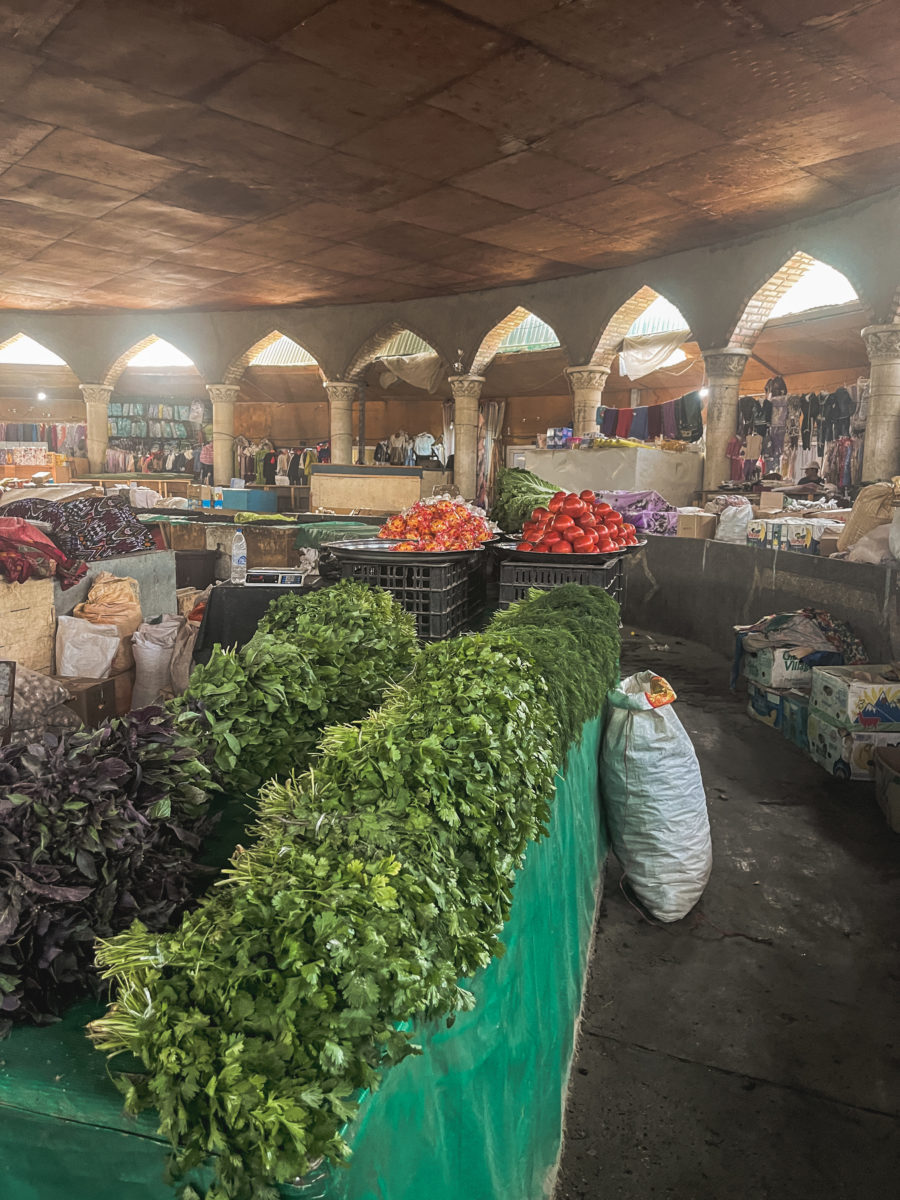
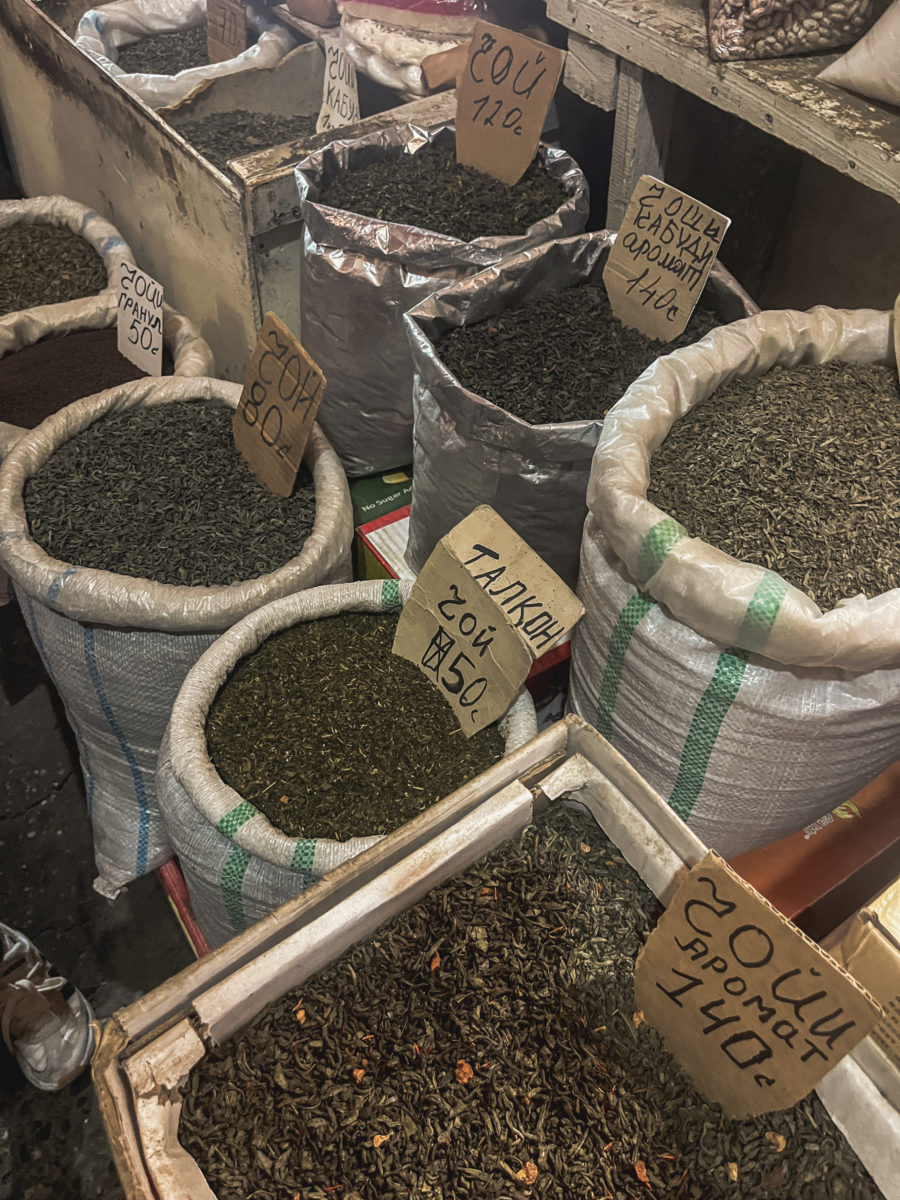
Compared with Tashkent’s bazaar, I greatly preferred Panjakent’s. The principle is the same: every product has its designated section, from fruits and textiles to grains and spices. Yet the atmosphere is entirely different. The market feels less polished and more spontaneous. The aisles pulse with life, vendors call out to local customers rather than tourists, and porters weave between stalls carrying enormous sacks. It is a true human anthill and perhaps the best illustration of where the word “bazaar” comes from.
Even today, despite modern development, Panjakent retains something of a frontier-town atmosphere. Situated between the Fann Mountains and the plains leading toward Samarkand, it naturally serves as a bridge between Uzbekistan and Tajikistan. Many travelers, like us, simply pass through on their way to the Seven Lakes.
The Fann Mountains: A Hidden Paradise
Before this trip, I had never heard of the Fann Mountains. Yet this range, located between Samarkand and Dushanbe, is considered one of Central Asia’s most beautiful natural treasures.
Rocky peaks, deep valleys, mountain rivers, and isolated villages come together to create spectacular scenery that seems largely untouched by mass tourism.
As we continued along the road, the views became more impressive. Our driver regularly stopped so that we could take photographs, but above all, so that we could simply enjoy the silence.
The Seven Lakes: A Palette of Colors
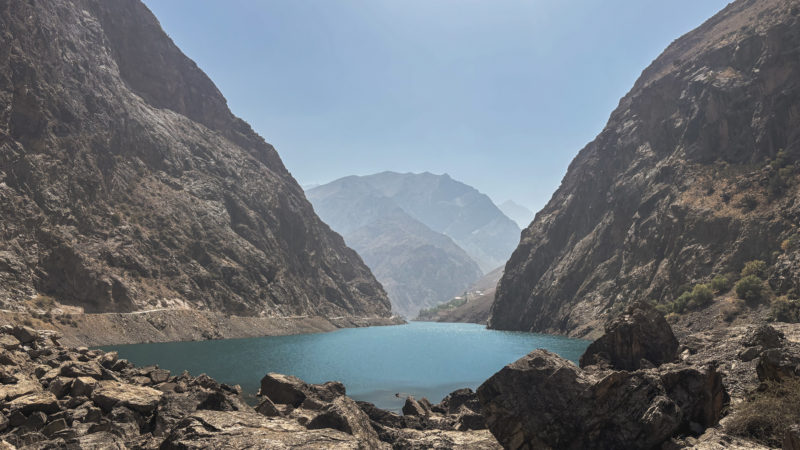
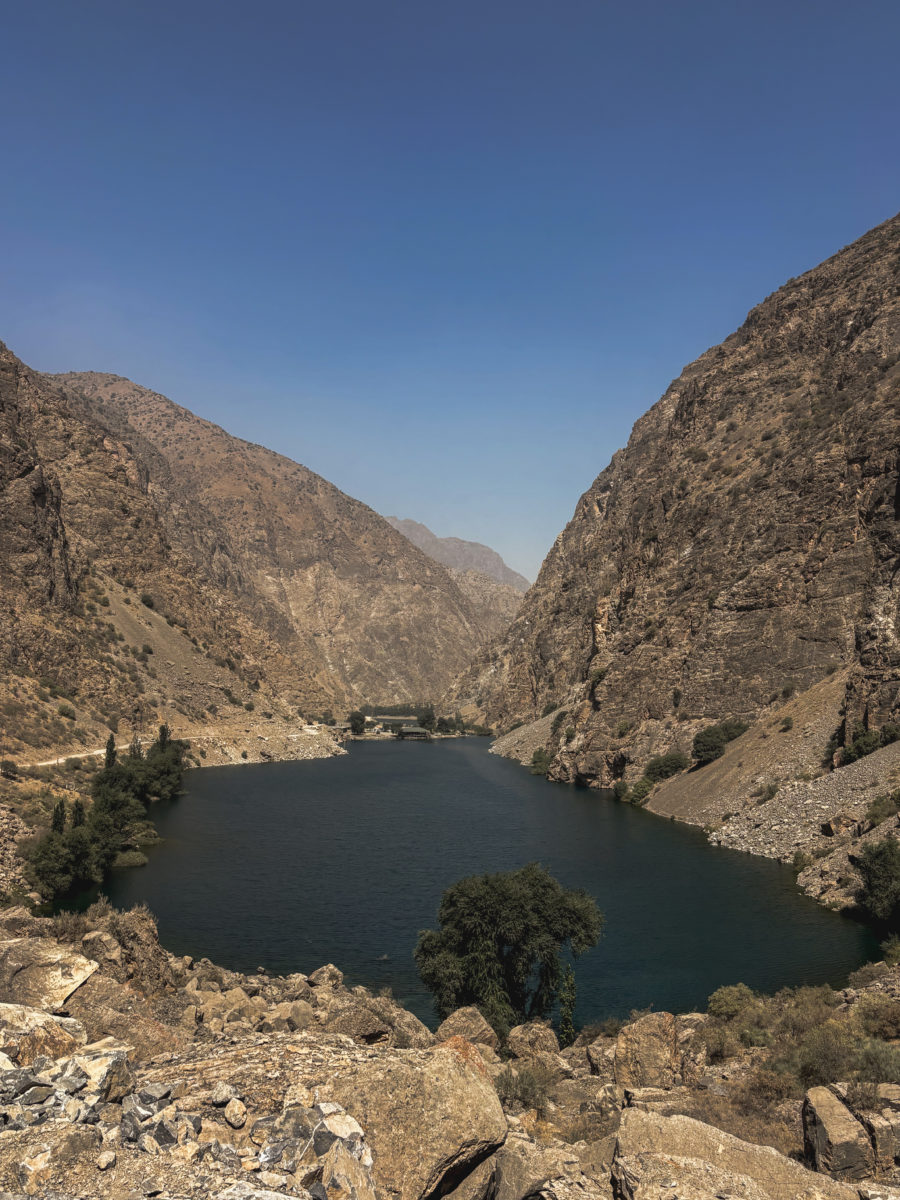
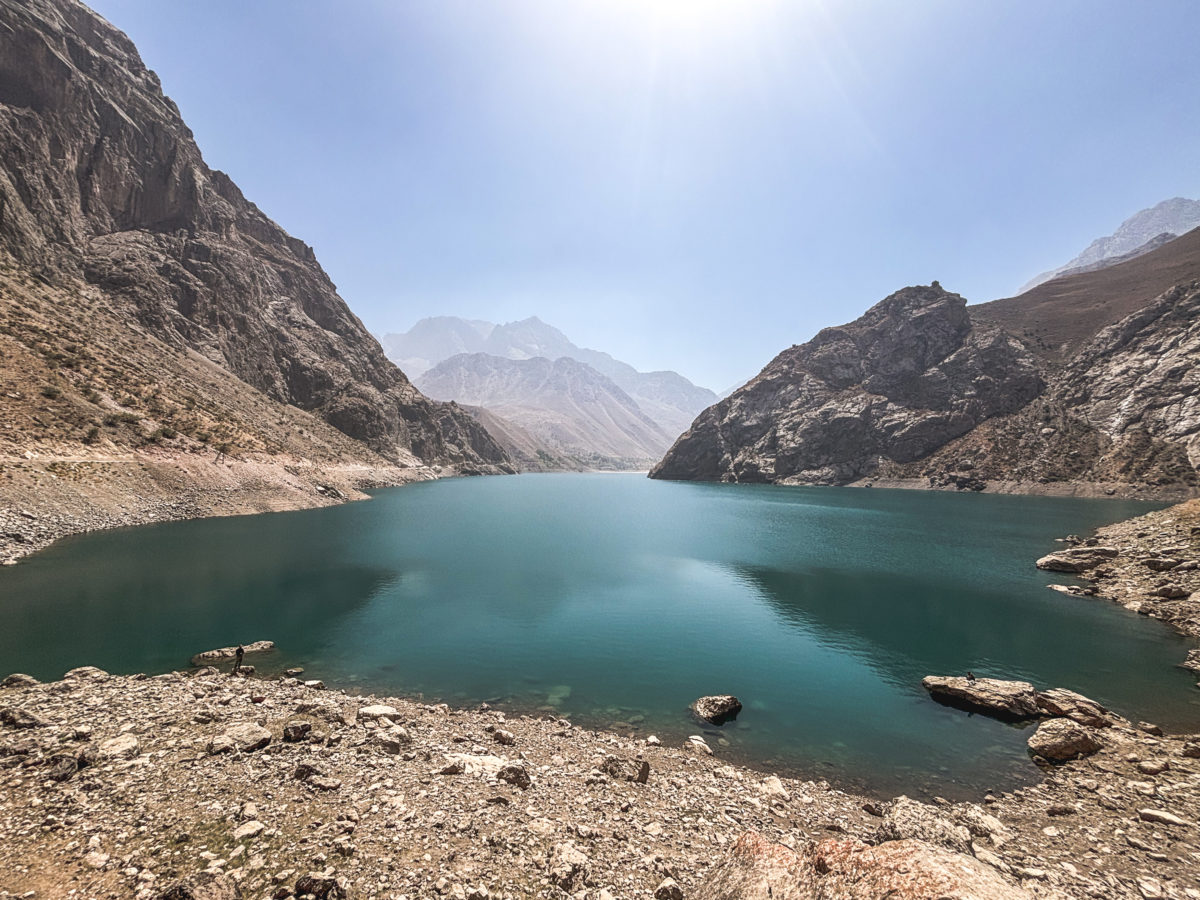
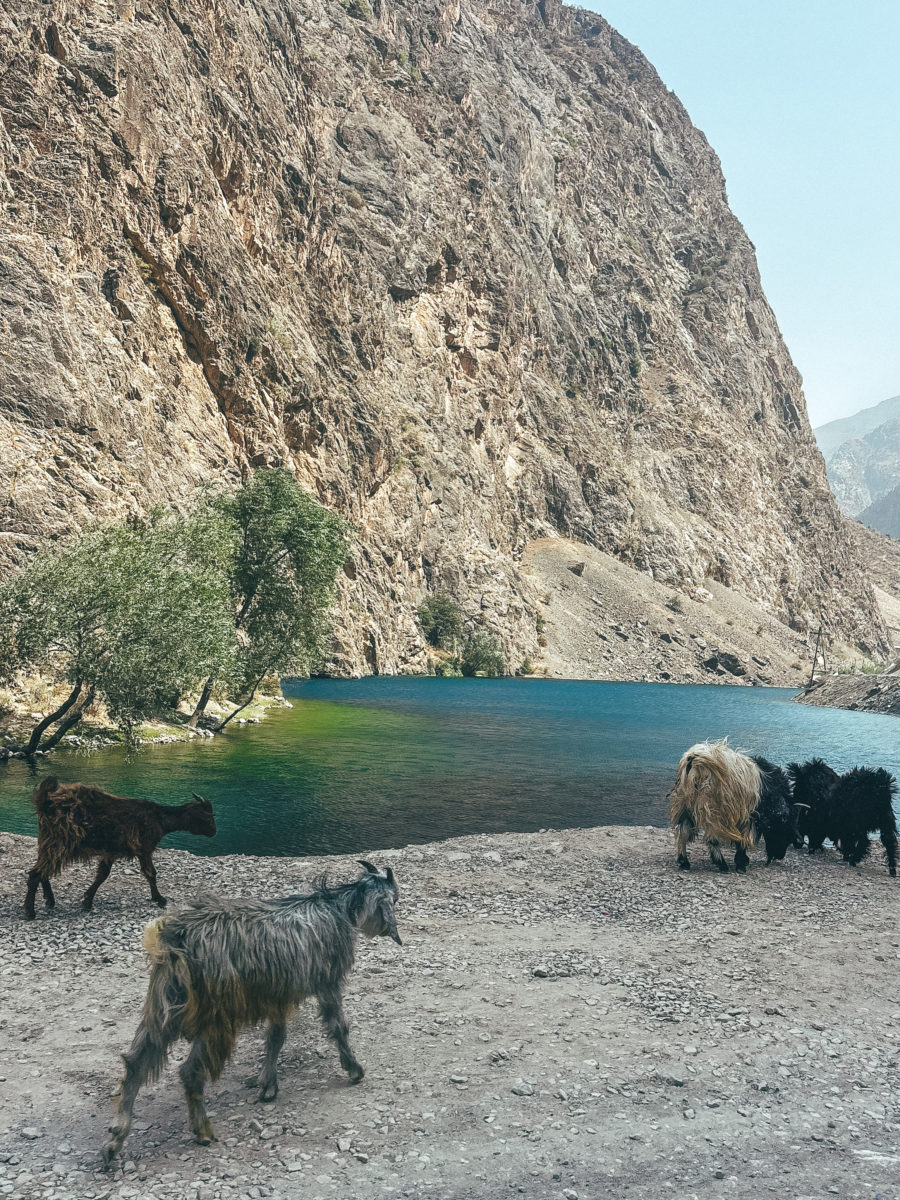
Known locally as Haft Kul, the Seven Lakes form a chain of mountain lakes connected by the Shing River.
Seven lakes visited in the heart of the Fann Mountains. It was difficult to remember all their names, yet impossible to forget their beauty. Some wonders are created by human hands; others are crafted by nature itself.
The river winds between the mountains, while the lakes’ reflections shift with the changing light, creating a landscape that is both wild and peaceful.
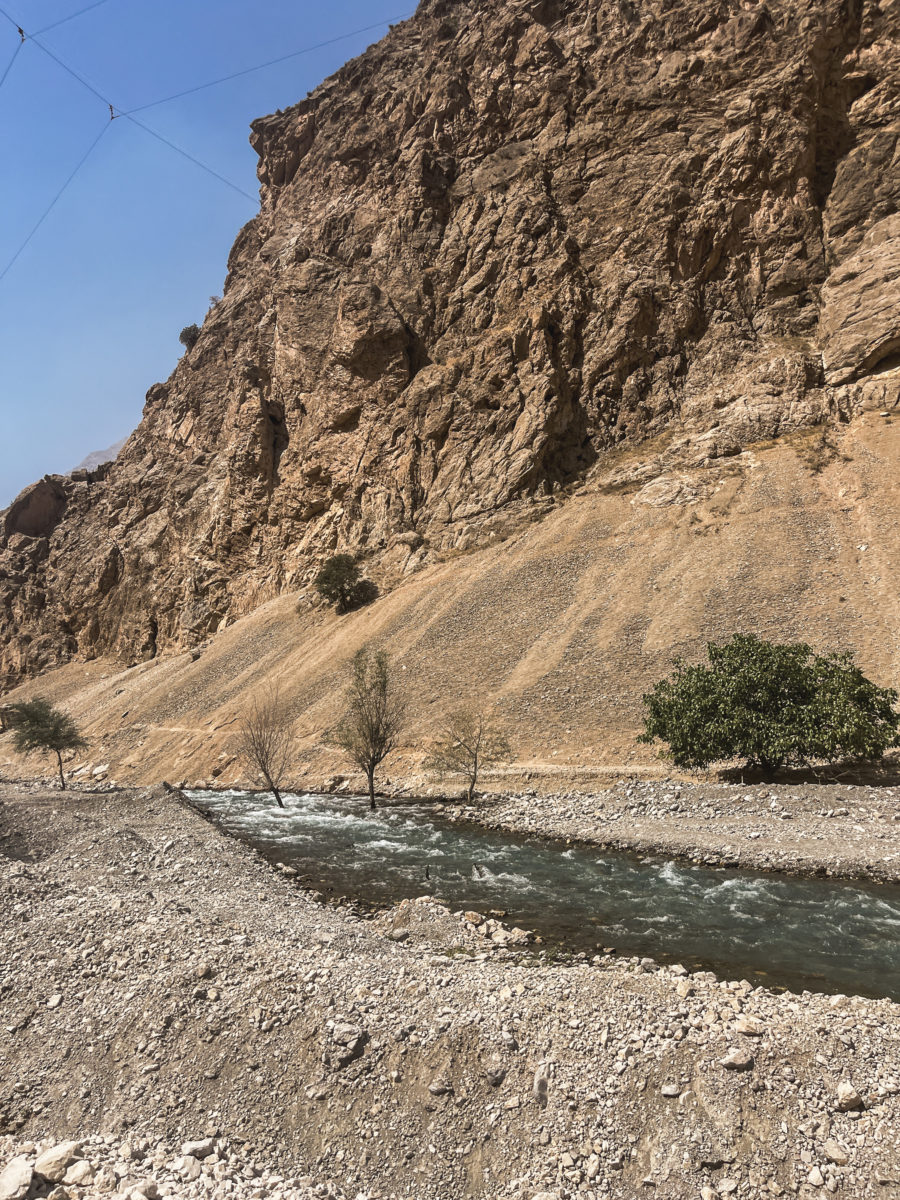
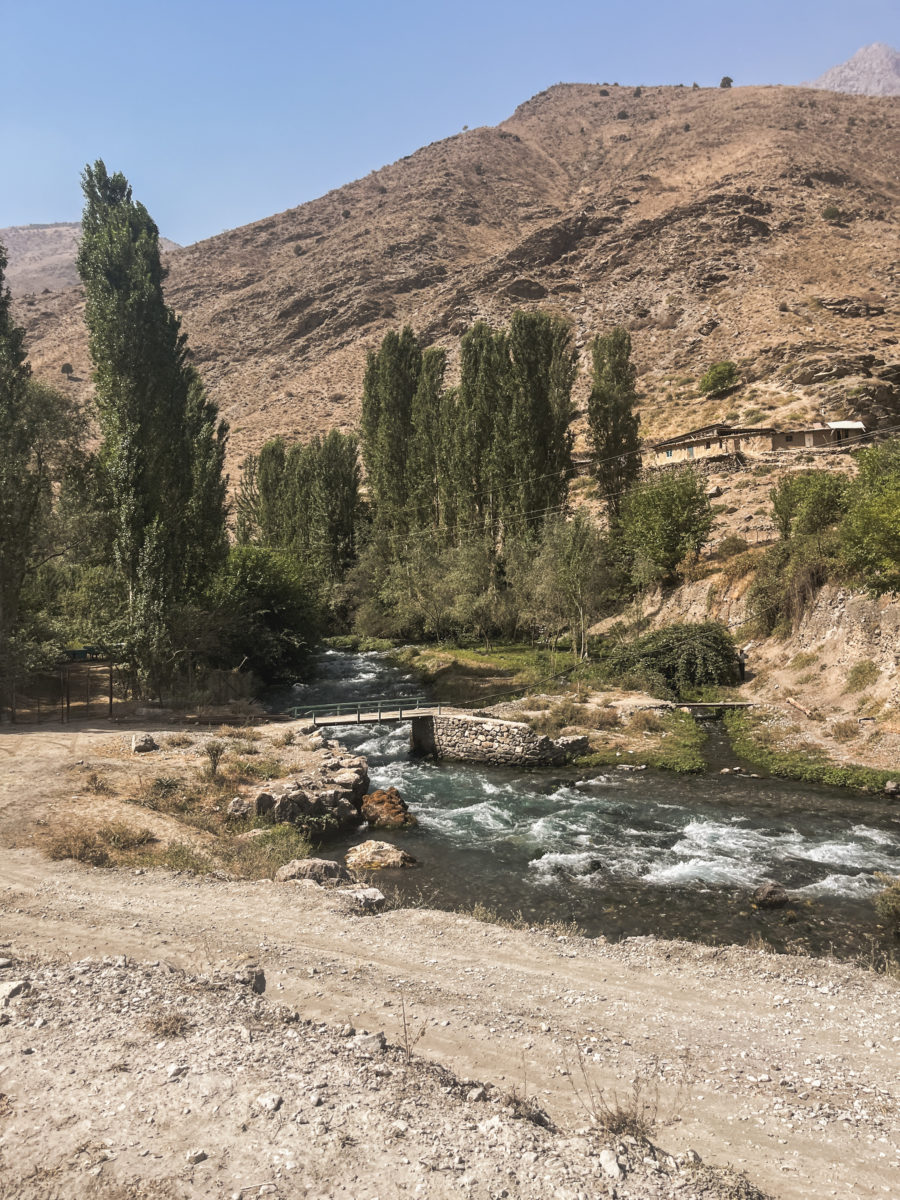
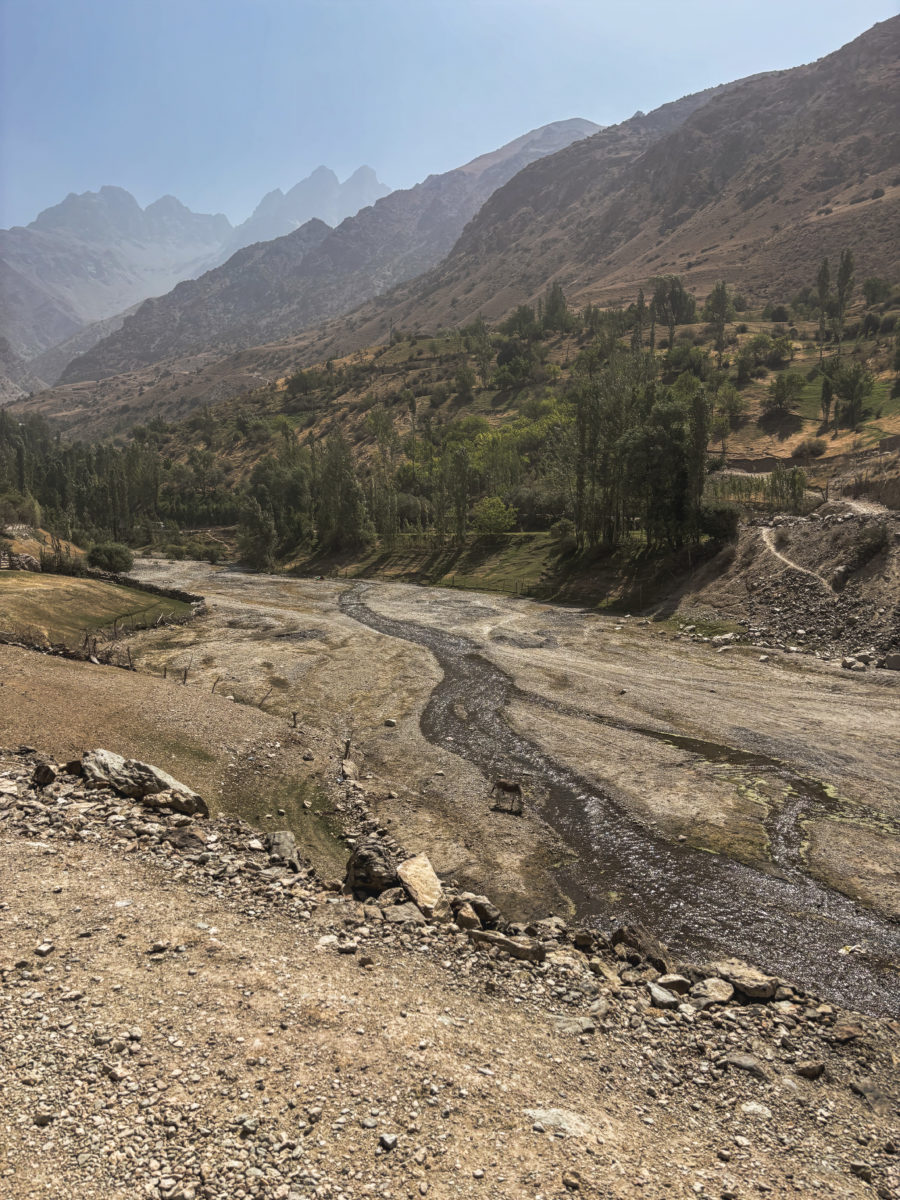
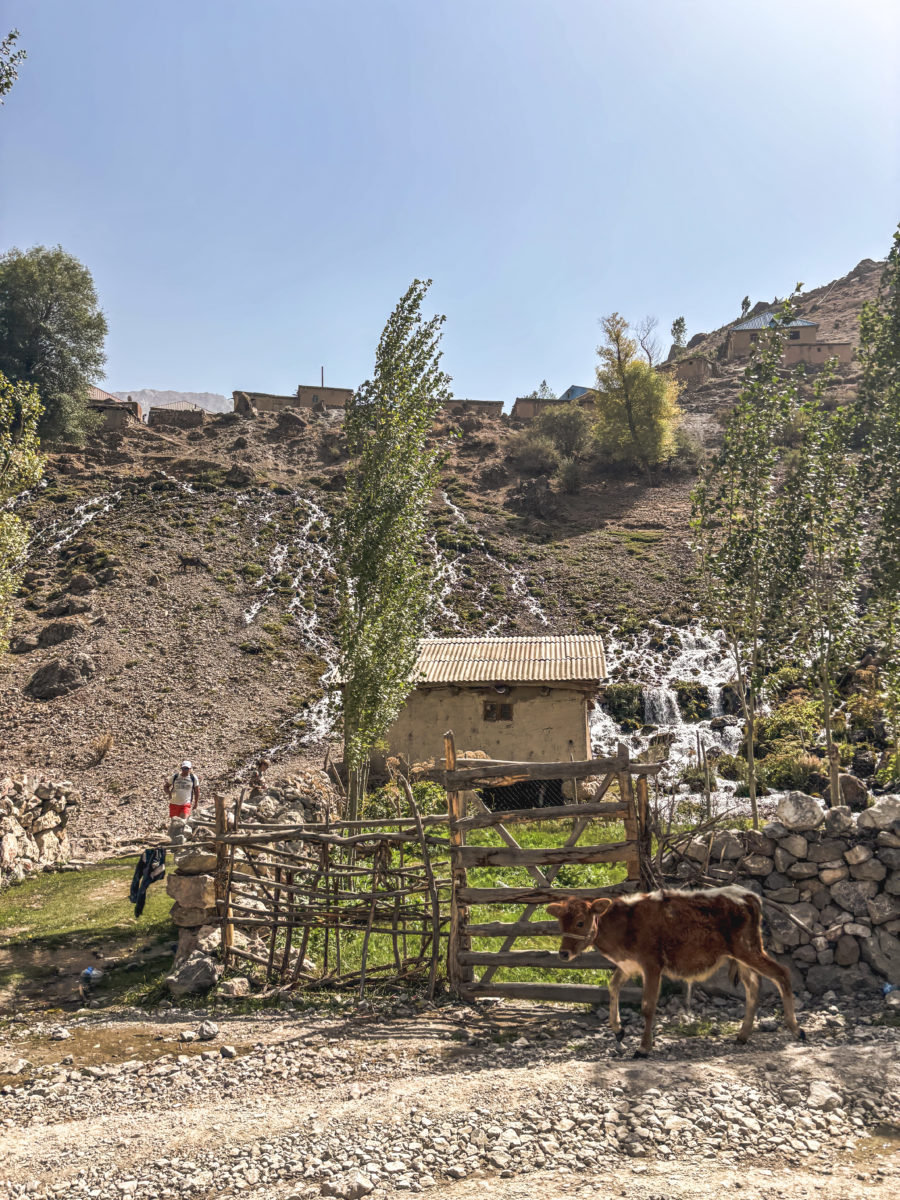
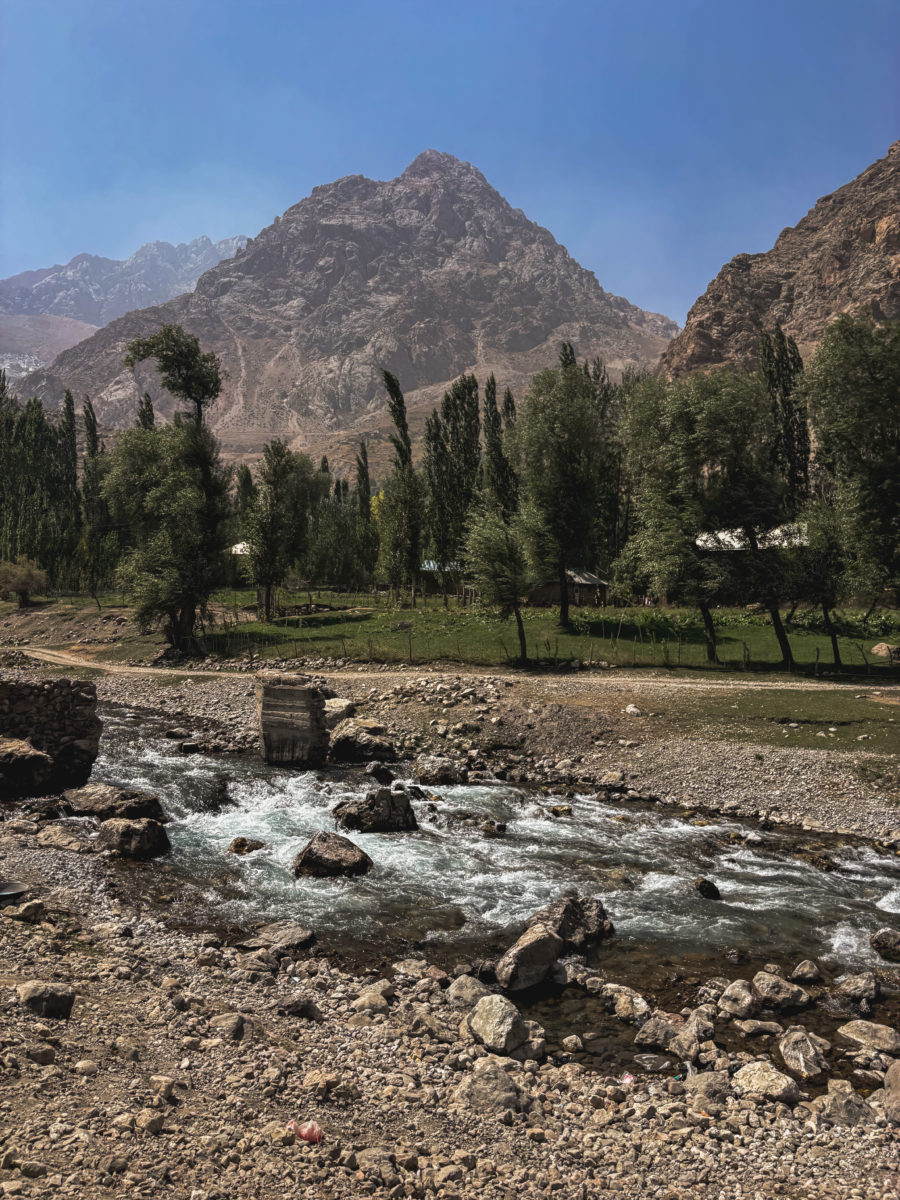
As Swiss travellers, accustomed to our own dazzling alpine lakes, we found them beautiful but perhaps not quite as overwhelming as some visitors might imagine. What truly made the adventure unforgettable were the encounters along the way and the simple novelty of finding ourselves deep in Tajikistan.
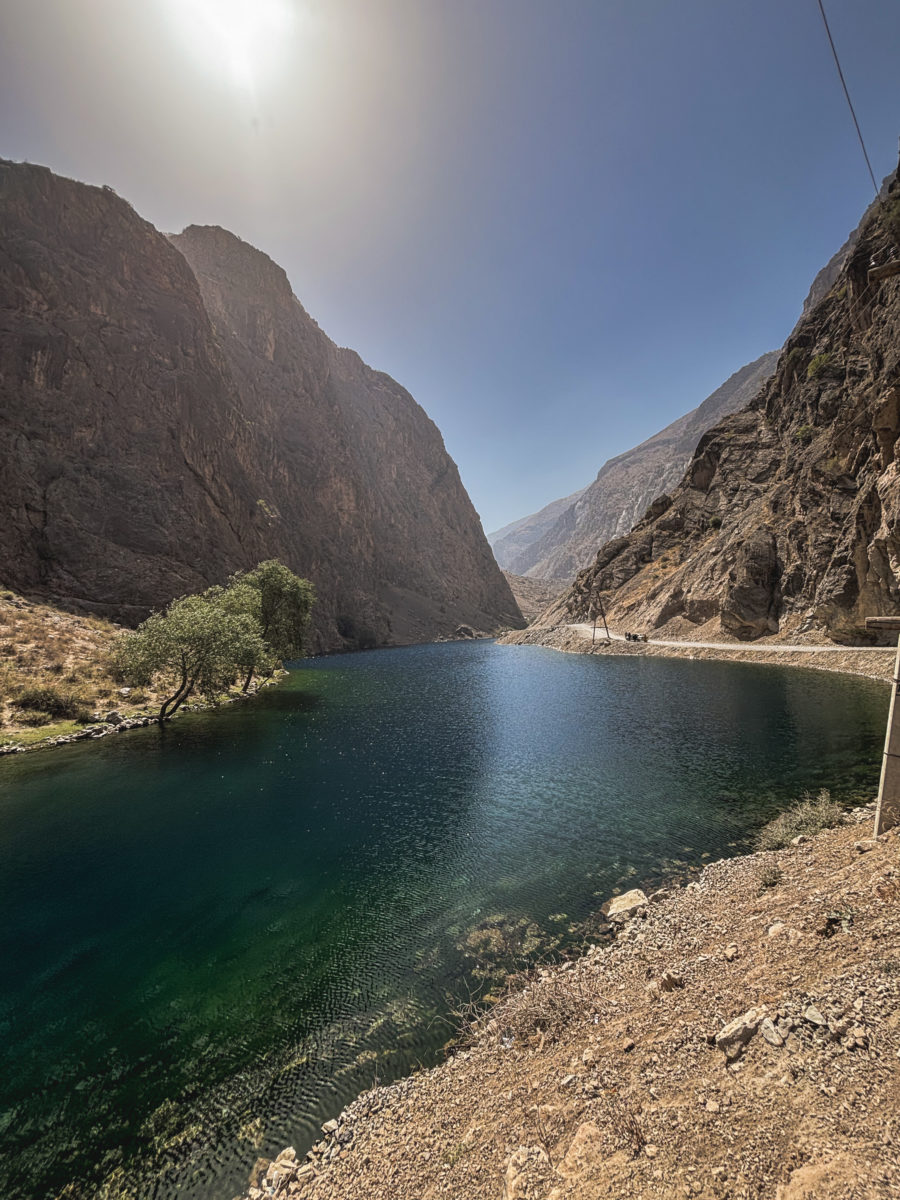
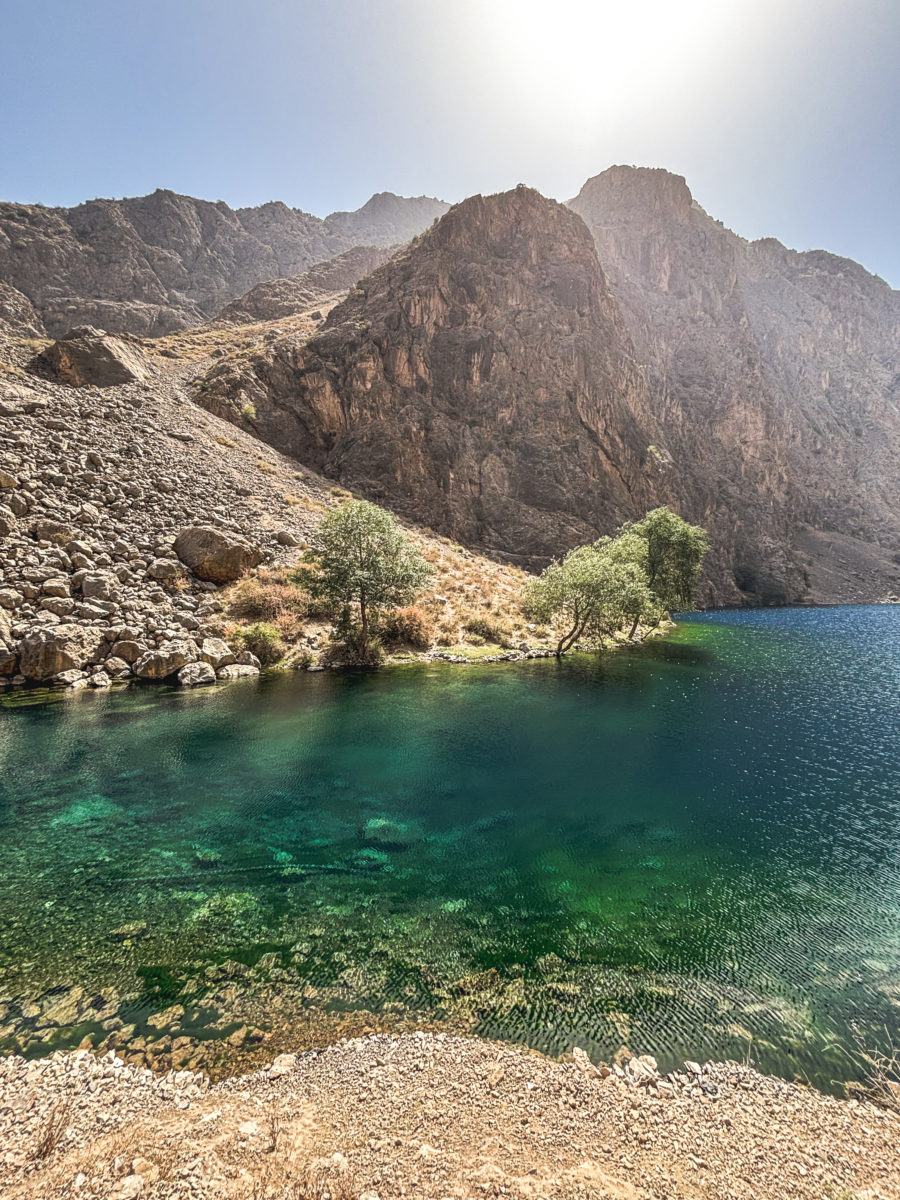
As is often the case in Central Asia, the people we met added immense richness to the journey.
Children waved as we passed or appeared unexpectedly beside a lake to reward us with a smile and sometimes even a few words of English. Residents looked at us with curiosity and kindness, occasionally hoping to sell us their handmade bracelets (If you wish to buy something, it is worth exchanging cash at the border, as Uzbek som are generally not accepted. Be aware, however, that these exchanges are conducted informally by locals rather than through official currency exchange offices.)
Although language often limited our conversations, even brief interactions were enough to create that sense of hospitality so characteristic of the region.
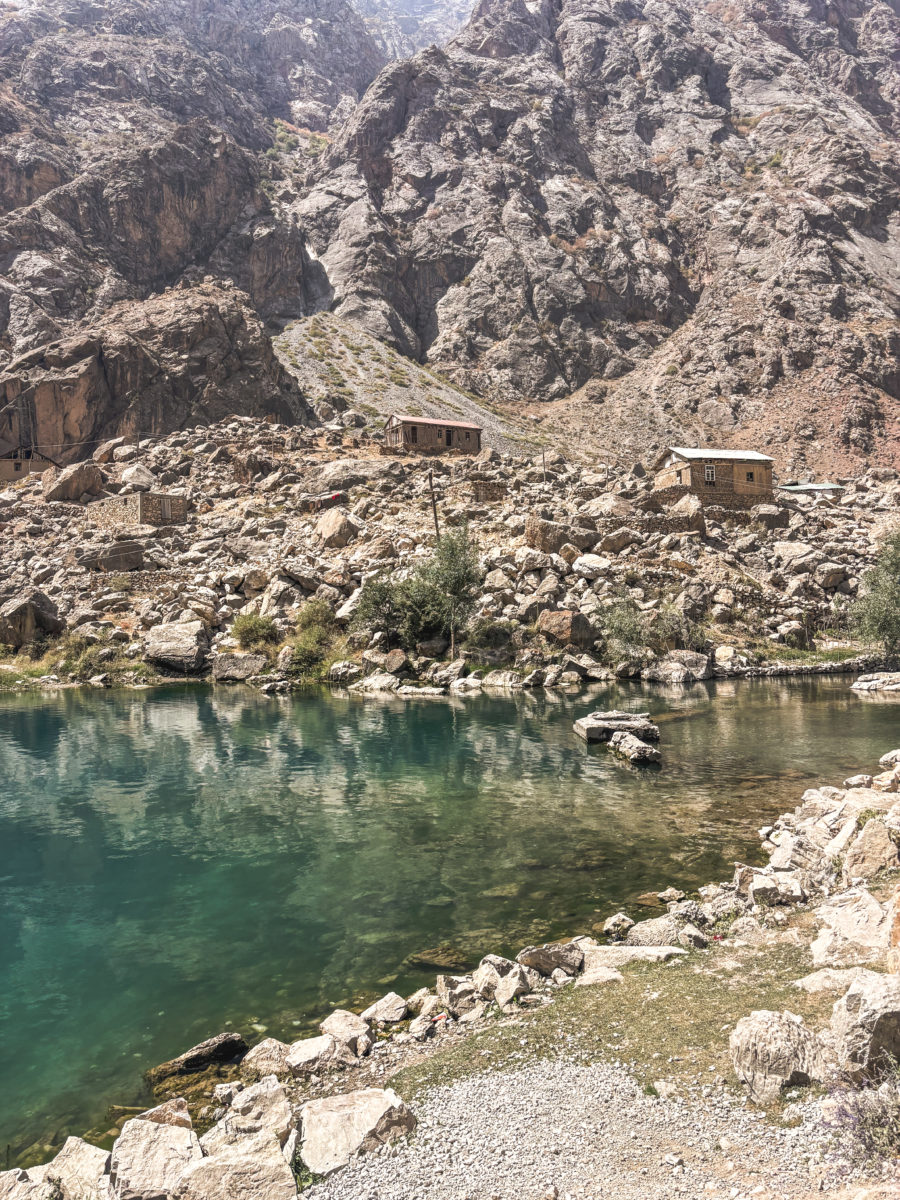
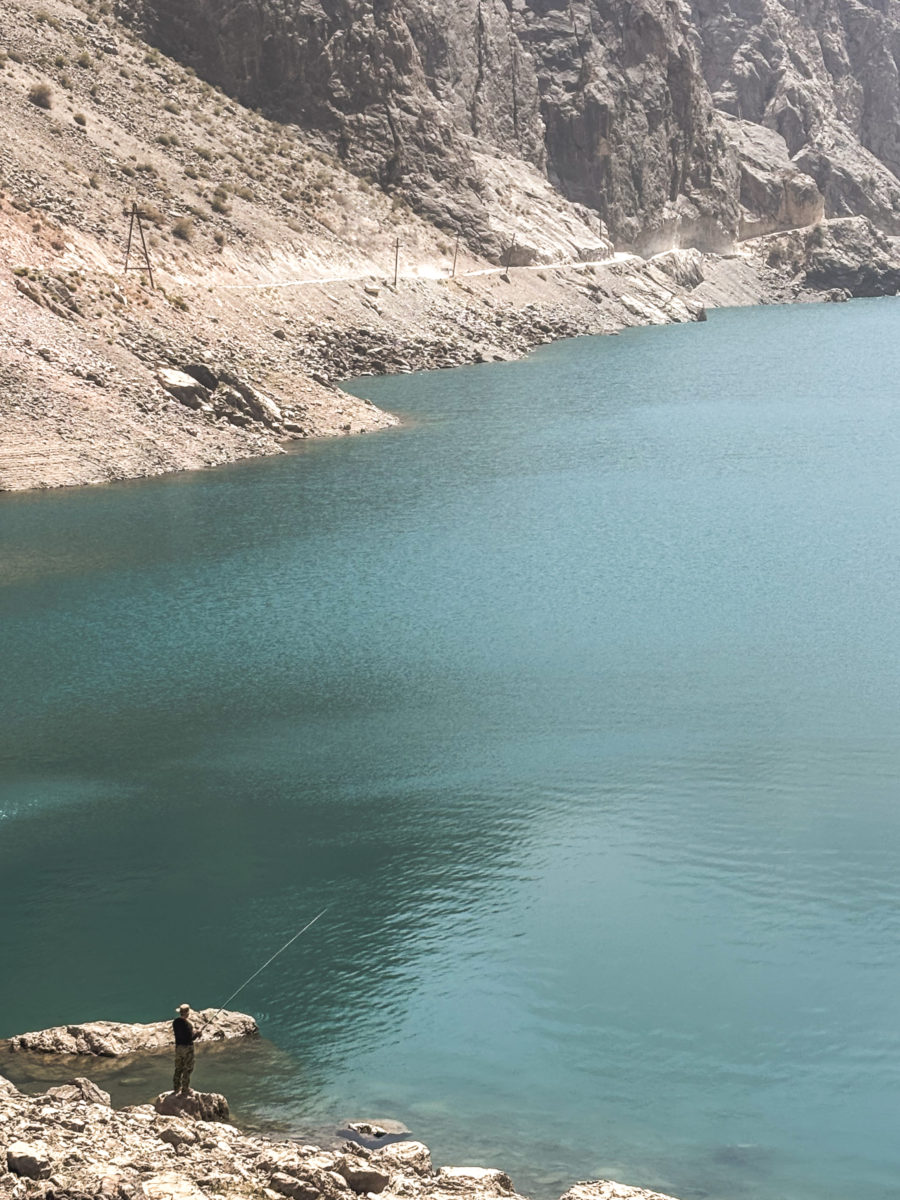
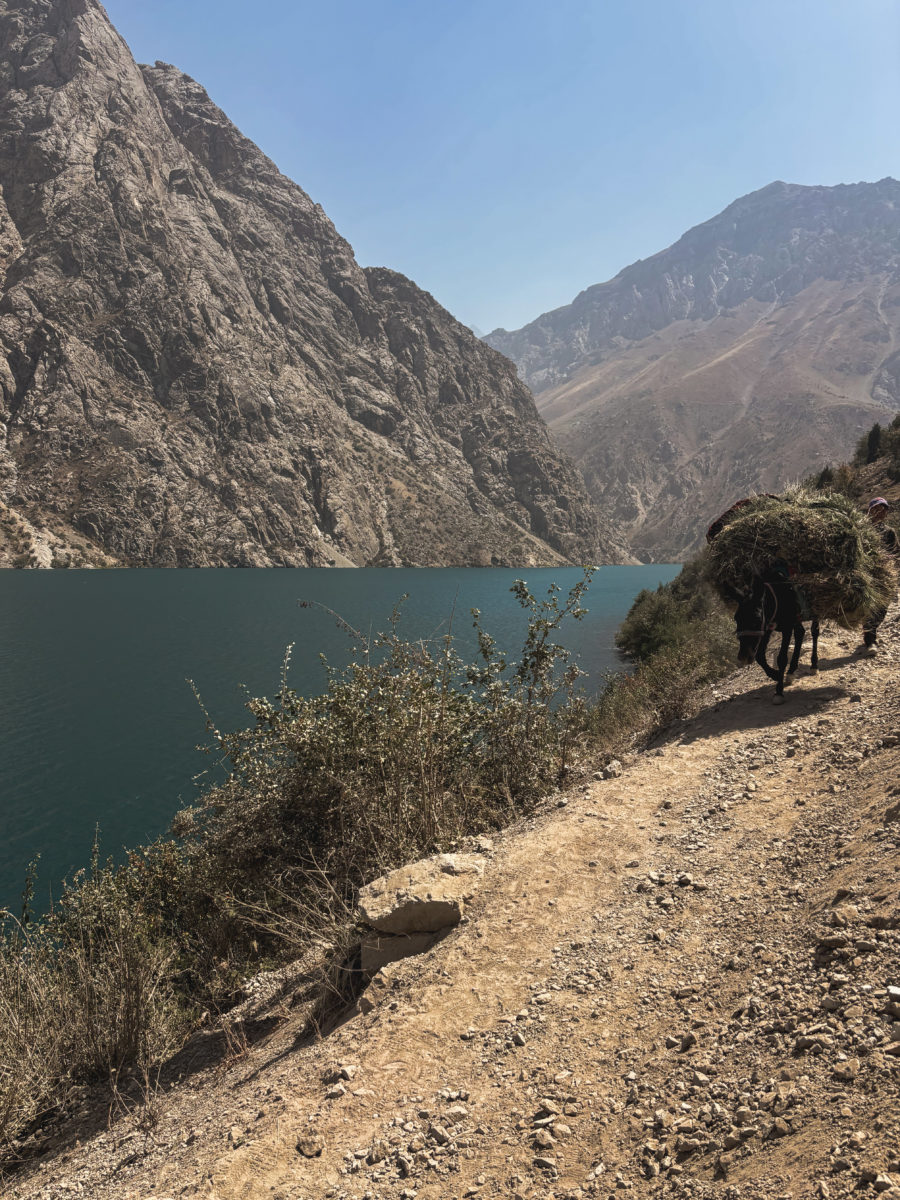
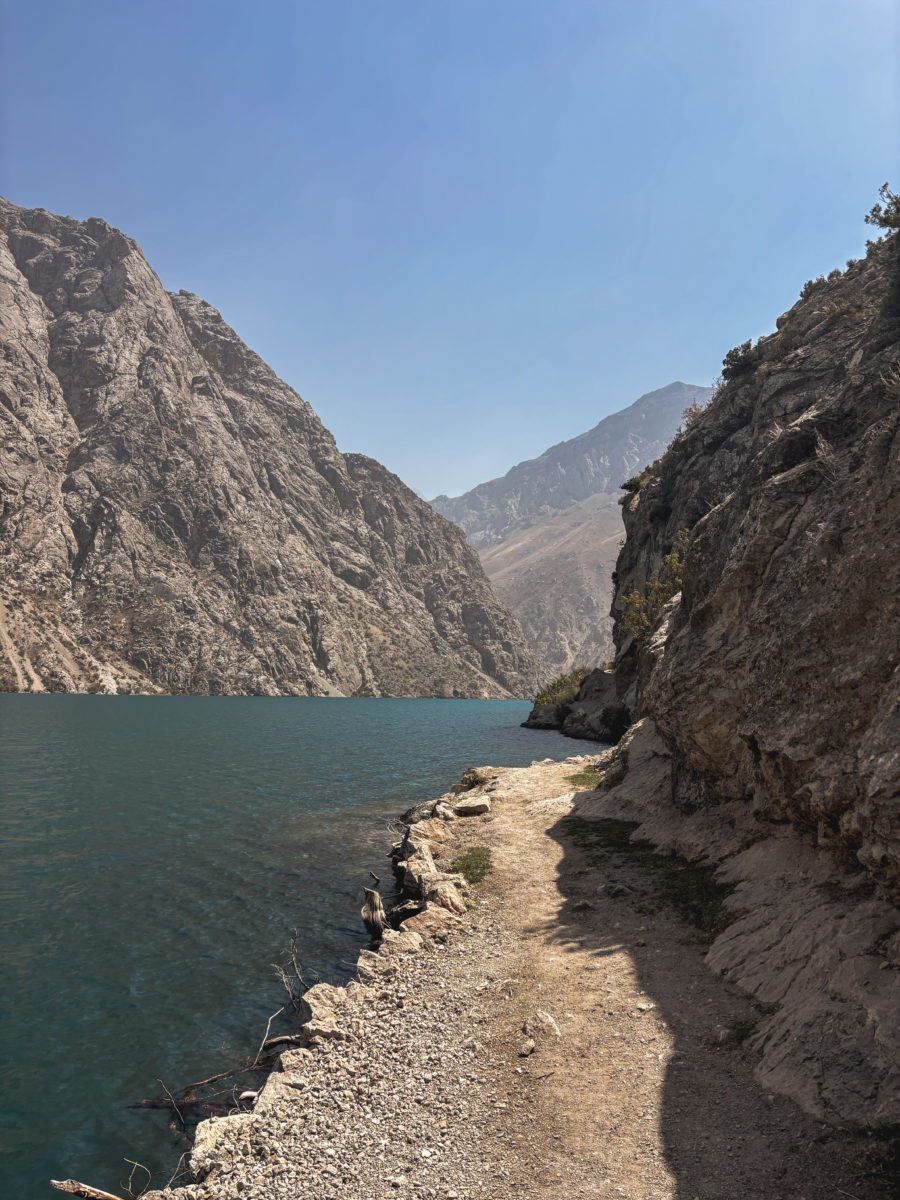
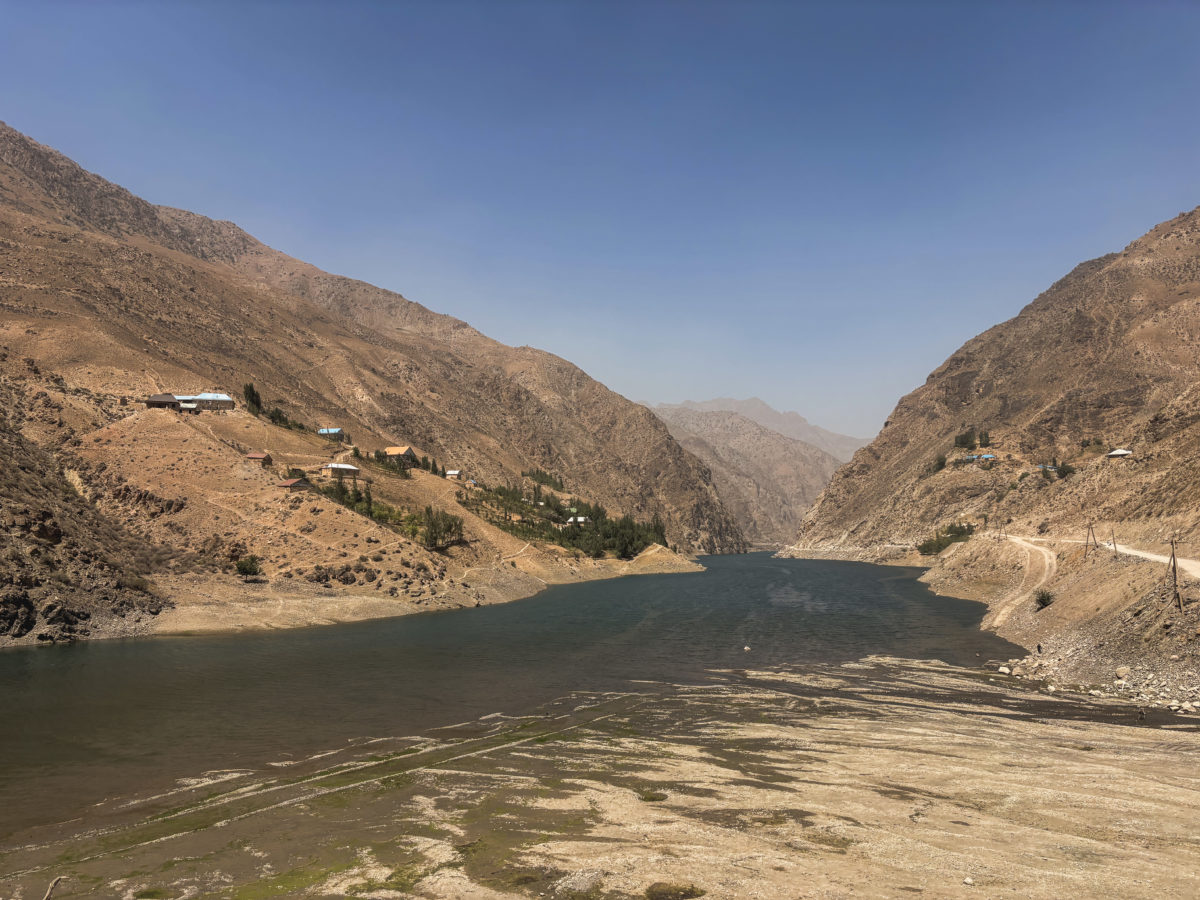
Tajikistan is sometimes overshadowed by its more famous neighbours, but the people we met throughout the day left us with the image of a welcoming country deeply connected to its traditions.
And one final restroom anecdote: the only facilities available along the route consisted of little more than a hole in the ground, located near Lake Number Four. Fittingly, this lake is commonly nicknamed “the Navel,” as it sits at the centre of the chain.
When the Road Becomes an Adventure
The road itself is part of the experience.
The farther we travelled, the narrower, steeper, and more spectacular the route became. The mountains seemed to close in around us while the lakes appeared one after another like oases at the bottom of the valley.
Our driver, perfectly accustomed to local conditions, navigated these roads with impressive calm, even in situations where we felt somewhat less relaxed.
Yet this is precisely what makes the excursion memorable: the feeling of gradually leaving the modern world behind and entering a territory that remains largely untouched.
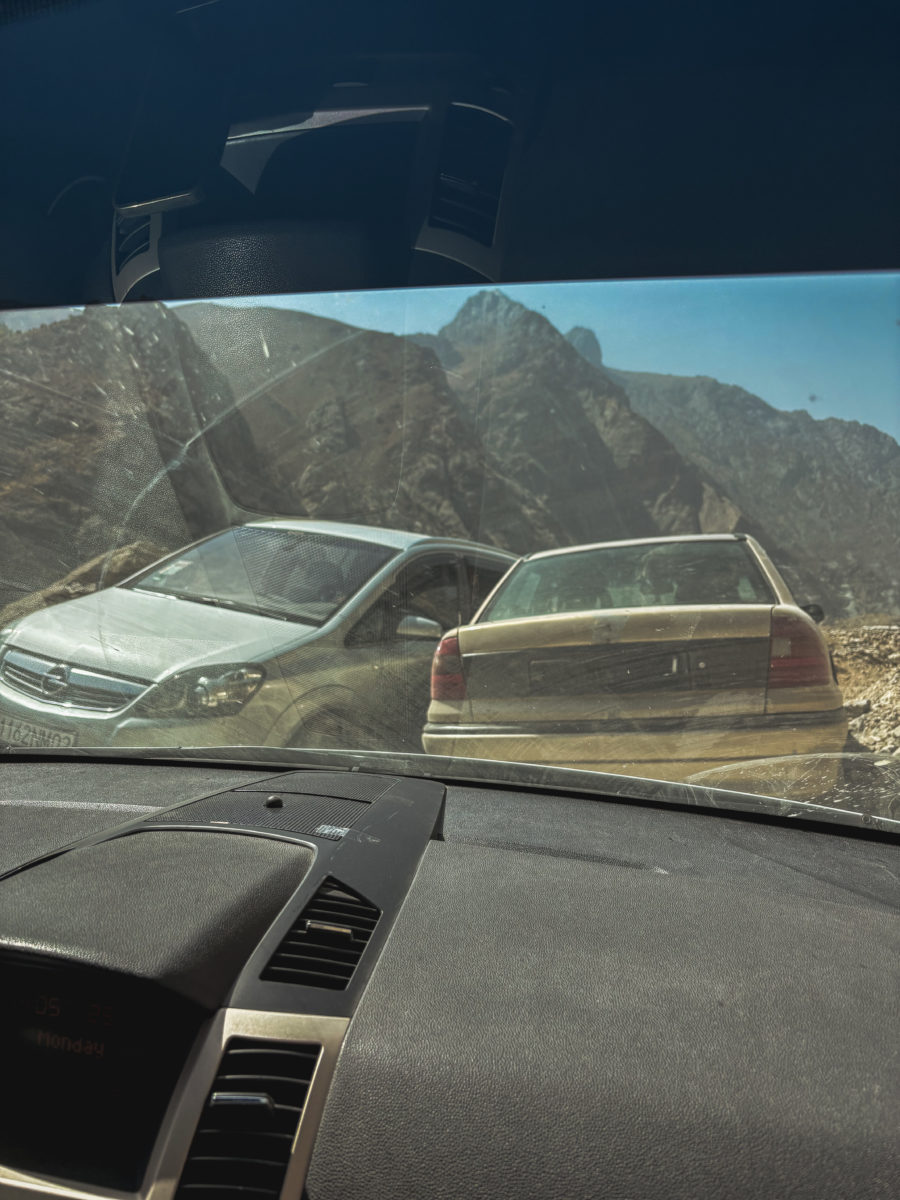
It felt like a four-wheeled rodeo, and not in a Jeep, but in a minivan. We bounced in every direction, nearly leaving our seats at every pothole. The roads are narrow, often bordered by dizzying drops, and overtaking manoeuvres happen constantly, sometimes in conditions where we, as disciplined Swiss drivers (usually!), would have been firmly pressing the brakes.
As for speed limits, they seem more an option than compulsory. At times the experience felt intense, even slightly crazy, but it is all part of the charm of traveling in Tajikistan.
Another Side of the Silk Road
After the turquoise domes of Samarkand, the Seven Lakes offer a completely different vision of Central Asia.
Here, it is no longer conquerors who inspire awe, but mountains. It is no longer mosaics that capture attention, but the ever-changing reflections dancing across the water.
This excursion was, for me, the perfect complement to my journey through Uzbekistan. On one side, centuries of history carved into stone; on the other, a raw and majestic natural world that reminds us Central Asia is not defined solely by the Silk Road and its architectural treasures. It is also a land of vast wilderness and grand landscapes, places that travellers crossed, despite the challenges they undoubtedly presented.