Of all the cities we discovered during our trip to Uzbekistan, Khiva was our true favorite. In our minds, Samarkand and Bukhara stood out as the must-see stops on any trip to Uzbekistan, while Khiva remained far less talked about. Yet the moment we passed through the walls of Itchan Kala, the fortified old city, we realized that this place was something special, different from anywhere else we had visited.
We spent three days wandering through its ochre-colored streets, admiring its turquoise-tiled minarets, and enjoying its unique atmosphere. More than a museum city, Khiva truly feels like traveling several centuries back in time. For us, it is simply the most authentic (and least touristy) of Uzbekistan’s Silk Road cities.
Khiva, a City Straight Out of One Thousand and One Nights
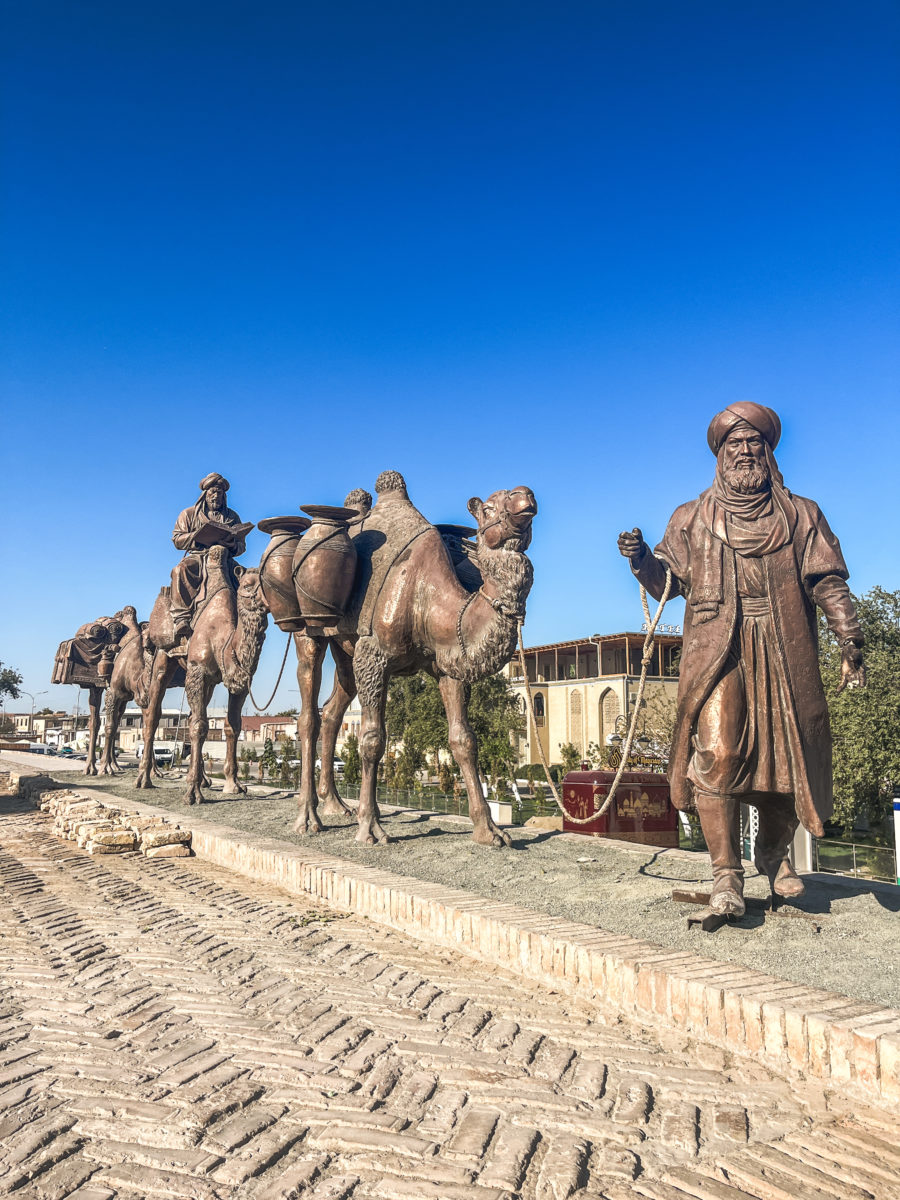
Located in the historic Khorezm region in western Uzbekistan, Khiva was for centuries an important stop along the Silk Road. Before crossing the great deserts toward Persia, caravans would rest in this prosperous oasis.
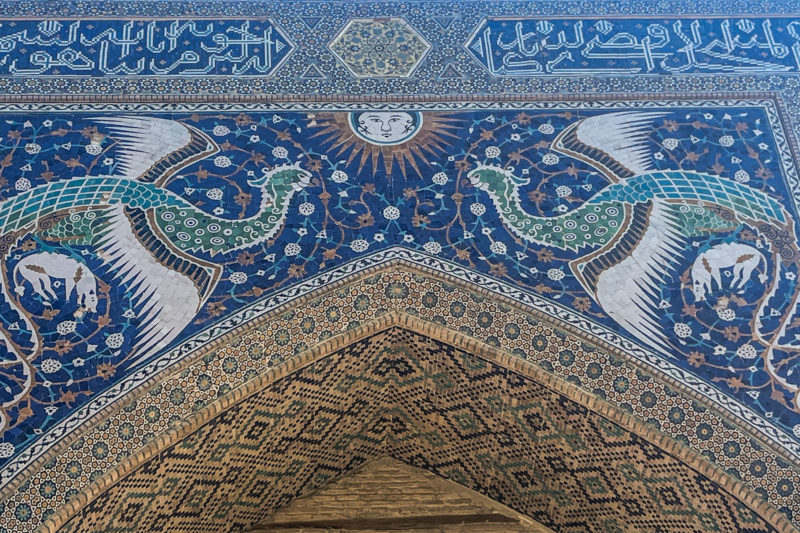
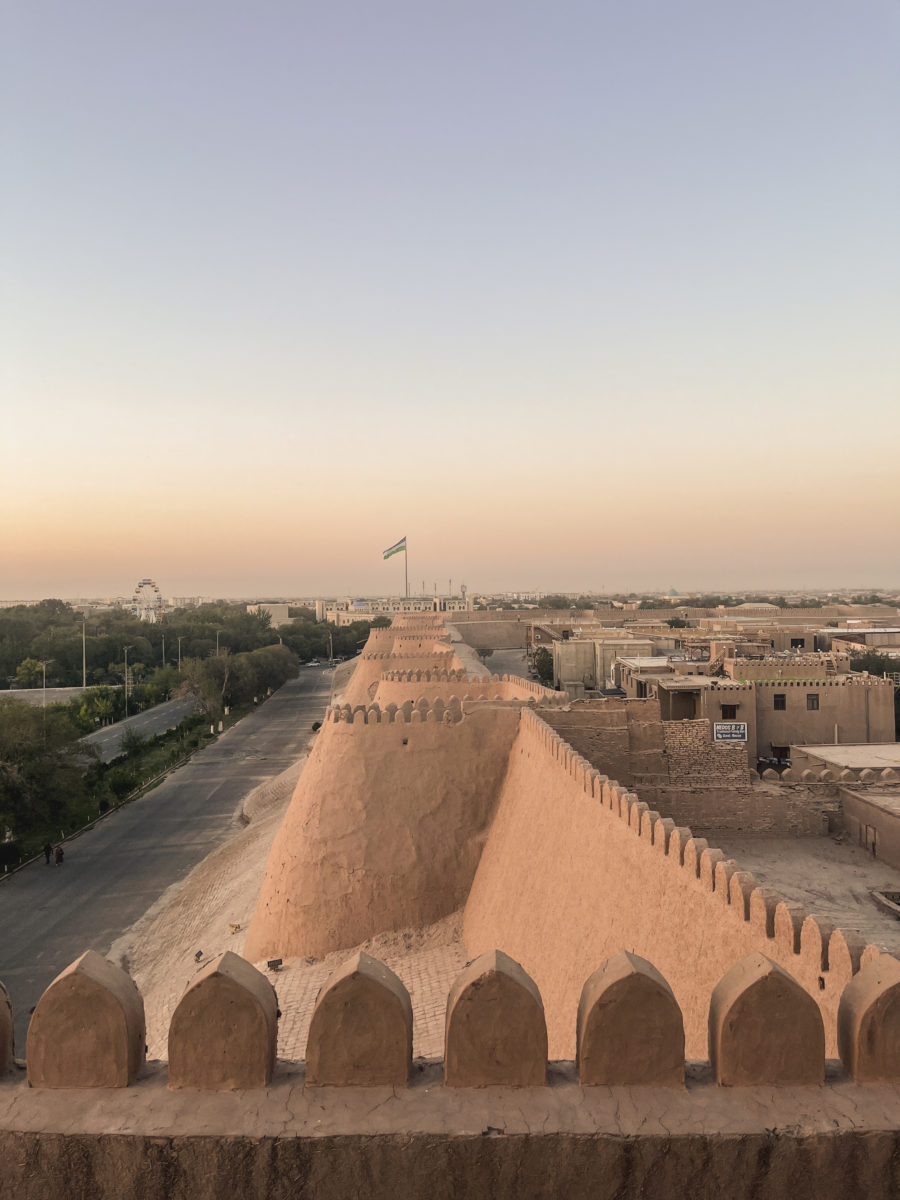
Even today, entering Itchan Kala, the fortified inner city, is an emotional experience. Behind its imposing brick walls lies a remarkable open-air museum filled with mosques, madrasas, palaces, mausoleums, and caravanserais that have been exceptionally well preserved.
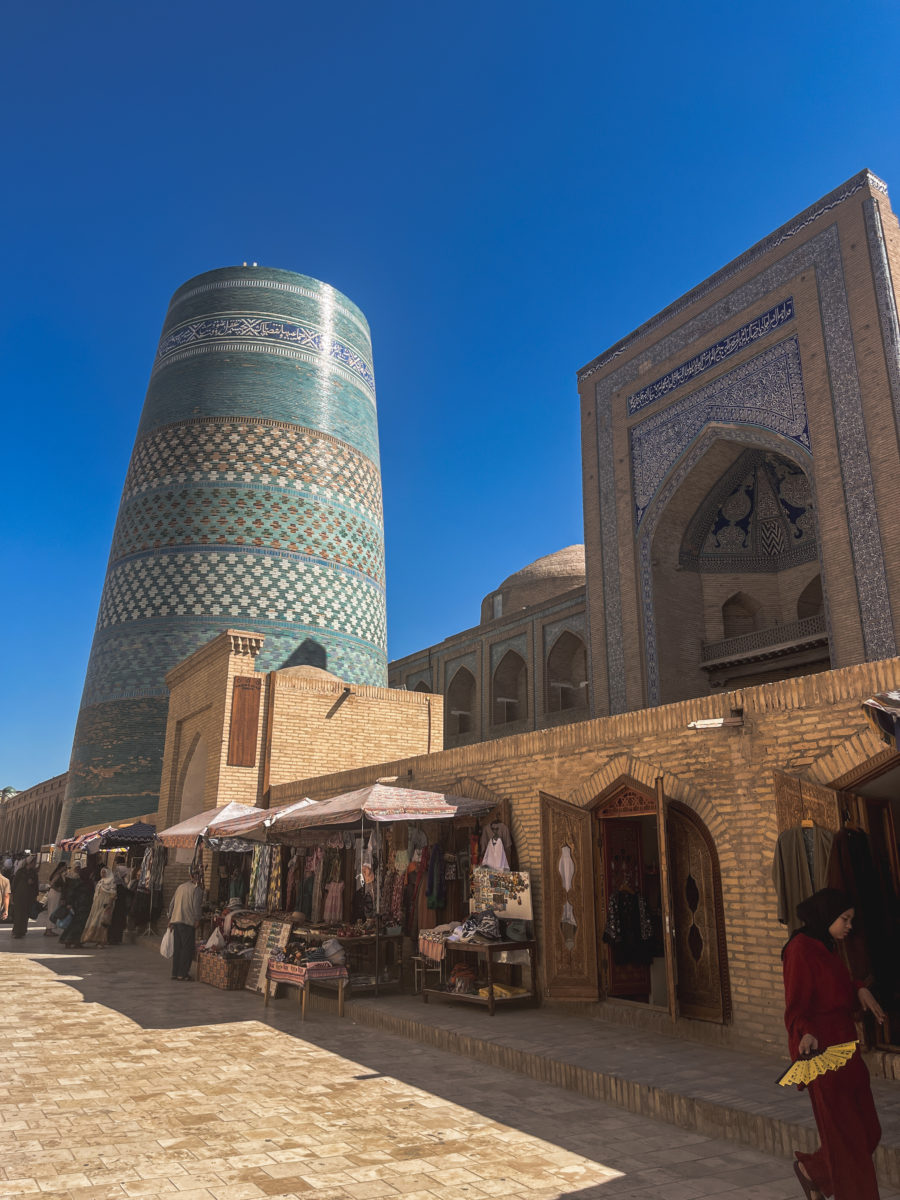
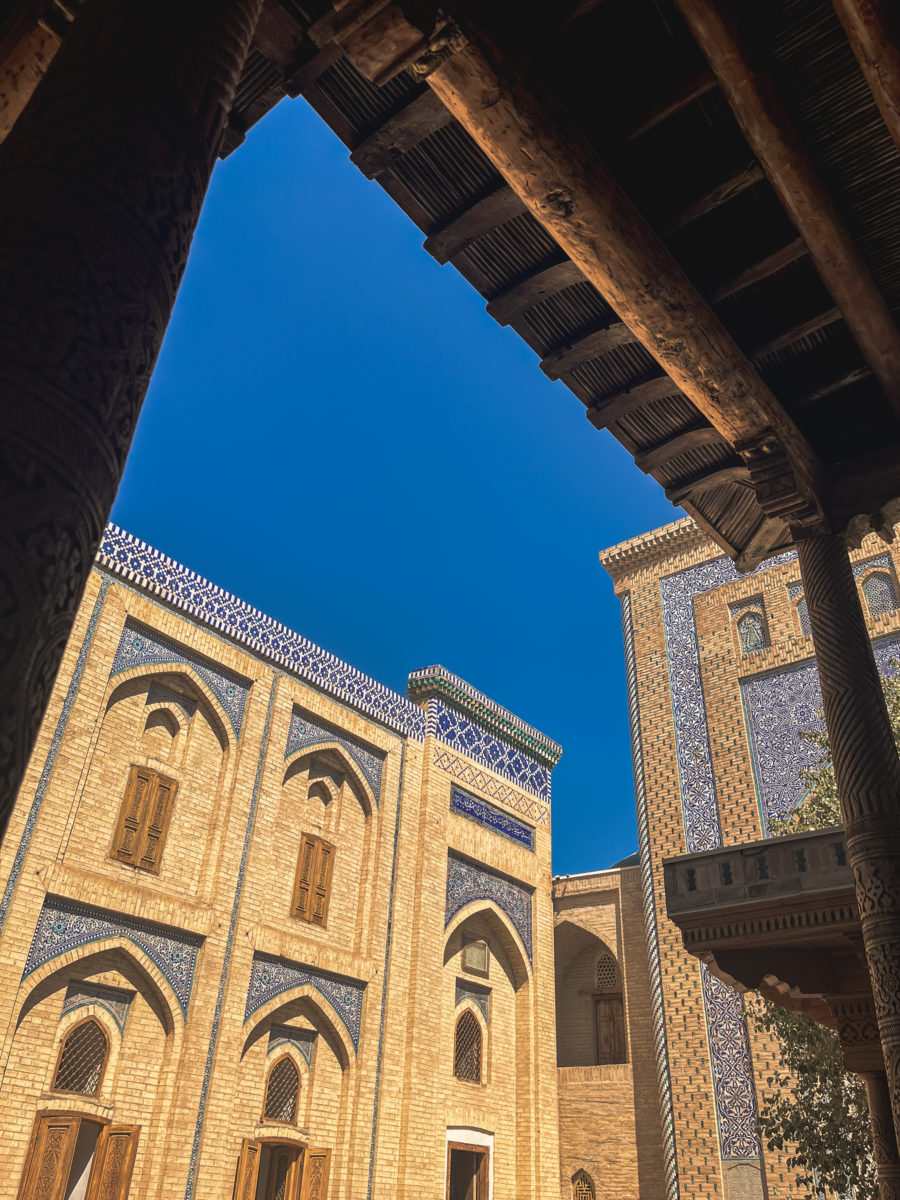
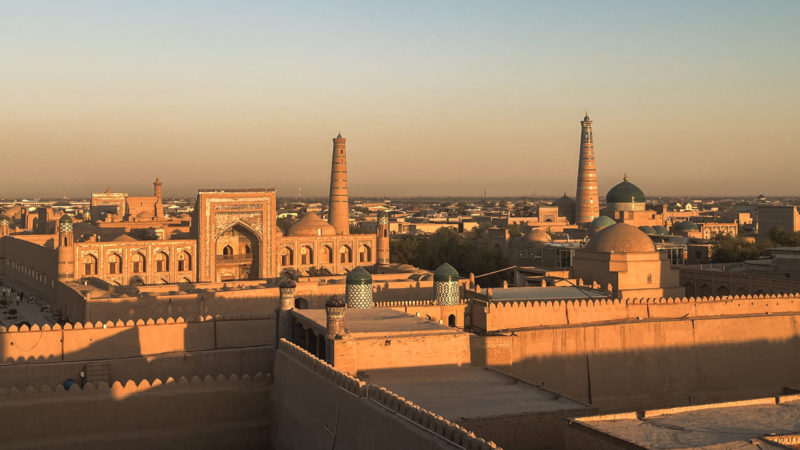
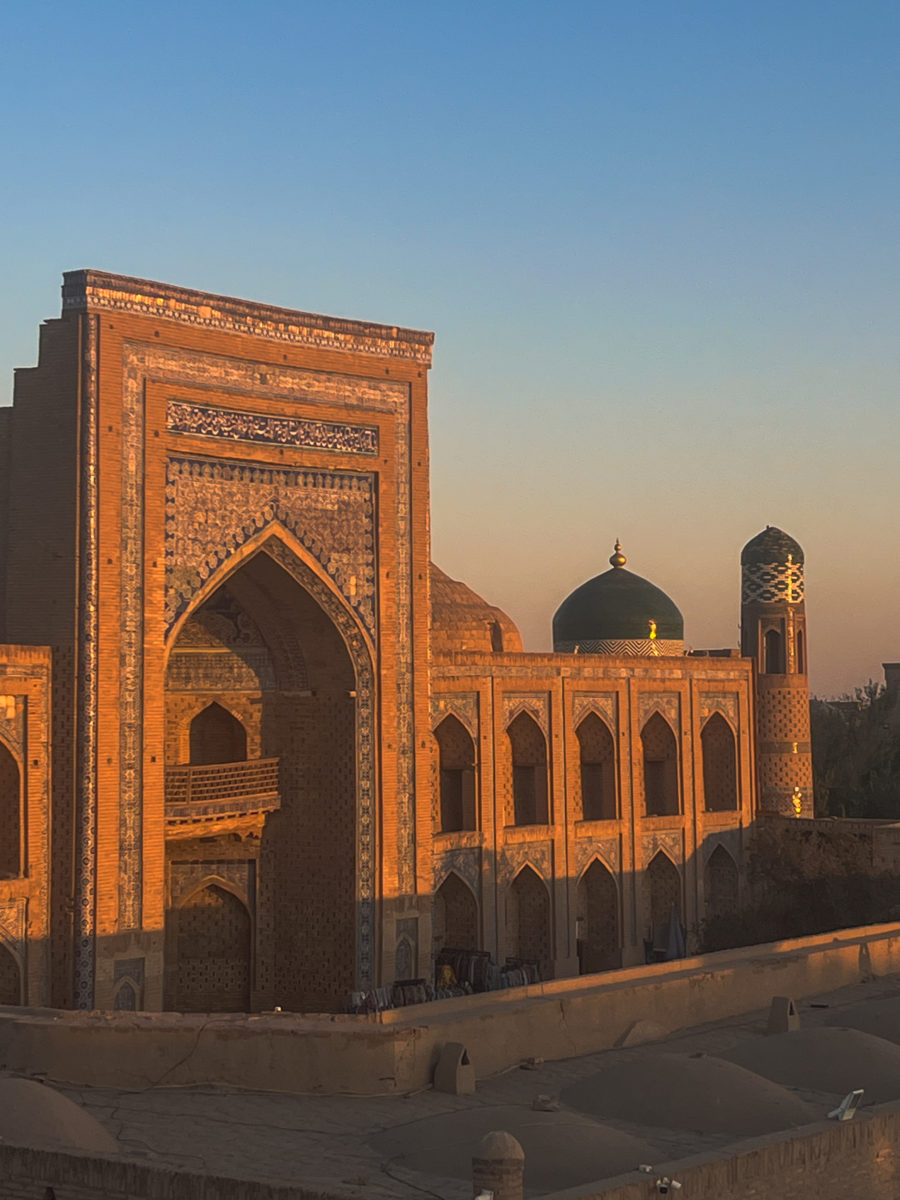
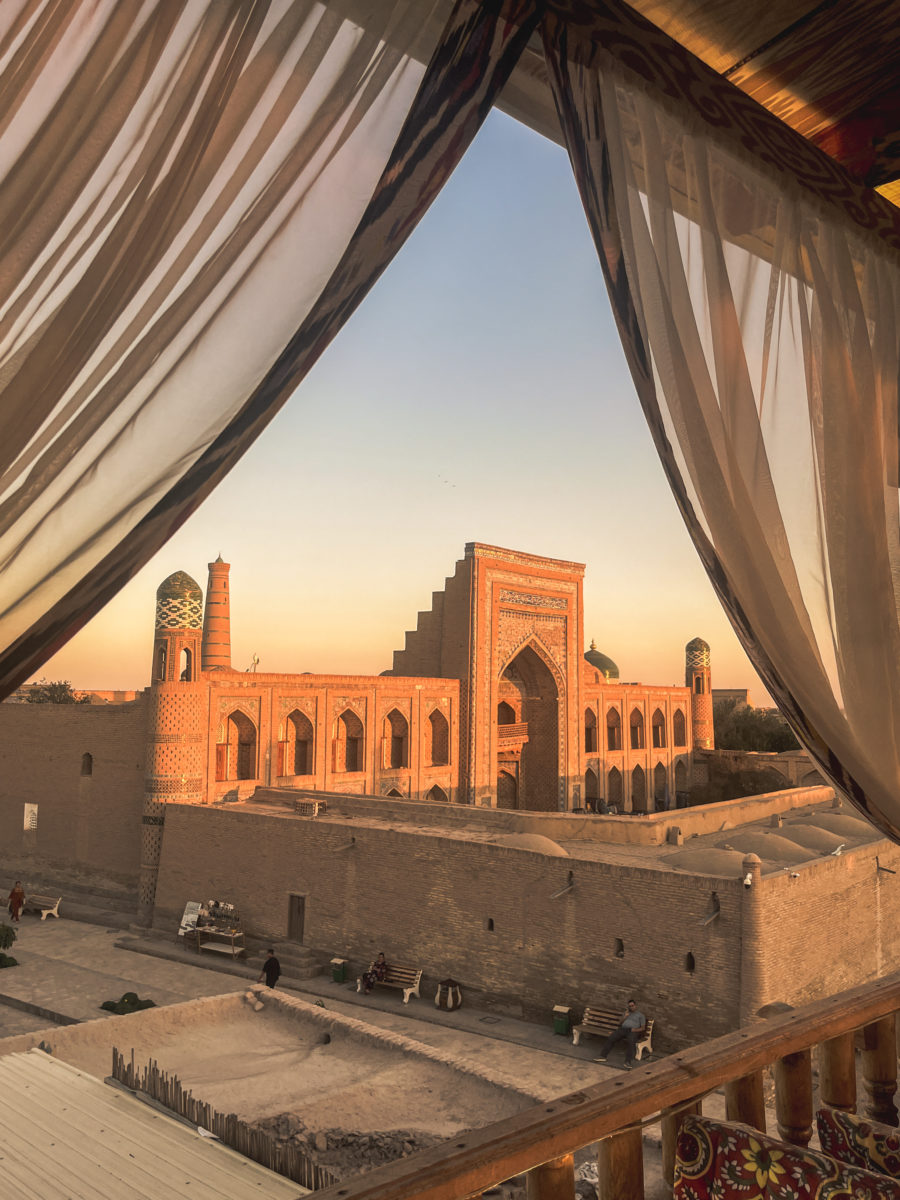
Unlike some historic cities overwhelmed by tourism, Khiva has maintained a peaceful atmosphere. Early in the morning or at sunset (especially if you visit in August as we did, when temperatures are very high), the nearly empty streets glow with magnificent golden hues. Khiva is not just a city, it is a splash of heavenly blues set within a frame of beige.
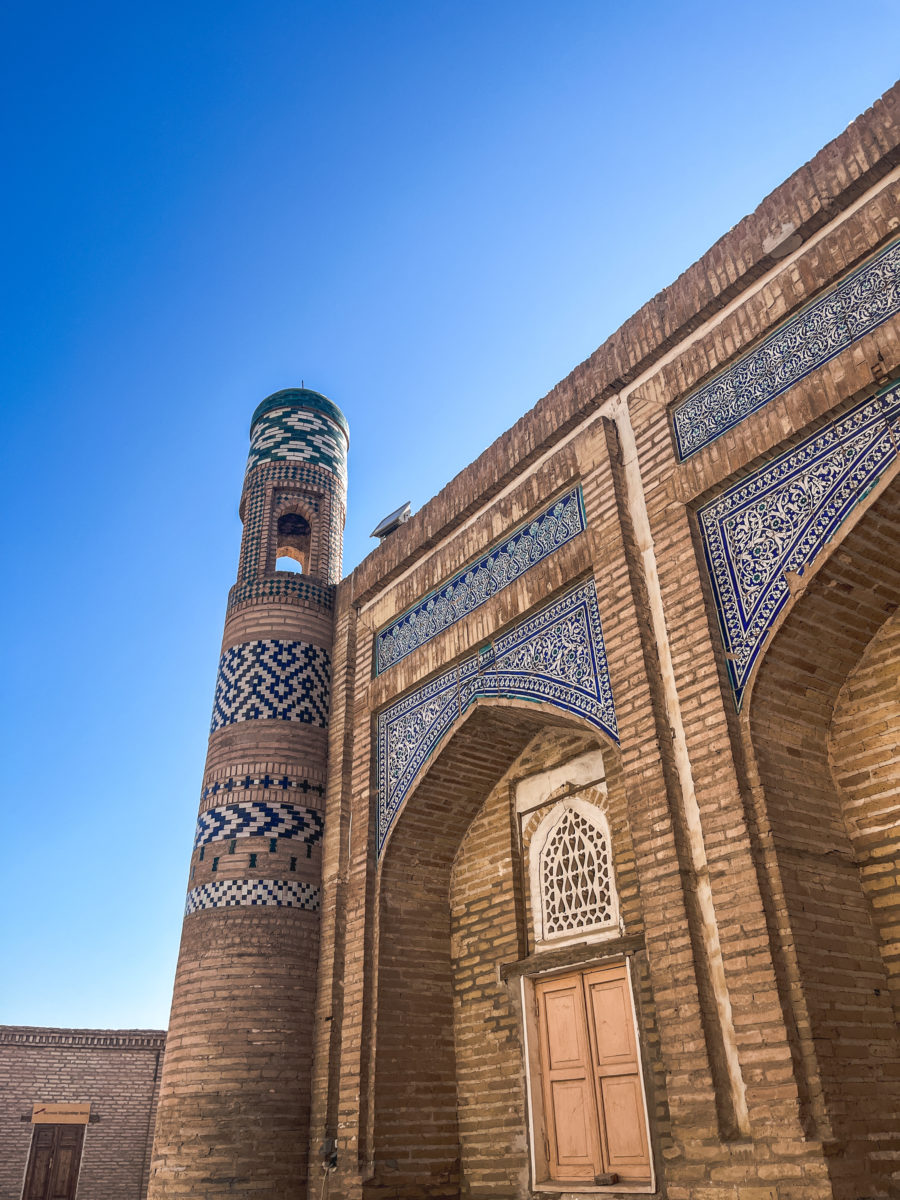
Three days may seem like a long time for such a compact city, but we did not regret it for a second.
Khiva reveals itself slowly. You need time to stop, watch craftsmen at work, walk along the city walls at sunset, or simply wander aimlessly through the quiet alleys.
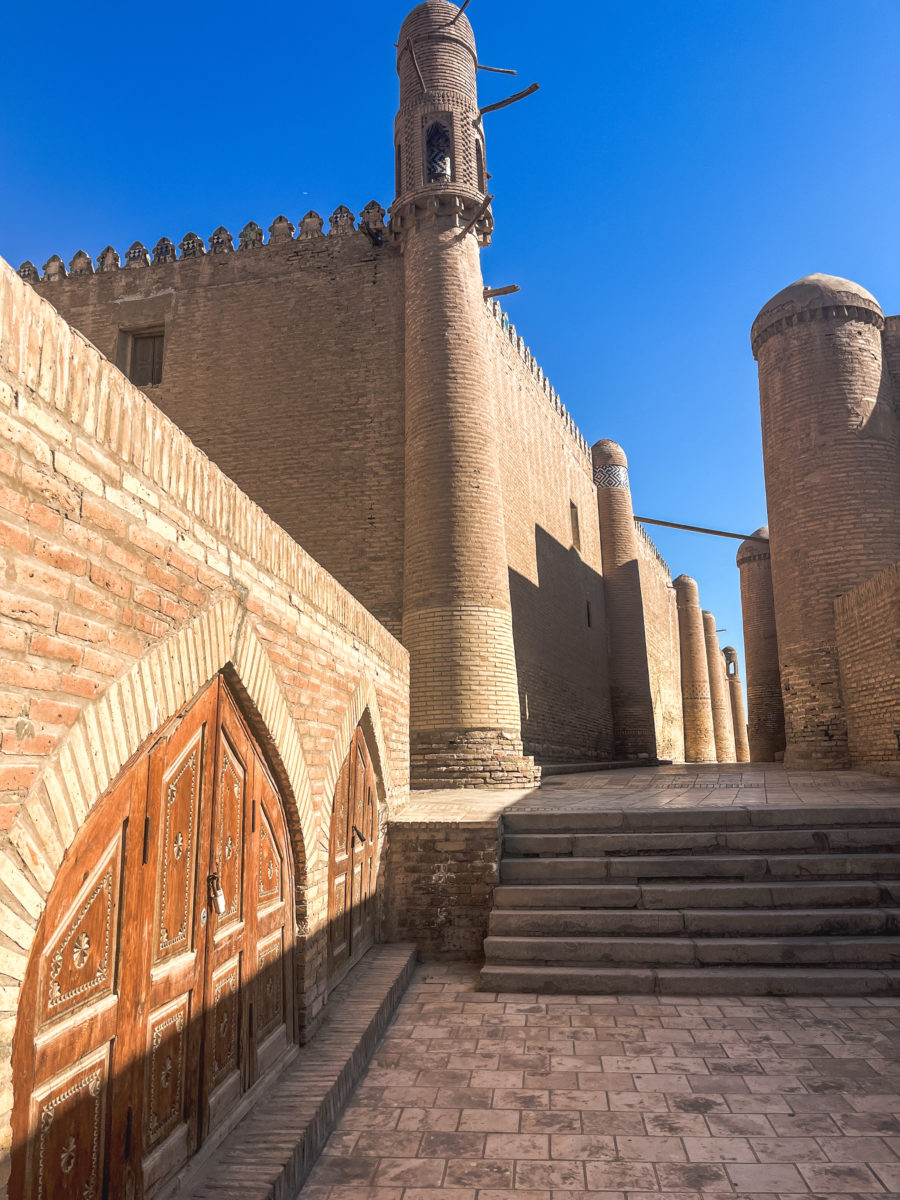
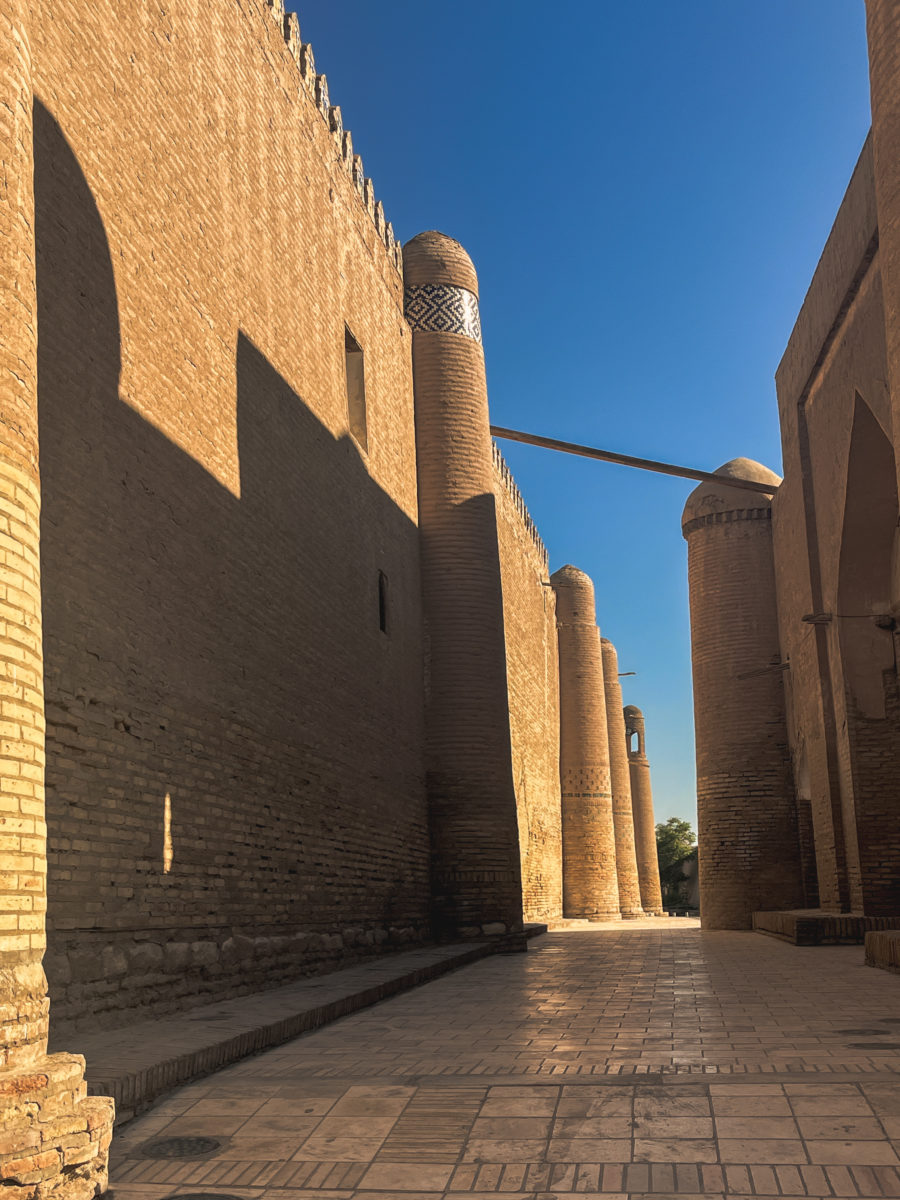
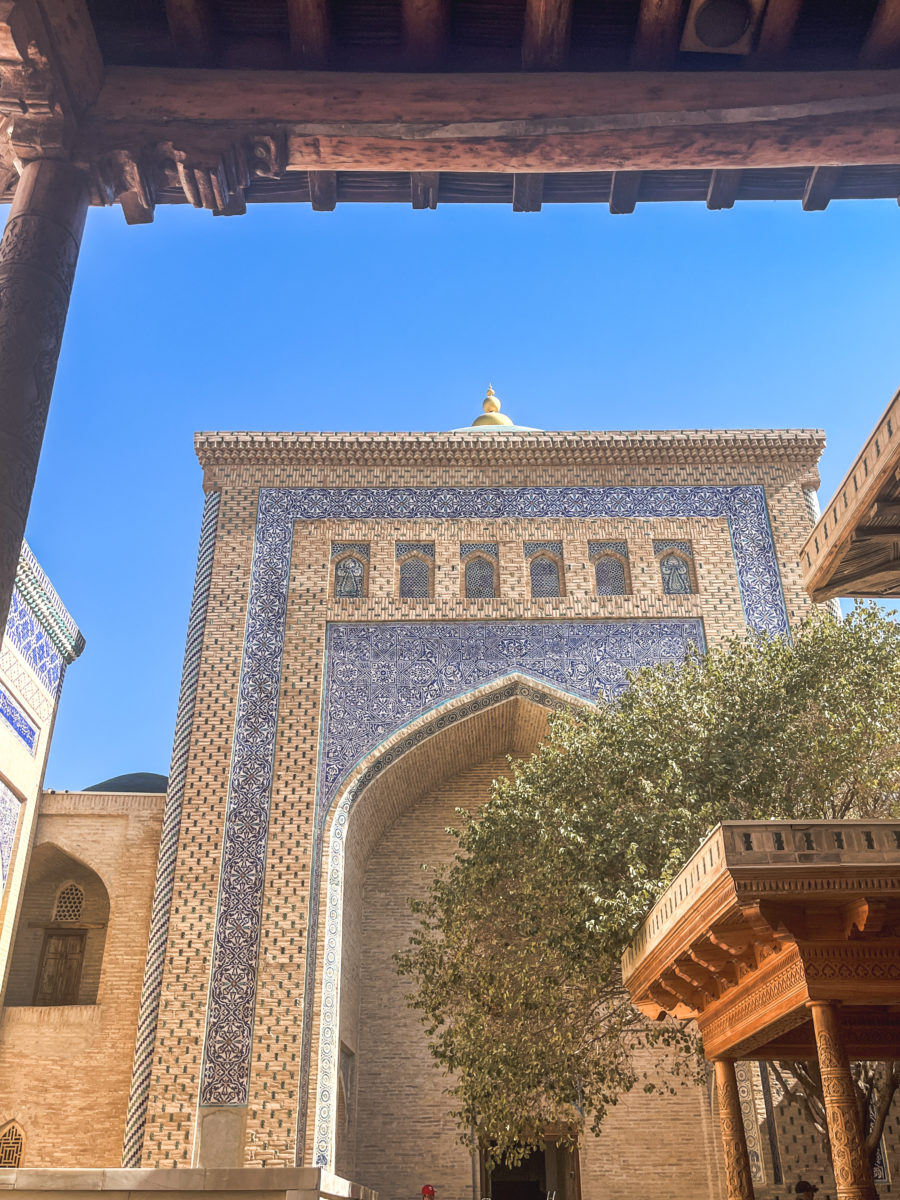
Every hour transforms the city’s mood. In the morning, the first rays of sunlight illuminate the blue tiles. At midday, the contrast between the azure sky and clay walls is striking. Then, at dusk, Khiva becomes almost unreal.
What to Visit in Khiva
Exploring Itchan Kala
The historic complex of Itchan Kala, surrounded by walls nearly 10 meters high, has been a UNESCO World Heritage Site since 1990. During our walks, several monuments particularly stood out.
Kalta Minor
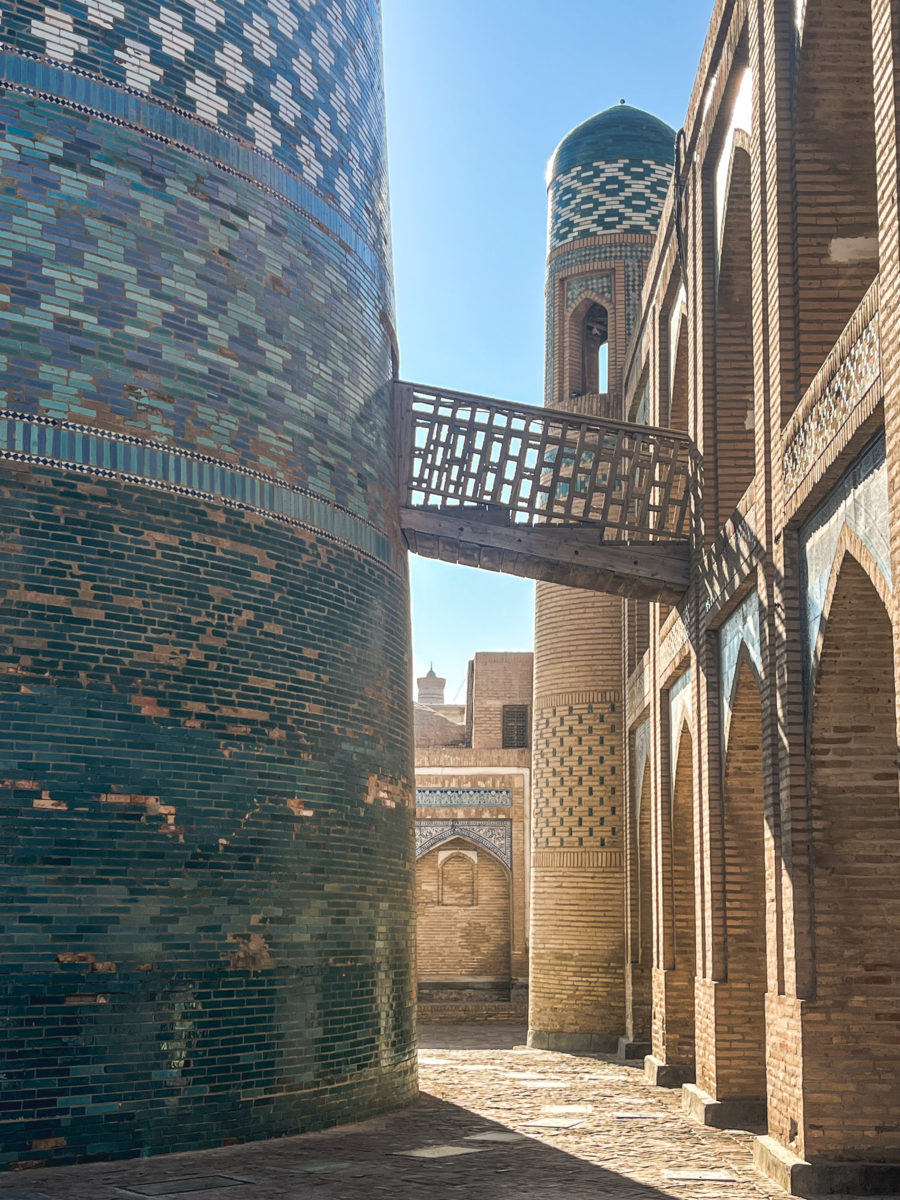
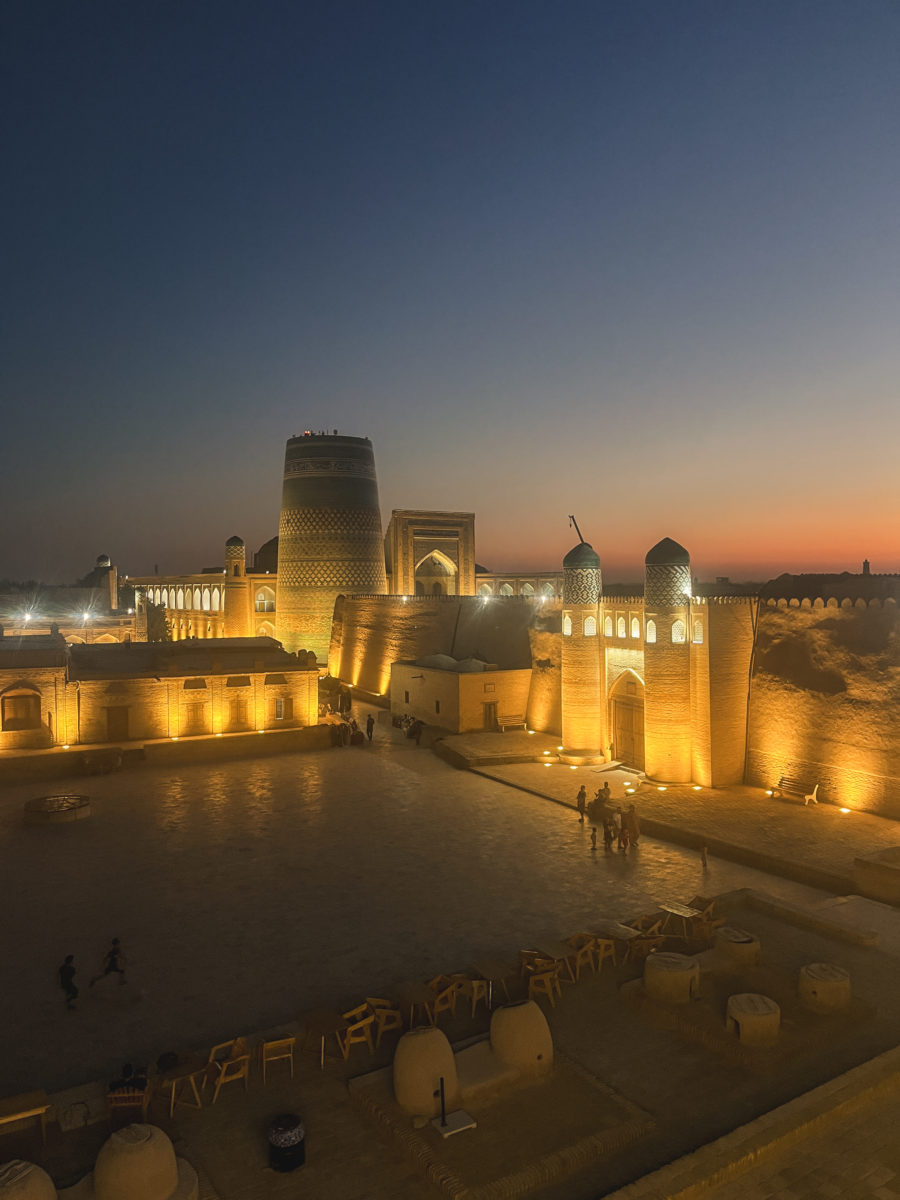
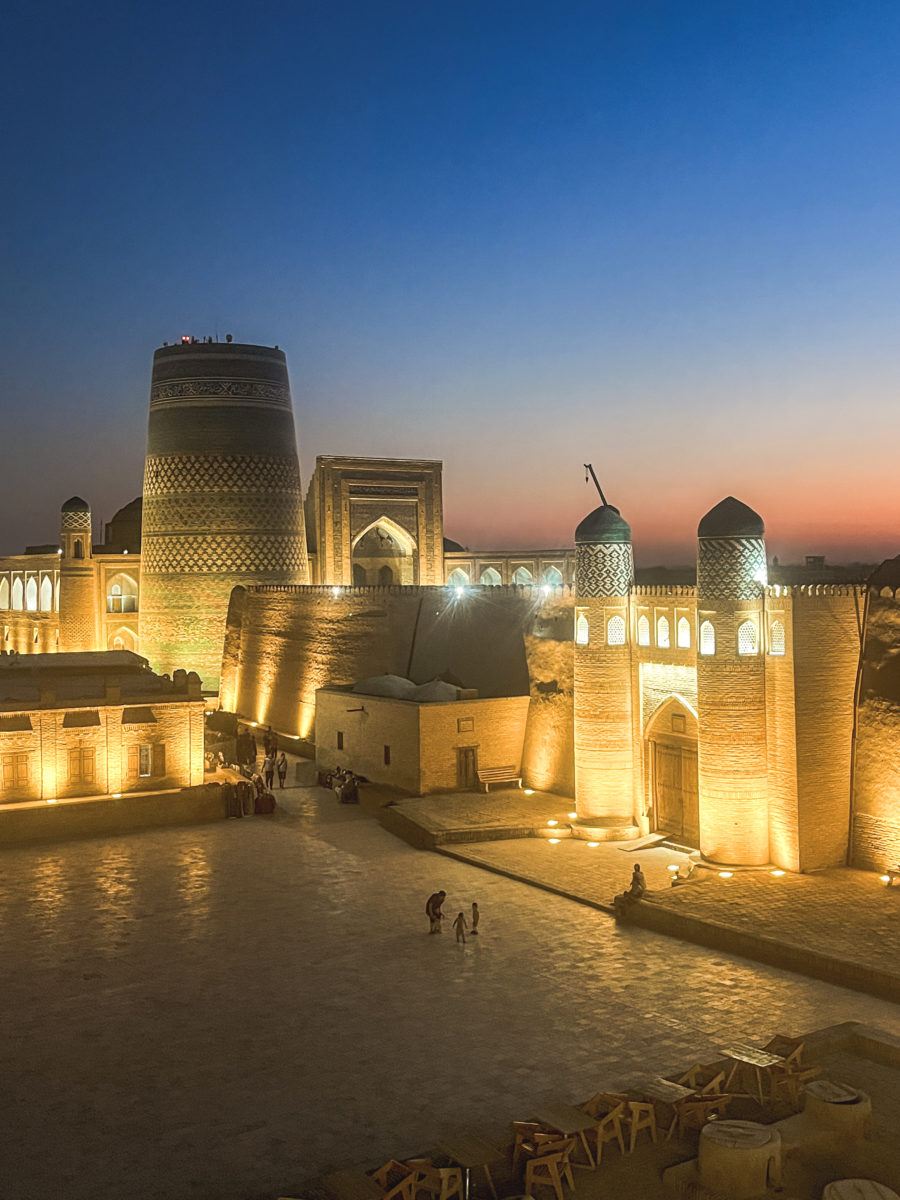
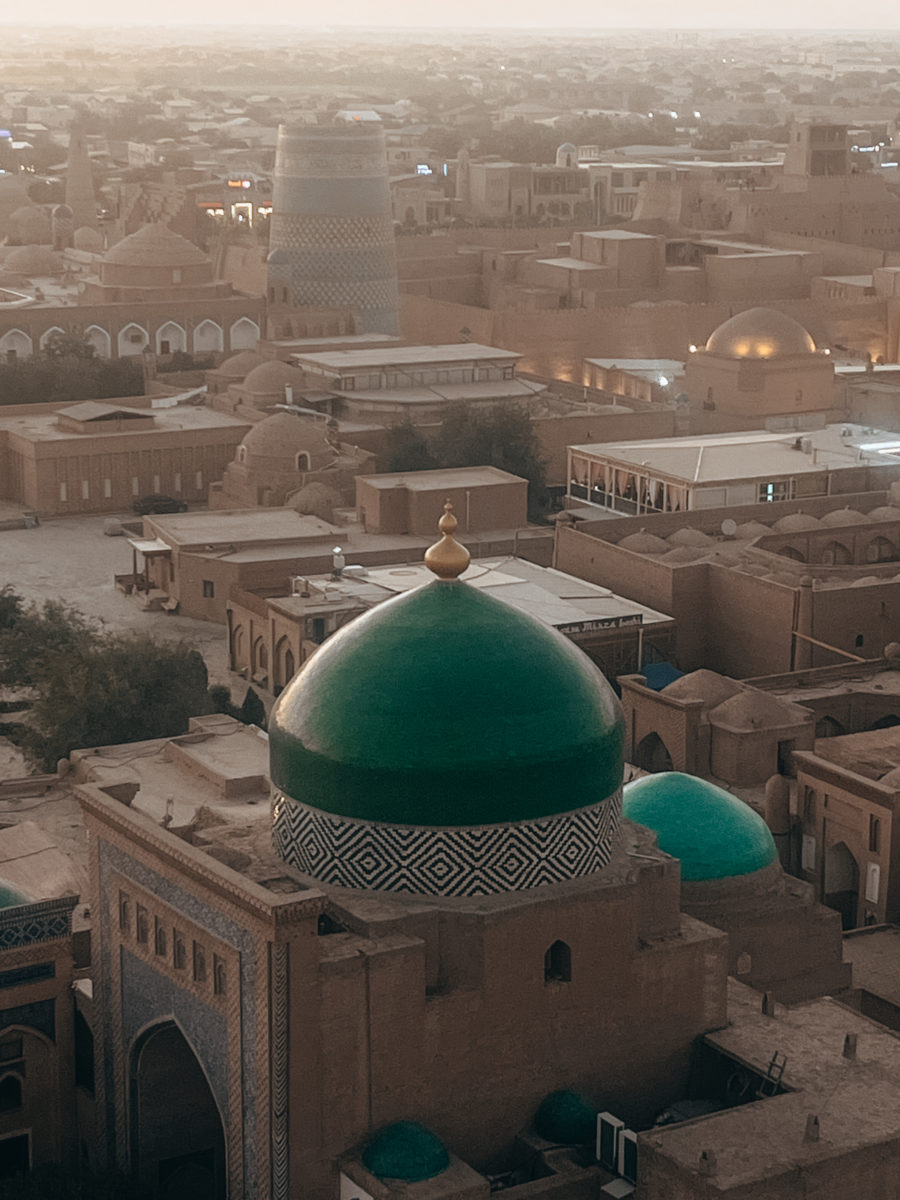
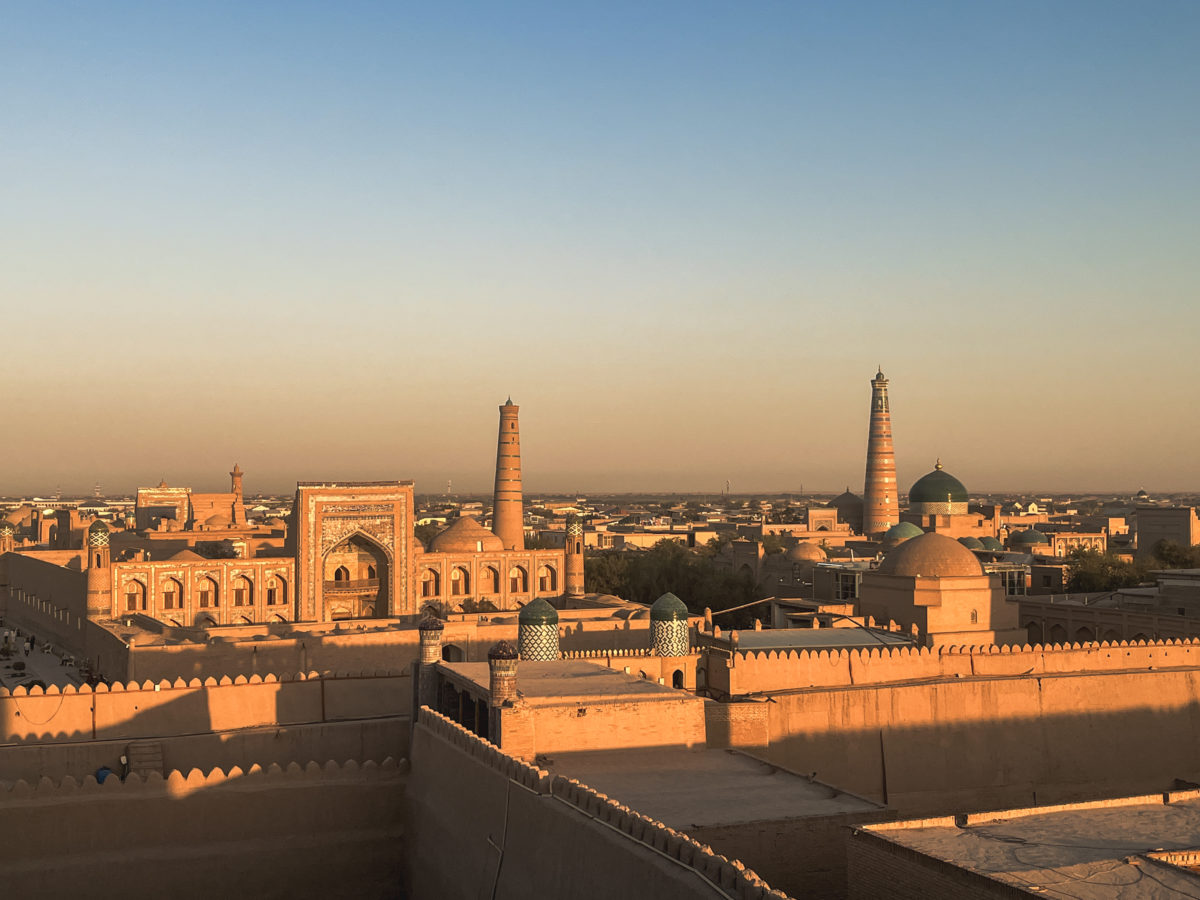
It is impossible to miss this unfinished minaret, which has become the symbol of Khiva. Its name means “short minaret.” With its brilliant turquoise tiles and stout silhouette, it is probably the city’s most photographed monument.
Originally intended to become the tallest minaret in the East, it was never completed, which only adds to its unique charm.
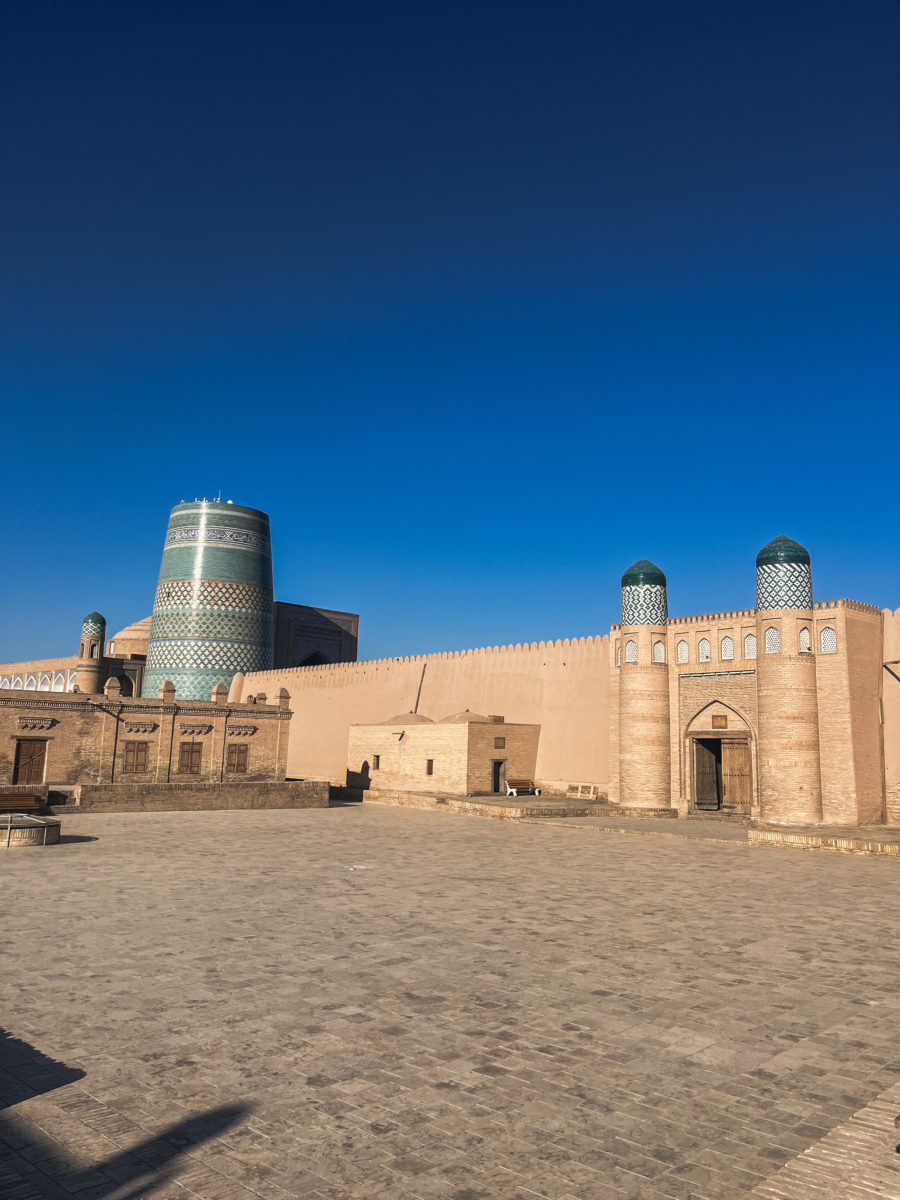
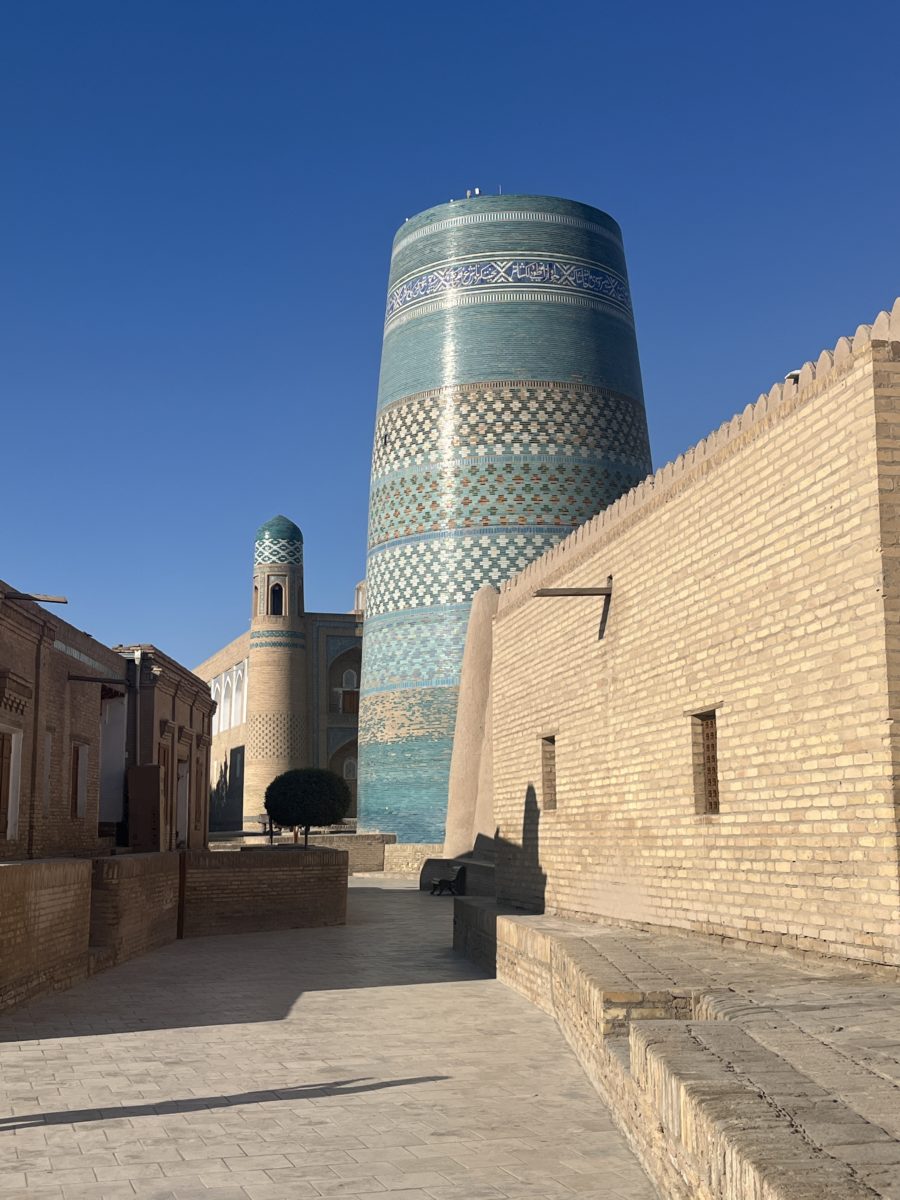
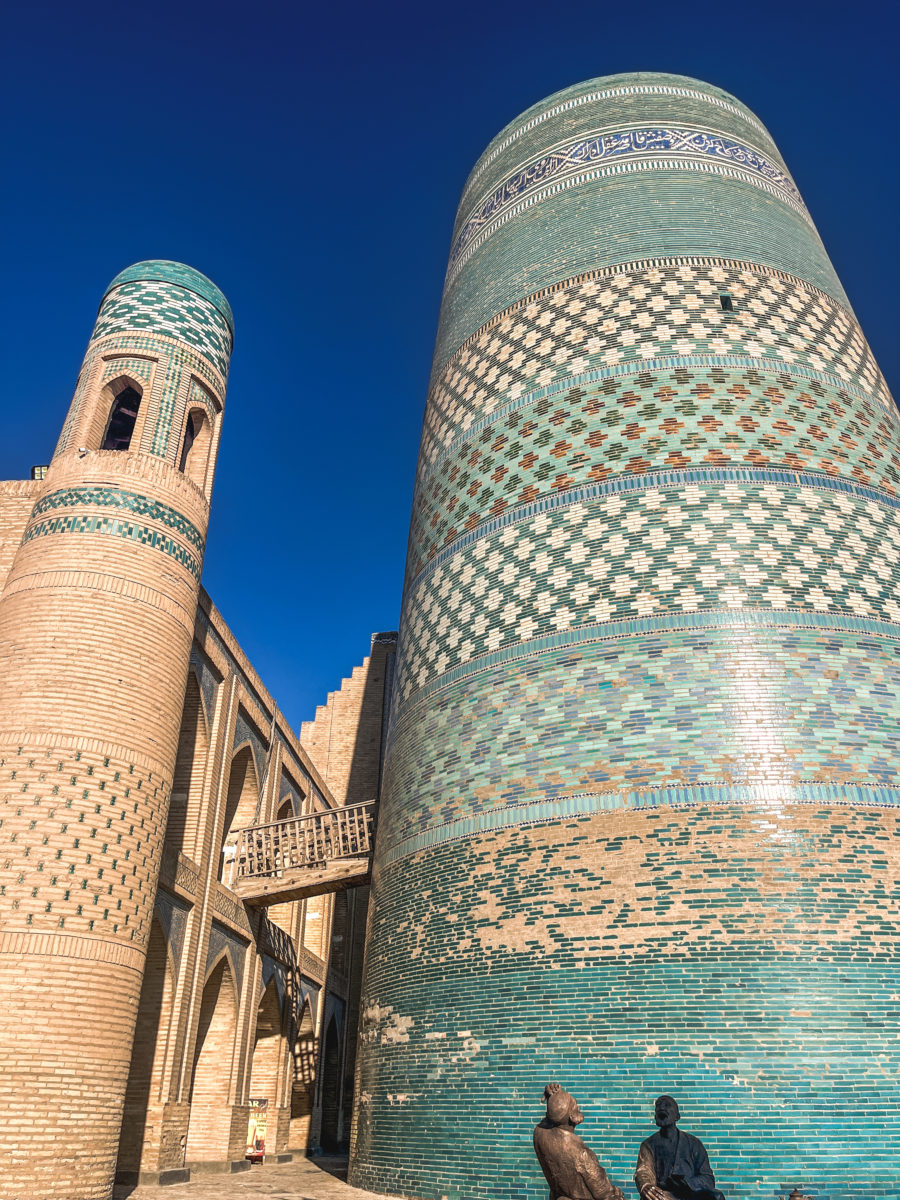
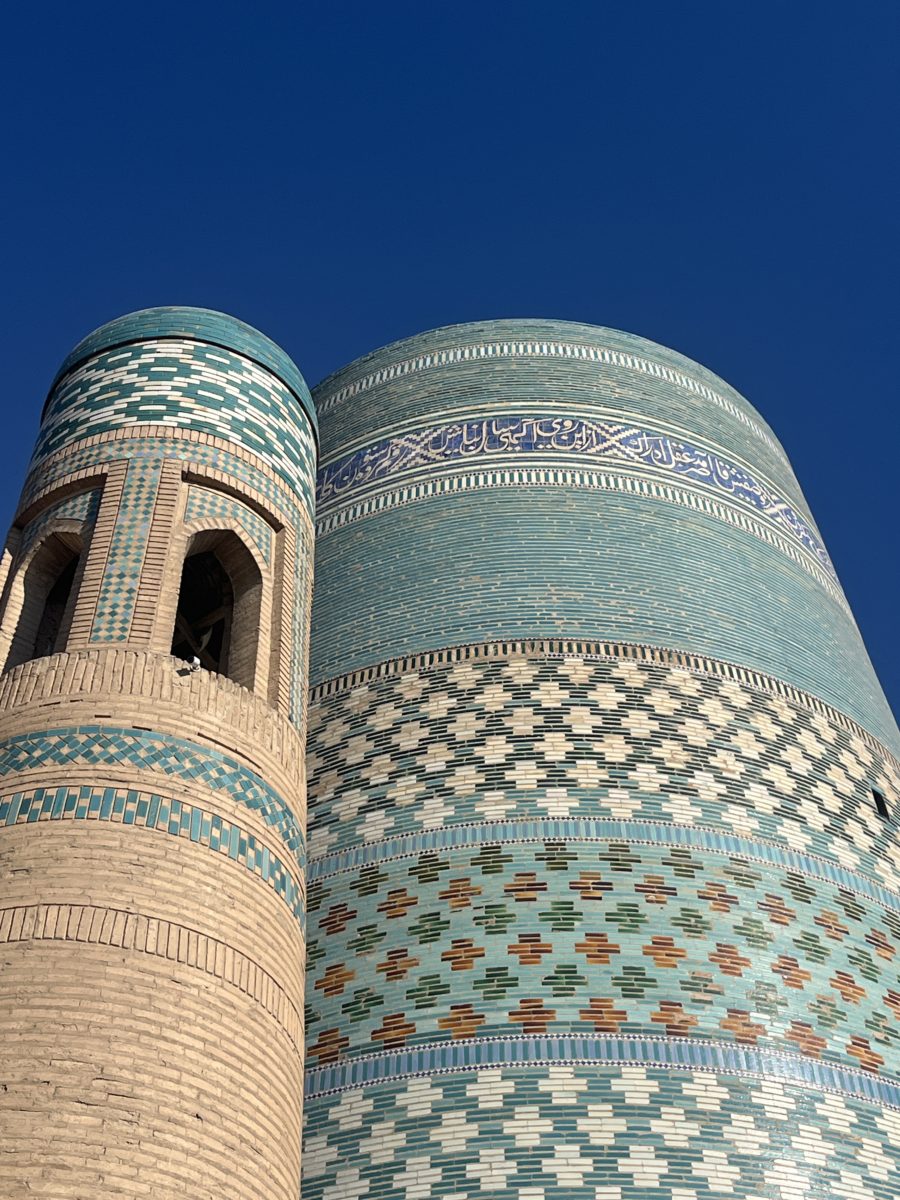
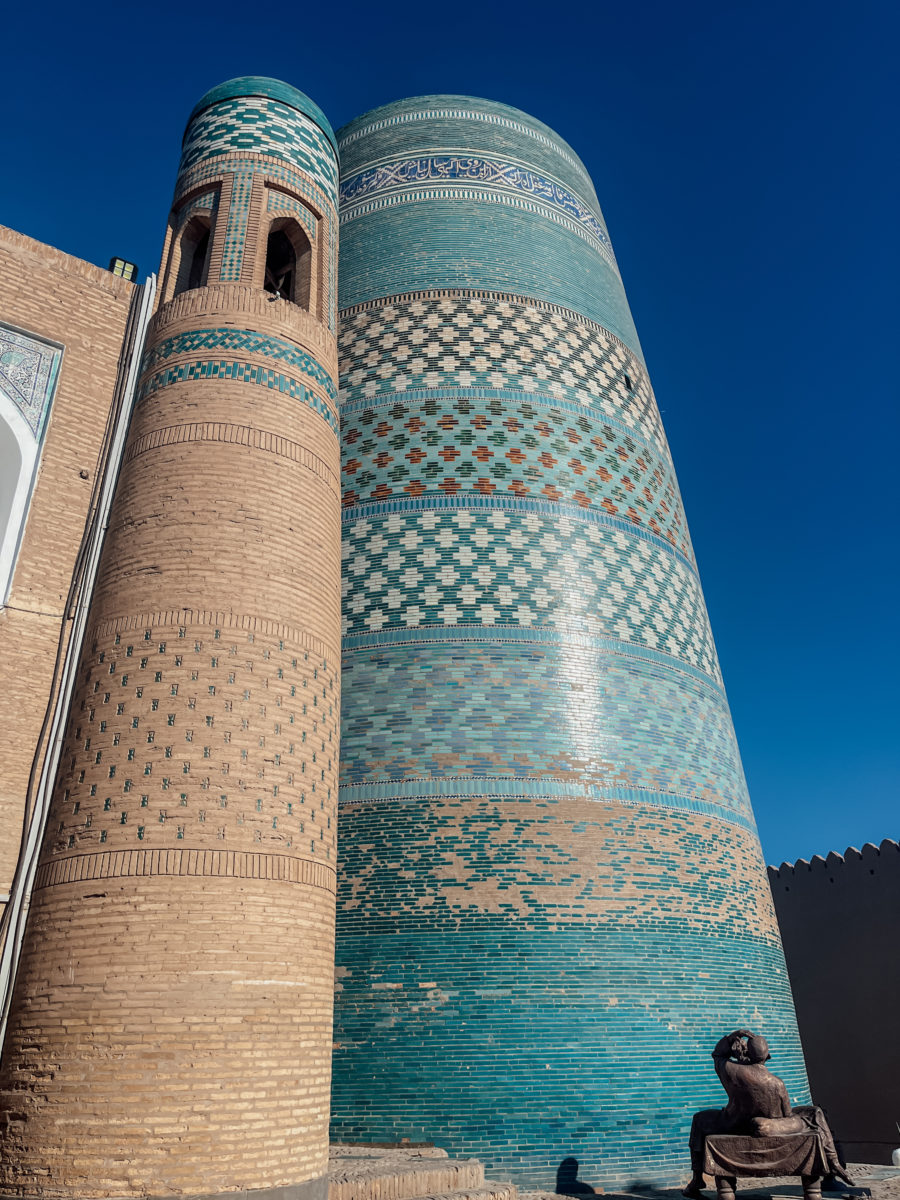
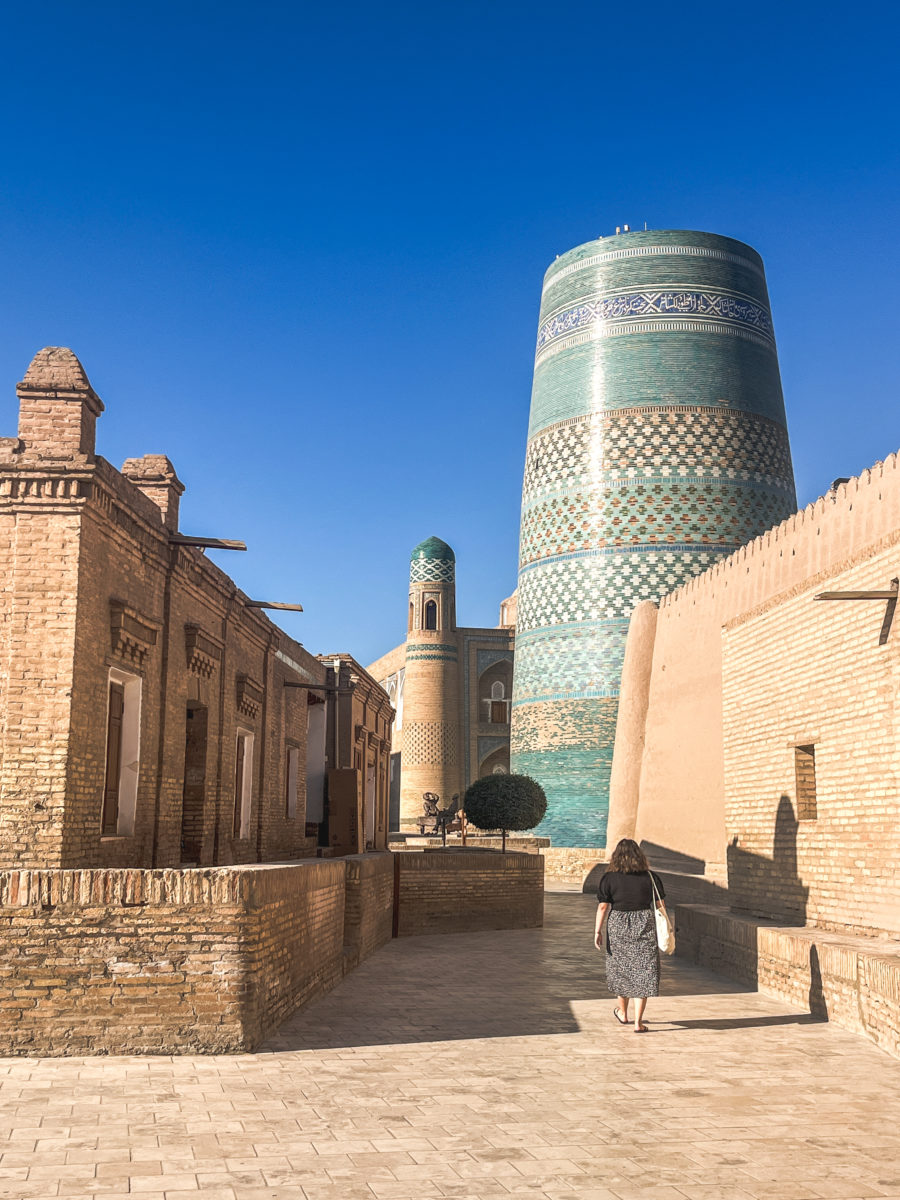
To me, it feels as though the city was built around this symbol. It can be seen from almost everywhere, and every glimpse of it is mesmerizing.
For a delicious meal overlooking the minaret, head to Terrassa. Be sure to reserve at least two days in advance if you want a table with a view.
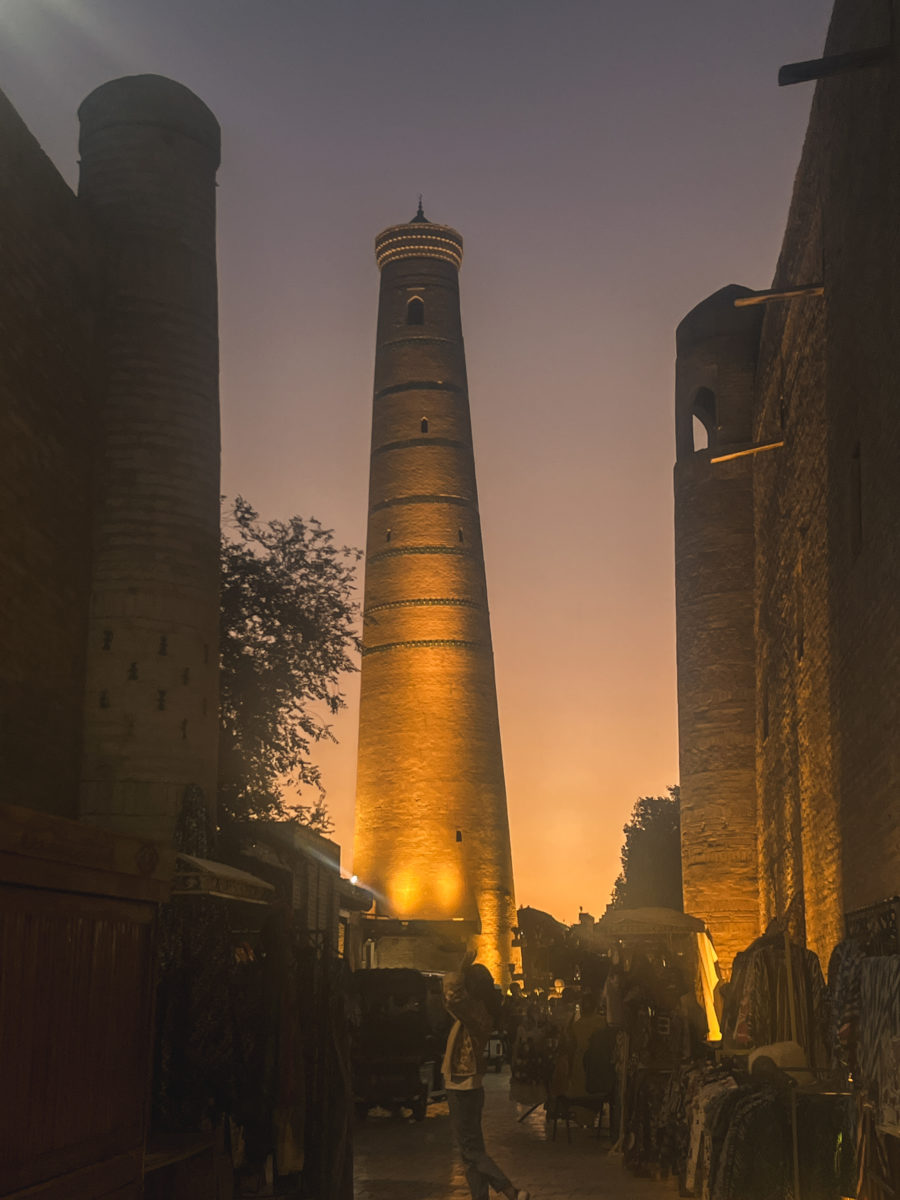
Islam Khodja Minaret
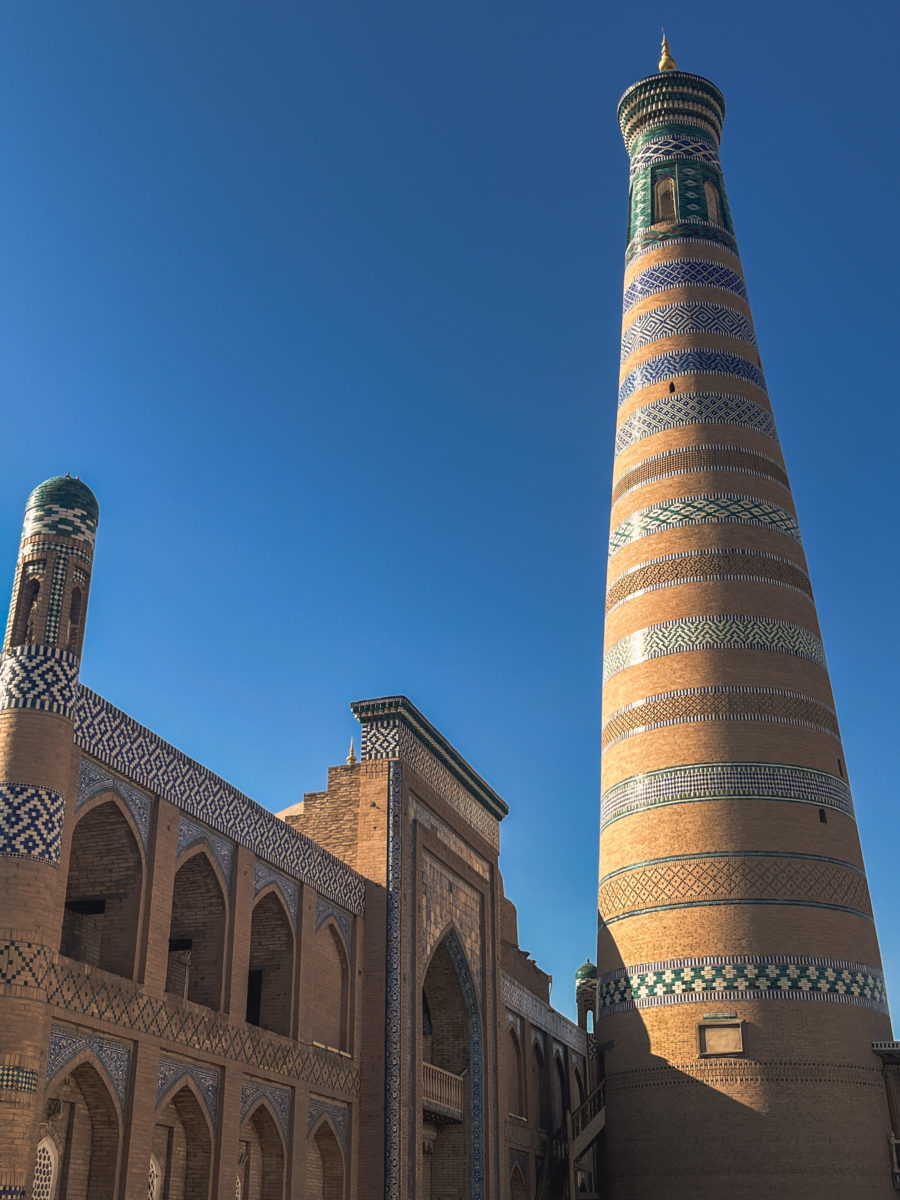
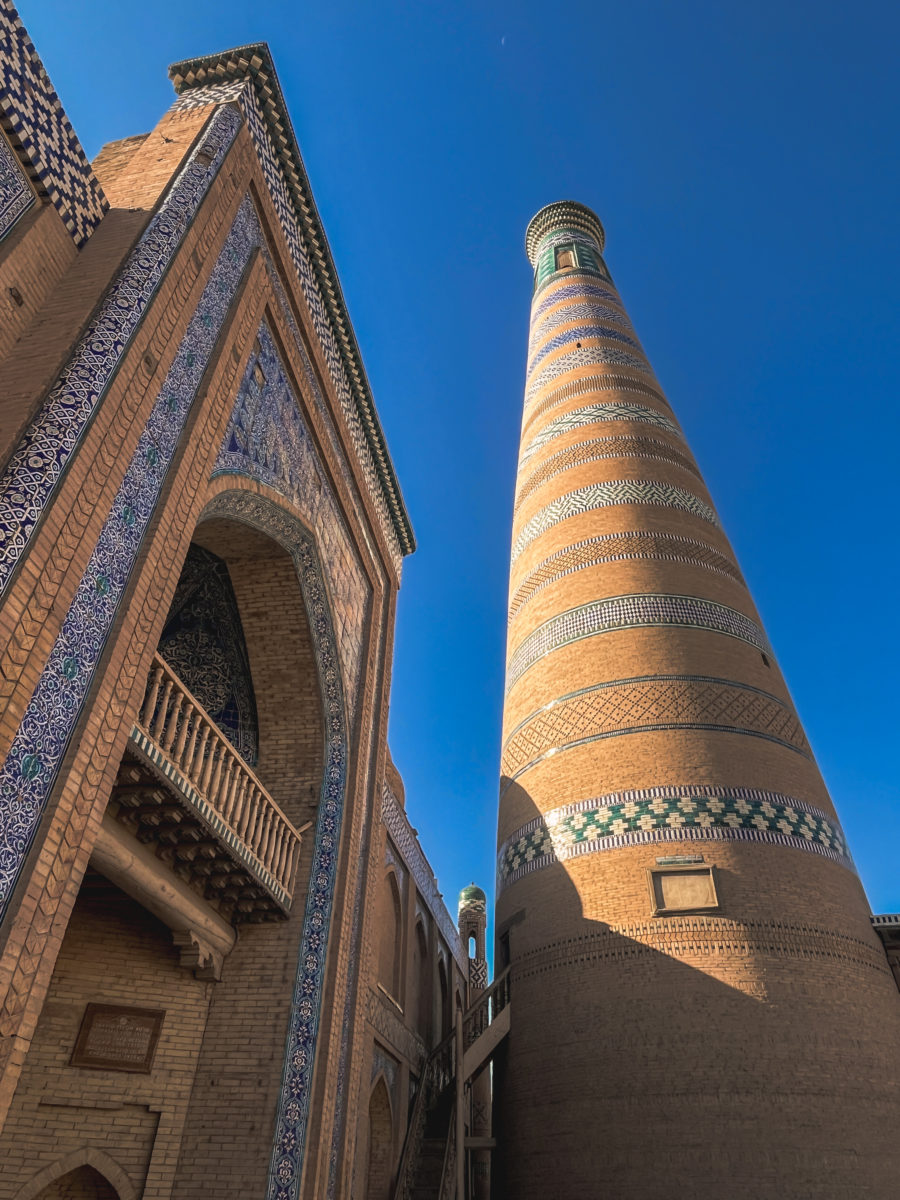
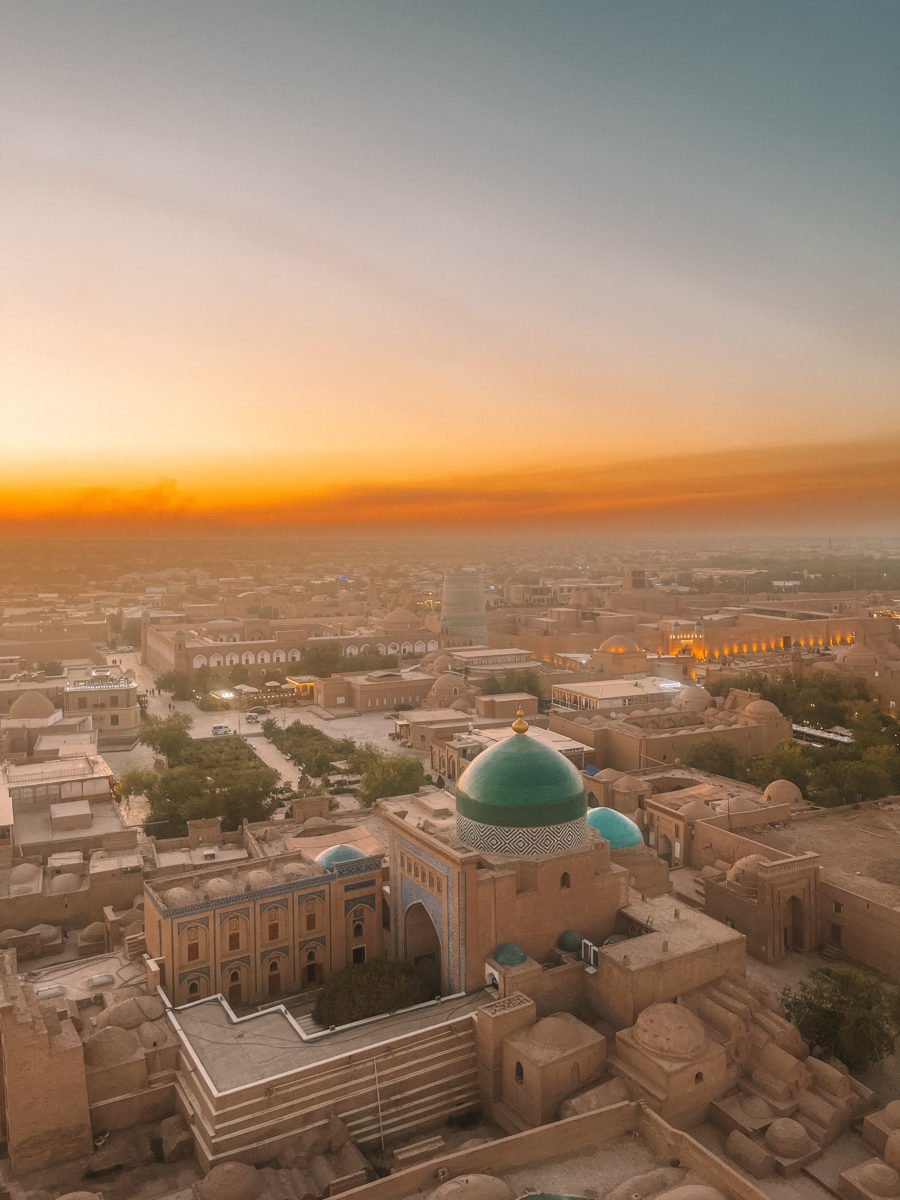
At 56.6 meters high, it towers over the old city and offers one of the finest views in Uzbekistan. From the top, you can admire an impressive panorama of turquoise domes, city walls, and earthen rooftops stretching into the distance.
We chose to visit at sunset to enjoy Khiva’s golden hour.
The climb is an adventure (especially in flip-flops). The staircase is steep, the steps are unusually high, the space is narrow, and there is nothing smooth or comfortable about the ascent. We practically climbed on all fours.
The view is earned and it is absolutely worth it. The evening light creates stunning contrasts across the domes and mud-brick rooftops, leaving us speechless with admiration.
Juma Mosque
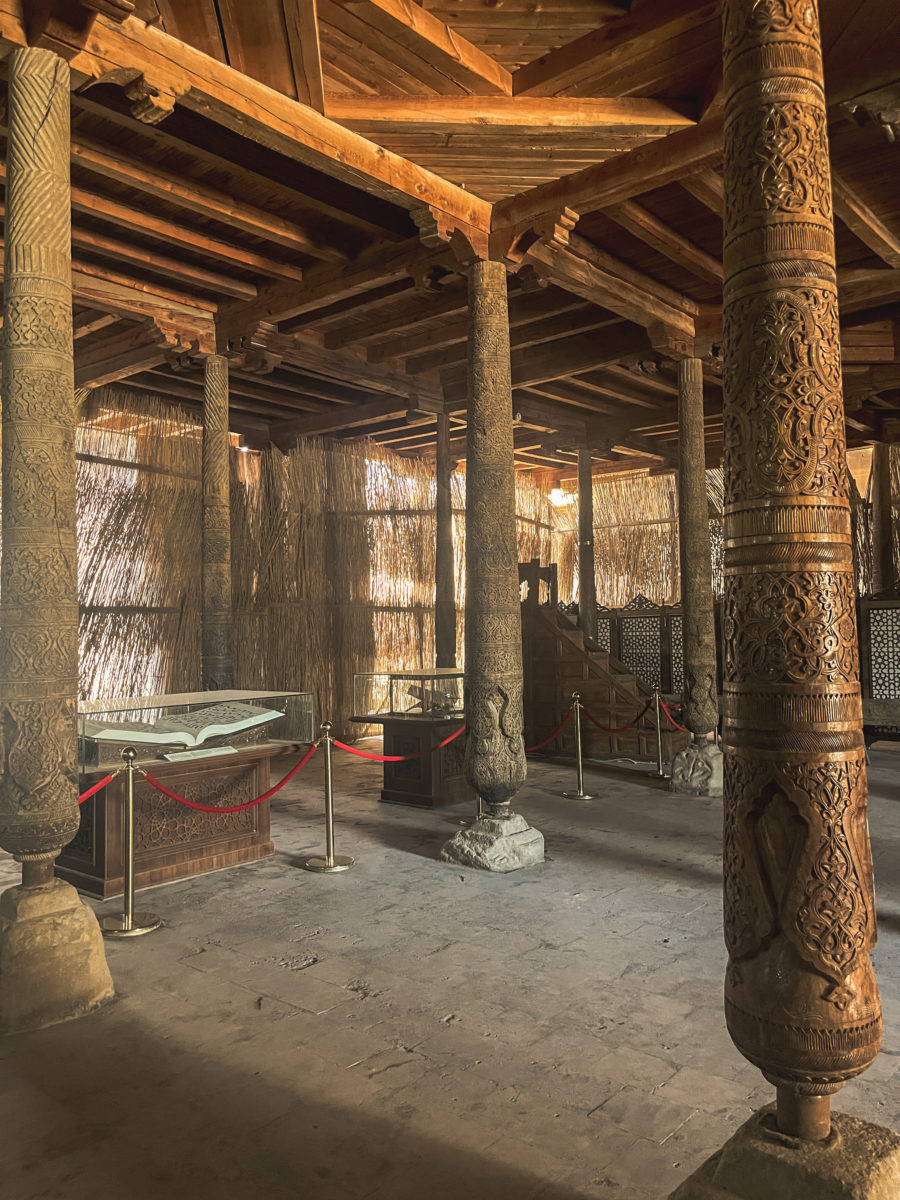
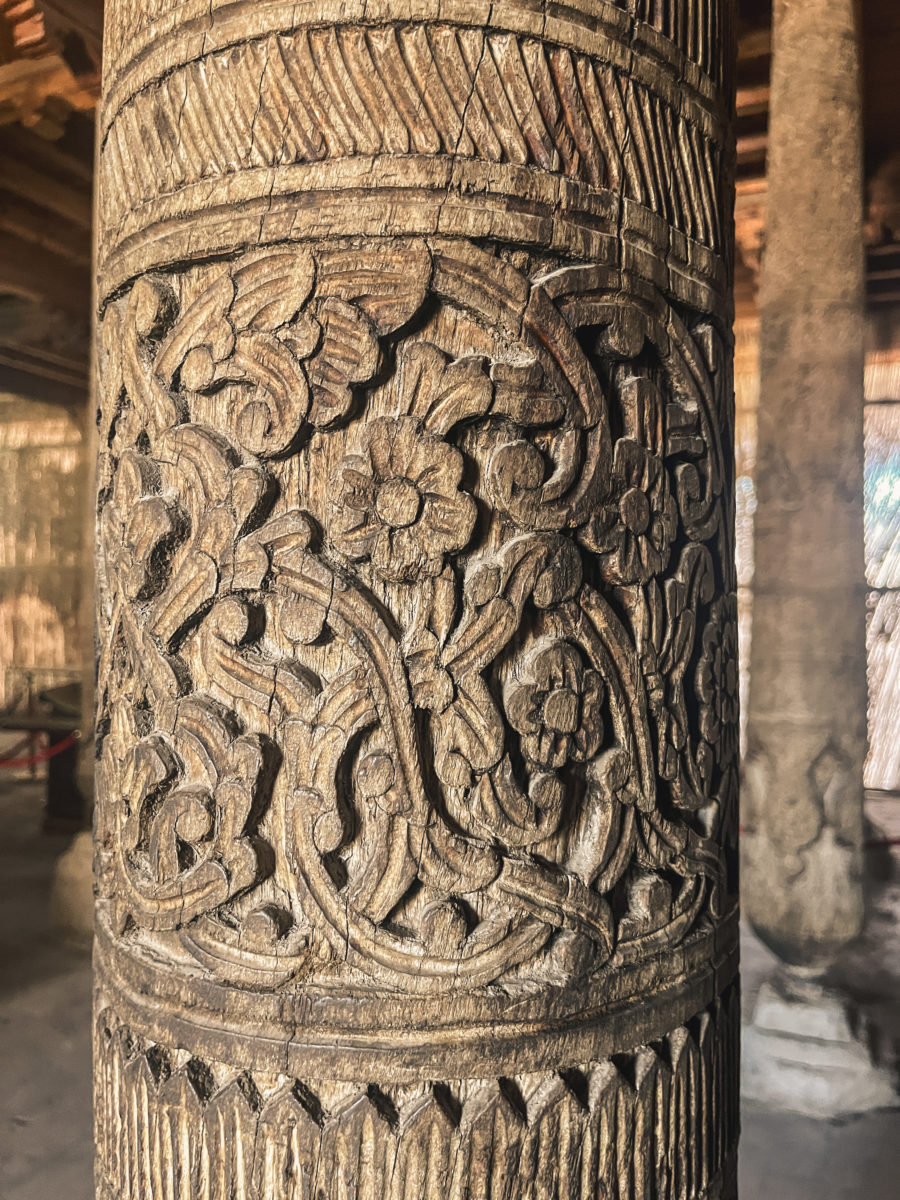
This mosque is one of the country’s most original monuments. Its vast prayer hall is supported by hundreds of carved wooden columns, some of which are several centuries old.
There are no domes and no arches here. During hot weather, the atmosphere inside feels particularly mysterious and cool.
Kunya Ark and the Khans’ Palaces
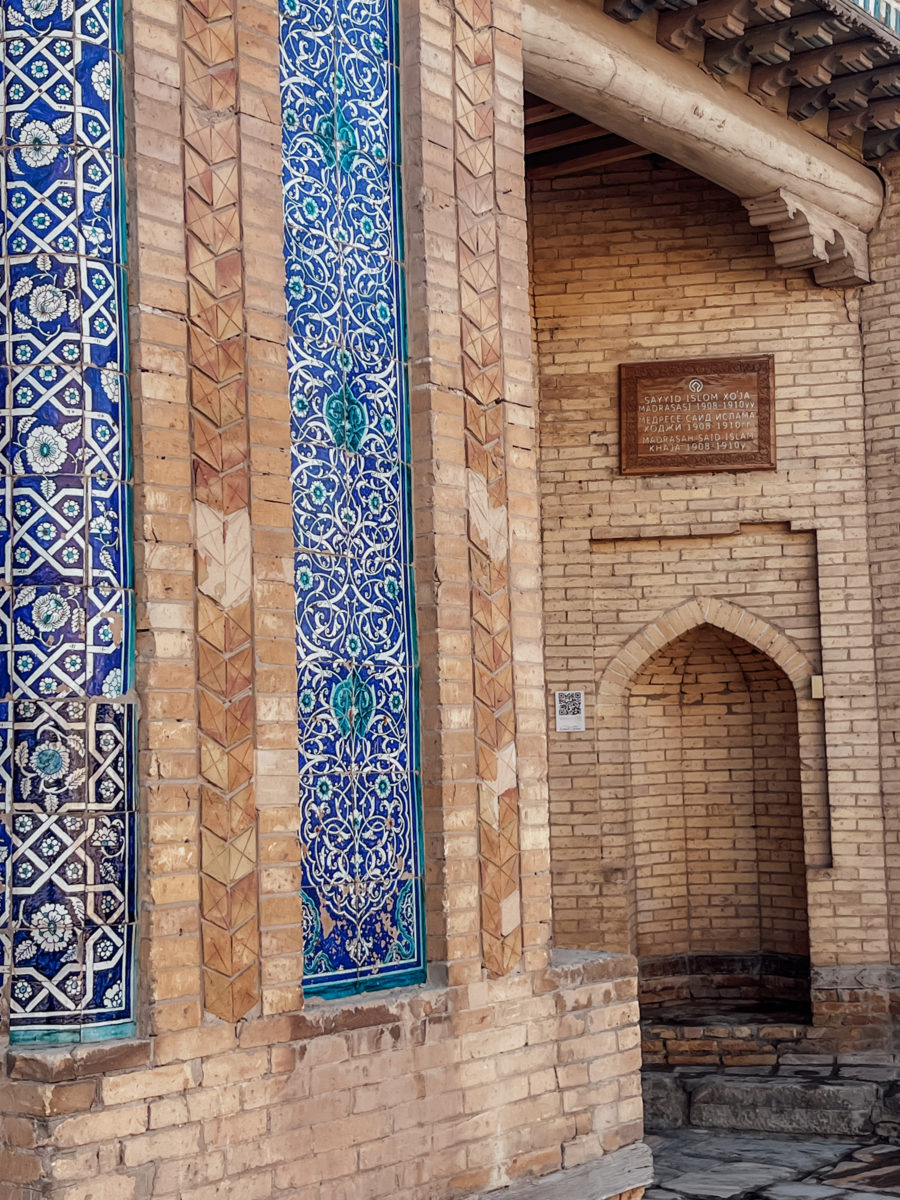
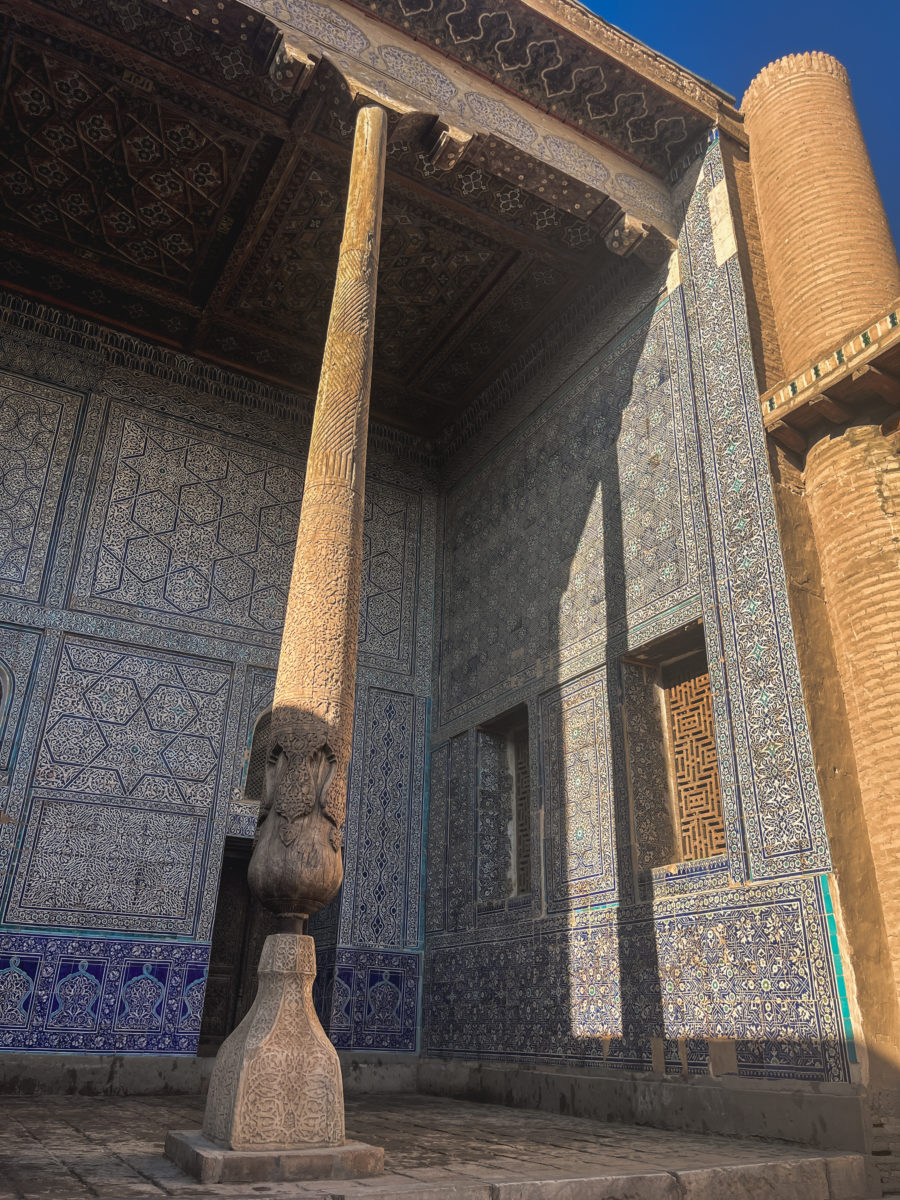
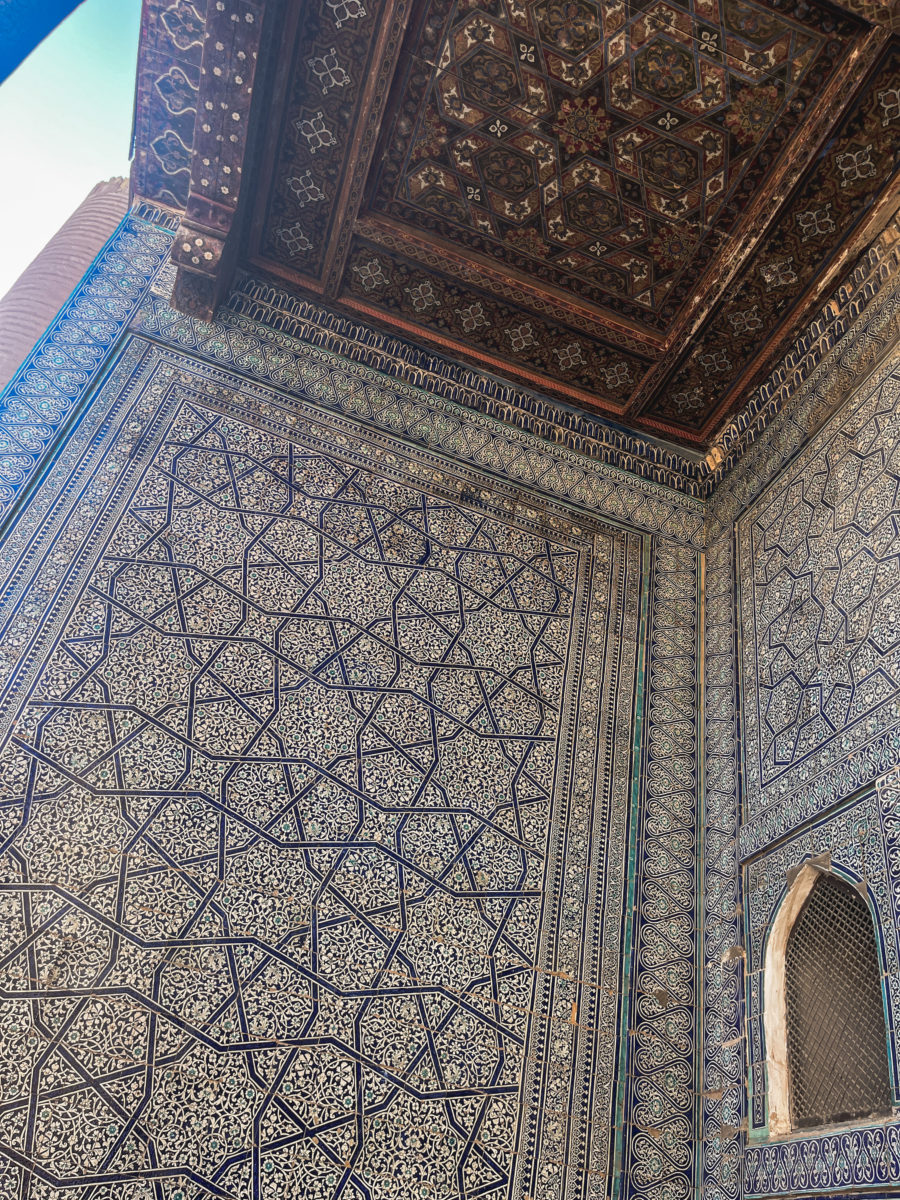
The former residence of Khiva’s rulers, the Kunya Ark citadel provides insight into the power once wielded by the Khanate of Khiva throughout the surrounding desert region.
The palaces, courtyards, and reception halls still reflect the refinement of an era when this city was a major centre of learning and culture in Central Asia.
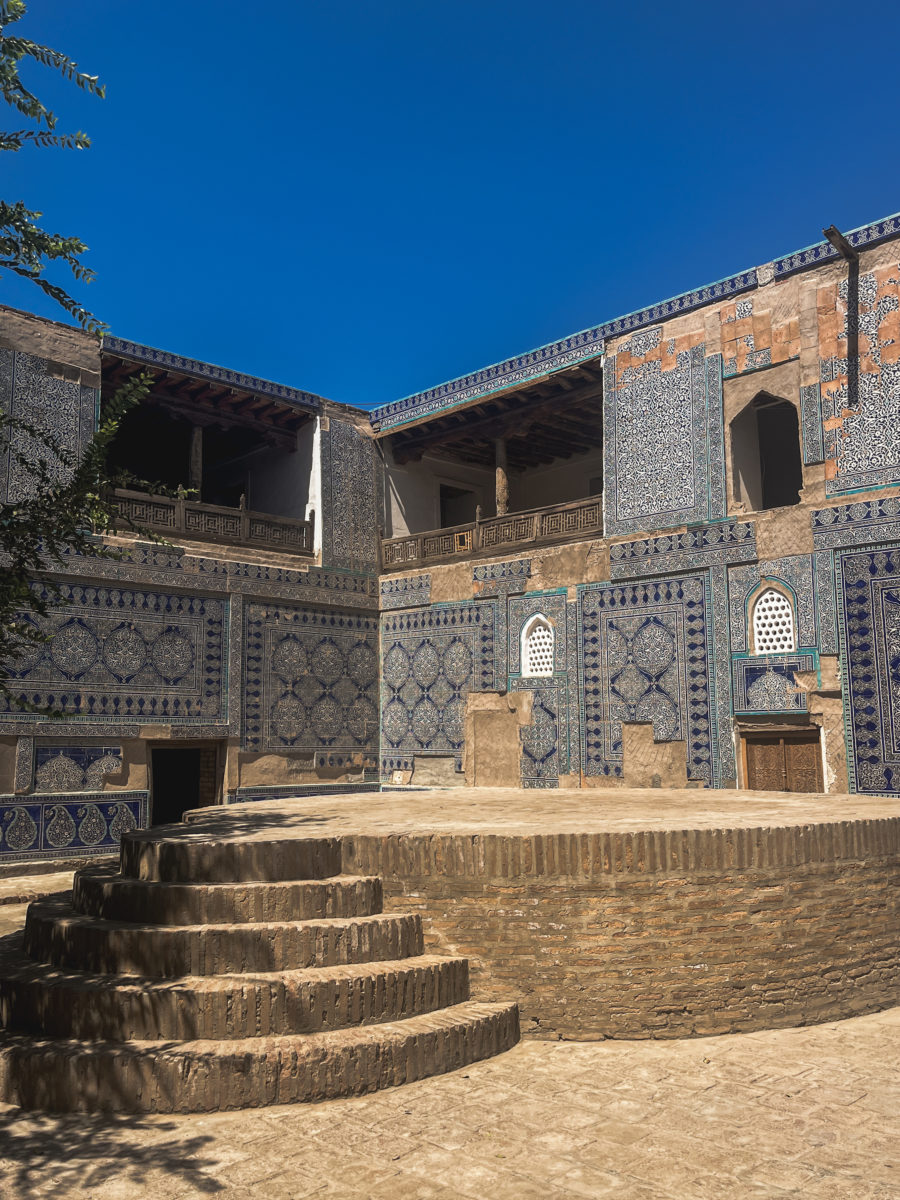
For an additional 6 CHF, visitors can climb the fortress tower. The view is splendid, although its sunset does not quite compare with the one from the top of the minaret.
Beyond the Walls: Discovering Nurullaboy Palace
One of our most surprising discoveries was Nurullaboy Palace, located outside Khiva’s historic walls. Less famous than the monuments of Itchan Kala, it nonetheless deserves a visit.
Built in the early 20th century for the last Khan of Khiva, the palace reflects a transitional period during which Russian and European influences began blending with traditional local architecture.
From the moment you enter, the contrast with the city’s madrasas and traditional palaces is striking. Behind its Oriental facades (and inside a wonderfully air-conditioned environment) you will find richly decorated interiors, including painted ceilings, Venetian mirrors, crystal chandeliers, ceramic fireplaces, and salons inspired by the Russian Empire.
The result feels like moving from One Thousand and One Nights directly into the court of the Romanovs.
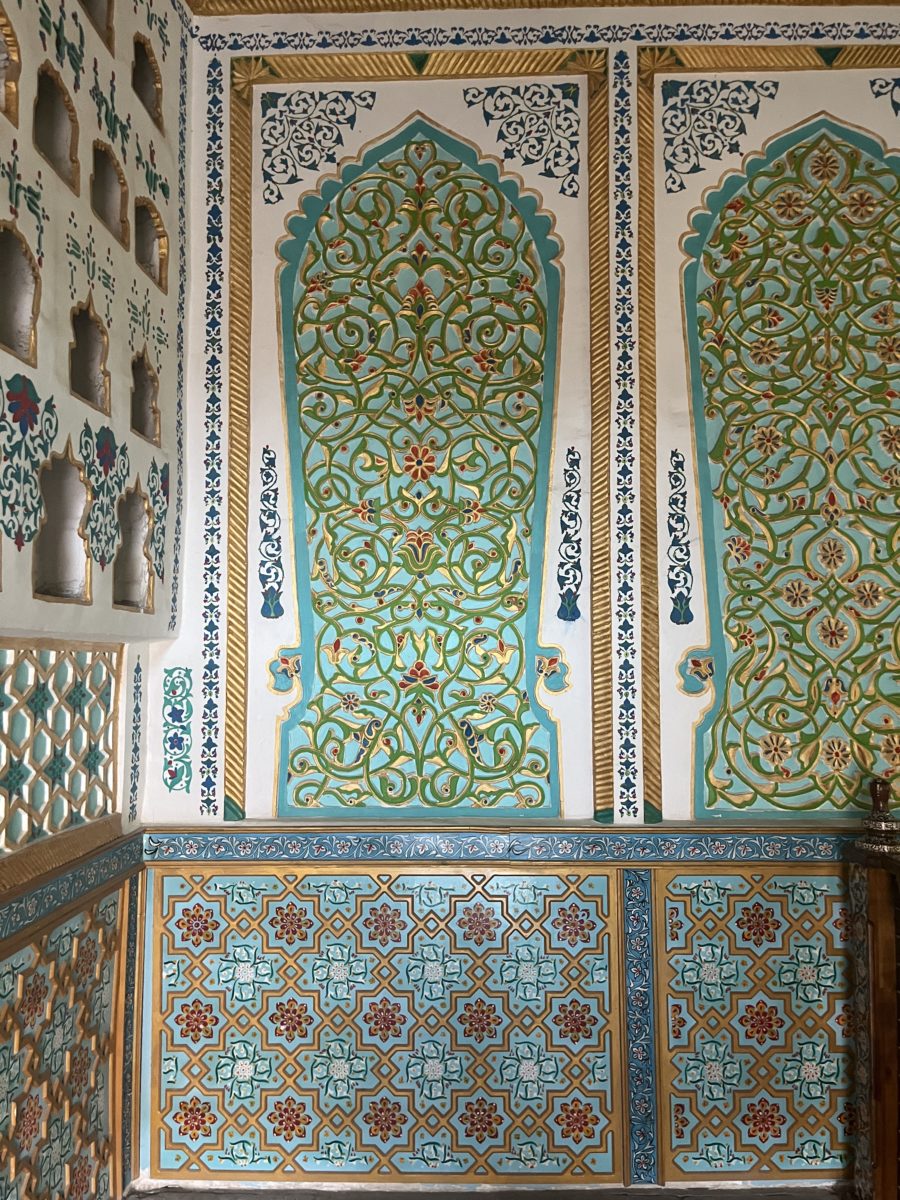
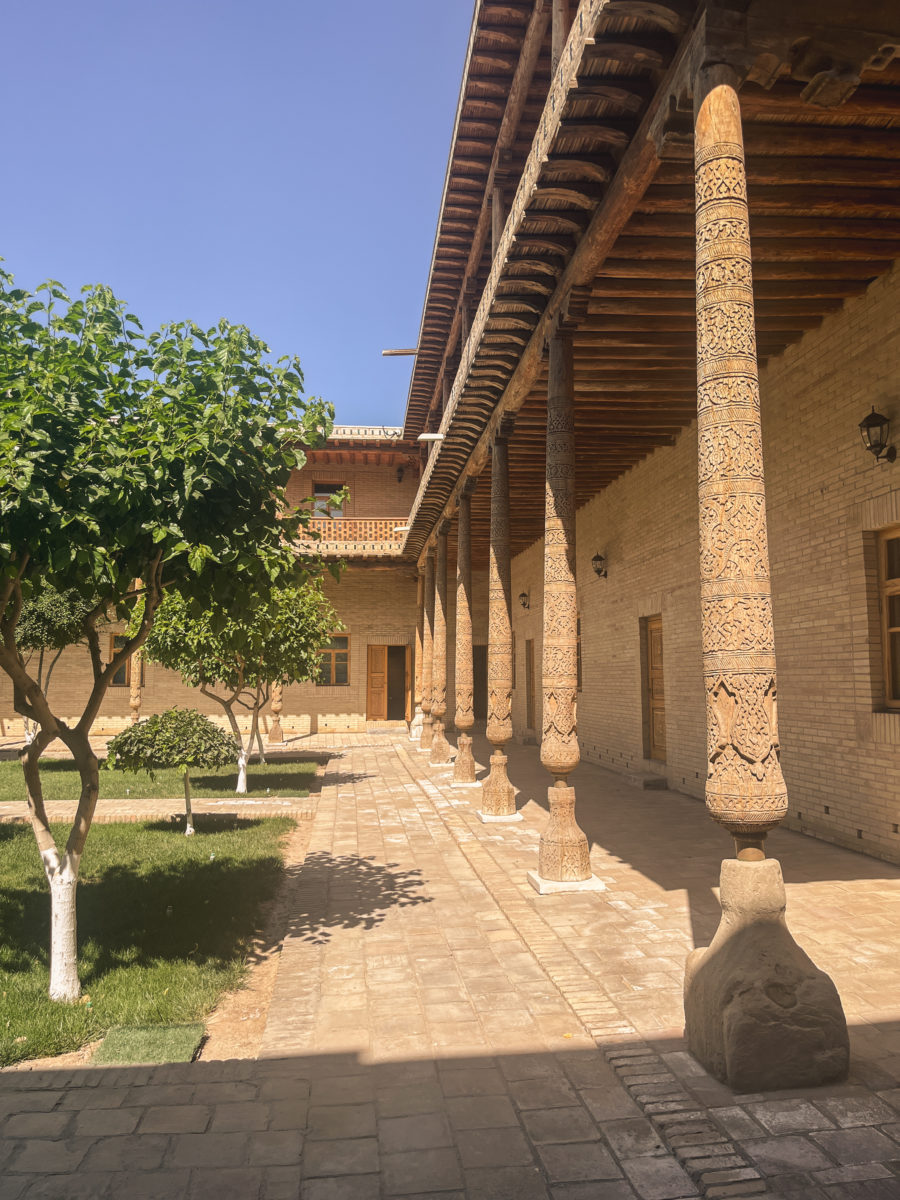
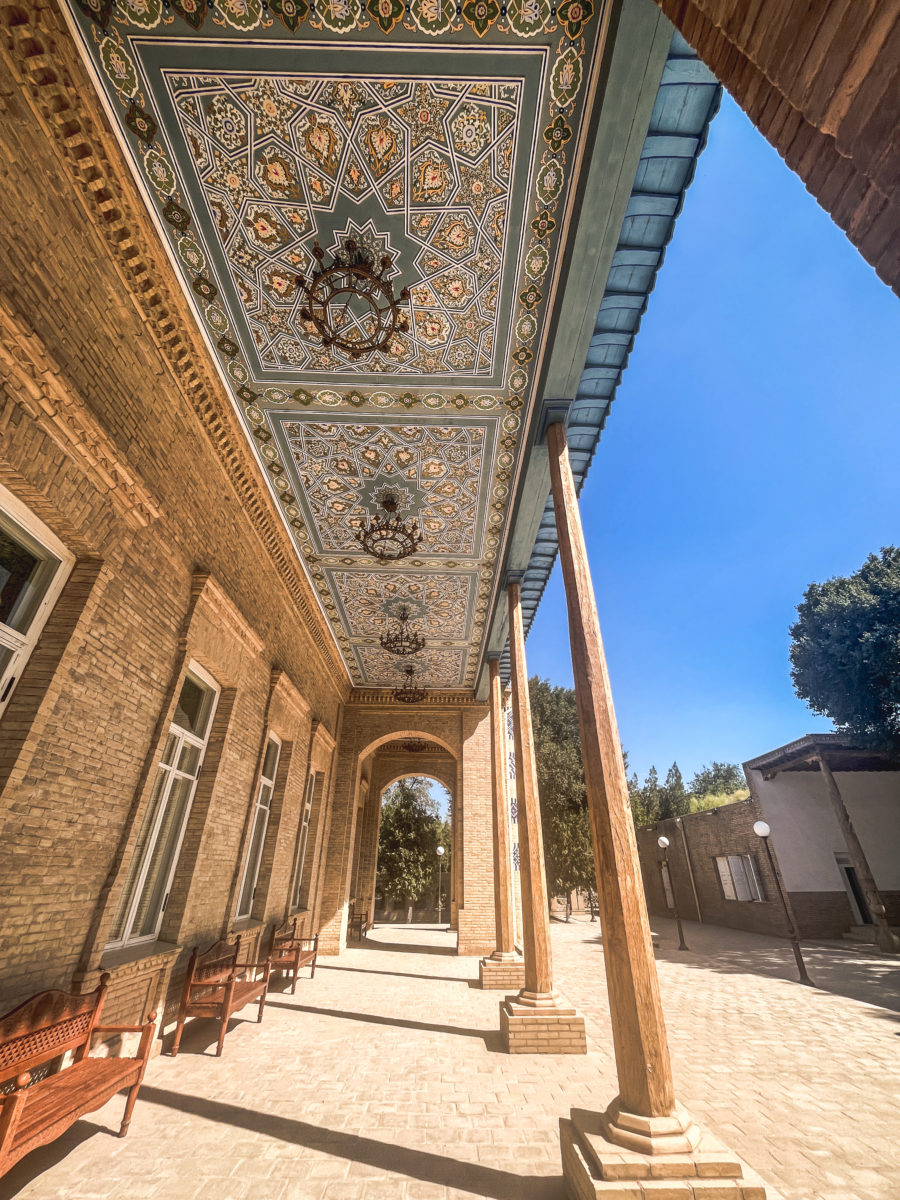
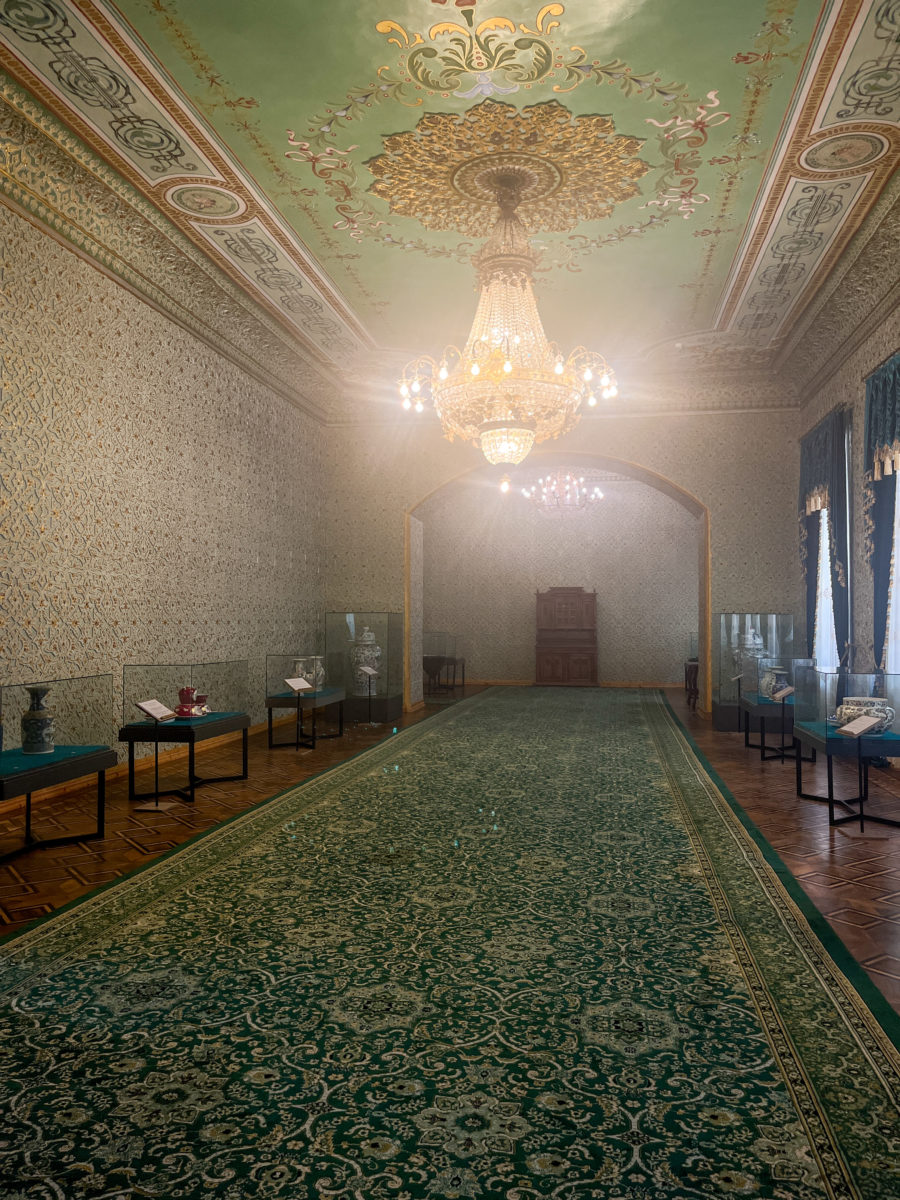
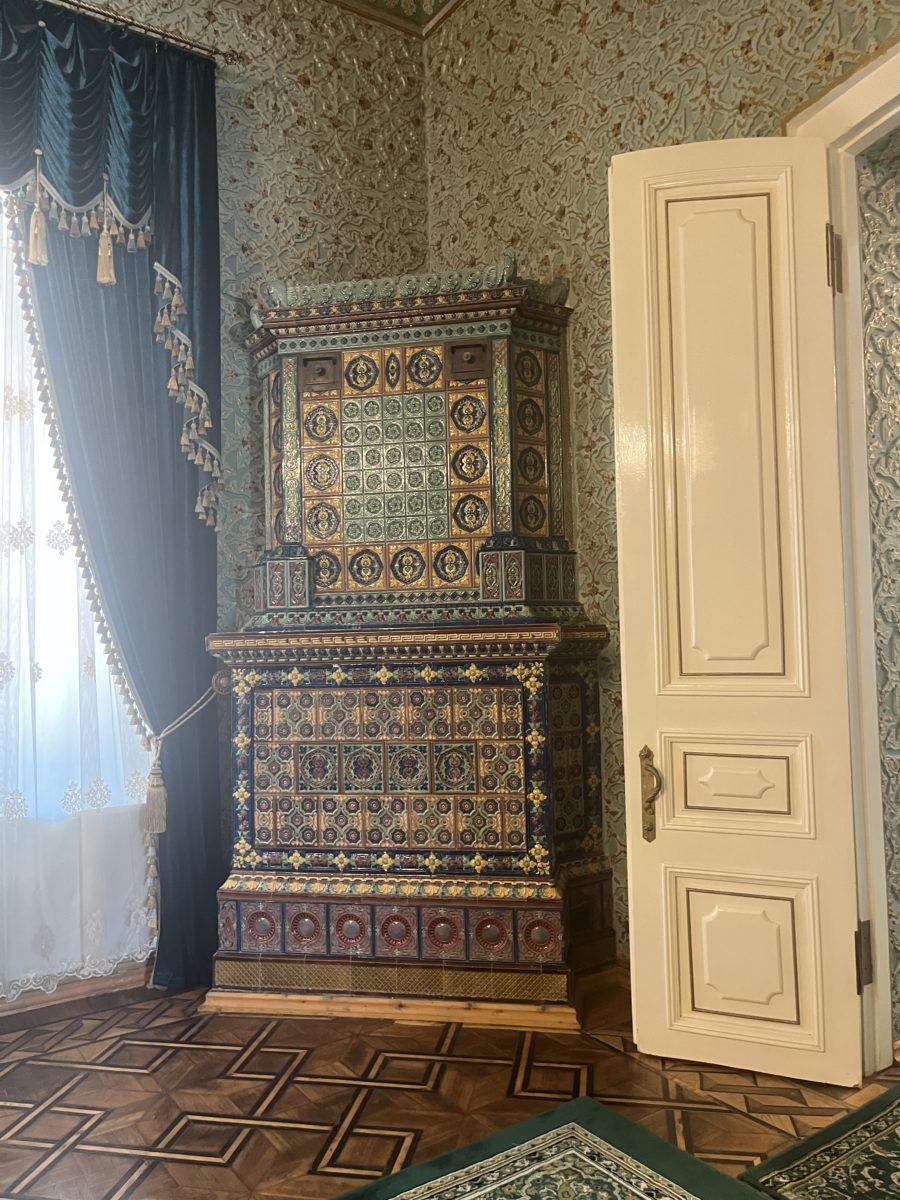
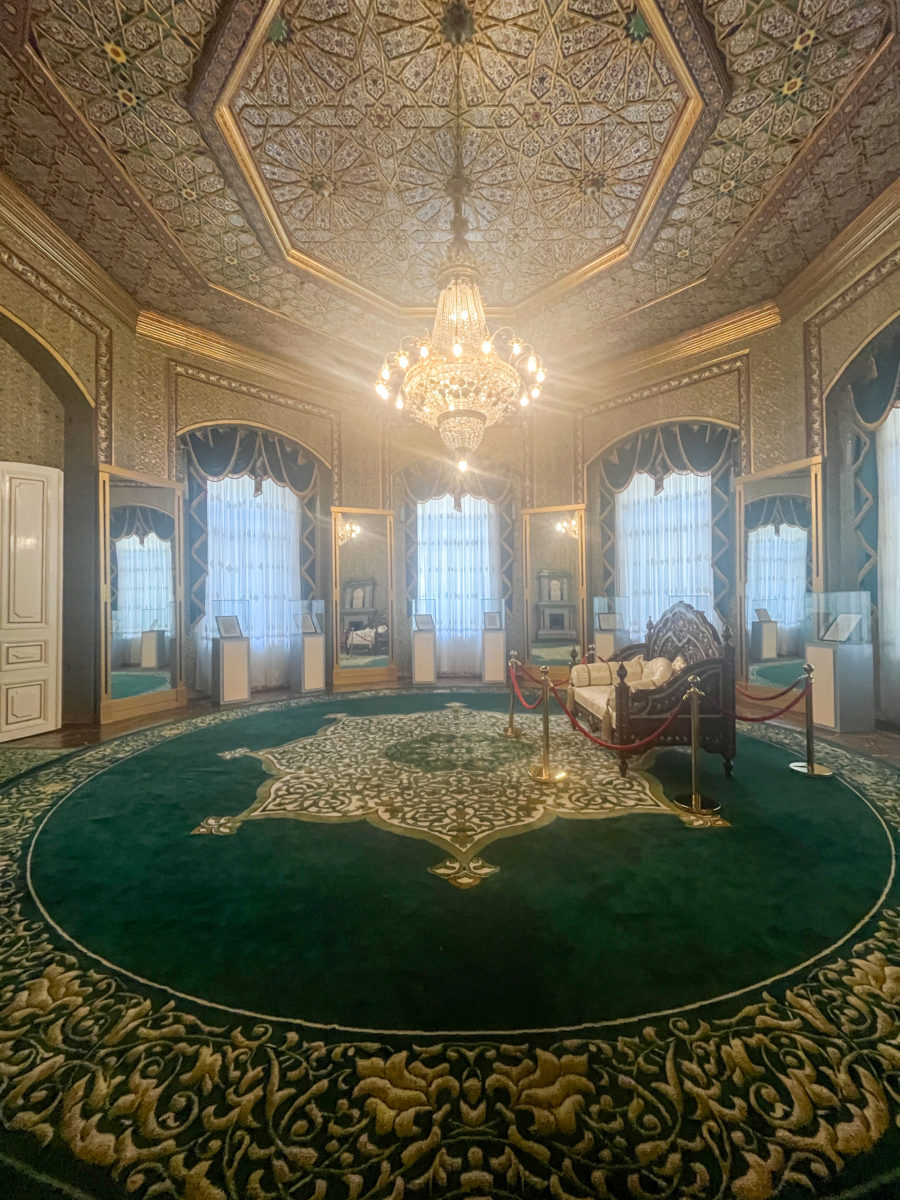
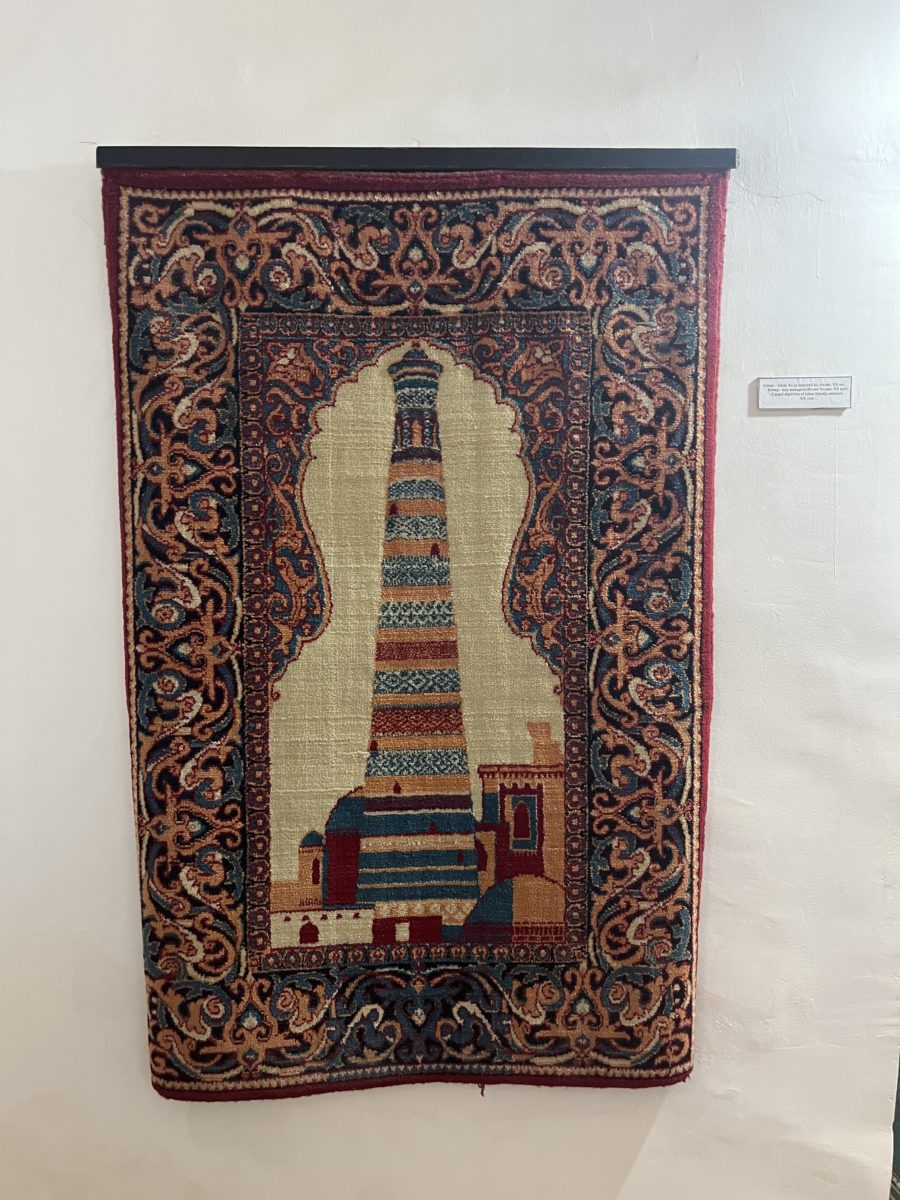
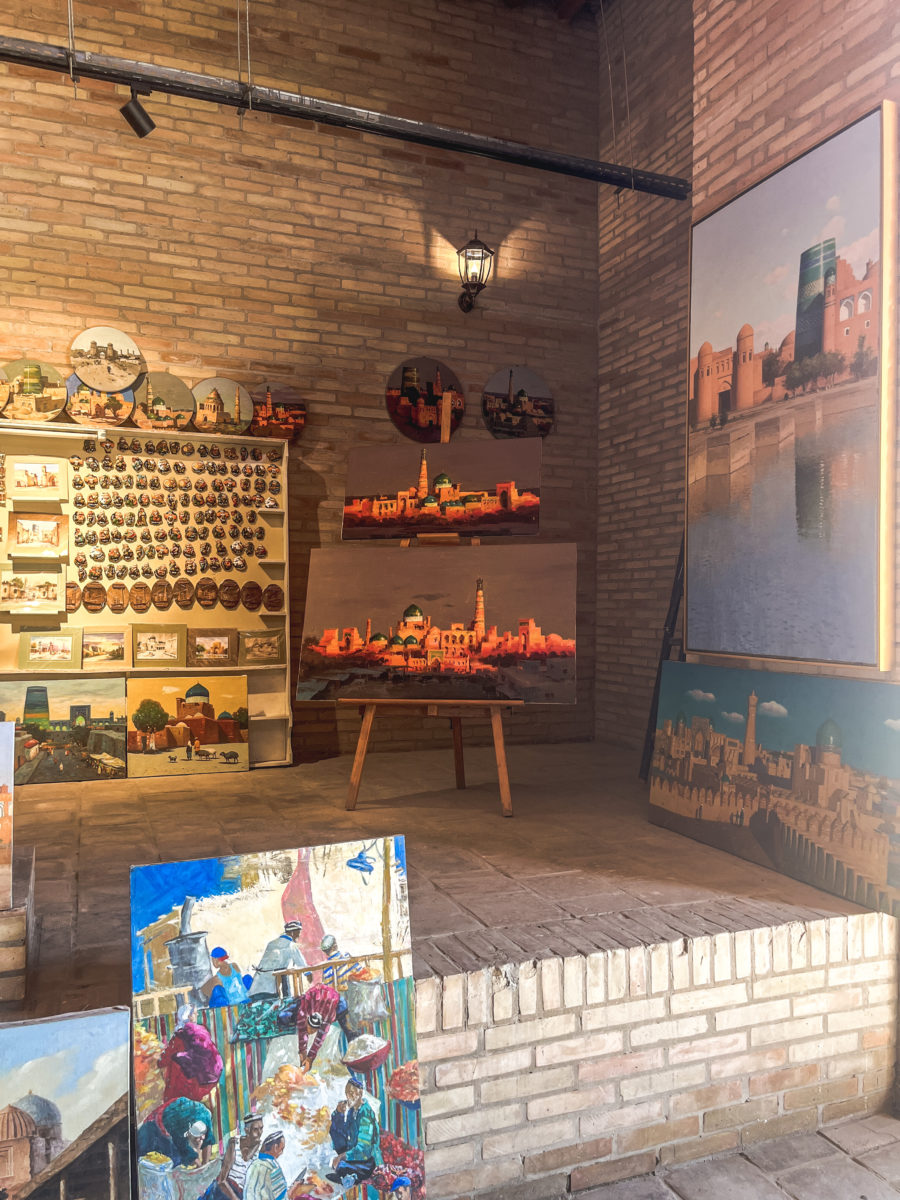
The throne room is especially impressive. It reflects the splendour of the final Khans’ court and helps visitors imagine the diplomatic receptions held there as Khiva gradually opened itself to the modern world.
Understanding Silk: Between Genuine Discovery and Commercial Interests
Since we never lose the thread (!), we visited a silk carpet workshop we found by chance while strolling through the streets: the Khiva Silk Workshop.
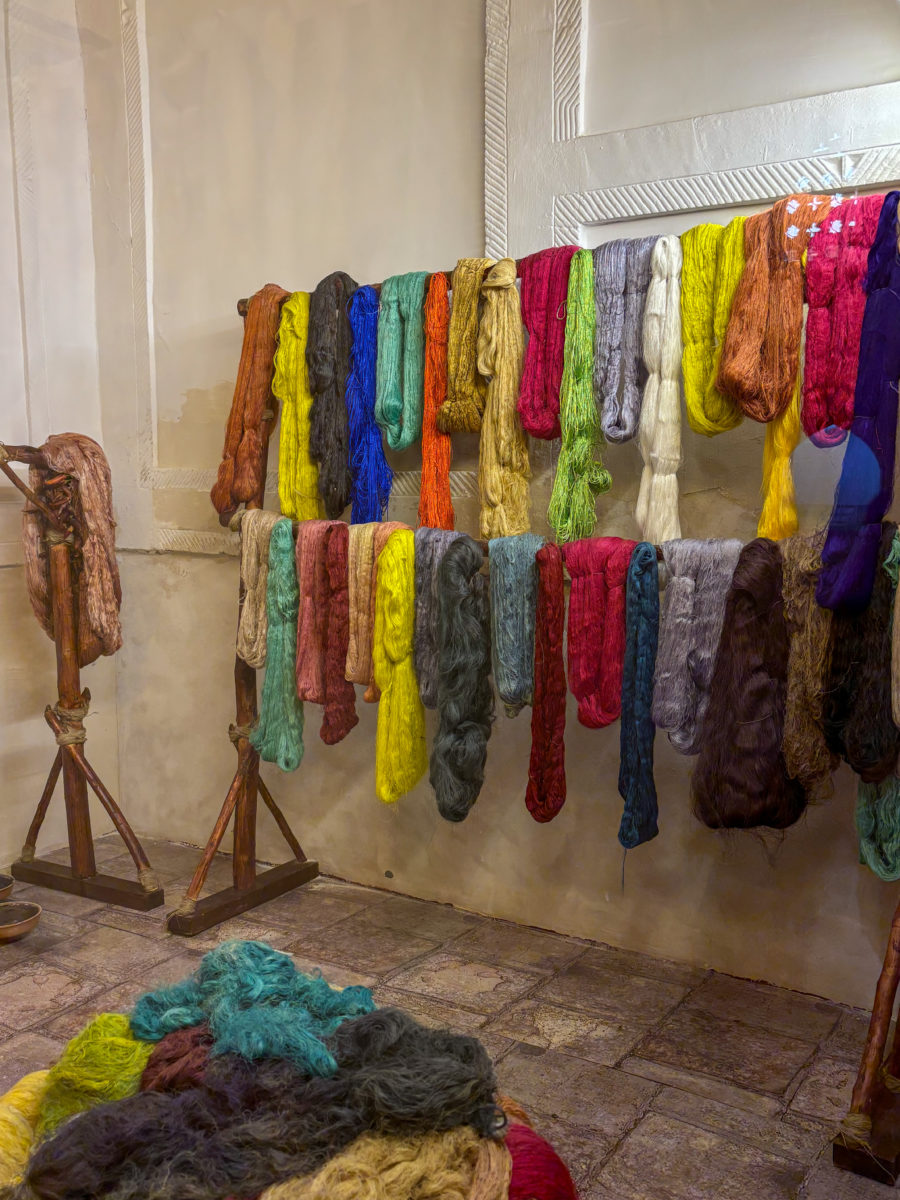
To be honest, we did not learn much about transforming silkworms into silk scarves there. We were briefly told that the colours come from fruits and vegetables (so interesting!) and that weaving a carpet requires an extraordinary amount of time.
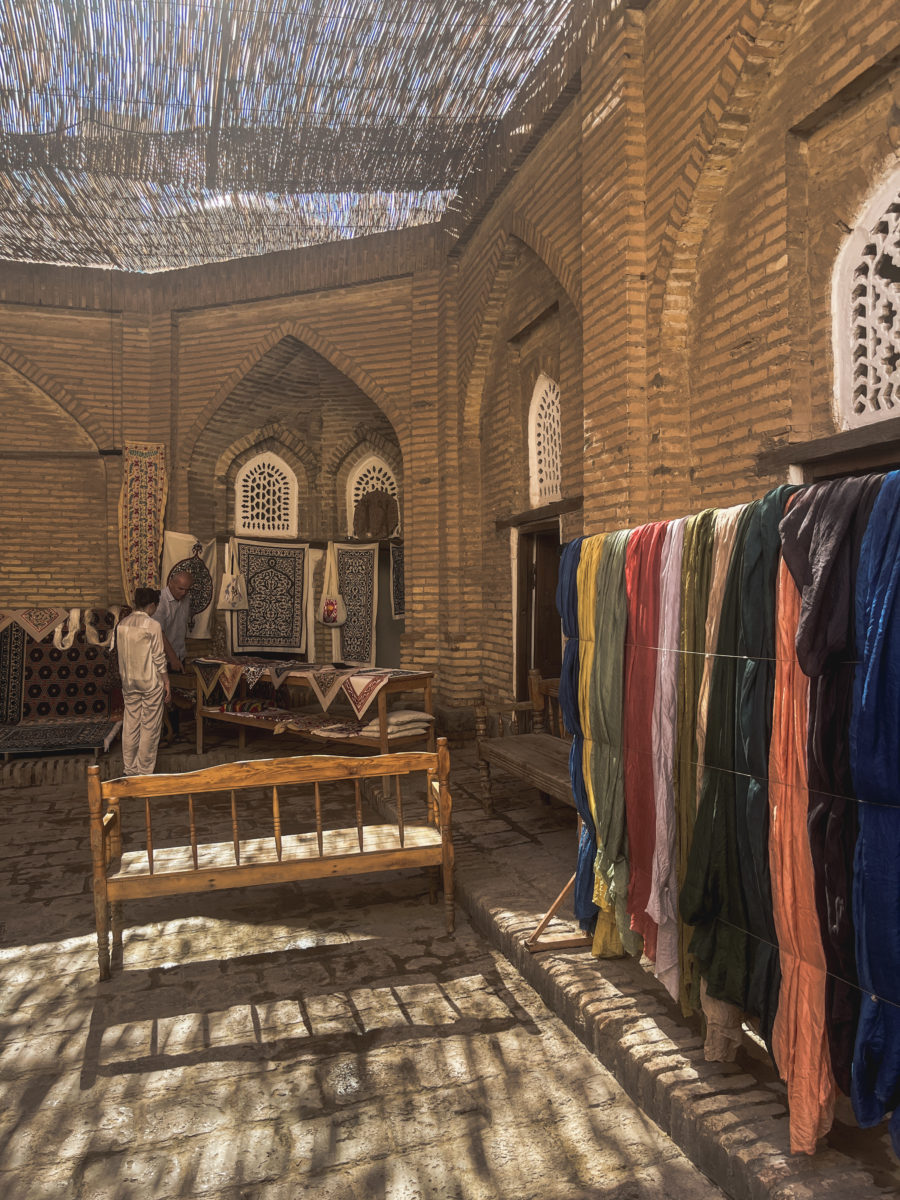
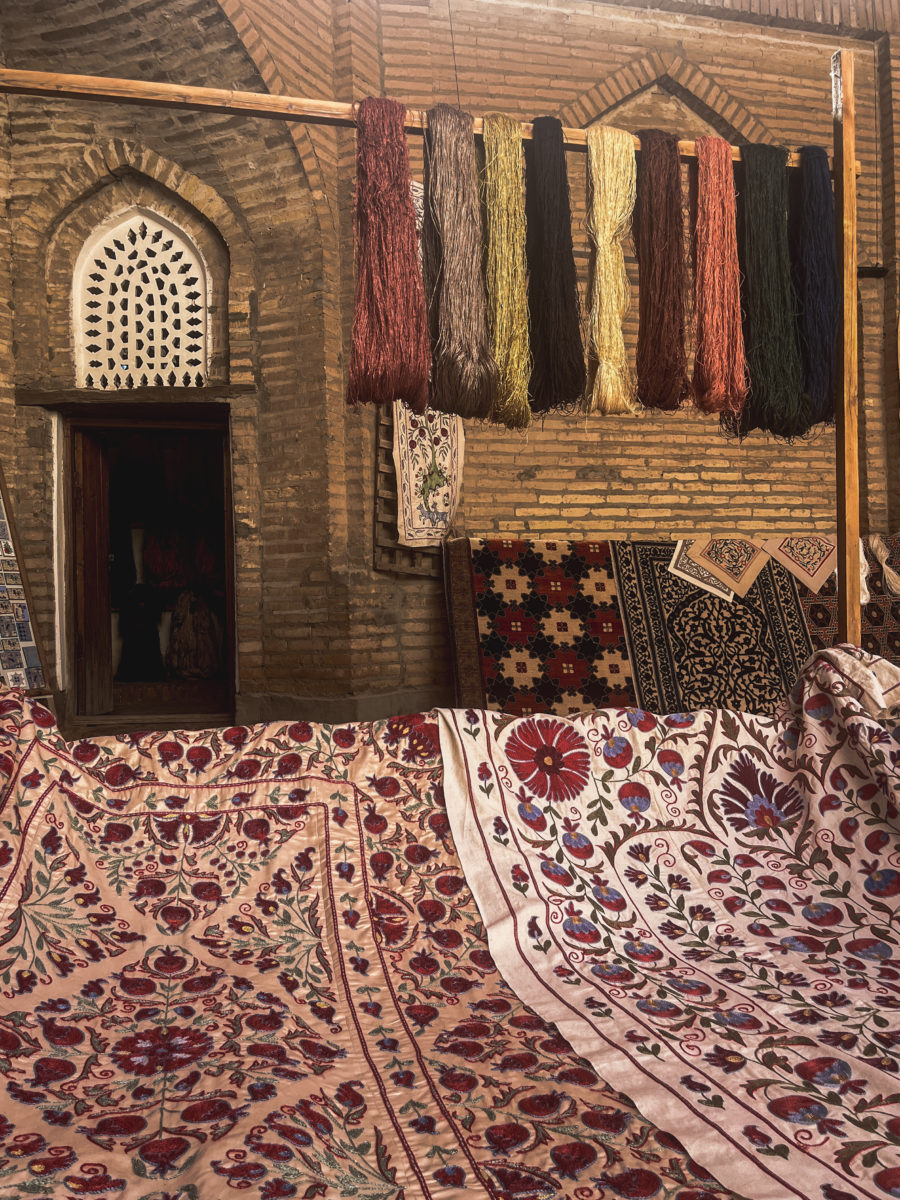
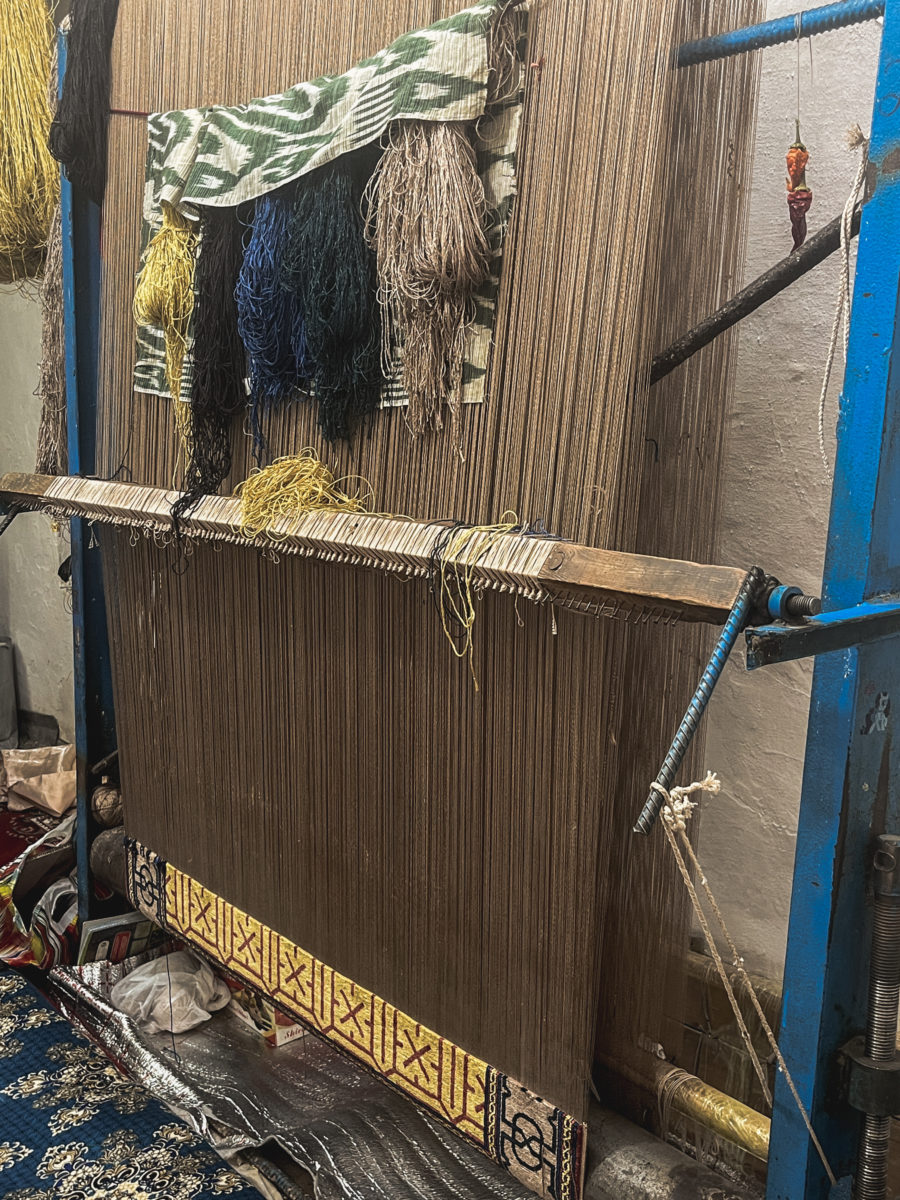
For example, producing a two-meter carpet takes roughly a year, progressing at about one centimetre per day.
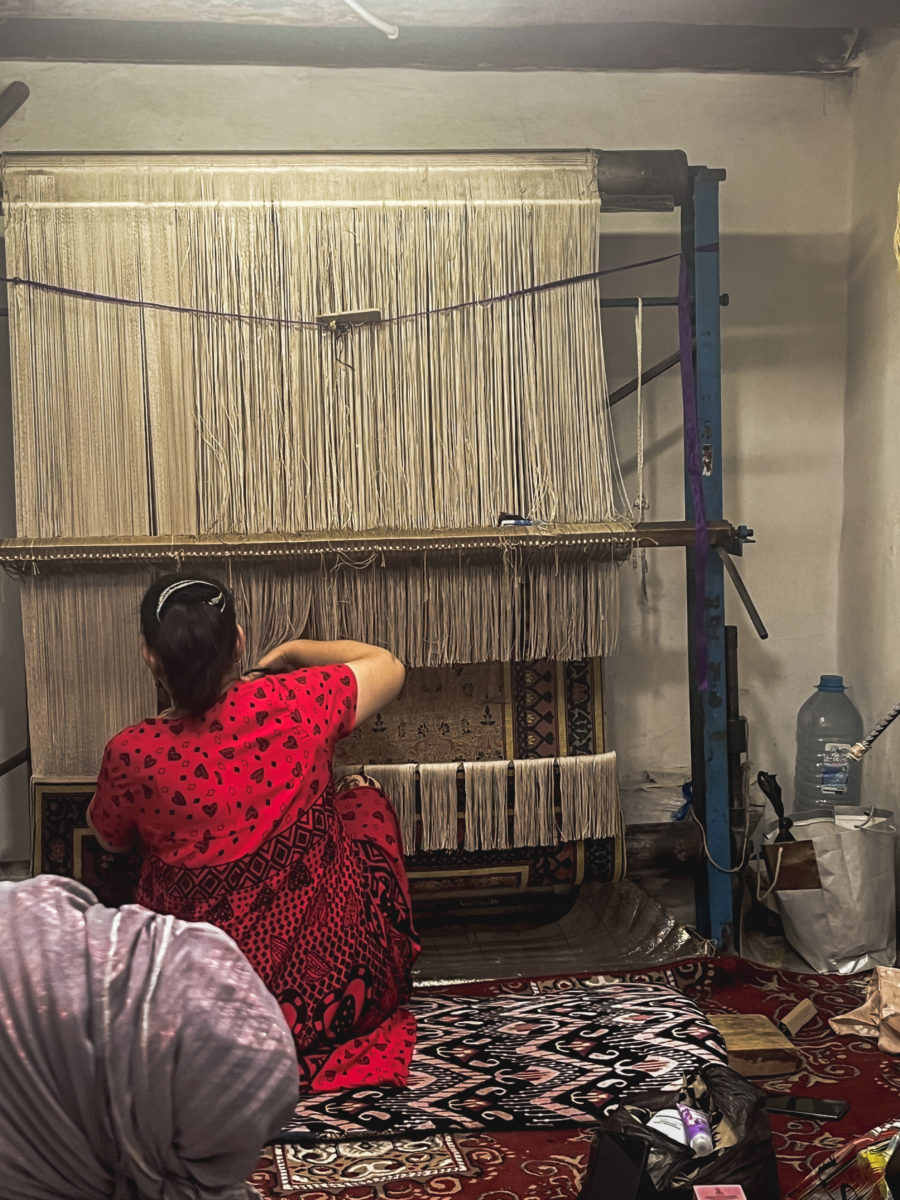
Watching the weavers’ fingers move at incredible speed while creating hypnotic silk patterns gave us a real appreciation for the value of craftsmanship.
Then, by chance, one of the weavers finished her carpet right in front of us. She calmly cut the threads, ending twelve months of work in just two seconds. She did not react, but we felt deeply moved by the humility of the moment.
We left fascinated but still not particularly well informed about silk. So, we headed to the Khorezm Silk Museum. This private museum (entry fee: 3 USD) left us with mixed feelings.
On one hand, the visit is informative and explains the various stages of silk production, from cocoon to weaving, while highlighting a traditional craft closely linked to Silk Road history. At one point in Khiva’s history, silk even served as official currency.
On the other hand, the experience is heavily sales oriented. After the demonstrations, visitors are inevitably directed toward scarves, shawls, garments, and other textiles produced on site.
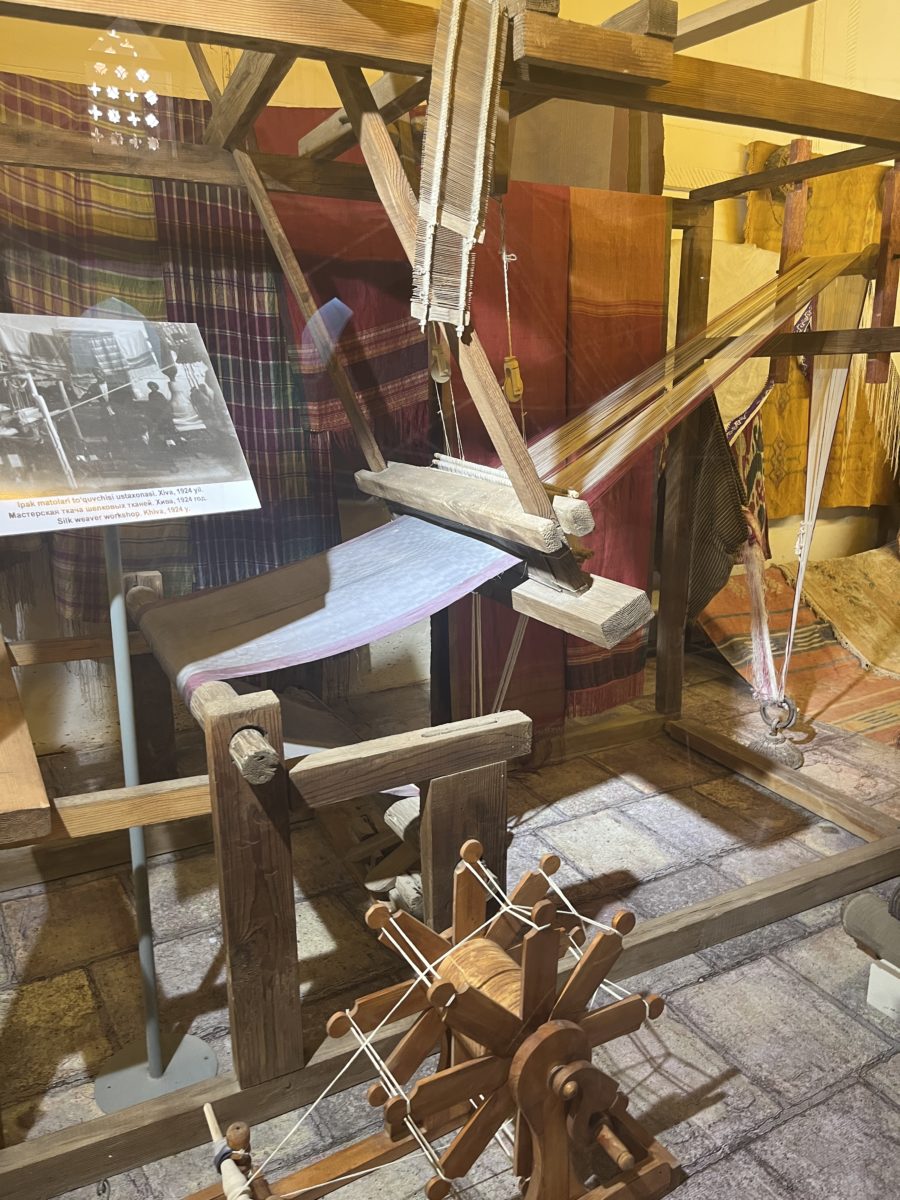
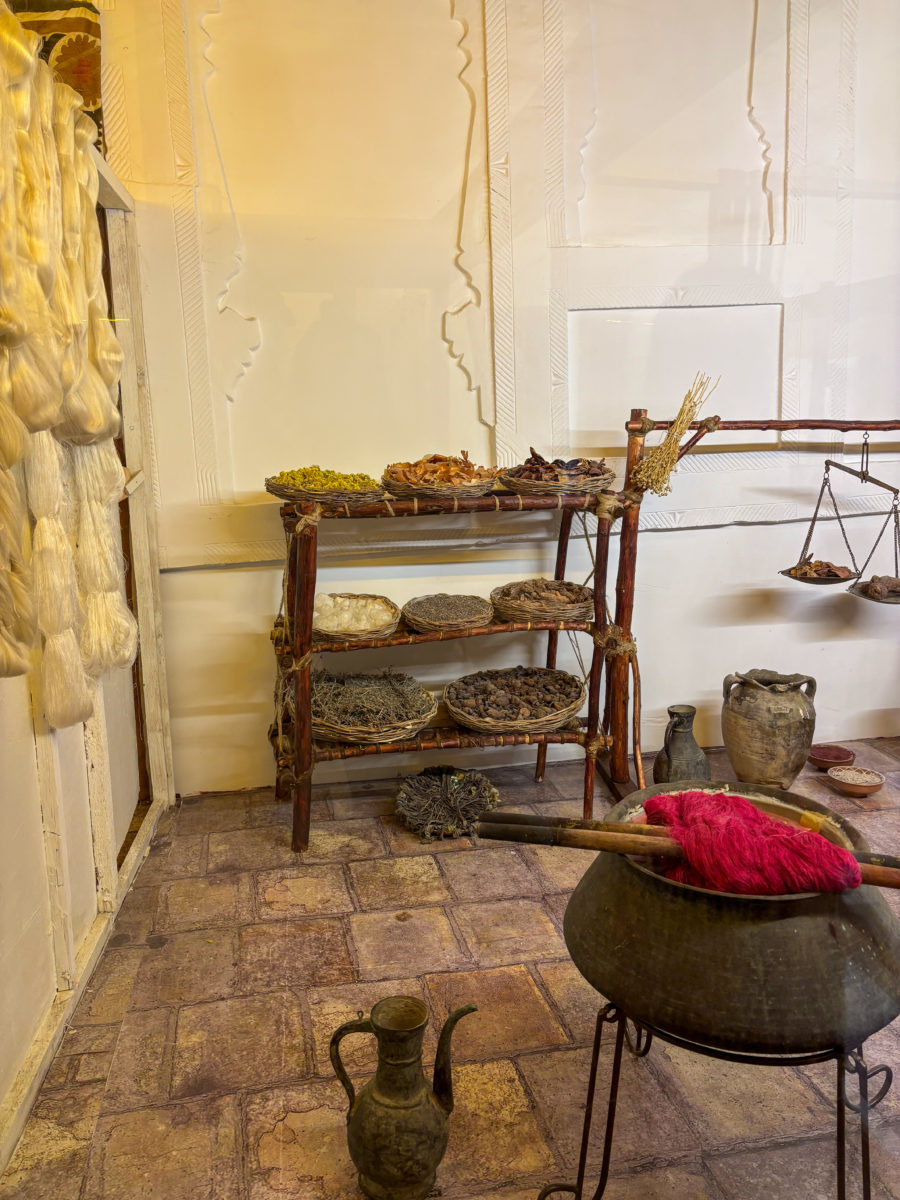
Still, it would be unfair to reduce the place to a simple shop. The demonstrations are performed entirely by women who preserve techniques passed down through generations. In a region where employment opportunities can be limited, the sale of these products often provides an essential source of income. It also encourages them to learn English, adding another valuable dimension to the experience. Inspired by the visit, my travel companion even created her own silk scarf for 25 USD.
Taking Part in an Uzbek Bread-Making Workshop
Among all the memories we brought back from Khiva, one of the most memorable was neither a monument nor a palace. It was a simple loaf of bread.
We had the opportunity to participate in an Uzbek bread-making workshop focused on the famous non (or lepeshka), the bread found on every table in the country. The experience was simple and absolutely wonderful.
Guided by local women from Khiva, we learned all the preparation stages. After kneading the dough, we shaped it into its characteristic round form with slightly raised edges and decorated the centre using a traditional stamp. The pattern is not merely decorative, it also helps the bread bake evenly.
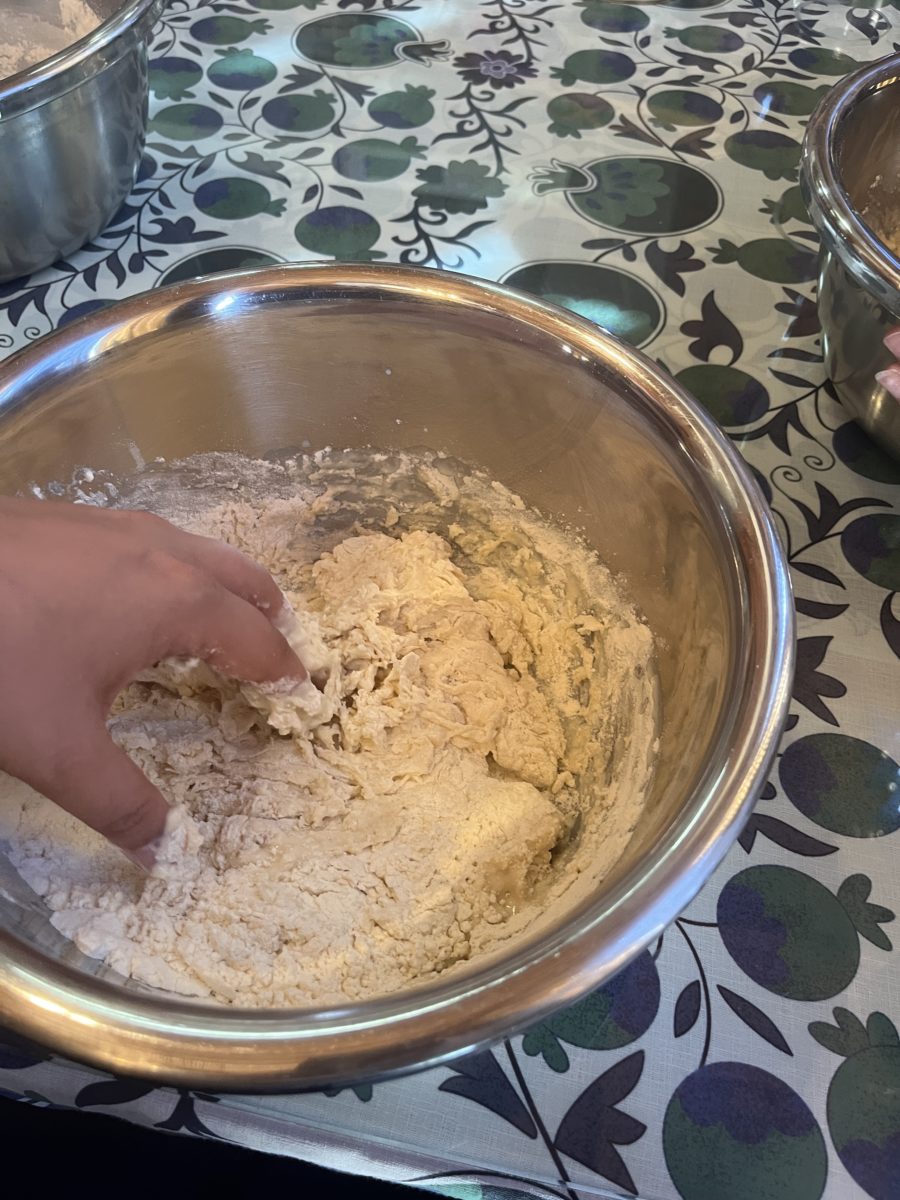
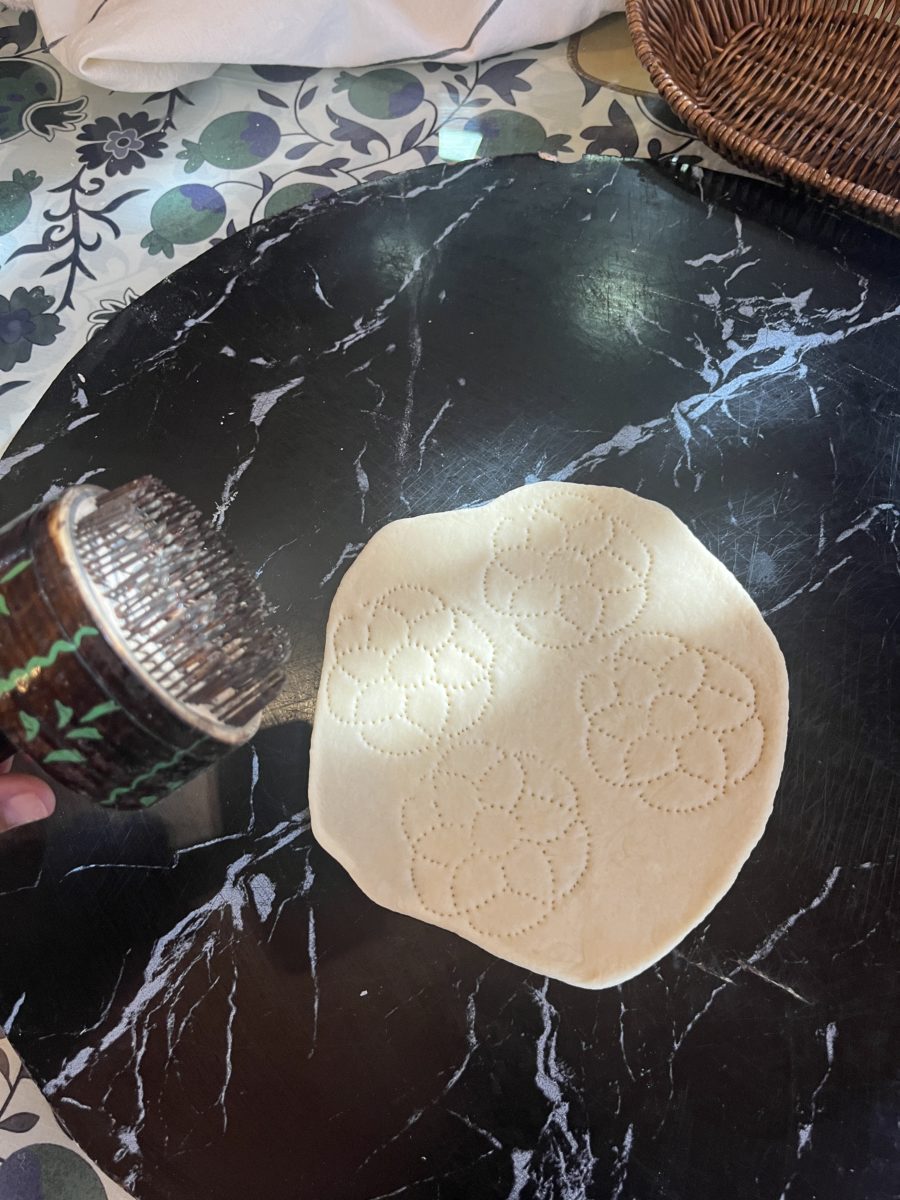
Perhaps the most impressive moment was placing the bread into the tandir, the traditional clay oven used throughout Central Asia. The process looks easy when performed by experts but clearly requires years of practice (we were not able to place the bread ourself in the oven).
When the bread emerges hot and golden from the oven, the aroma is irresistible. Far more than a cooking class, it is a genuine immersion into everyday Uzbek life and a privileged opportunity to experience the legendary hospitality of local people.
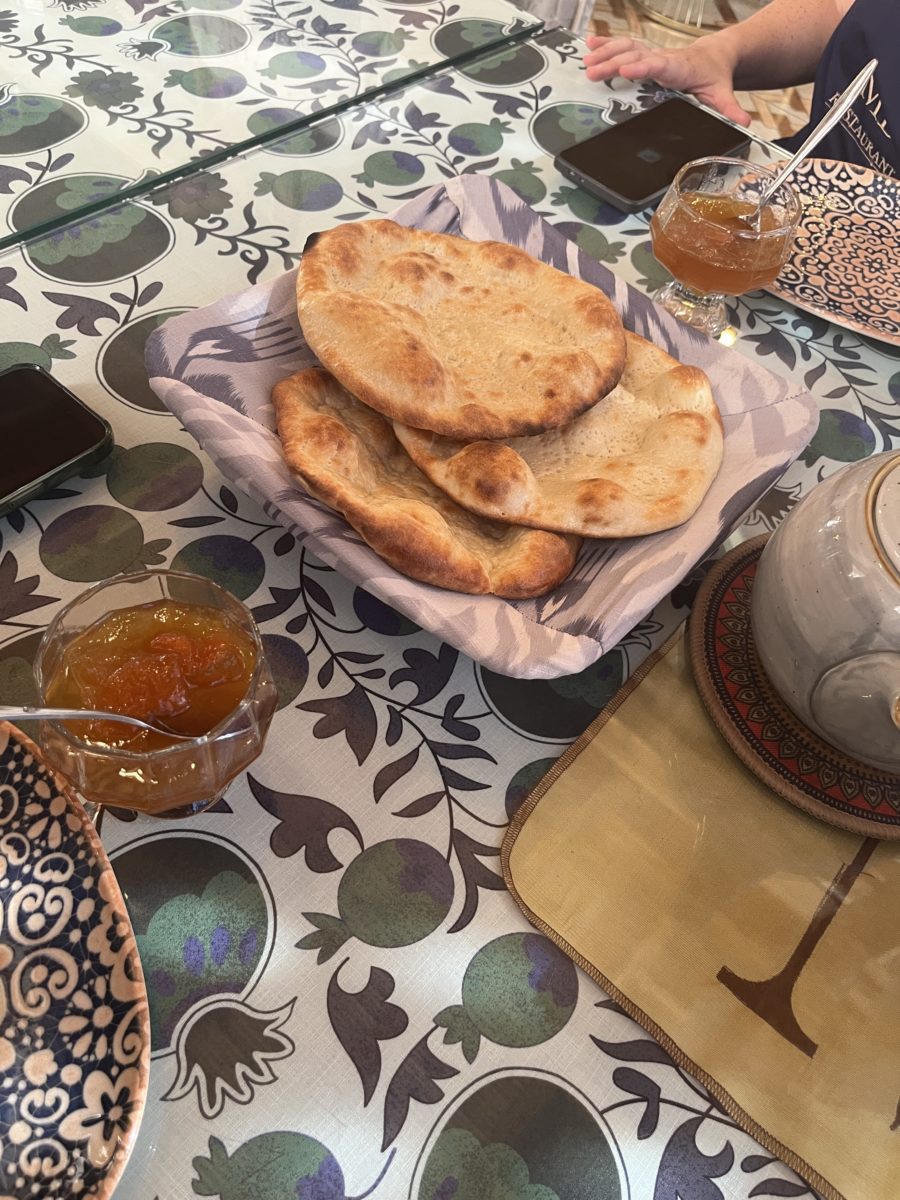
Beyond the culinary aspect, the workshop allowed us to share an authentic moment with the locals who keep these traditions alive. Between laughter, proudly transmitted knowledge, and the final tasting accompanied by tea and delicious melon jam (the country’s national fruit), this activity became one of the highlights of our three days in Khiva.
Because ultimately, that is what makes Khiva so special: beyond its magnificent monuments and fascinating history, it still offers countless opportunities to connect with local people and discover a lifestyle deeply rooted in tradition.
Prices in Khiva: Excellent Value for Money
One of Khiva’s great advantages is that sightseeing remains relatively affordable considering the richness of its heritage.
The main Itchan Kala entrance ticket provides access to most of the monuments inside the old city, including madrasas, mosques, palaces, museums, and sections of the city walls. We purchased a two-day pass for 120,000 som each (approximately 7.70 CHF or 8 euros).
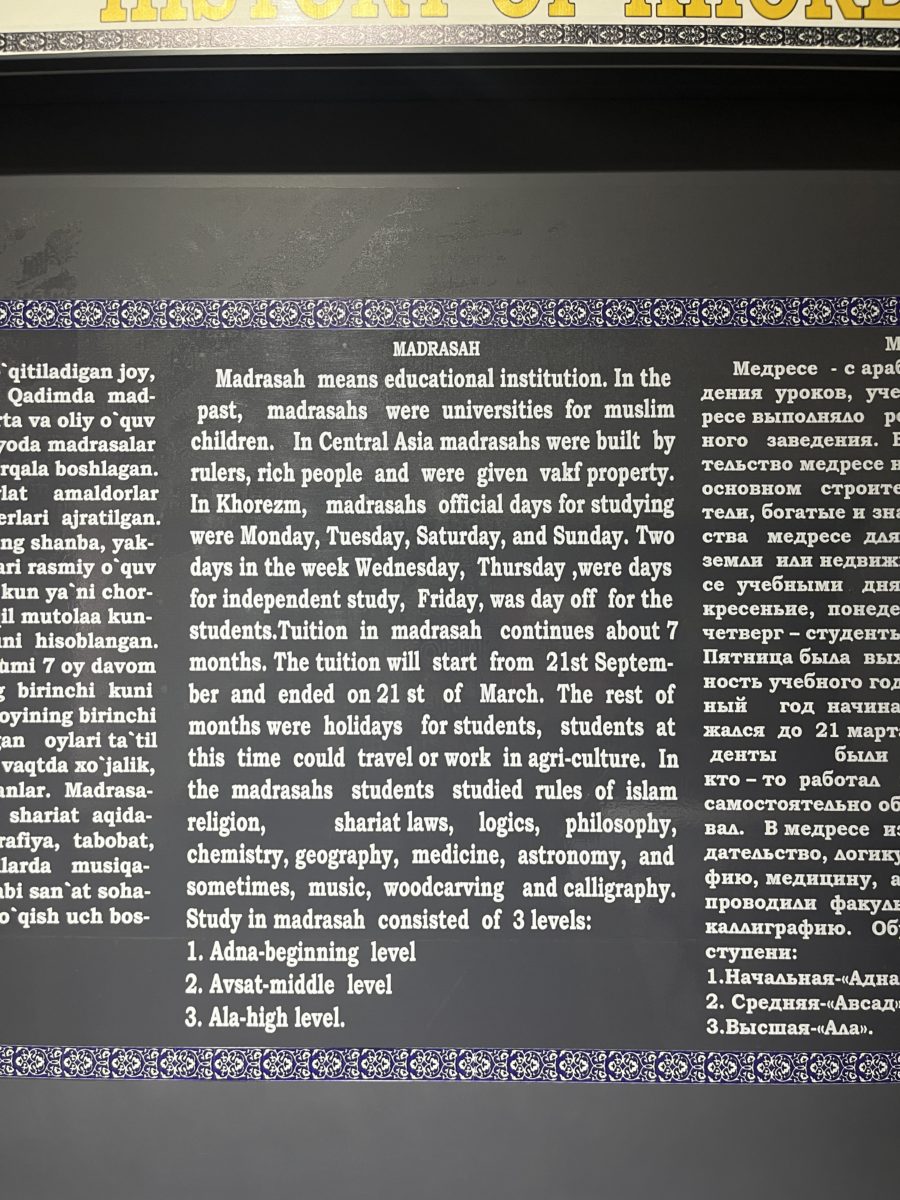
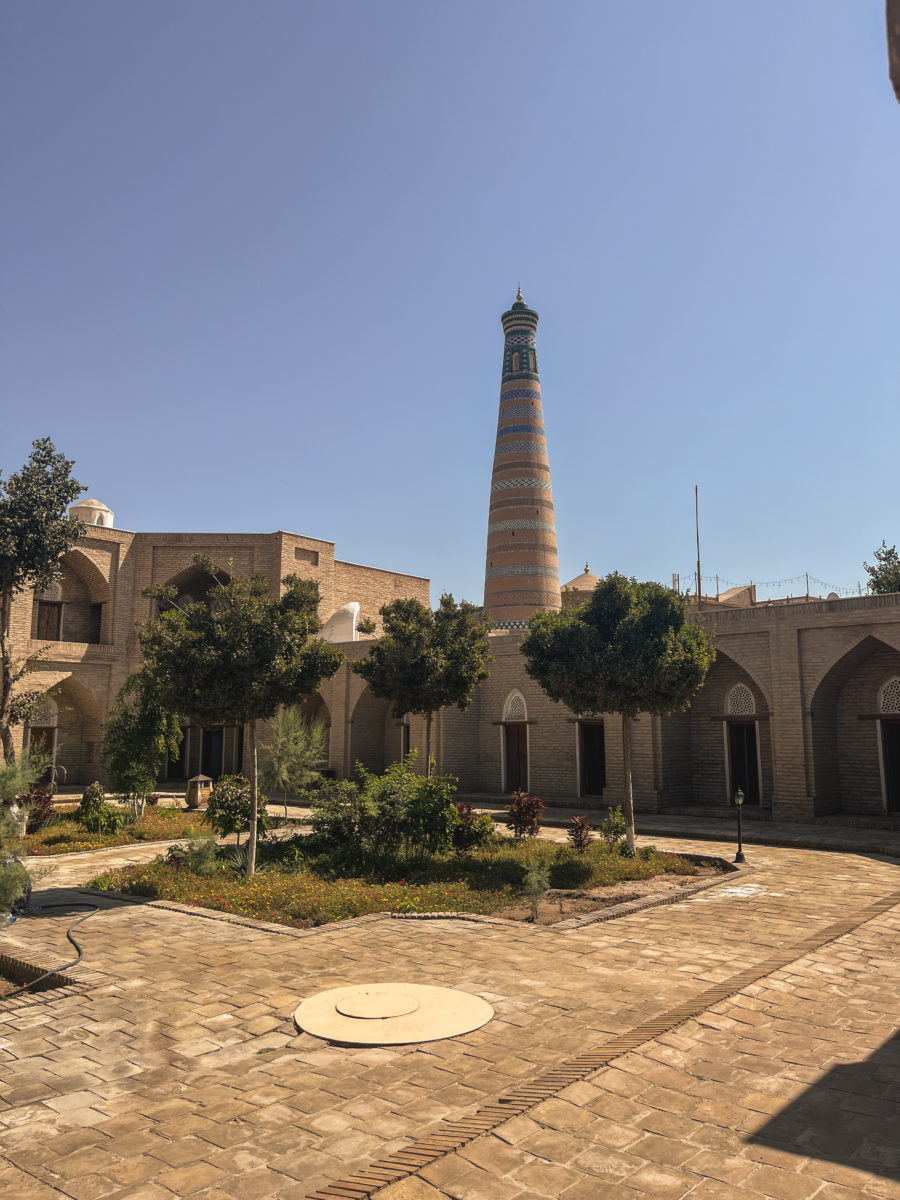
Some major attractions require an additional fee. This is the case for the Islam Khodja Minaret, whose climb costs an extra 100,000 som per person.The panoramic view over Khiva’s domes and walls more than justifies the expense.
Nurullaboy Palace, located outside Itchan Kala, has a separate entrance fee. The visit is somewhat more expensive (15 USD for two people in August 2025), but it offers a completely different experience.
The Desert Fortresses: A Journey Even Further into the Past
One of the most fascinating excursions from Khiva is the visit to the famous Khorezm Desert Fortresses, often referred to as Elliq Qala, meaning “the fifty fortresses.”
Personally, I felt as if I were in Prince of Persia, searching for monumental ruins scattered across the arid landscapes of the Kyzylkum Desert and Karakalpakstan. These fortresses are the remains of an ancient kingdom that flourished here more than two thousand years ago.
Today, only some of these fortresses survive, but their immense scale still hints at the power of the civilizations that once occupied these lands.
We booked this excursion through Booking and were fortunate to be accompanied by Sukhrab (+99 890 437 07 37), who served as both our driver and English-speaking guide. It was an excellent experience. Passionate about his region and its history, he does far more than simply drive visitors from one site to another: he enthusiastically shares his knowledge and is always happy to answer questions.
Throughout the day, we also learned a great deal about everyday life in Uzbekistan. Our conversations provided valuable insight into how Uzbek society has evolved over the past few decades, as well as the sometimes-striking differences between the country’s major cities and its rural areas.
Sukhrab also helped us better understand Karakalpakstan, the vast region in western Uzbekistan where many of the desert fortresses are located. This autonomous republic has a unique status within the country. Thanks to his explanations, we gained a deeper appreciation of the region’s distinct identity, history, culture, and the challenges it faces today.
We also came away with a much clearer understanding of why and how cotton has shaped Uzbekistan’s history (thank you, Stalin…) and how the Aral Sea disappeared, becoming the victim of one of the worst environmental disasters of modern times. While planning our itinerary, we had considered visiting the Aral Sea, or rather, what remains of it, but the distance was simply too great. Several documentaries and videos on YouTube provide an excellent introduction to the role of cotton in Uzbekistan and its devastating impact on the Aral Sea.
Ayaz Kala
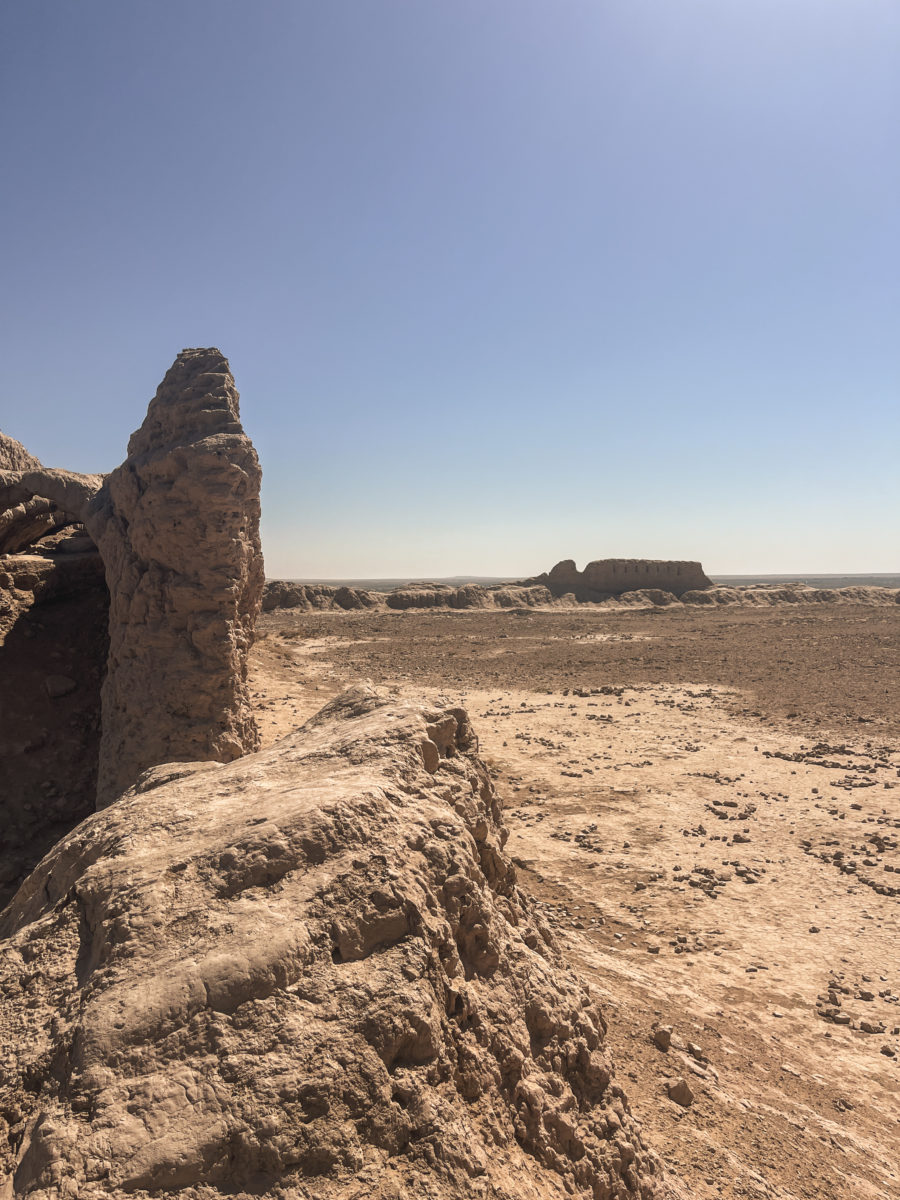
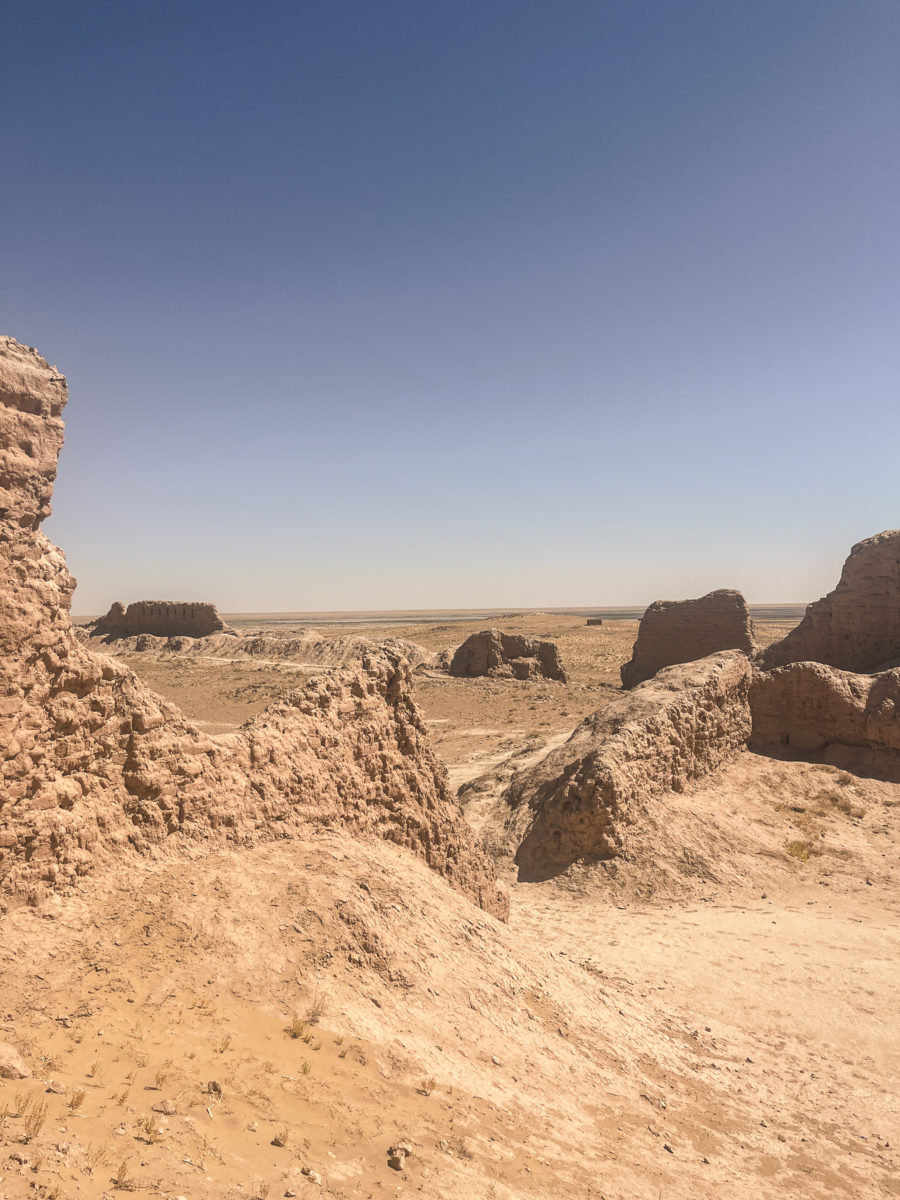
In my opinion, Ayaz Kala is the most spectacular of all the desert fortresses. Perched majestically atop a hill, it overlooks the vast arid expanses of Khorezm and appears to have challenged time itself for more than two millennia. The site comprises several fortresses, the oldest dating back to the 4th century BCE.
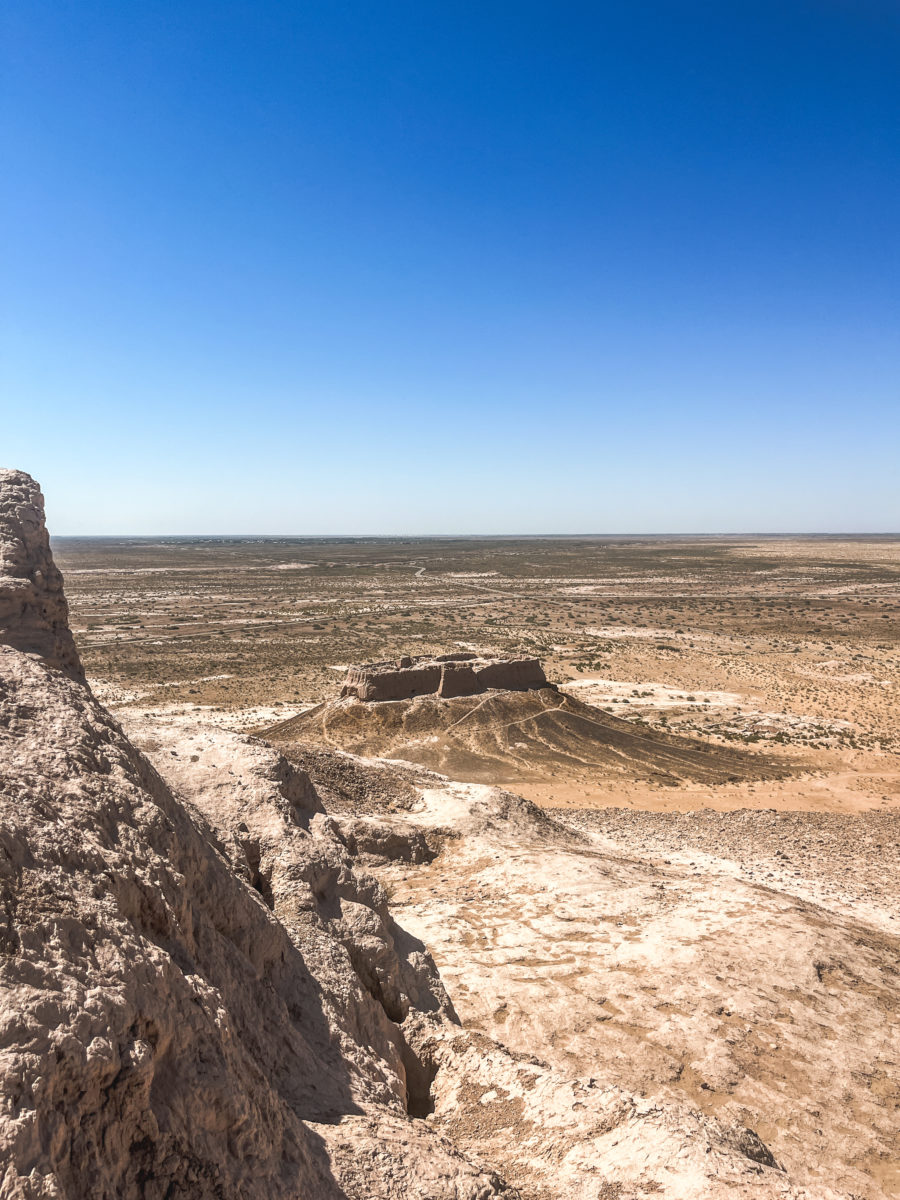
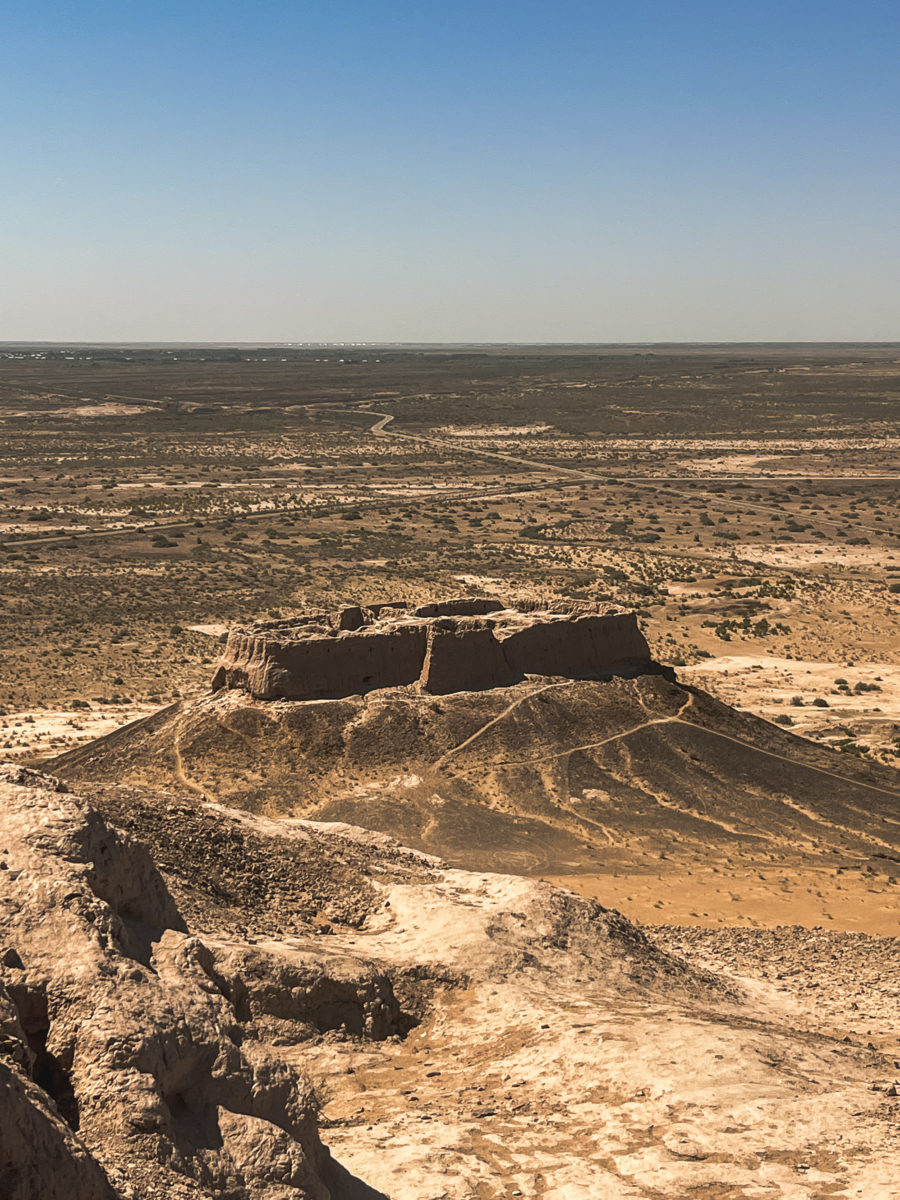
Facing these towering ochre earthen walls rising against the horizon, it is immediately clear why this site once held such strategic importance. The view over the surrounding desert is breathtaking and further reinforces the feeling of standing at the heart of a long-lost civilization. The silence is absolute, and one can truly sense the isolation of these ancient citadels. It is undoubtedly one of the most impressive archaeological sites we visited in Uzbekistan.
Toprak Kala
Once the capital of the Kingdom of Khorezm, Toprak Kala was an important city between the 1st and 3rd centuries CE. Archaeological excavations have uncovered palaces, reception halls, and numerous works of art demonstrating the sophistication of this civilization.
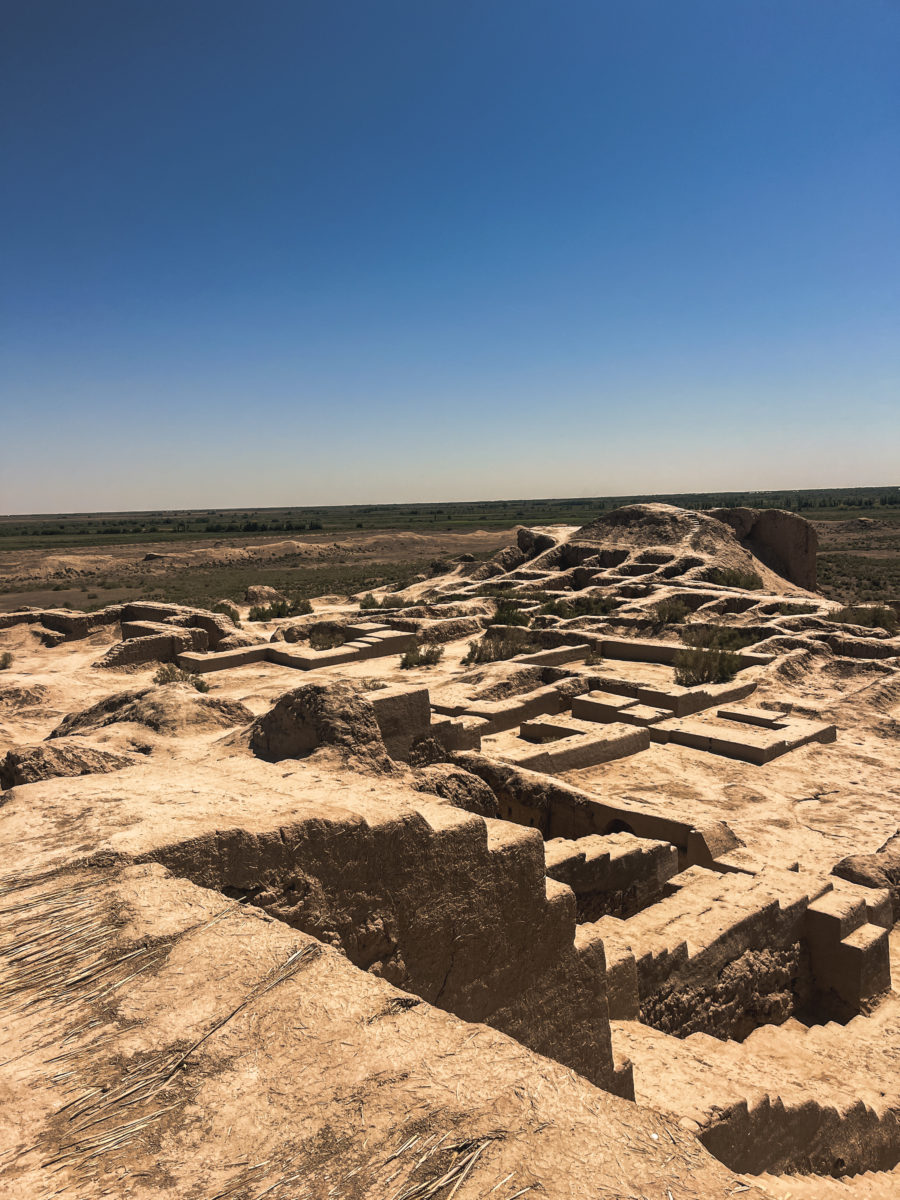
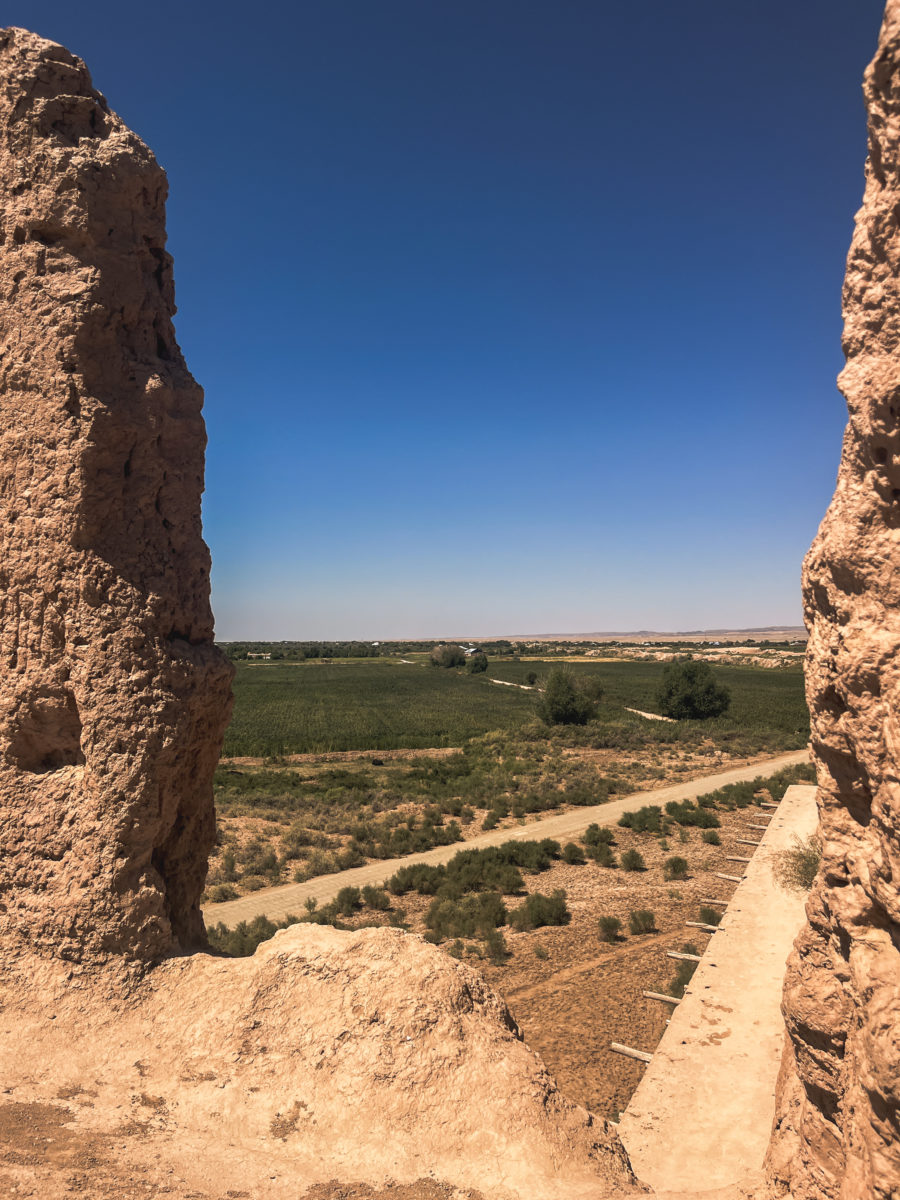
This stop also provided us with a small adventure: our vehicle suffered a tire blowout in the middle of the desert. While our guide repaired it, we searched desperately for shade in a landscape where shade barely exists.
The incident reminded us how demanding conditions can be in this region. Depending on the season, temperatures rise rapidly and the sun becomes relentless. Bring plenty of water, a hat, sunglasses, and strong sun protection. The Khorezm Desert offers no mercy under the sun.
Kyzyl Kala
Our final stop was Kyzyl Kala. Partially restored, this fortress helps visitors visualize how these massive earthen structures once appeared. Even today, its defensive architecture remains impressive.
On the way back, our guide made a short detour to show us a large body of water where locals cool off during the summer heat. While not the most memorable stop of the day, it offered an interesting glimpse into local life.
We also passed through Urgench, the region’s principal city and the main gateway to Khiva. There, our guide surprised us one final time with a stop at a street food vendor famous for traditional somsa, delicious pastries filled with savory stuffing and baked in a clay oven.
Offered by our guide, they were simply delicious. Crispy on the outside, generously filled, and still warm from the oven, they provided the perfect ending to a day already packed with discoveries.
Why Khiva Captivated Us So Much
Samarkand impresses with its grandeur. Bukhara charms visitors with its Silk Road authenticity. But Khiva possesses something rarer: an atmosphere.
Everything feels harmonious. The monuments are concentrated within a human-scale setting, the colours are magnificent, and history surrounds you at every moment.
Add to this the breathtaking landscapes of the desert fortresses, silent witnesses to a past more than two thousand years old, and you have one of Central Asia’s most memorable travel experiences.
After three days, we left Khiva with heavy hearts. If we had to recommend just one city in Uzbekistan, it would undoubtedly be this one: a magical, timeless city that gave us our most beautiful memories of the country.