If there is one city that perfectly embodies the imagination of the Silk Road, it is undoubtedly Bukhara. With its turquoise domes, caravanserais, centuries-old madrasas, and covered markets, it seems frozen in time. Yet despite its immense historical wealth, it was probably the city I enjoyed the least during my trip to Uzbekistan.
This is certainly not because it lacks interest (quite the opposite). We spent three full days there and had enough time to visit absolutely everything we wanted to see. Looking back, however, it felt a little too long. Once we had explored the main sights, I felt the pace slow down, and two days would probably have been enough.
Nevertheless, Bukhara remains an essential stop for understanding the history of Central Asia. Even more than Samarkand or Khiva, it is, in my eyes, the city of merchants, the place that best represents the spirit of the Silk Road.
Bukhara, a City Where the Spirit of the Caravans Still Lives On
For centuries, Bukhara was one of the most important trading hubs between China, Persia, India, and Europe. Caravans stopped here to trade silk, spices, precious metals, carpets, and countless other goods from every corner of the known world. Merchants, travellers, scholars, and craftsmen crossed paths in a constant bustle of activity.
As you stroll through its UNESCO-listed historic centre, you can still feel this commercial vocation. Unlike Samarkand, which impresses through its grandeur, Bukhara captivates through its authenticity. Its narrow streets, sand-coloured brick façades, and elegant domes create a setting that seems to have changed very little over the centuries.
This is perhaps what struck me most about Bukhara: more than a city of monuments, it is a city of commerce. Even today, one can still sense the legacy of the exchanges that shaped its identity for centuries.
The Must-Sees of Bukhara
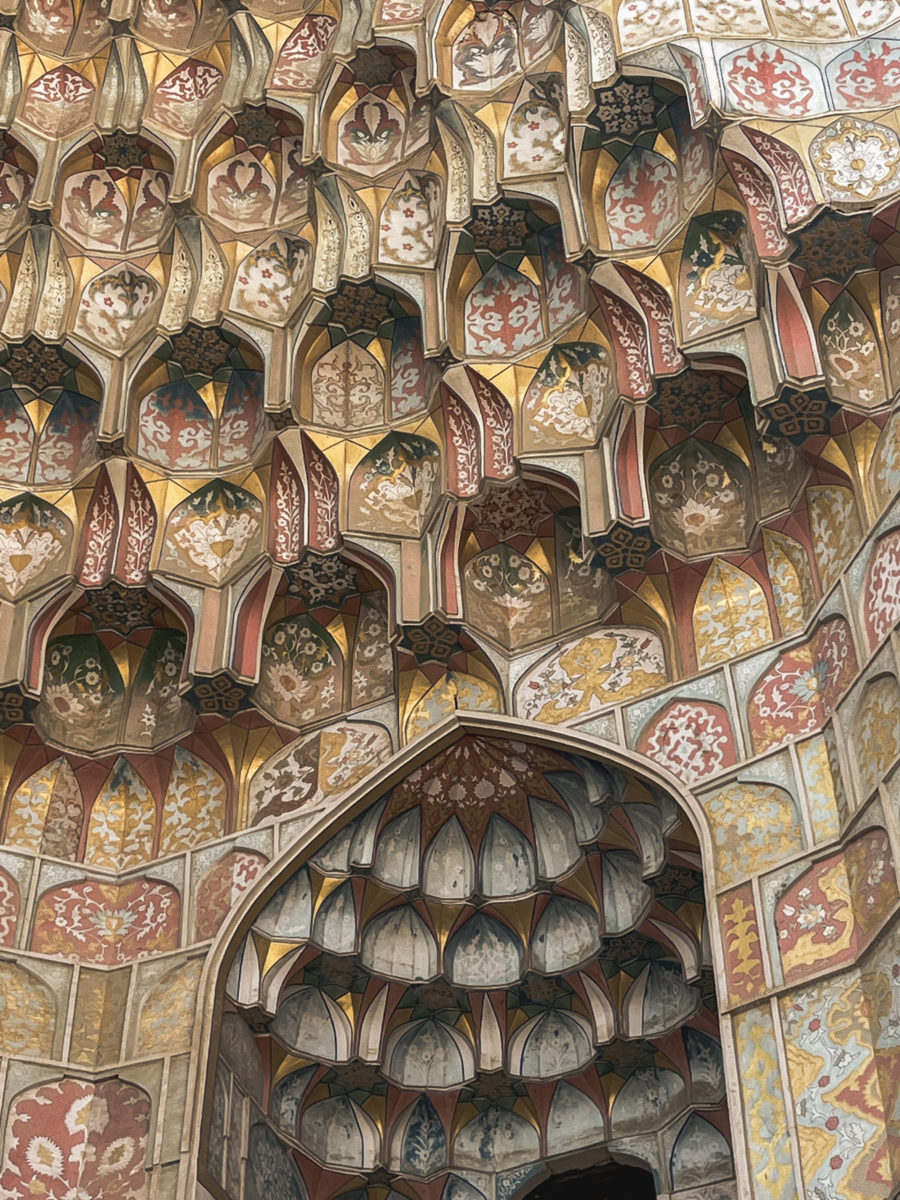
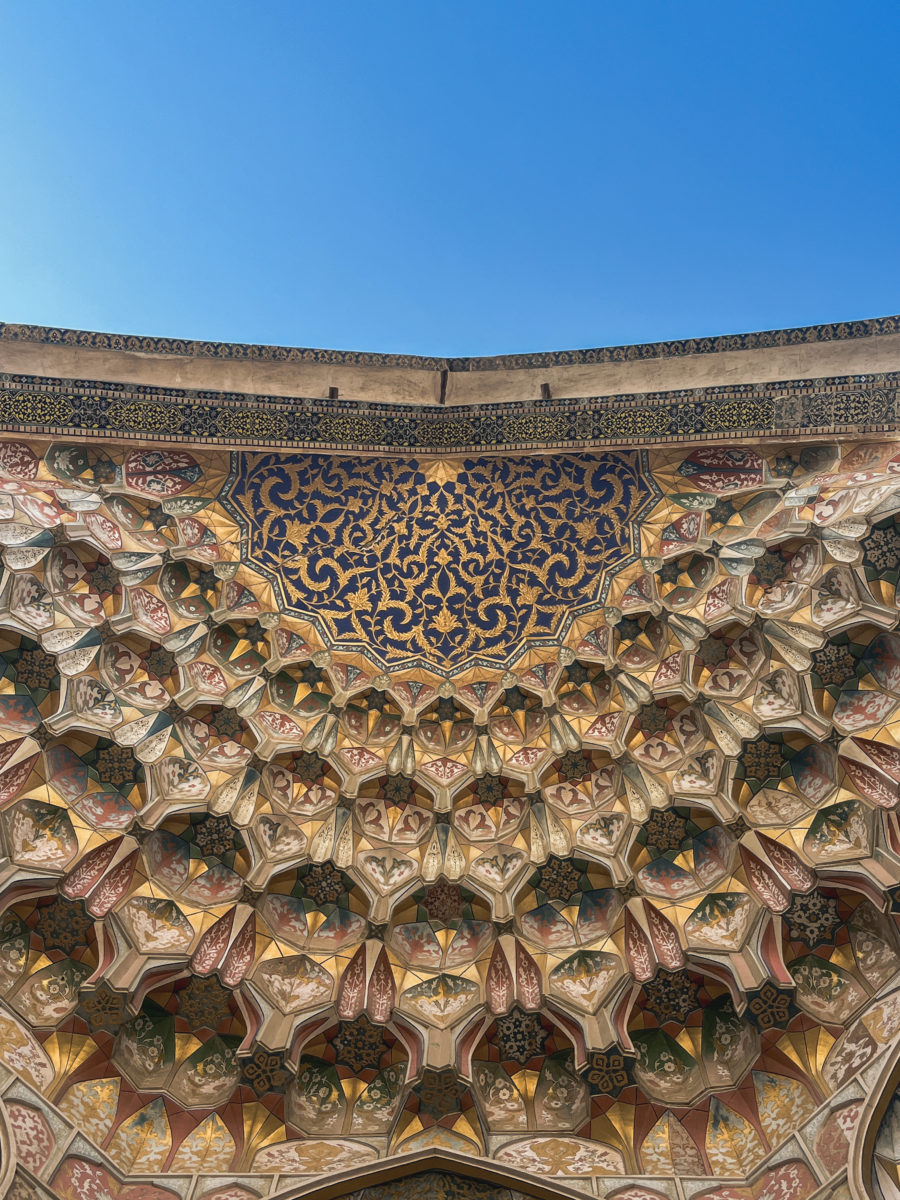
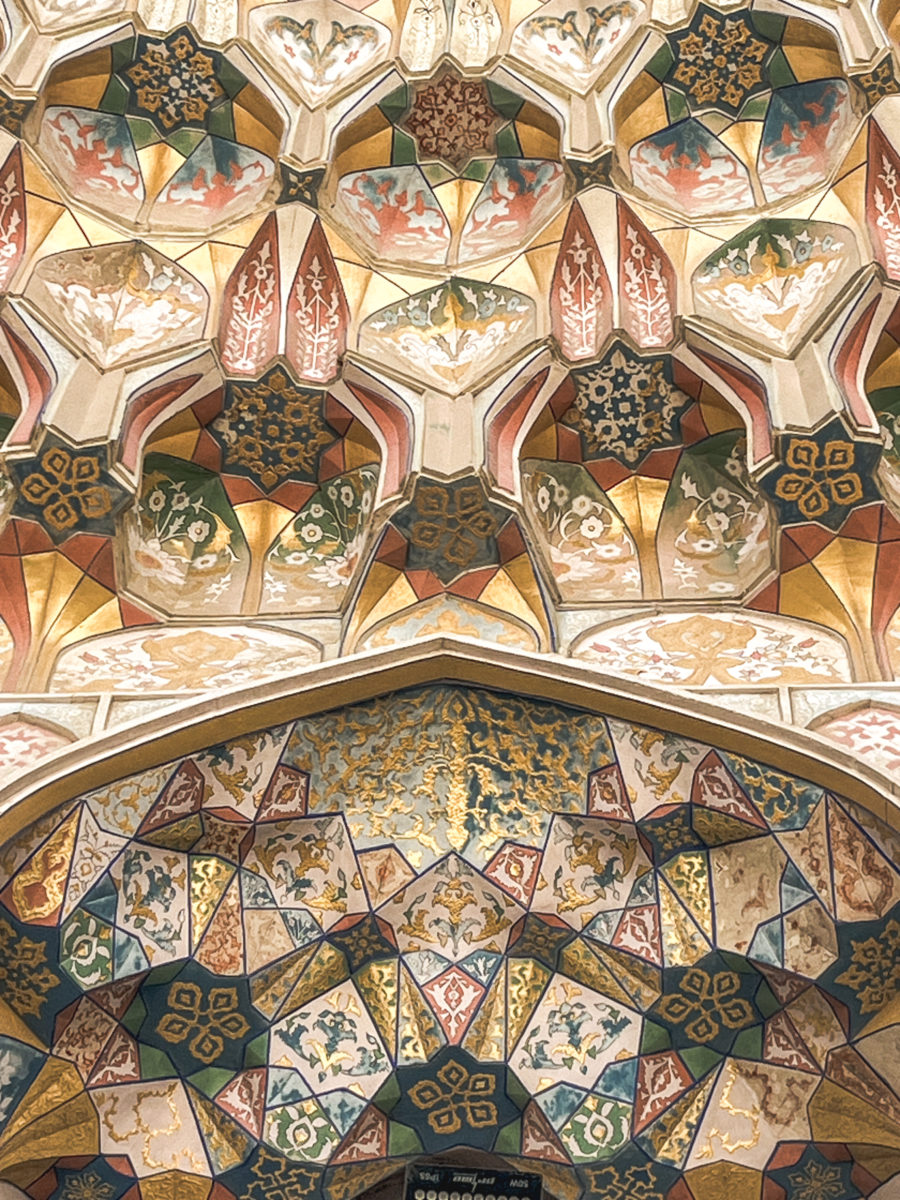
Po-i-Kalyan Complex – Kalyan Minaret, Kalyan Mosque and Mir-i-Arab Madrasa
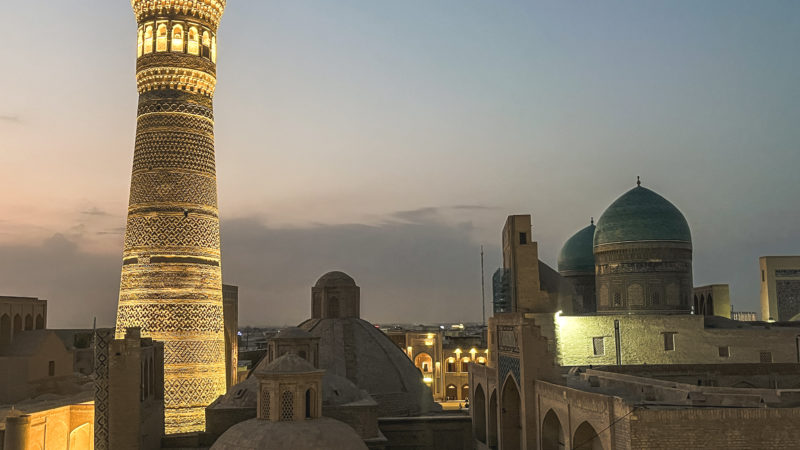
The city’s most iconic monument is undoubtedly the Kalyan Minaret, which rises 47 metres above the skyline. Built in the 12th century, it once served as a beacon for caravans crossing the desert.
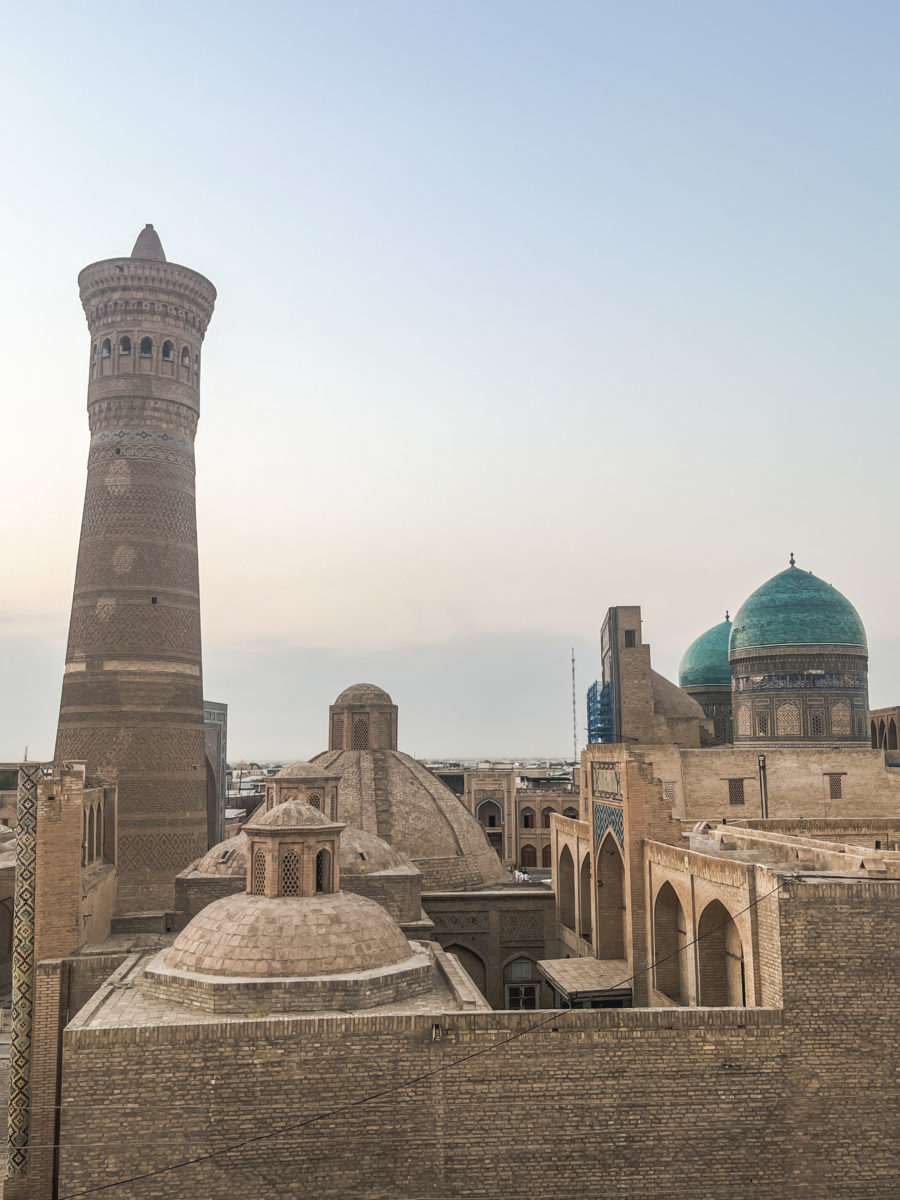
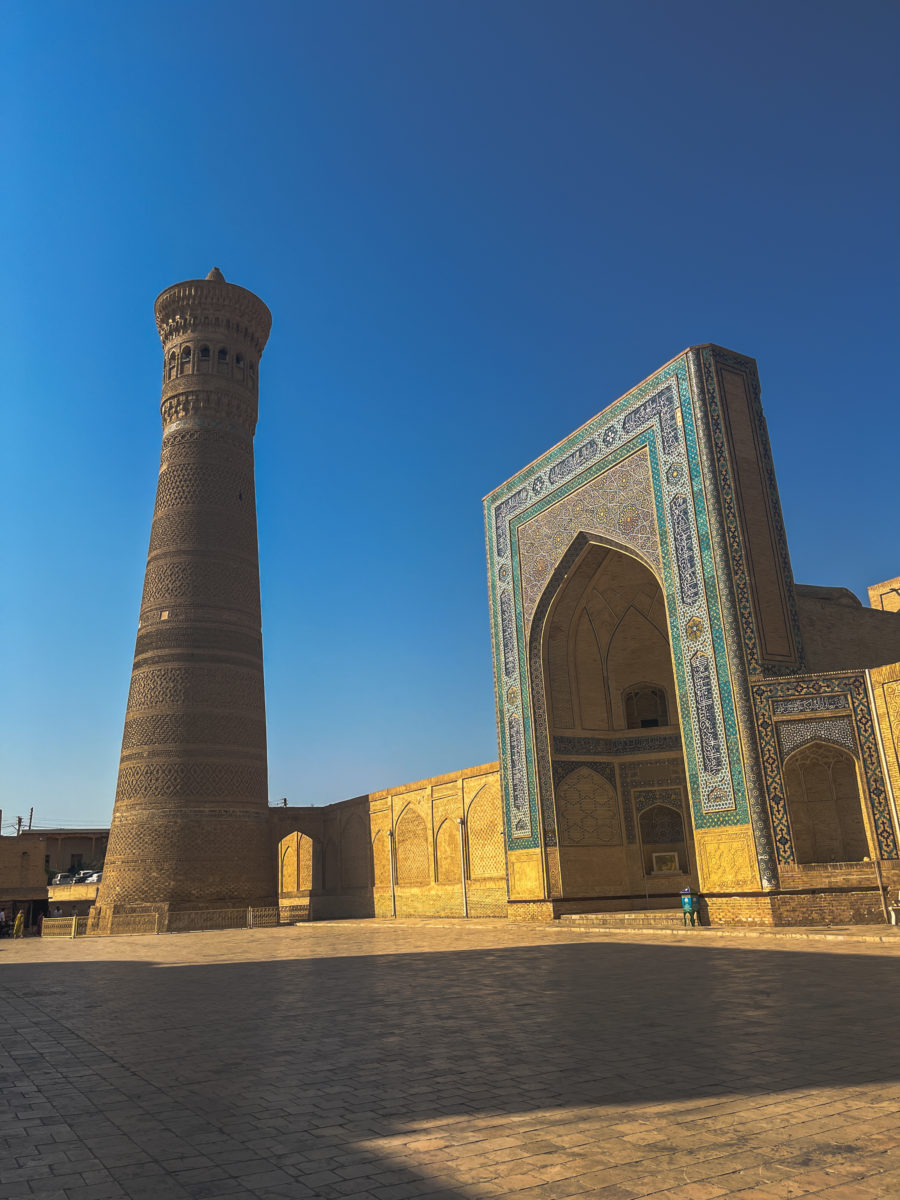
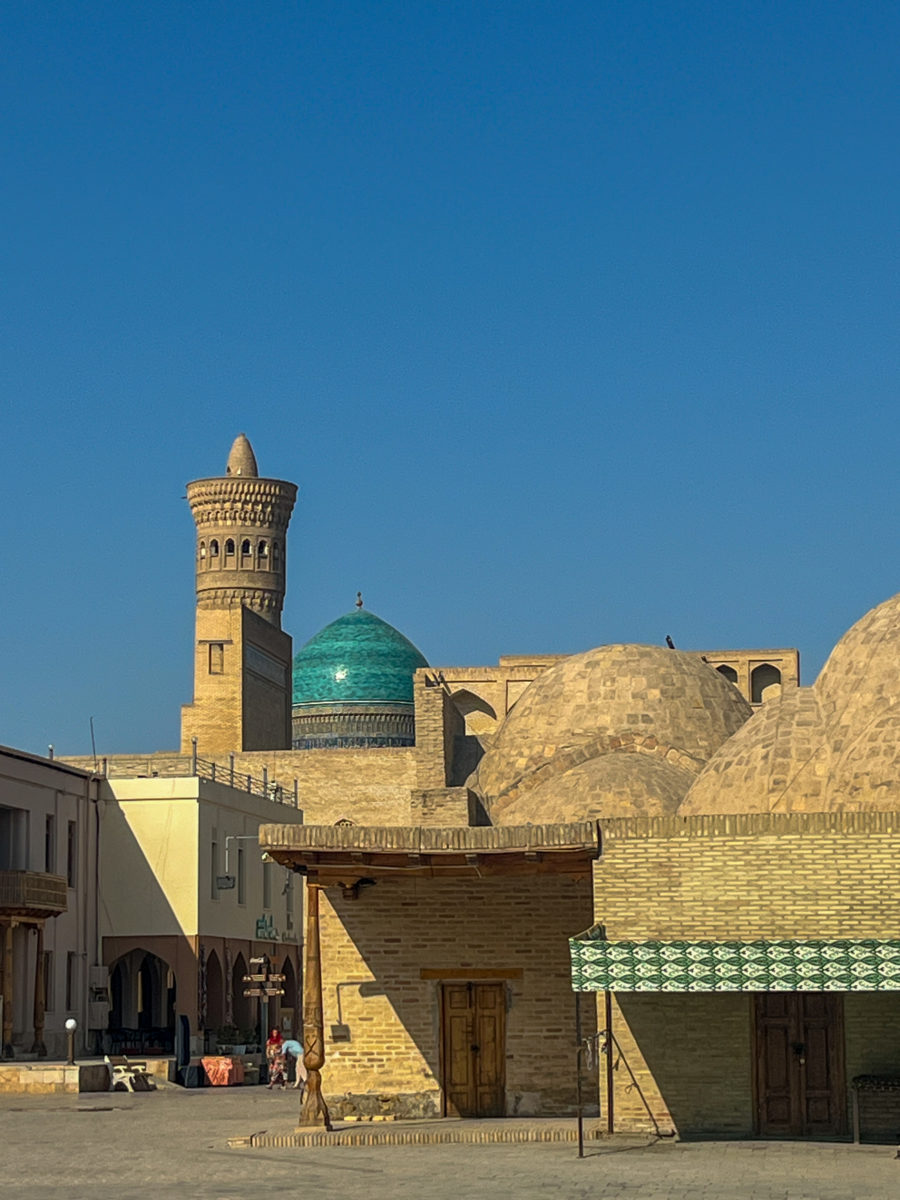
Beside it stand the majestic Kalyan Mosque, whose name means “Great Mosque” and which dates back to 1514, capable of accommodating thousands of worshippers (more than 12,000 before it was deconsecrated in 1924), and the beautiful Mir-i-Arab Madrasa, which remains active today.
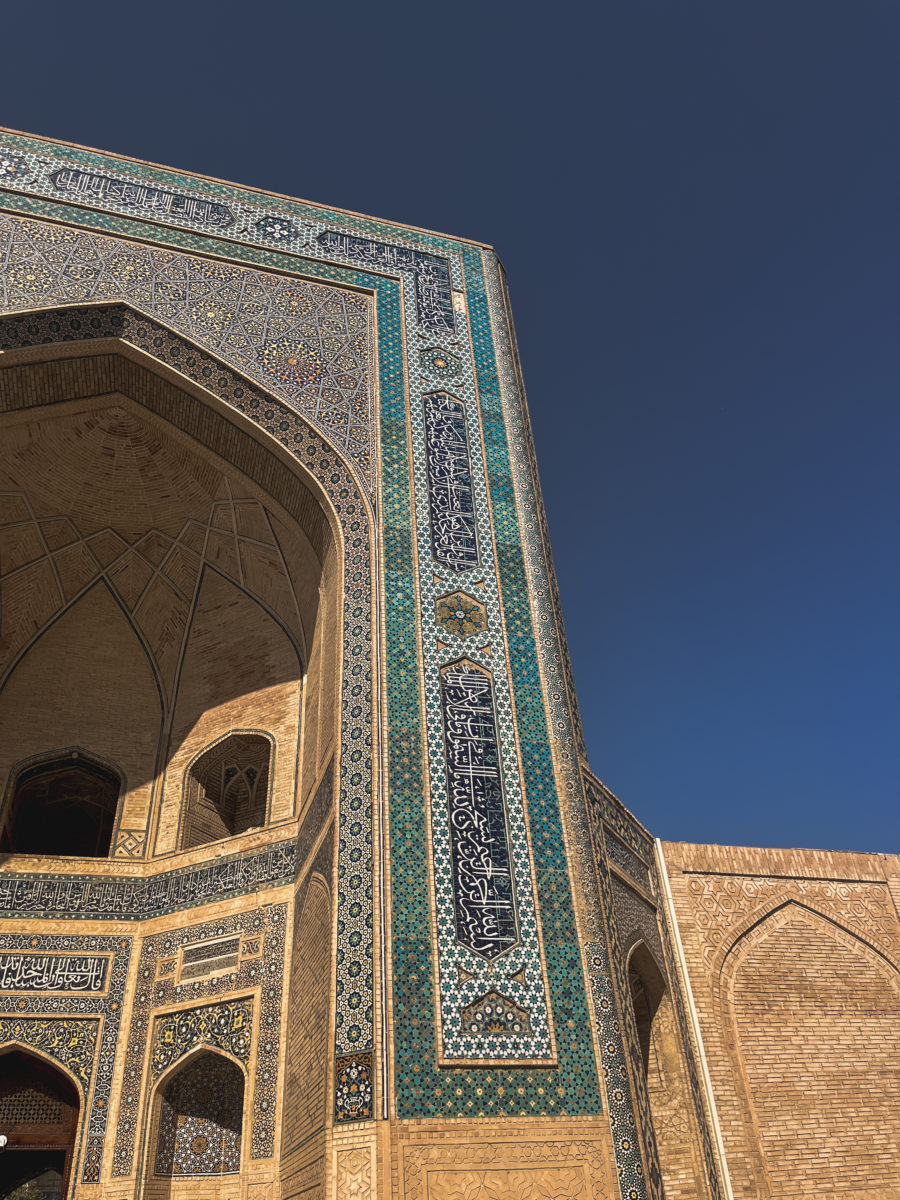
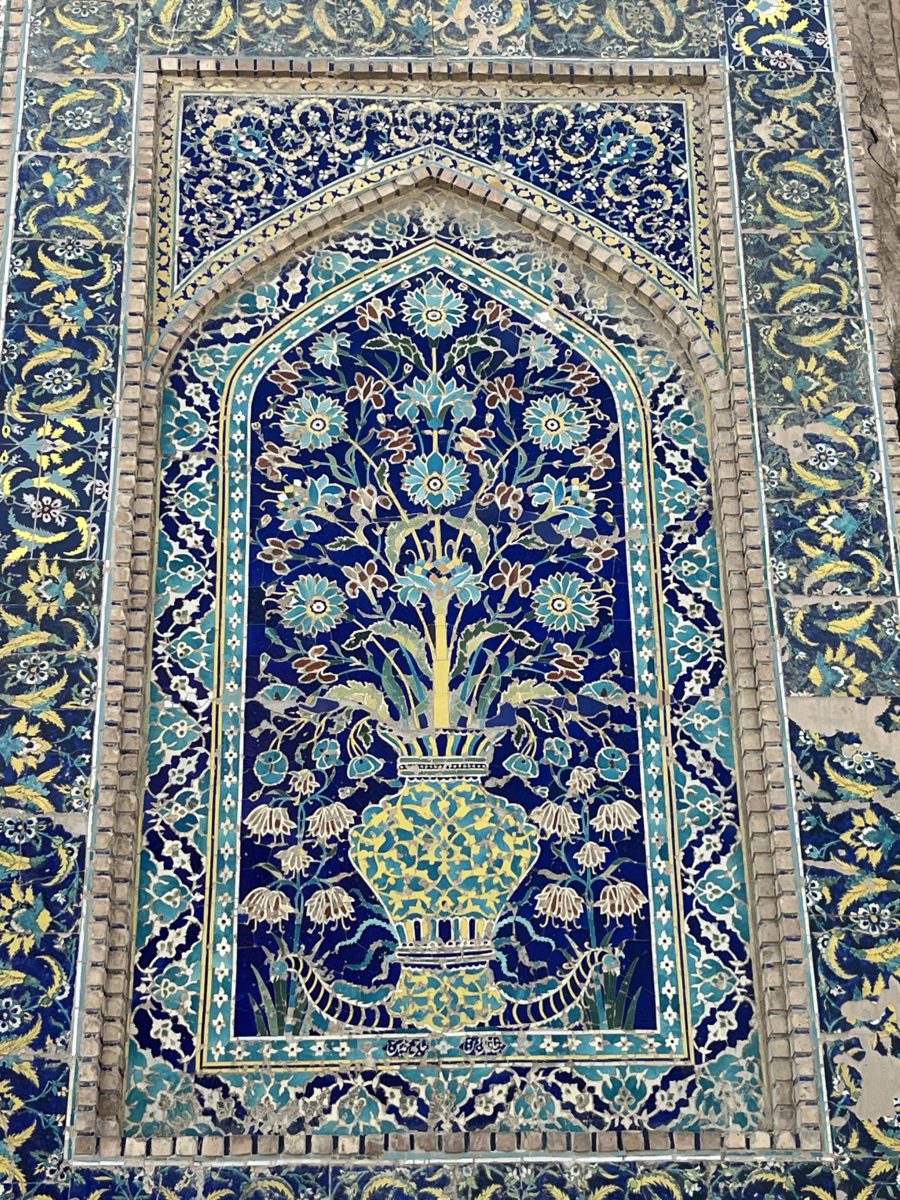
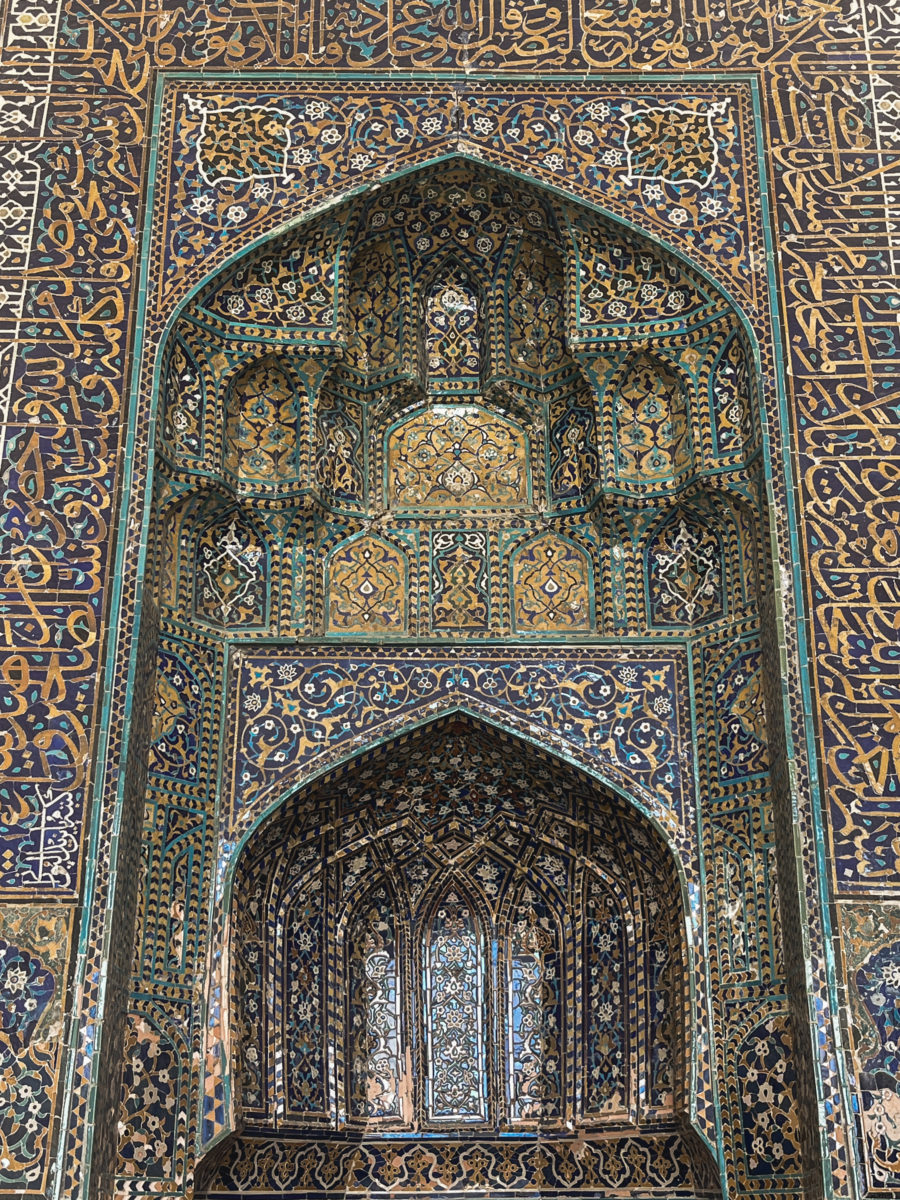
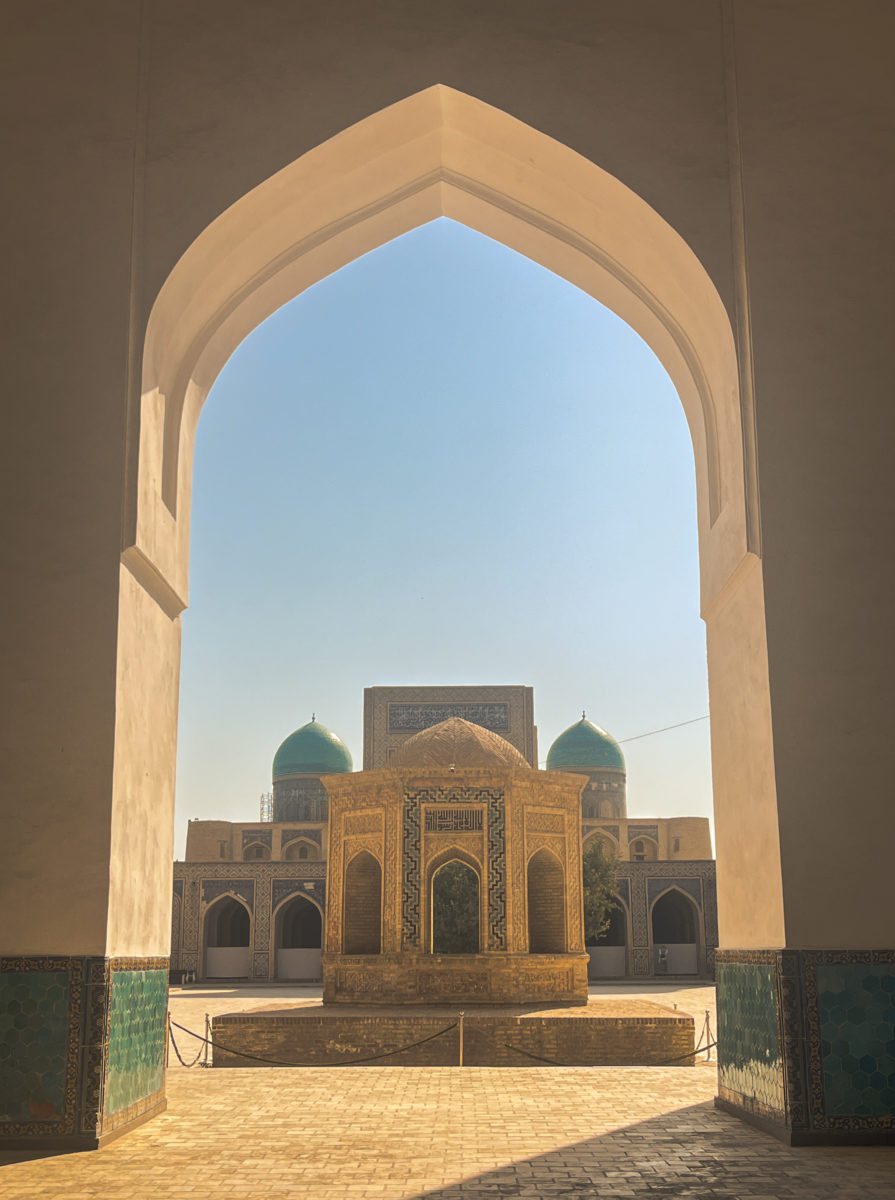
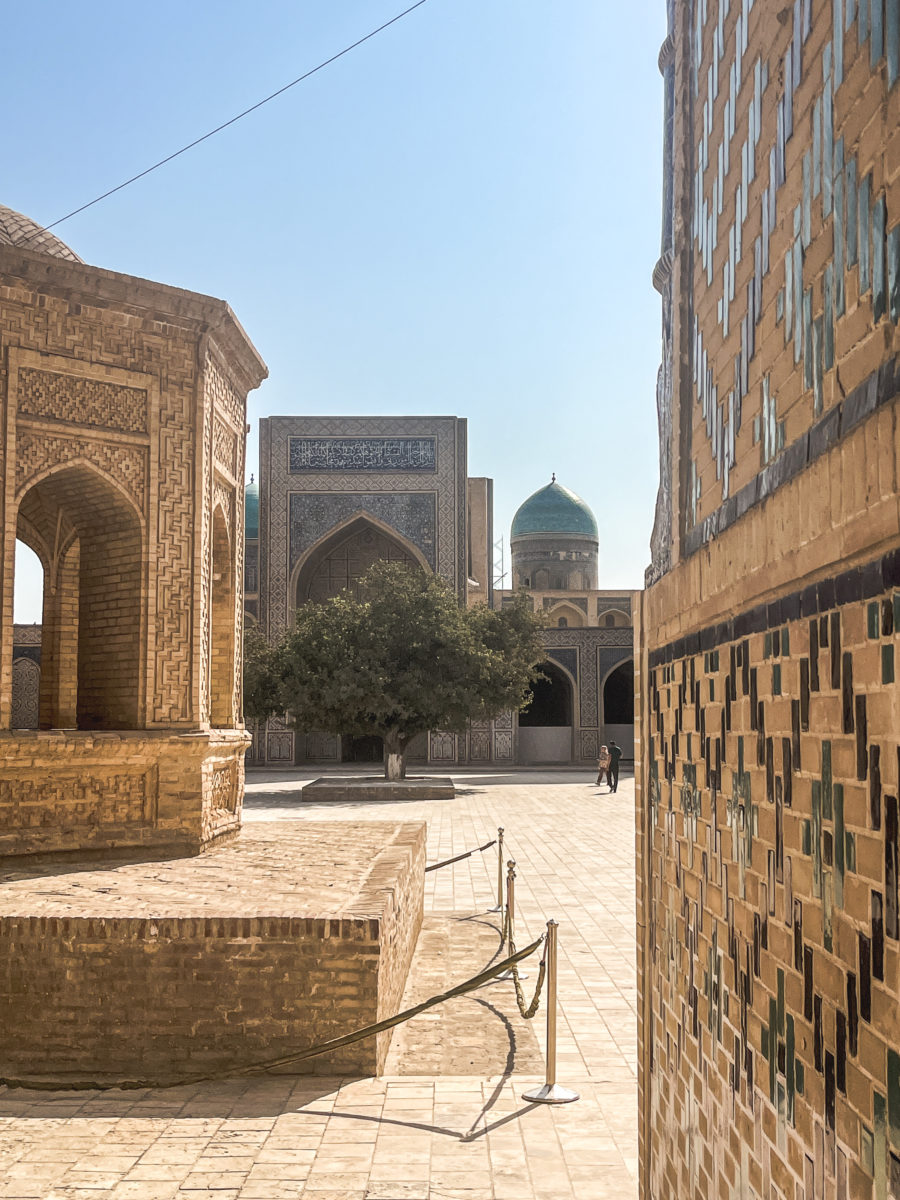
As always, the intricate decorative details reflect the full grandeur of the site. However, as it is a religious building, visitors are required to dress modestly and cover themselves appropriately. Fabric skirts are available for those who are not sufficiently covered. Since I only had a scarf with me, I used it to cover my hair while a skirt was provided to cover my legs.
The Ark of Bukhara
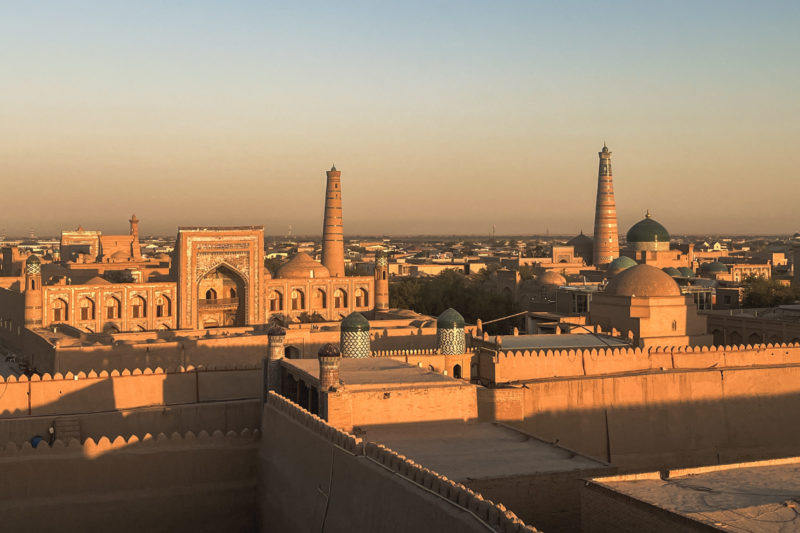
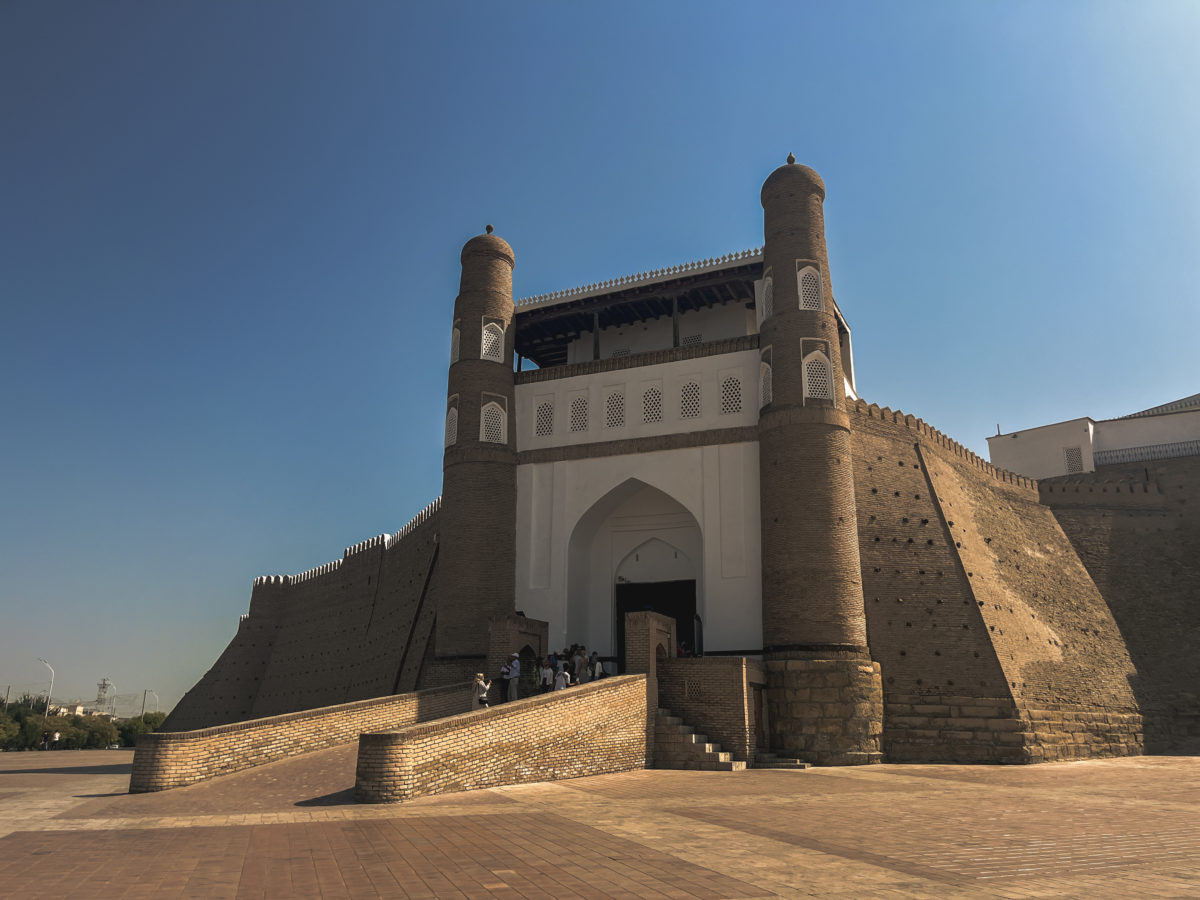
A little further away stands the Ark of Bukhara, a vast fortress that served for centuries as the residence of the emirs. Behind its imposing ochre-coloured walls lie the remains of the political centre of the former Emirate of Bukhara, as well as beautiful views over the city.
A museum inside offers insight into the culture of the era, notably through exhibits on numismatics and epigraphy.
Bolo Haouz Mosque
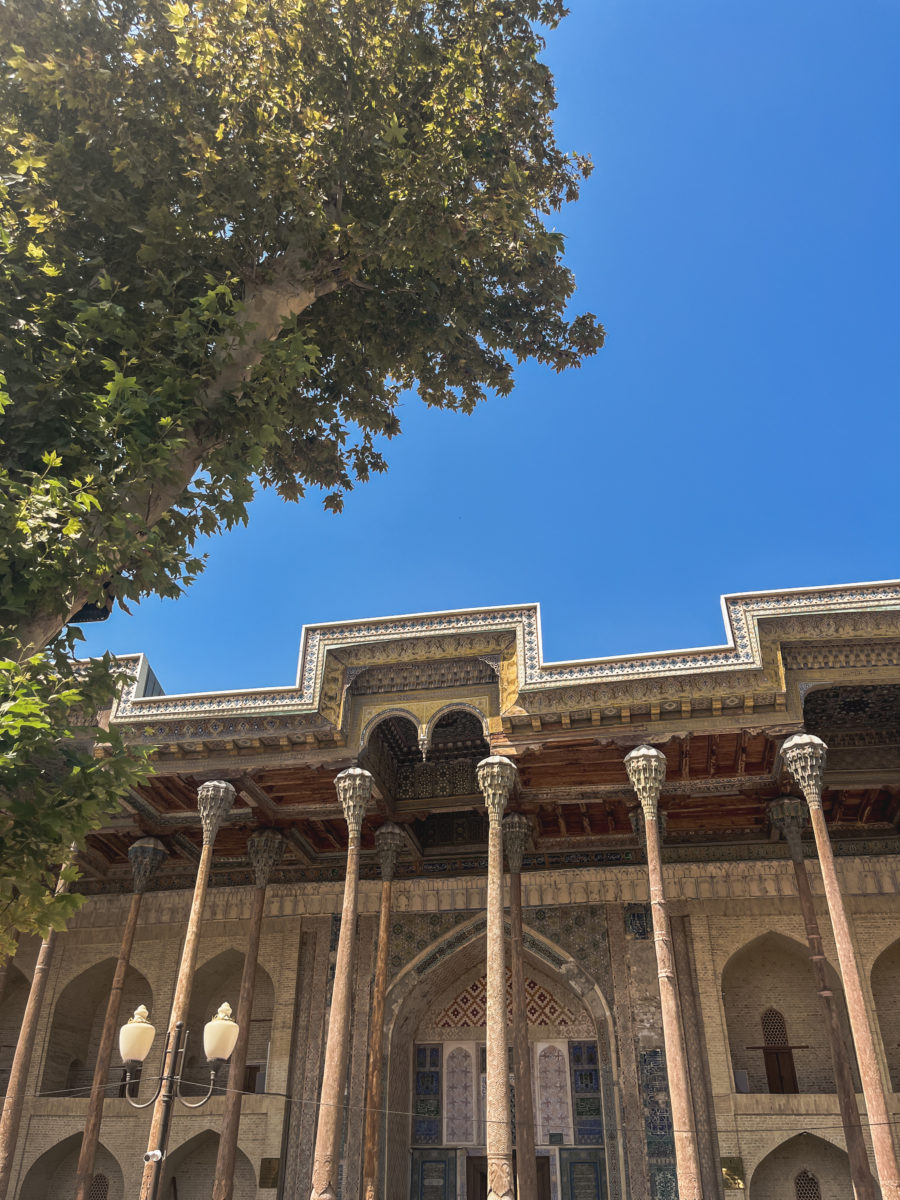
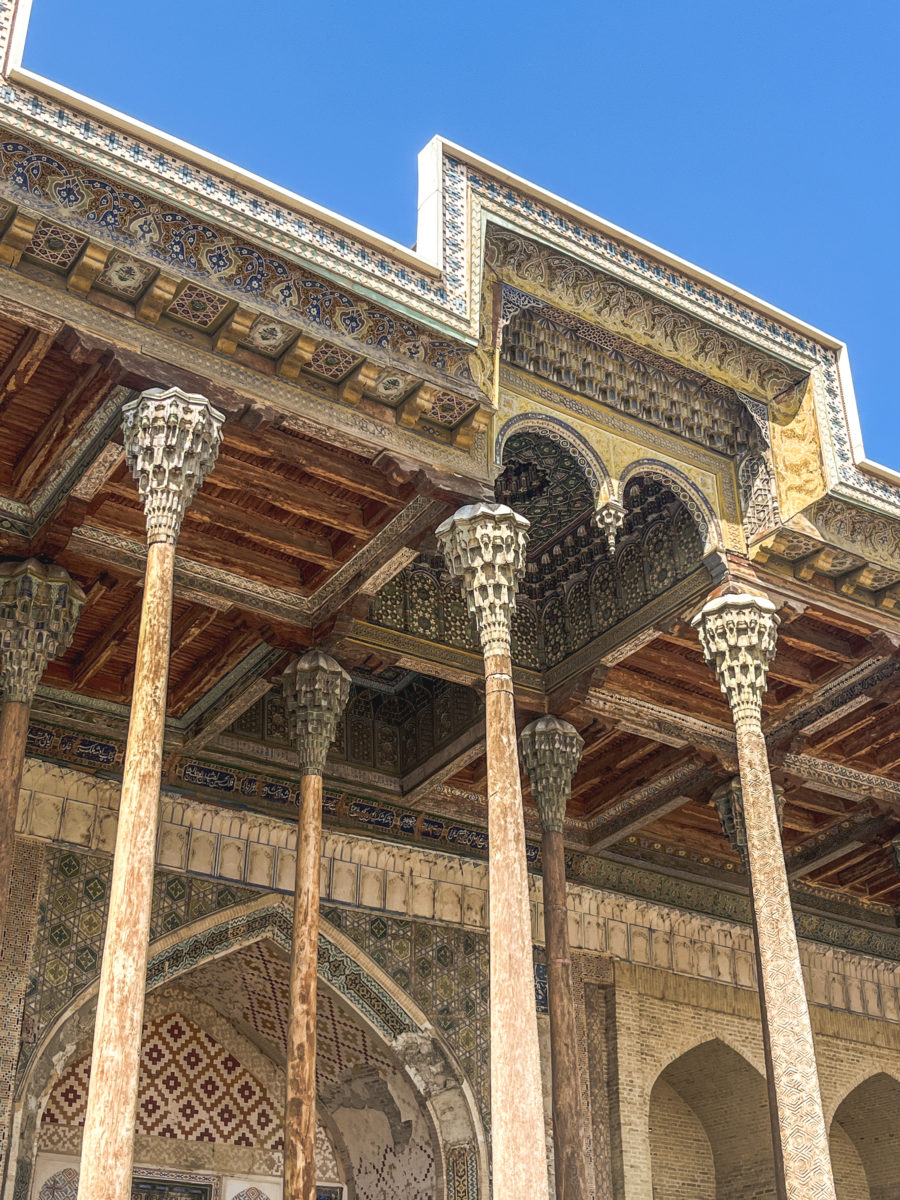
Directly opposite the fortress stands the magnificent Bolo Haouz Mosque, easily recognizable by its elegant wooden portico supported by slender carved columns. Its reflection in the pool facing it creates one of the most beautiful views in Bukhara. Built in the early 18th century, it served as the royal mosque of the emirs.
Mausoleum of the Samanids
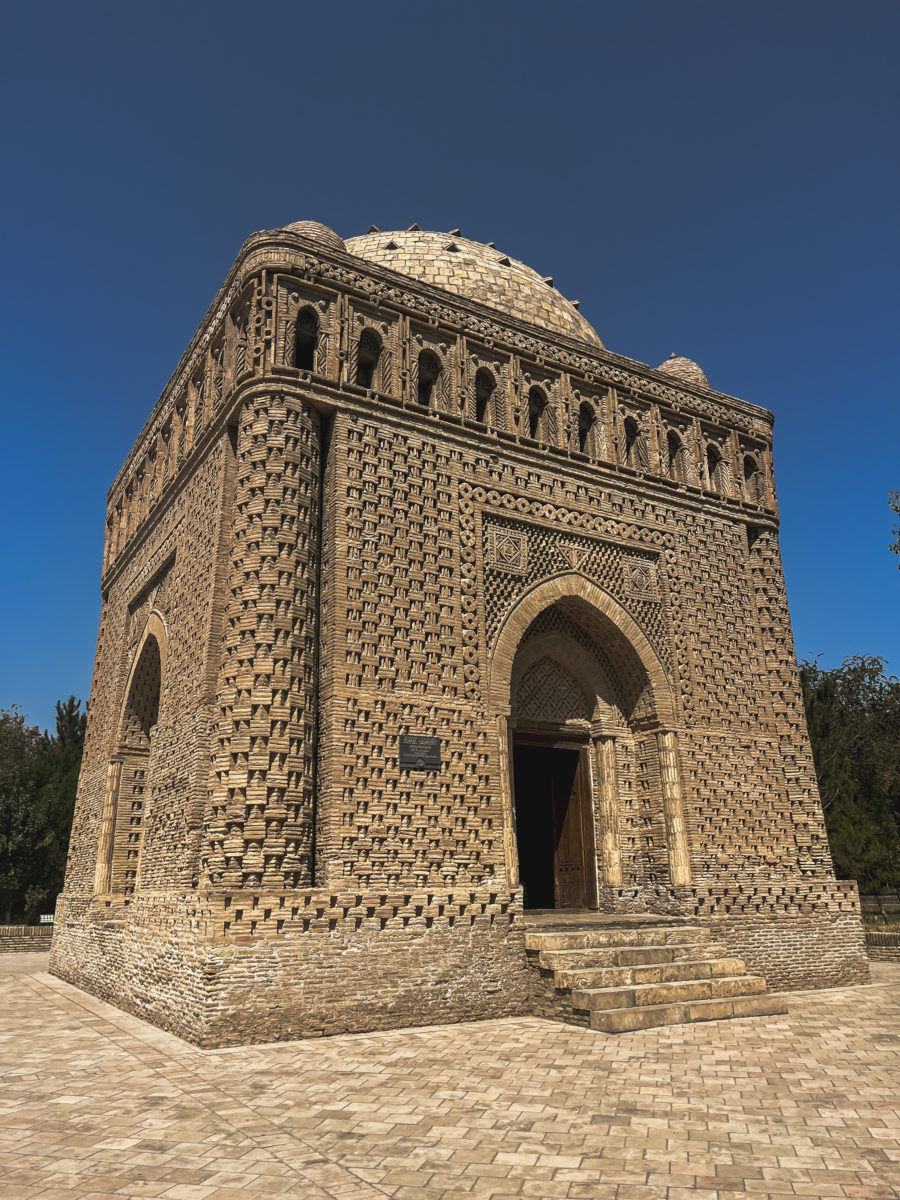
Among the city’s oldest treasures is the Mausoleum of the Samanids, considered one of the masterpieces of Islamic architecture in Central Asia. Built in the 9th and 10th centuries, it impresses with the refinement of its decorative brickwork and the perfect harmony of its proportions. Its understated architecture contrasts with the later monuments covered in colourful ceramics.
Lyabi-Hauz
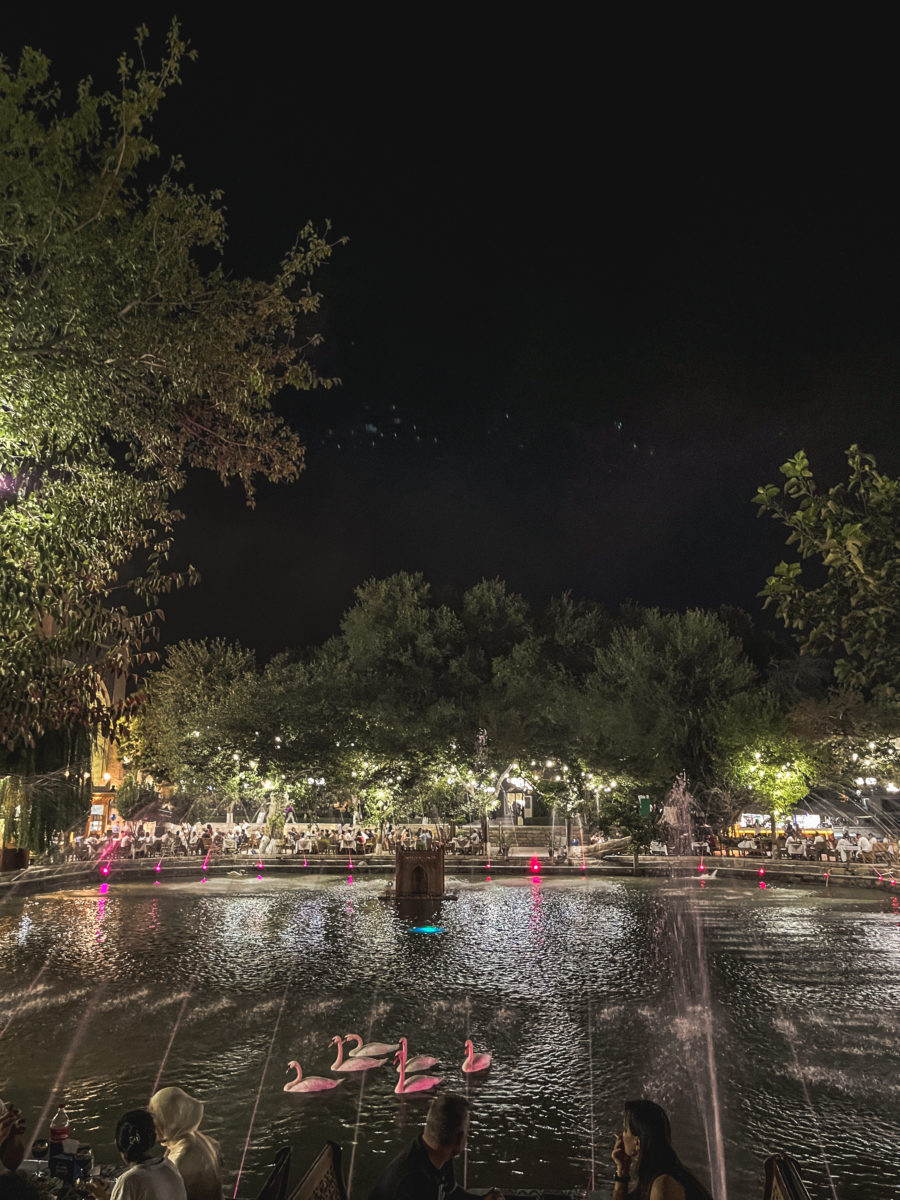
I also greatly enjoyed the Lyabi-Hauz ensemble, the lively heart of the old town. Around a large, shaded pond, café terraces sit alongside two magnificent madrasas and the Nadir Divan-Beghi Khanaka. It is probably one of the most pleasant places to wander as the day comes to an end.
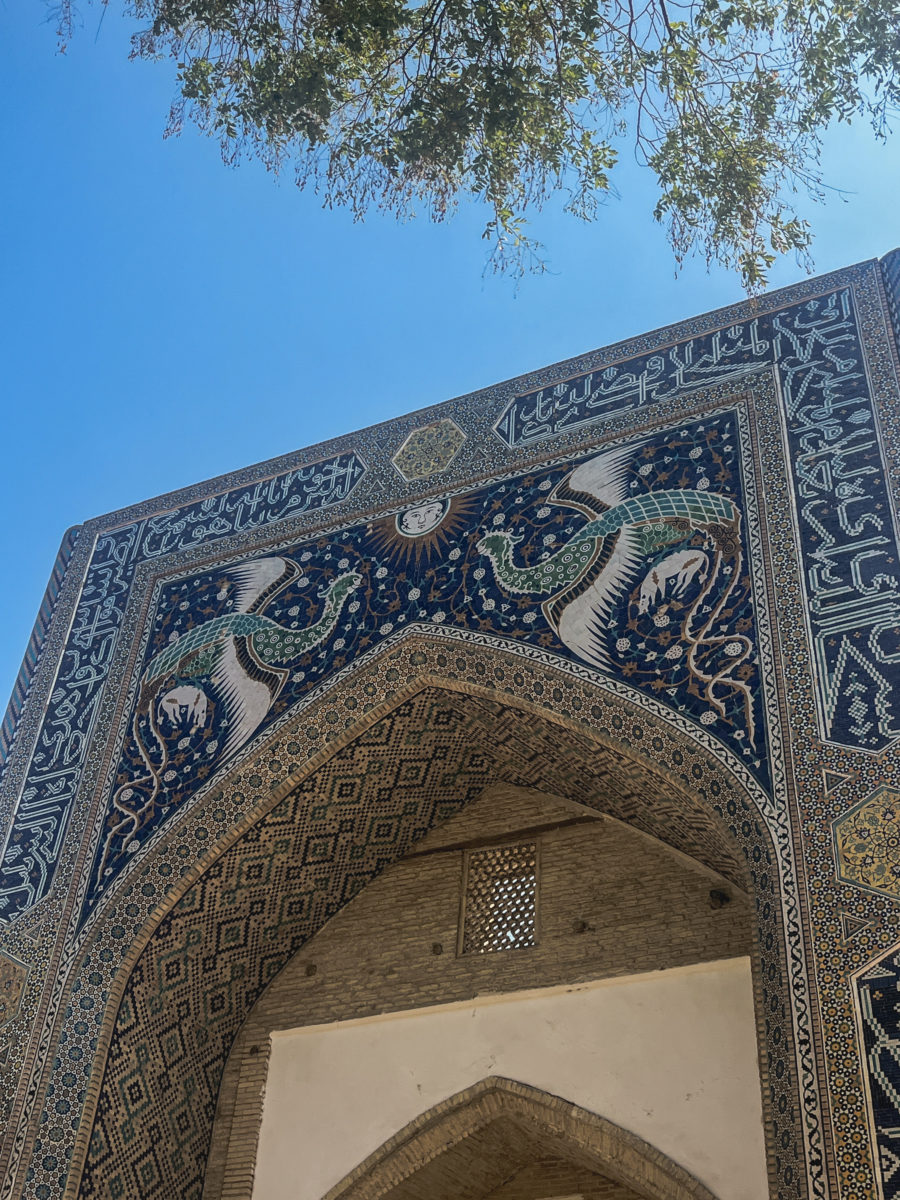
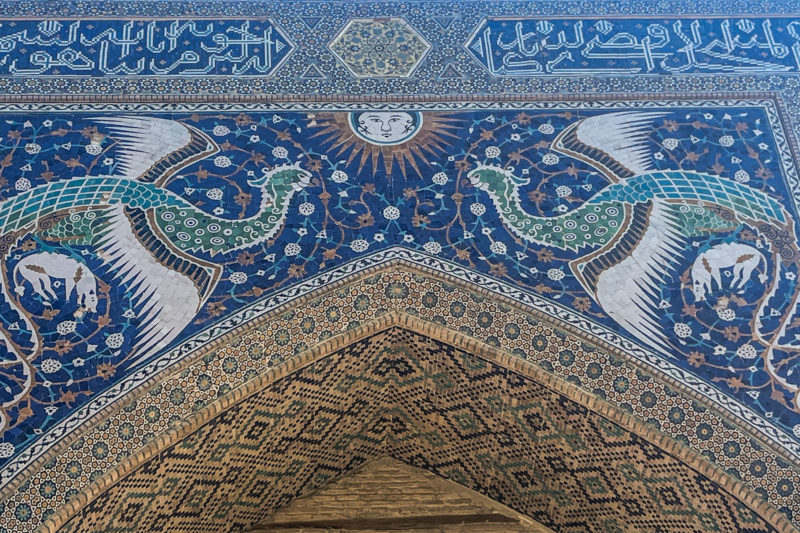
This is also where my favourite façade in all of Uzbekistan can be found: the mosaic adorning the portal of the Nadir Divan-Beghi Madrasa, depicting two Humo birds. I spoke in more detail here about this legendary bird. In Persian mythology, the Humo is the bird of happiness and good fortune, one that never lands and is forever soaring, free and elusive. It is even said that its shadow brings luck to anyone it touches.
Beneath the 37-degree heat, while the city seemed crushed beneath the sun, I felt the lightness of that promise. It was as if those mythical birds were whispering that this is how one should travel: moving forward without becoming too attached, preserving momentum and curiosity, allowing the mind to drift freely from one place to another. That is surely why this façade is my favourite. It does not merely tell the story of Bukhara or Uzbekistan; it also speaks of movement, of the invisible force that continually drives travellers further afield.
Chor Minor
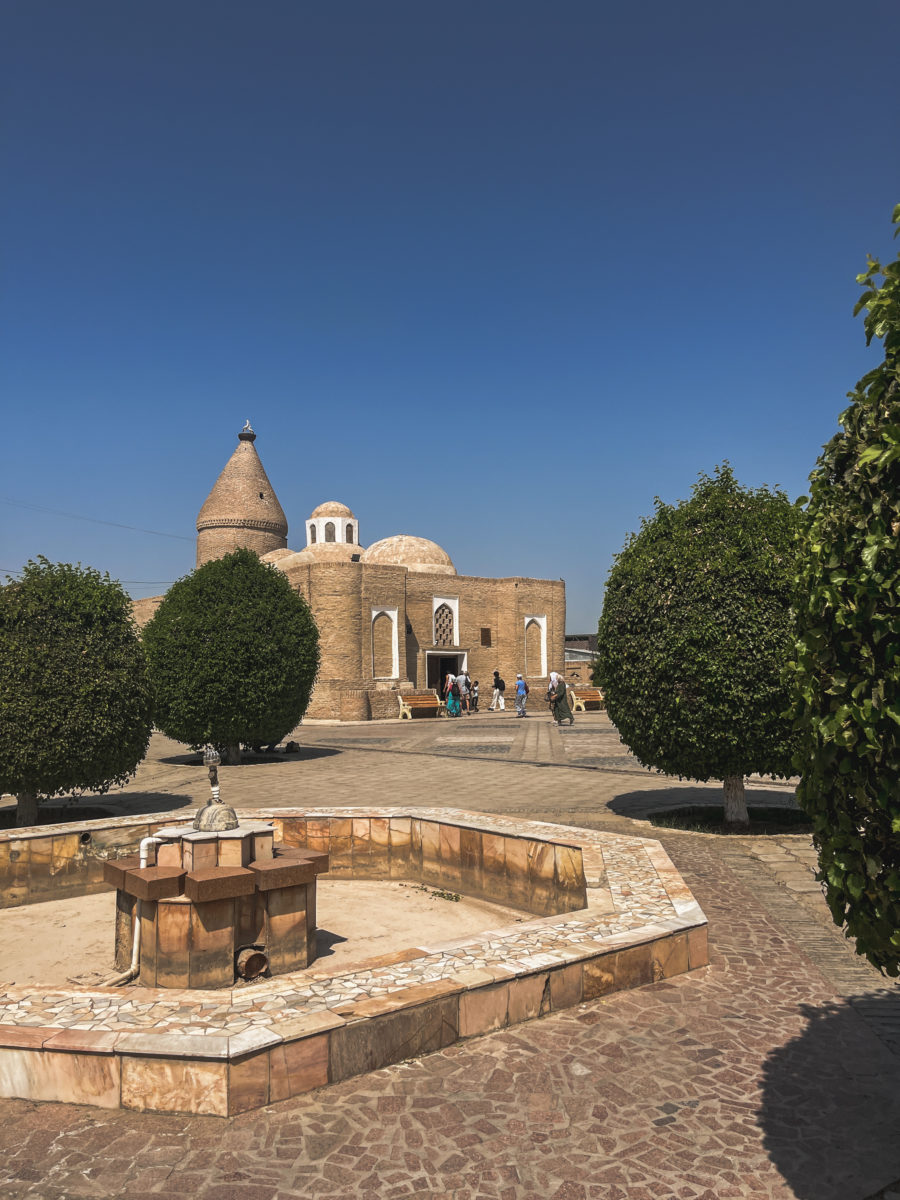
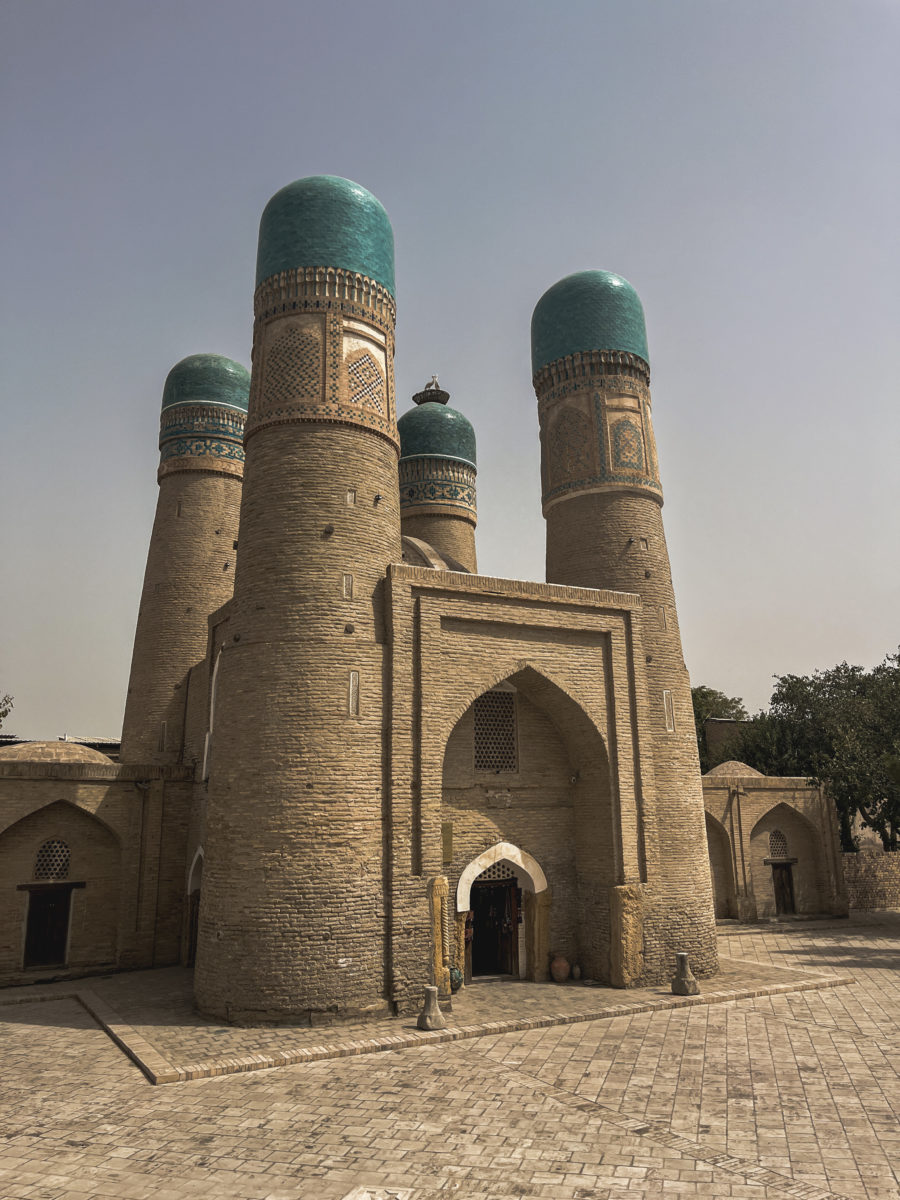
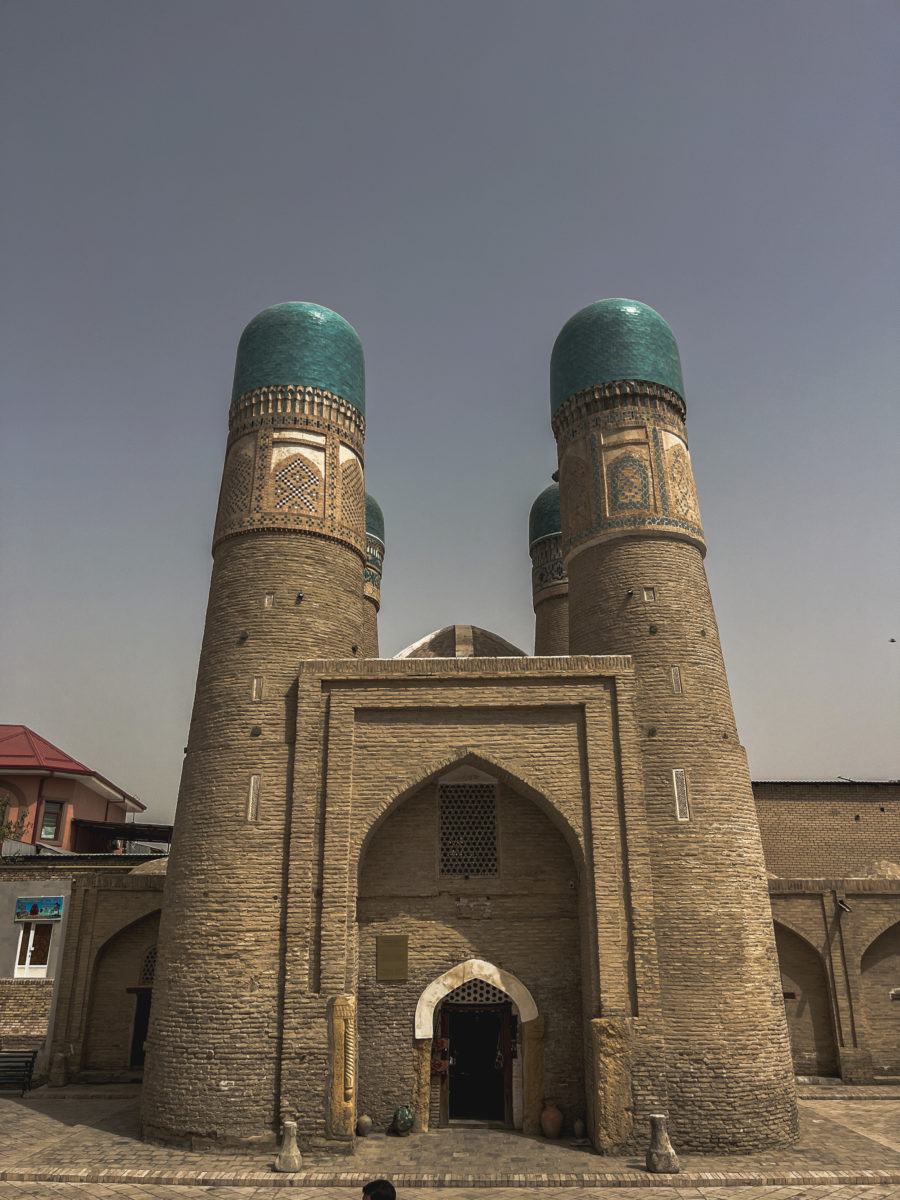
Among Bukhara’s most distinctive monuments is Chor Minor, recognizable by its four small towers topped with blue domes. Far more modest than the city’s great monumental complexes, it possesses a unique charm that makes it one of Bukhara’s most photogenic sites.
Getting Lost in the Covered Markets
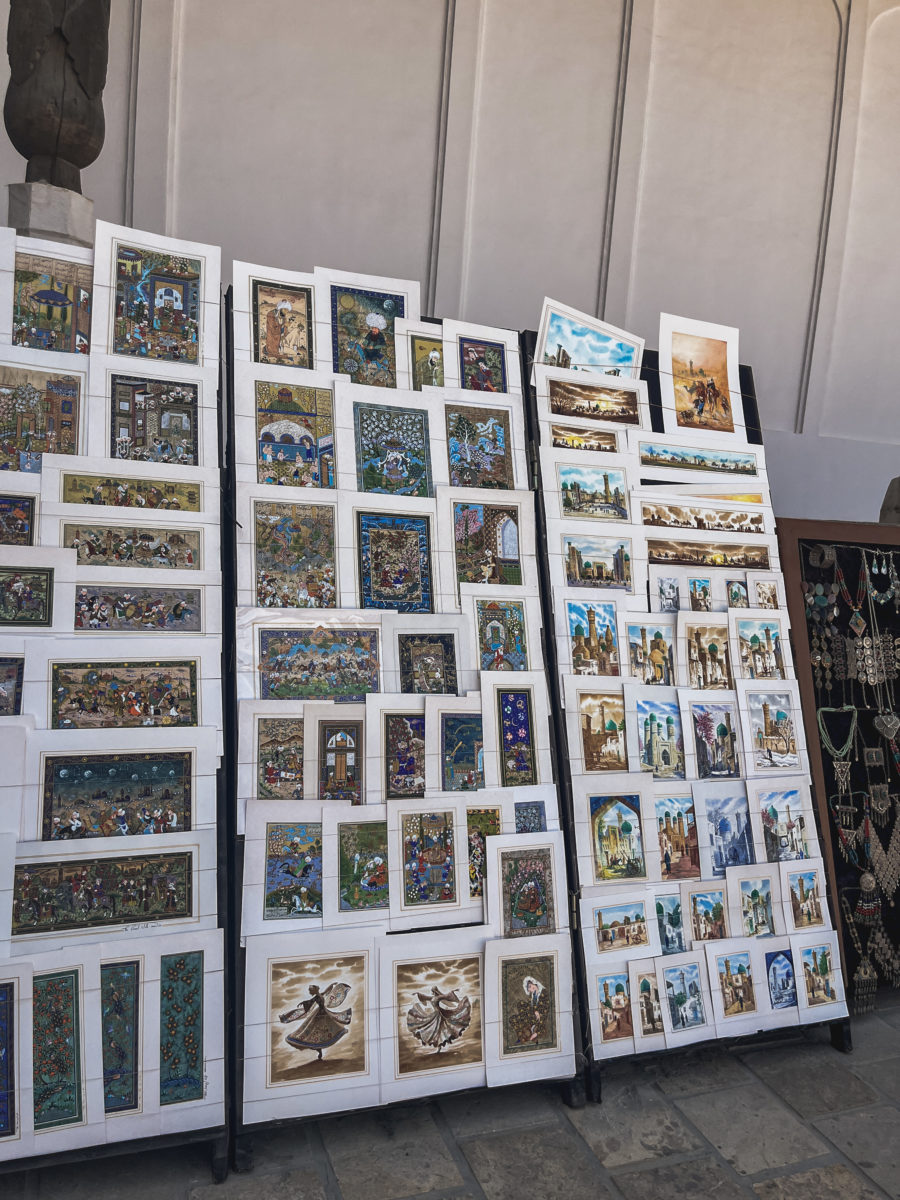
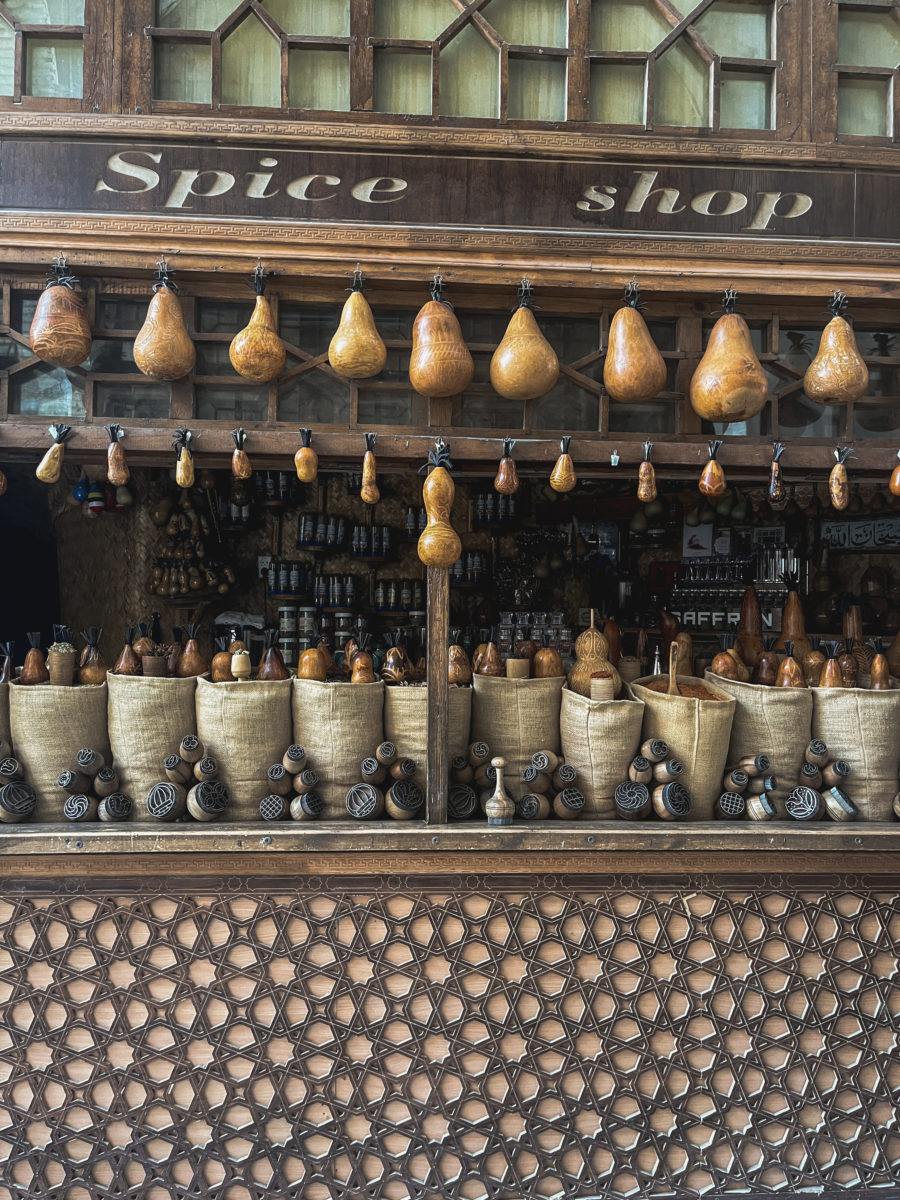
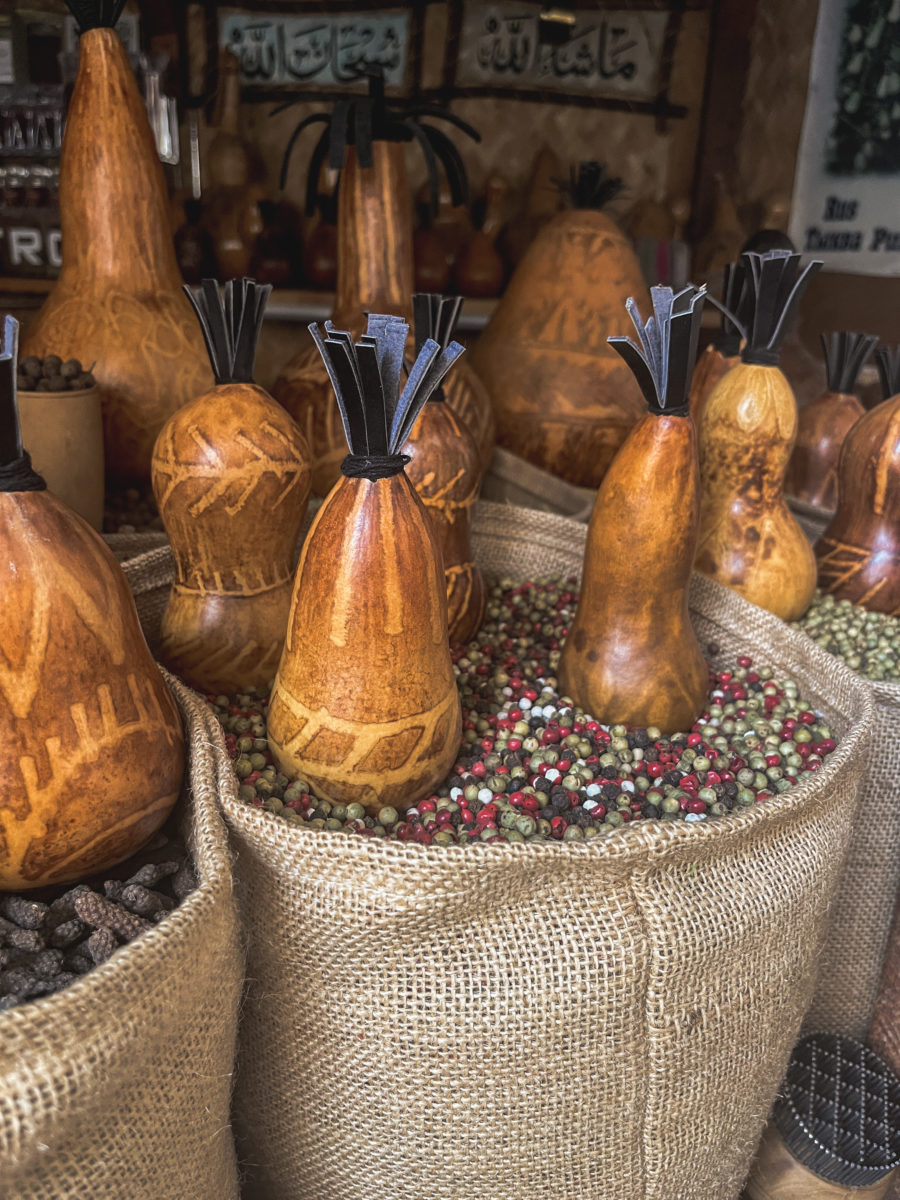
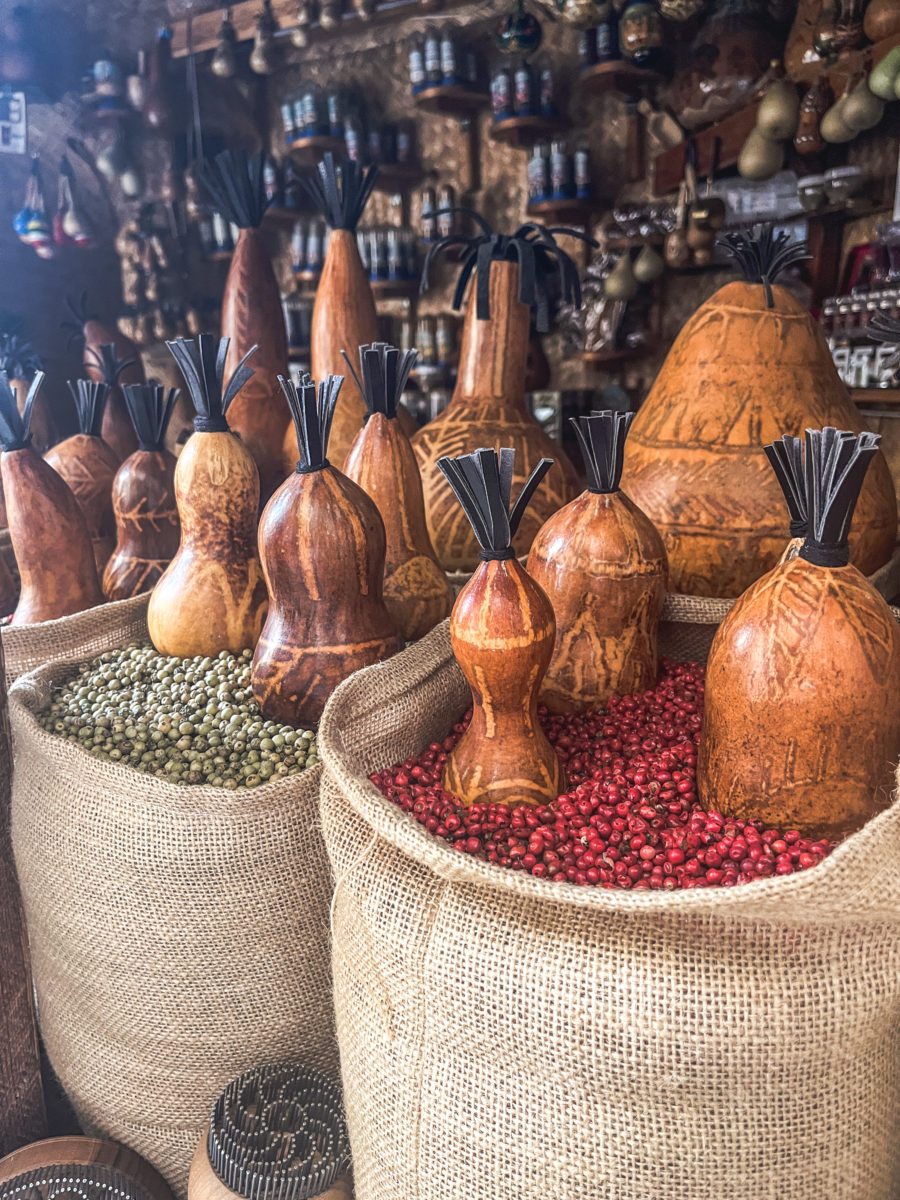
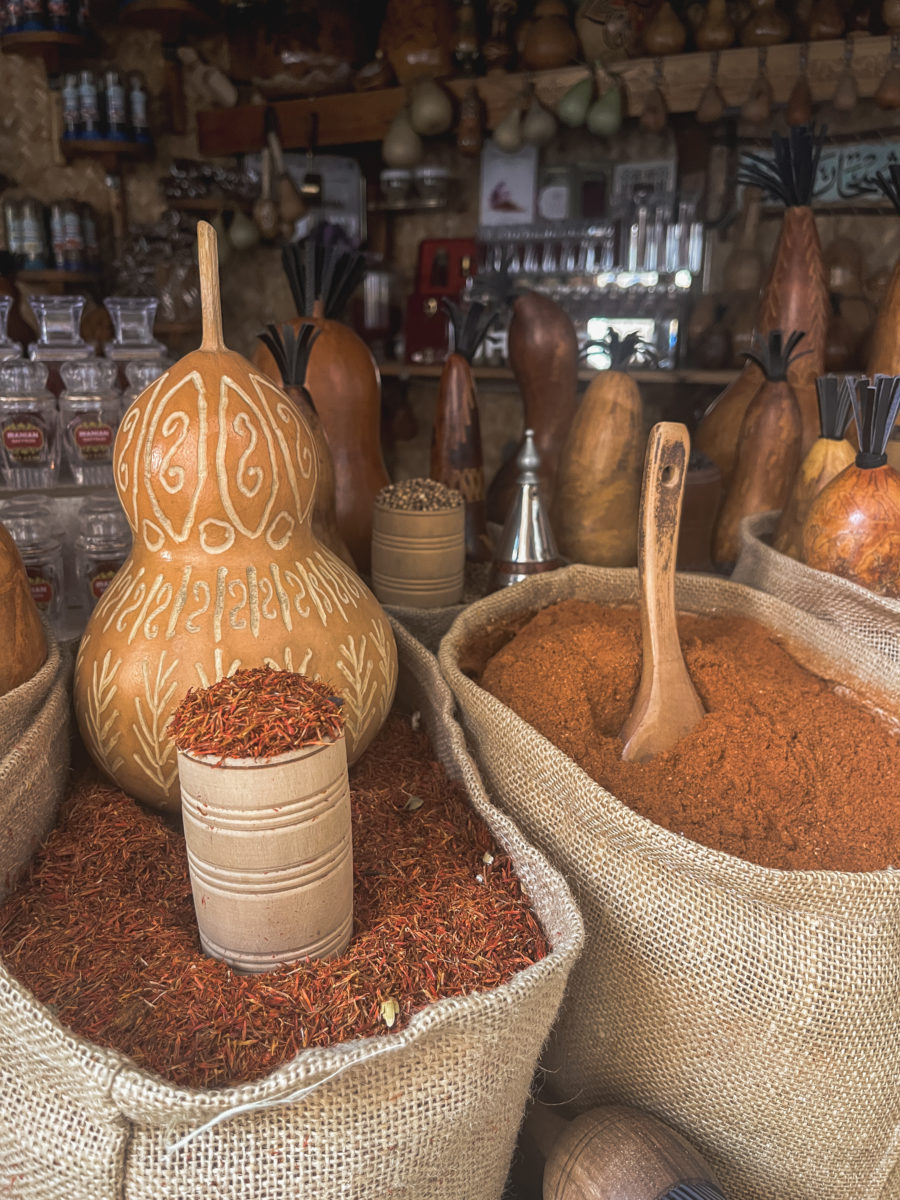
For me, what truly sets Bukhara apart from other Uzbek cities is its historic covered bazaars. The trading domes, known as toks, still exist today. They now house souvenir shops, handicrafts, jewellery, spices, and textiles, but above all they bear witness to the central commercial role the city once played.
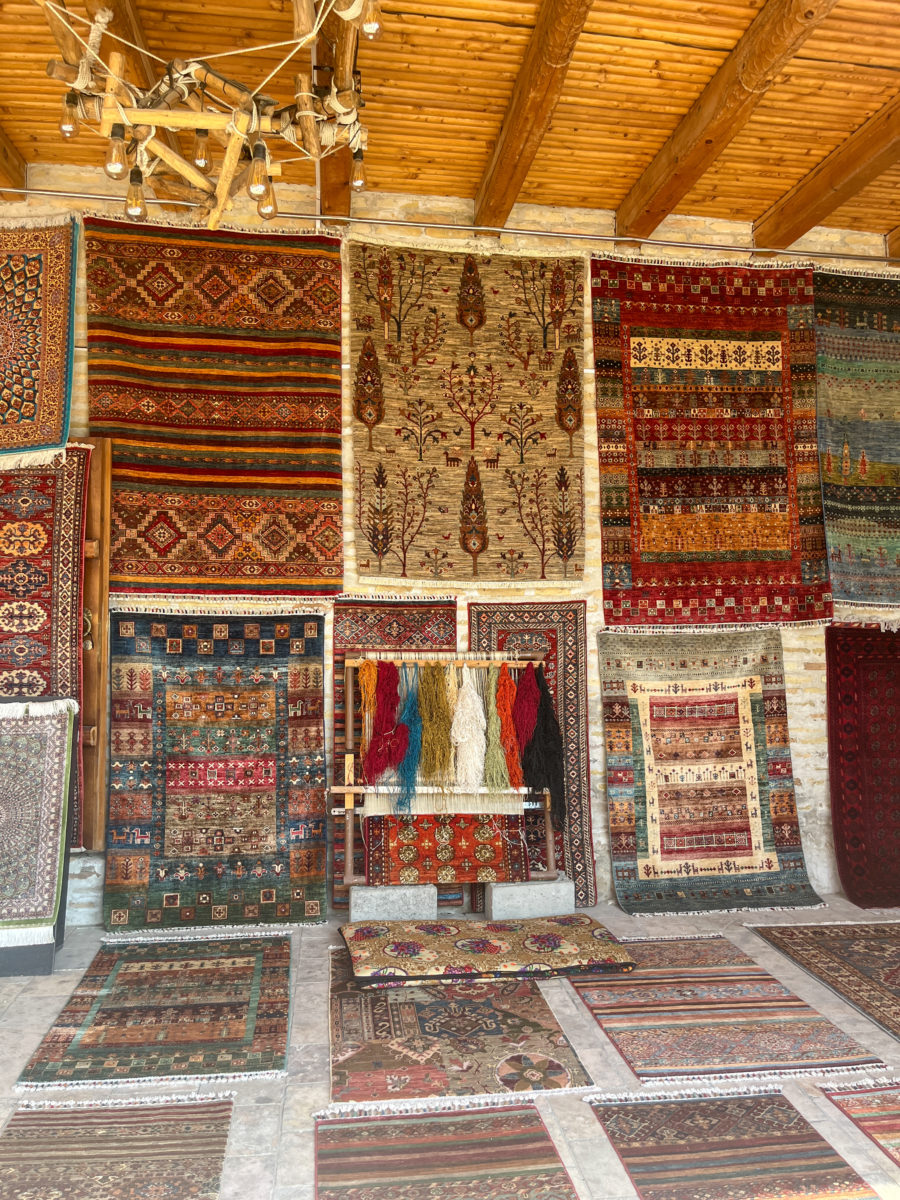
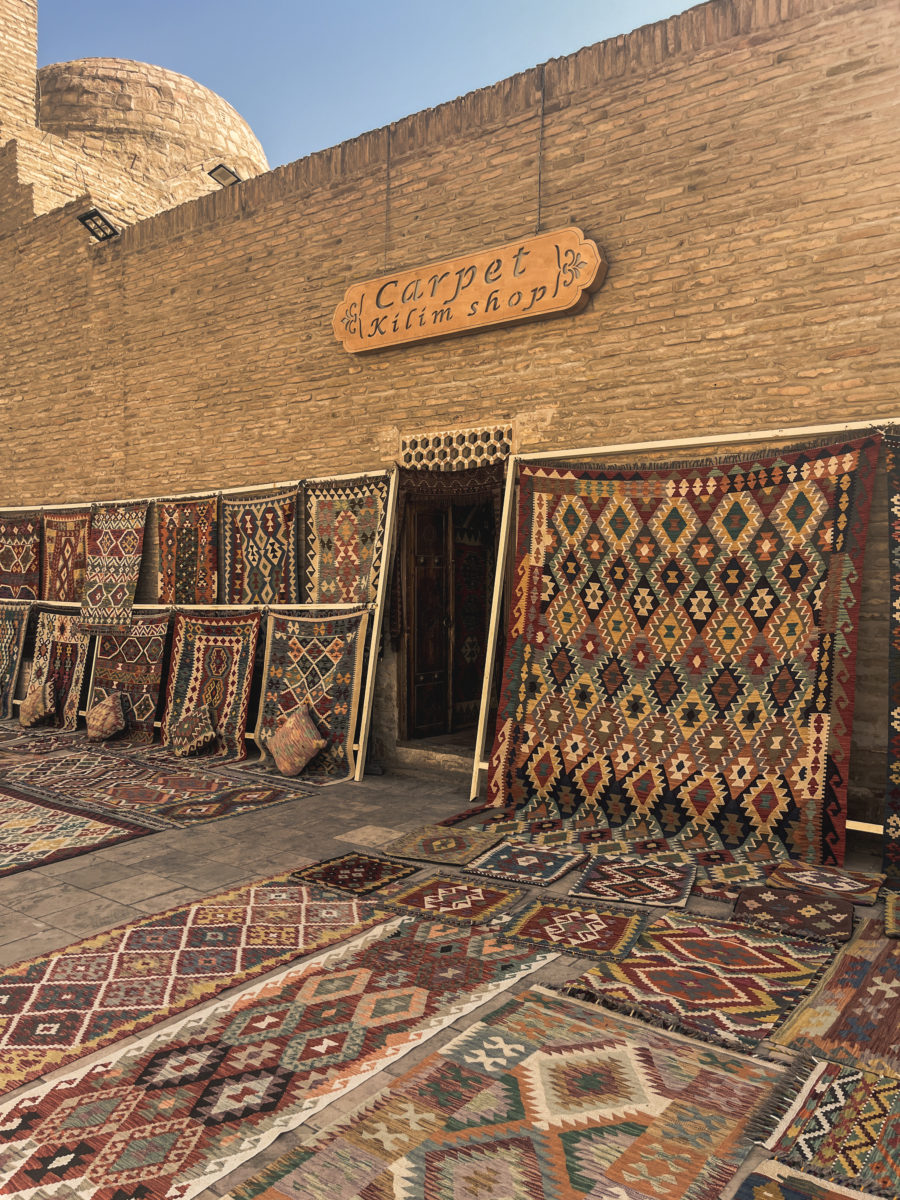
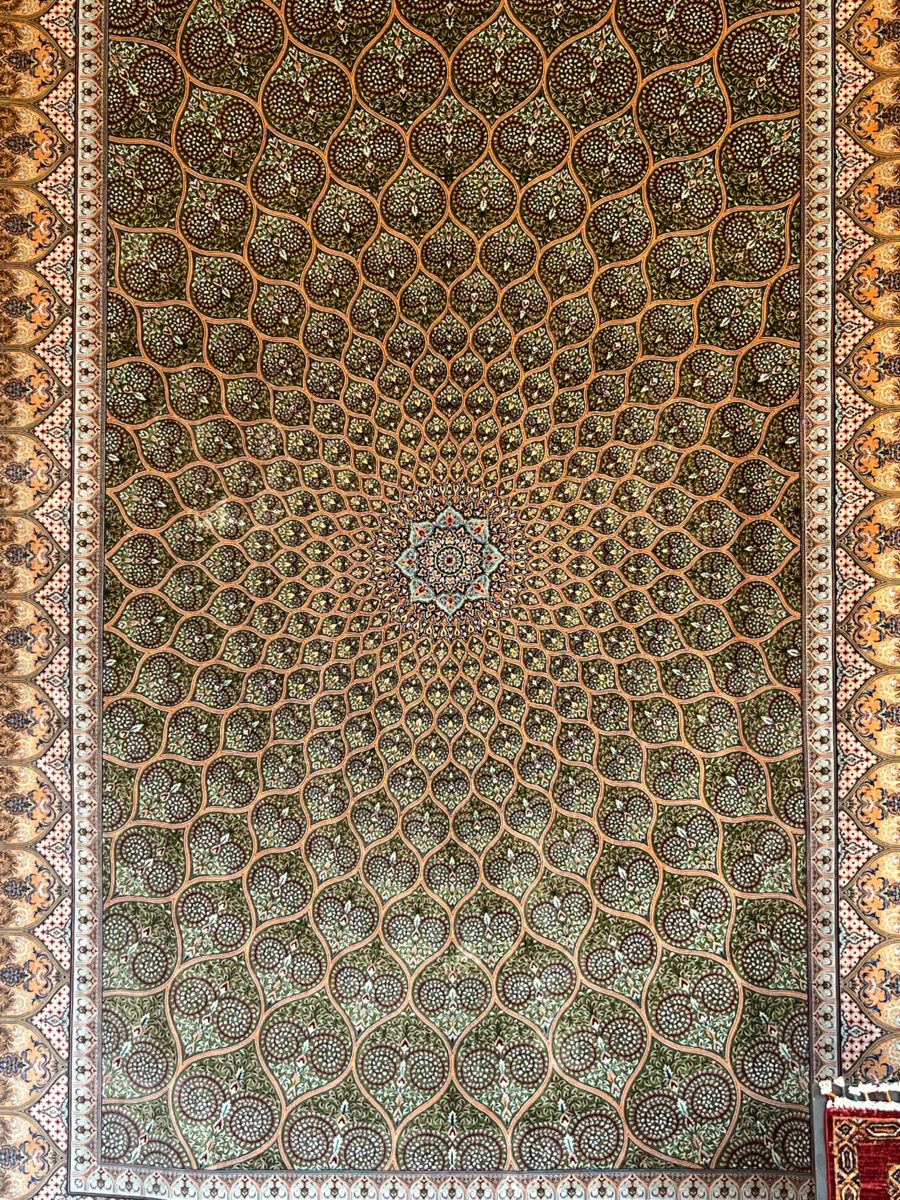
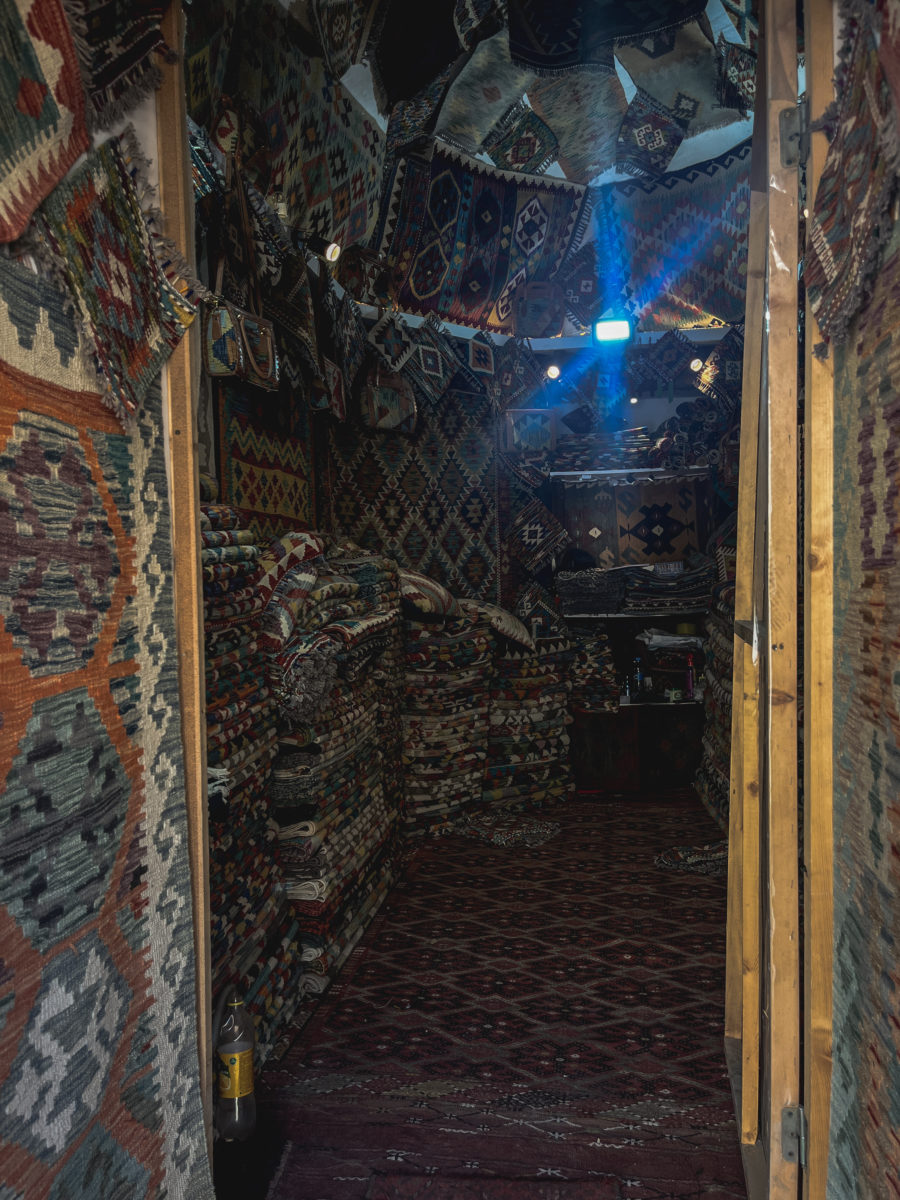
As you wander beneath these ancient vaults, it is easy to imagine the sounds of negotiations, the many languages spoken by people from distant lands, and the wealth that once passed through these markets. It is equally easy to get swept up in the atmosphere and leave with a few beautiful silk scarves.
Discovering Bukhara Embroidery
One of our favourite activities was a workshop dedicated to traditional embroidery, one of the region’s most emblematic crafts.
Far from the grand monuments, this experience offered a more intimate glimpse into Uzbek culture. Embroidery, with its colourful floral motifs and intricate compositions, is an integral part of the local heritage. Every detail tells a story and reflects traditions passed down from generation to generation.
It is more challenging than it looks, you do not quite get the hang of the thread immediately, but in the end, it is tremendous fun, and time simply flies by. Afterwards, I was tempted to buy many of the pieces on display, but their rather steep prices quickly curbed my enthusiasm.
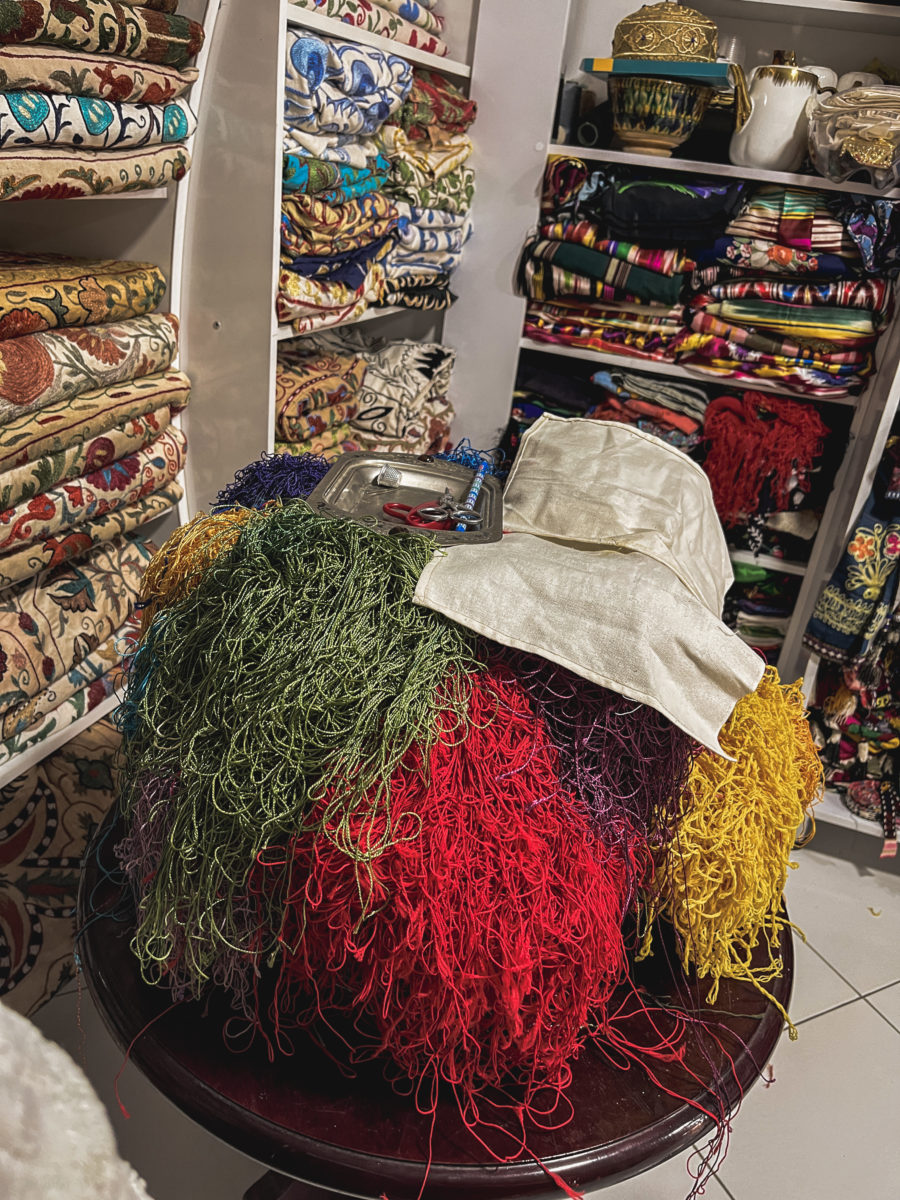
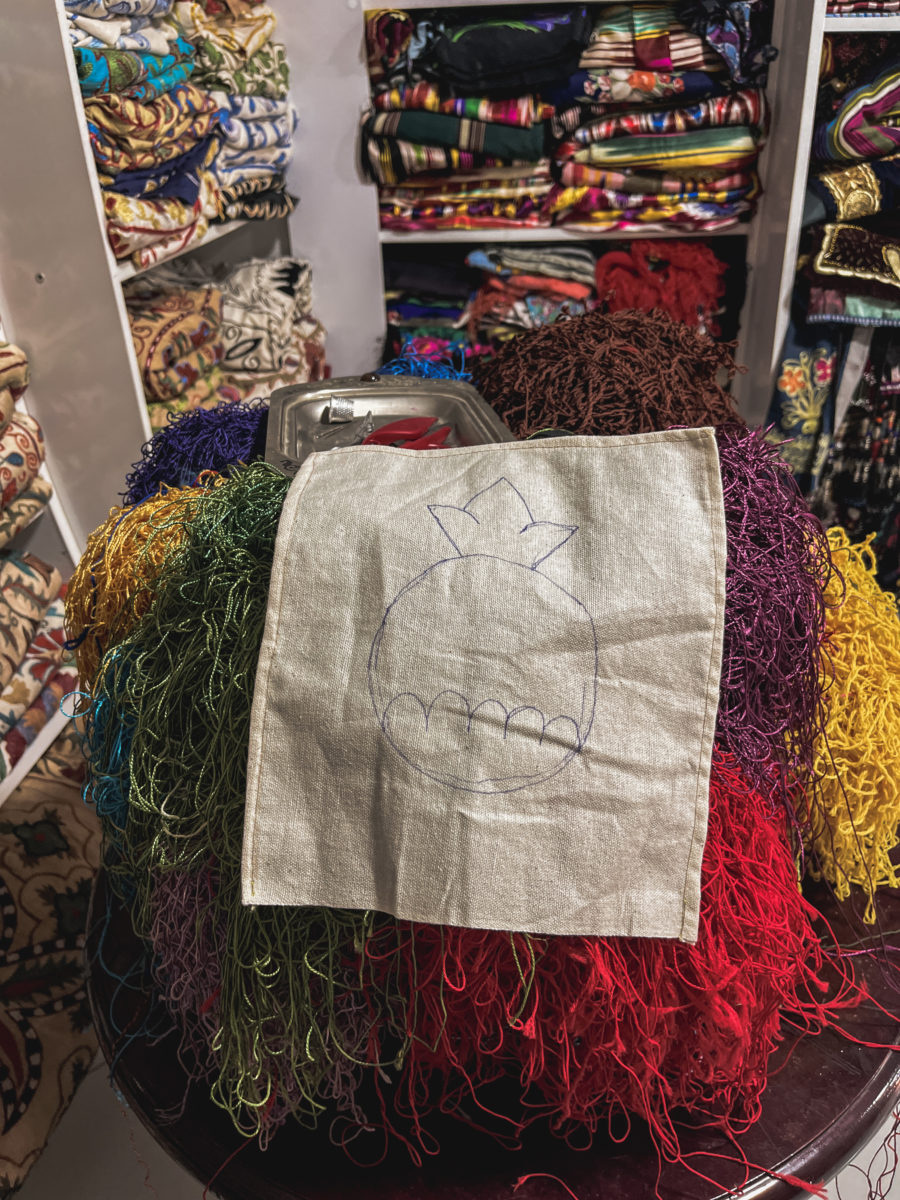
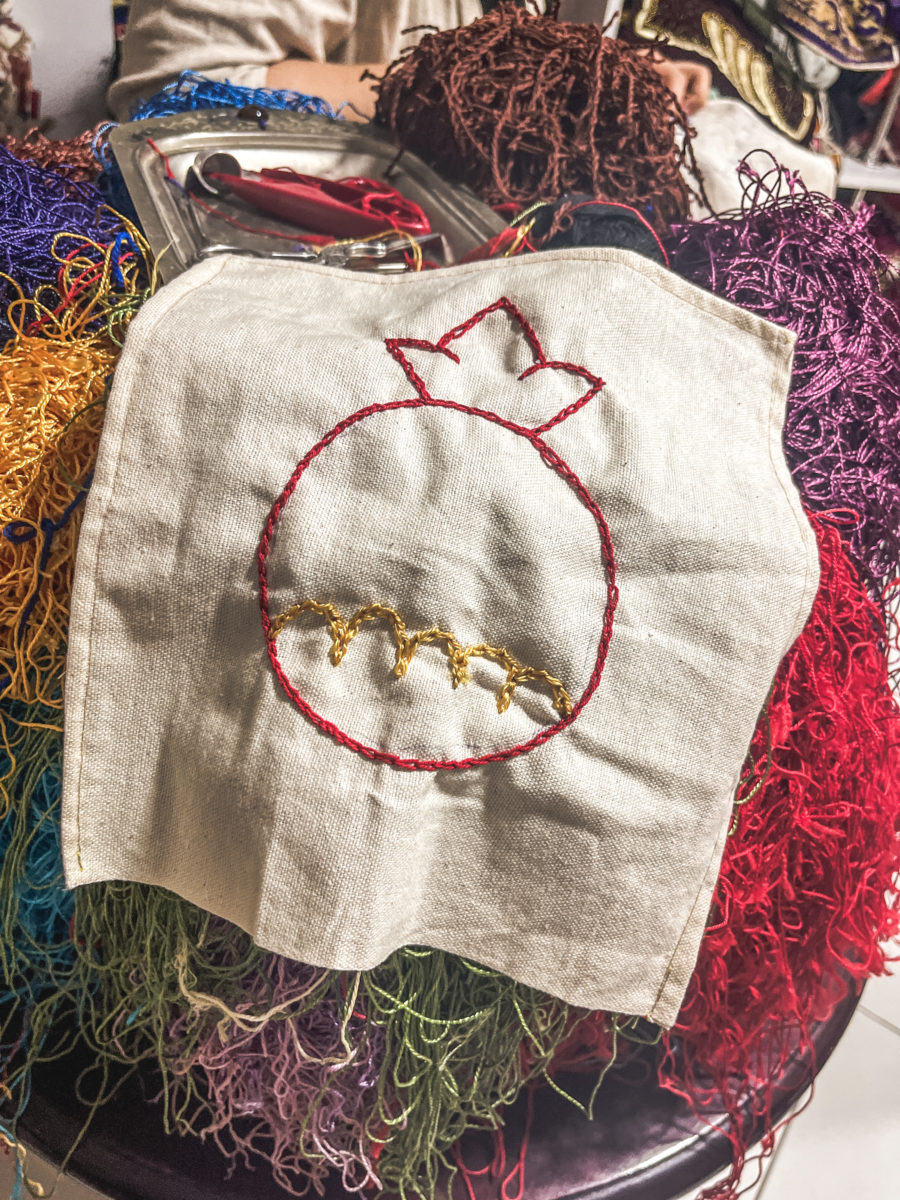
We attended this masterclass at the Suzani Gallery and Workshop for a cost of $15 per person. The workshop is normally scheduled for one hour, but we ended up spending well over two hours creating our little masterpiece.
A Welcome Break at Magic House
The trip took place in the height of summer, under an intense and relentless heat. After hours spent wandering through cobbled streets and historic monuments, we found our refuge: the Magic House.
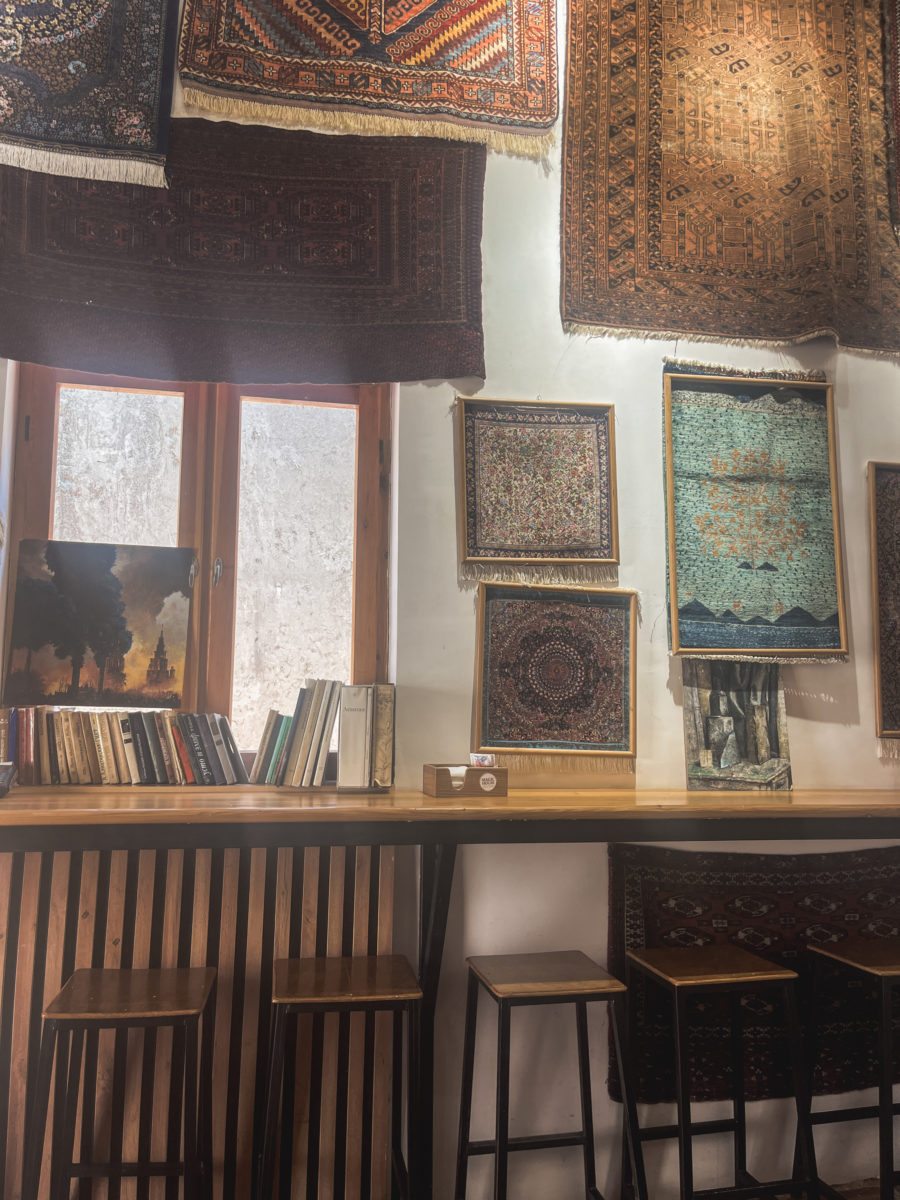
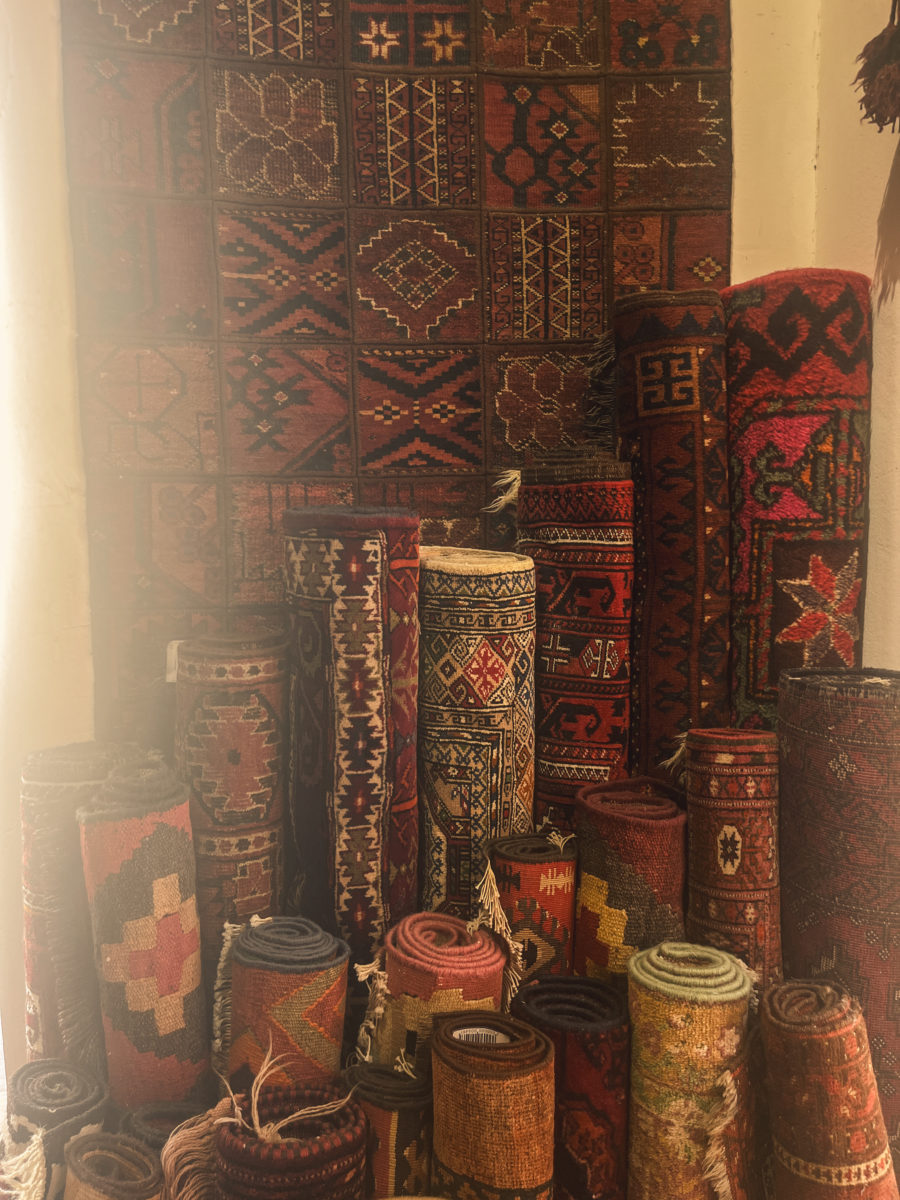
This place quickly became our favourite hideaway. Located next to a carpet shop, it offered the perfect respite: a chance to cool down, recharge our batteries, and escape the oppressive heat for a while. Surrounded by brightly coloured carpets, we found ourselves enveloped by a soothing sense of calm and serenity.
My Thoughts on Bukhara
Although Bukhara was not my favourite destination in Uzbekistan, I recognize that it possesses a unique identity. Where Samarkand dazzles with the grandeur of its monuments and Khiva resembles an open-air museum, Bukhara tells above all the story of trade and exchange.
It is a city that instantly evokes caravans, negotiations in bustling bazaars, merchants arriving from distant lands, and artisans preserving ancestral traditions. In my eyes, it is the most faithful embodiment of the Silk Road.
Three full days felt slightly excessive, but I do not regret including Bukhara in my itinerary. Beyond its monuments and attractions, the city helps one understand what made this region prosperous for centuries: trade, craftsmanship, and encounters between peoples. And that, perhaps, is what makes it so charming.