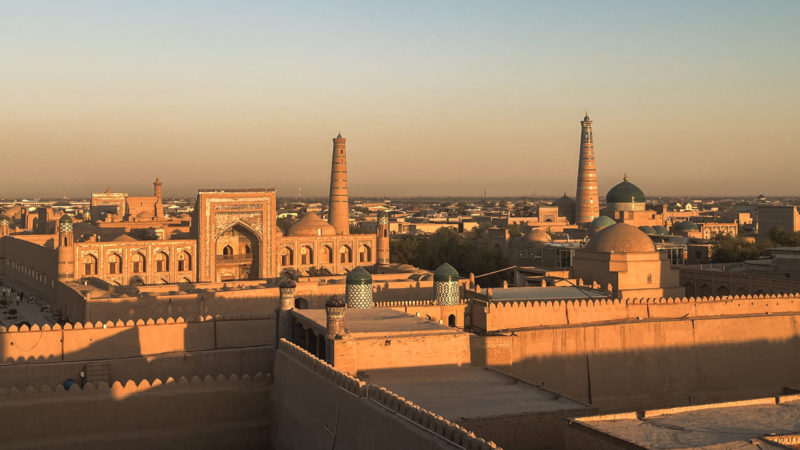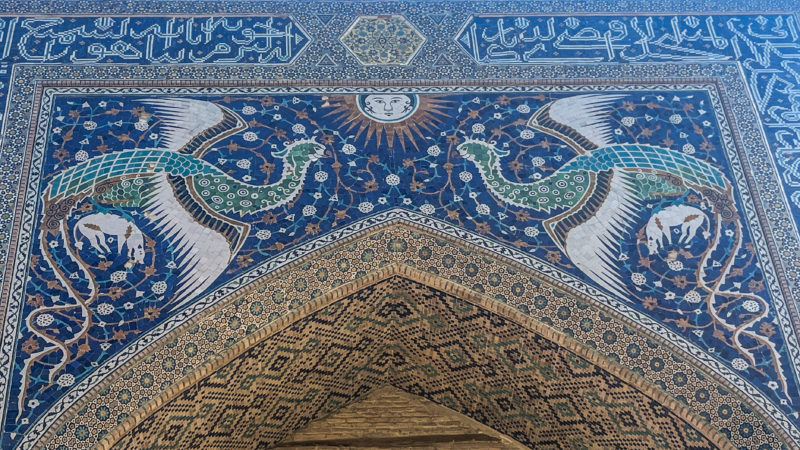
Of all the cities we discovered during our trip to Uzbekistan, Khiva was our true favorite. In our minds, Samarkand and Bukhara stood out as the must-see stops on any trip to Uzbekistan, while Khiva remained far less talked about. Yet the moment we passed through the walls of Itchan Kala, the fortified old city, we realized that this place was something special, different from anywhere else we had visited.
We spent three days wandering through its ochre-colored streets, admiring its turquoise-tiled minarets, and enjoying its unique atmosphere. More than a museum city, Khiva truly feels like traveling several centuries back in time. For us, it is simply the most authentic (and least touristy) of Uzbekistan’s Silk Road cities.
When planning a trip to Uzbekistan, most people immediately think of Samarkand, Bukhara, or Khiva. Tashkent, the country’s capital, is often seen as little more than a gateway before boarding the train to the historic Silk Road cities. That would be a mistake.
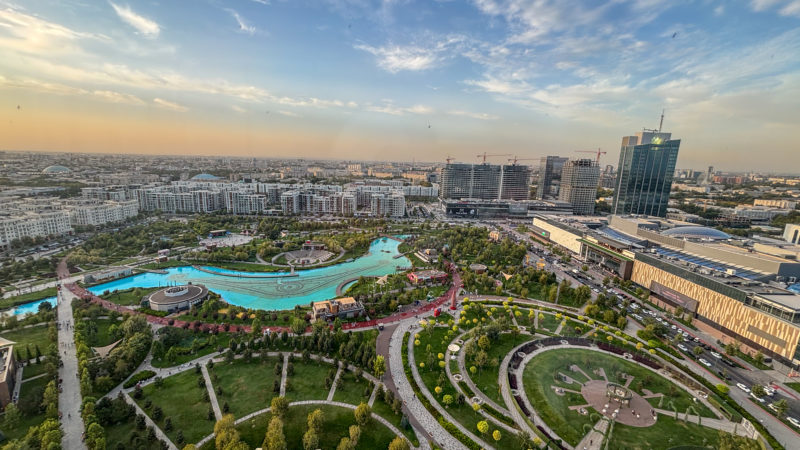
With its wide Soviet-era boulevards, spectacular metro stations, bustling bazaars, and ultra-modern districts, Tashkent offers a completely different perspective on Uzbekistan. It is a city of contrasts, where history exists side by side with bold modernity.
We spent our very first day in Uzbekistan here, and it introduced us to an entirely different side of the country.
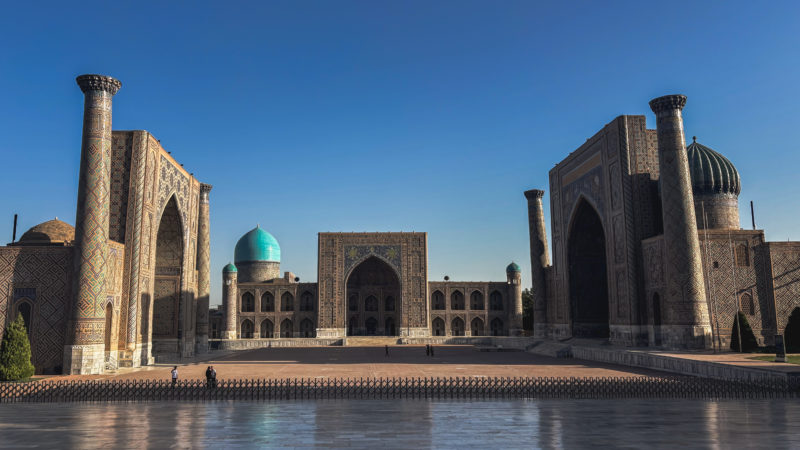
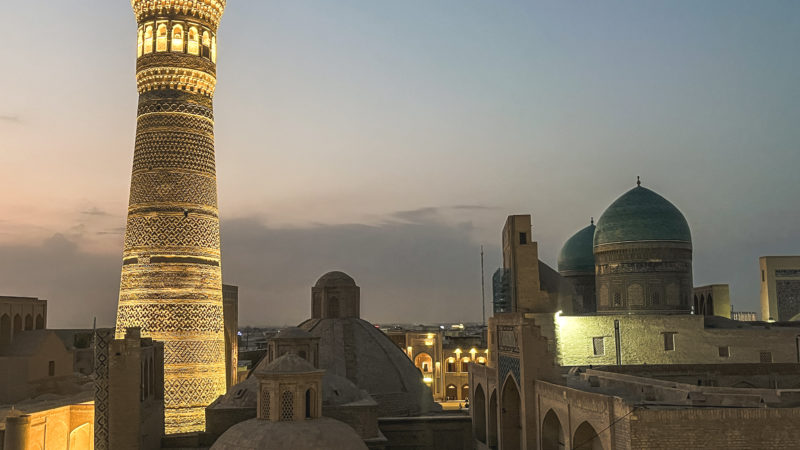
Getting lost in a maze of blue domes, hearing the echo of caravans on sun-warmed stones, sipping hot tea in a shaded courtyard, and letting the golden dust of the desert cling to your shoes. Uzbekistan has that rare gift: it slows you down and reignites your curiosity. There, history is written on façades, light turns ceramics into jewels, and every public square becomes a stage where centuries pass by.
For fifteen days, we moved between brick citadels, Timurid splendor, and trains swallowing the landscape. Like any well-prepared traveler, my friend and I balanced moments of awe with practical considerations, such as tickets secured, cash on hand, insurance checked, so the magic could unfold without unpleasant surprises.
As the destination becomes increasingly popular, tourism is growing fast. Yet guidebooks are still scarce, which is precisely why this article exists.
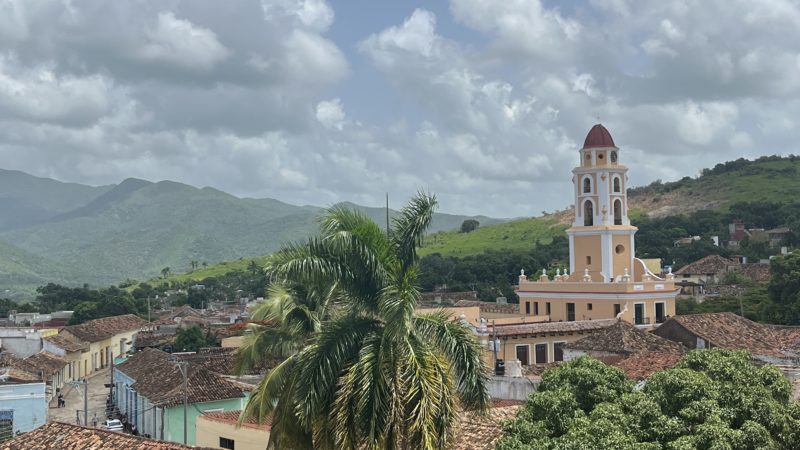
Reconnect with the essentials, let nature soothe your soul, listen to the sea whisper through the breeze, and sometimes, drink too many cocktails (after all, all roads lead to rum, right?).
Dance, reveal yourself, let go… The warmth of Cuba embraced me like a hug. Here, time stands still, and music is not just a sound: it’s the heartbeat that makes the island vibrate.
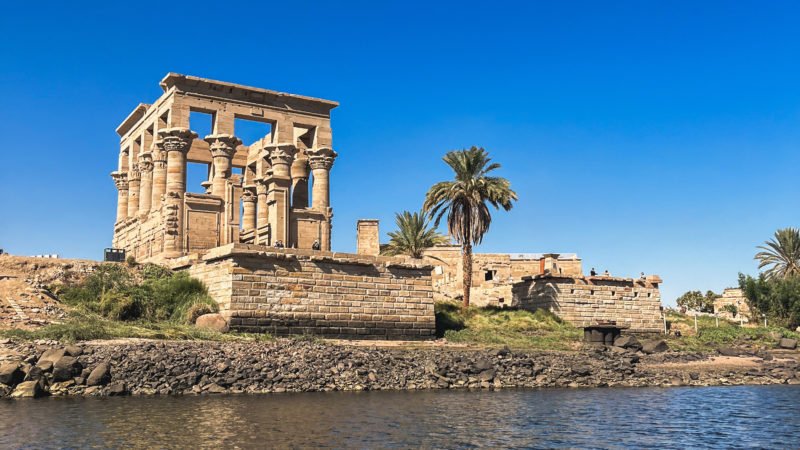
Settled in Luxor for the continuation of our Egyptian adventures, I was itching to go further, towards Aswan, to push the exploration to two jewels of ancient Egypt: Abu Simbel and the Temple of Philae.
But time was not on our side: only one day to make the round trip to Aswan from Luxor. Thus, we faced some tough decisions. We had to bid farewell to the stunning Nubian villages and, with a heavy heart, Abu Simbel, which was too far for our tight schedule. But we’ll return someday!
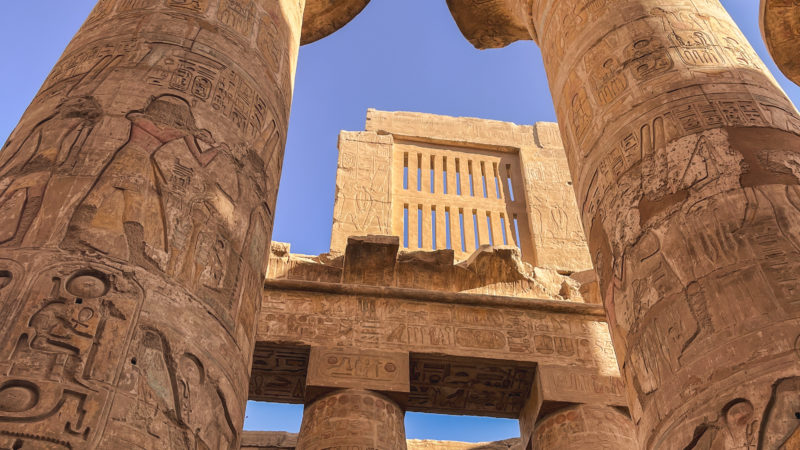
After wandering through the marvels of the West Bank, the next day we set our sights on Luxor’s East Bank. A different face of the city unfolded before us; bustling, vibrant, and undeniably chaotic, yet every bit as rich in history.
There, between blaring tuk-tuks and the pulse of city life, the ancient remnants of temples still rise – monumental structures that have withstood the passing of millennia. It was another kind of immersion into ancient Egypt, right under the open sky.
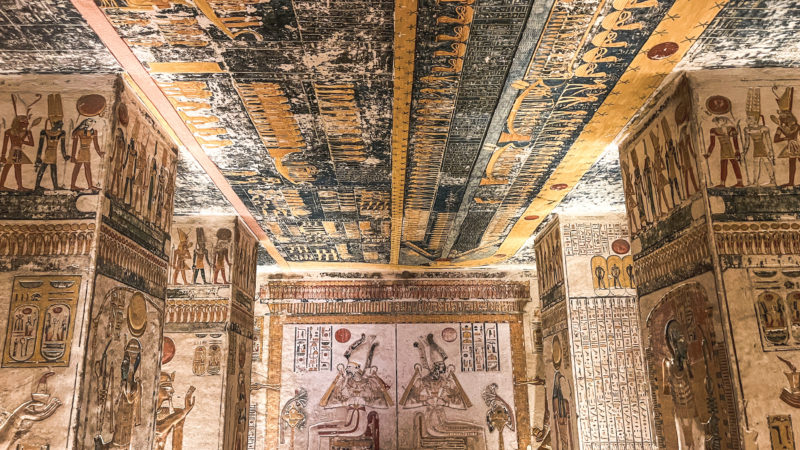
My Egyptian journey continued to Luxor, a city that, for me, is the true heart of Ancient Egypt. In a brief introduction to Luxor, I explained the symbolic duality of the city, between east and west and life and death. To the east, we have light, life, and rituals. But today, we focus on the west bank, the dark side, where mysteries and eternity blend—the famous “side of death.”
Luxor, formerly known as Thebes, is a city that embodies the historical heart of Ancient Egypt. Divided by the Nile into two distinct banks, it offers two complementary facets of this millennia-old civilization.
The East Bank, often called the “city of the living,” is home to the temples of Karnak and Luxor, places of worship and festivals dedicated to the gods. In contrast, the West Bank, nicknamed the “city of the dead,” is the realm of necropolises, featuring the famous Valley of the Kings and the Valley of the Queens, where pharaohs rest for eternity.
Moved, shaken, fascinated… I stand with deep emotion at the base of the Great Pyramid of Khufu, the oldest of the Seven Wonders of the Ancient World. The warm desert wind brushes against my skin, but the silent majesty of this pyramid fills my thoughts. How were such architectural feats accomplished with the tools of their time?
This question lingers in my mind throughout my visit—a mystery I do not claim to solve definitively. But one thing is certain: the pyramids, with their colossal stone blocks and almost supernatural precision, command immediate respect and profound humility.
“Man fears time, but time fears the pyramids.” – Arabic Proverb
After diving into the millennia-old history of Cairo, it was time to venture into the mysteries surrounding the pyramids. The second day of our journey took us on the trail of ancient civilizations to fascinating sites just a short distance from the capital.
Saqqara: The First Pyramid in History
Our first stop of the day was Saqqara, an essential archaeological site home to the famous Step Pyramid of Djoser. This pyramid, one of the oldest and most iconic in Egypt, marked a turning point in funerary architecture. Built-in the 3rd millennium BCE, it paved the way for the great pyramids we know today. The structure was designed by Imhotep, a well-known figure in popular culture. In reality, Imhotep was a man of many talents—vizier, physician, architect, and much more—under King Djoser’s reign.
We were standing in the presence of history: each stone seemed to whisper secrets of antiquity. Admittedly, it wasn’t our guide’s faint murmurs (I’ve mentioned him here) that would reveal the pyramids’ mysteries. For this day, our imagination and a few explanatory signs served us well.
Walking around the site, the feeling of being before an ancient yet strikingly modern architectural feat was overwhelming. It left us in awe of the builders’ ingenuity, making us feel small in comparison to these imposing structures.
Dahshur: Pyramids and Transitions
A few kilometres from Saqqara lies Dahshur, a lesser-known site that nonetheless holds even more fascinating surprises. Why? Because we had the chance to explore the inside of a pyramid and believe me, it was an unforgettable experience!
Picture this: descending backwards into the depths of a pyramid, then climbing back up (as the entrance is not at the base but mid-height) to find yourself in the very heart of the structure, surrounded by tons upon tons of stone blocks. Claustrophobic? Not quite… The most unsettling part wasn’t the heavy air, but the bats that happily accompanied us on our visit.
But really, who can say they’ve been at the centre of a pyramid? It was just… incredible!
Now, let’s move beyond our explorer tales. Dahshur is best known for two major structures: the Red Pyramid (the first smooth-sided pyramid) and the Bent Pyramid. The latter, unique for its shape, features two distinct inclines: the first, from the base to the midpoint, slopes at 58°, while the second, rising to the summit, inclines at 43°22′. This change in angle, which gives it such a peculiar appearance, is thought to result from a mid-construction adjustment to the original plan—a daring architectural experiment that didn’t fully succeed.
Dahshur is a key site in the evolution of pyramids. It showcases the first architectural experiments, transitioning from Saqqara’s Step Pyramid to the classic form we now associate with the Pyramids of Giza. It’s a genuine turning point in Egyptian architectural history, where the air seems infused with the energy of ancient attempts to defy time and space.
Memphis: The Ancient Capital of the Pharaohs
After exploring these appetizers of the Giza pyramids, we headed to Memphis, the ancient capital of Pharaonic Egypt. Today, this city is little more than an open-air museum, but its historical impact remains unparalleled. Strolling among the ruins of temples and colossal statues, you can immediately feel the grandeur of this city—a centre of power that once ruled the entire Nile Valley.
As the capital of Egypt throughout the Old Kingdom, Memphis retained its importance throughout Egyptian history. It was a major political and religious hub, where the god Ptah was particularly venerated and where pharaohs were crowned. During the Middle Kingdom, Memphis was nicknamed the “Balance of the Two Lands,” underscoring its central role between Upper and Lower Egypt.
During our visit, we admired the impressive statue of Ramses II. Its grandeur and majesty leave an unforgettable impression. We also discovered the alabaster Sphinx: carved from a single block, it stands 4 meters tall, 7 meters long, and weighs 80 tons. These features suggest it might have belonged to Queen Hatshepsut.
A Journey Through Time
Each stage of this day brought us closer to the mysteries of Egyptian civilization. Each pyramid, each ruin, and each relic told a story of ambition, the quest for eternity, and architectural ingenuity. The site of Saqqara, the pyramids of Dahshur, and the ruins of Memphis are open pages of history, where the past seems to stretch into infinity.
This second day helped us better understand the world view of the ancient Egyptians—a civilization already thinking of the afterlife with eternal monuments, and symbols of power meant to be indestructible. And even after millennia, the pyramids continue to defy time, reminding us that, ultimately, they have the final word.
As we left these sites, one certainty remained: Egypt does not easily reveal its secrets. You have to experience it, feel it, and every moment transports you to another world, where eternity is measured in stones and shadows.
What’s next? The Pyramids of Giza, of course. But that’s for the next day.