Between Christmas and New Year 2025, we left Paris to discover a corner of France I had not yet explored: Normandy. More precisely, a stretch of coastline that had long drawn me in, the famous Côte d’Albâtre (literally Alabaster Coast in English).
Between ever-changing skies and a sea sometimes blue, sometimes pearl-grey, the Côte d’Albâtre stretches for nearly 140 kilometers, from Le Tréport in Seine-Maritime to Le Havre, marking the natural boundary between land and the English Channel. This long ribbon of chalk cliffs, among the highest in Europe, rises in places to more than 100 meters.
Sculpted over millennia by erosion, the coast owes its name to the whiteness of its rock, reminiscent of alabaster. Yet beyond its spectacular landscapes, the Côte d’Albâtre is also a land of stories of harbors, fishermen, artists, and memory. Impressionist painters, writers, sailors, and soldiers have all left their mark here, making this shoreline a concentrated essence of Normandy: wild, luminous, and deeply shaped by the sea.
Here is the story of our journey and itinerary.
Day 1 – Reaching the Côte d’Albâtre: From Paris to Le Tréport
We leave Paris and head toward Rouen. Along the way, we discover a place my boyfriend had been eyeing for some time: La Roche-Guyon. True, we are not yet in Normandy, but the Seine guides us toward the region that bears its name: Seine-Maritime.
La Roche-Guyon
The first stop of our road trip toward the ACôte d’Albâtre: a tiny hamlet suspended in time. Here, white stone whispers centuries of history, while the road, still untouched by miles, already hints at salty winds, chalk cliffs, and the call of Normandy ahead.
Perched above a wide bend in the Seine, La Roche-Guyon stands like a stone sentinel. Its castle, literally carved into the rock, dominates the village, though it remains inaccessible to us, closed for winter. That is also part of traveling between Christmas and New Year: shuttered windows, silent shops, nearly deserted streets. Yet far from disappointing, this quiet gives the place an added charm. With only a few hundred inhabitants, the village seems frozen in time, nestled at the foot of the castle as if time itself had paused.
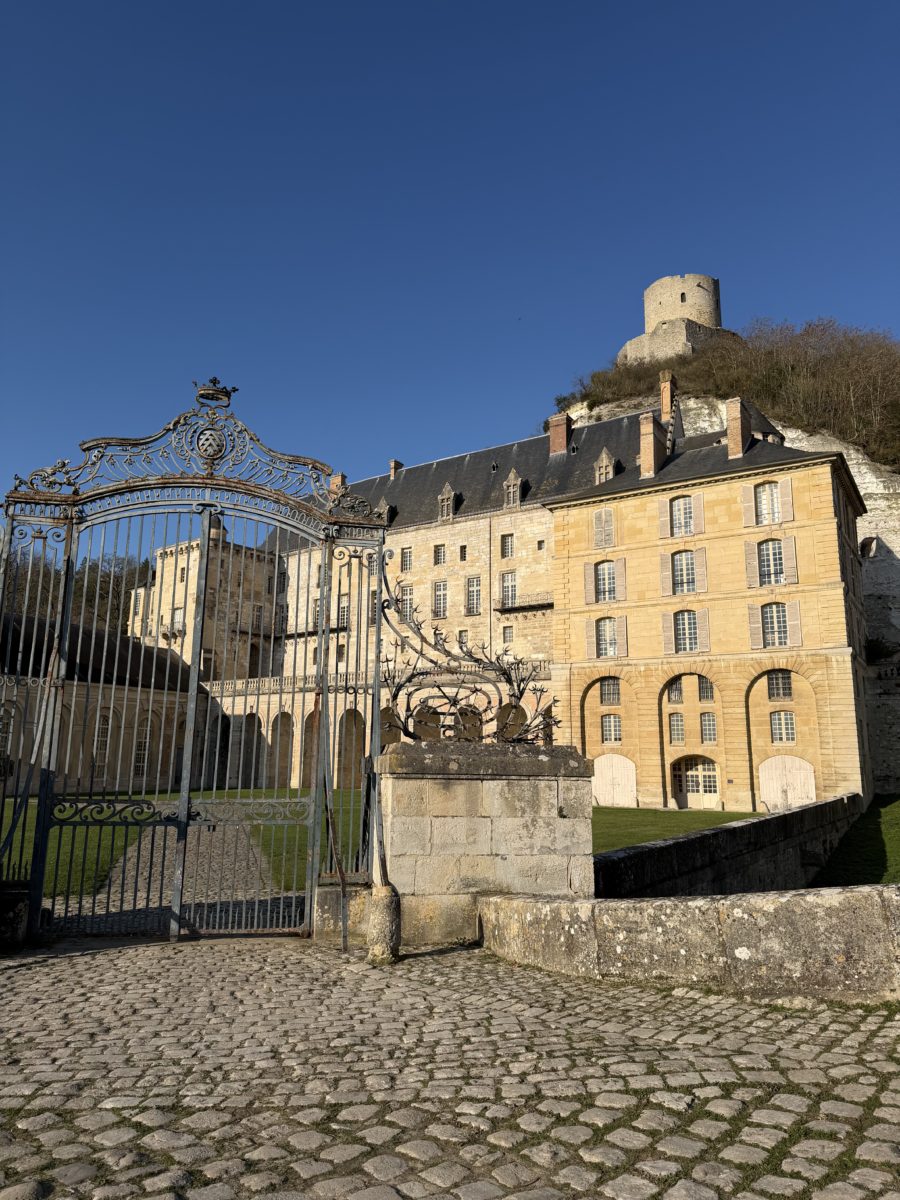
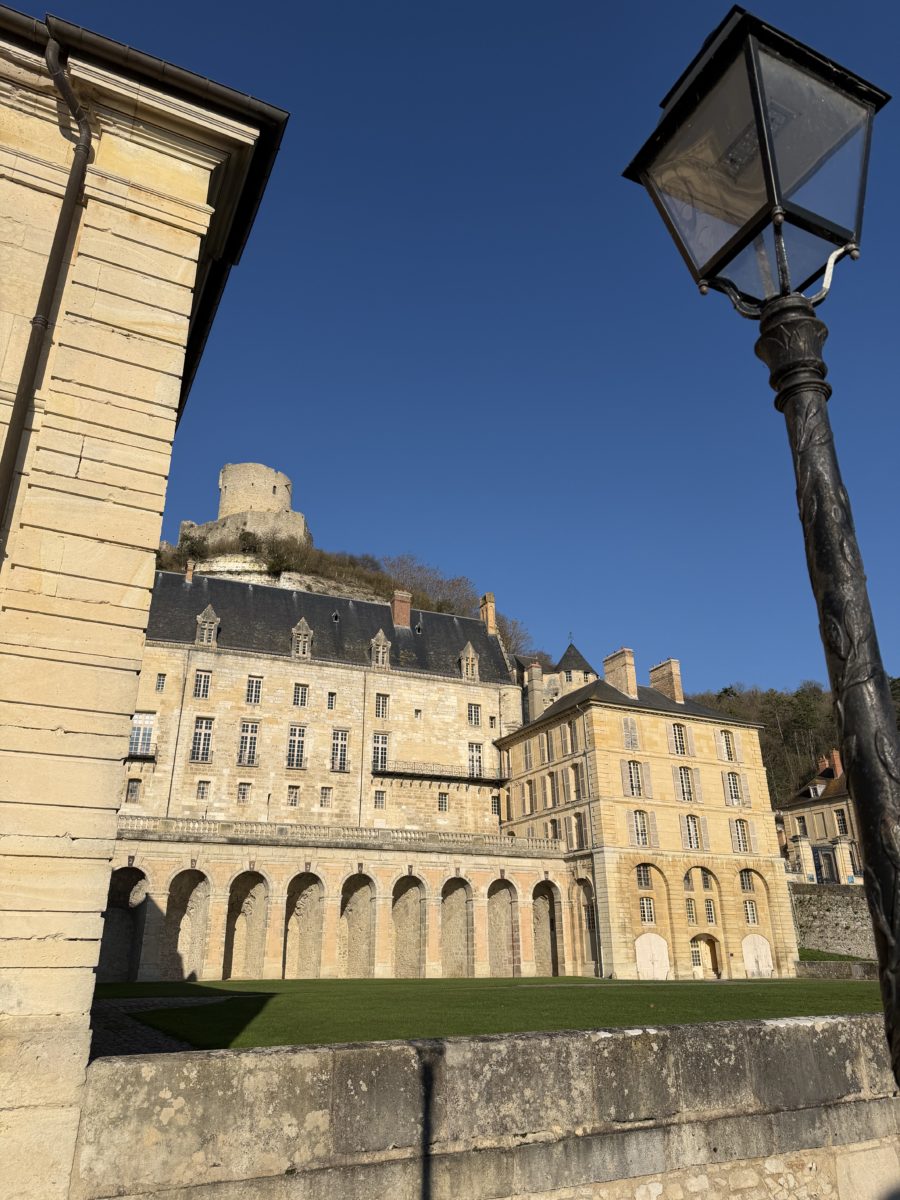
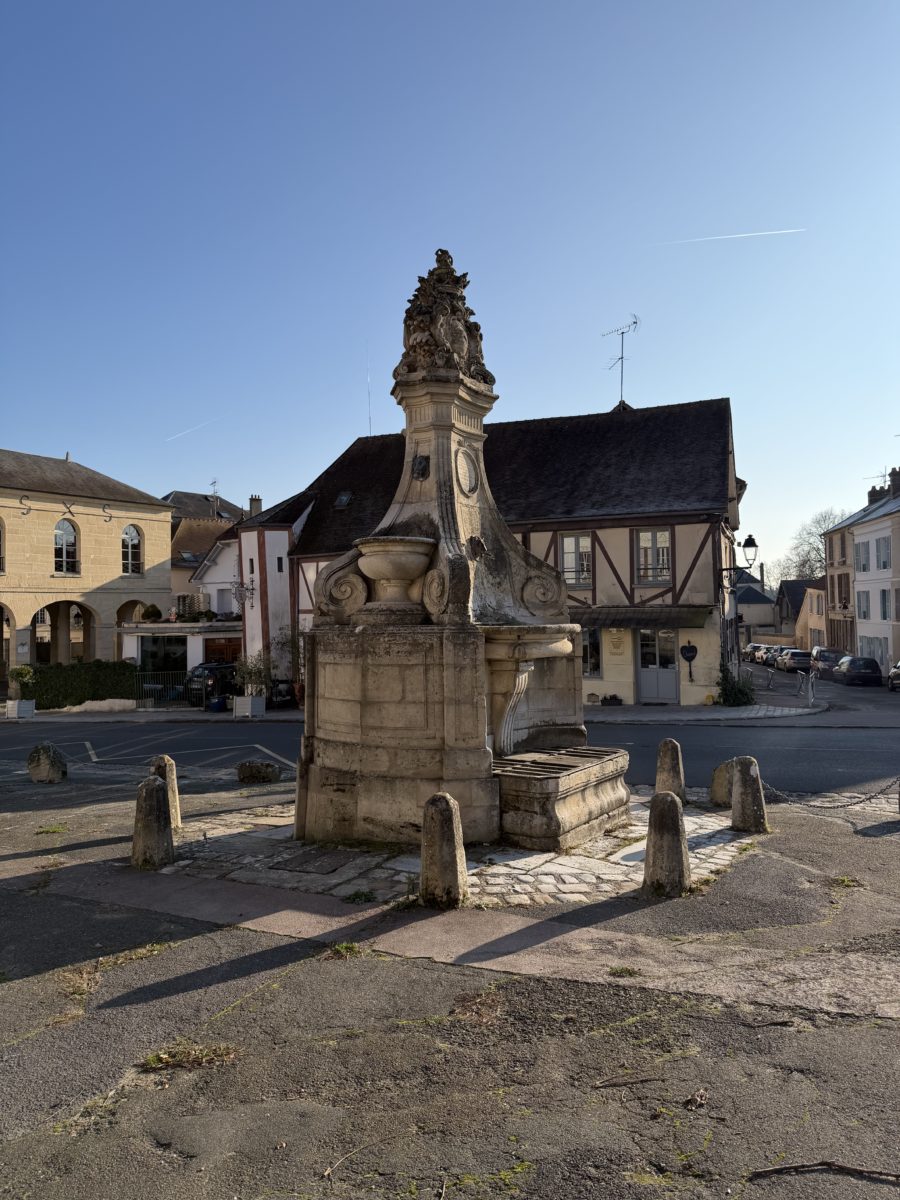
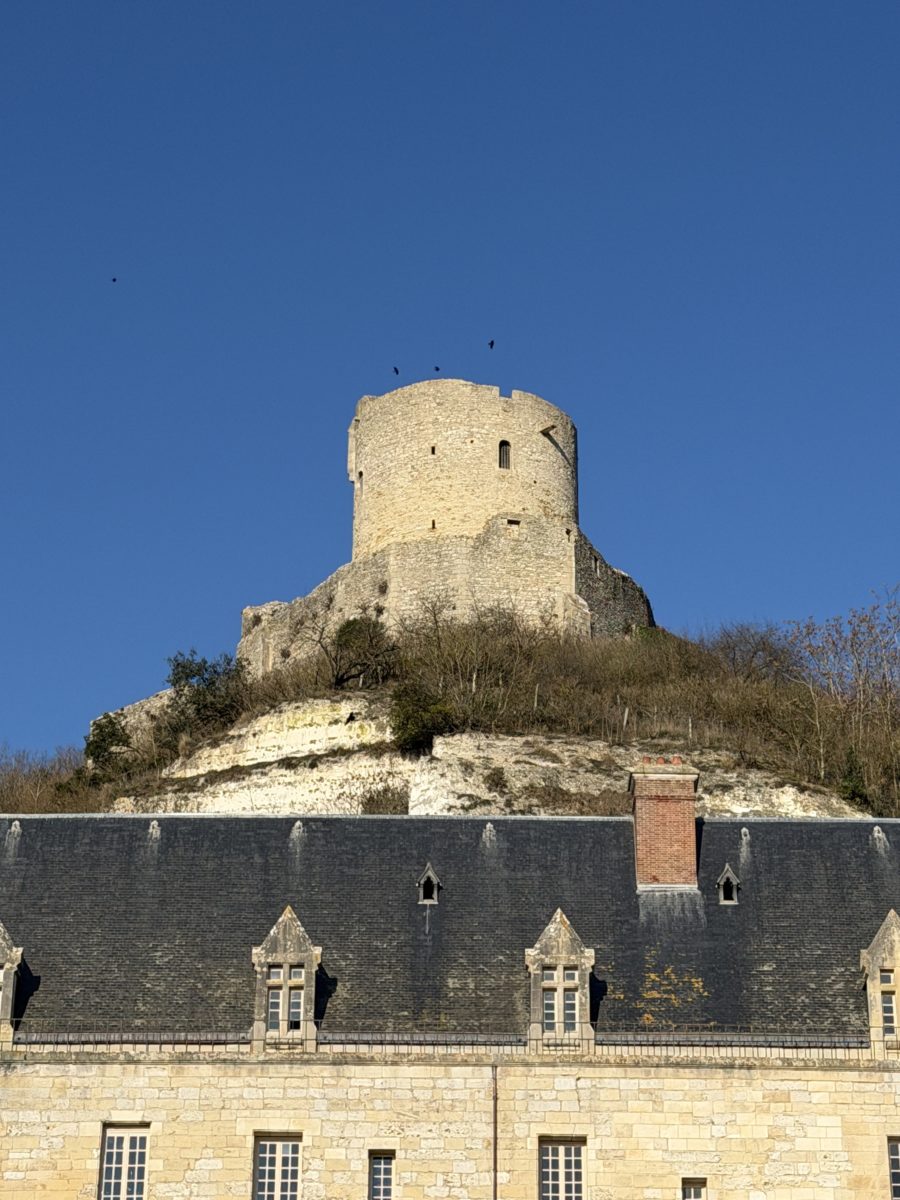
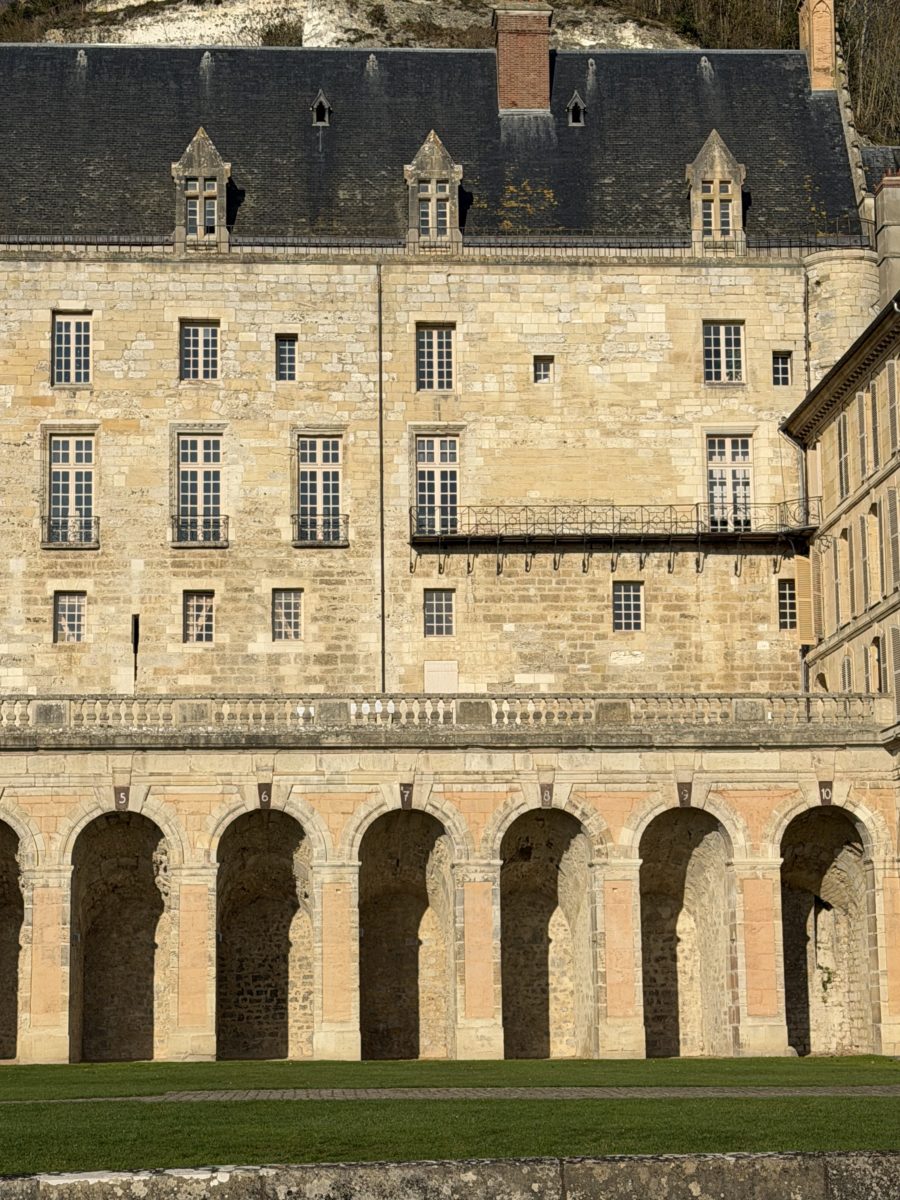
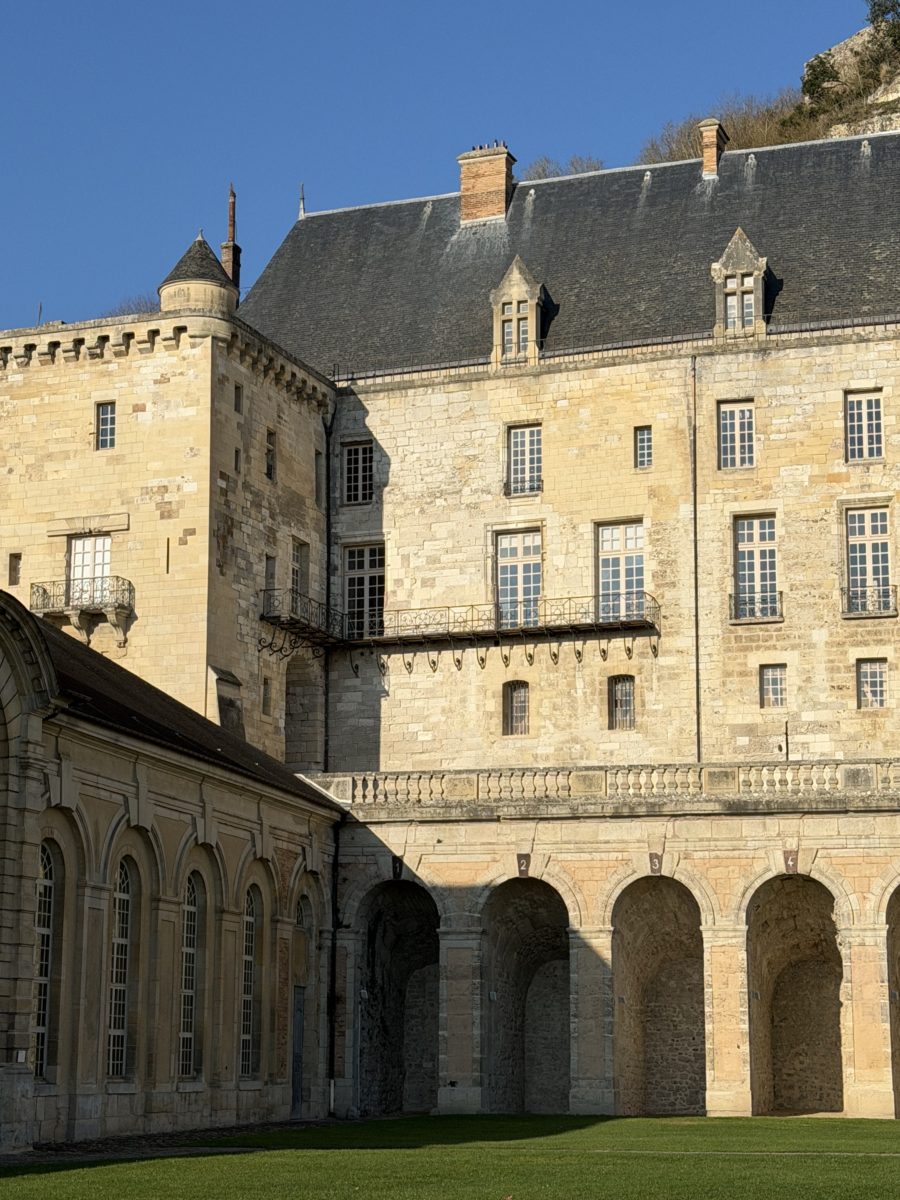
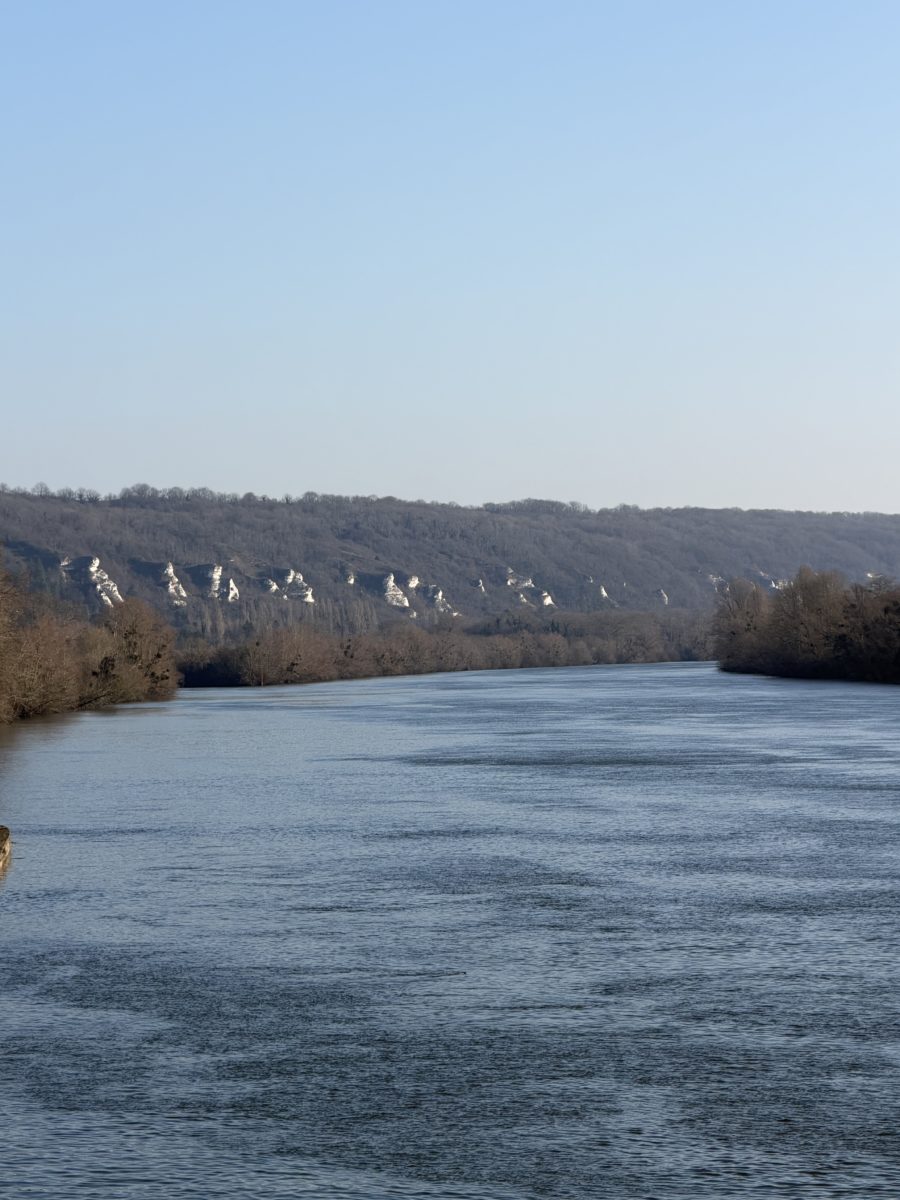
We stop for barely ten minutes, just long enough to enjoy an unexpected winter sun, grab a few pastries for the road, and savor the rare calm before getting back behind the wheel. Heading toward the first major Norman city on our itinerary: Rouen.
Rouen
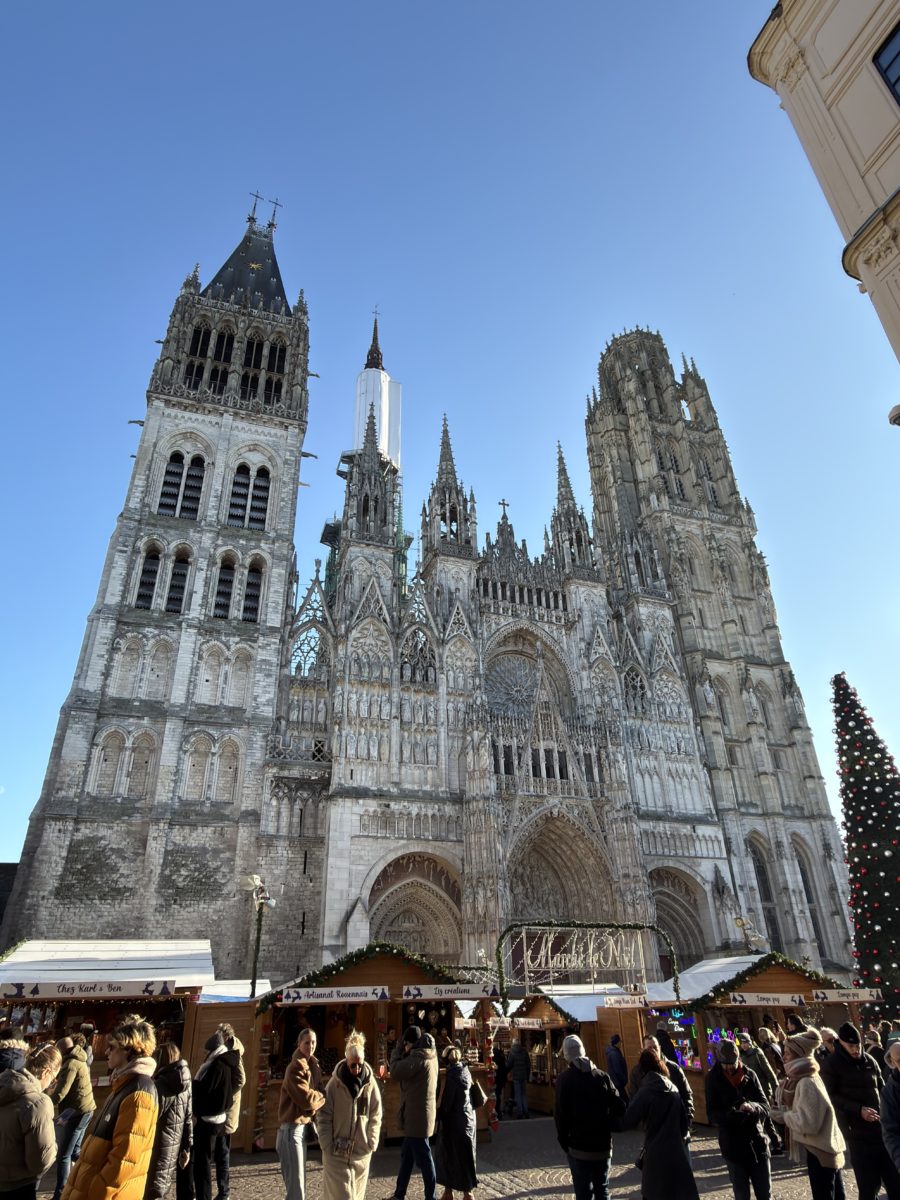
Rouen reveals itself in shadow and light, heavy with history and memory. In its cobbled streets lined with half-timbered houses, the past still murmurs, even amid the songs of the Christmas market. Beneath garlands and the scent of mulled wine, the city retains a gentle gravity, almost solemn. The shadow of Joan of Arc seems to linger over every square and façade. It was here that her fate was sealed, in the flames of history, making Rouen both a place of remembrance and grandeur.
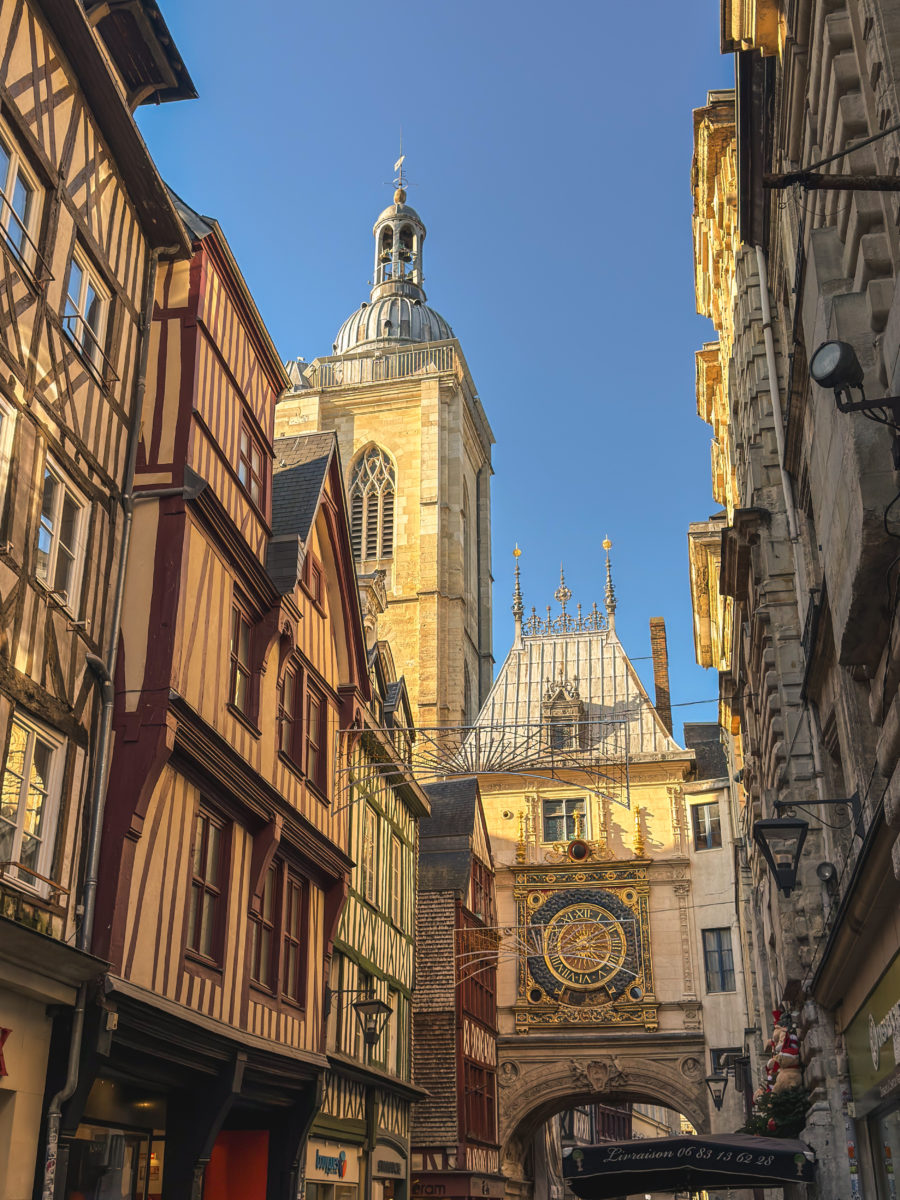
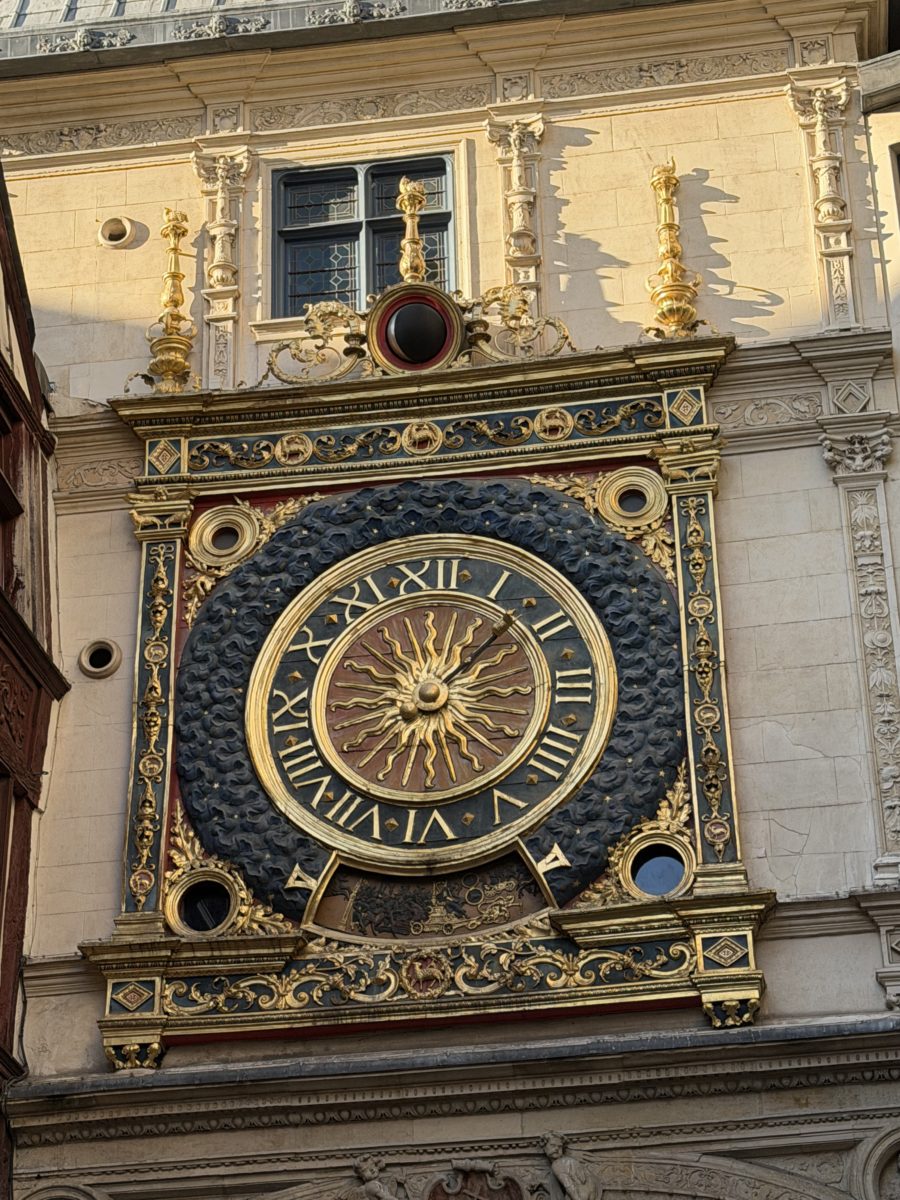
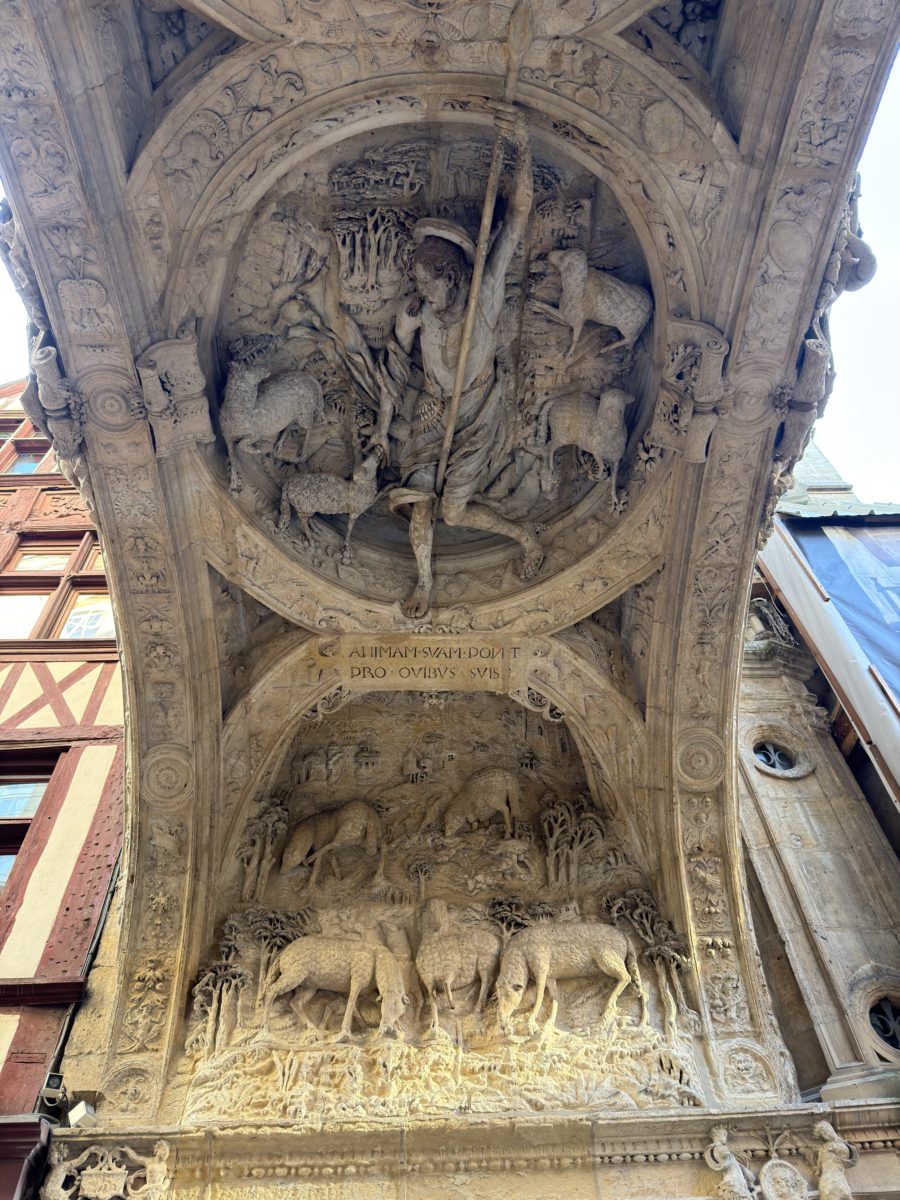
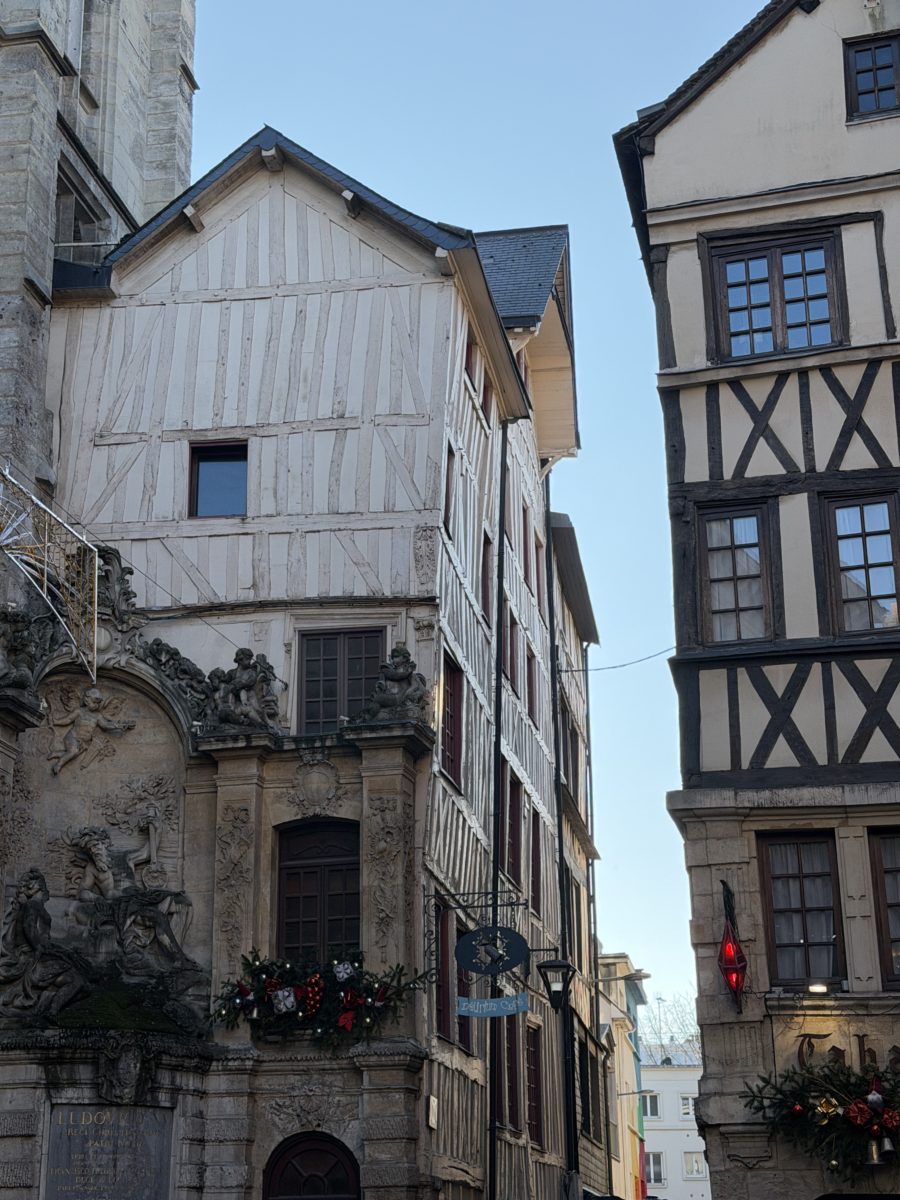
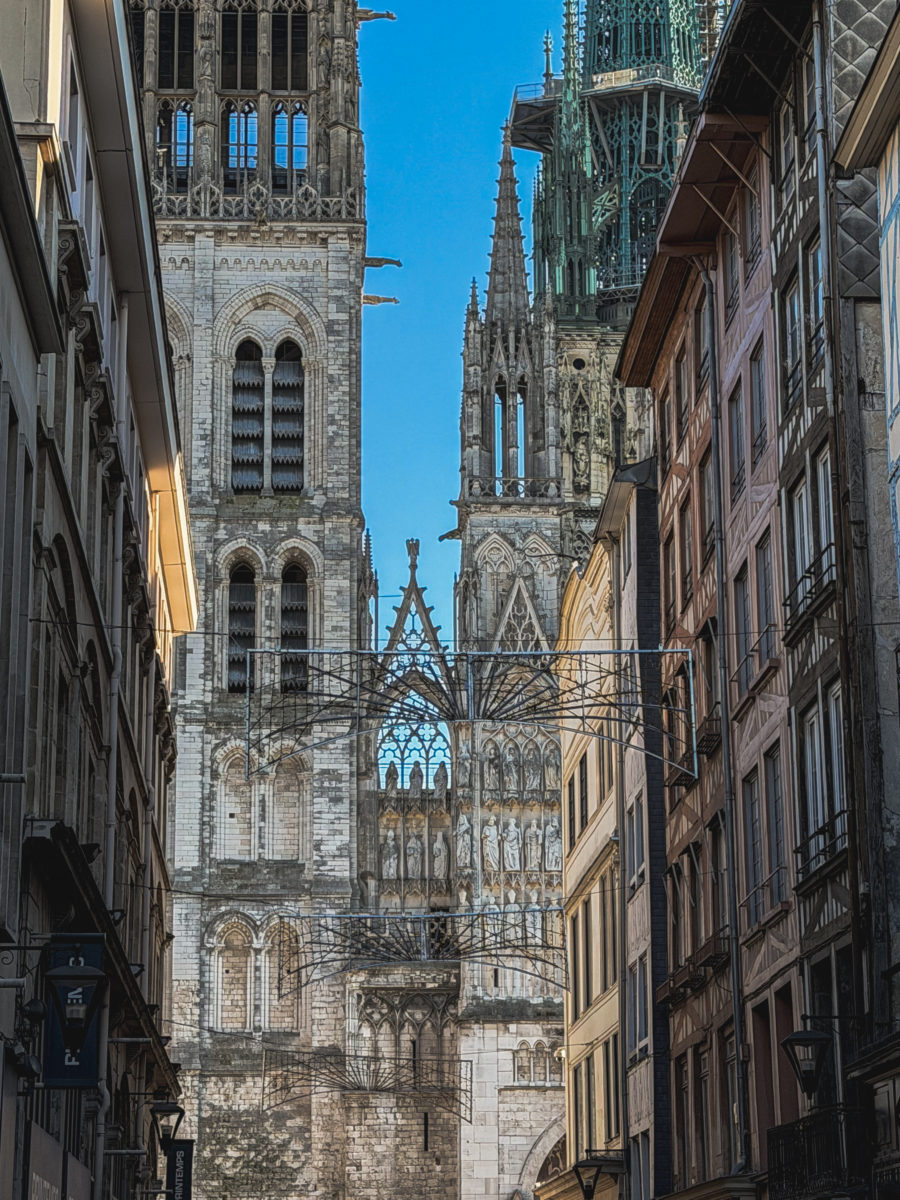
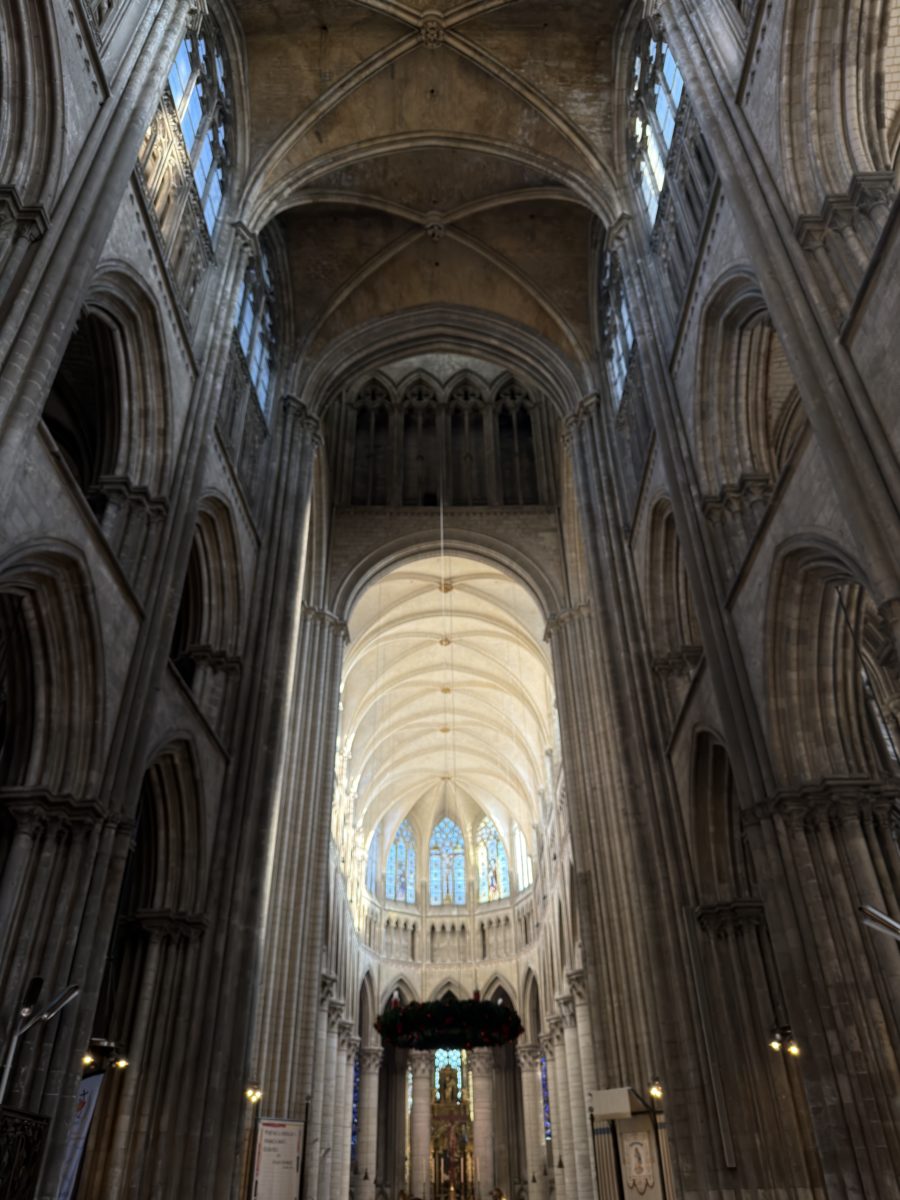
Dominated by the majestic Notre-Dame Cathedral, Rouen immediately asserts its vertical presence. Its stone façade, shifting with the light, feels strangely familiar: Claude Monet immortalized it in his famous Rouen Cathedral series, painting it at different hours of the day to capture its changing moods. Seeing it in person is like recognizing a painting brought to life, a tangible link between the city and art history.
Yet it is another place, more intimate and deeply symbolic, that captures my attention: the Place du Vieux-Marché. It was here that Joan of Arc was executed in 1431. Today, the Church of Saint Joan of Arc stands in her honor. Its modern architecture contrasts with the rest of the city but moves with its simplicity. The stained-glass windows, salvaged from the former Church of Saint Vincent, diffuse a soft, colorful light that feels almost soothing. The open, luminous layout invites quiet reflection without heaviness.
Le Tréport
After about two and a half hours on the road from Paris, we finally reach our destination for the day: Le Tréport. The turning point. Here, the Côte d’Albâtre begins.
By the time we arrive, night has gently fallen over the still-vibrant harbor. Despite the in-between holiday season, maritime life has not truly slowed. Dock lights reflect on the dark water, boats creak softly against the pontoons, and the sharp, damp sea air signals the open sea. Everything is calm yet alive.
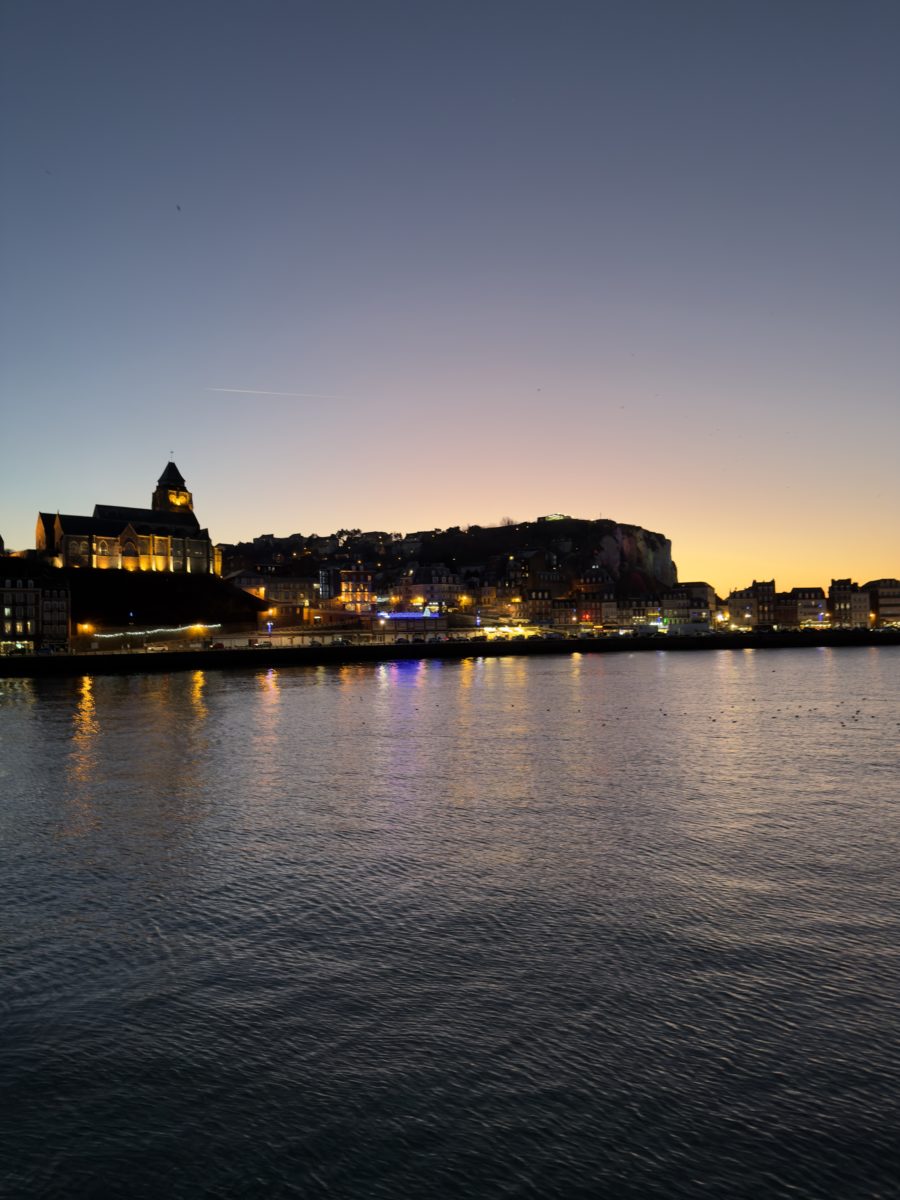
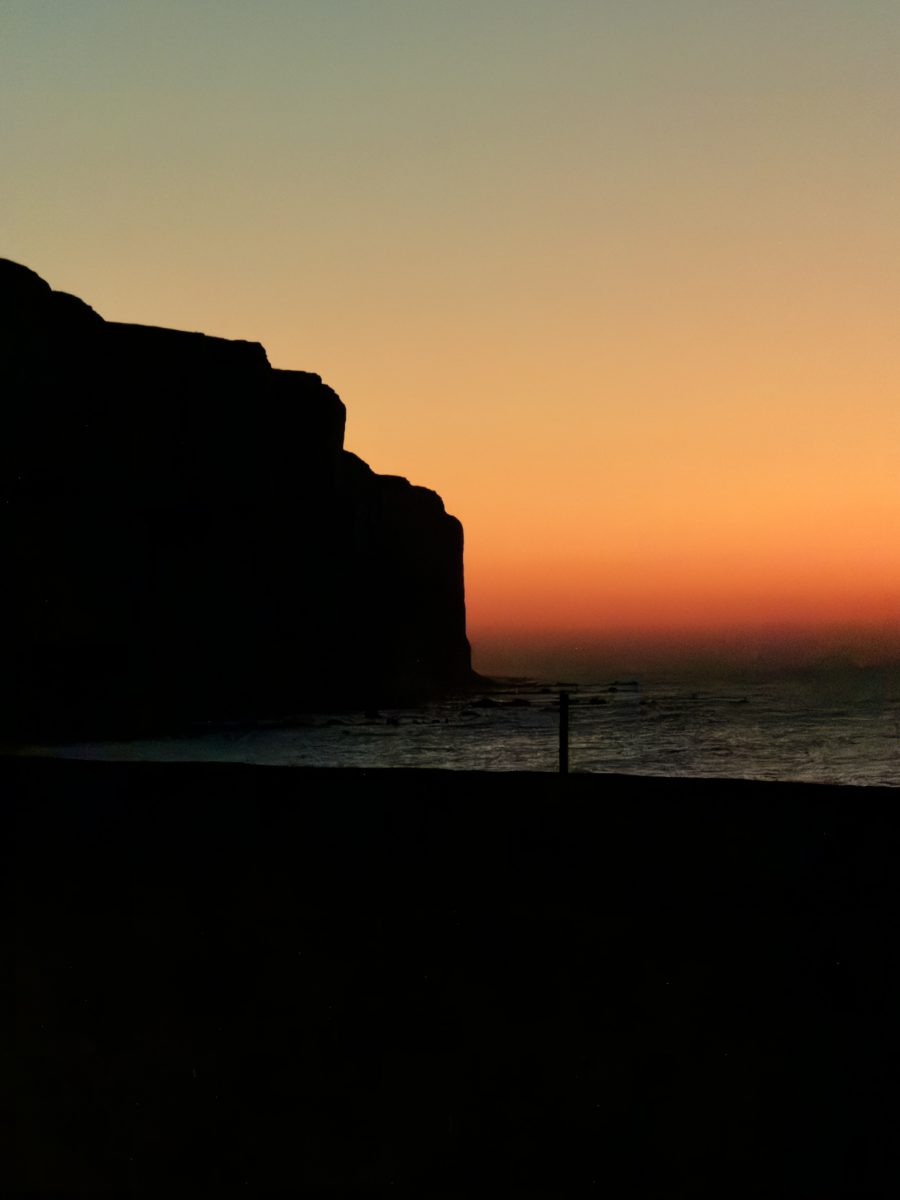
In the darkness, we sense more than we see. Beyond, the cliffs are present without revealing themselves. Massive, silent, almost intimidating, they wait for daylight. They do not show themselves yet, but we know they are there like a promise held in suspension. Tomorrow, at first light, they will reveal their white lines, and the Côte d’Albâtre will truly begin to tell its story.
Day 2 on the Côte d’Albâtre – From Le Tréport to Fécamp
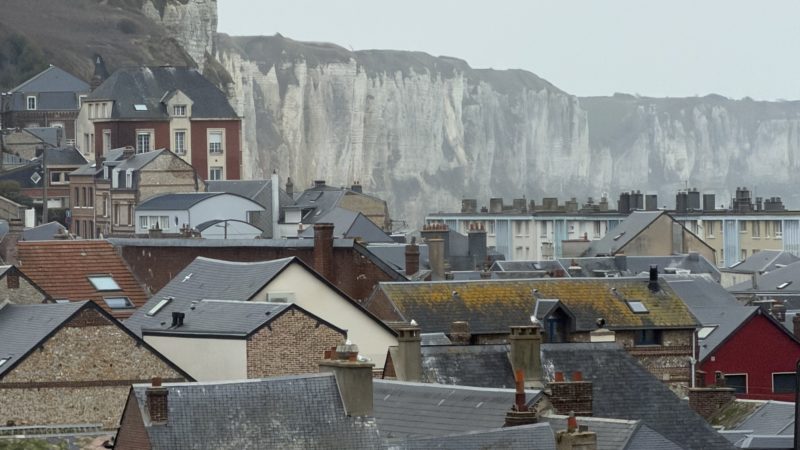
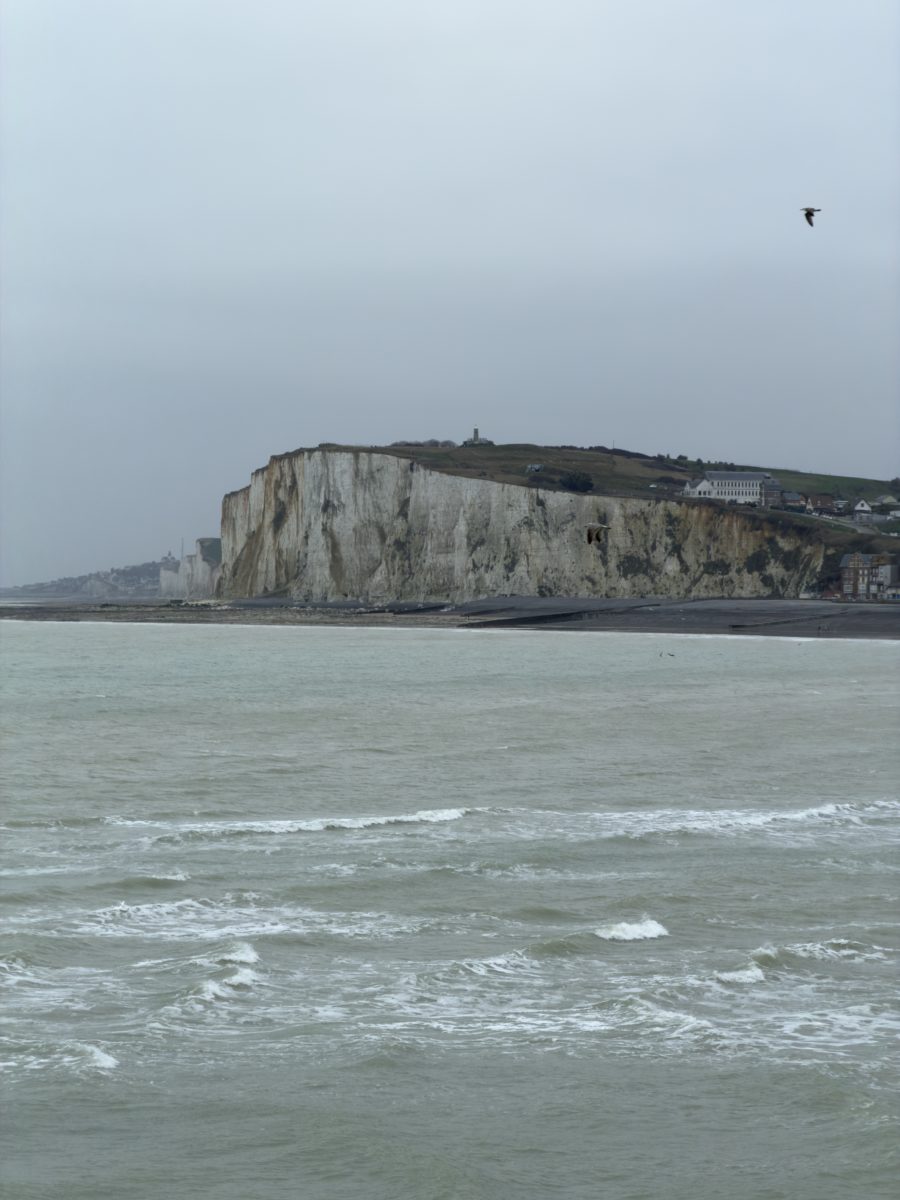
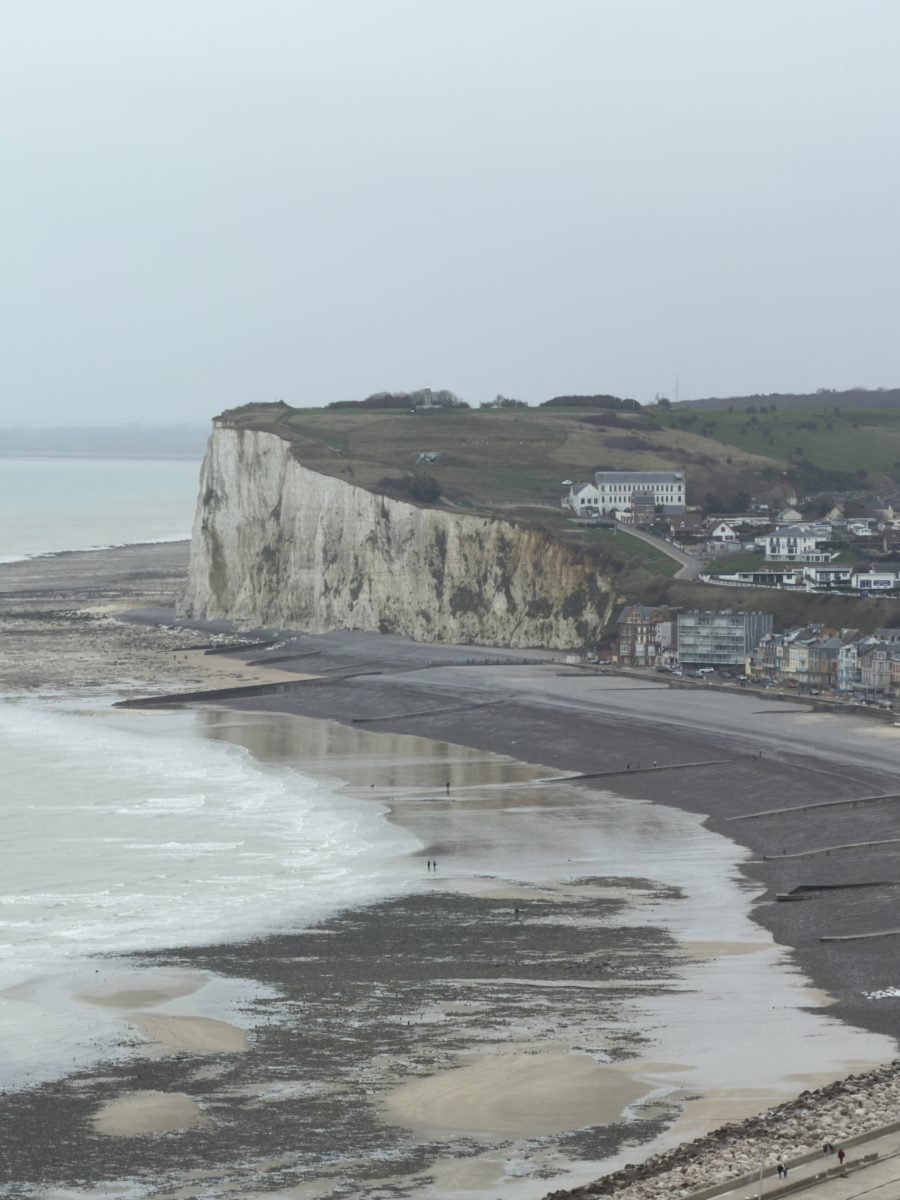
In the morning, Le Tréport finally reveals itself. And then, they appear. The cliffs. Wow. White, chalky, sometimes tinged with ochre, immense and almost unreal, they mark the beginning of the Côte d’Albâtre with quiet power. A spectacular introduction, raw and elegant at once. Impossible to look away. The journey truly begins.
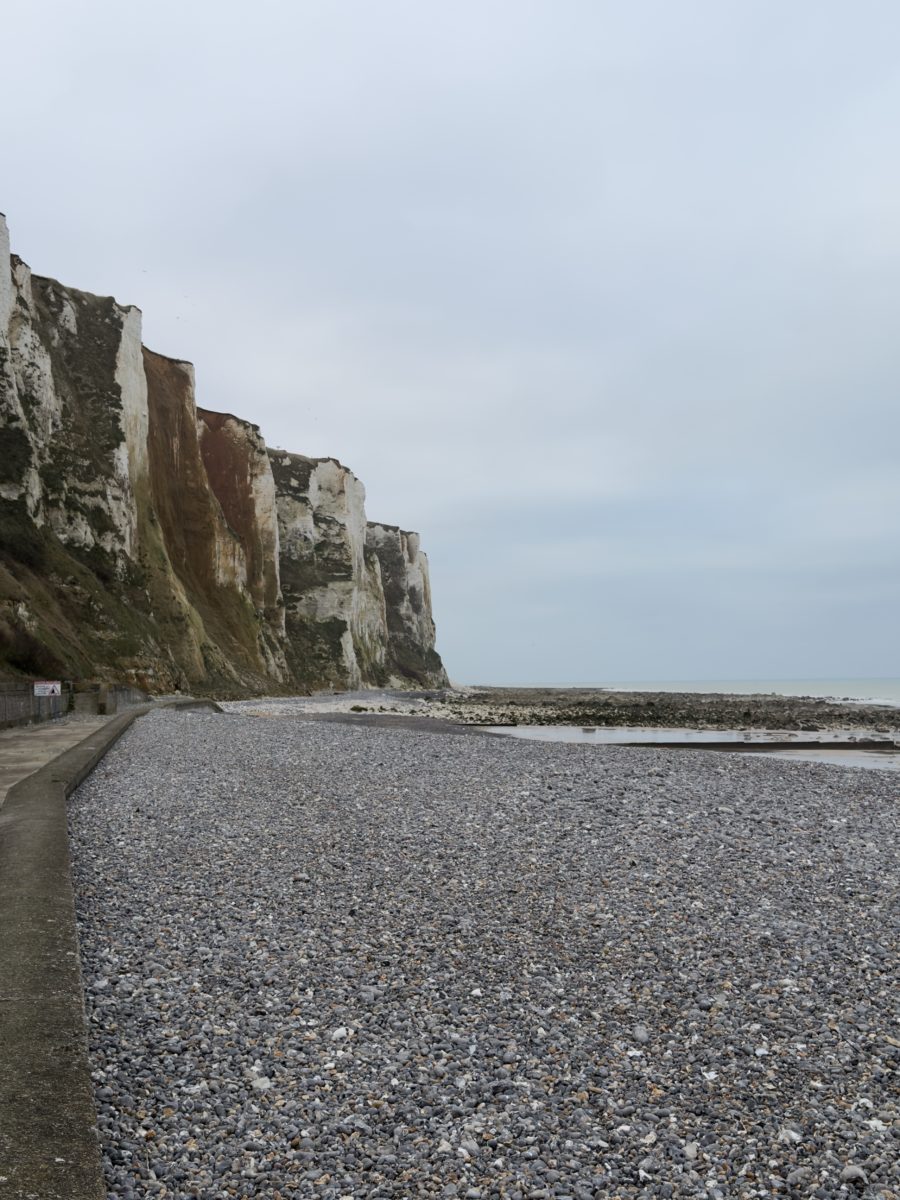
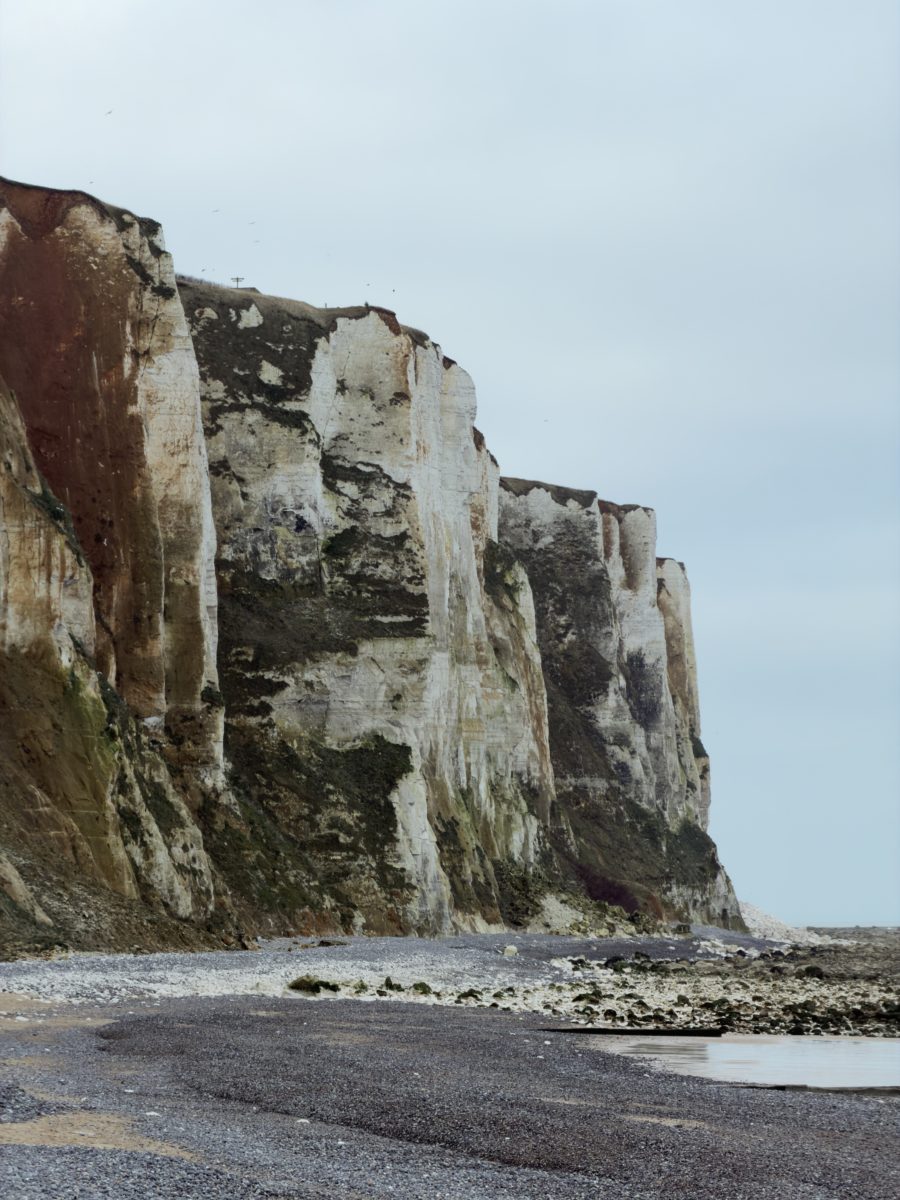
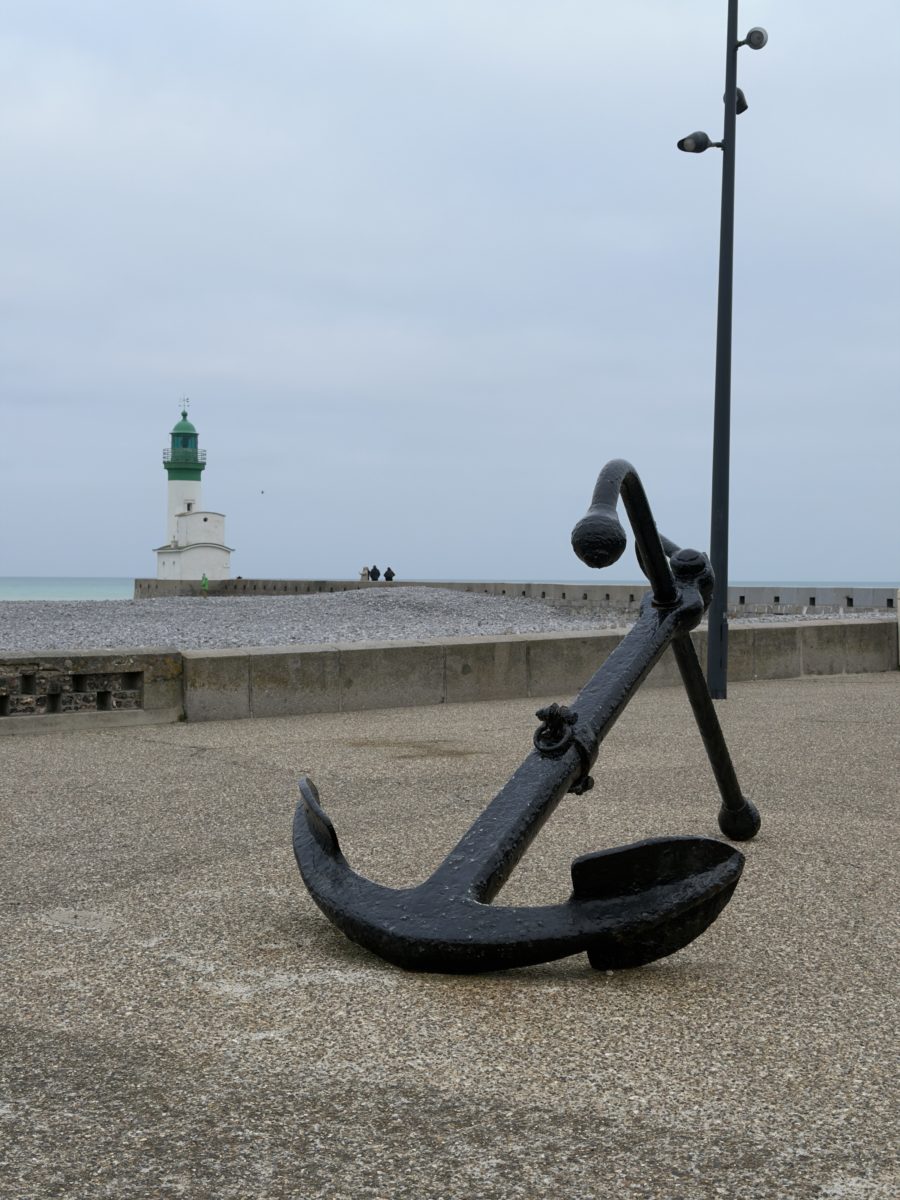
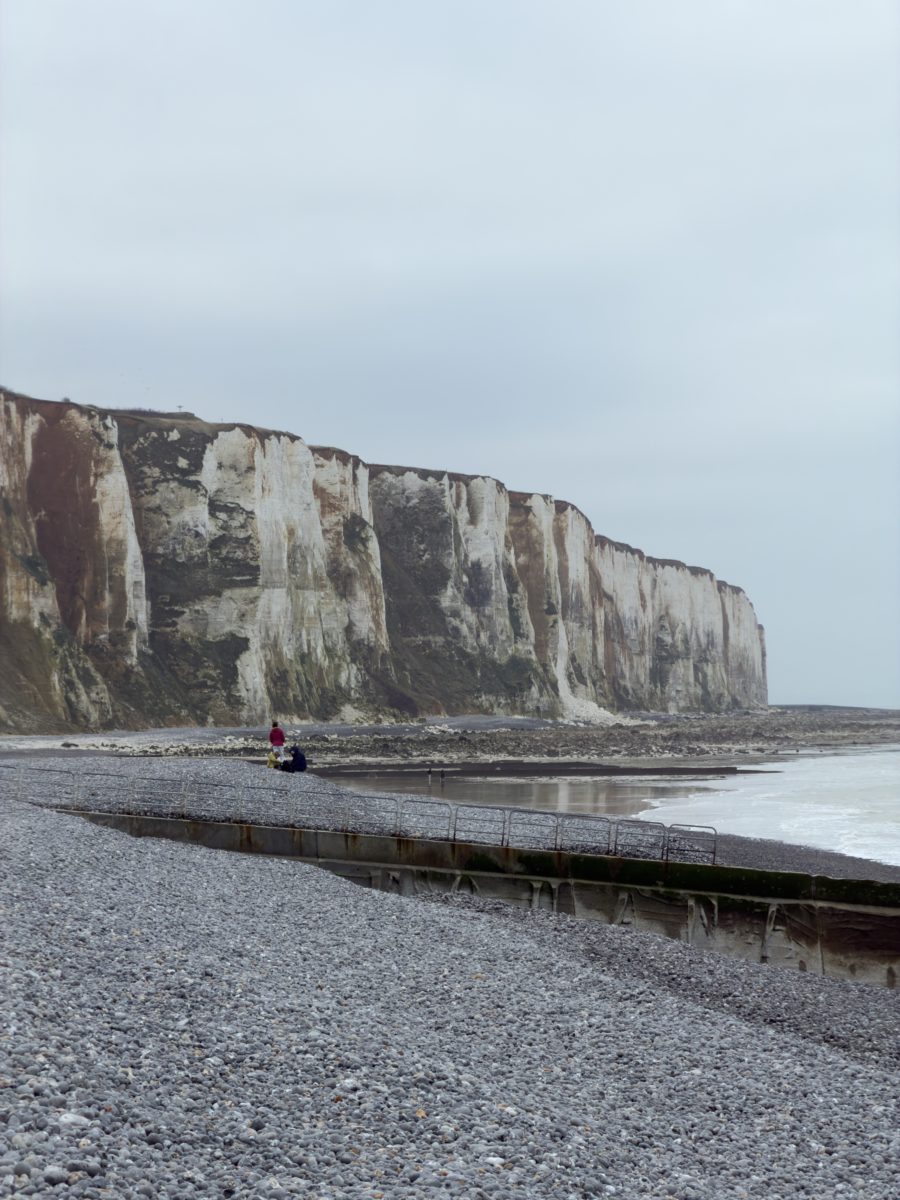
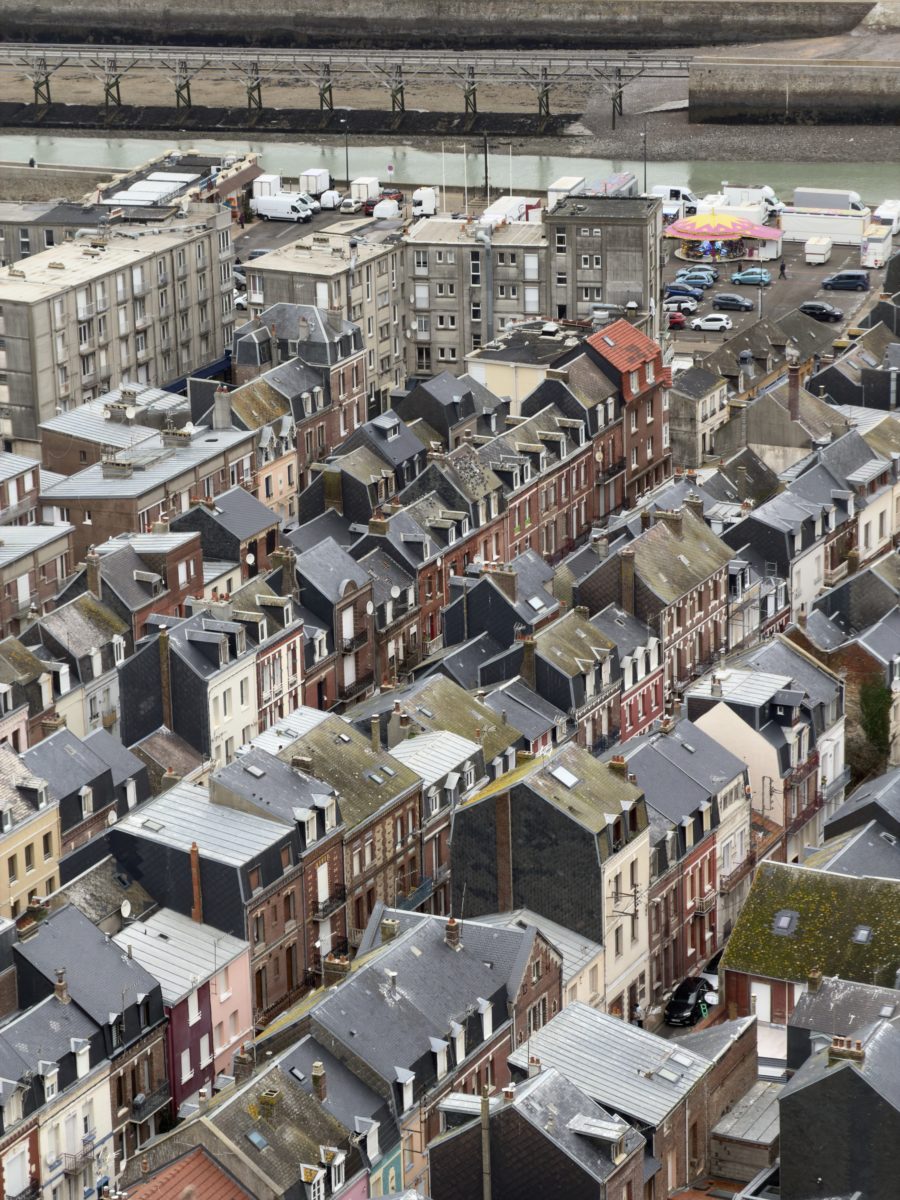
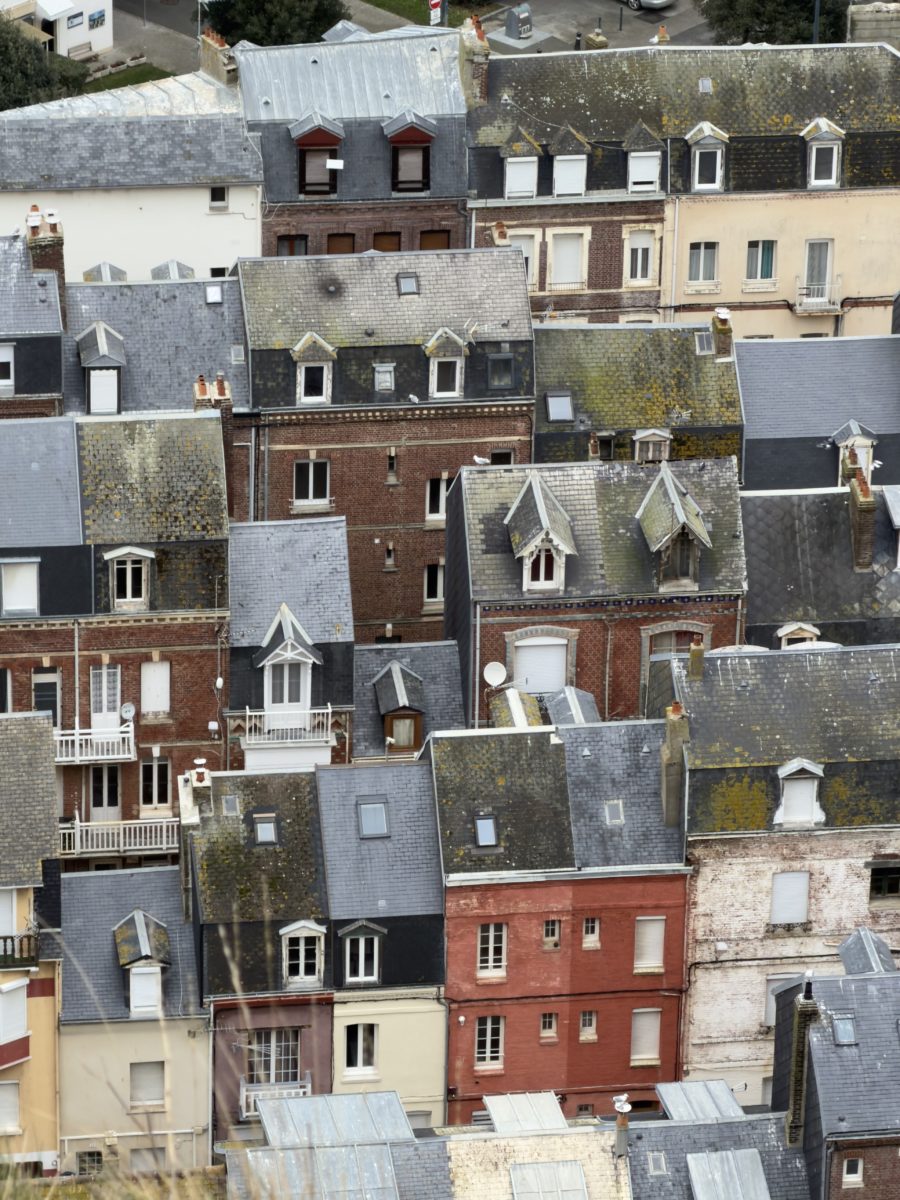
We drive up to the panoramic terrace (not on foot, nor by funicular, let’s not be ridiculous, it’s at least minus ten thousand degrees outside). From above, the view takes in everything: Le Tréport at our feet with its beautiful rooftops, Mers-les-Bains in the background, and even Eu off to the side. Tightly packed roofs, the pebble beach, the horizon stretching into the unknown.
And then the car sets off again, heading toward the next destination.
Dieppe
About thirty minutes later, a brief stop in Dieppe: barely ten minutes. Just enough time to be thoroughly windswept by a non-negotiable gust and to feel immediately the energy of a town turned toward the sea.
Dieppe reveals itself as a charming port town, animated by its harbor, fishermen, hurried passersby, persistent sea spray. And then, above all, the ferry. My partner stands mesmerized, determined to watch every maneuver, down to the meticulous unloading of cars. Impossible to leave before the show ends. I, however, decide otherwise, the cold freezing me in place.
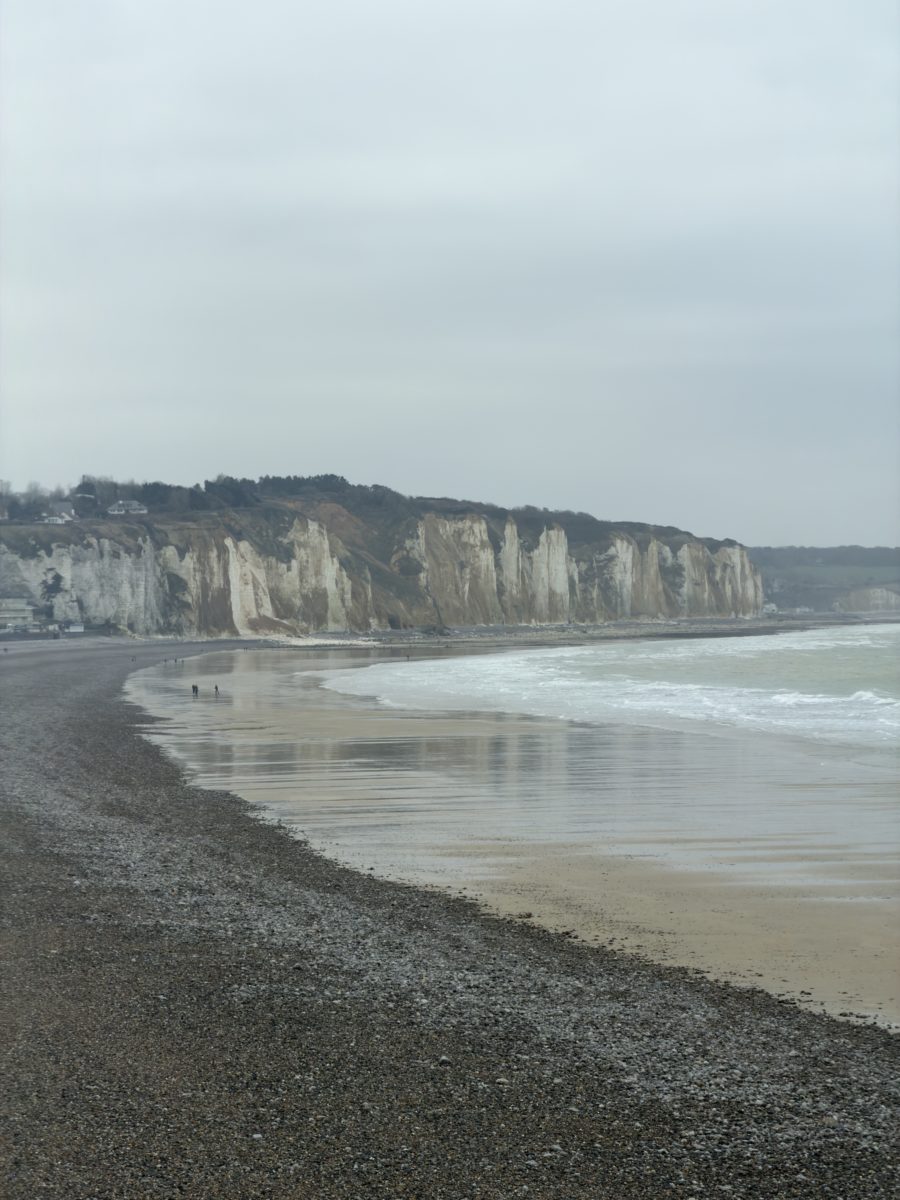
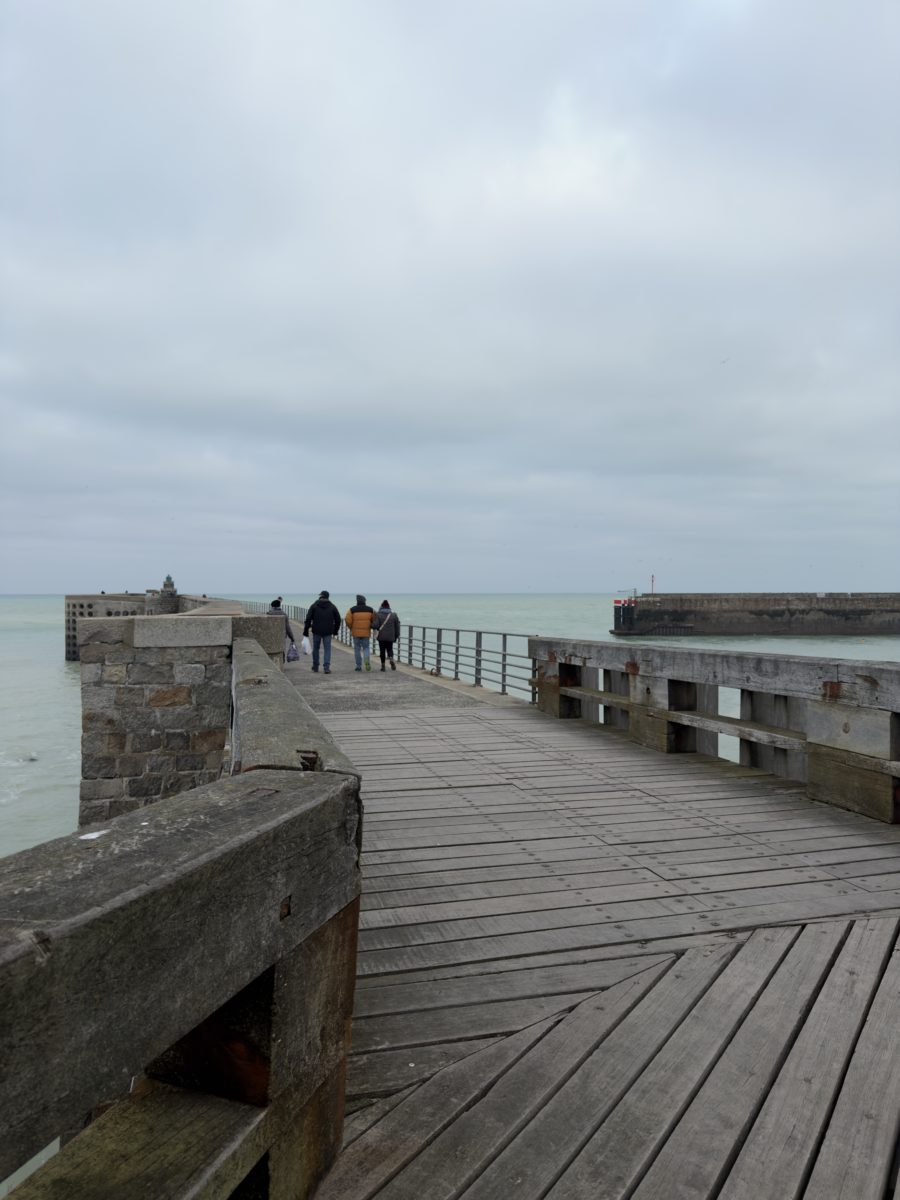
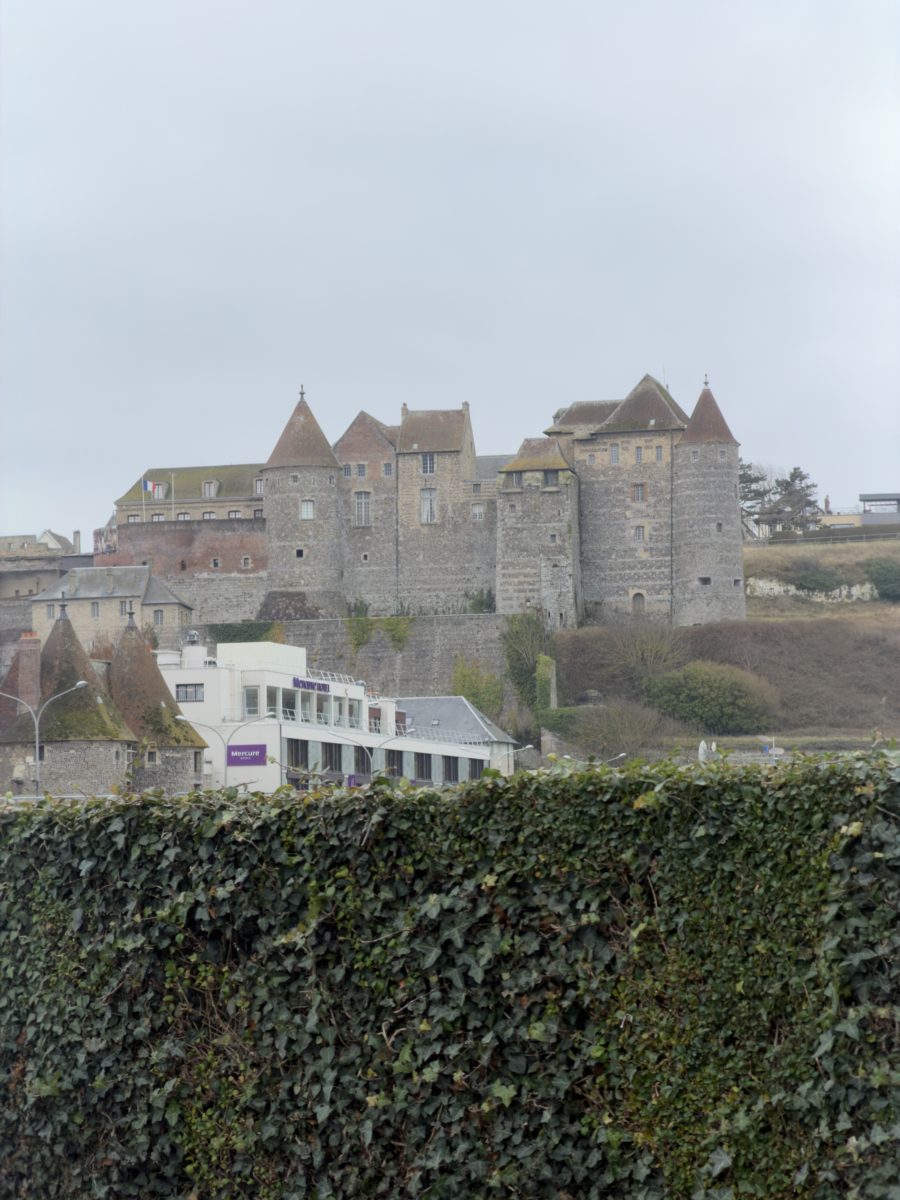
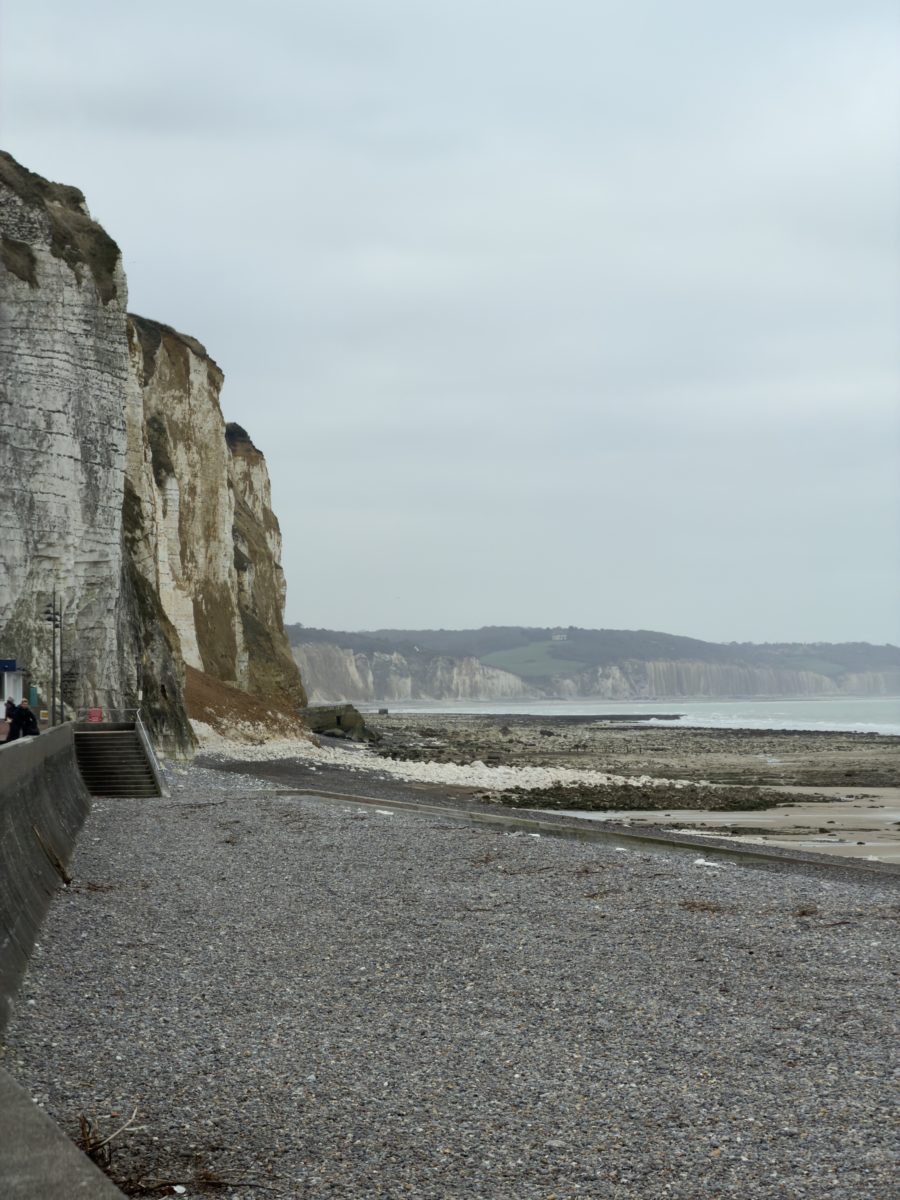
A lovely coincidence: the ferry is called Côte d’Albâtre. It arrives straight from Newhaven, near Brighton, my favorite English city. It is hard not to draw a connection. Facing the Channel, these Norman cliffs immediately remind me of the Seven Sisters. As if the Côte d’Albâtre answers its English cousins across the water. The same white, the same vertical drama, the same edge-of-the-world feeling separated only by a few hours’ crossing.
Veules-les-Roses
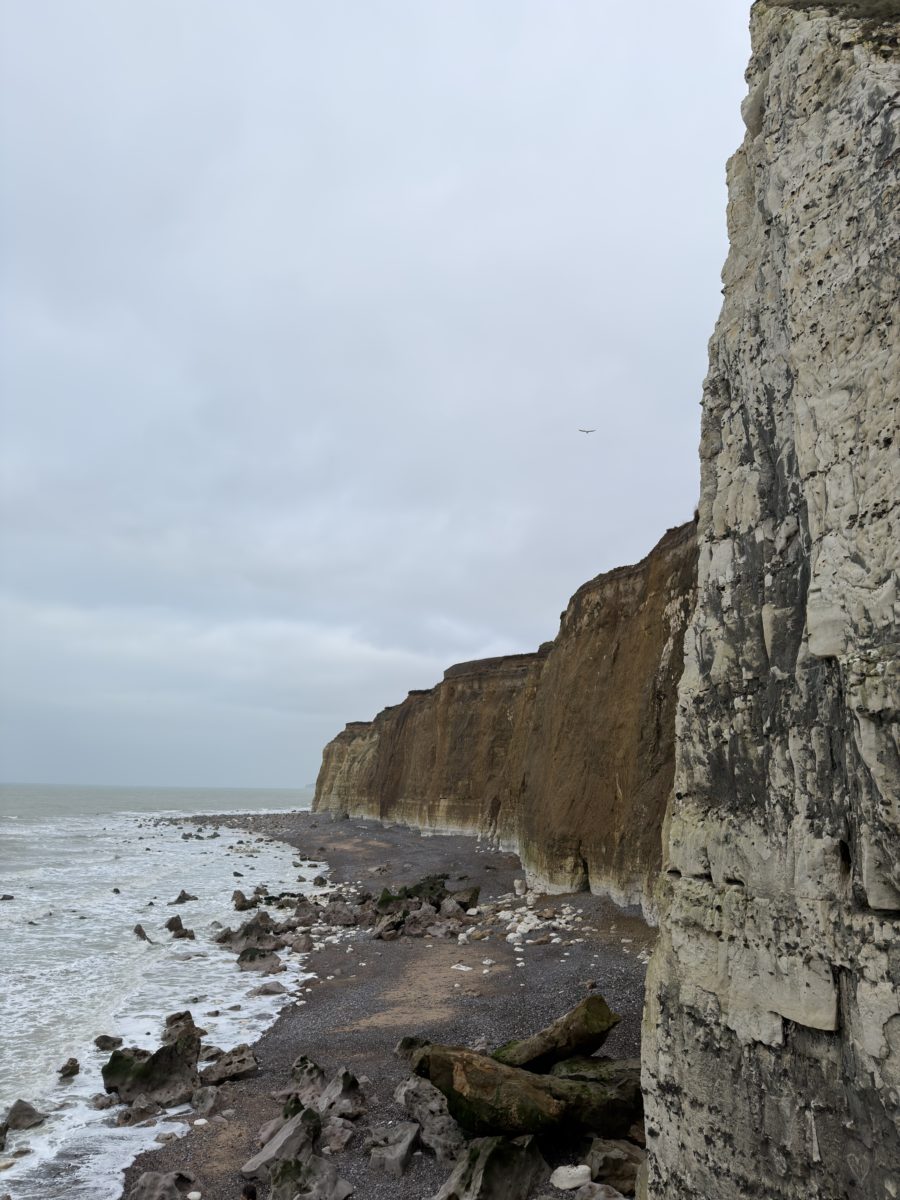
We drive on toward Veules-les-Roses. The scenery changes instantly. Here, the cliffs feel wilder, steeper almost plunging straight into the sea. They set the tone of the Côte d’Albâtre: raw, vertical, uncompromising. Below, the pebble beach is superb, wide and pale. Even at low tide, the sea feels immense, more vast still beneath these towering walls.
The whole scene is powerful, without artifice. A straightforward, almost austere landscape, where the contrast between the rugged cliffs and the simple beauty of the beach evokes an immediate emotion. Here, nothing is decorative: everything is real.
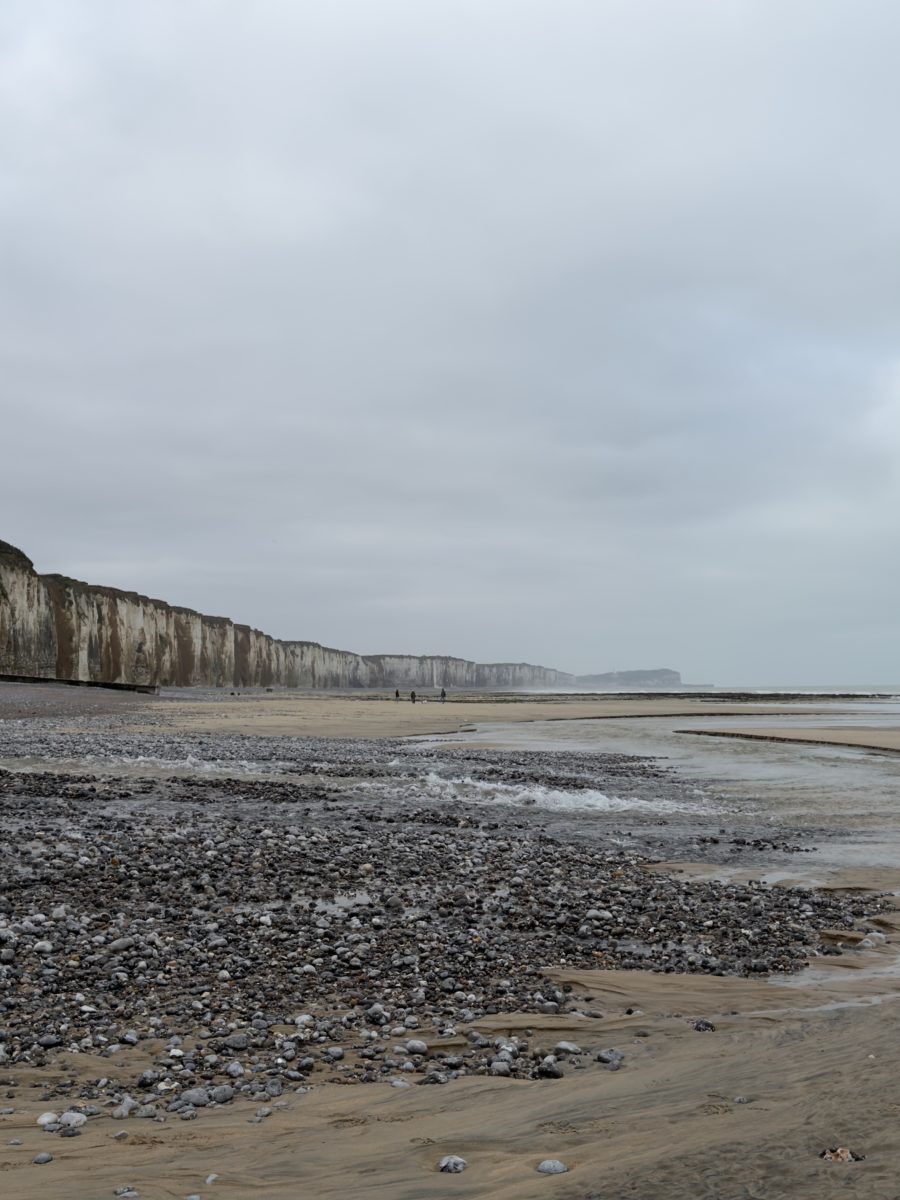
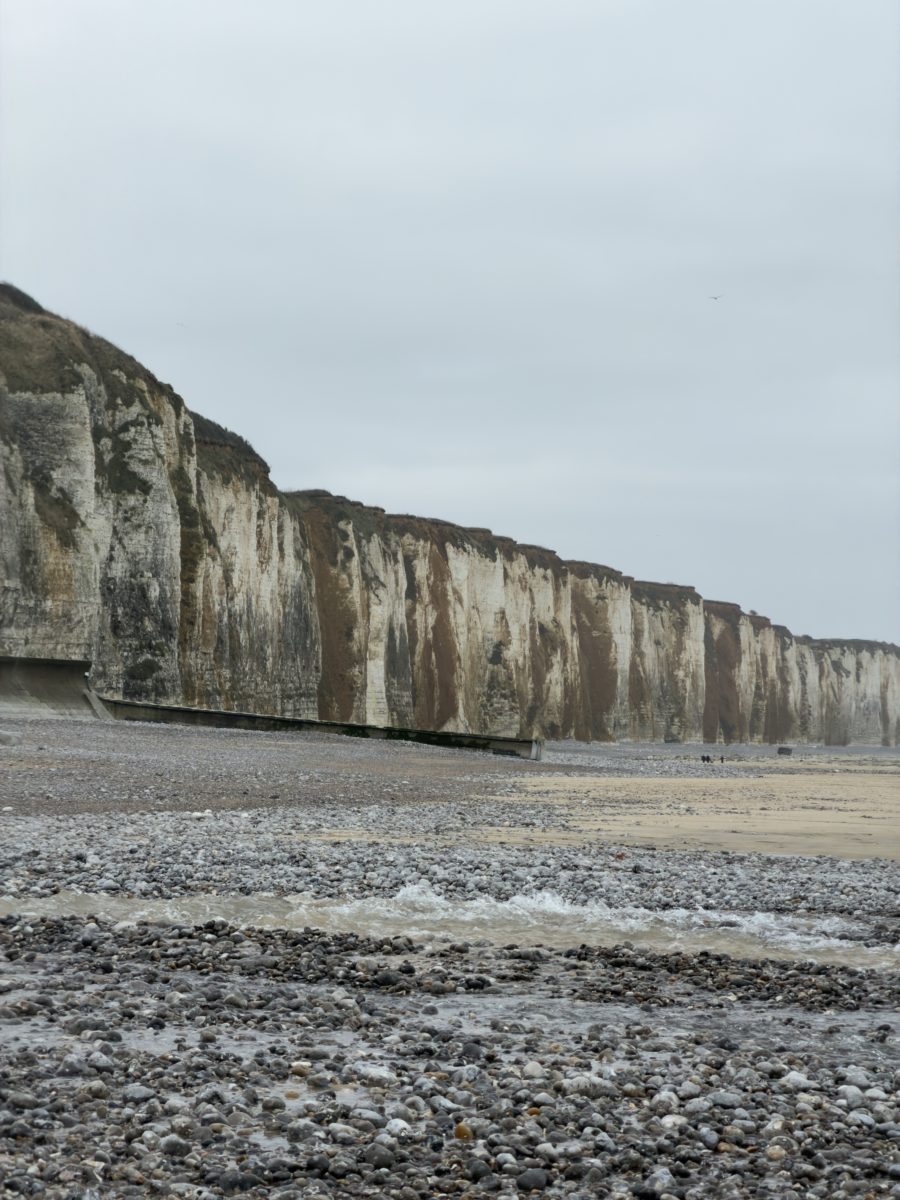
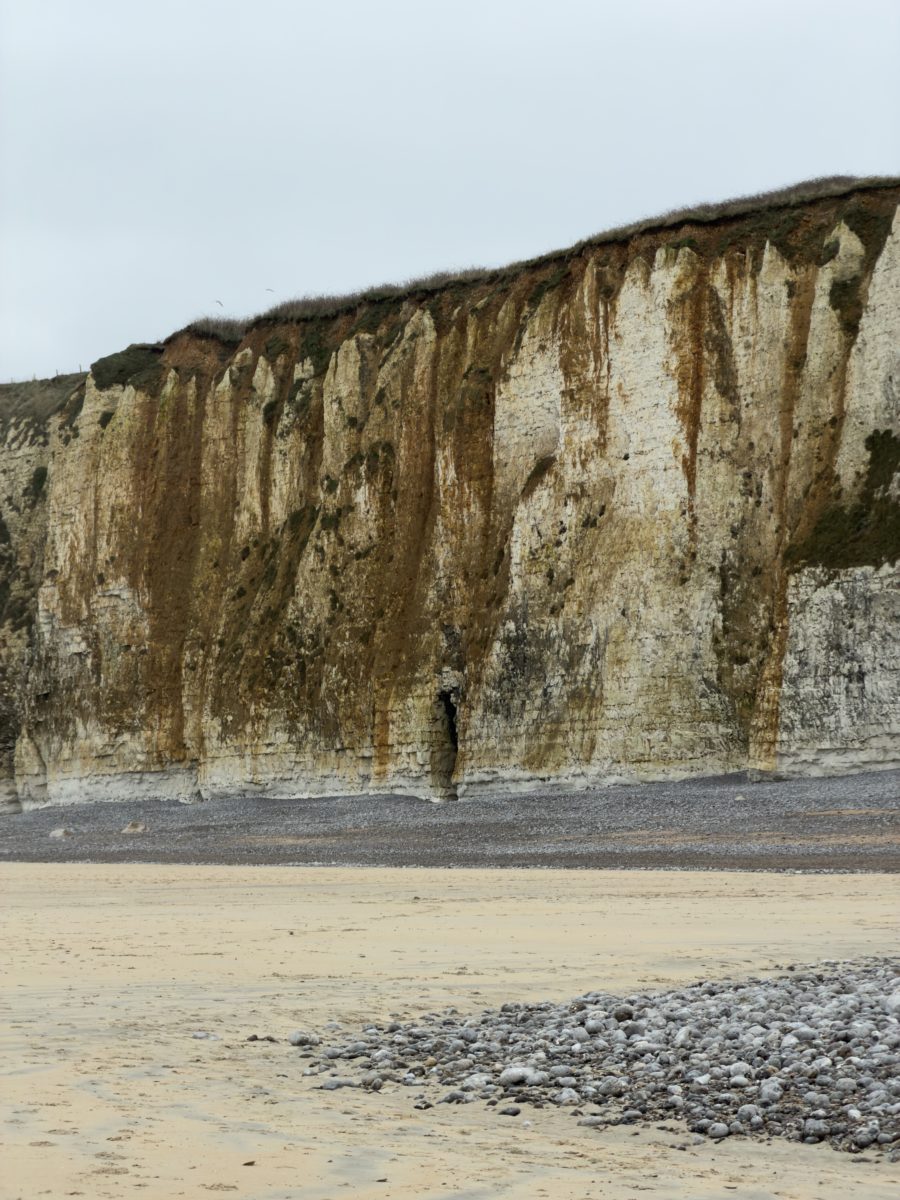
Then the village reveals itself, sheltered from the vertical drama. Voted one of the “Most Beautiful Villages of France” in 2017, it exudes discreet, almost shy charm. Off-season, everything is quiet, nearly asleep. Shuttered windows, silent lanes : a village preserved from bustle.
We leisurely follow the Veules, this tiny river, which is officially the smallest river in France with 1,149 meters. It winds gently between mills, half-timbered houses, and well-kept gardens, flowing peacefully to the sea. The walk is simple, calming, with no crowds or hustle.
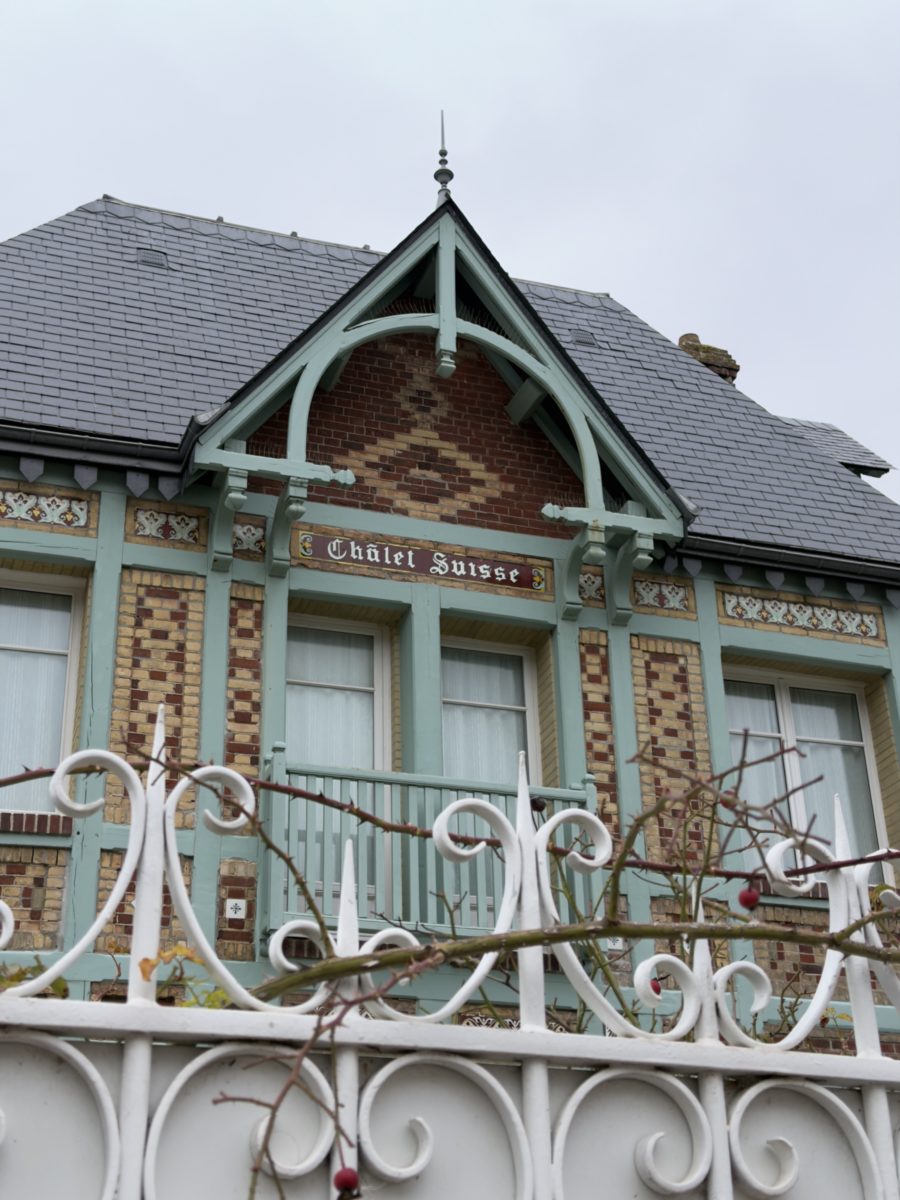
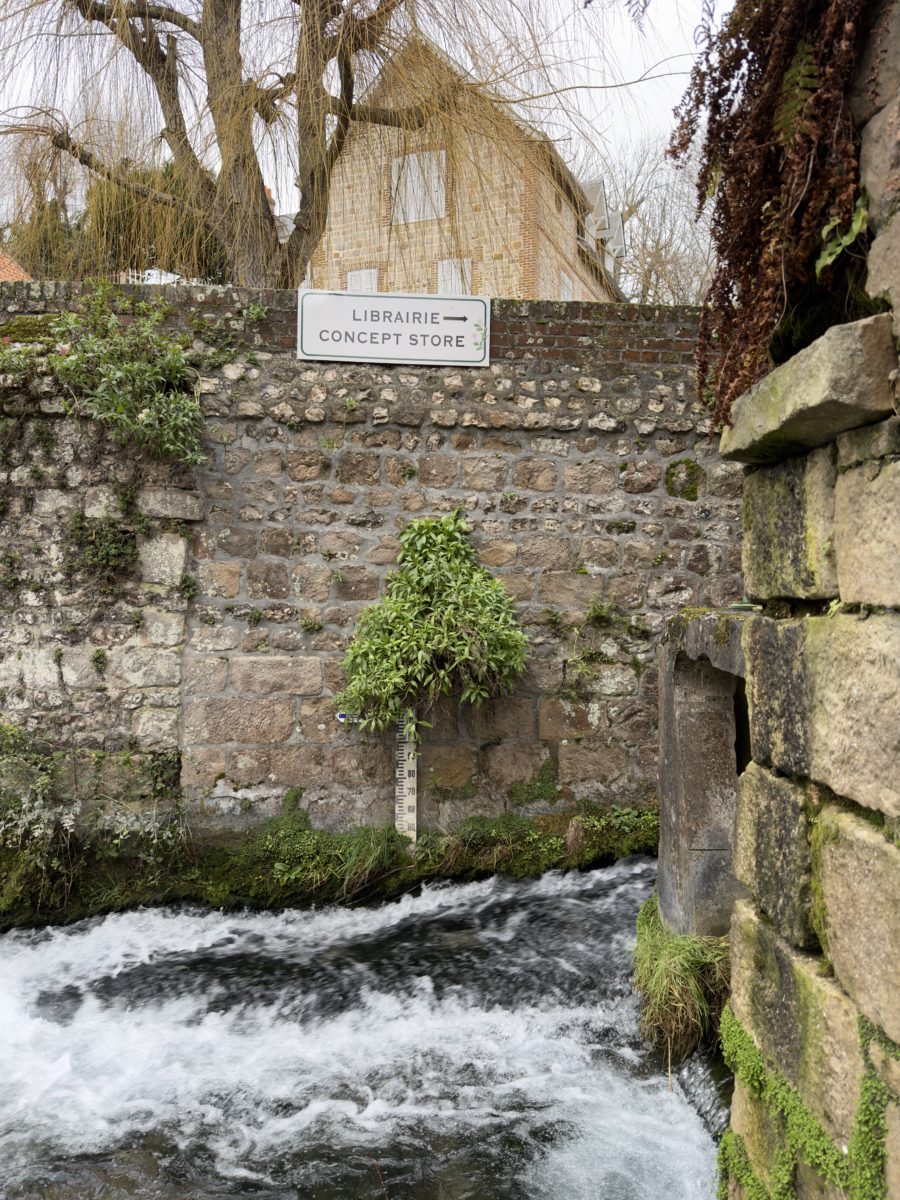
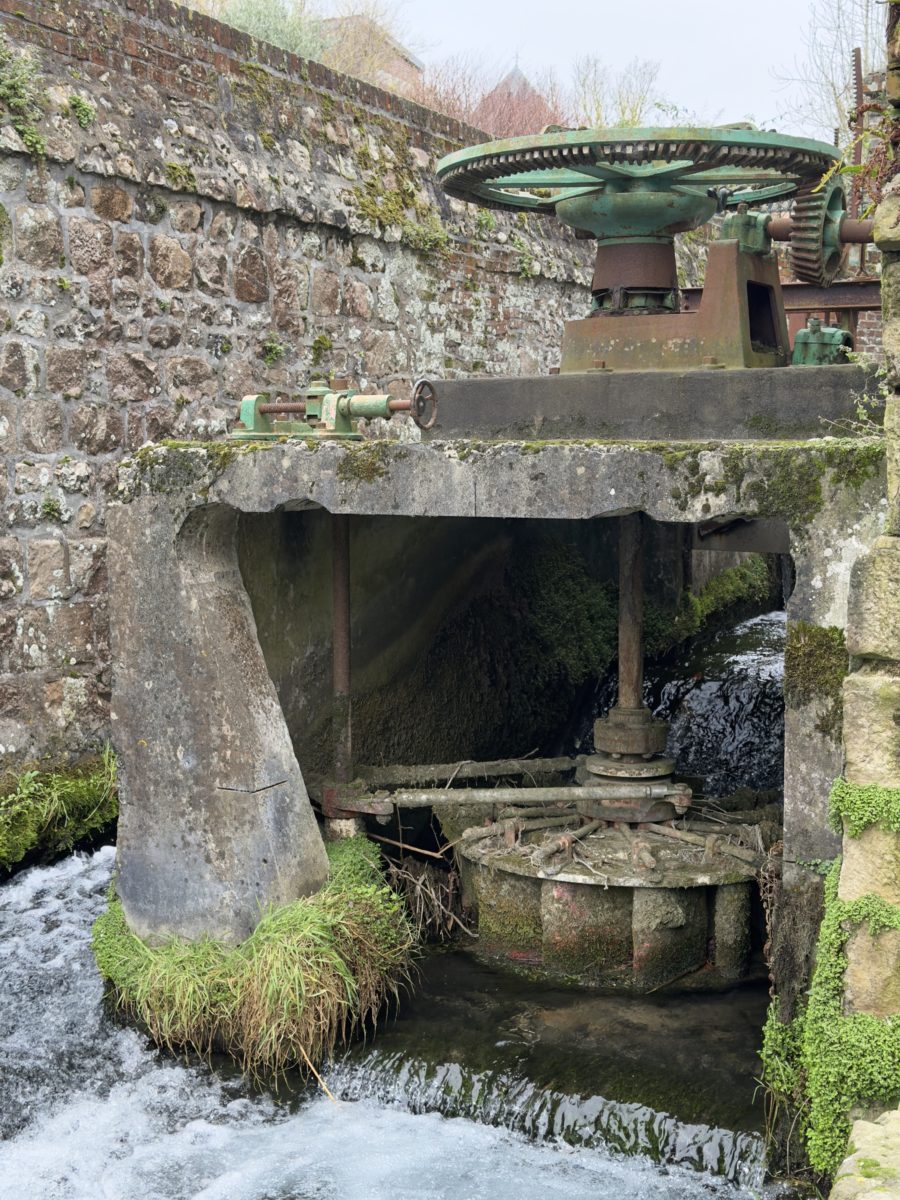
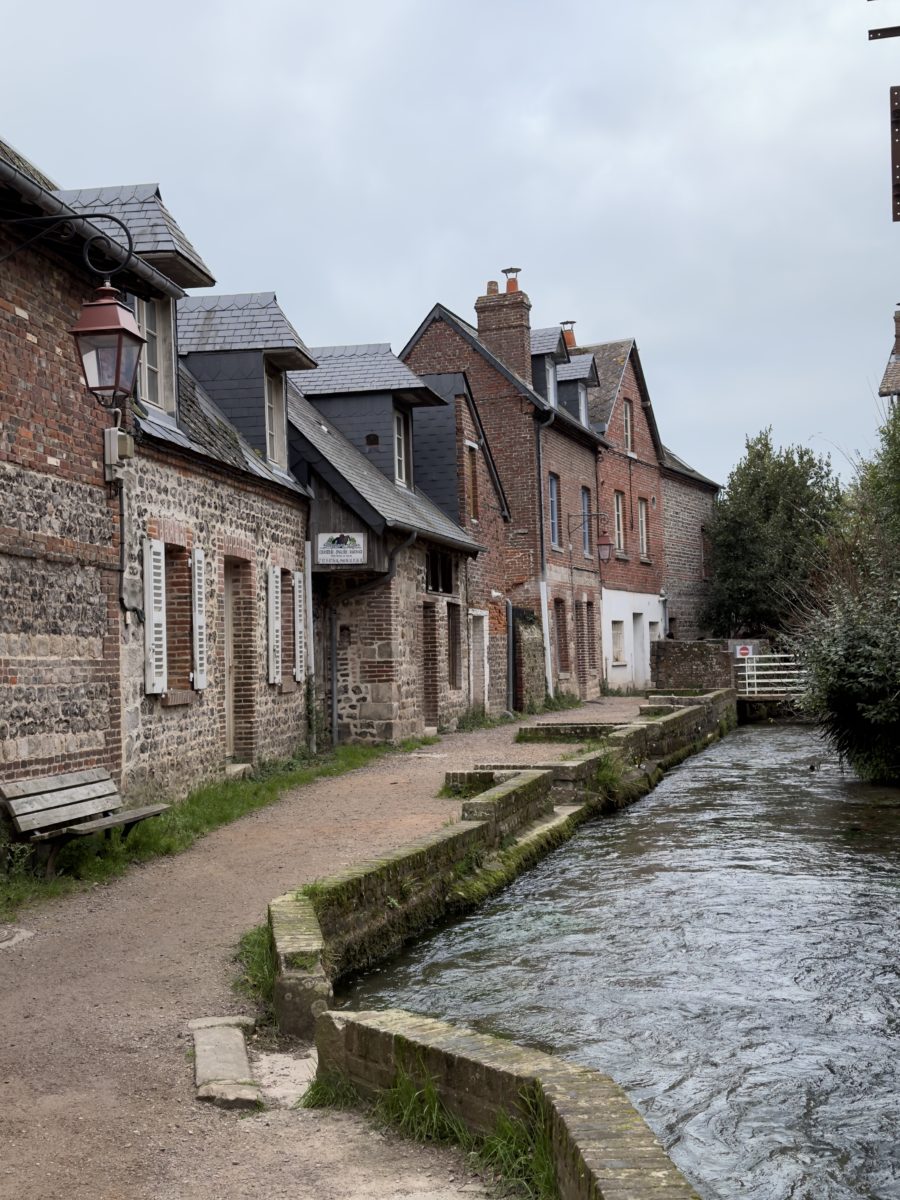
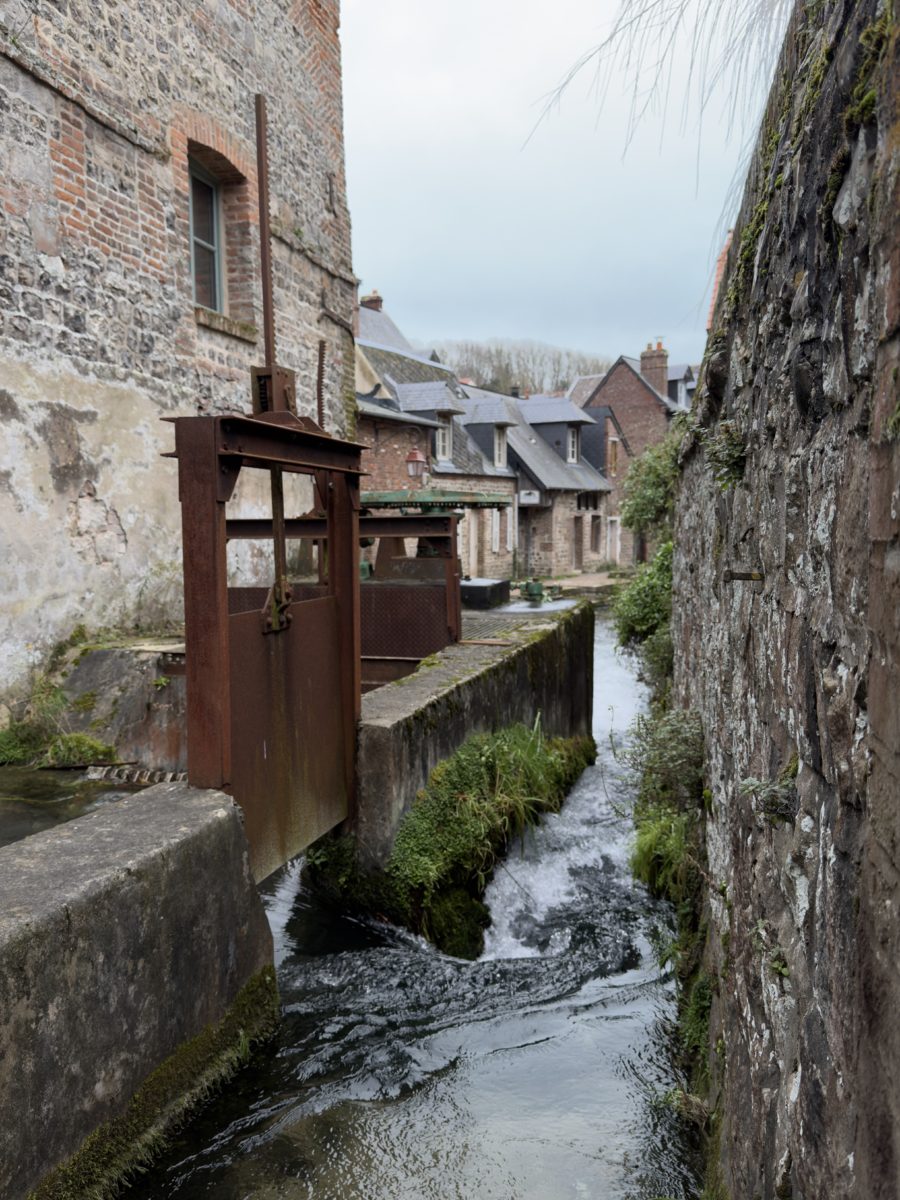
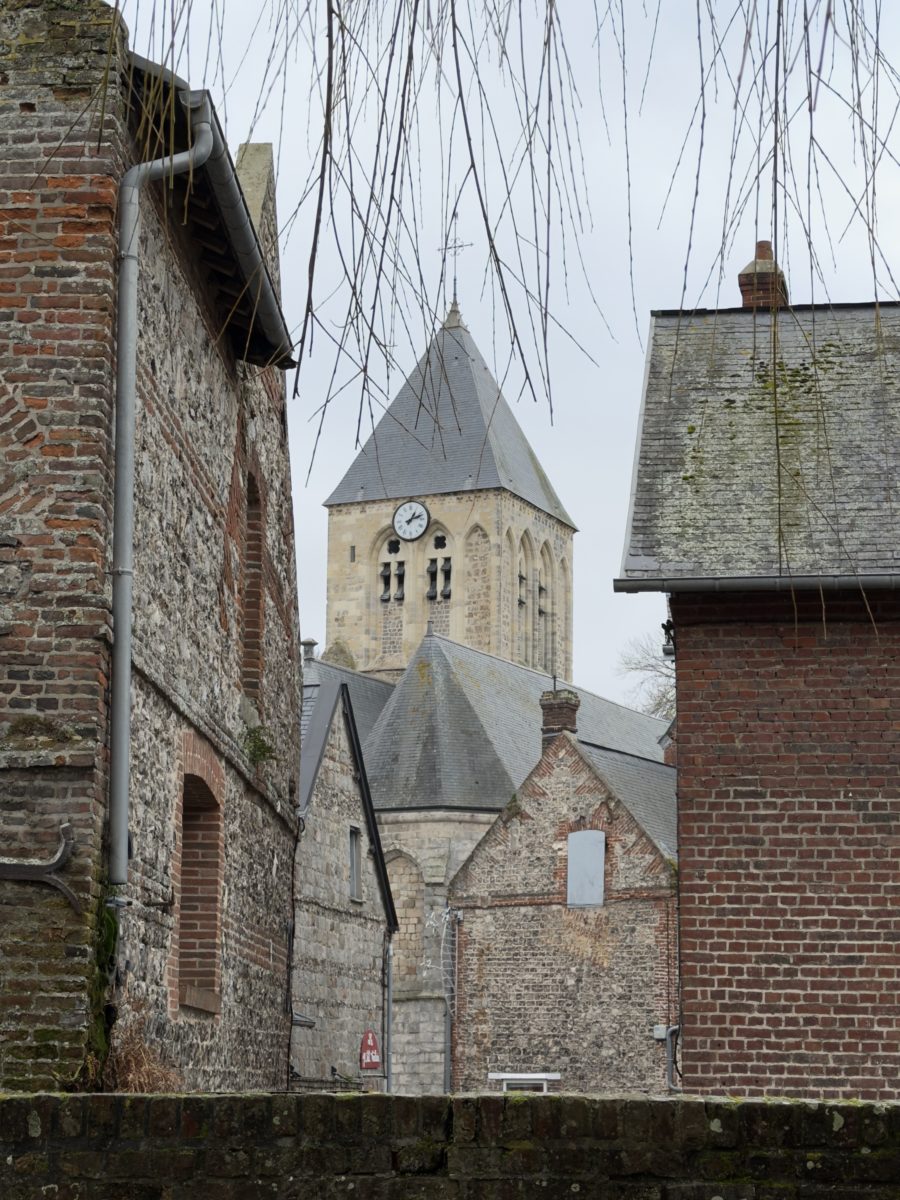
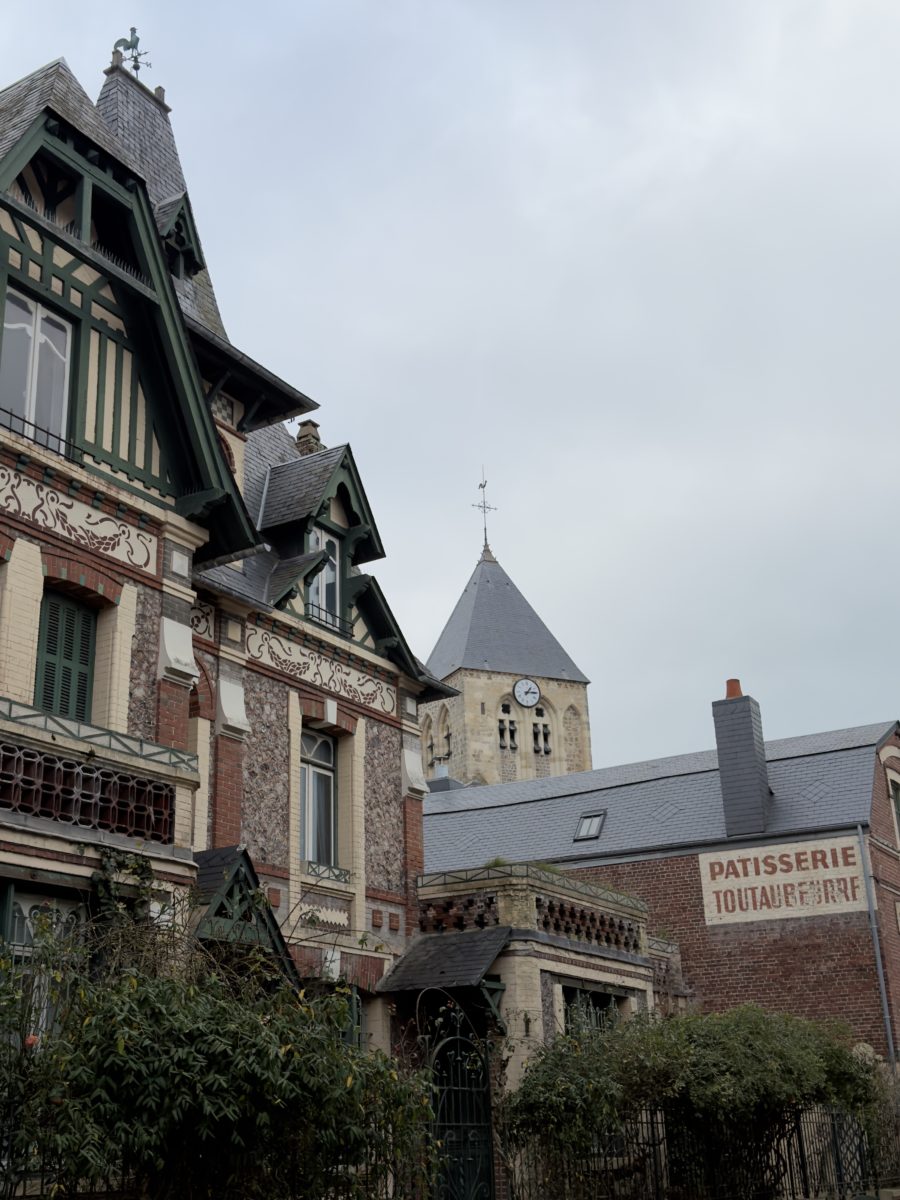
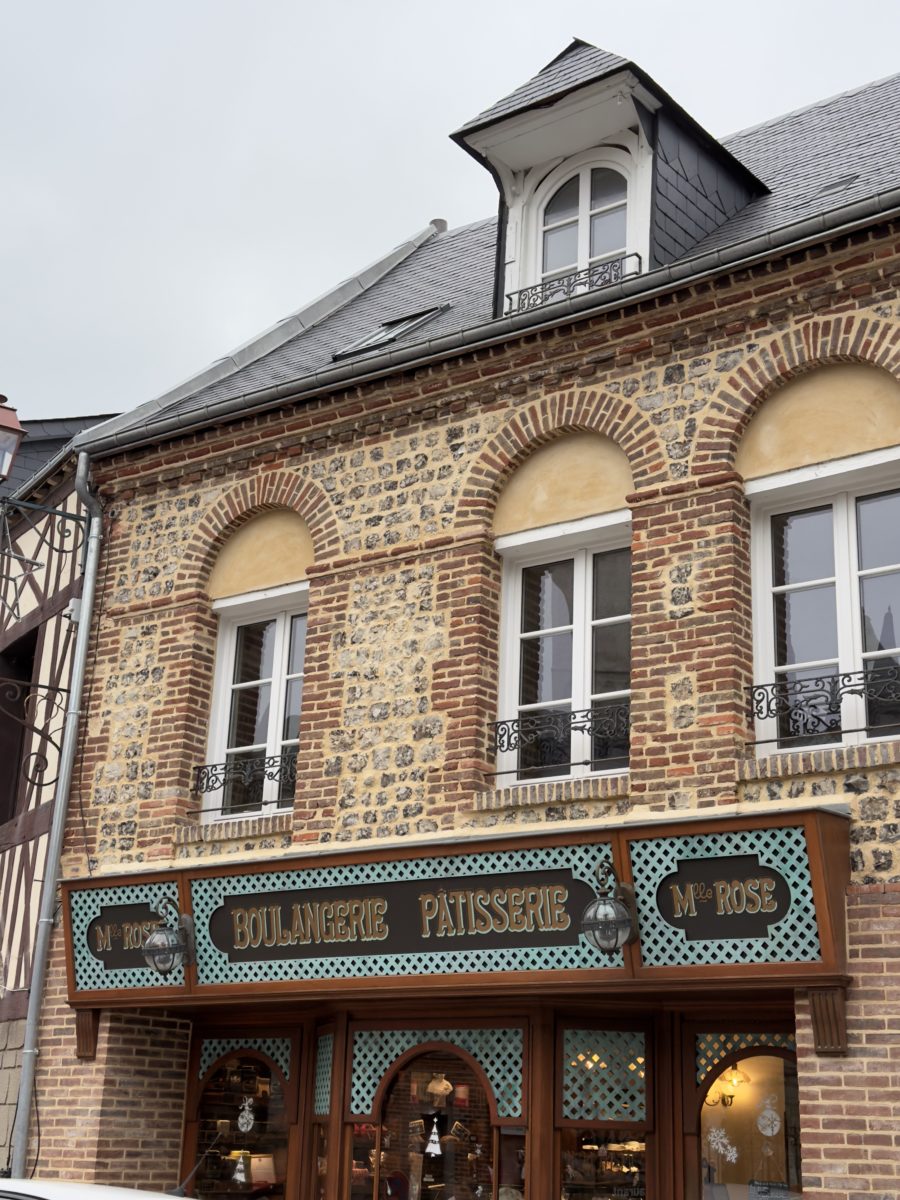
We move at its pace, taking the time to observe the details and let the place settle gently. A suspended moment, much like the village itself.
Sotteville-sur-Mer
We backtrack slightly to Sotteville-sur-Mer for a striking stop: the staircase that seems to plunge straight into the cliff. Originally carved into the chalk and built in 1890 for fishermen, it was also used to haul up pebbles, valuable at the time for porcelain and emery powder production. A direct link between sea, rock, and human labor.
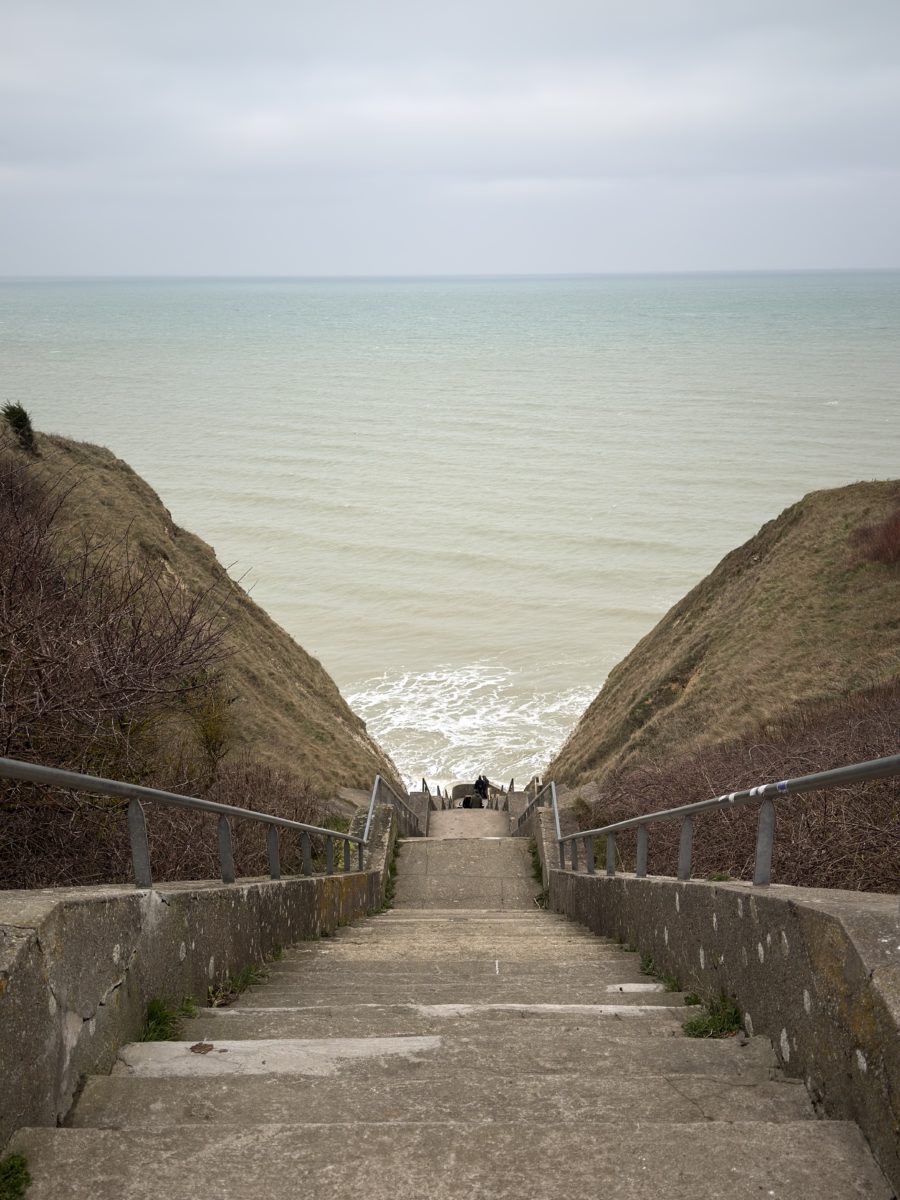
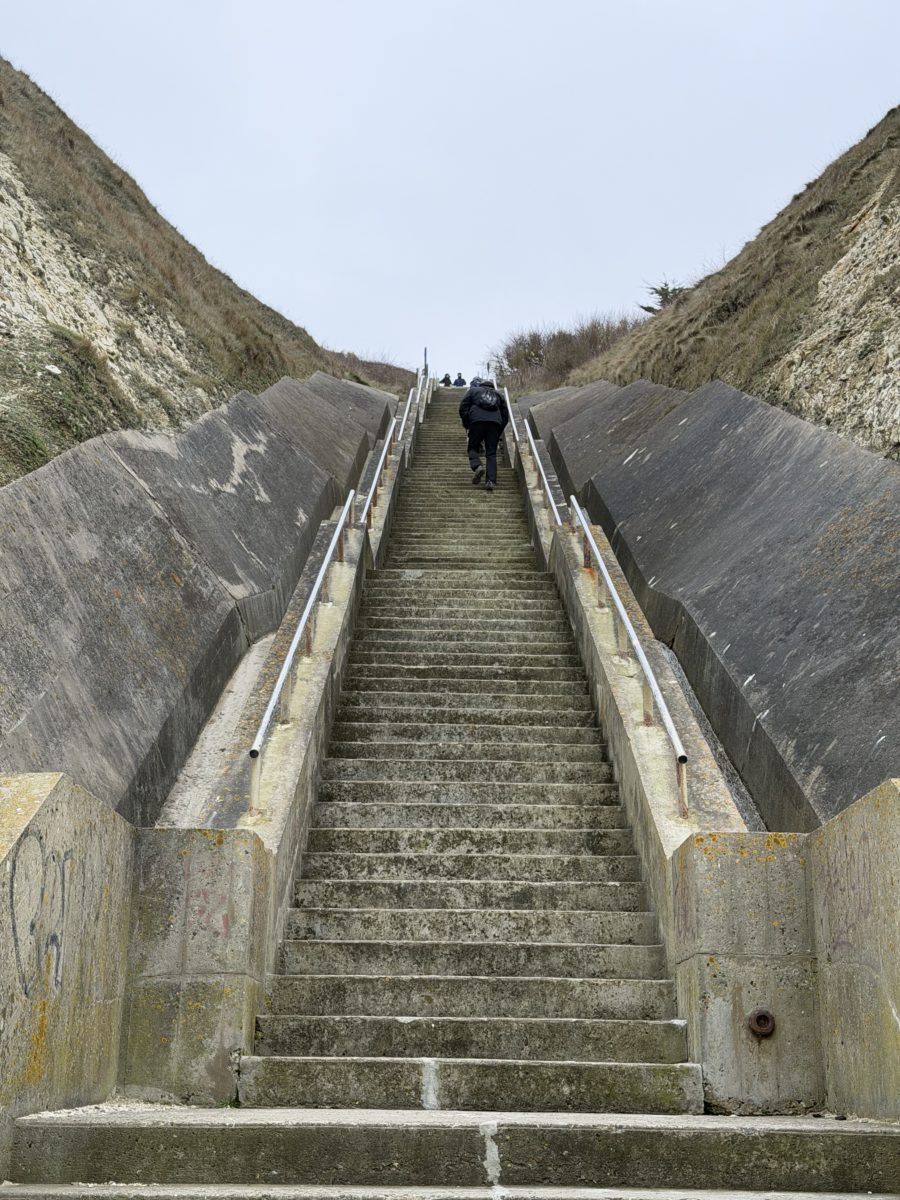
In 1940, its strategic importance became evident. Too exposed, too useful, it was dynamited during World War II, leaving the cliff scarred.
Rebuilt in concrete in 1954, the staircase now forms a long ribbon of steps threading between chalk walls, austere and almost monumental. As you descend, the sea reveals itself gradually. Each landing brings you closer to the shore and to the layered history etched into the landscape.
Fécamp
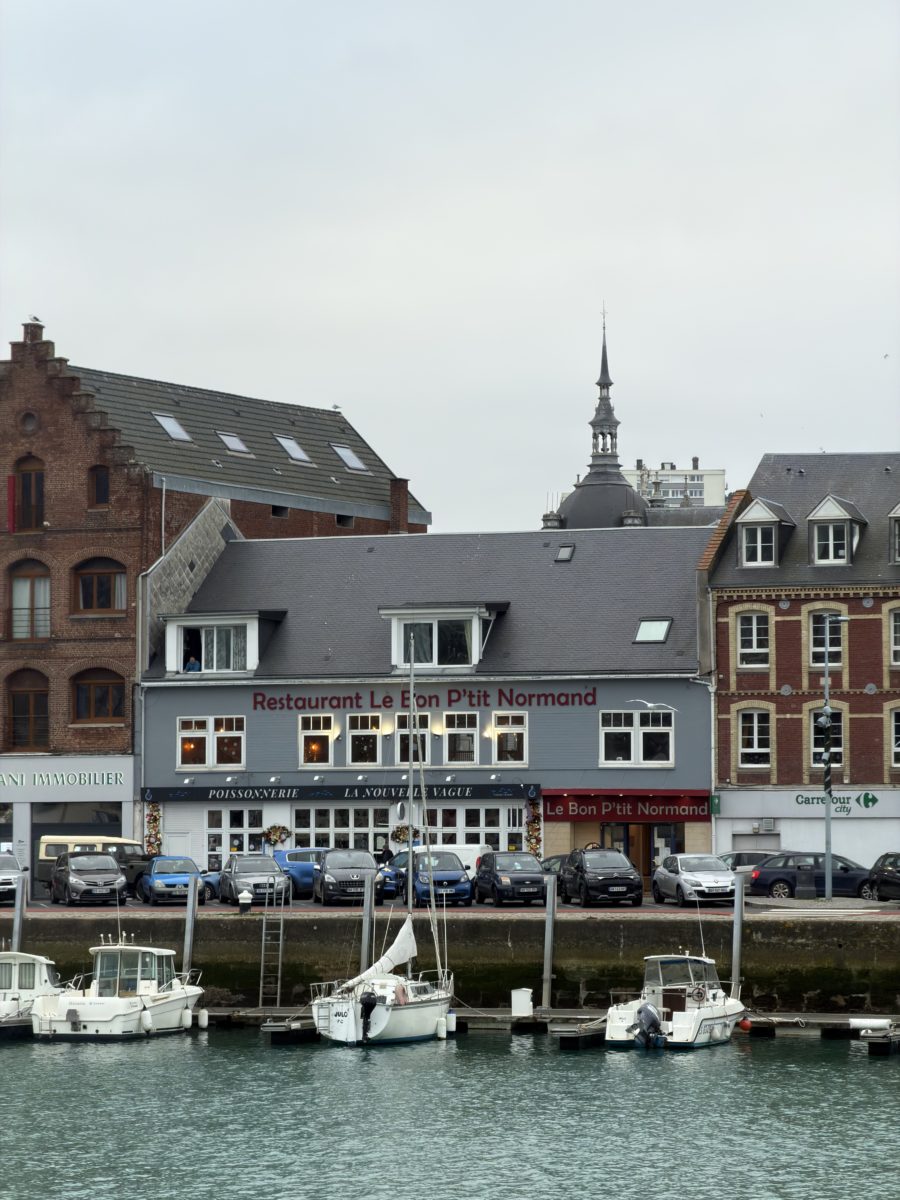
In Fécamp, we decide to visit a museum. And what a good decision. La Pêcherie immediately asserts the city’s deeply maritime identity. For centuries focused on deep-sea fishing, particularly the distant cod expeditions to Newfoundland, Fécamp saw its sailors leave the port for grueling journeys, shaped by the uncertainty of departures and returns.
Just steps from the harbor, La Pêcherie tells this story of hard work, courage, and the untamable sea. Nets, boats, sailors’ tales—everything evokes a town shaped by salty iodine. Even today, the place preserves this living memory, between maritime heritage and the still-thriving port life.
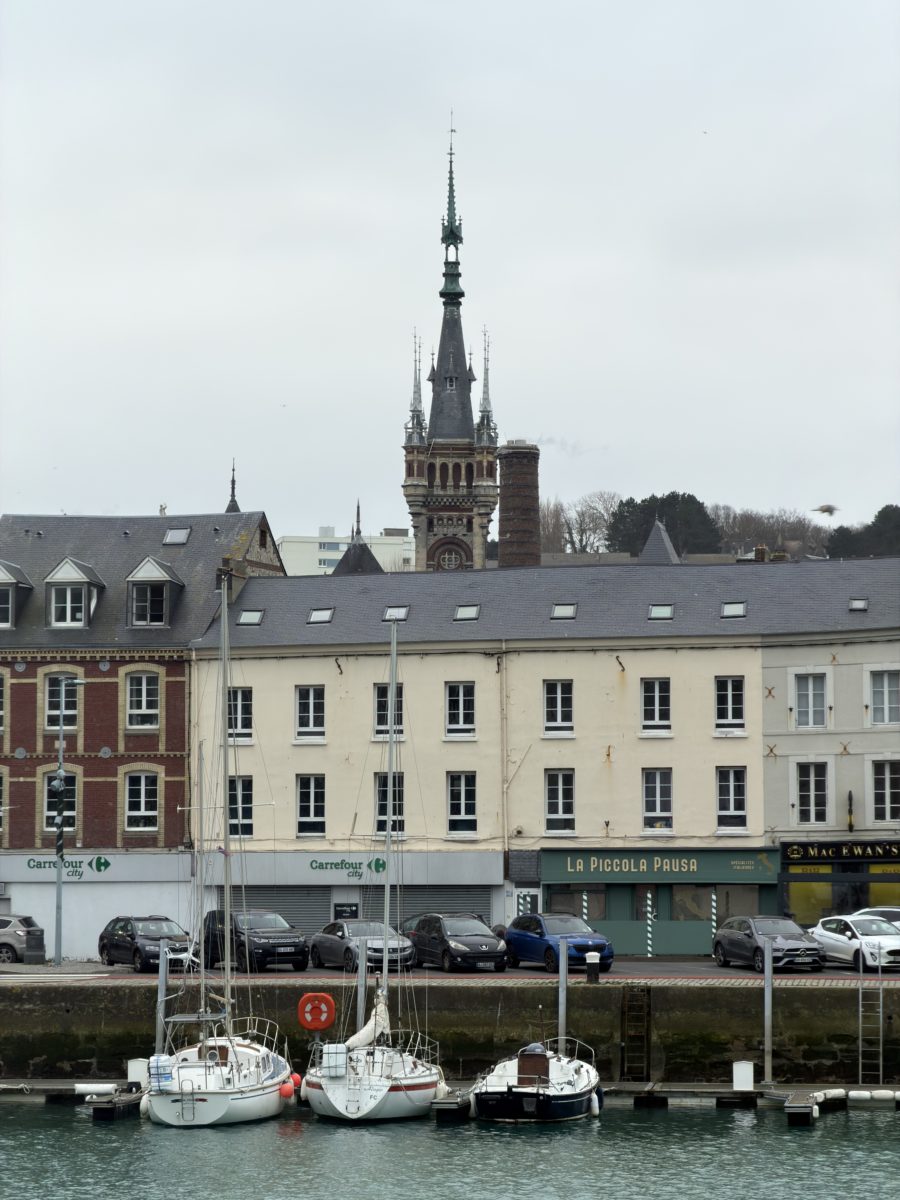
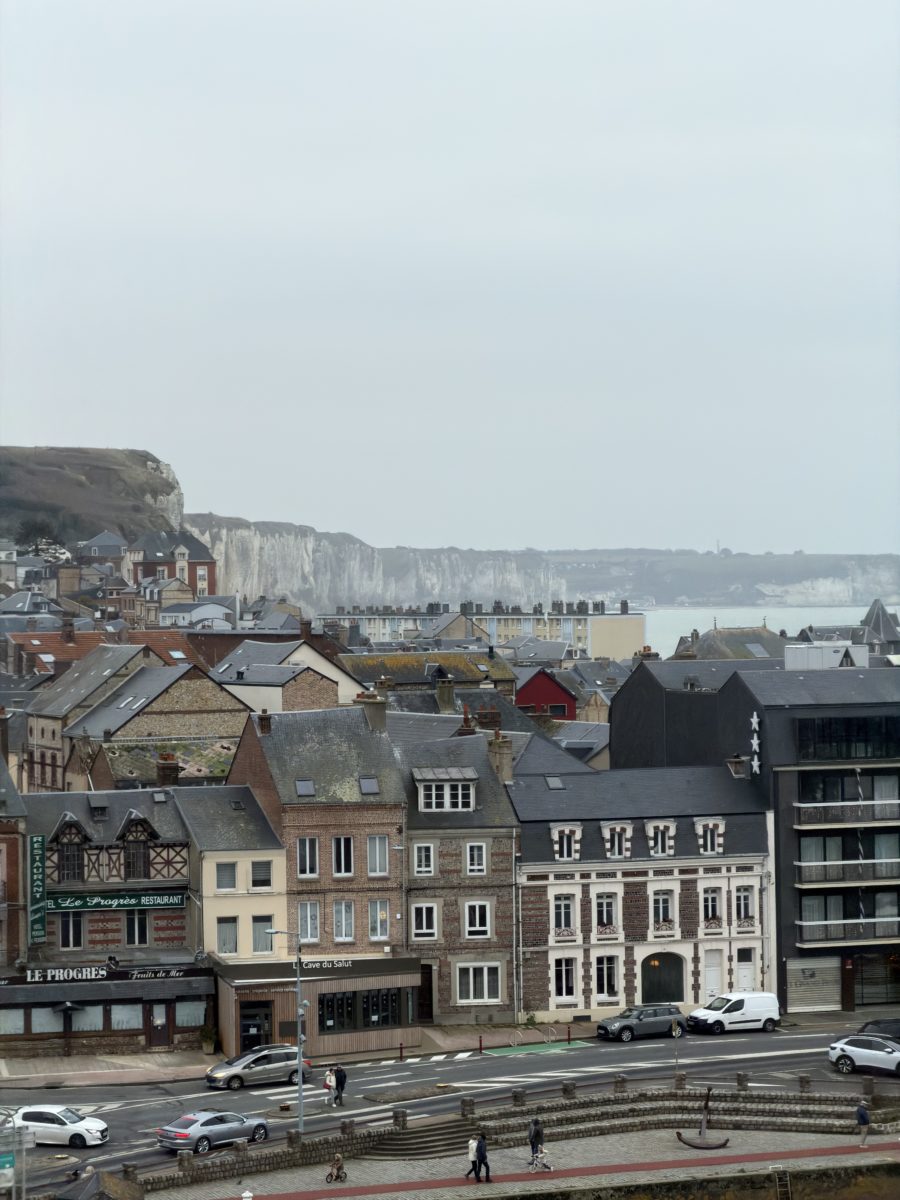
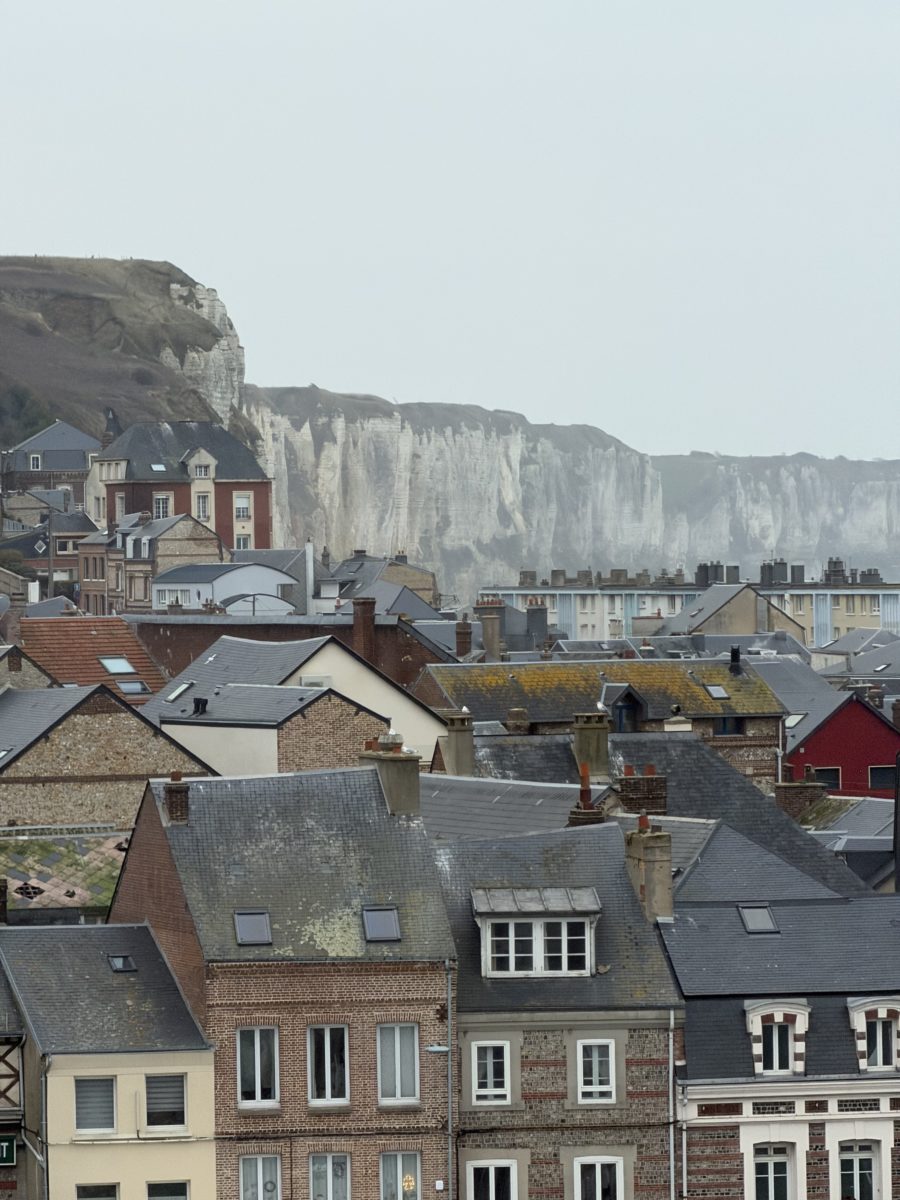
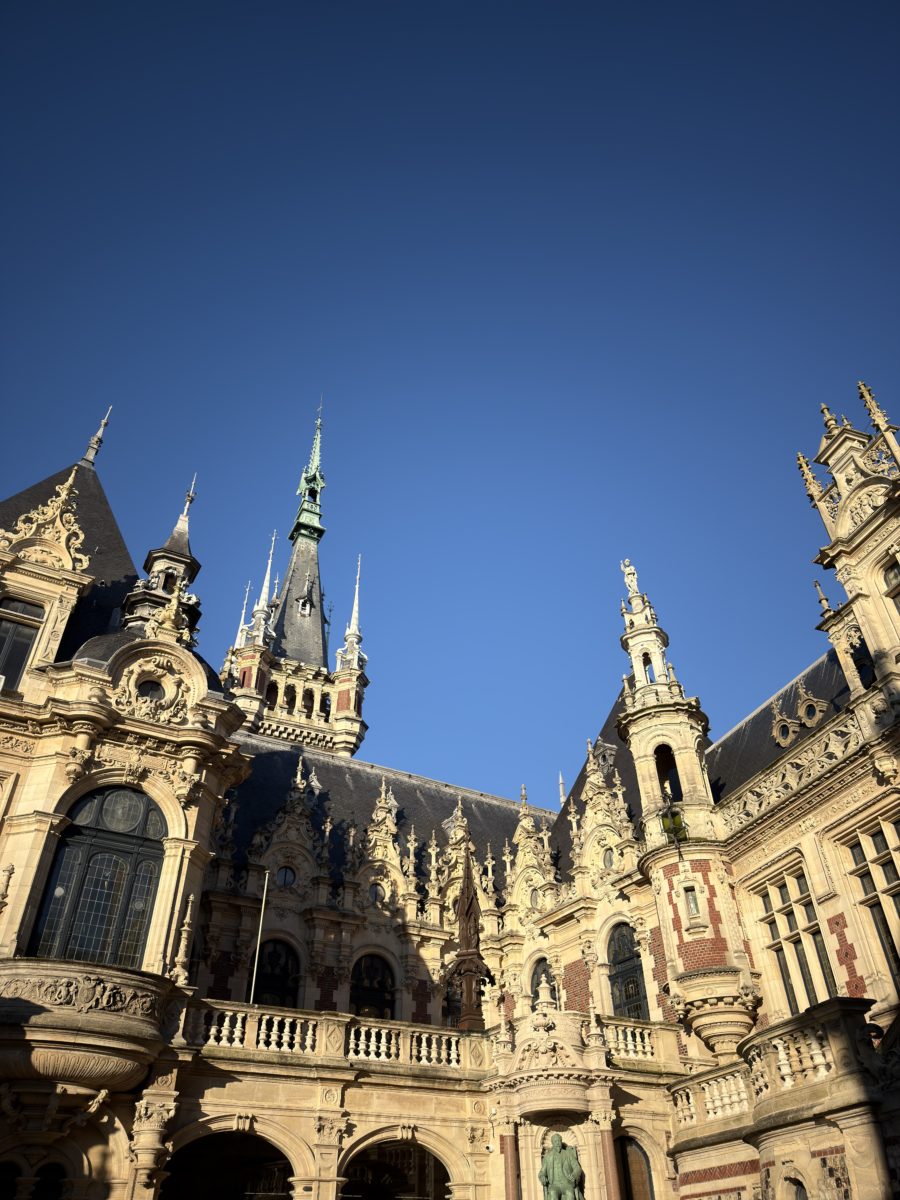
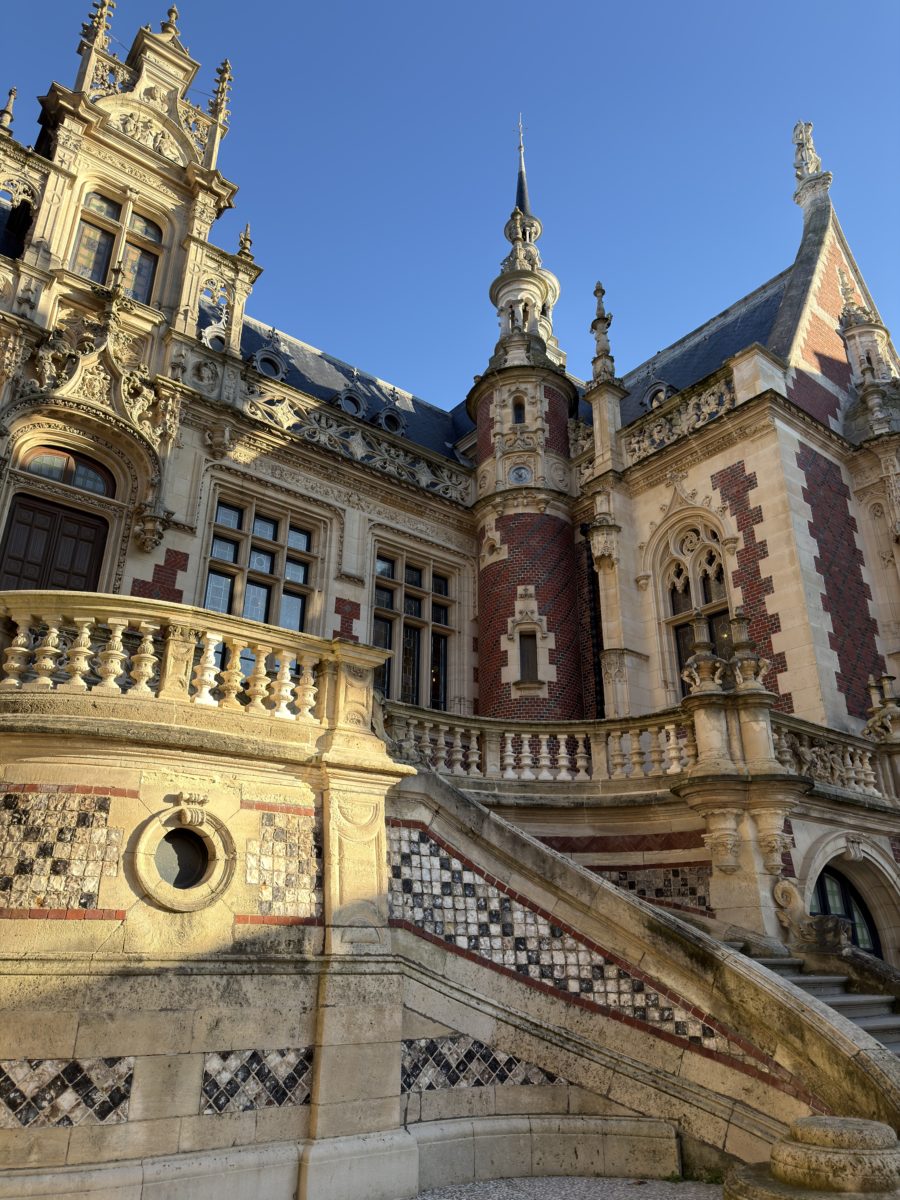
The site also offers a lovely view of the town. In the background stands the Palais Bénédictine, too expensive to visit at the time, but whose delicious liqueur we would later enjoy, reinvented as a Norman-style spritz. Further along, the cliffs stretch toward Yport and Étretat, carving the horizon and already calling for the next stage of the journey.
Day 3 on the Côte d’Albâtre – From Fécamp to Étretat
We stayed in a very mediocre hotel, and the next day, reality caught up with us: it was bitterly cold. The sea spray didn’t help. Fortunately, some good crêpes (at a small restaurant in the upper town) warmed us up and gave us the energy needed to set out and conquer the day’s cliffs.
But before that, a mandatory detour to the Palais Bénédictine to stock up on liqueur. The abbey visit and the secrets of its spice-laden recipe would have to wait for another time. The cliffs, or perhaps I, clearly had no patience to wait.
SENNEVILLE-SUR-FÉCAMP
By late morning, we head for Senneville-sur-Fécamp, my favorite spot on this road trip.
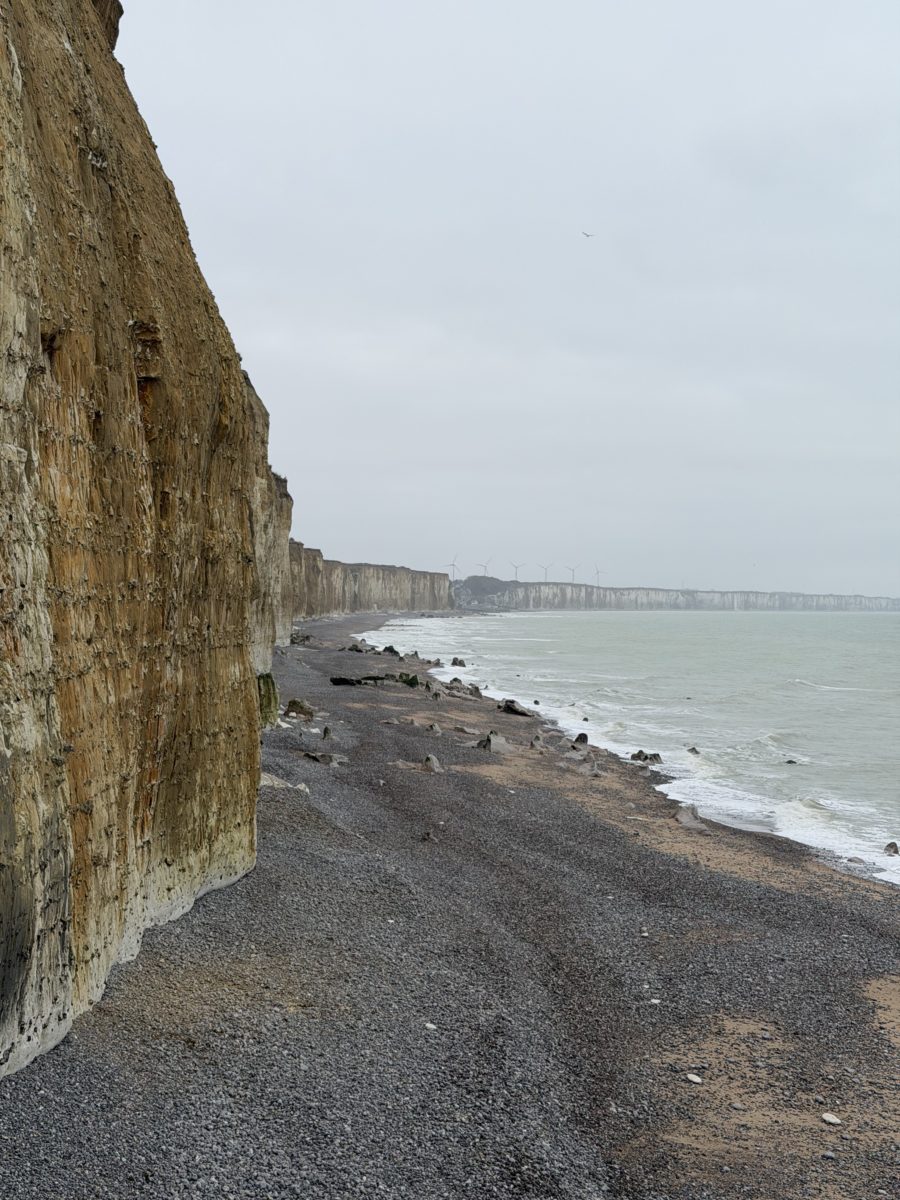
There, the world seems to literally stop. No noise, no crowds, no unnecessary scenery. Just us, the wind, the receding sea, and the cliffs. Alone in the face of this vast, white, vertical expanse. We laugh at our pun, but it truly is “Love at first cliff.” Raw. Immediate. Obvious.
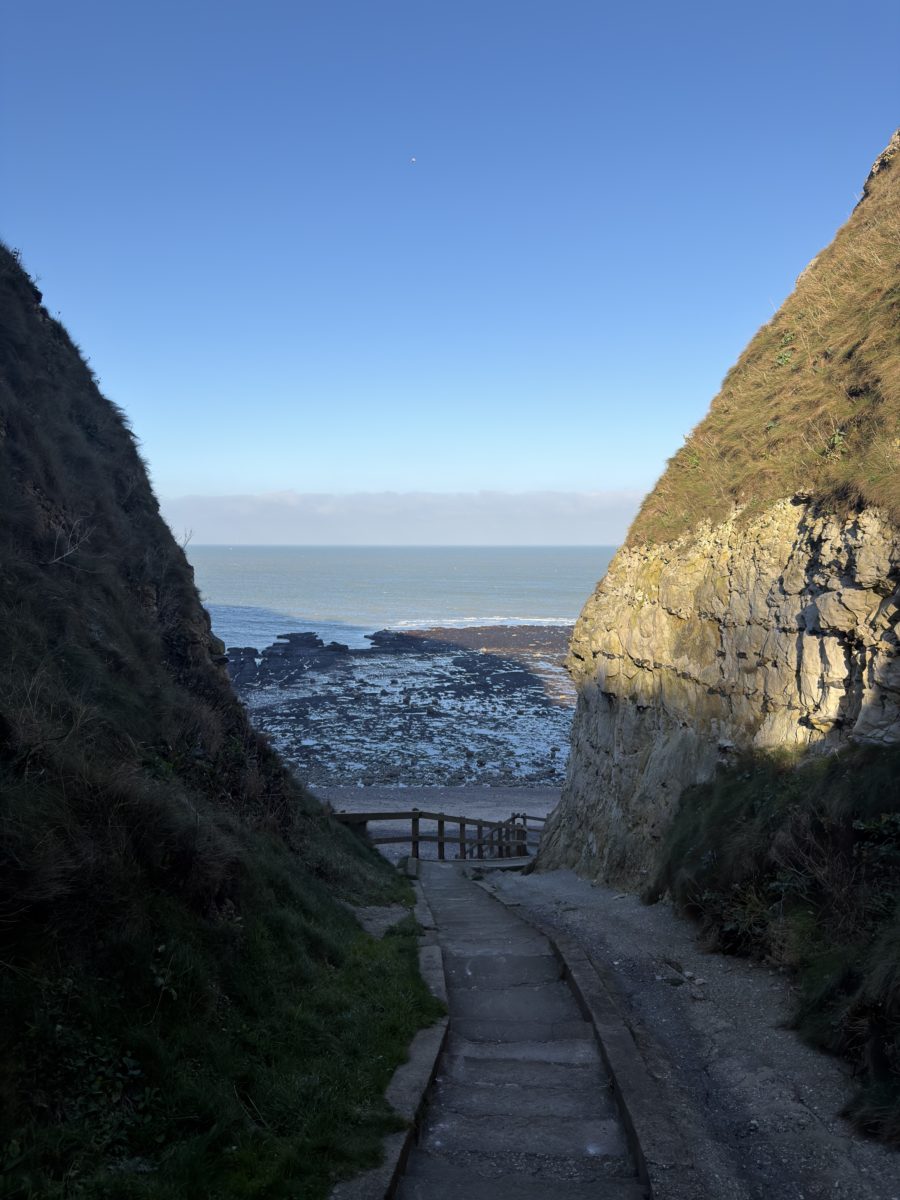
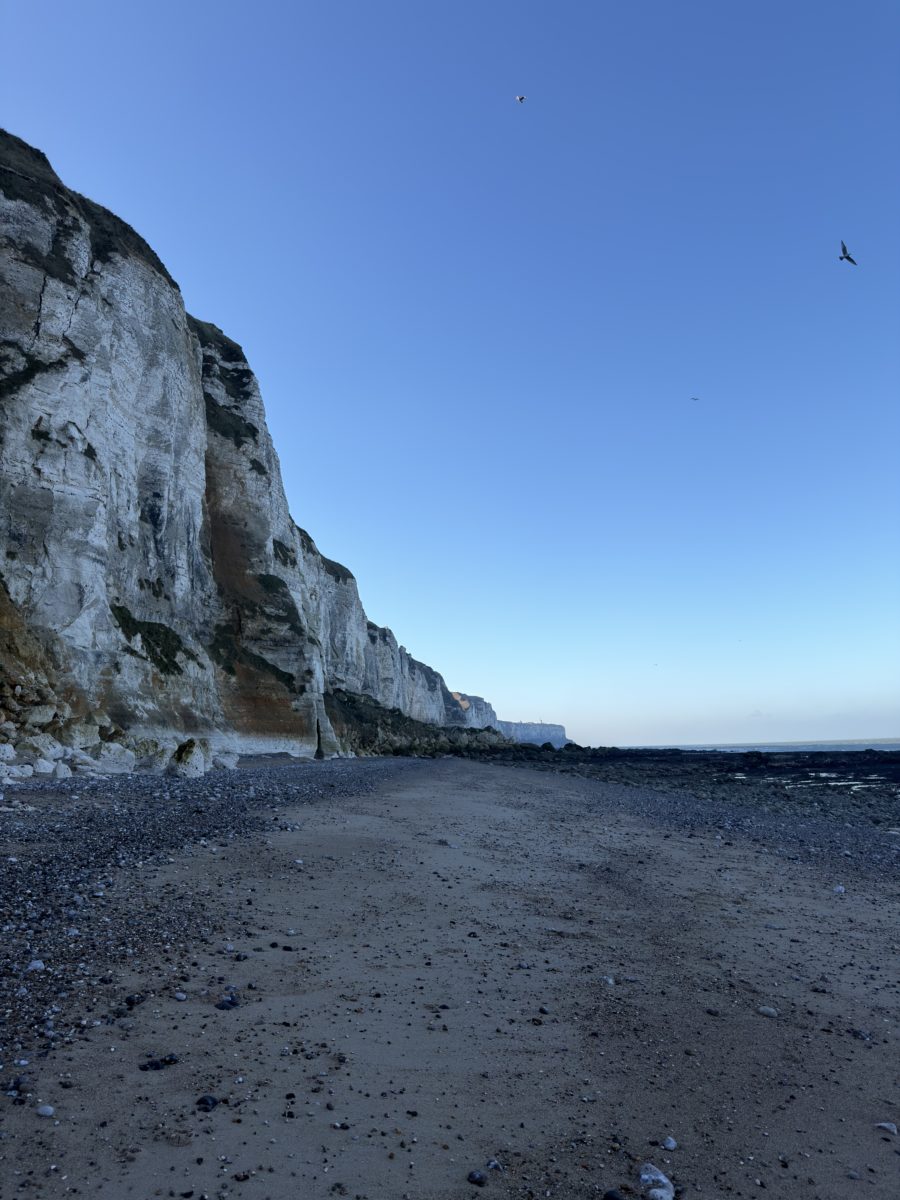
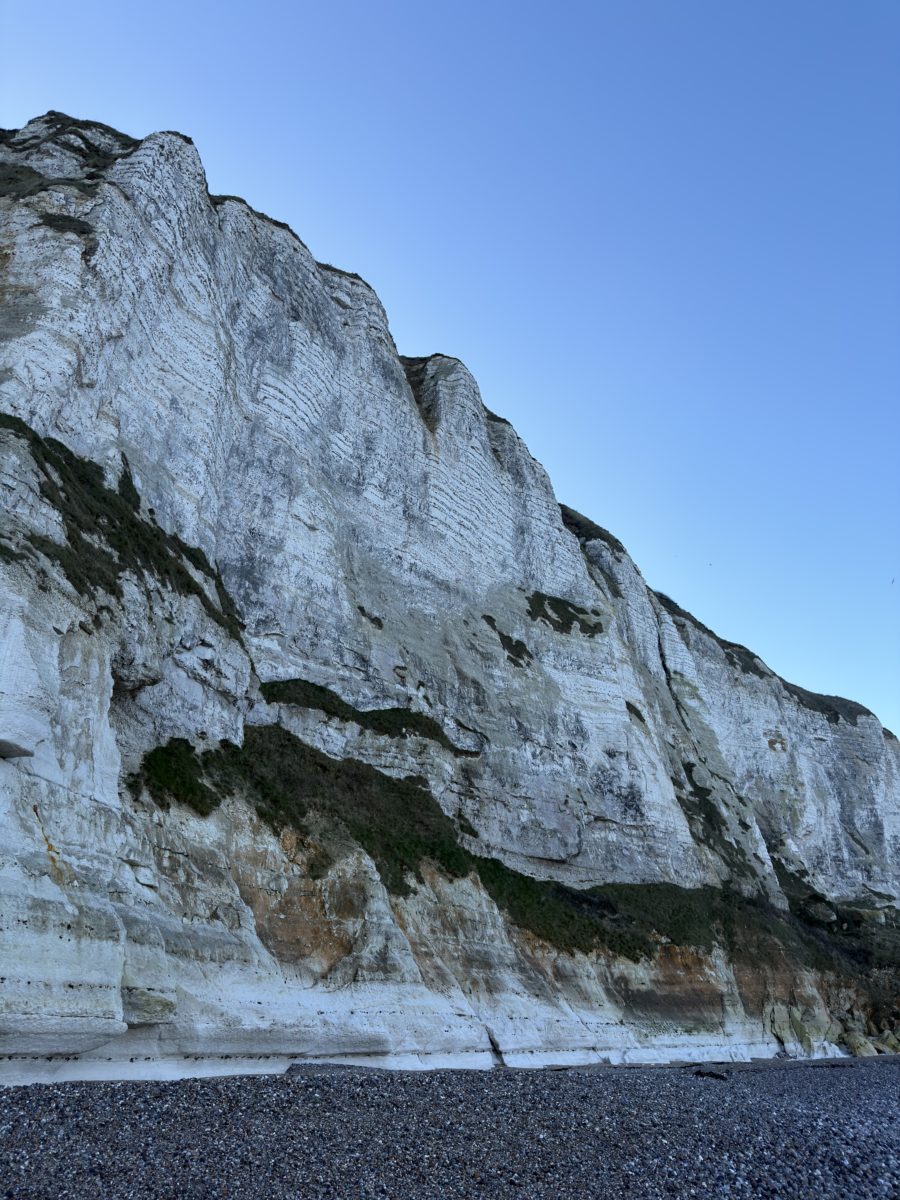
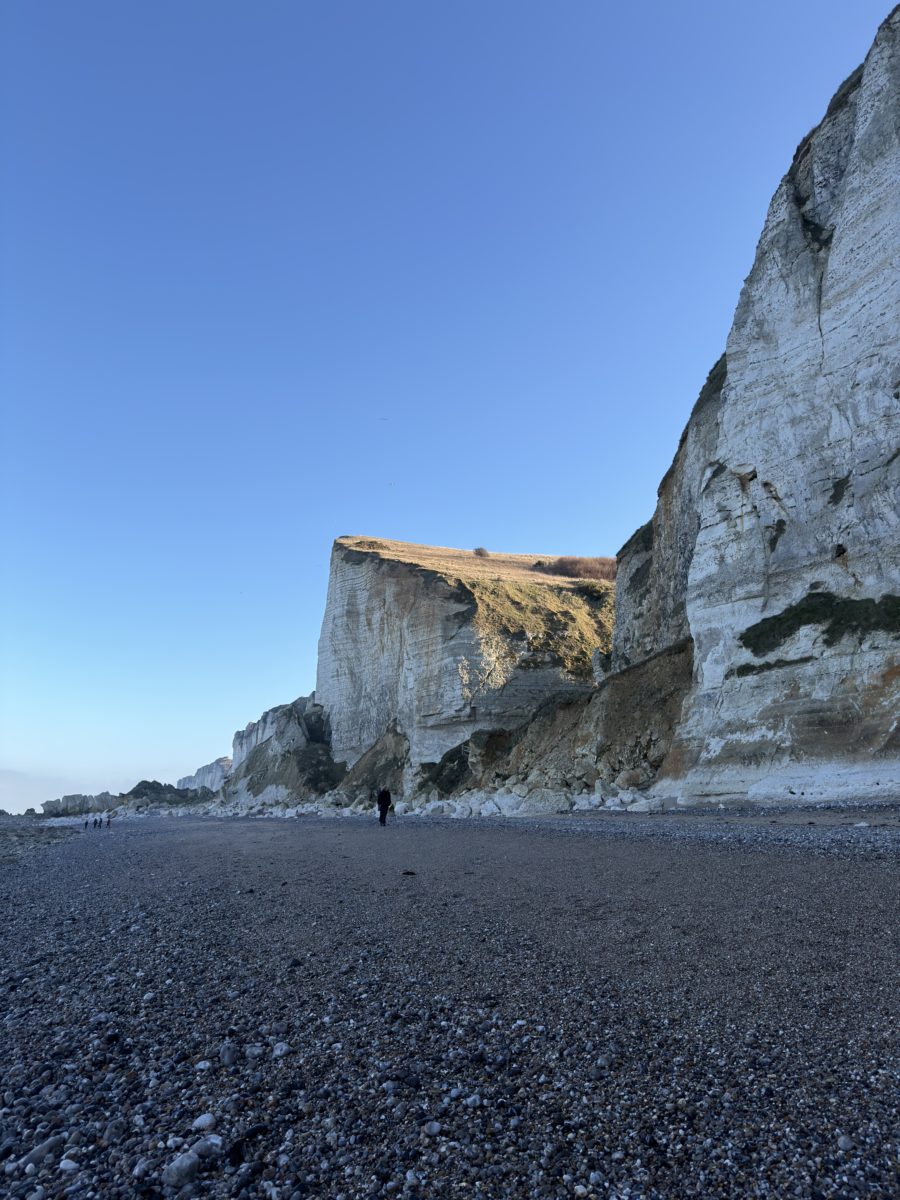
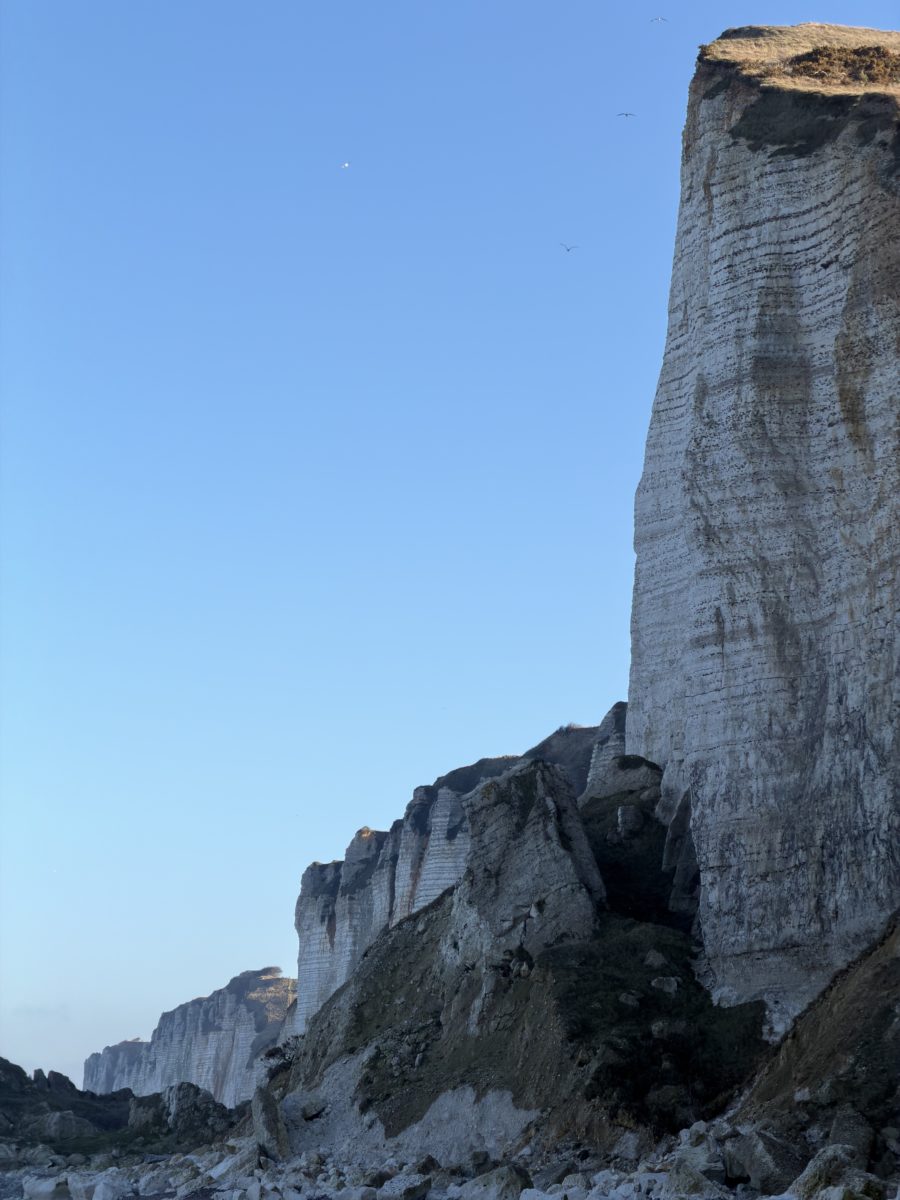
The place doesn’t try to please. It doesn’t pose. It simply exists, direct, almost austere. And that is precisely what makes it overwhelming. The silence is immense, only broken by the wind’s breath and the distant crash of waves. We feel tiny, yet strangely in our place.
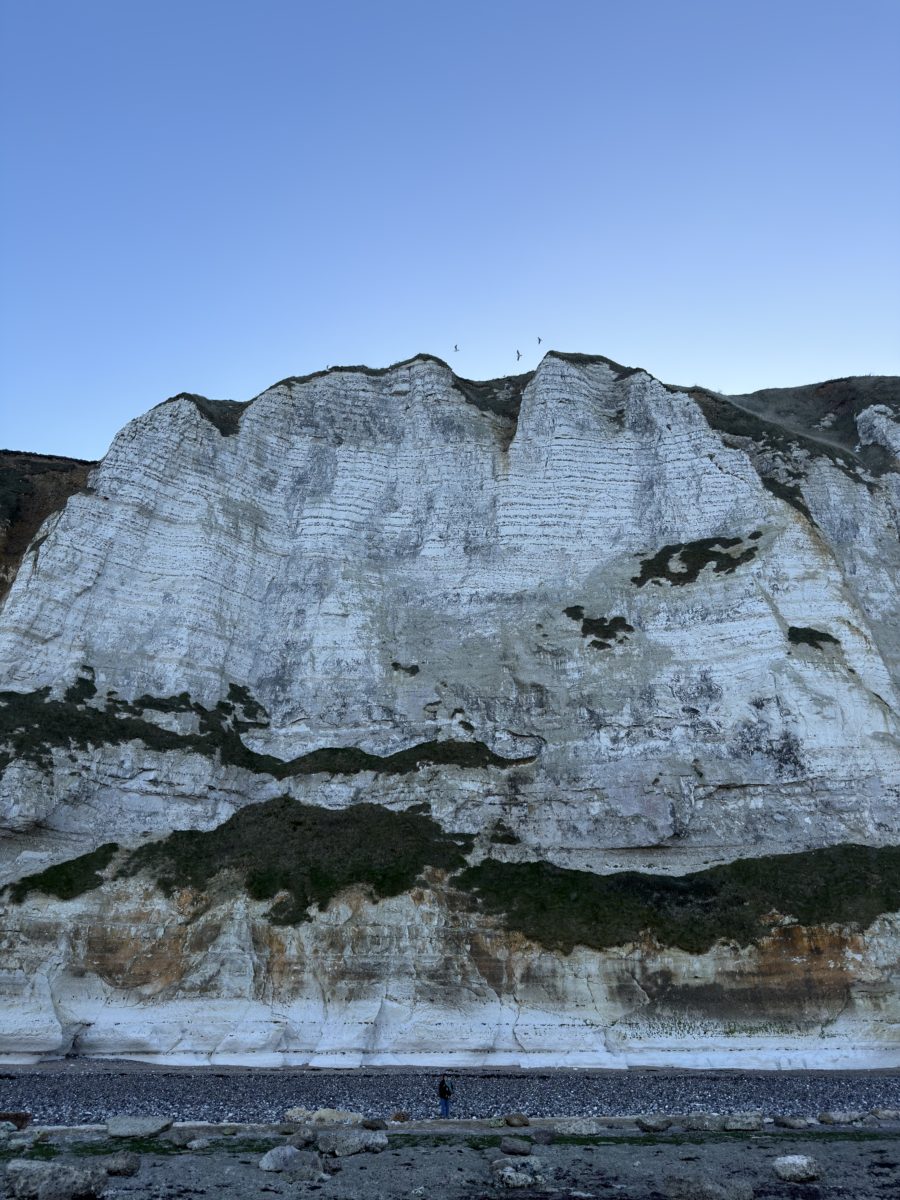
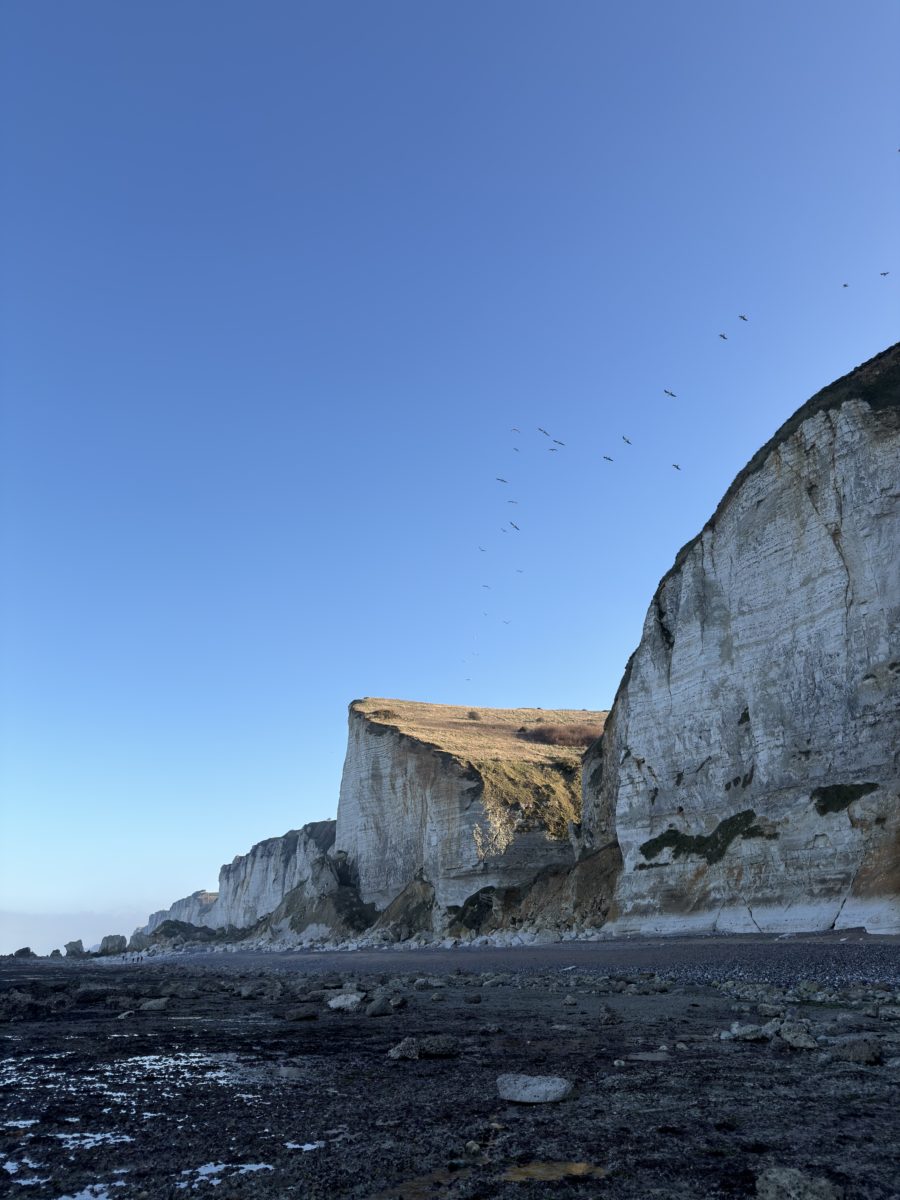
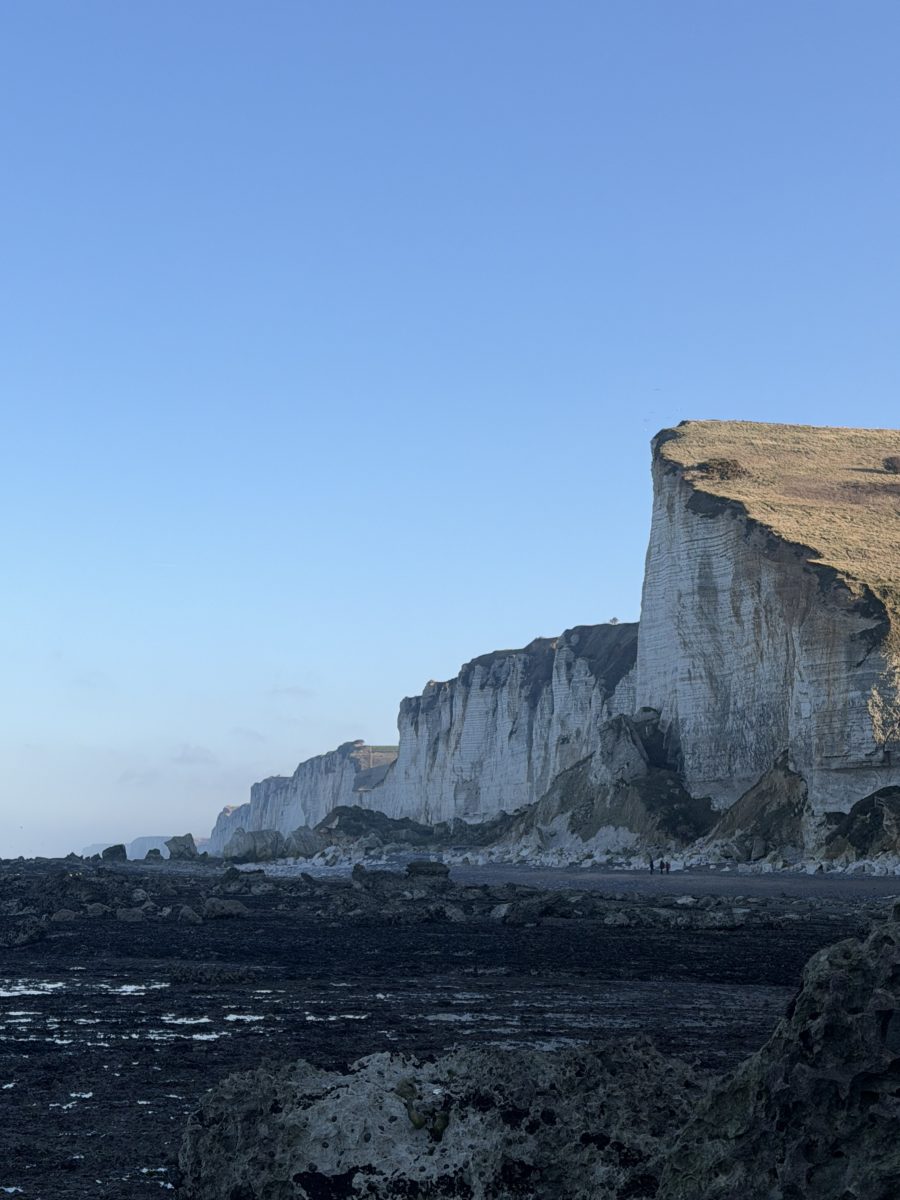
My partner goes crab hunting, focused and happy, absorbed in this simple game along the rocks. I, on the other hand, immerse myself in the landscape. At low tide, the sea has withdrawn far ahead, letting the cliffs unfold in all their grandeur. Massive, intact, almost unreal, they rise straight up, without compromise.
They do not seek to seduce. They command.
Magnificent. Powerful. Unforgettable.
One of those places where there is nothing to add, nothing to explain. Just to look, to feel, and to remember.
Yport
And then, Yport. We wander around a bit, looking for a restaurant… without success. But it doesn’t matter. This village has its own charm, far from the bustle, in its simplicity and gentle way of life.
Yport is calm, almost deserted off-season, and this tranquility can be savored before reaching Étretat. The small, colorful huts along the shoreline, the welcome rays of sunlight, the boats waiting to set sail again, all invite relaxation.
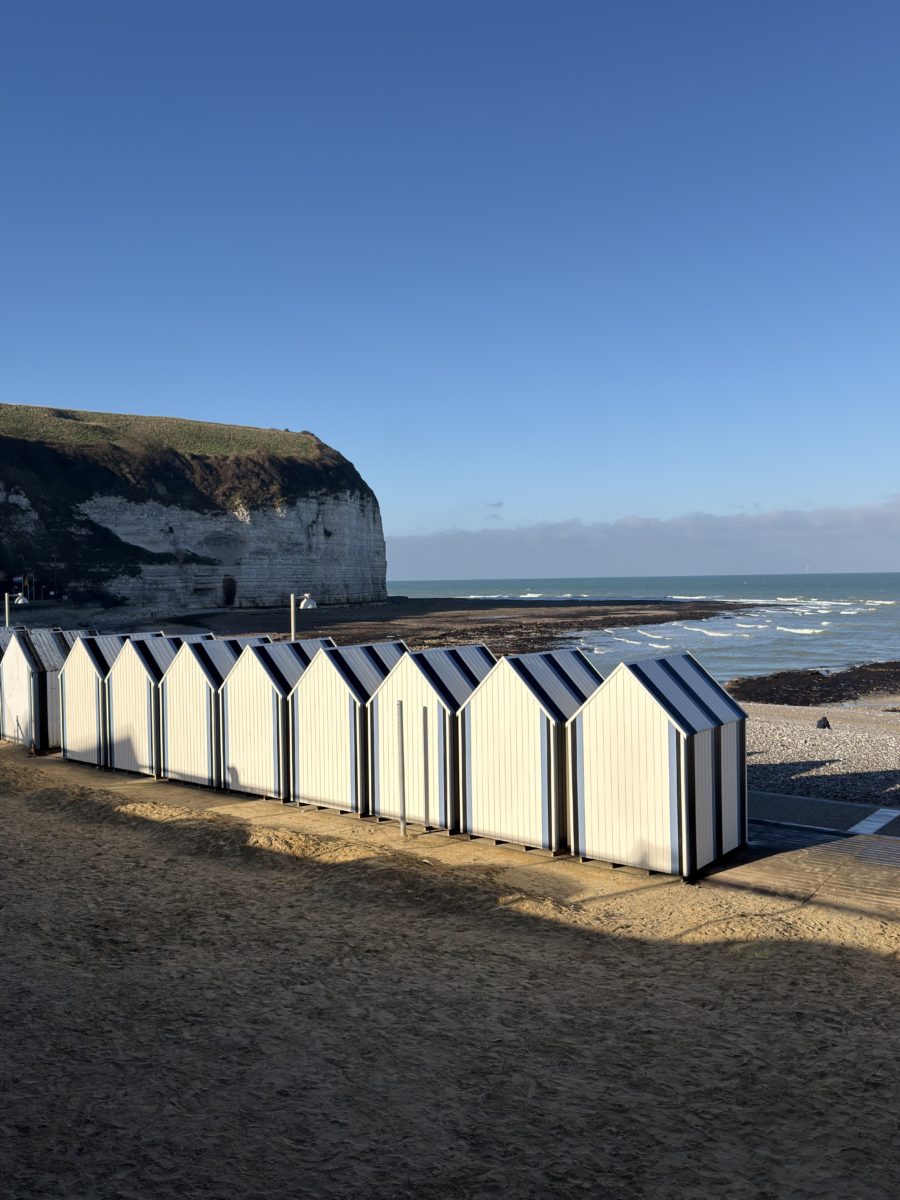
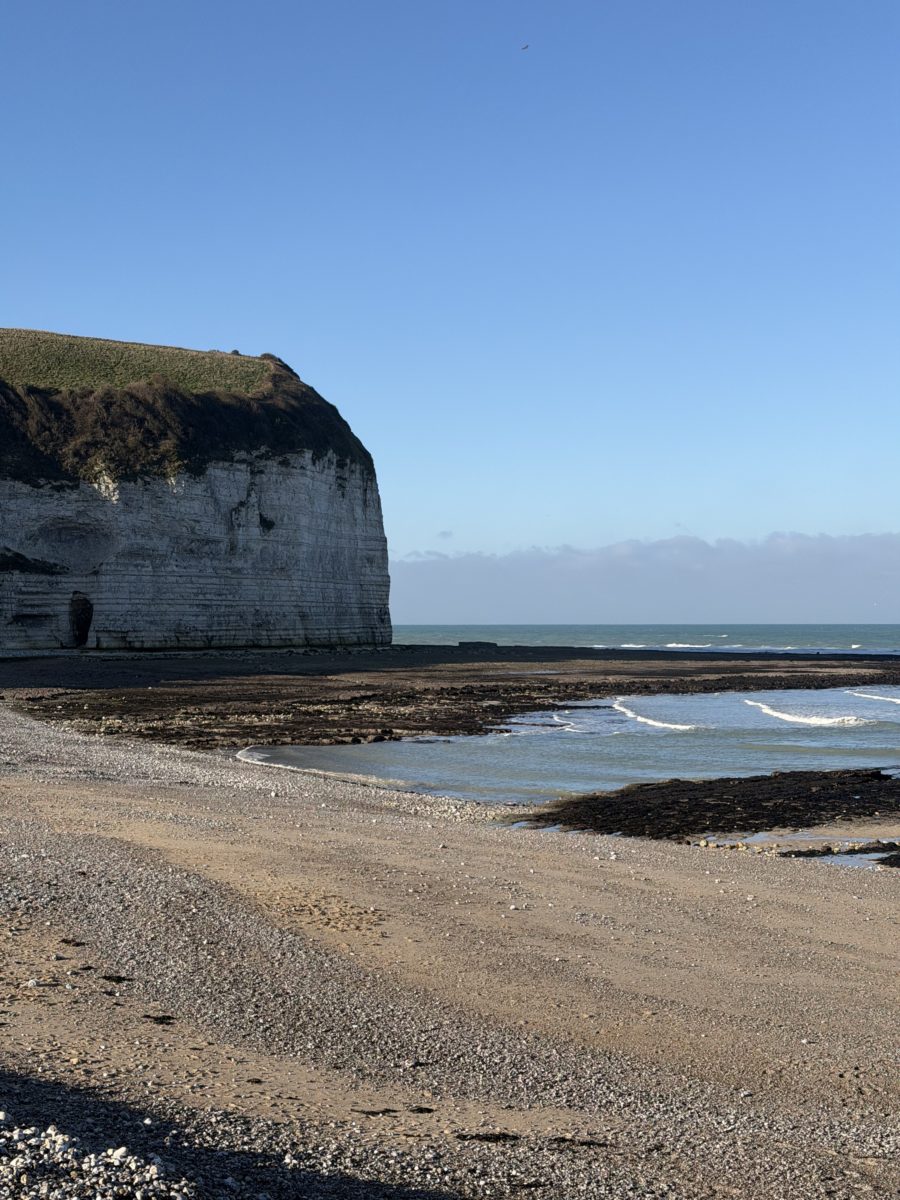
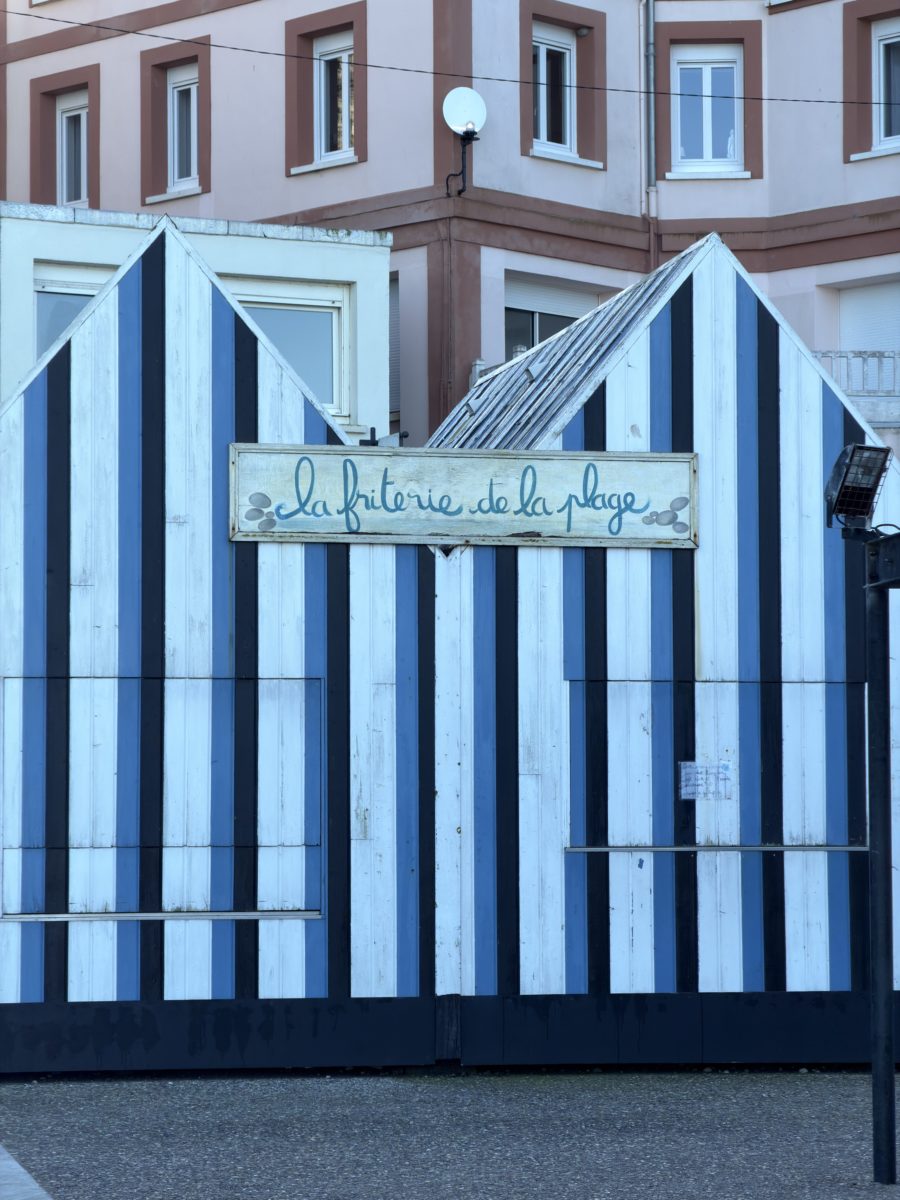
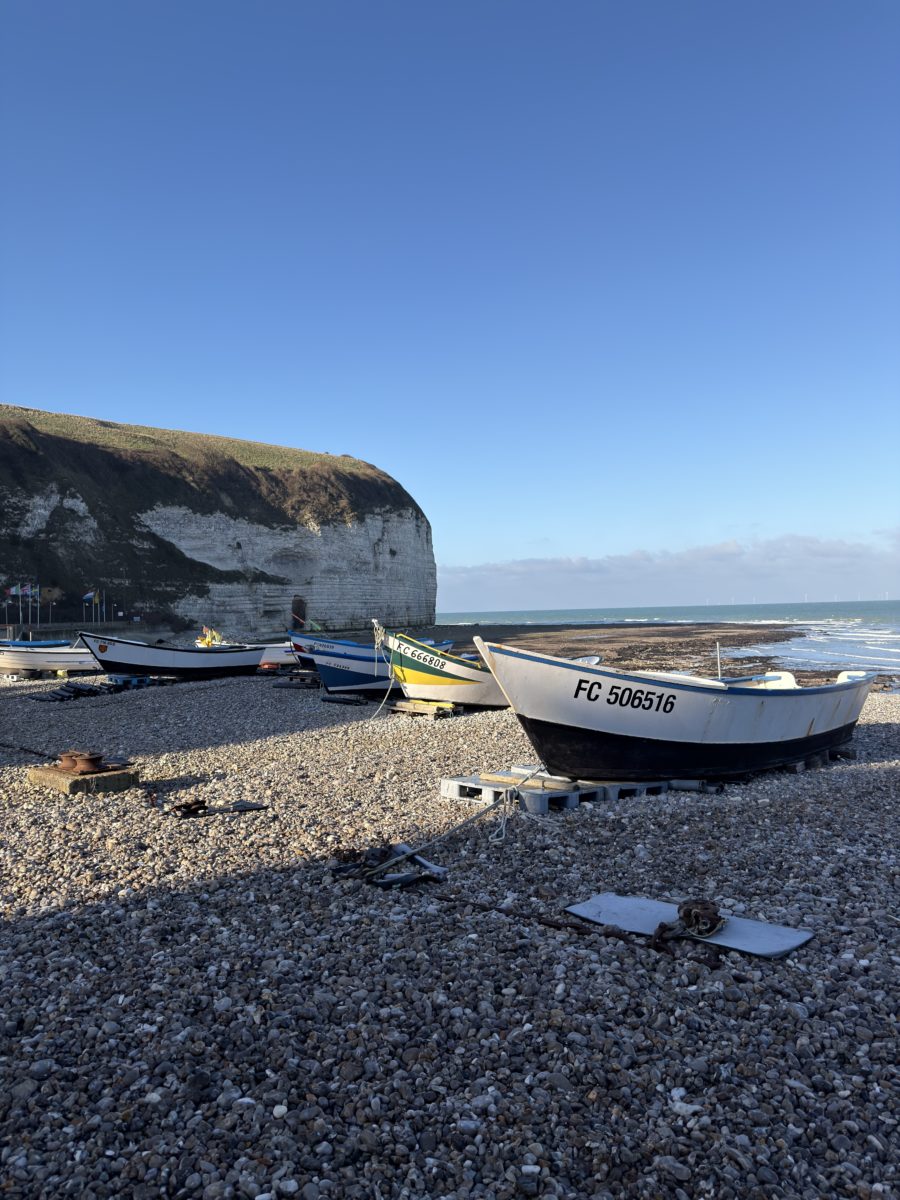
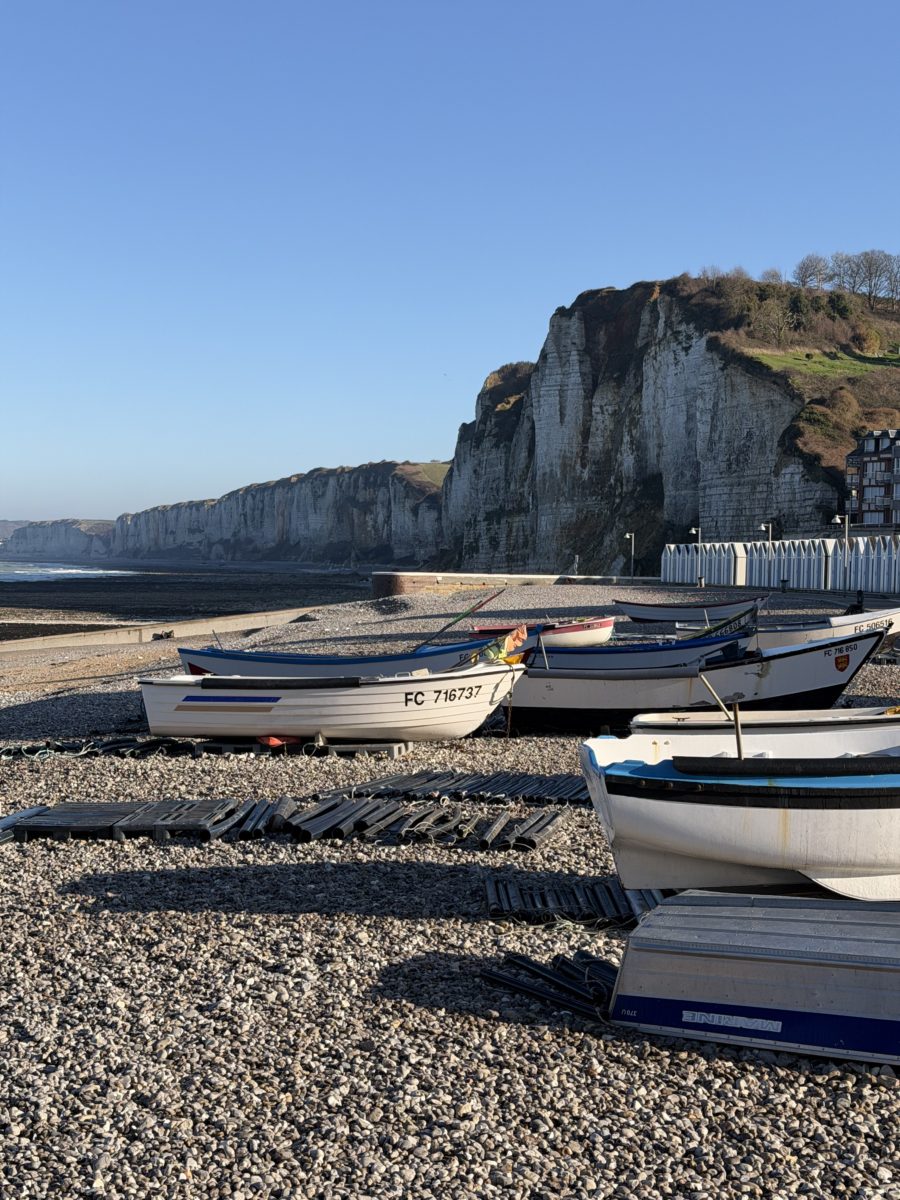
One can already imagine summer, when the famous fries stand opens, drawing hungry strollers and the laughter of children. But for now, off-season, Yport can be experienced slowly, without rush or noise, like a silent interlude nestled between two cliffs, offering a breath of calm at the heart of the Côte d’Albâtre.
ÉTRETAT
And then, Étretat. A place I had long dreamed of seeing and feeling. A name that immediately evokes its famous white chalk cliffs, the arches sculpted by the sea, especially the renowned Porte d’Aval and the Needle, an iconic silhouette reaching toward the sky. The village, with its roughly 1,200 inhabitants, moves to the rhythm of visitors from around the world, drawn as much by the site’s raw beauty as by its literary and cultural connections. Indeed, who hasn’t heard of Arsène Lupin, the gentleman thief, whose adventures unfold here, or of the famous paintings by Boudin and Monet?
But reality slightly tempers the dream. Finding a parking spot is a challenge: nearly 40 minutes in the large northern lot, a ten-minute walk from the center. Once there, the crowd asserts itself, somewhat diluting the magic of the place. It’s December 29, 2°C, with a wind chill close to -5. What must it be like in the height of summer, when the site is overrun?
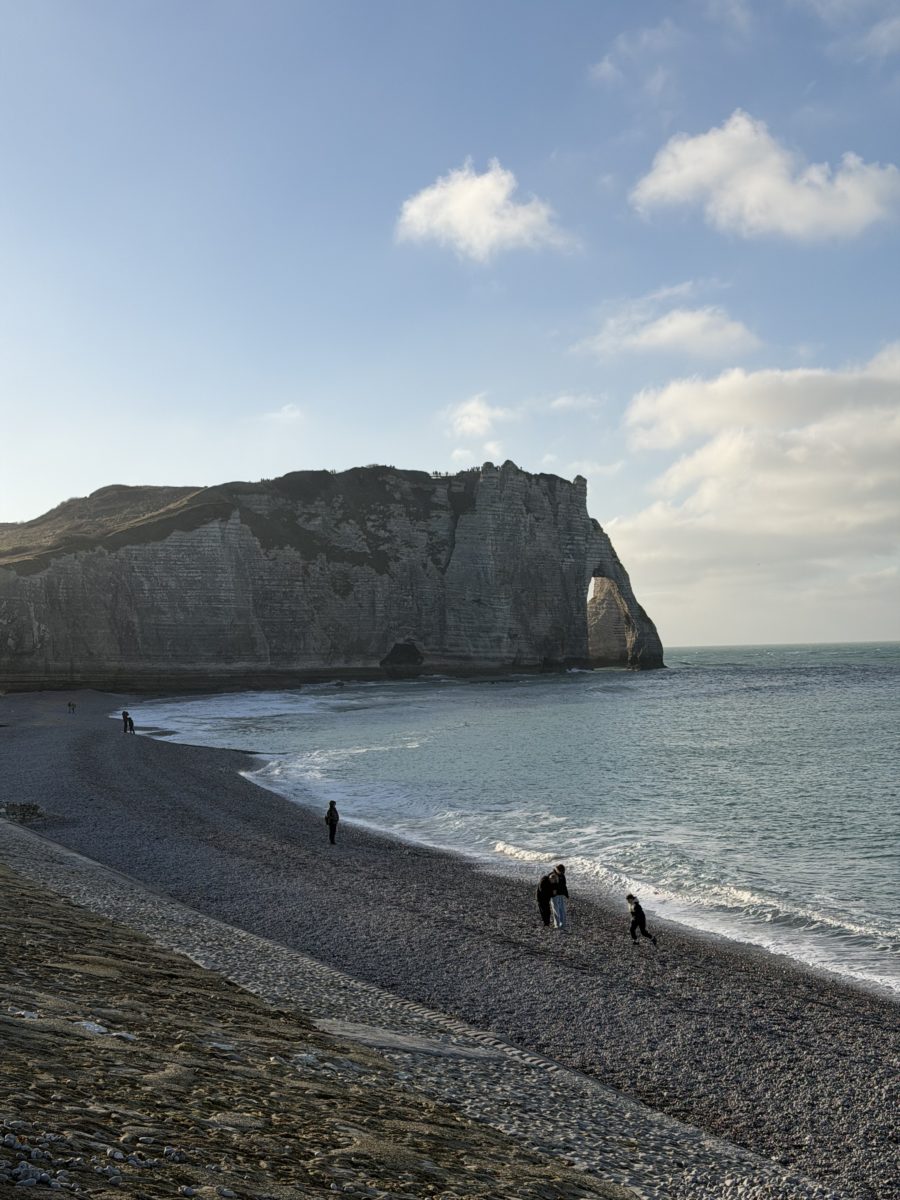
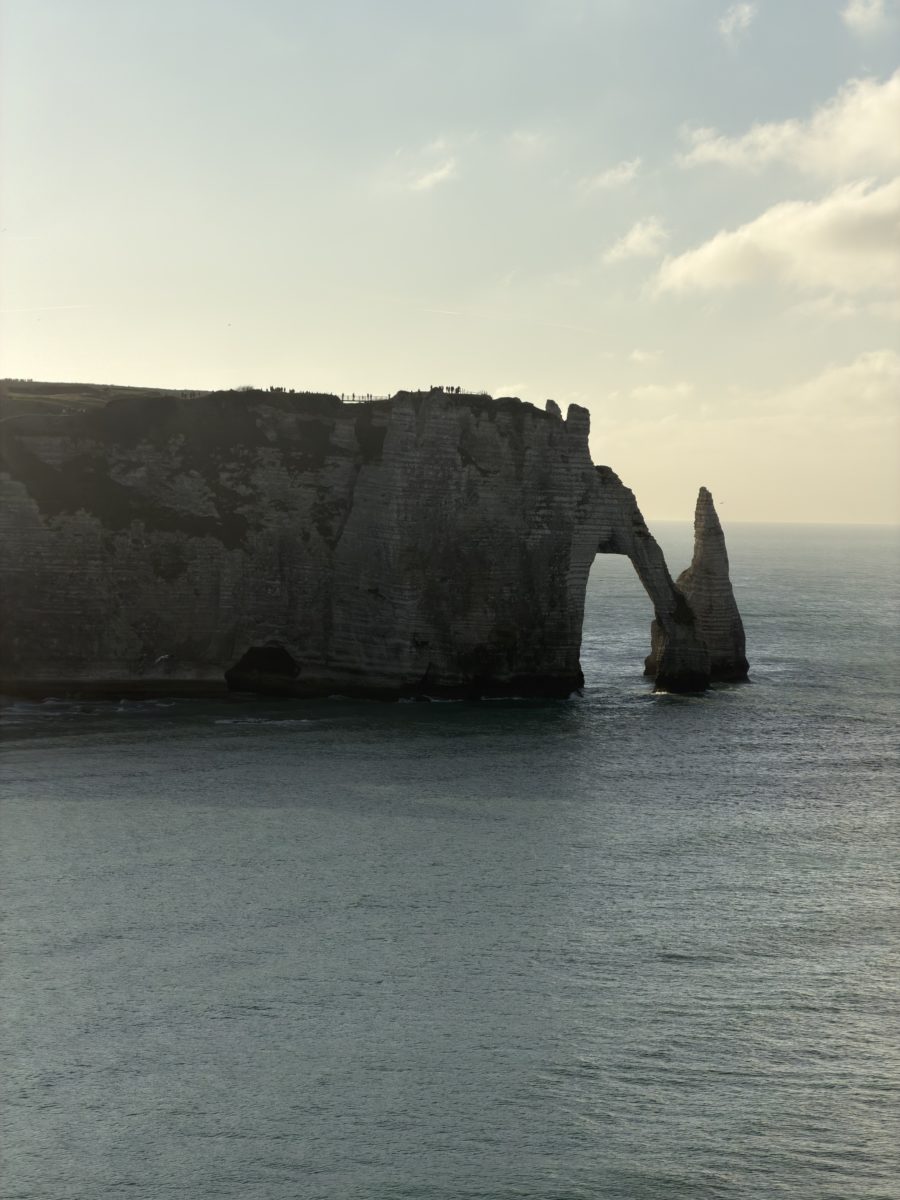
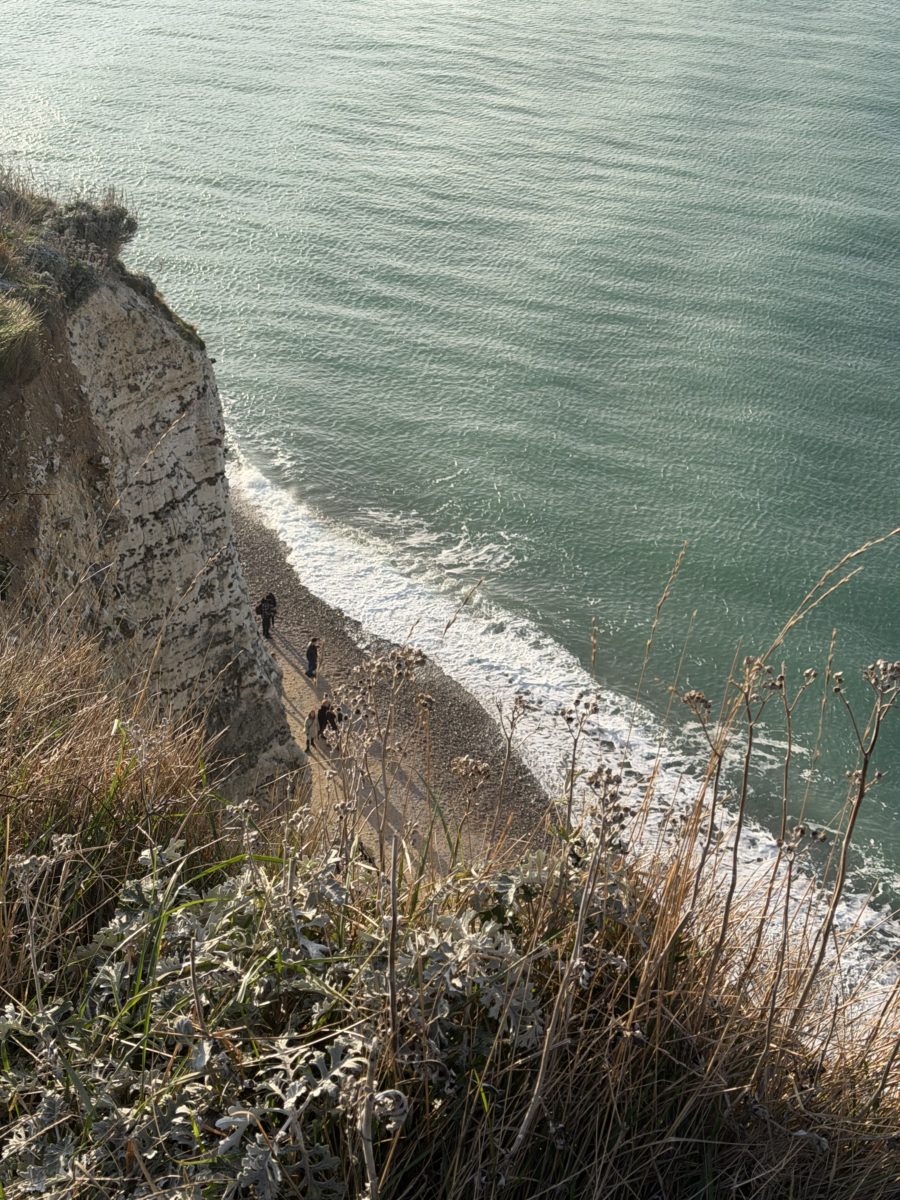
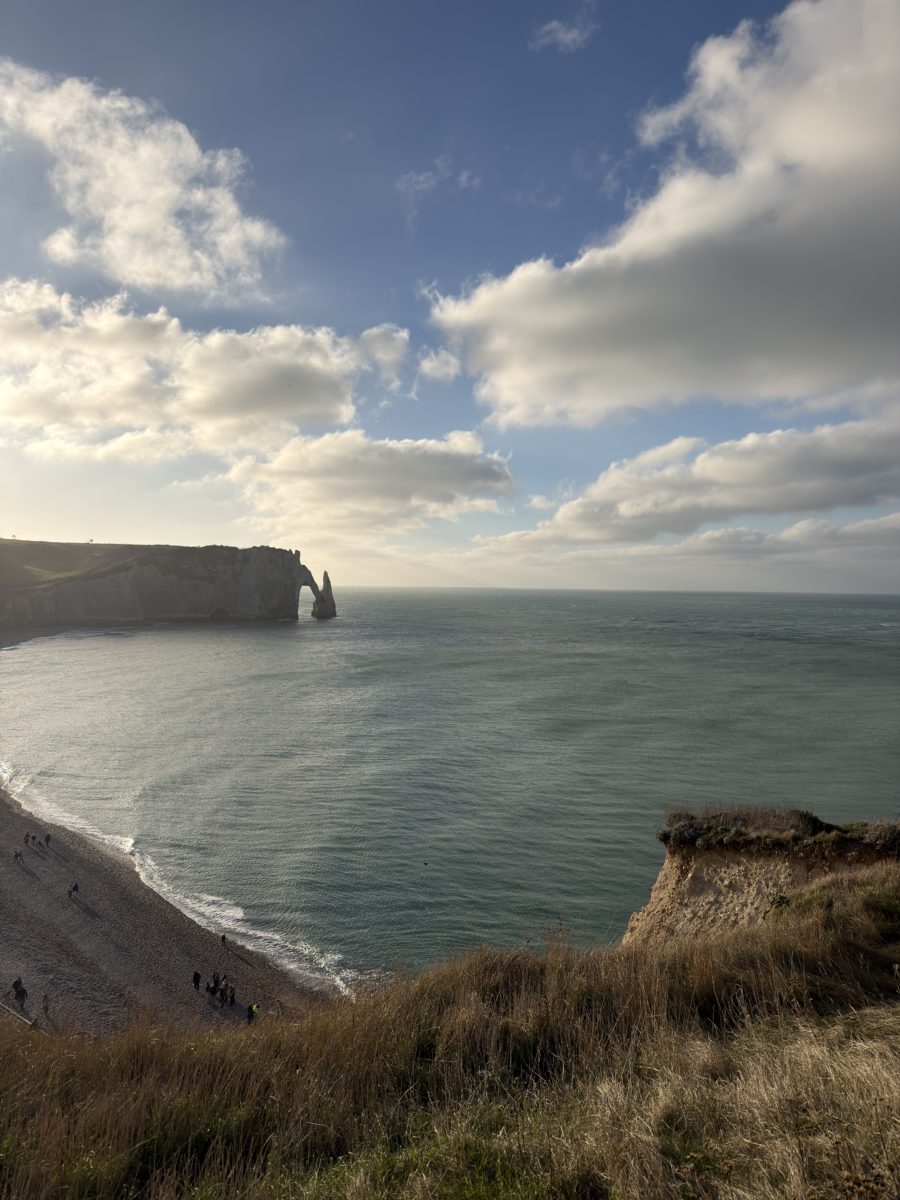
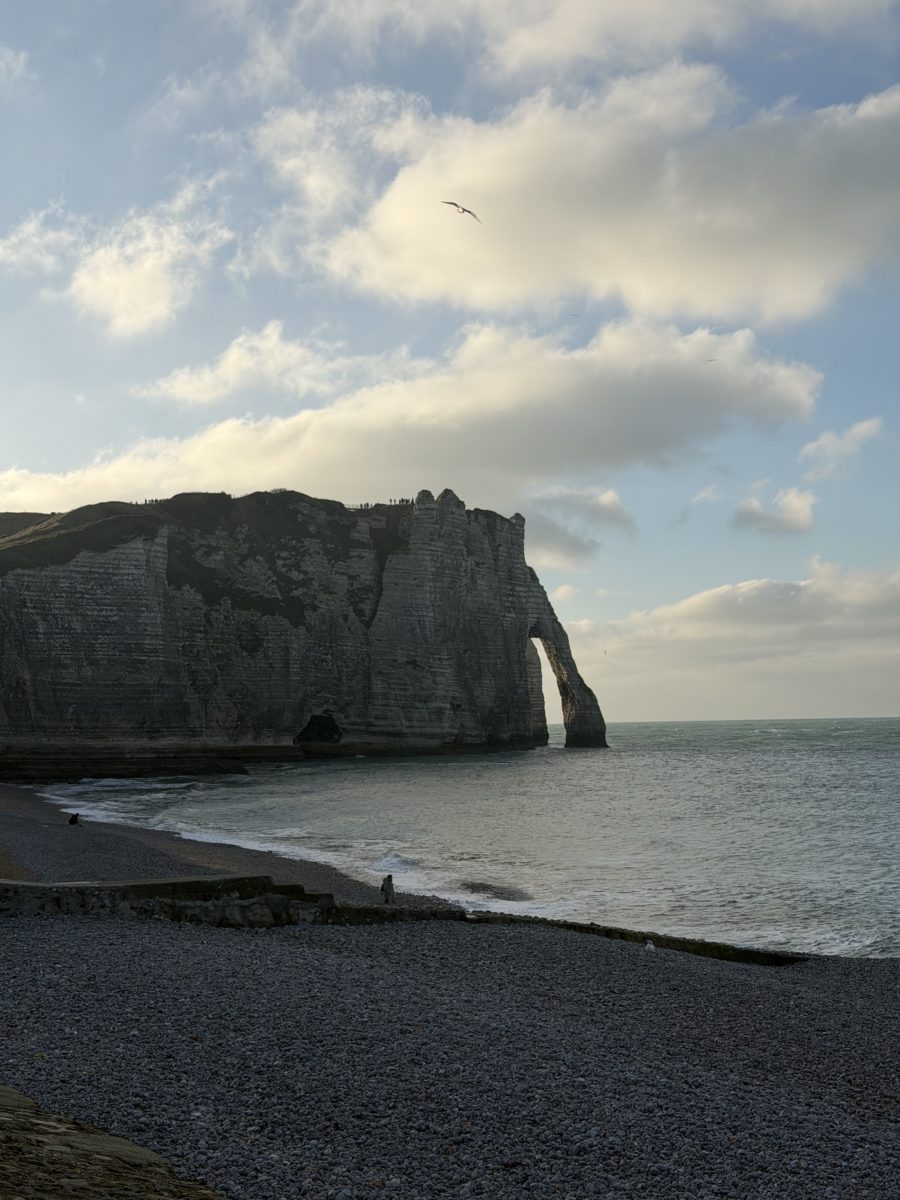
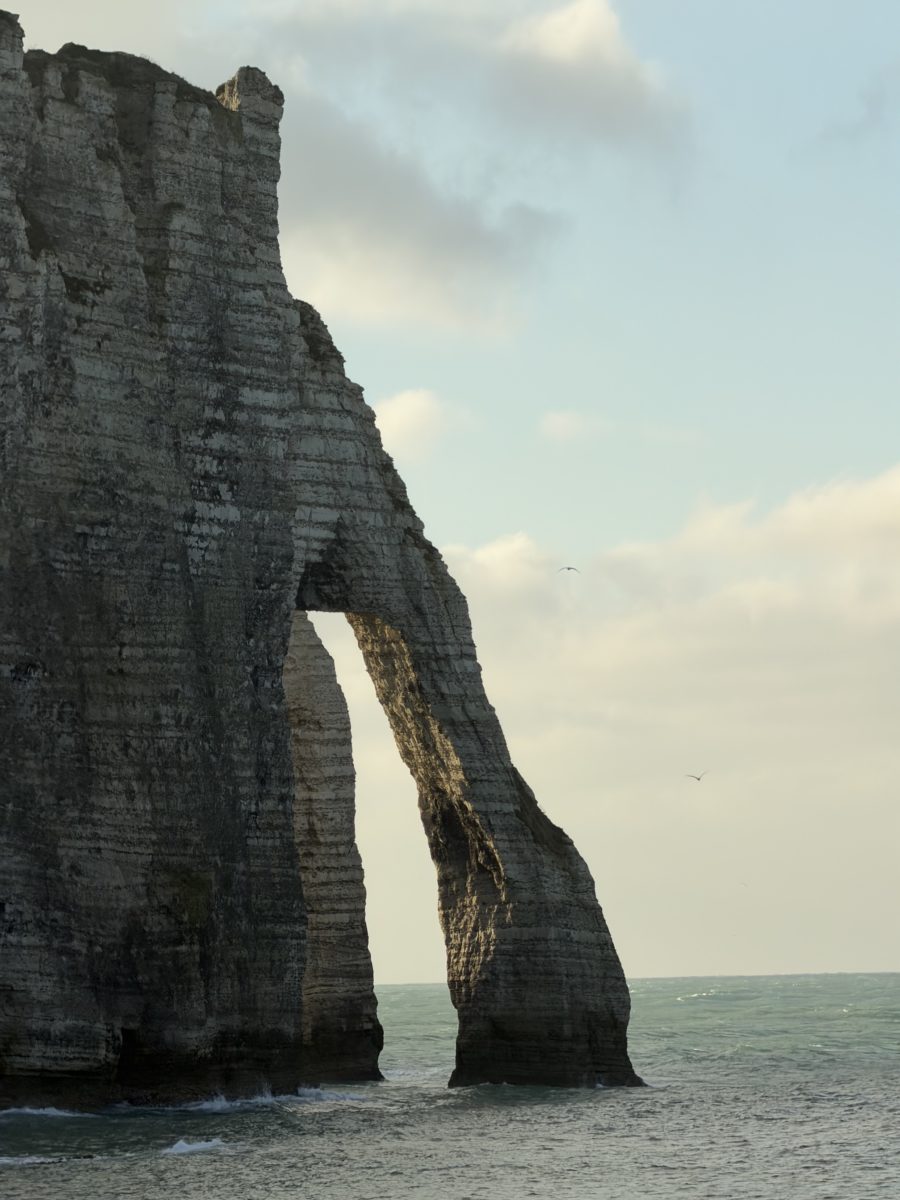
Fortunately, the sun is out. Its light catches the natural arches, the white cliffs, and the deep waters of the English Channel, illuminating the landscape with a golden glow that reminds us why Étretat is so captivating.
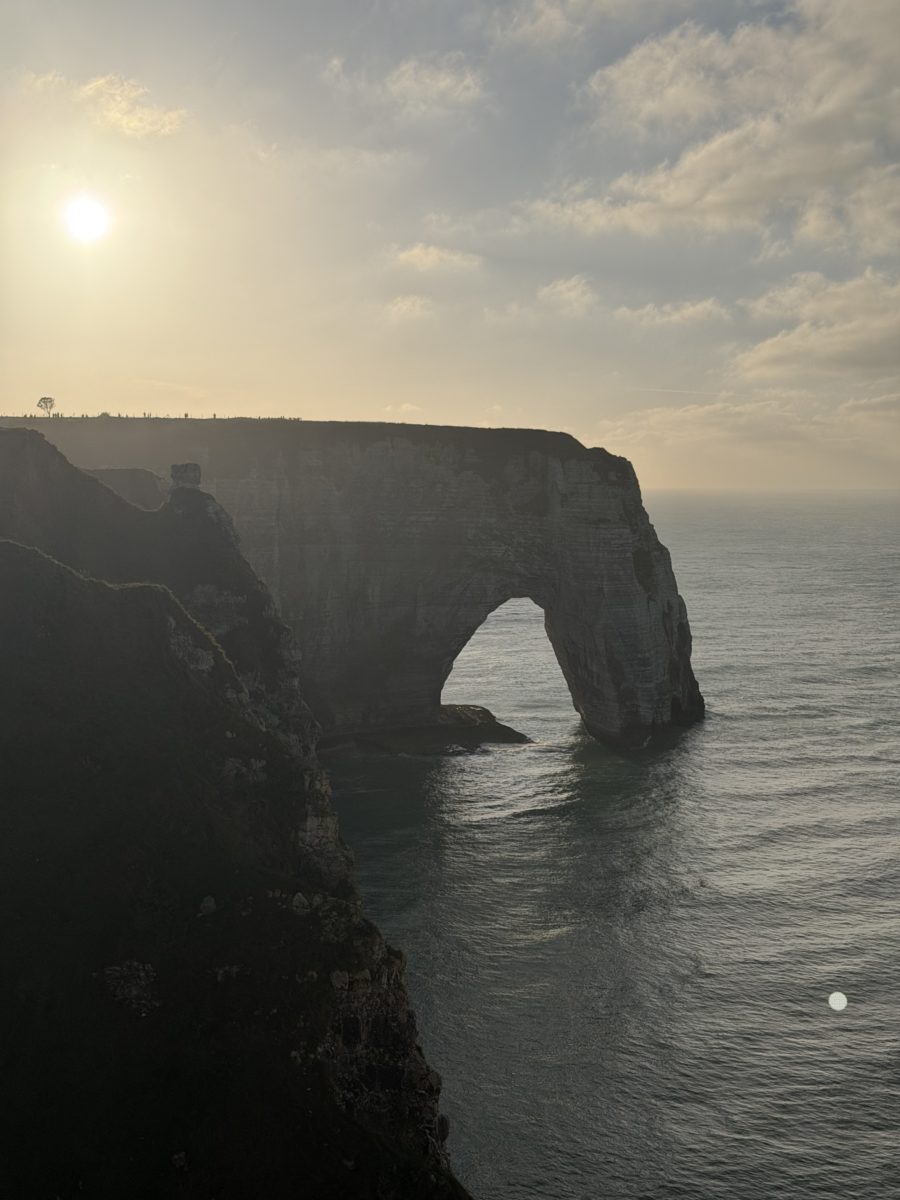
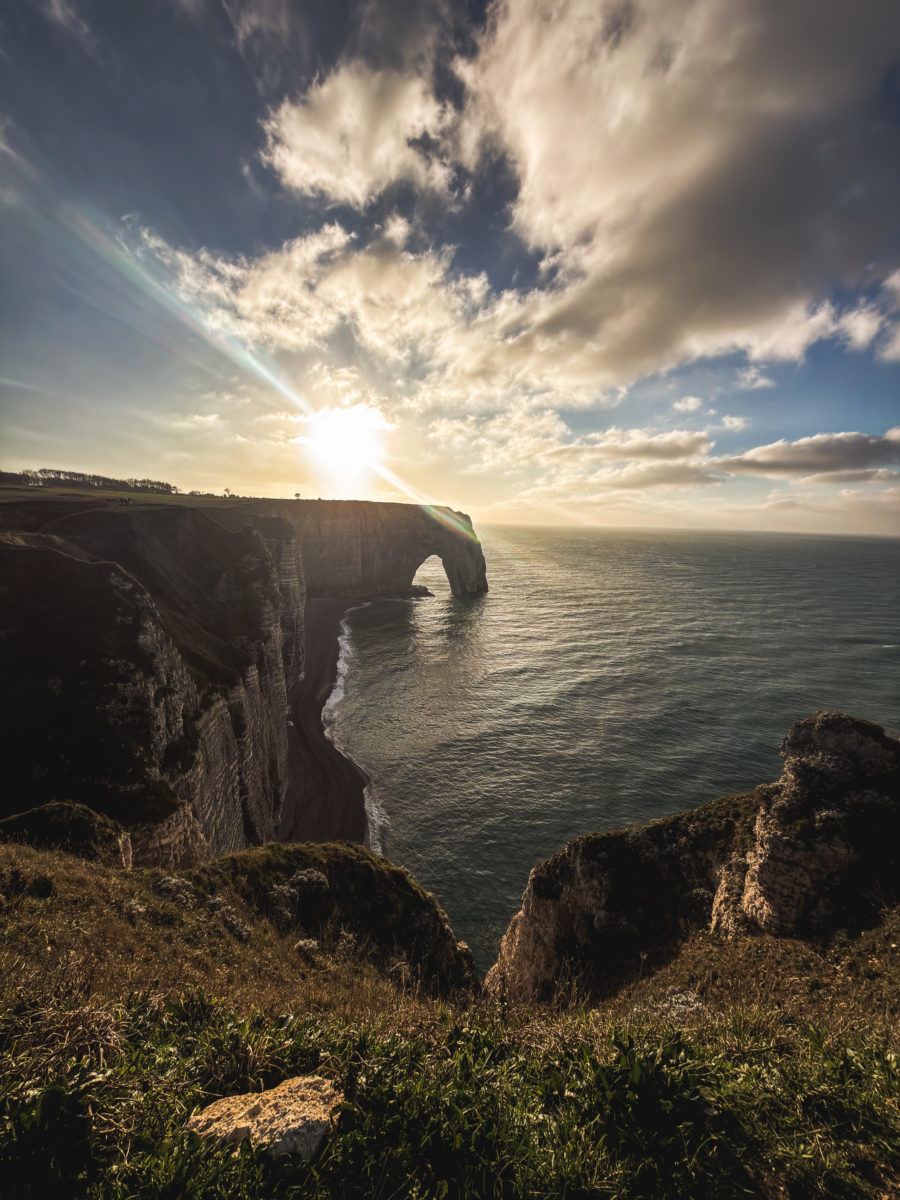
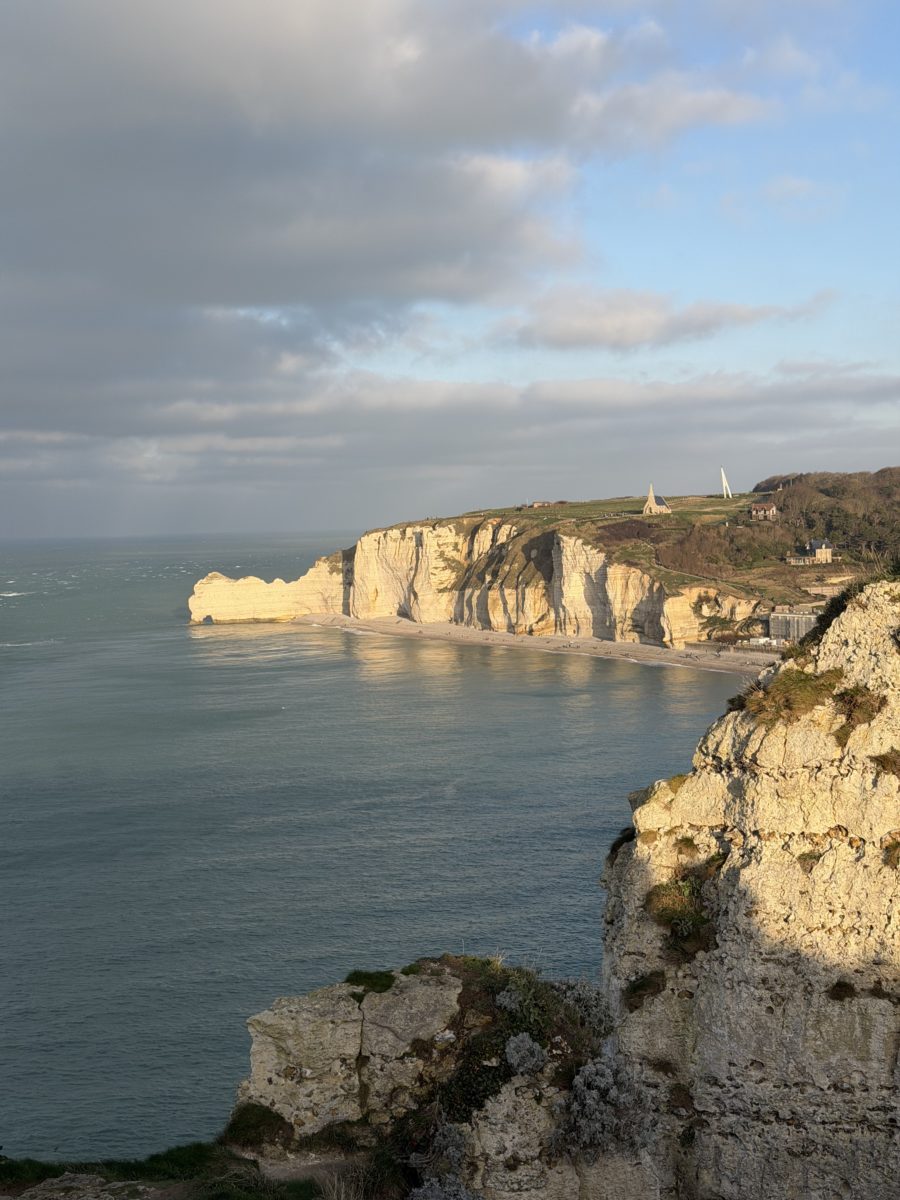
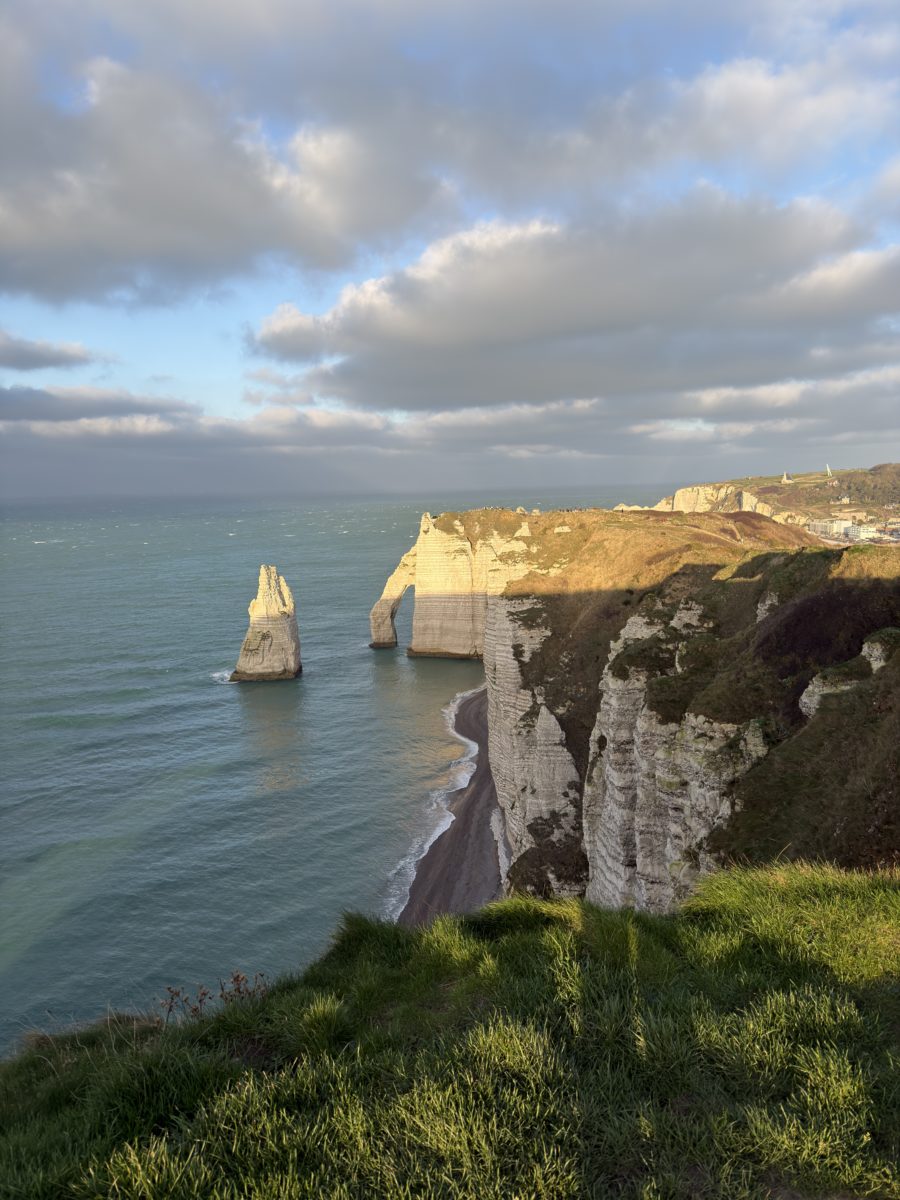
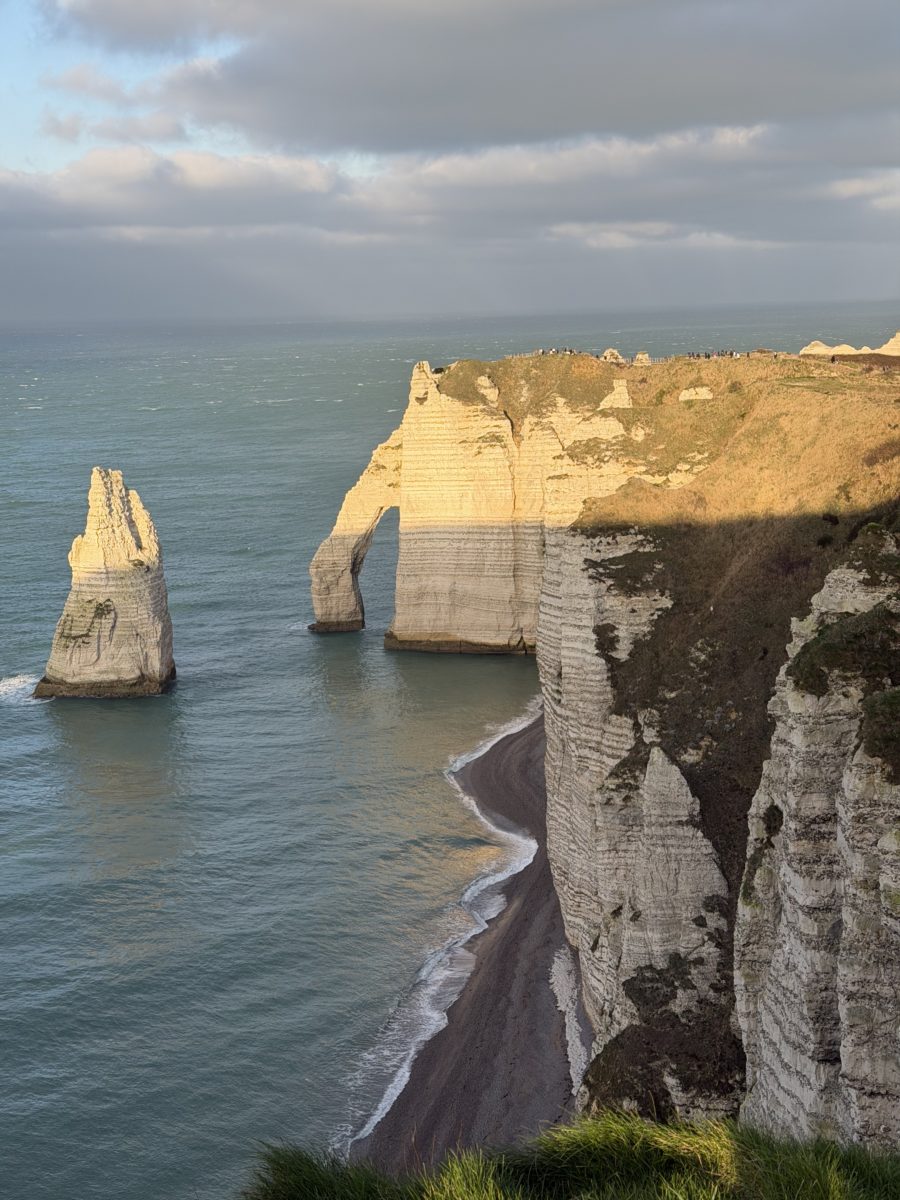
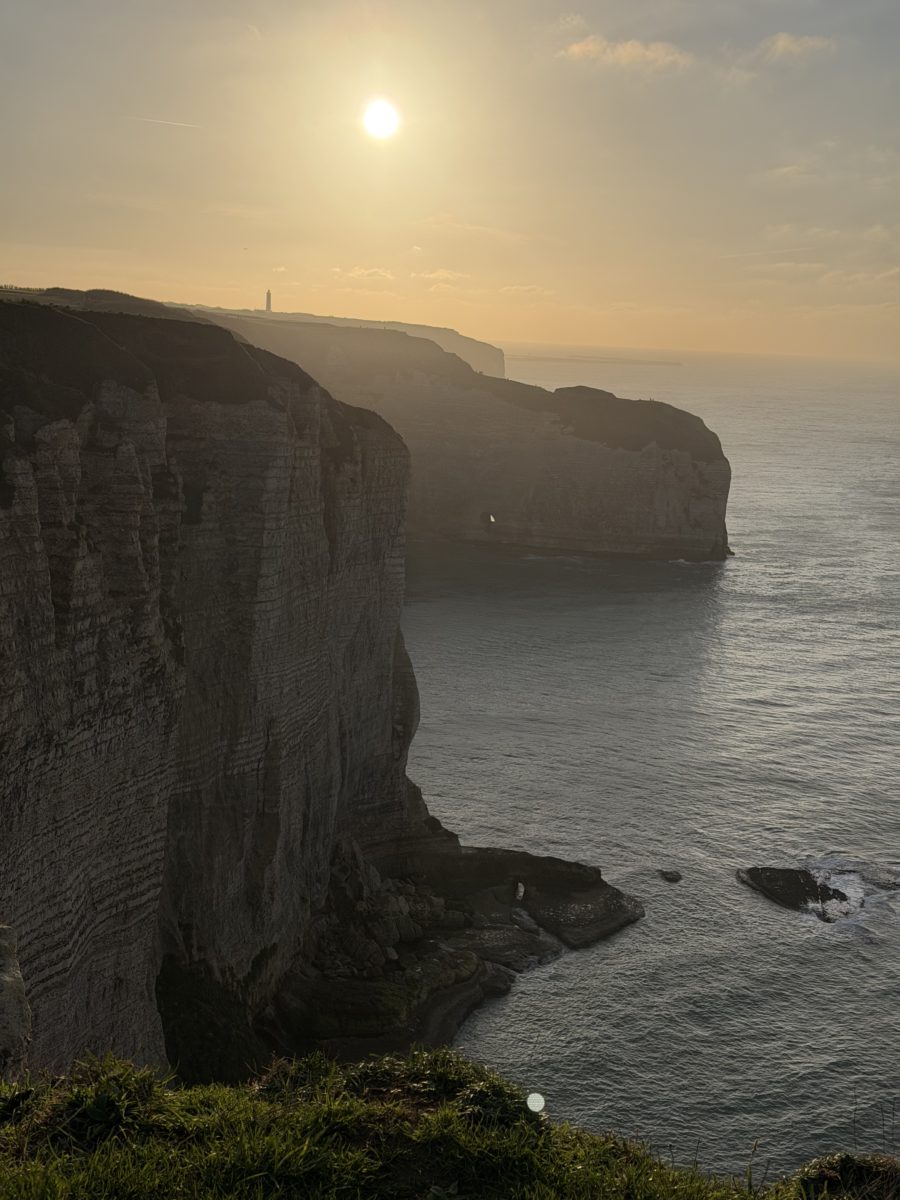
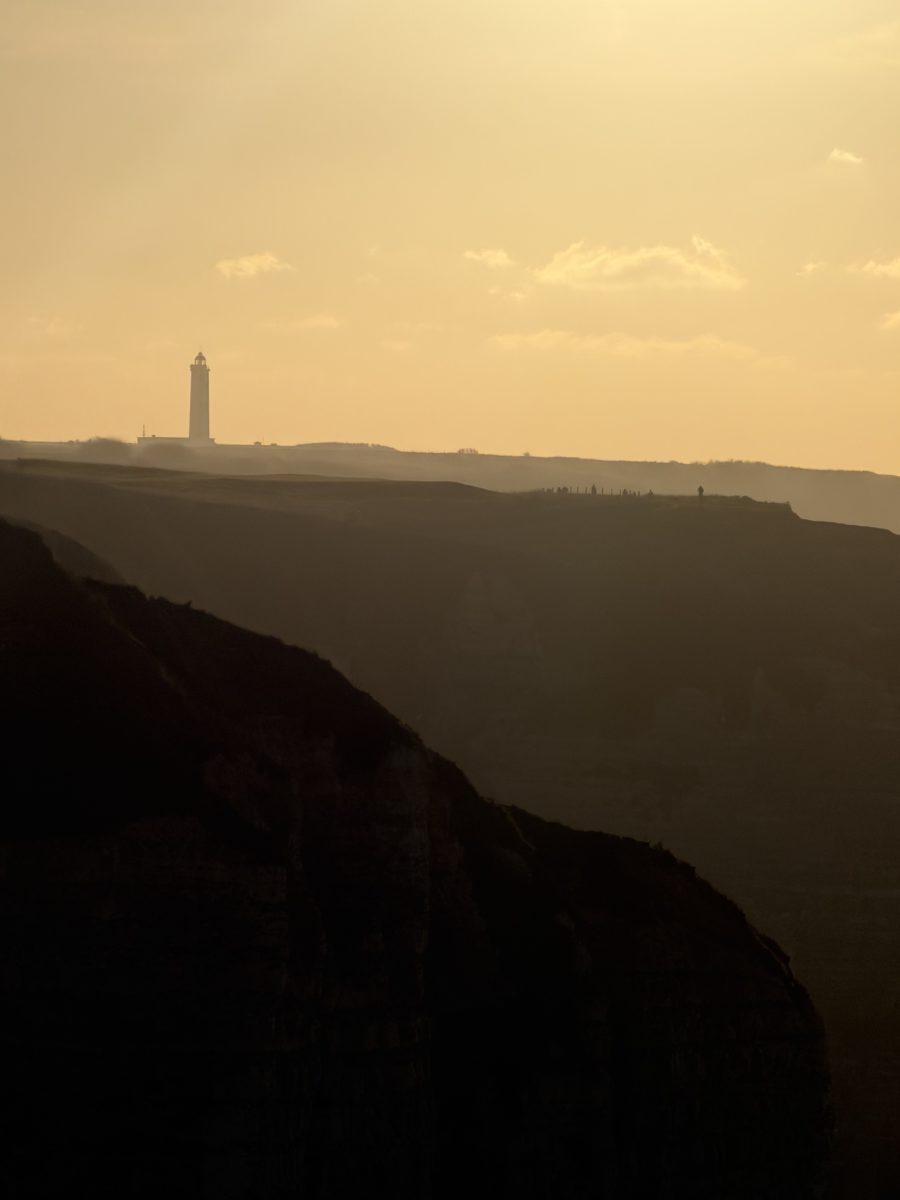
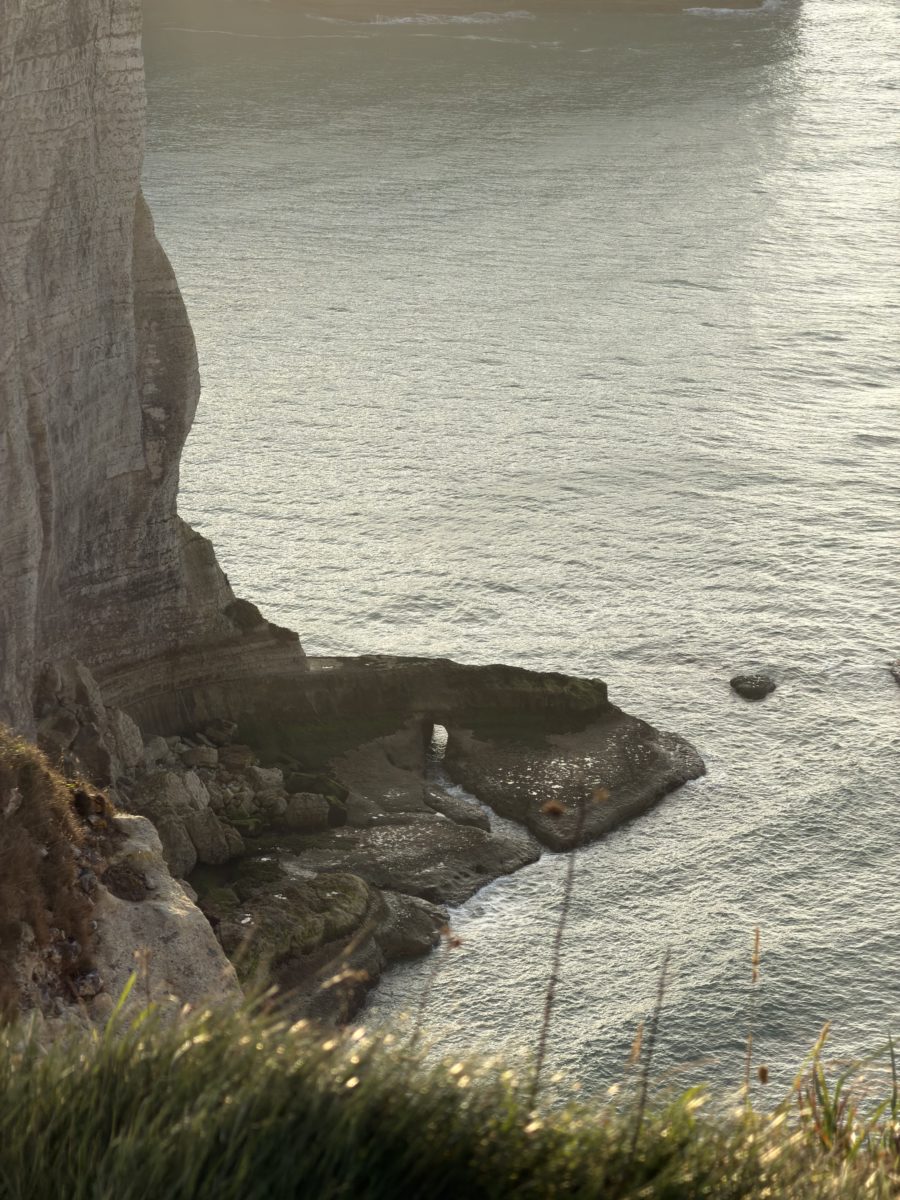
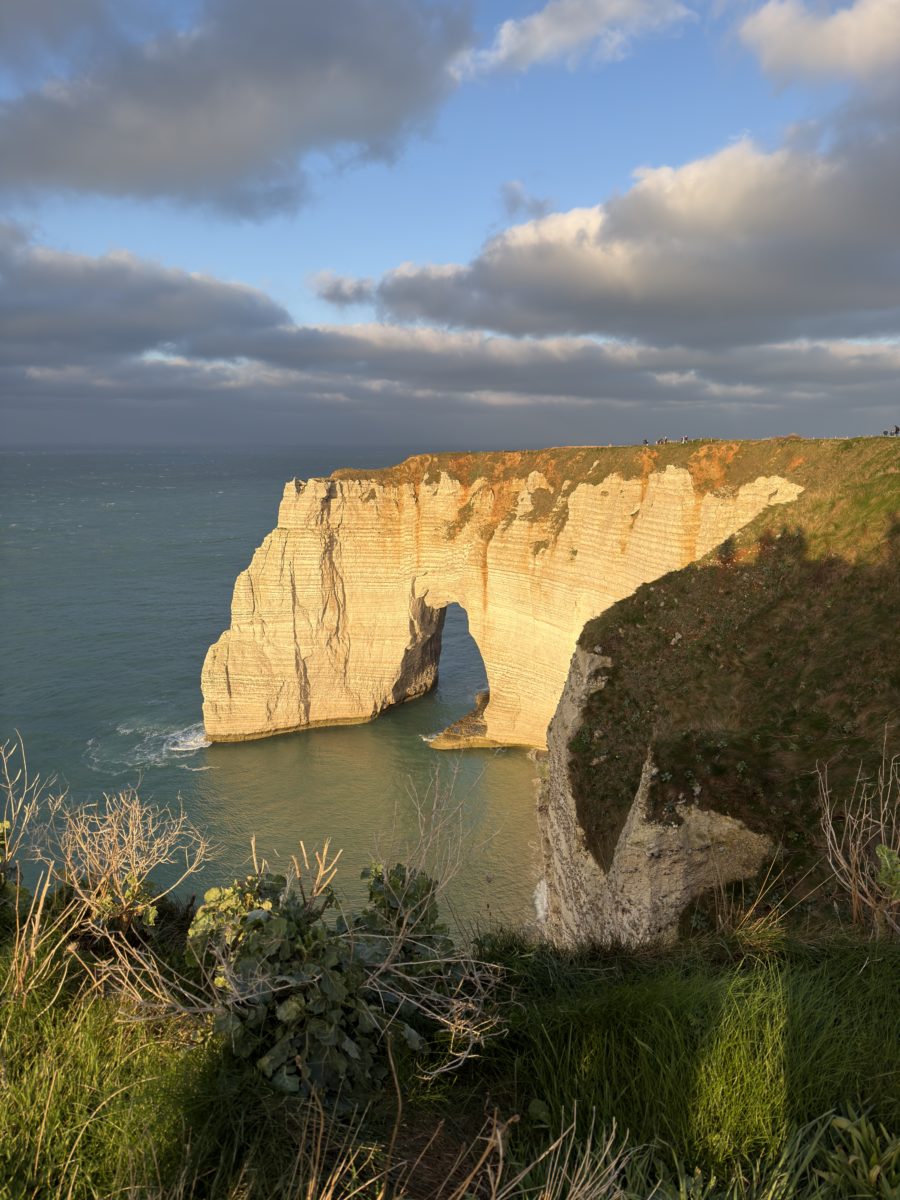
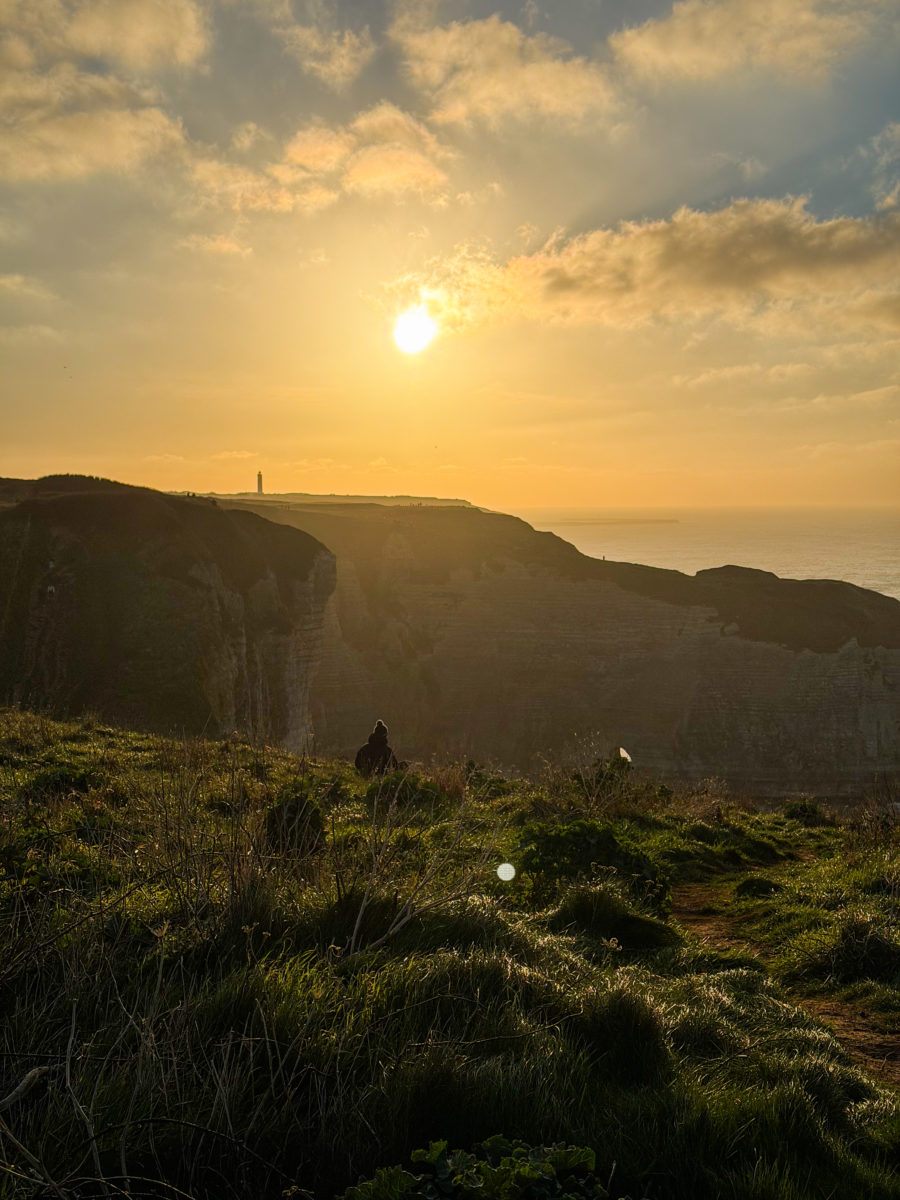
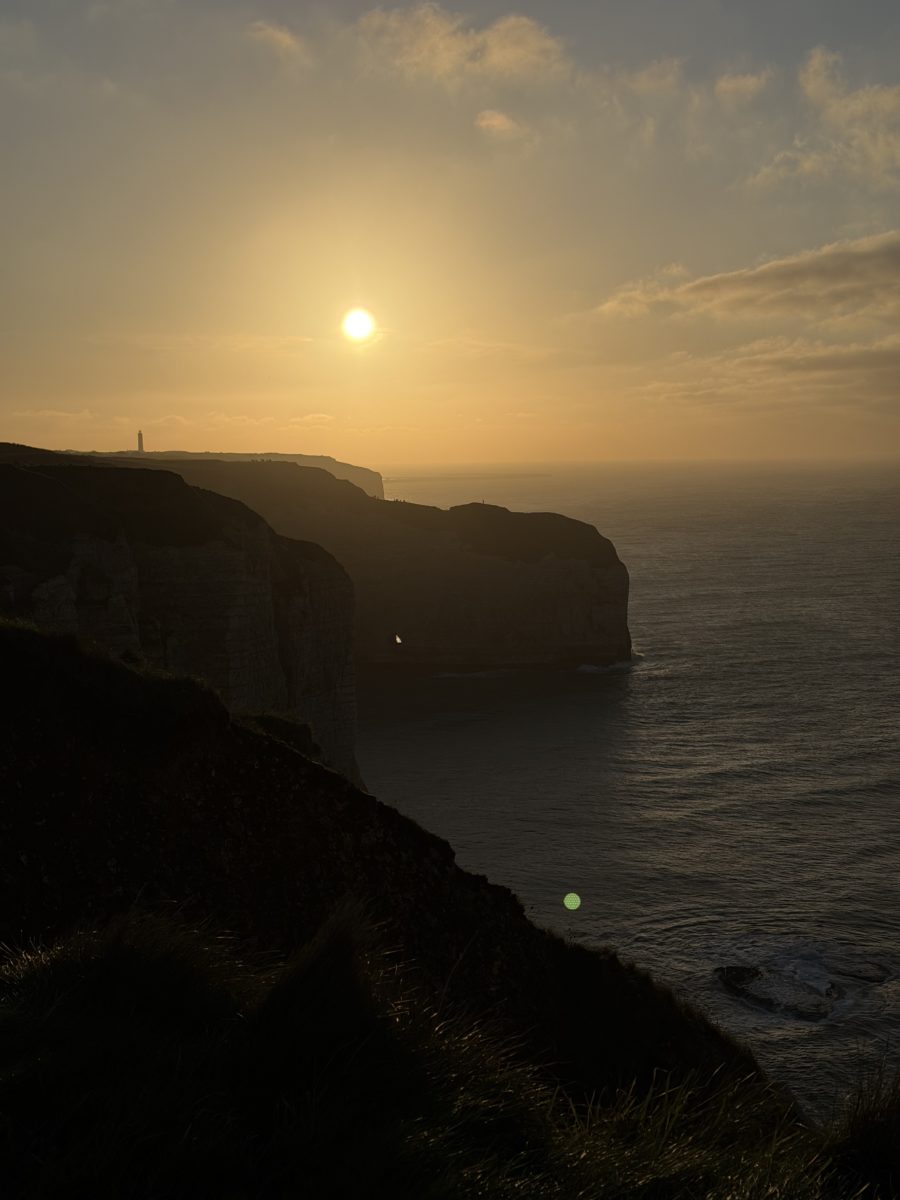
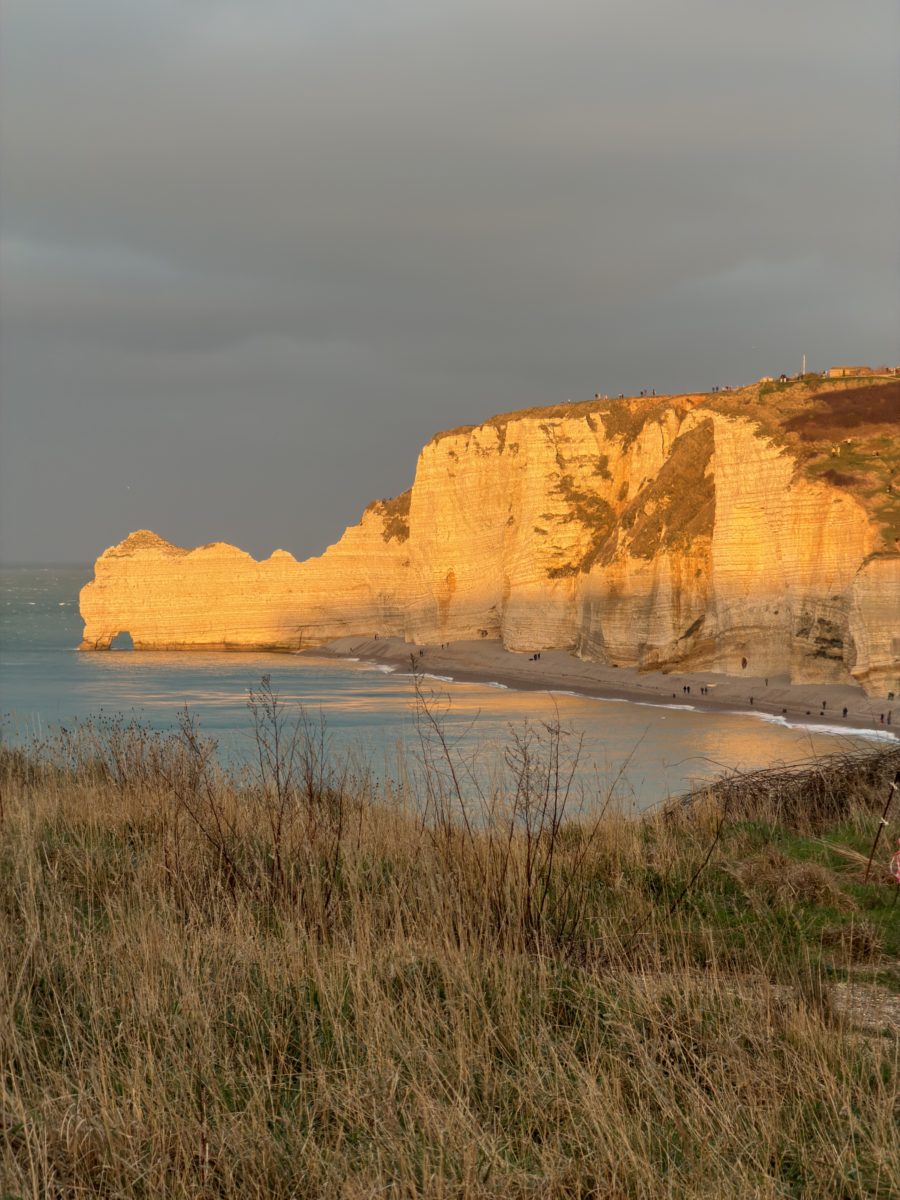
We hike for a good thirty minutes along the trails above the cliffs, between bracing sea air and stunning panoramas. Yet, despite the undeniable beauty, the slightly wild and solitary charm of the cliffs we encountered earlier seems to fade here under the weight of the visitors.
Étretat remains an exceptional place, a Norman gem, even if its magic is now shared, almost contested.
DAY 4: FAREWELL TO THE Côte d’Albâtre; FROM ÉTRETAT TO PARIS
LA POTERIE-CAP-D’ANTIFER
The next day, we head toward La Poterie-Cap-d’Antifer. We make our way to the Antifer lighthouse, standing proudly, an unchanging sentinel before the vastness of the sea. That day, the English Channel is almost unreal in its calm, a smooth, peaceful surface, frozen in time, contrasting sharply with the brisk gusts of cold wind that whip through our clothes and tousle our hair.
The GR21 trail, winding all the way to Étretat, beckons us, but we choose to stay, gazing at this endless horizon where sky and sea seem to merge. A suspended moment, filled with silence and reflection.
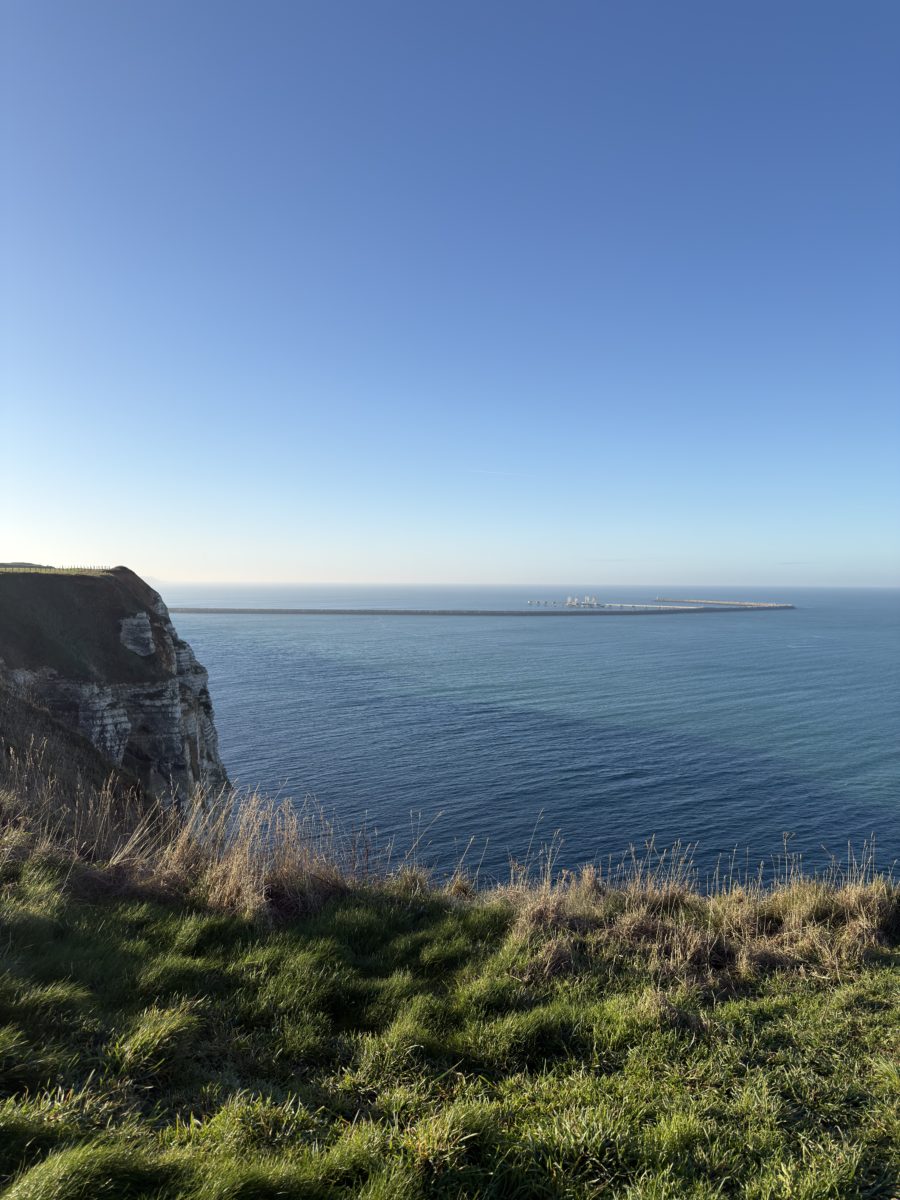
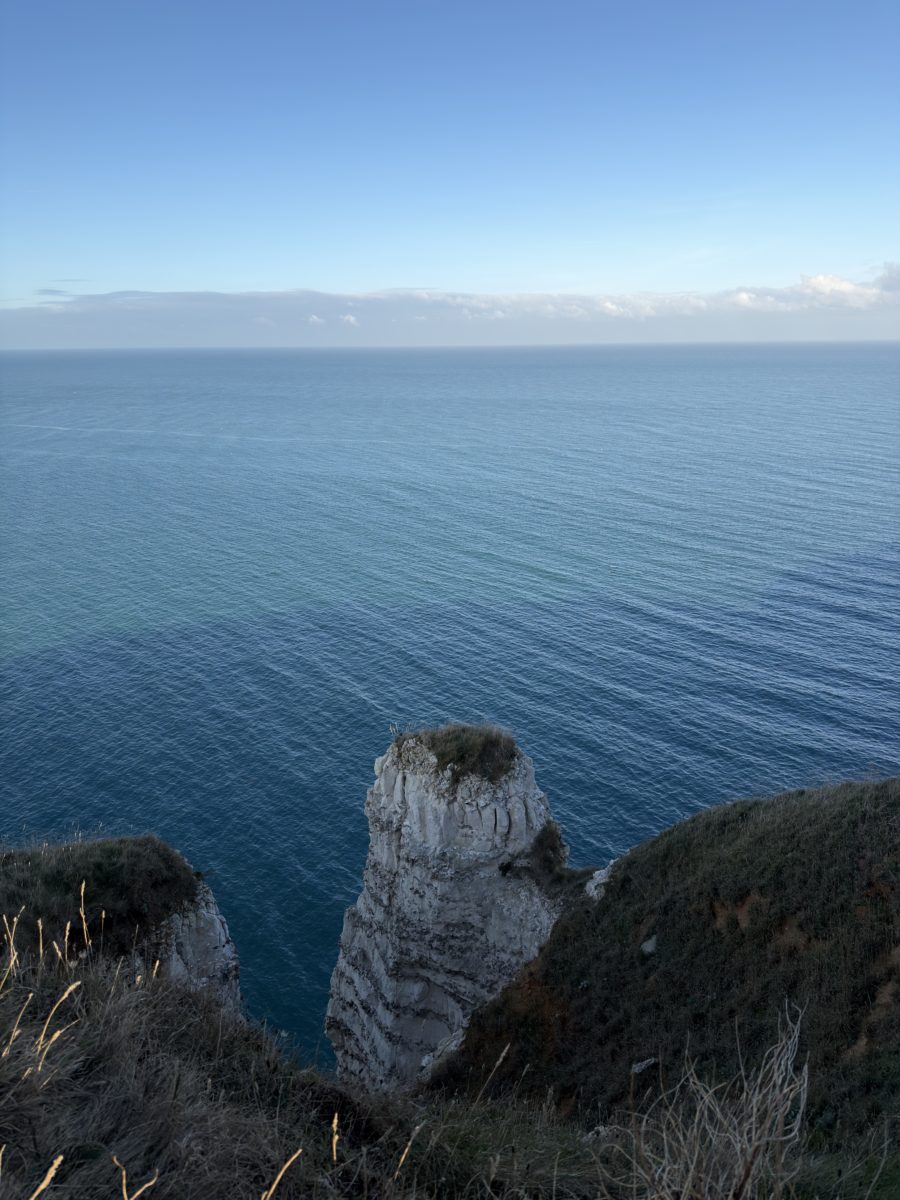
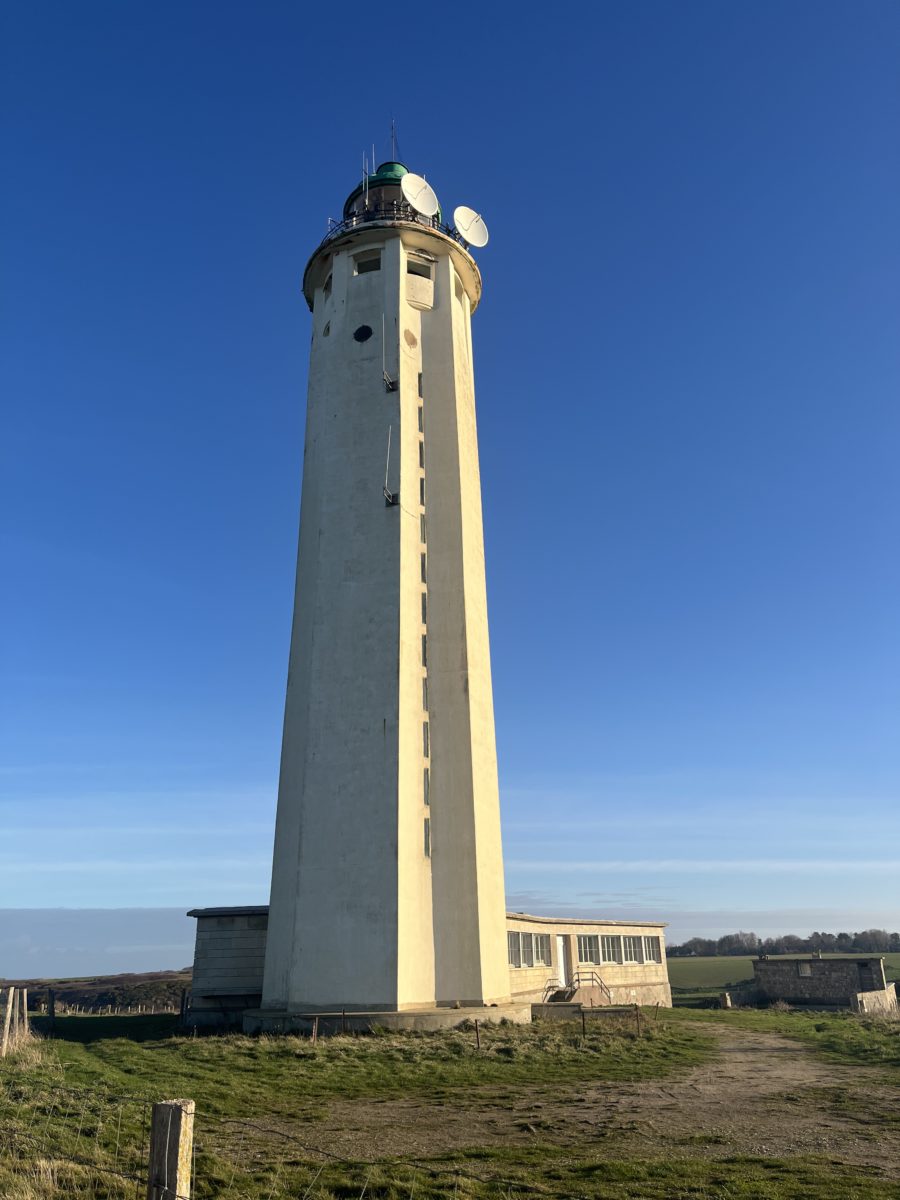
This place, steeped in history, also resonates with the weight of darker years. During World War II, Cap d’Antifer was a strategic point, occupied by the German army. Integrated into the famous Atlantic Wall, it housed military installations designed to monitor the Norman coast and anticipate any Allied invasion. Imagining the sentinels posted there, watching the horizon with constant vigilance, the past feels almost tangible.
This brings me back to the pages of the book I was reading at the time, where the memories of a Norman woman navigate the turmoil of war, particularly as D-Day approaches. These stories, even if fictional, give a voice to those who lived in the shadow of the cliffs, at the heart of a land marked by waiting and hope, anxiety and resistance.
LE HAVRE
We then resume our journey to Le Havre, where we spend two hours wandering its avenues and port.
From the very start, we are drawn to Saint-Joseph Church. Monumental, yet surprisingly luminous, it rises like a lighthouse of raw concrete, defying the sky and sea with modern majesty. Inside, the light almost becomes a living presence: thousands of stained glass windows, works by Marguerite Huré, an exceptional female artist (at a time when so few women were highlighted).
These windows cast a shifting, vibrant atmosphere, as the walls take on shimmering hues throughout the day. Every ray of sunlight seems to dance across these fragments of glass, giving the place an almost mystical aura, in stark contrast to the concrete of the church.
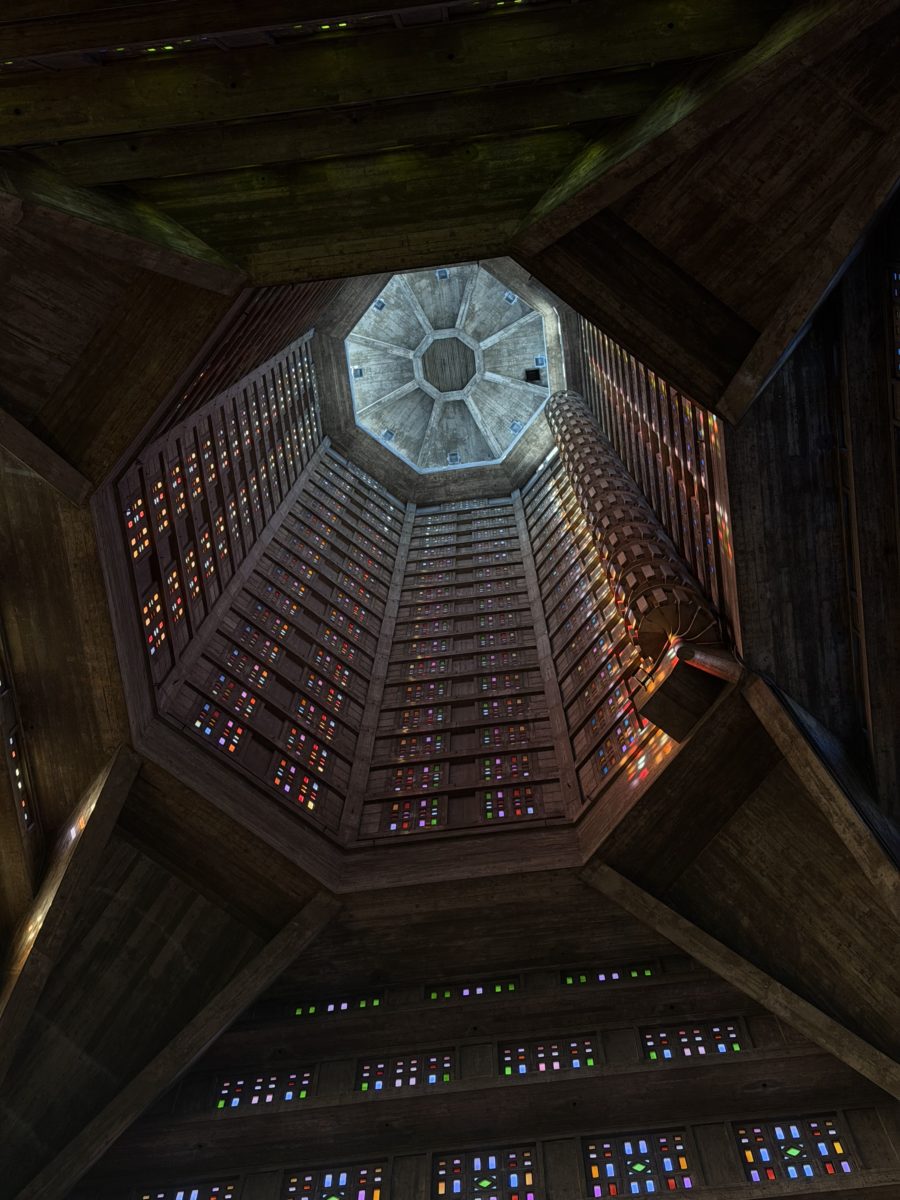
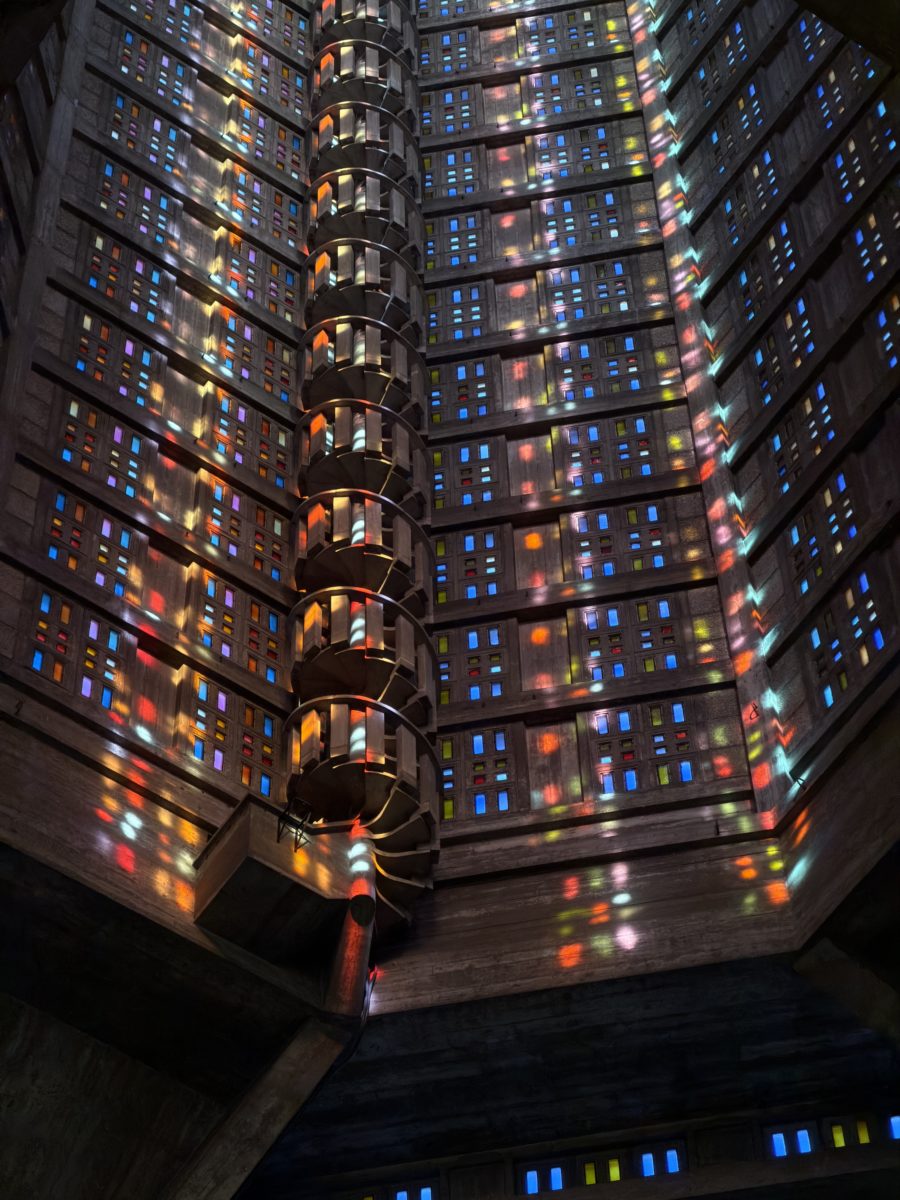
Built after the devastation of World War II by Auguste Perret, this church is not only a sanctuary for reflection but also a symbol of rebirth. It honors the victims of the bombings that scarred the city, embodying the hope and resilience of a community that rebuilt itself, proud and modern, despite the trials of the past.
Just steps away, the beach offers a refreshing breath of salty air and simplicity. Between the pebbles polished by the tides, the brisk sea wind whipping against your face, and the endless horizon, the atmosphere is relaxed and energetic, and I find the place reminiscent of Santa Monica in California.
We then continue toward the port, the true beating heart of the city. Here, the constant movement of cargo ships and cranes tells a story of labor, commerce, and global connection, even if it goes unseen. Visitors can explore the Port Center: this modern interpretation center immerses us in maritime activity, revealing the inner workings of this port giant. Born from post-war reconstruction, the port remains resolutely forward-looking, oriented toward the open sea, a symbol of Le Havre’s economic vitality and ambition.
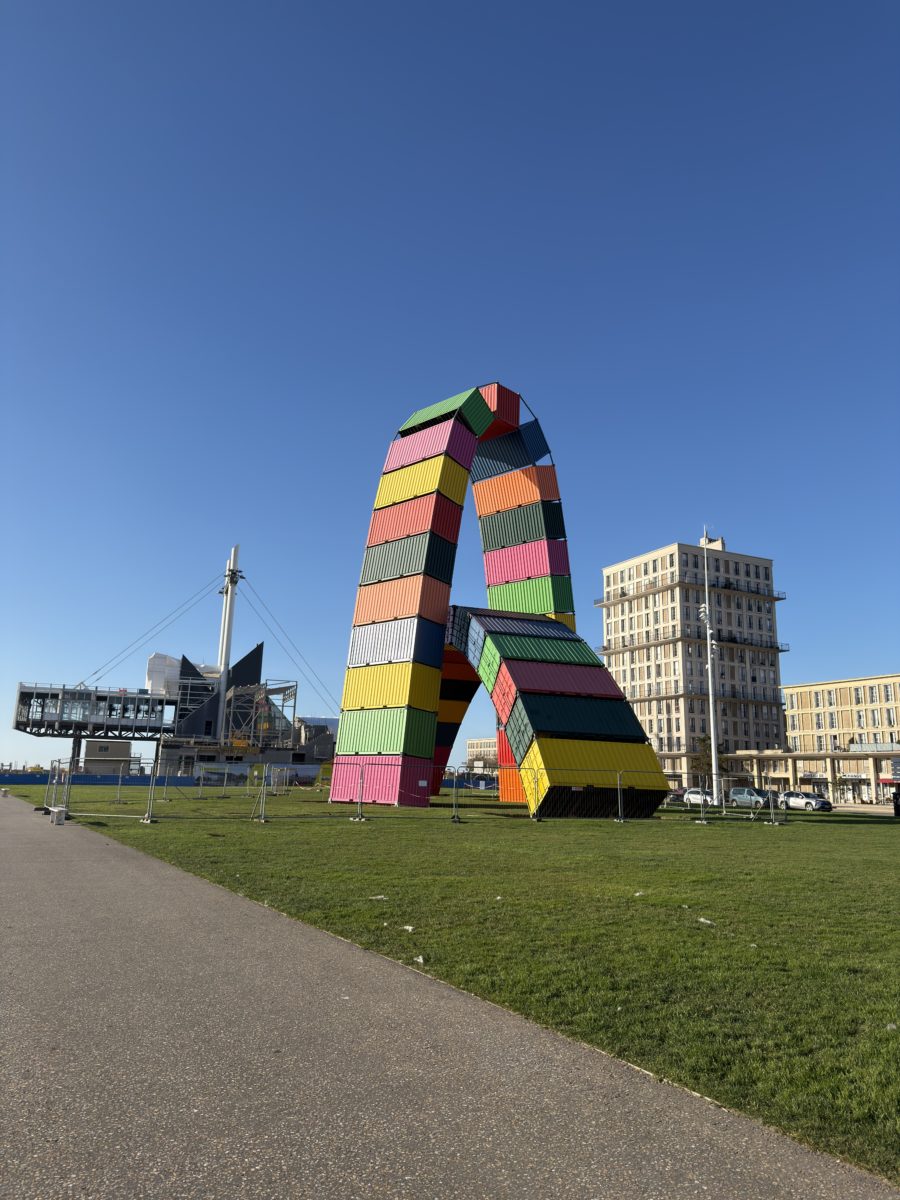
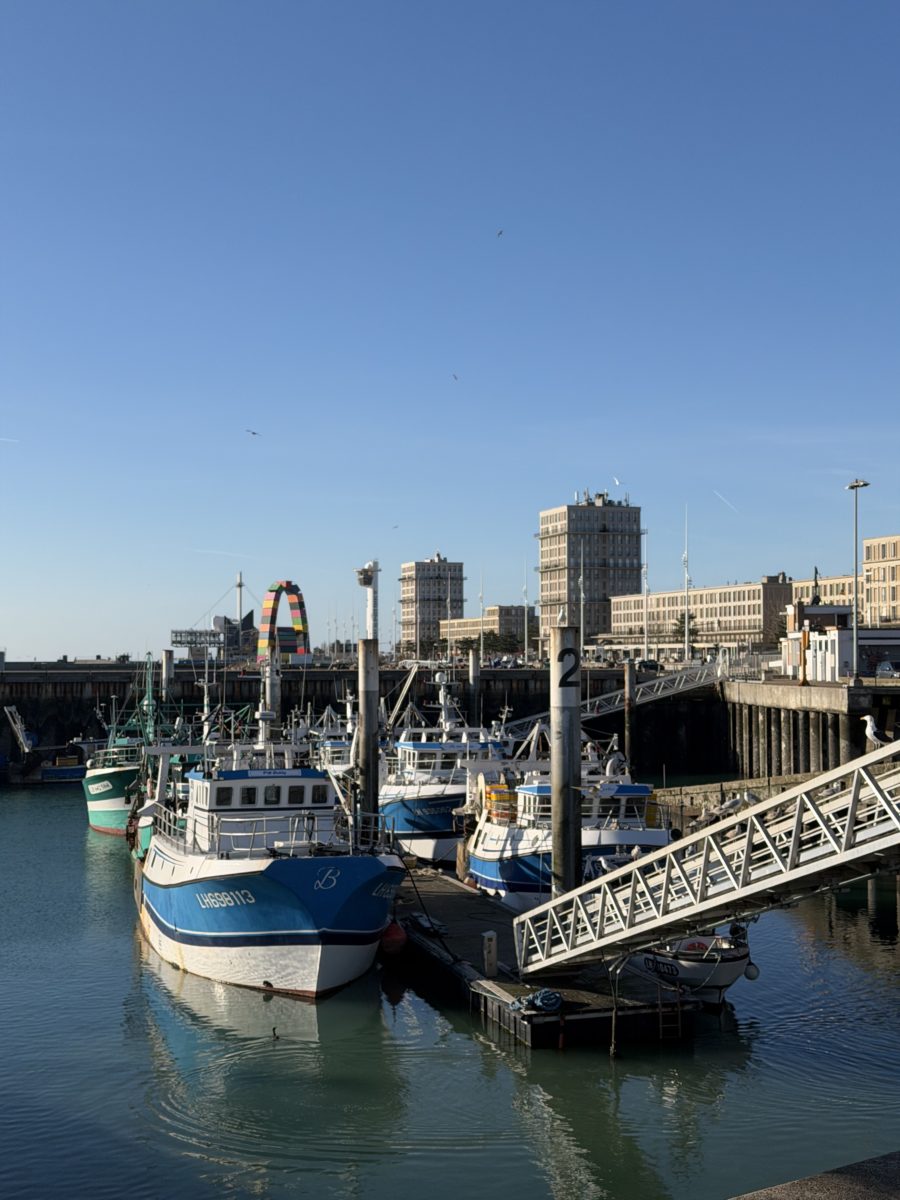
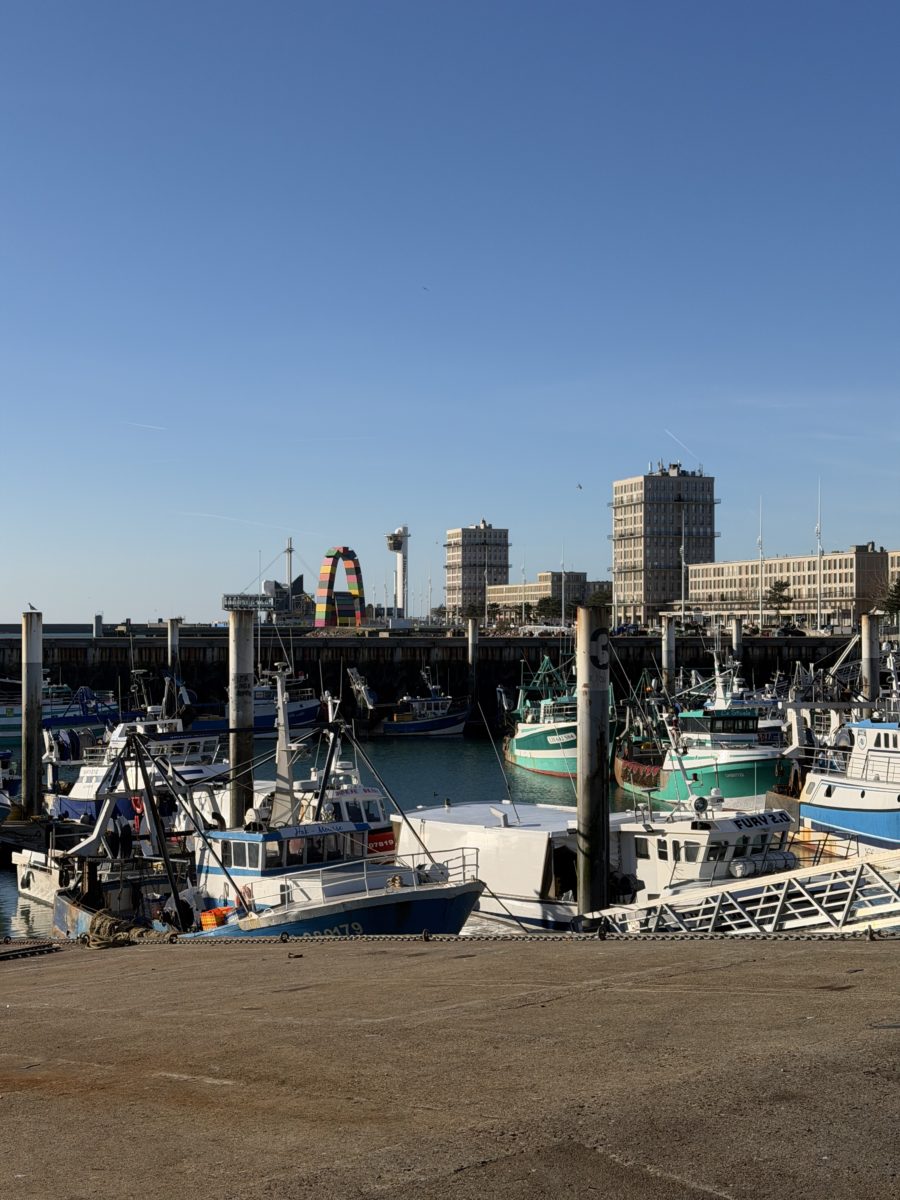
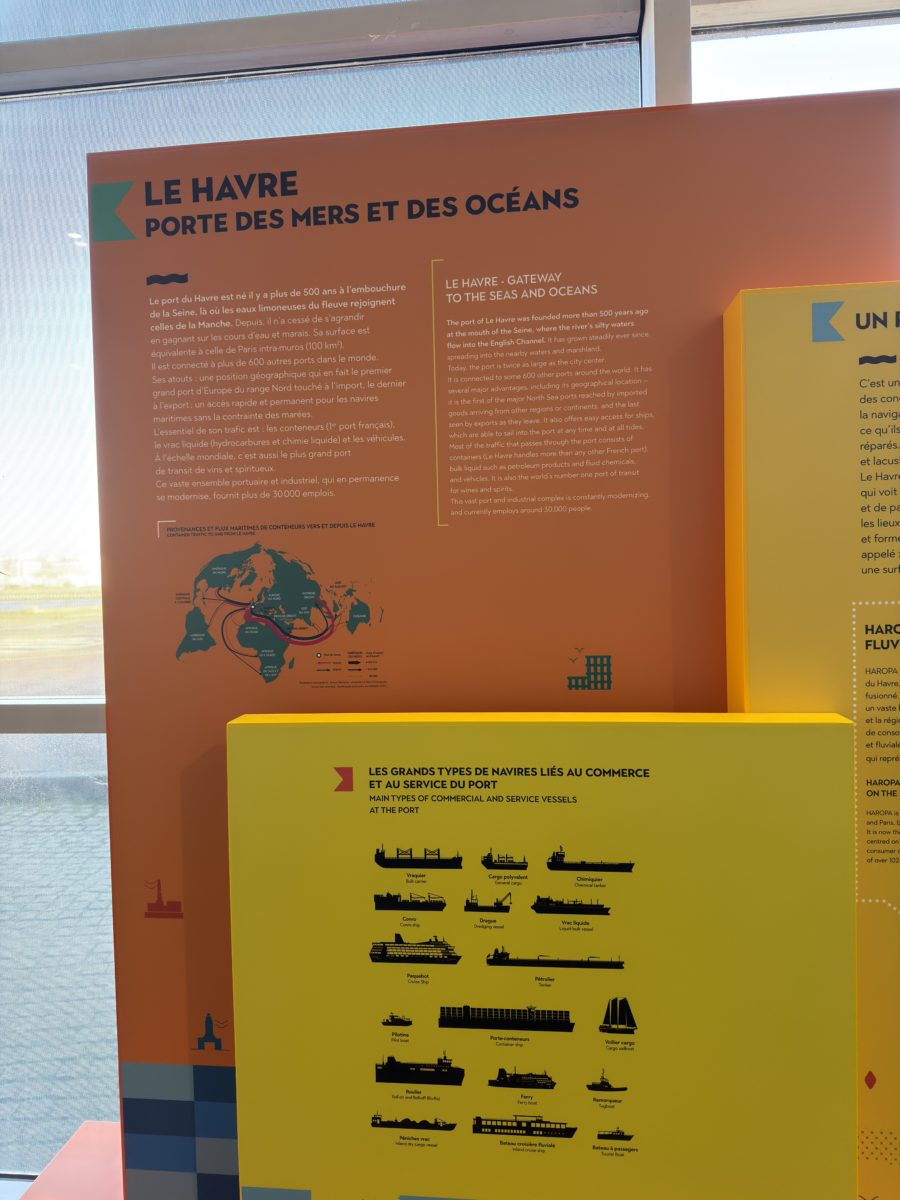
At that moment, we could have returned straight to Paris, but I wanted to see a small town that had caught my eye for years, located on the other side of the Seine estuary: Honfleur.
HONFLEUR
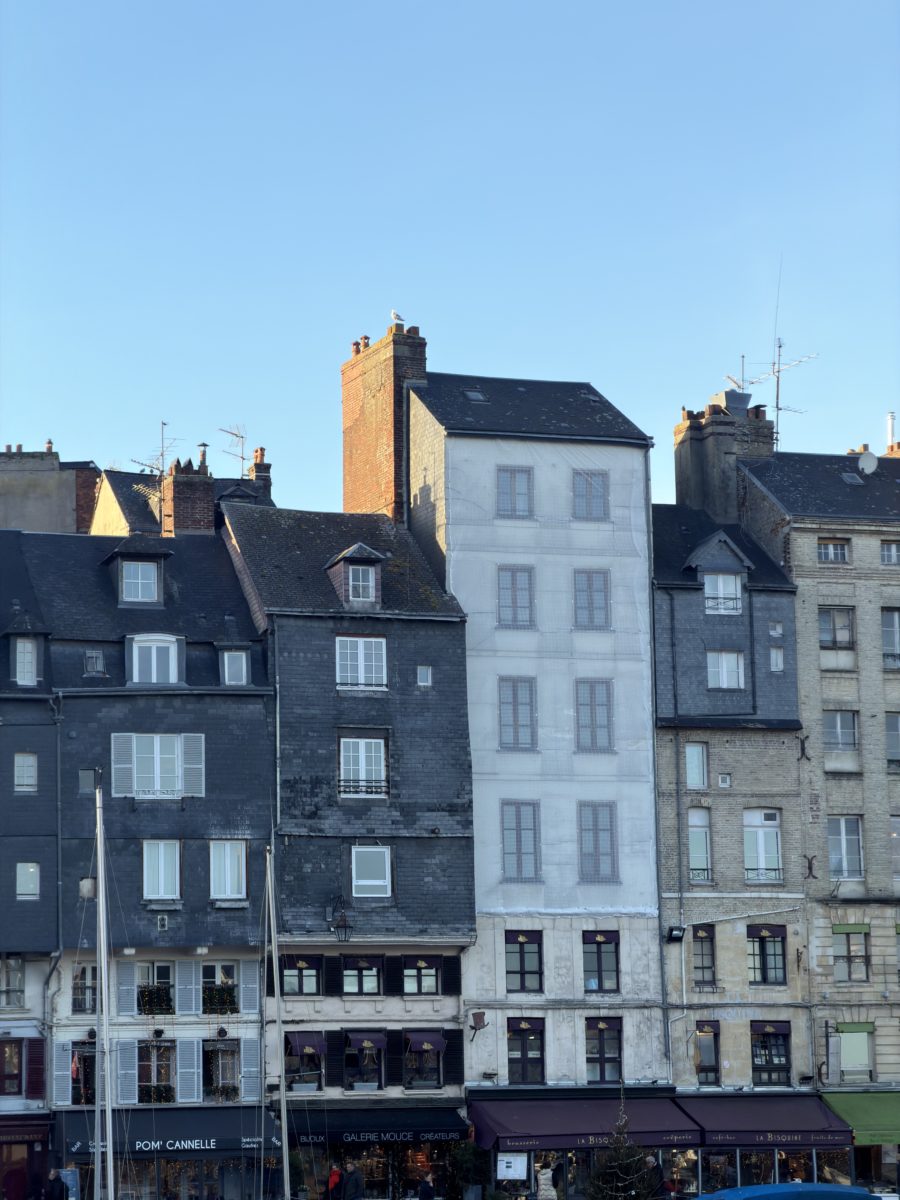
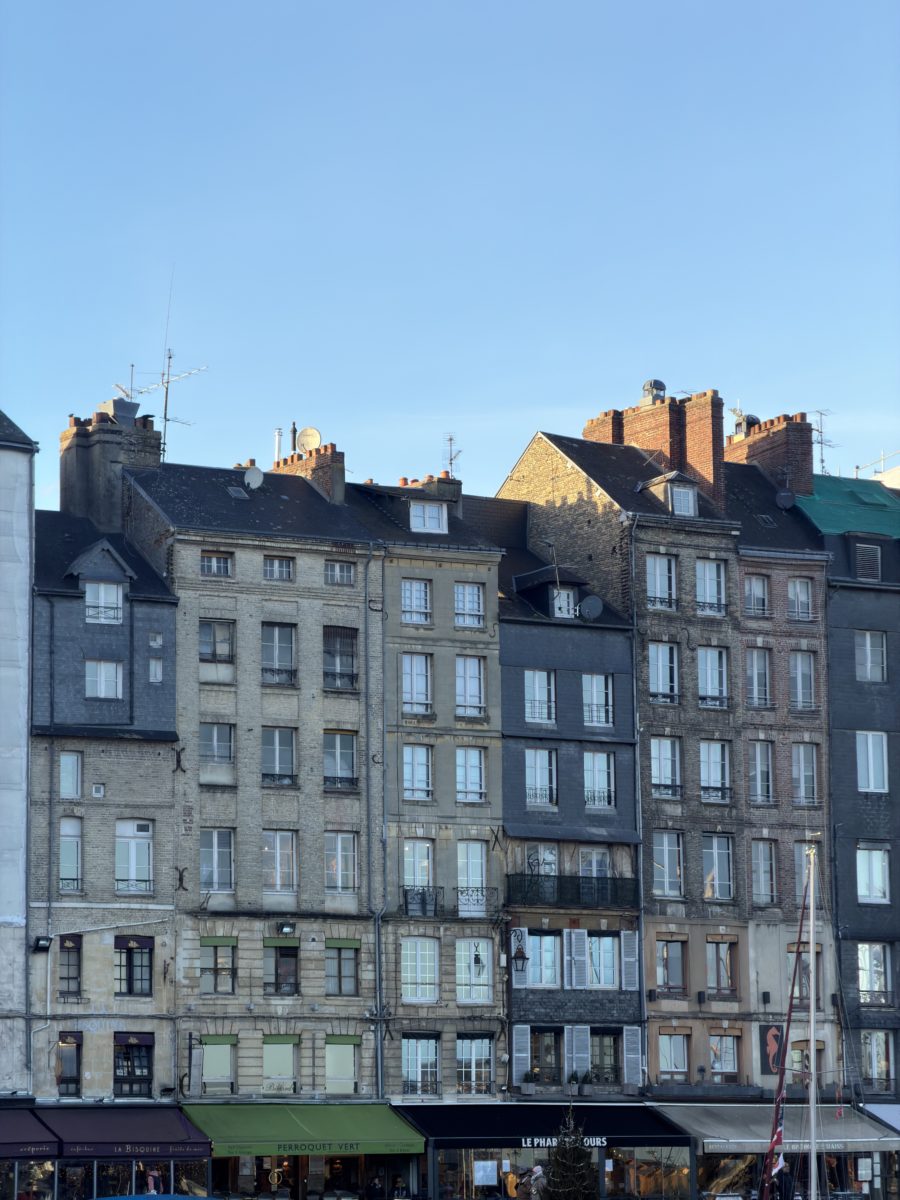
Honfleur captivates us from the very first steps. We park just a few paces from the town’s main attraction: the Vieux-Bassin. Around it, the tall, narrow-fronted houses reflect in the calm water, like a living painting.
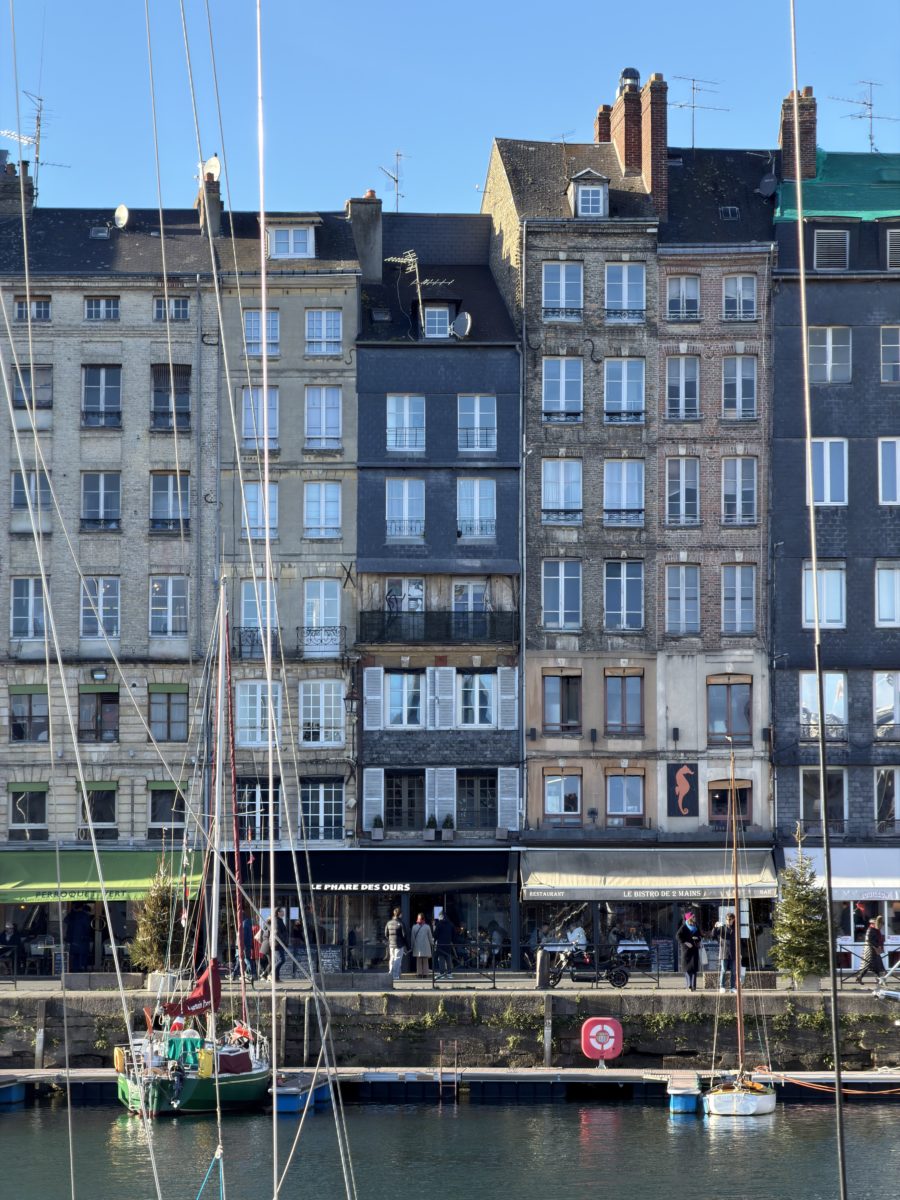
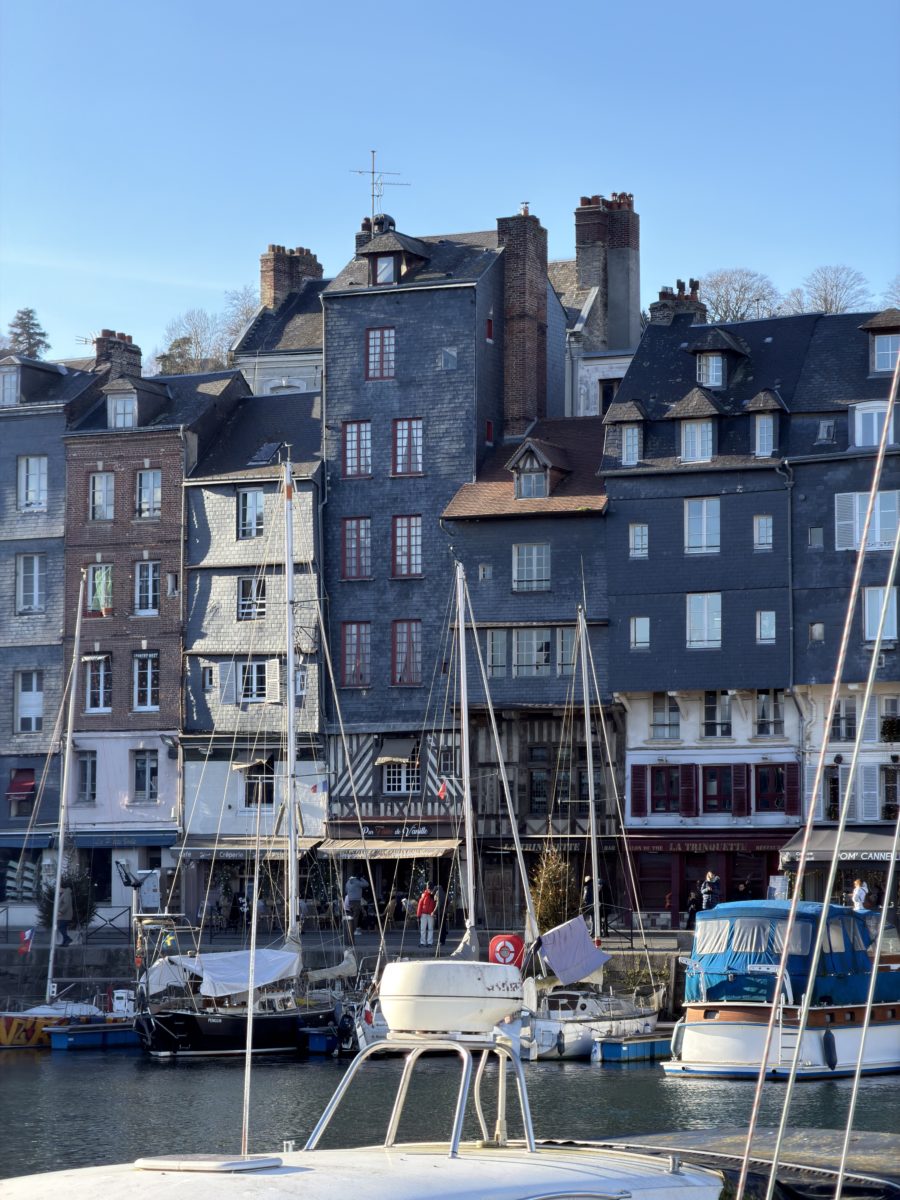
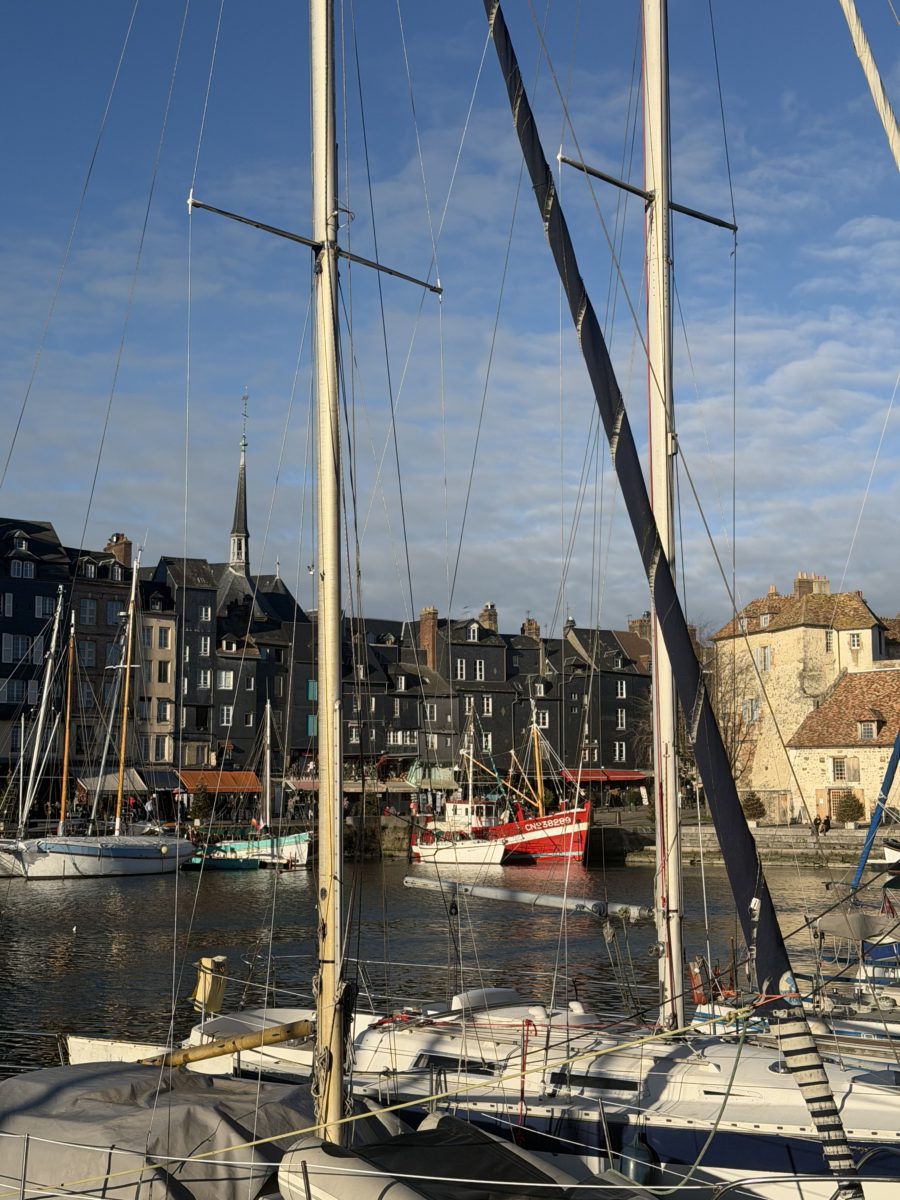
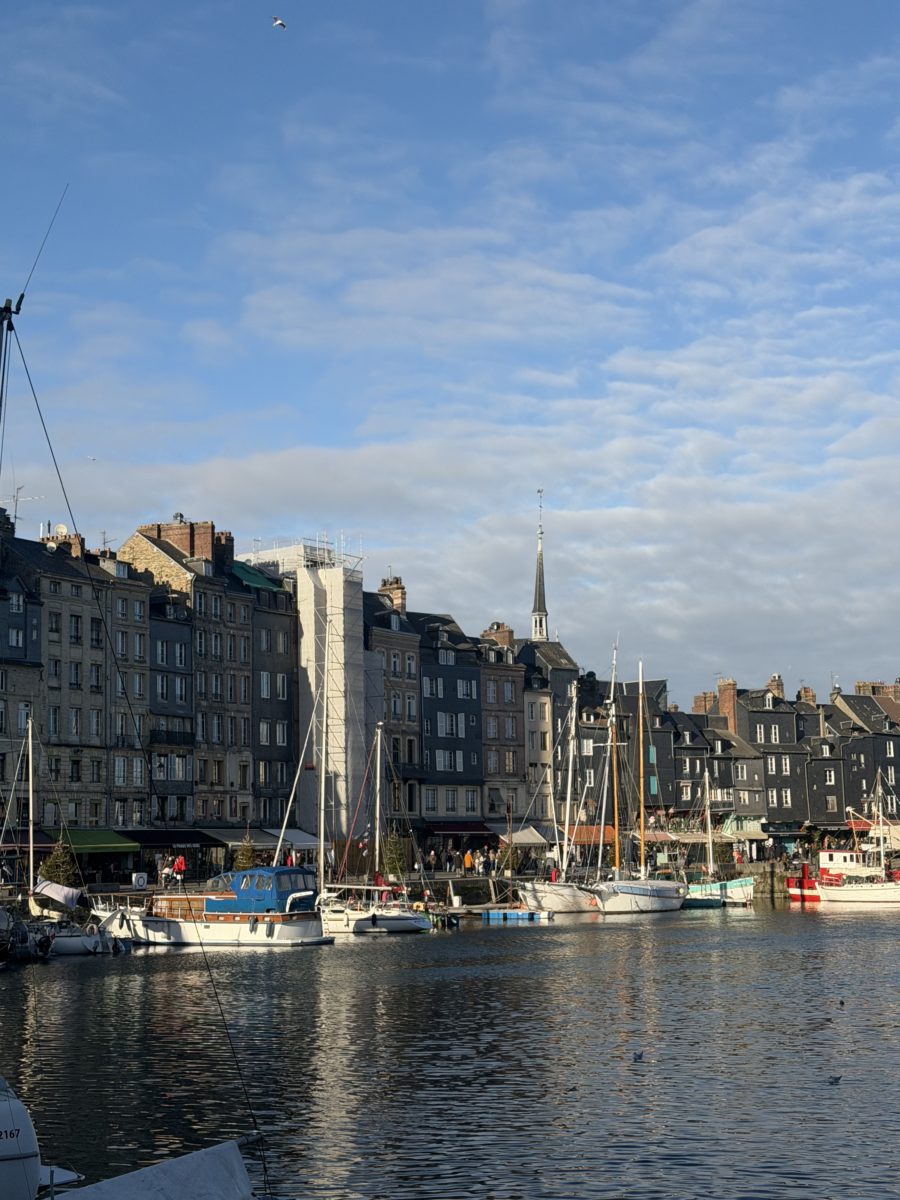
This setting has inspired generations of artists: Boudin, Monet, and Courbet all found here a unique, ever-changing light, perfect for capturing the moment. Even today, galleries and workshops continue this legacy, giving the town a deeply artistic soul, where every quay, every boat, seems to tell a story of painting and the sea.
RETURN TO PARIS AND REFLECTIONS
Over the course of these four days on the Côte d’Albâtre, I realized that this journey was not just a succession of cliffs, ports, and villages. It was an ongoing dialogue between landscape and art.
In Rouen, in front of the cathedral immortalized by Claude Monet, I saw how light transforms stone into a living painting. In Étretat, it’s impossible not to think of the works of Eugène Boudin or Gustave Courbet, who sought to capture that almost unreal whiteness, that dramatic verticality. In Honfleur, art is not a memory: it is still present, in every gallery, in every reflection on the Vieux-Bassin.
Even in Le Havre, within the raw modernity of Saint-Joseph Church, designed by Auguste Perret and illuminated by Marguerite Huré’s stained glass, I found the same recurring theme: light. Always light, on the chalk cliffs, on the ever-changing sea, on the reconstructed concrete.
The Côte d’Albâtre is not content with merely being beautiful. It inspires. It sets a rhythm. It compels you to lift your eyes, to slow down, to observe the shifting nuances of a sky that never stands still. Perhaps this is why so many artists have sought refuge here: nature has already done half the work.
I leave with my mind full of images, some photographed, others simply etched in memory, and with the feeling of having followed, almost unconsciously, an open-air museum. A museum where the sea is the curator, the wind the exhibition director, and the light, the eternal artist.