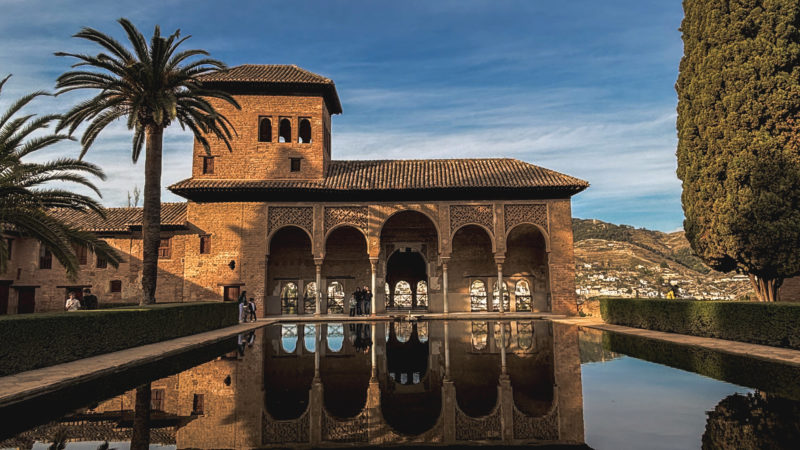
Granada, with its Andalusian charm and rich history, is an ideal destination for a stay of less than 48 hours, with sunshine, sangria, and culture. Nestled at the foot of the Sierra Nevada, this sunny city radiates with its historic heritage and vibrant culture. What attracts visitors most is undoubtedly the Alhambra, a jewel of Moorish architecture that majestically overlooks the city.
The Alhambra: A Legendary Palace
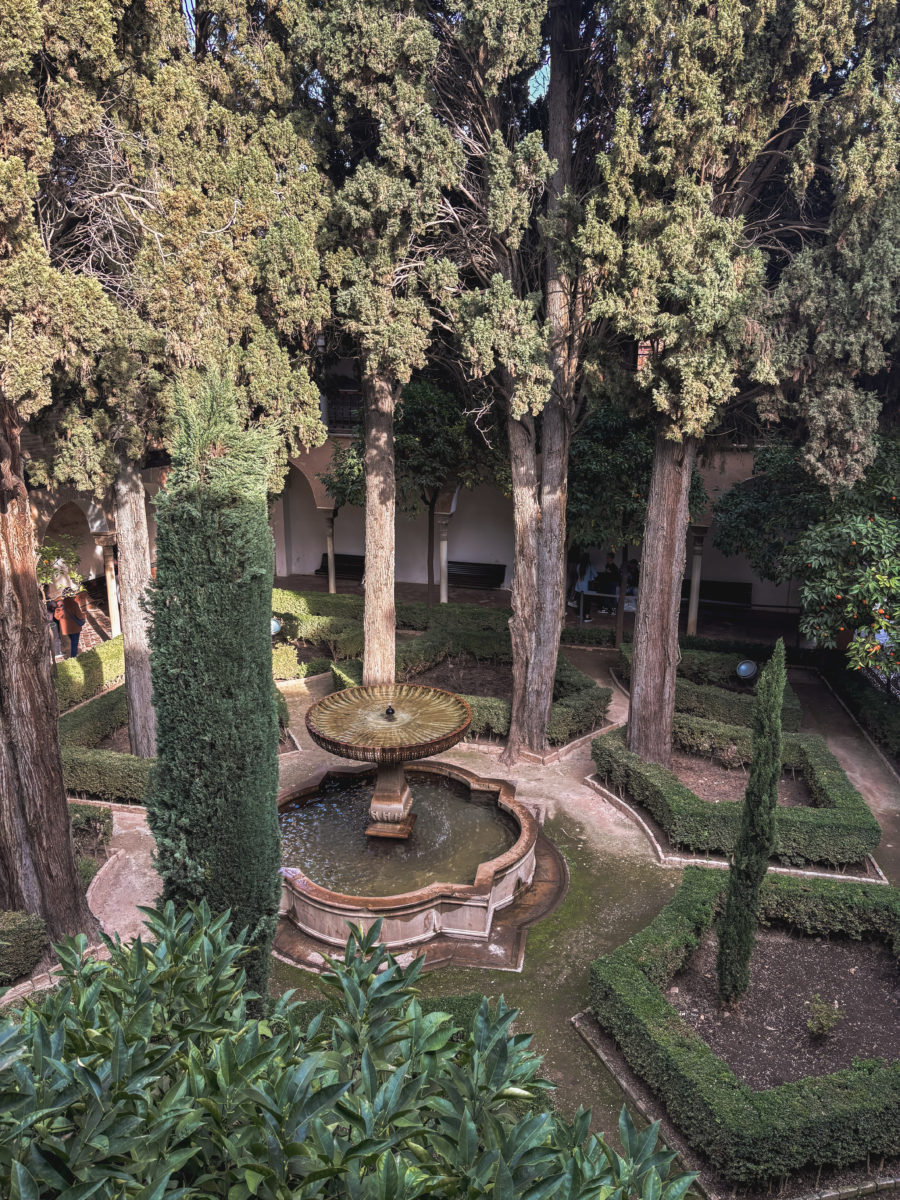
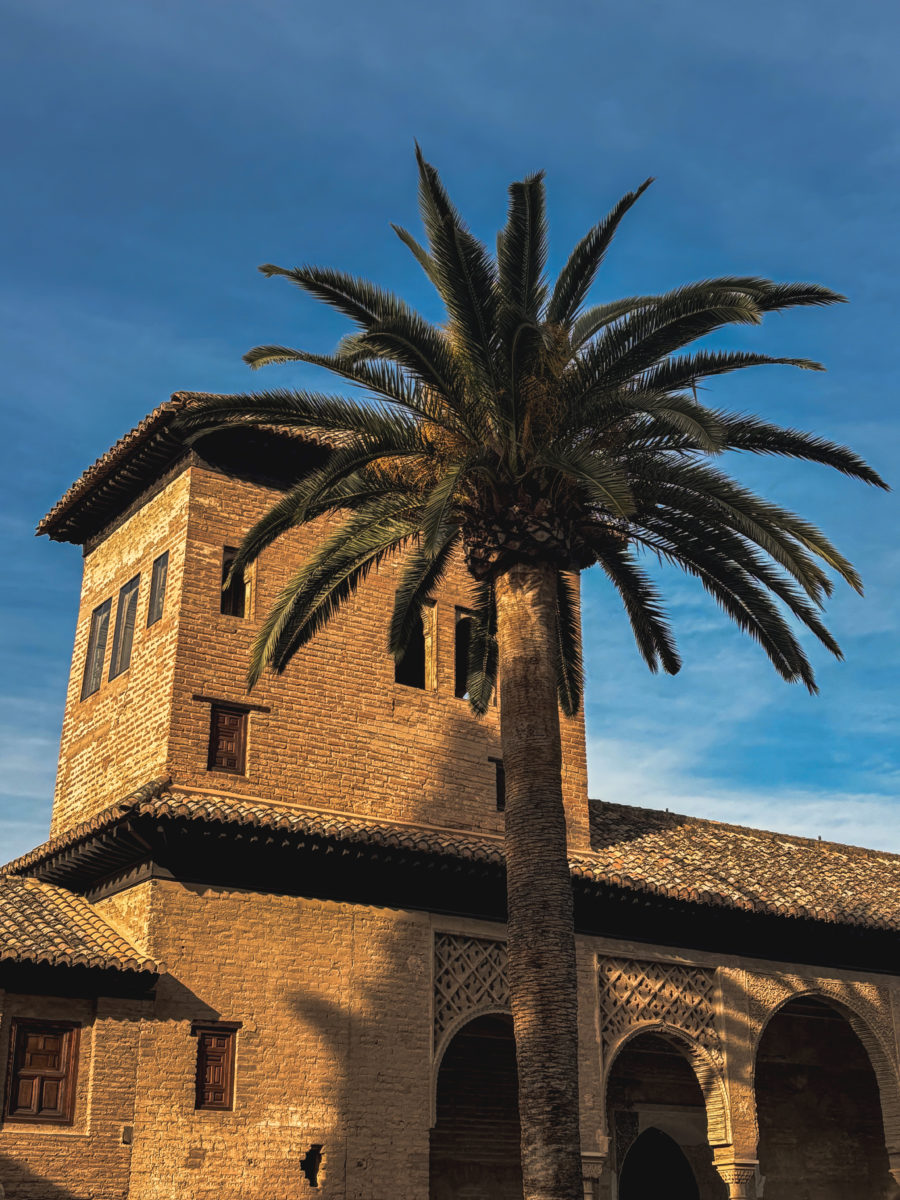
The Alhambra, whose name means “The Red” in Arabic, is a palace complex that reflects the full splendor of the Nasrid era. Perched high above Granada and built in the 13th century, this fortified complex is a masterpiece of Islamic architecture. Its finely detailed palaces, courtyards animated by the whisper of fountains, and lush gardens offer a true dive into the past; a time when art and architecture breathed poetry, as if every ornament whispered a story.
Visiting the Alhambra means immersing yourself in a world of legends and mysteries, and as someone who loves that, I can tell you just how captivating it is. But here, there’s no room for improvisation, you must book your tickets in advance, as the site is coveted and spots are limited.
Somewhat like Sintra in Portugal or Hallstatt in Austria, you sometimes come close to sensory overload as the crowds grow so dense that the magic of the place nearly fades away. Alas, the downsides of mass tourism are part of the journey. And even though I love to escape the crowds and wander off the beaten path, I can never resist the pull of these places suspended in time, of breathtaking beauty.
The Alhambra is made up of several remarkable sections:
- The Nasrid Palaces: a masterpiece of elegance, where each room reveals delicate ornamentation, soothing courtyards, and the gentle murmur of fountains.
- The Alcazaba: this imposing fortress, the oldest part of the complex, offers sweeping views over Granada and its surroundings.
- The Generalife: a true haven of peace, whose lush gardens, shaded walkways, and shimmering pools invite leisurely wandering.
Built by the Nasrid dynasty, the Alhambra was the last great Muslim fortress in Spain before the Reconquista, the guardian of a world on the brink of change.
THE NASRID PALACES
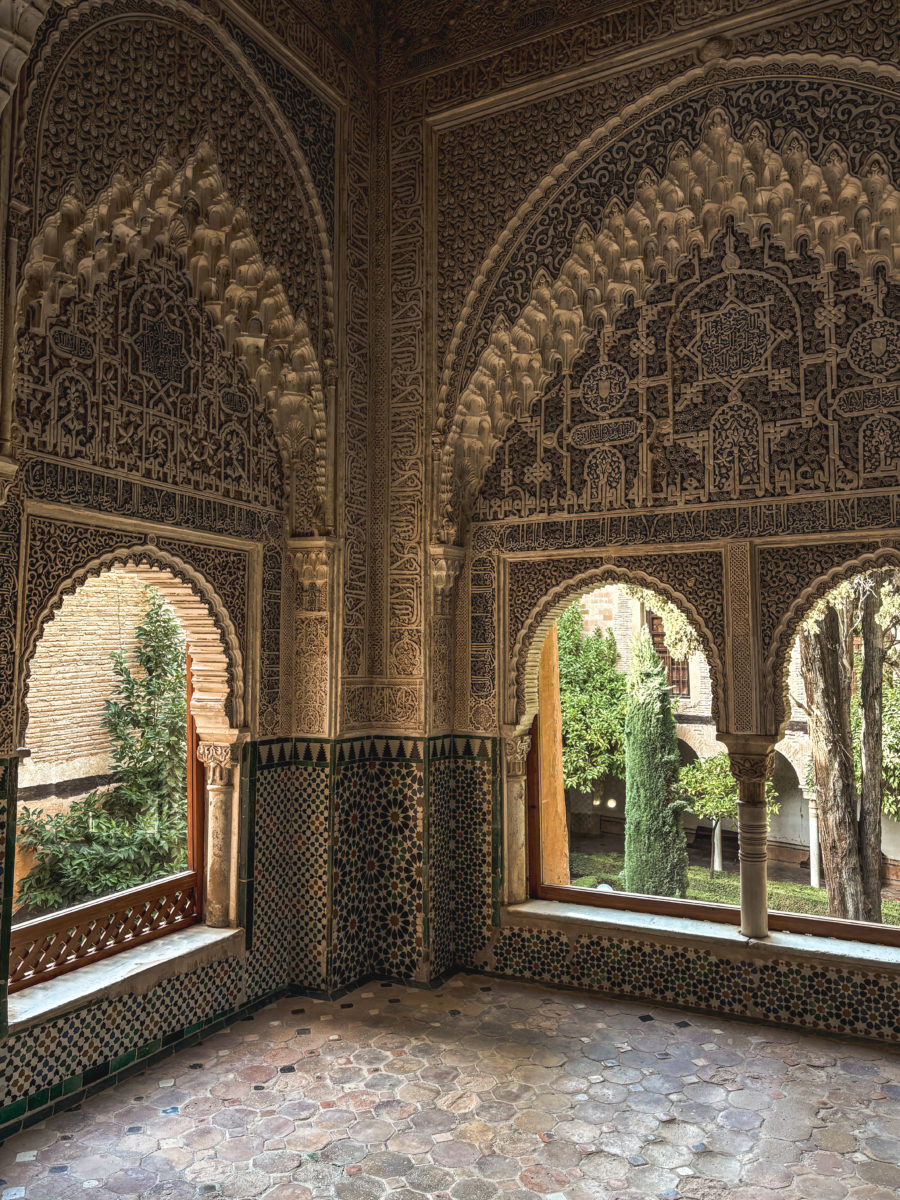
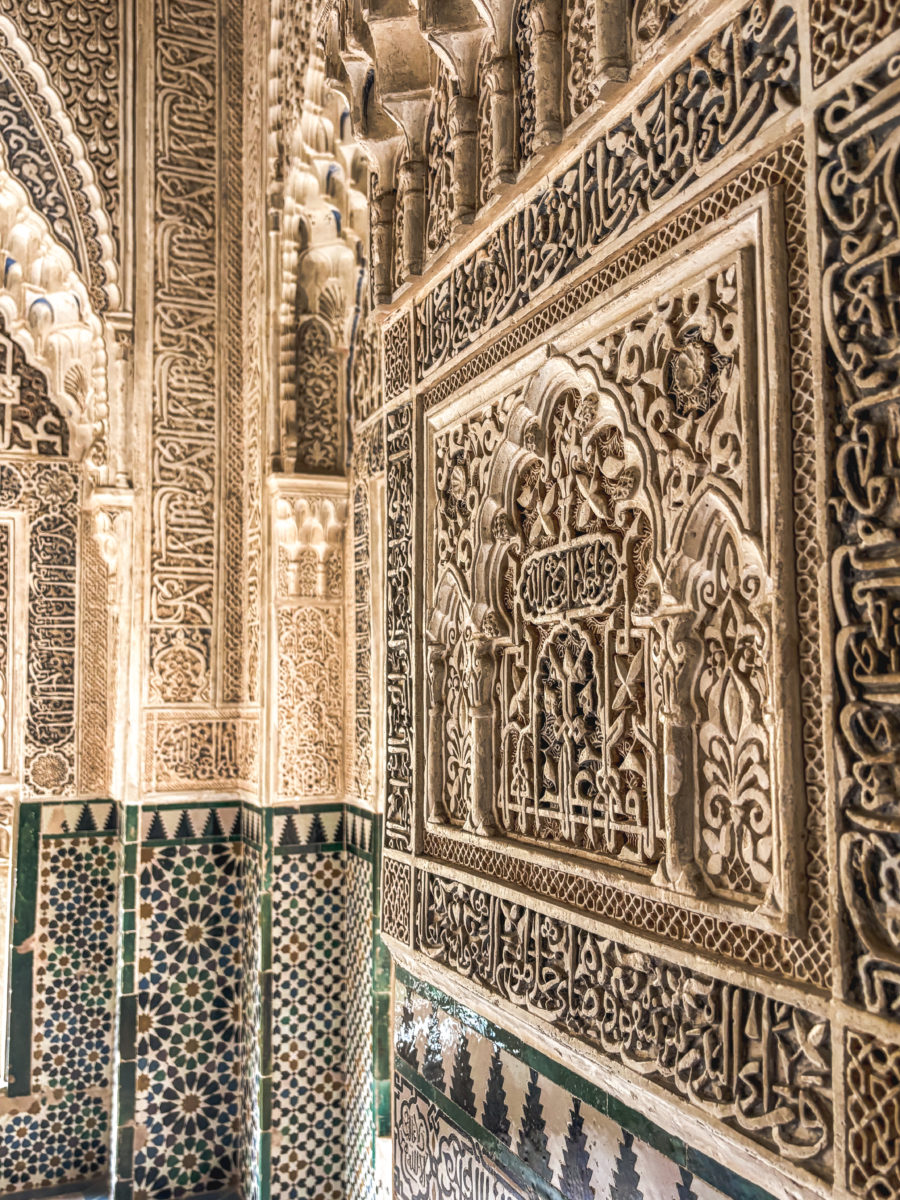
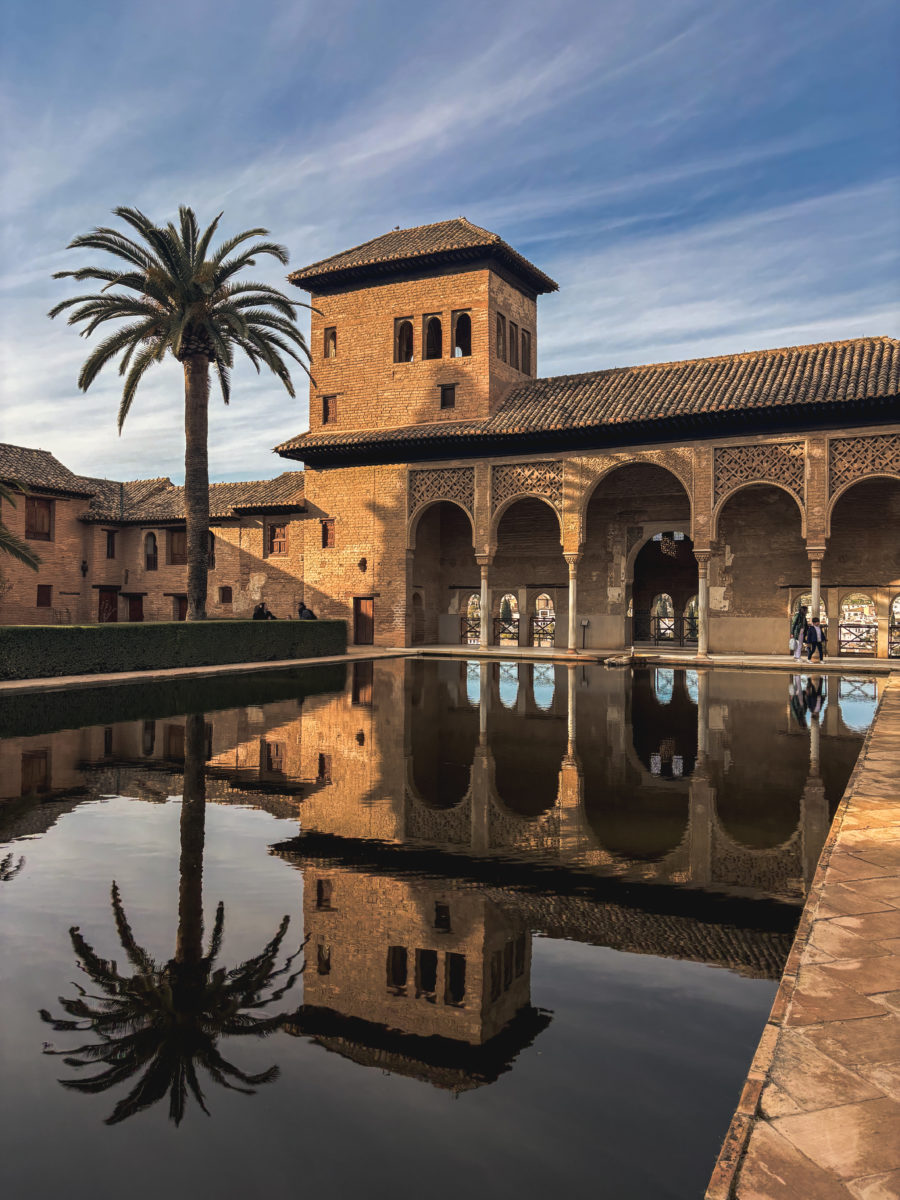
This is the heart of the Alhambra. It is renowned for its exquisite interior decorations. The walls are adorned with delicate stucco work, colorful mosaics, and Arabic calligraphy that tells ancient stories. The Court of the Lions, with its central fountain surrounded by twelve marble lions, is one of the most iconic symbols of the Alhambra.
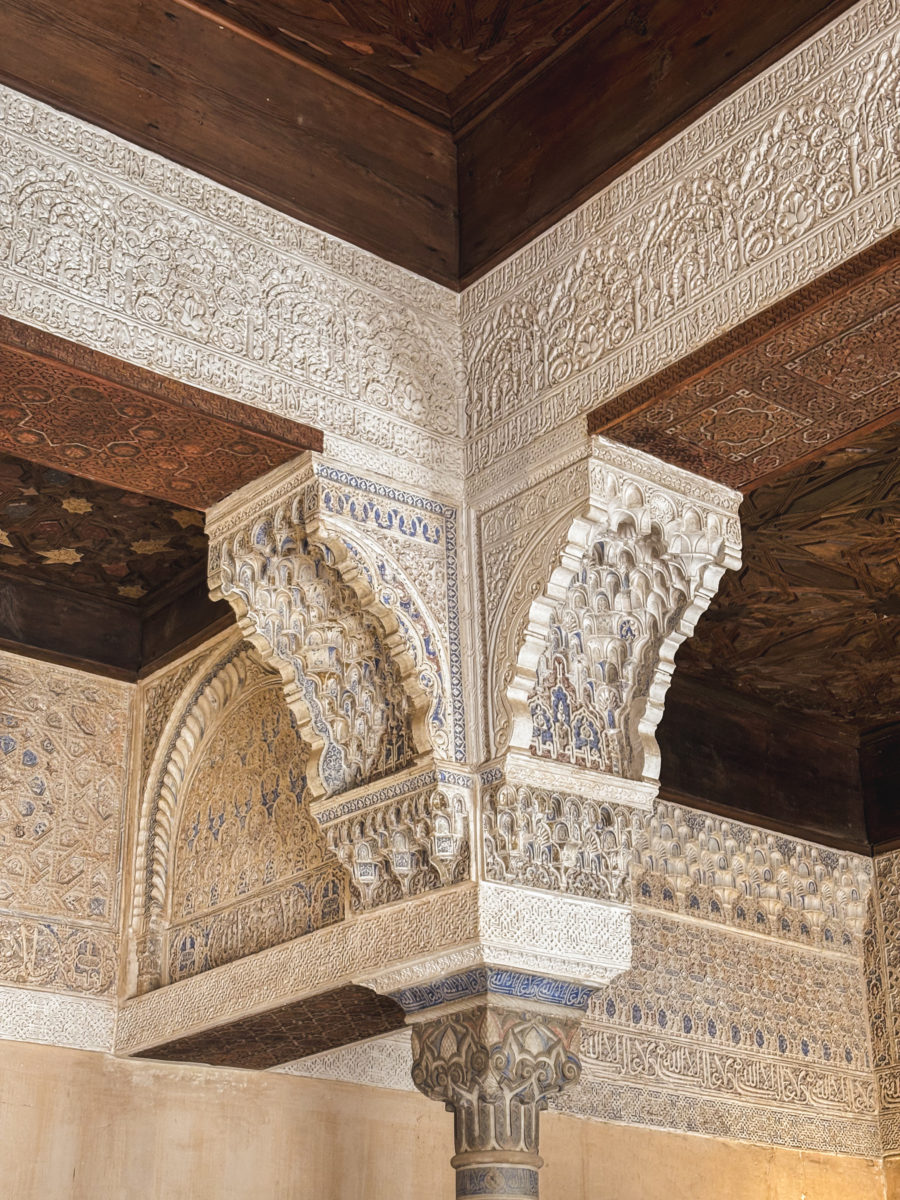
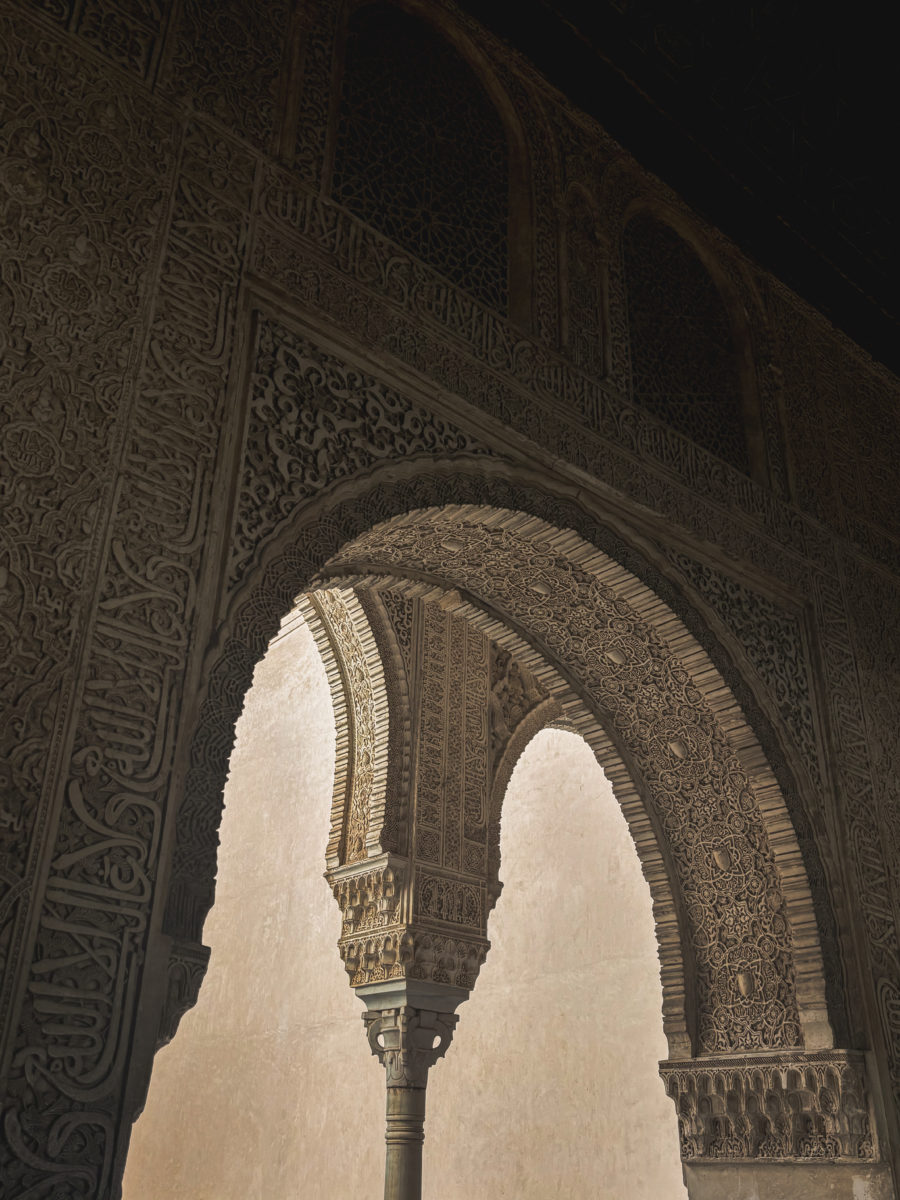
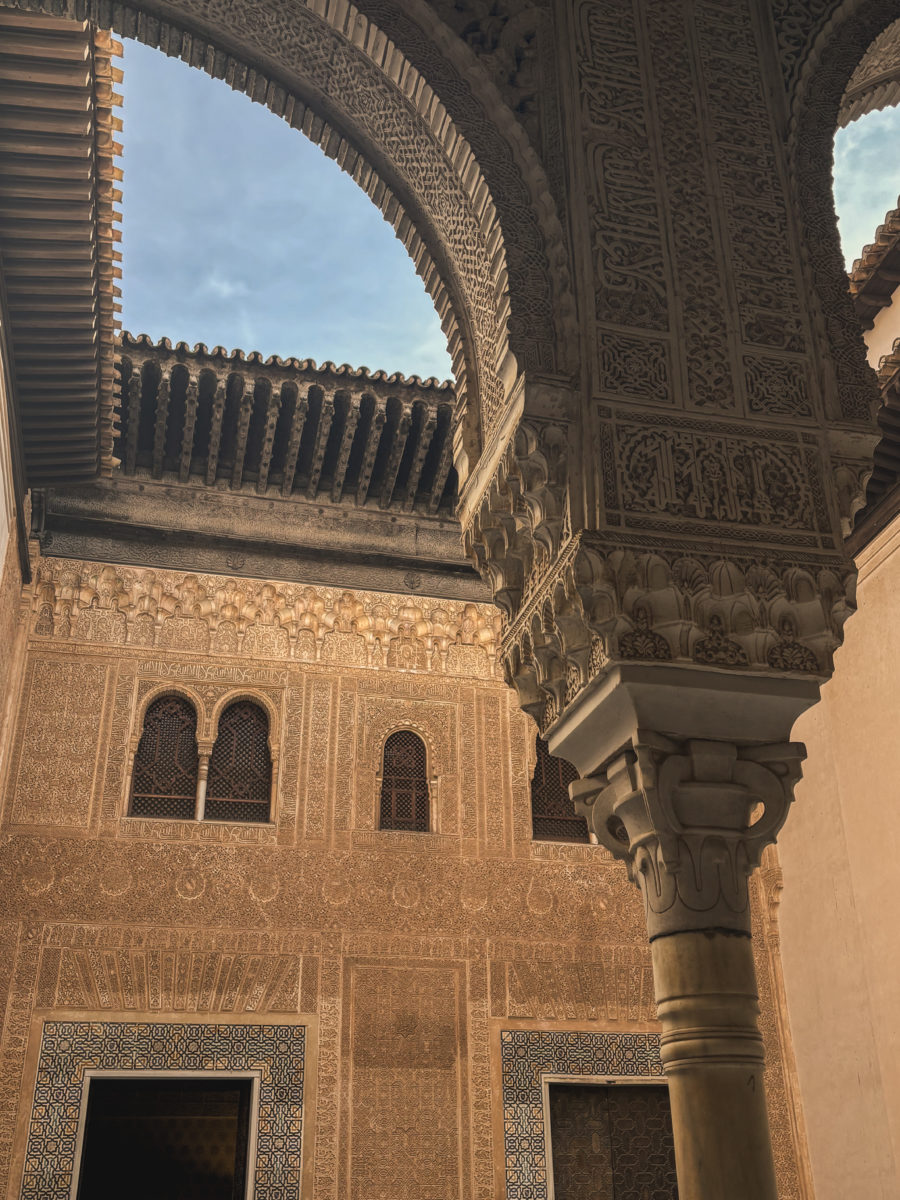

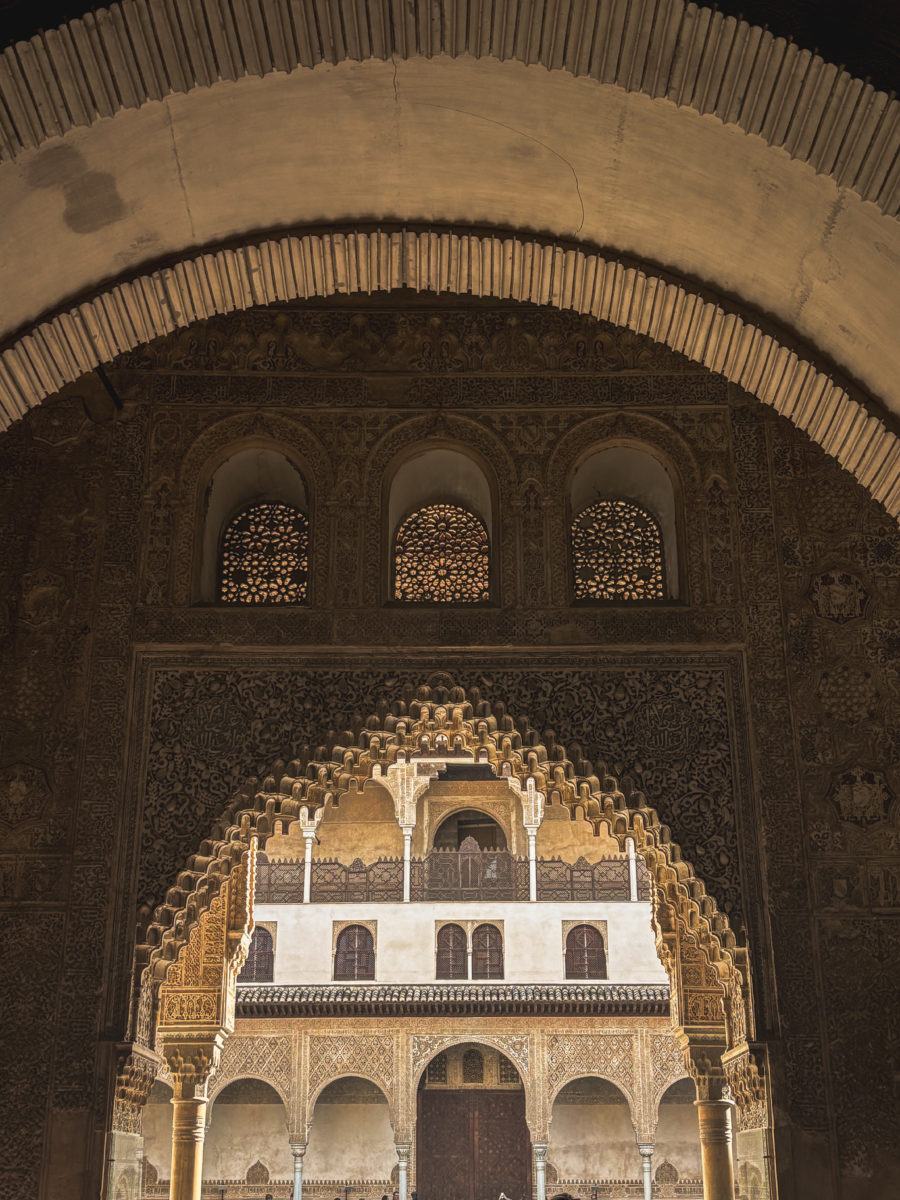
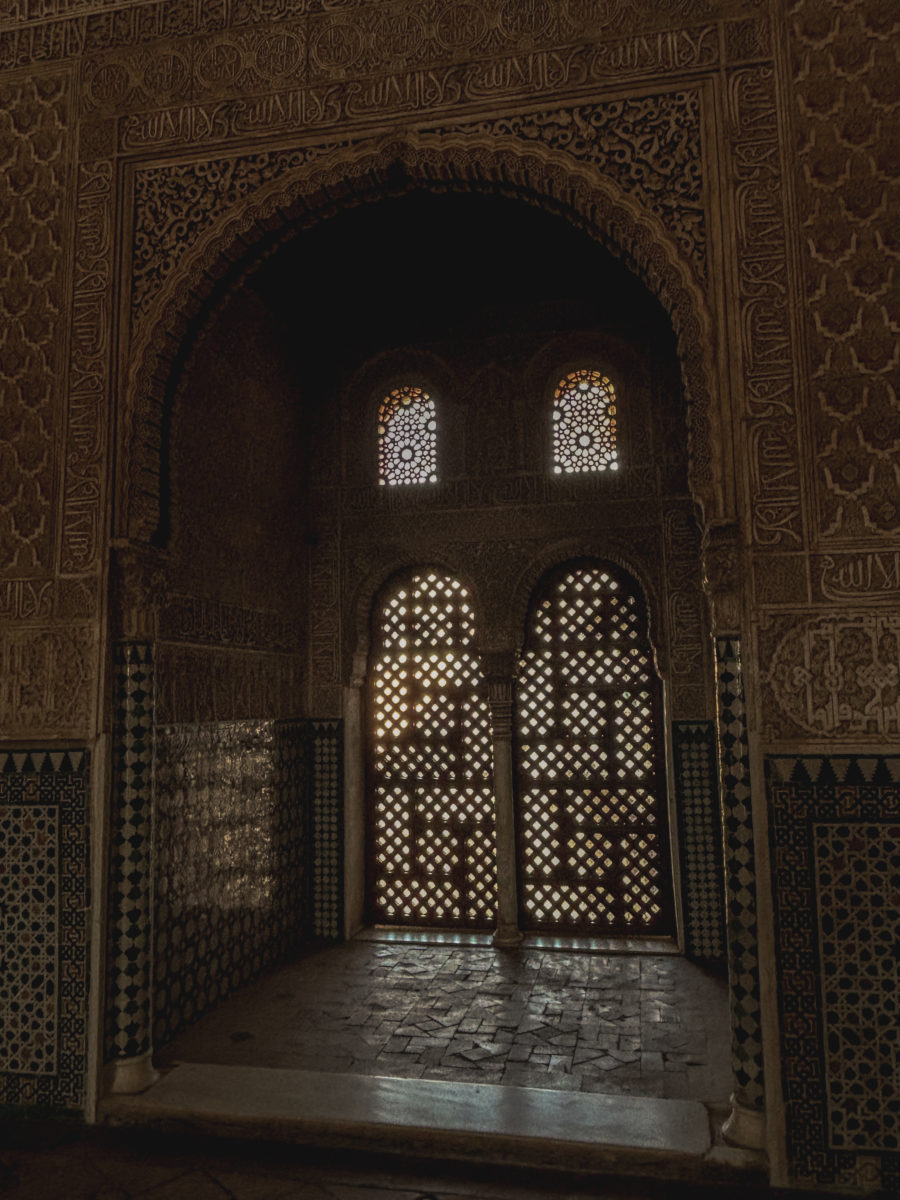
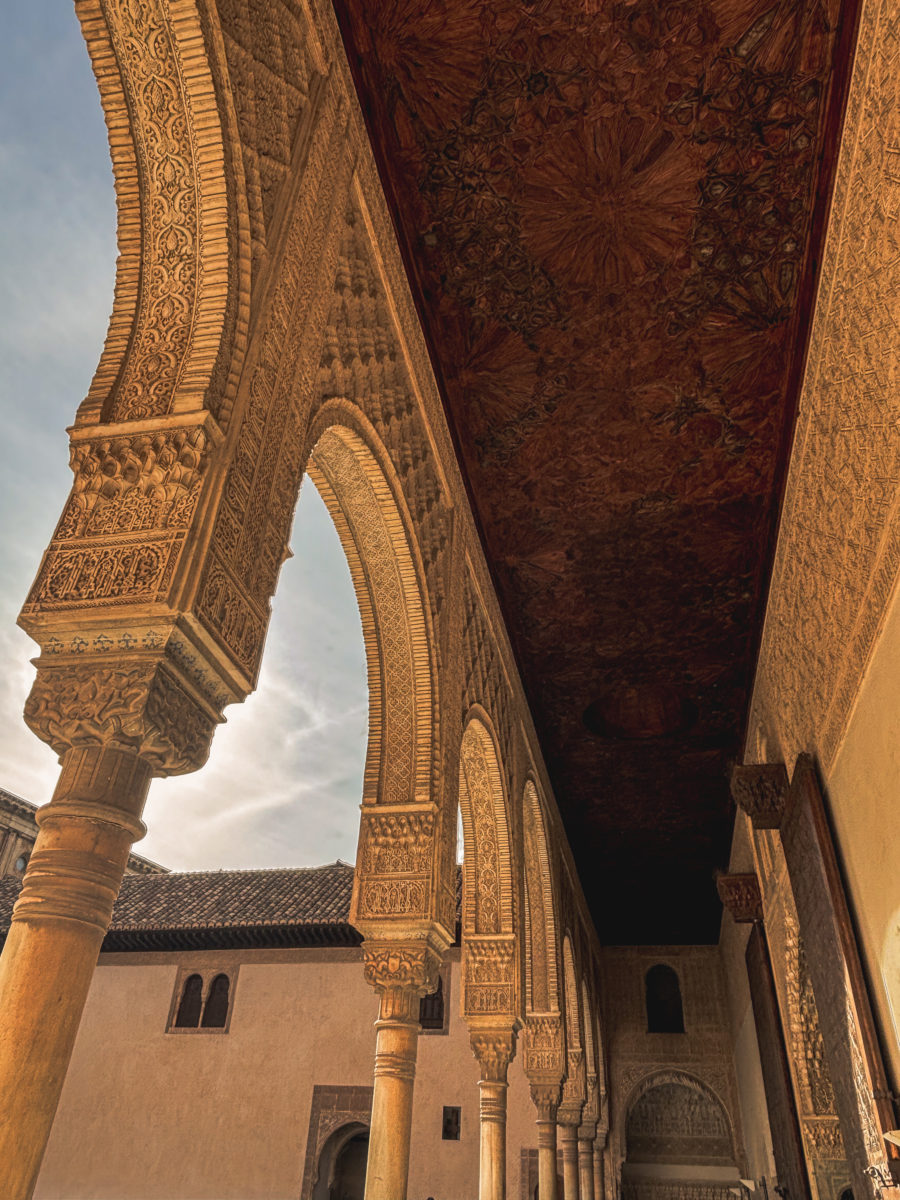
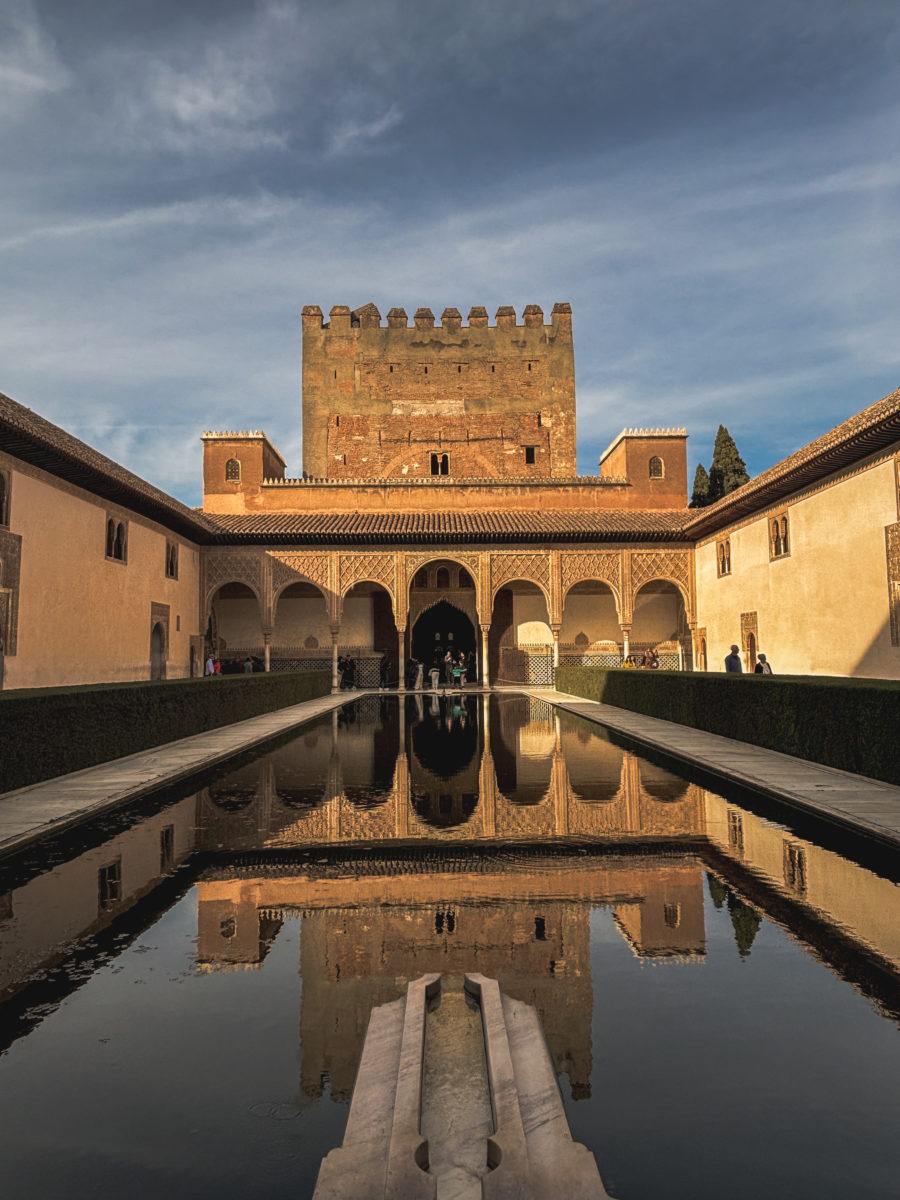
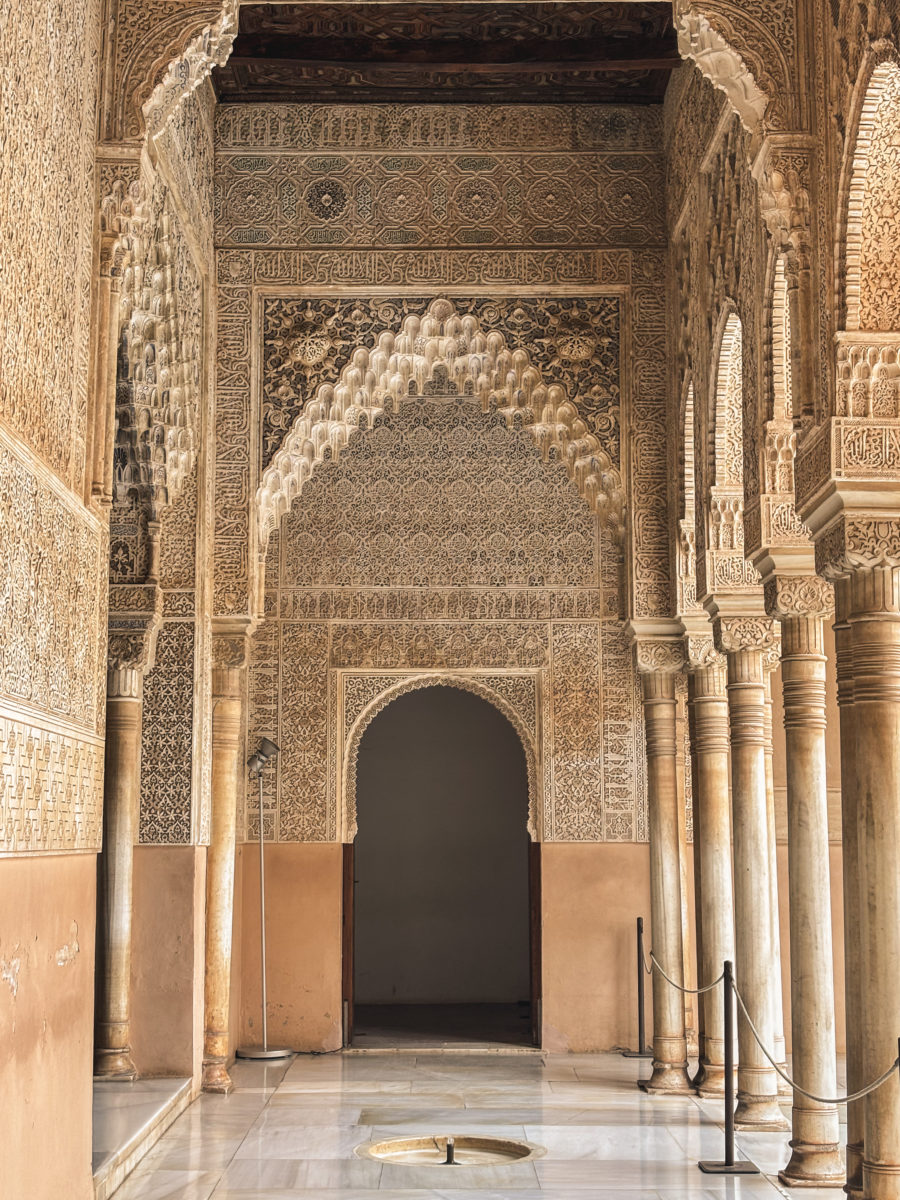
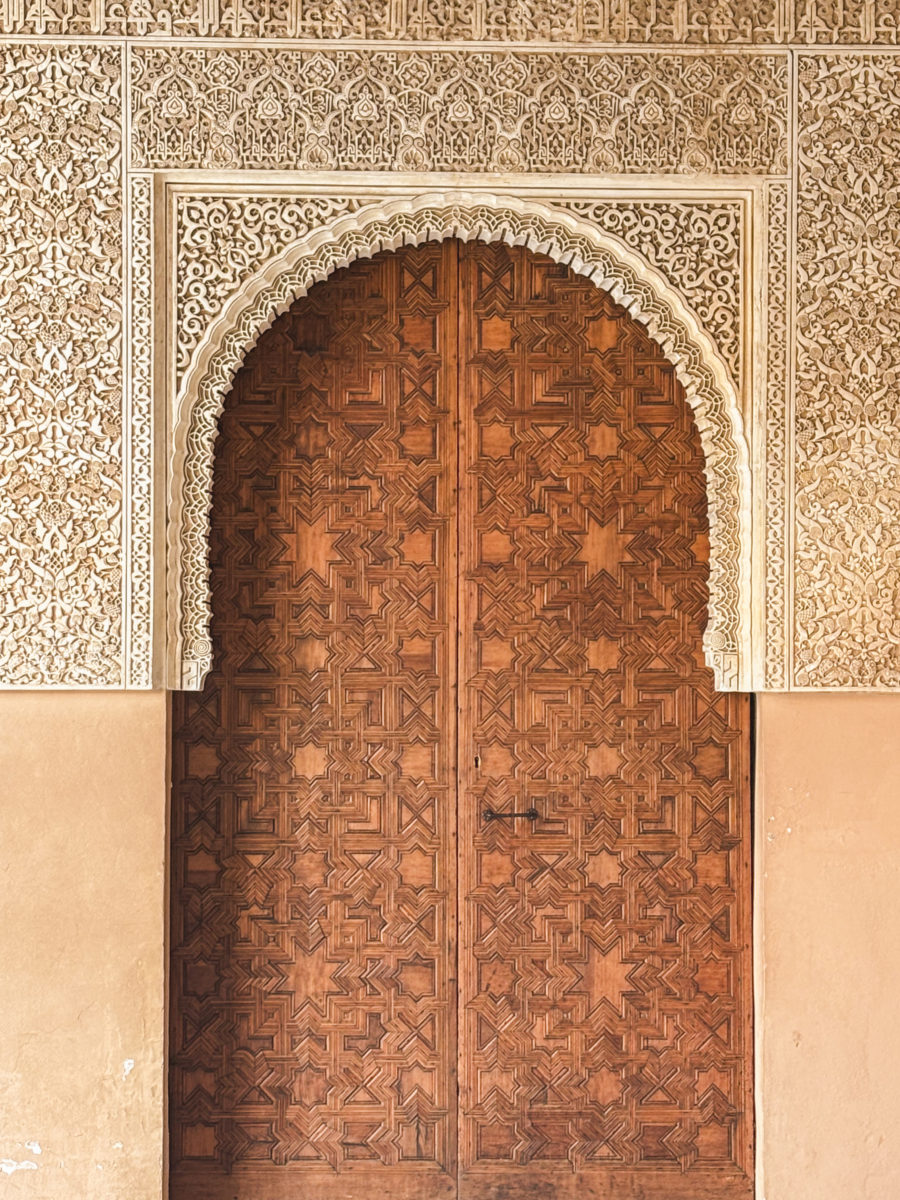
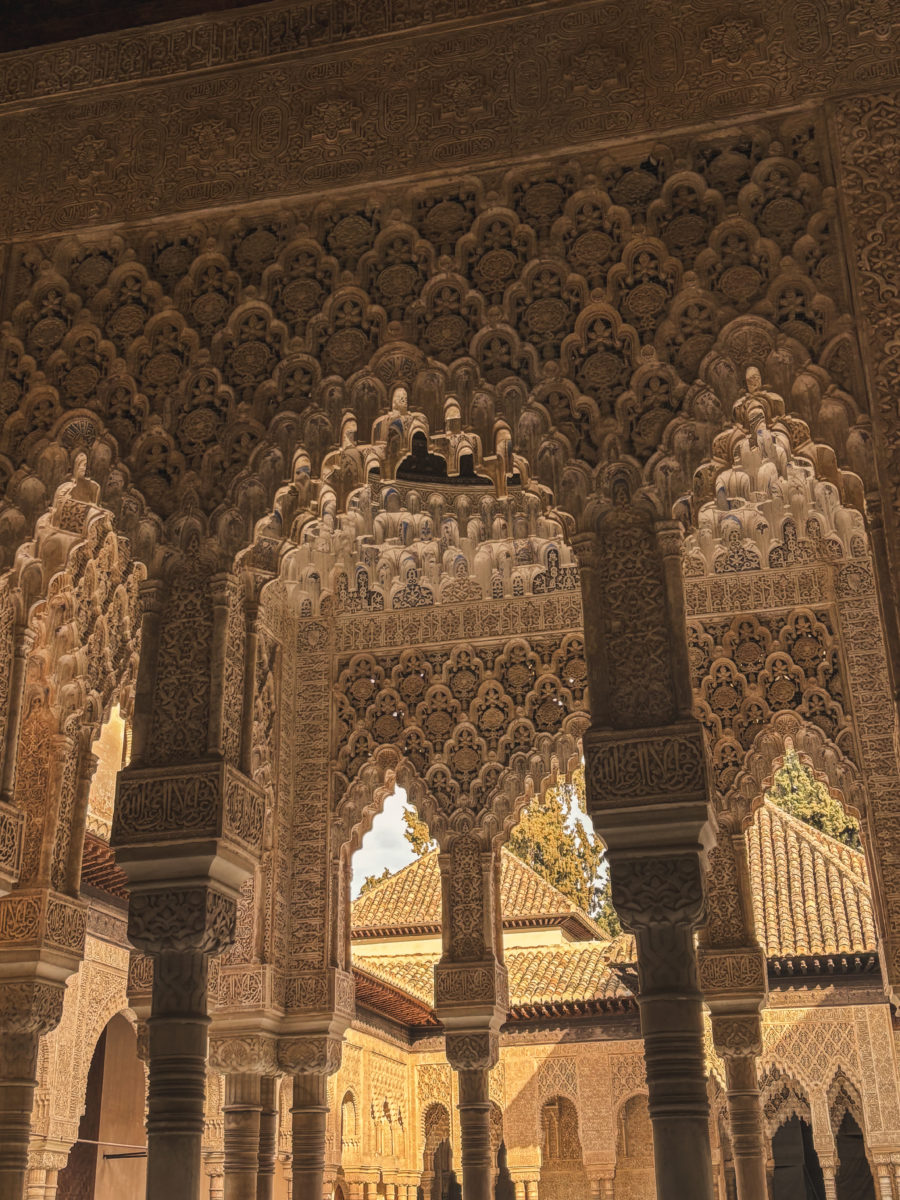
Facing the delicate arabesques and the light dancing across the mosaics, I finally understood what makes the Alhambra such an enchanting place. And yet, as I mentioned earlier, it is hard not to feel a twinge of disappointment when watching the crowd move forward mechanically, one after another, without really looking up or absorbing the magic of the site. It felt as though, for some, the Alhambra was nothing more than another box to tick on a holiday to-do list.
Taking the time to delve into its turbulent history, to understand the many influences that shaped Granada, or simply to wander peacefully through its sumptuous gardens—this kind of approach seems far removed from the priorities of many visitors.
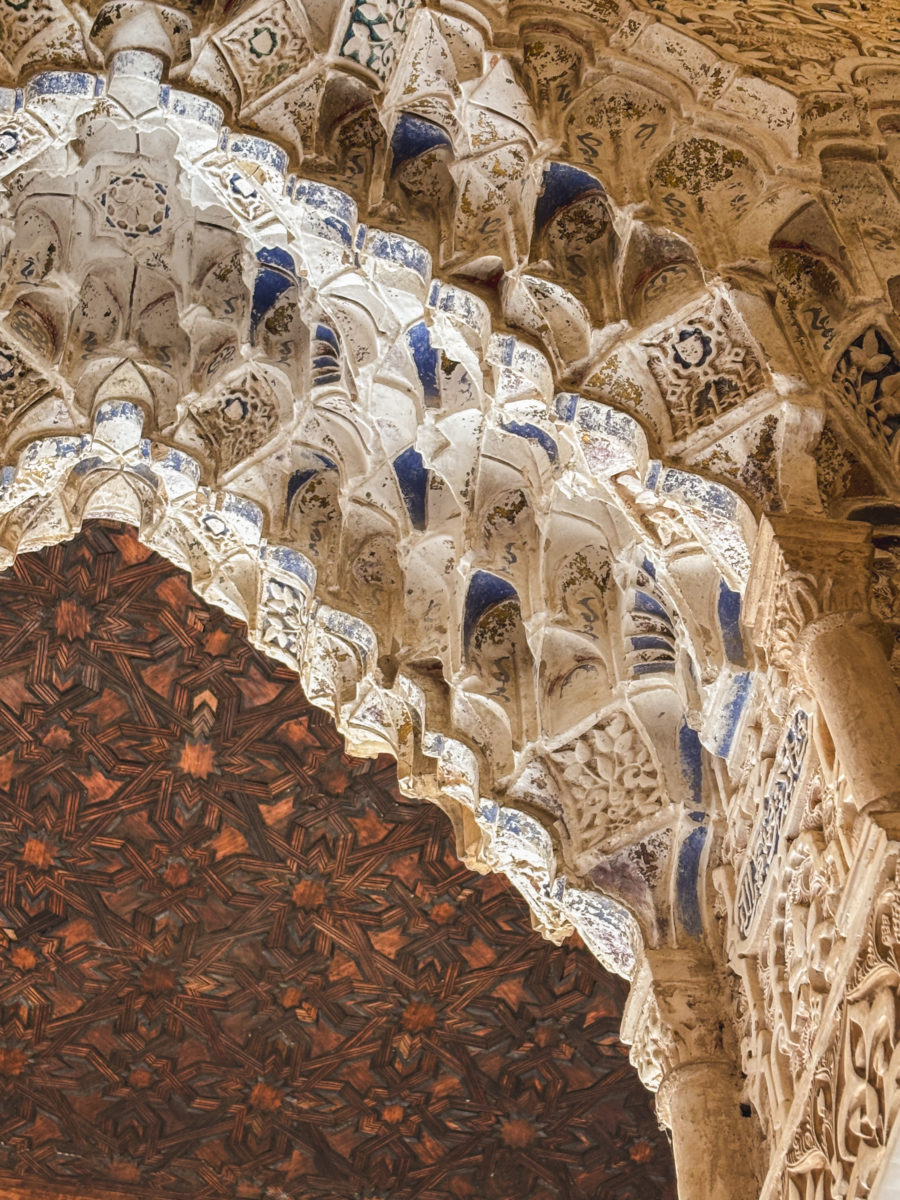
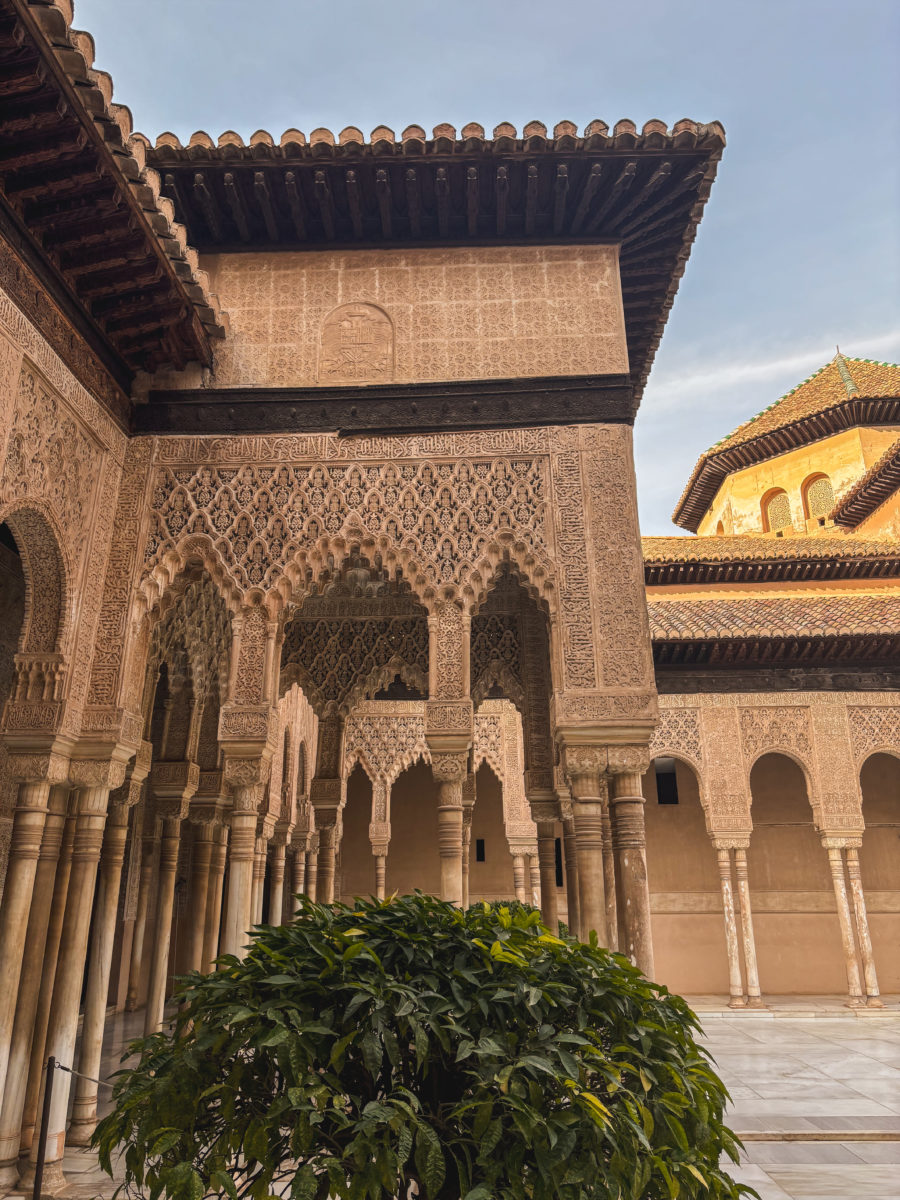
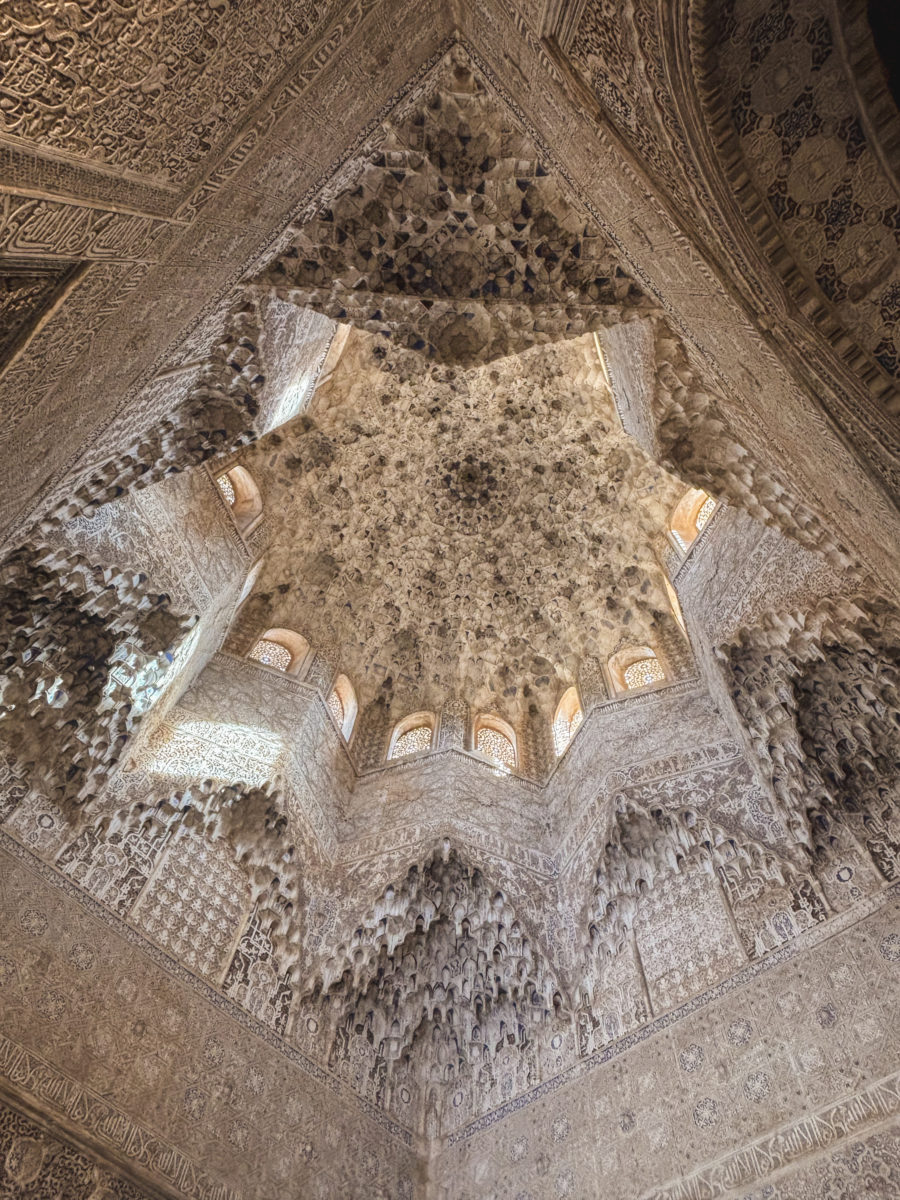
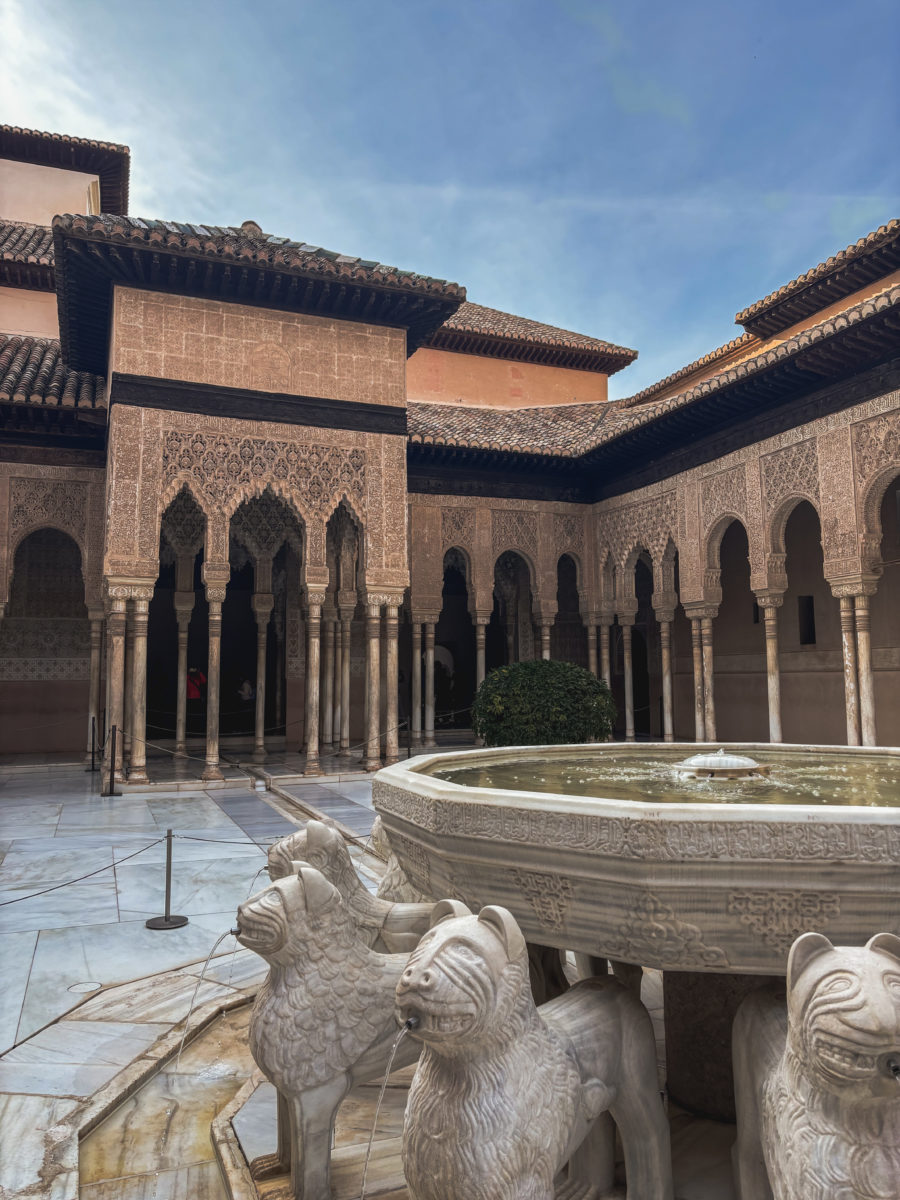
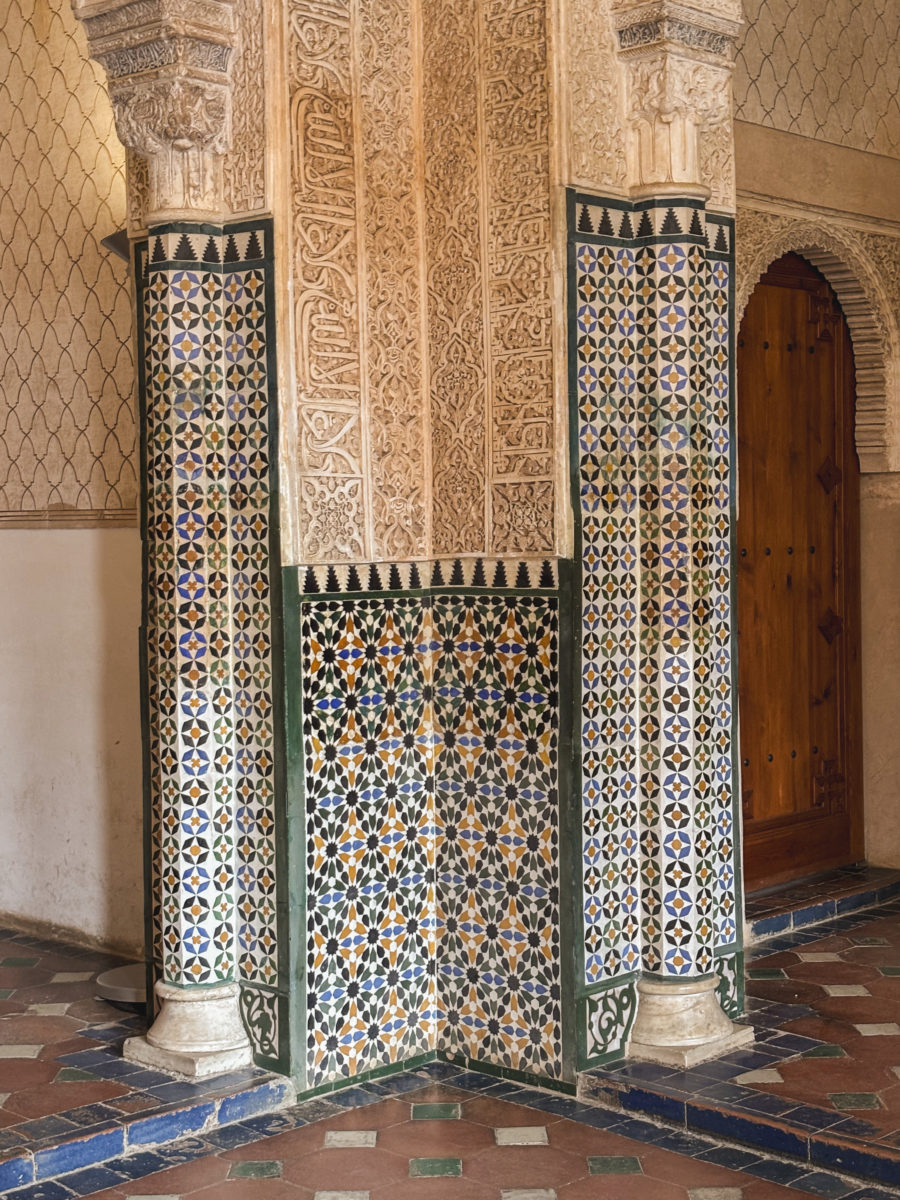
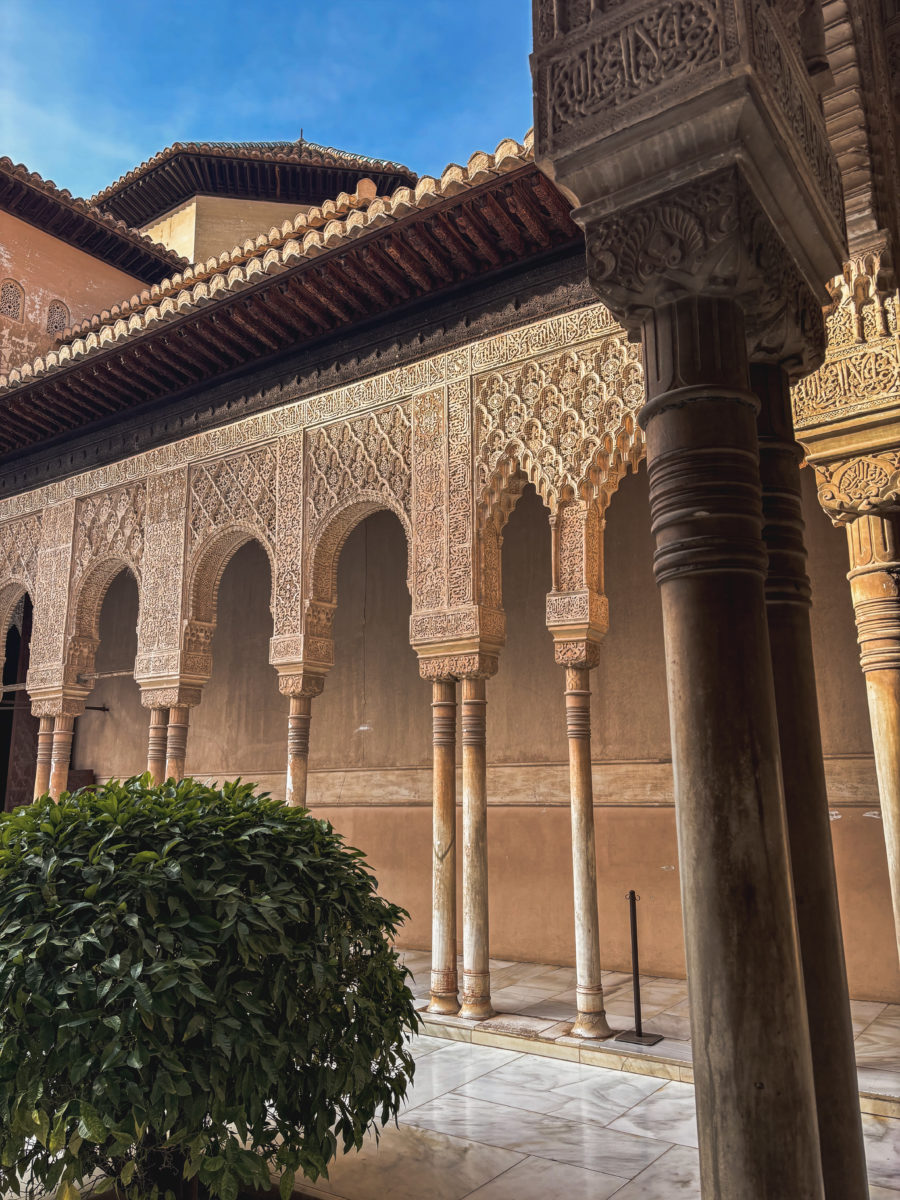
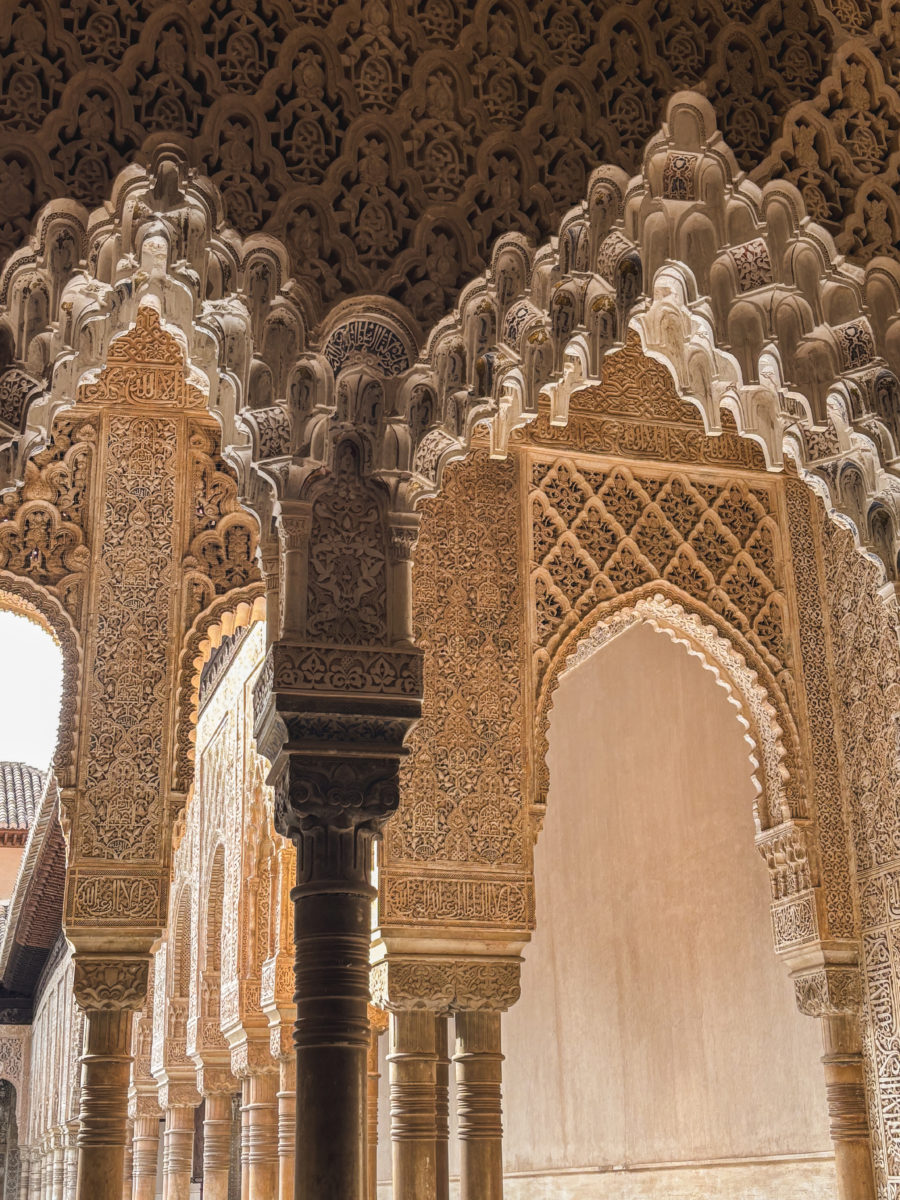

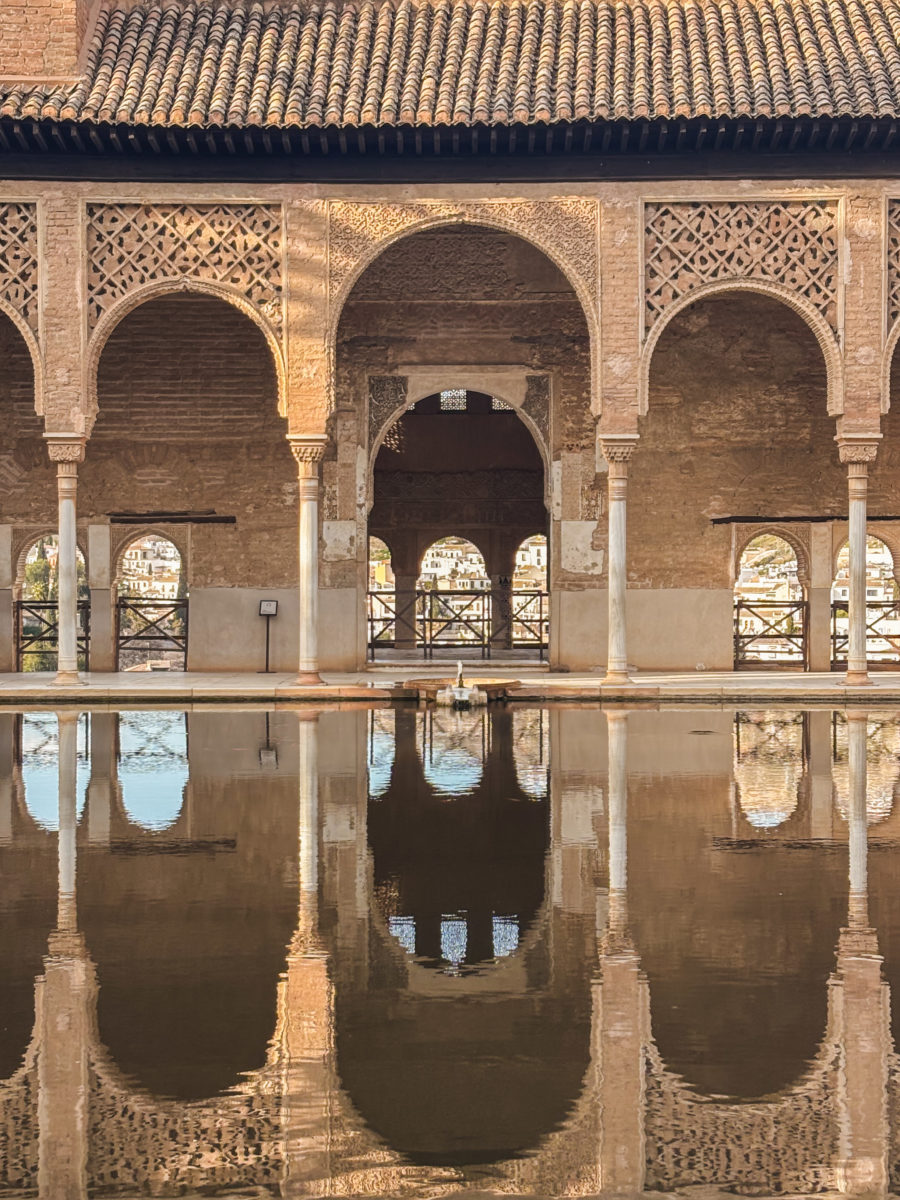
At the Alhambra, arabesques cover the walls with remarkable precision, forming repeated patterns that create a sense of harmony and balance. Rigorous geometry blends with stylized vegetal forms, while carved inscriptions recall the importance of writing in Nasrid architecture. Finely crafted stucco work, delicately cut arches, and muqarnas adorning the ceilings bear witness to exceptional craftsmanship and a deep attention to detail. Every decorative element contributes to an architecture meant to be contemplated up close, where richness lies not in monumentality, but in the finesse and mastery of ornament.
THE GENERALIFE GARDENS
Just next to the Alhambra stretch the Generalife Gardens, often described as a true paradise on earth. They were once the retreat of the emirs, a place where they would come to rest, sheltered from the summer heat. Shaded walkways, shimmering pools, and flowerbeds in bloom; everything here breathes serenity and timeless beauty.
Of course, summer is the ideal season to enjoy them in all their floral splendor, but knowing how high Andalusian temperatures can be at that time of year, we chose to visit in February instead. Admittedly, nature was still dormant, but at least we didn’t melt under the blazing sun!
THE ALCAZABA
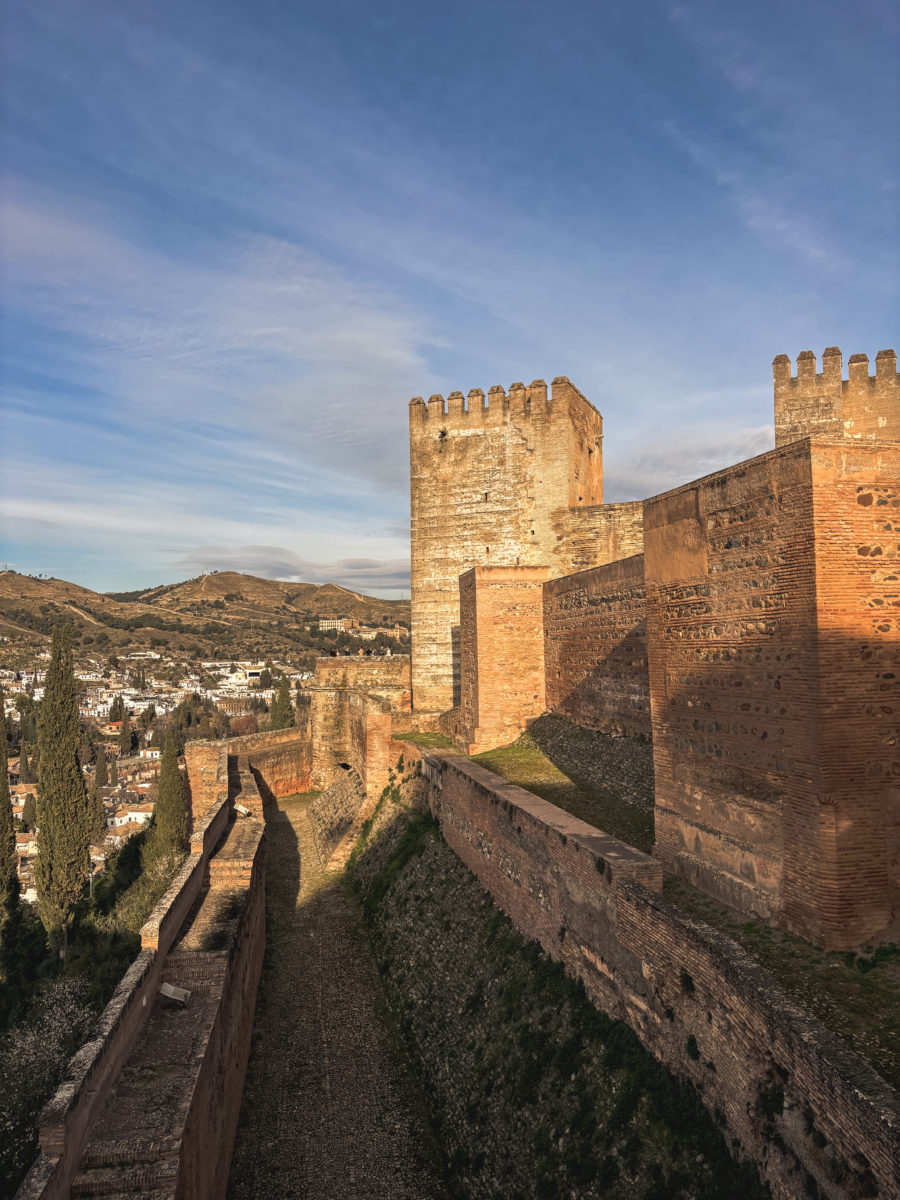
This is the oldest part of the Alhambra, a military stronghold with an austere appearance that contrasts with the refinement of the Nasrid Palaces. Perched at the western end of the complex, this fortress once provided strategic protection for the city.
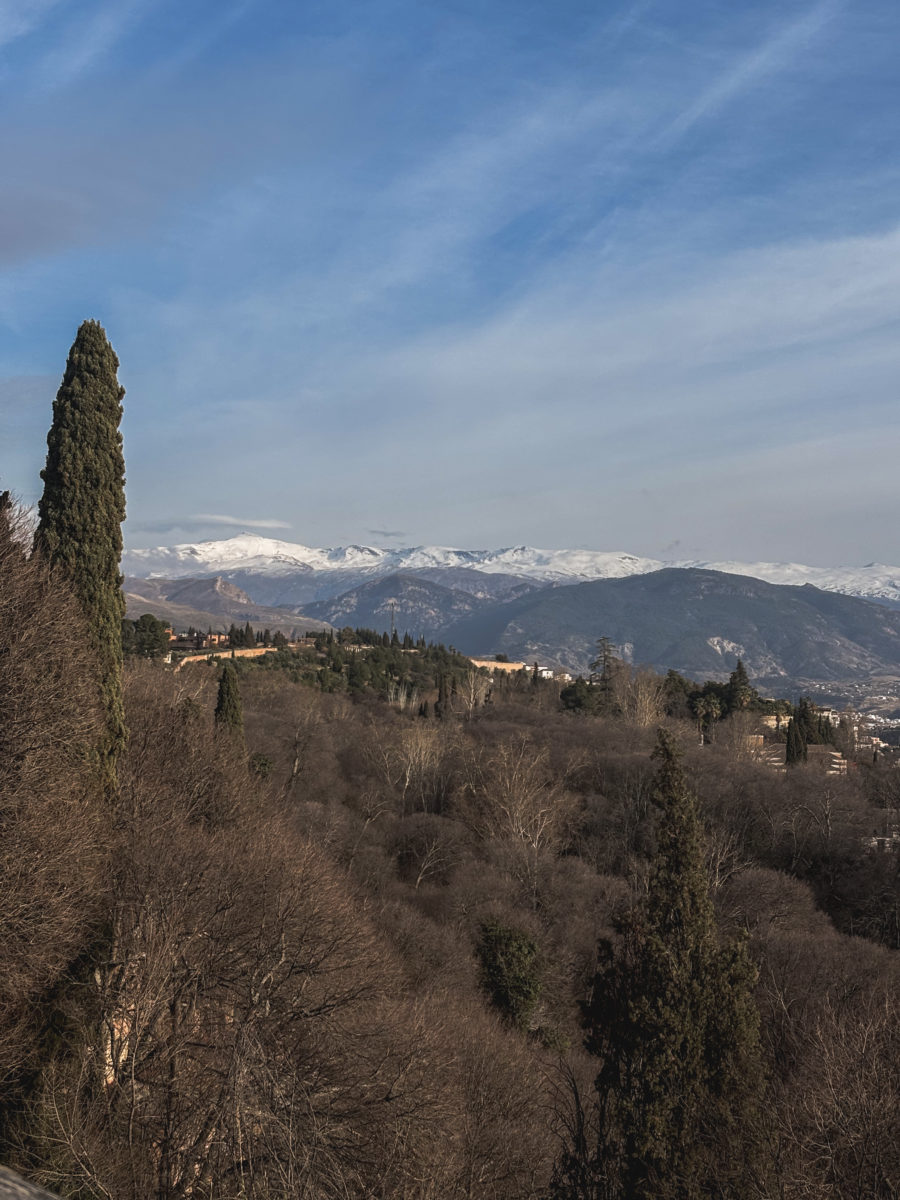
Climbing up to the Torre de la Vela rewards you with a spectacular view over Granada, the surrounding plain, and the peaks of the Sierra Nevada. An ascent well worth the effort, if only to imagine the lives of the sentinels of old, watching over the sleeping city.
From the Alhambra, viewpoints abound. On one side, the city of Granada unfolds below: whitewashed streets, church bell towers, and the Albaicín, the former Moorish quarter, winding its way across the hills. The ochre-tiled rooftops contrast beautifully with the deep green of the cypresses and gardens, even in the heart of winter.
On the other side, the Sierra Nevada rises on the horizon, still blanketed in snow, creating a striking contrast with the elegance of Andalusian architecture. From the ramparts or certain towers, you can also glimpse the vast plains surrounding Granada, a reminder of the Alhambra’s strategic importance during the Nasrid period.

WANDERING THROUGH THE ALBAICÍN, GRANADA’S HISTORIC QUARTER
After exploring the Alhambra, it’s time to head to the Albaicín, one of Granada’s most emblematic neighborhoods. With its narrow streets, cobbled stairways, and whitewashed houses, this hilltop labyrinth exudes a distinctive atmosphere, at the crossroads of Eastern and Western cultures.
Charming in every season, it is undoubtedly even more enchanting in summer, when flowers spill over balconies, gardens burst with color, and you can fully enjoy shaded terraces while breathing in the scents of jasmine and orange blossom.
Strolling through the Albaicín is a journey back in time, at the crossroads of Muslim Andalusia and Christian Spain. And it’s also a great way to work off a few indulgences of paella or jamón, trust me, your calves will remember it!
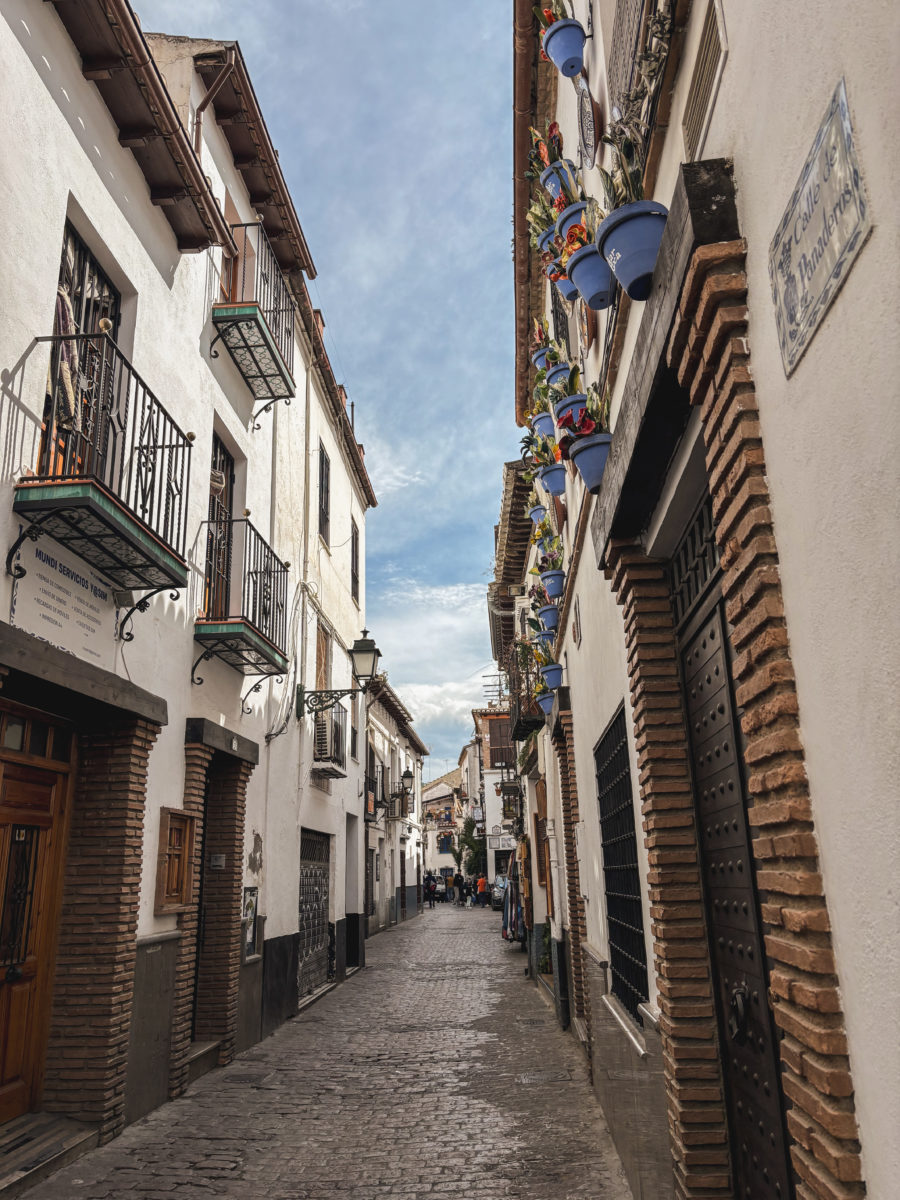
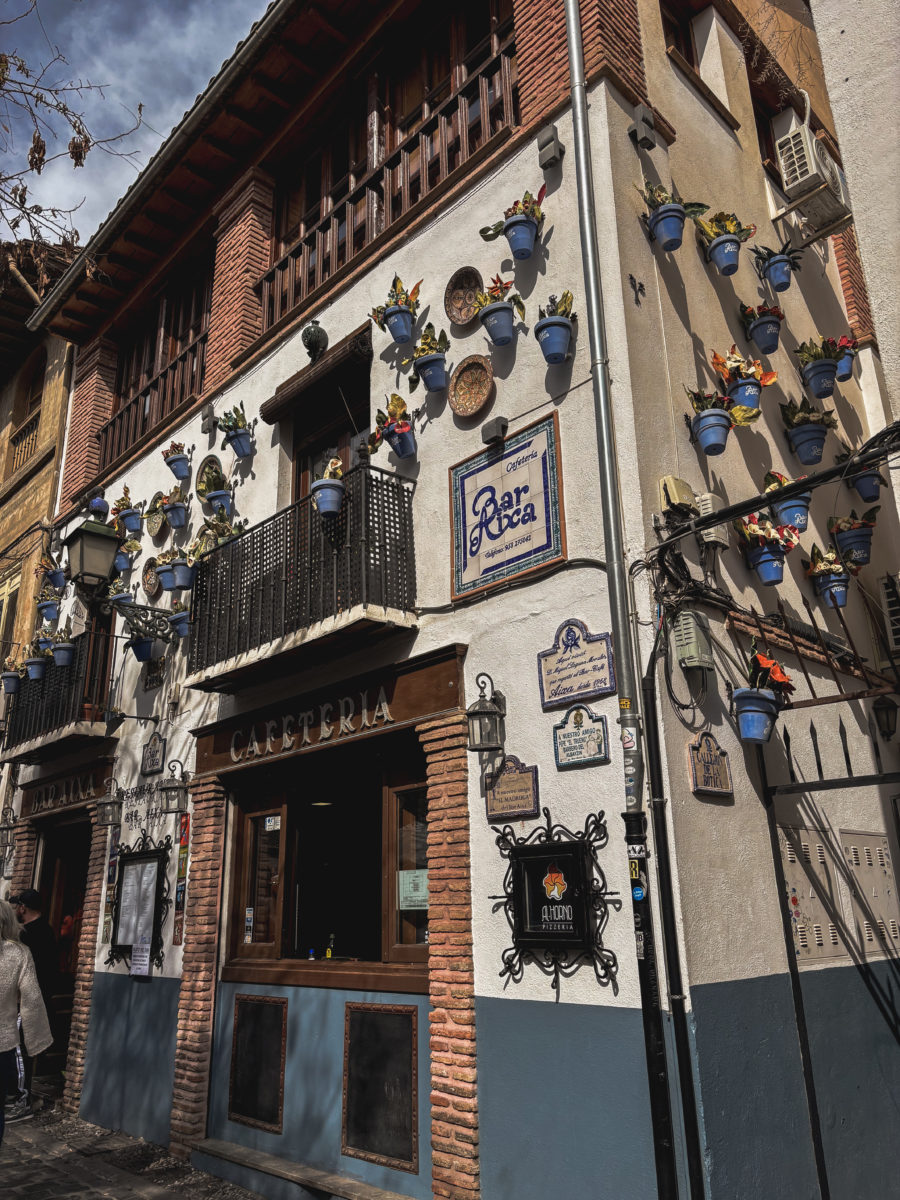

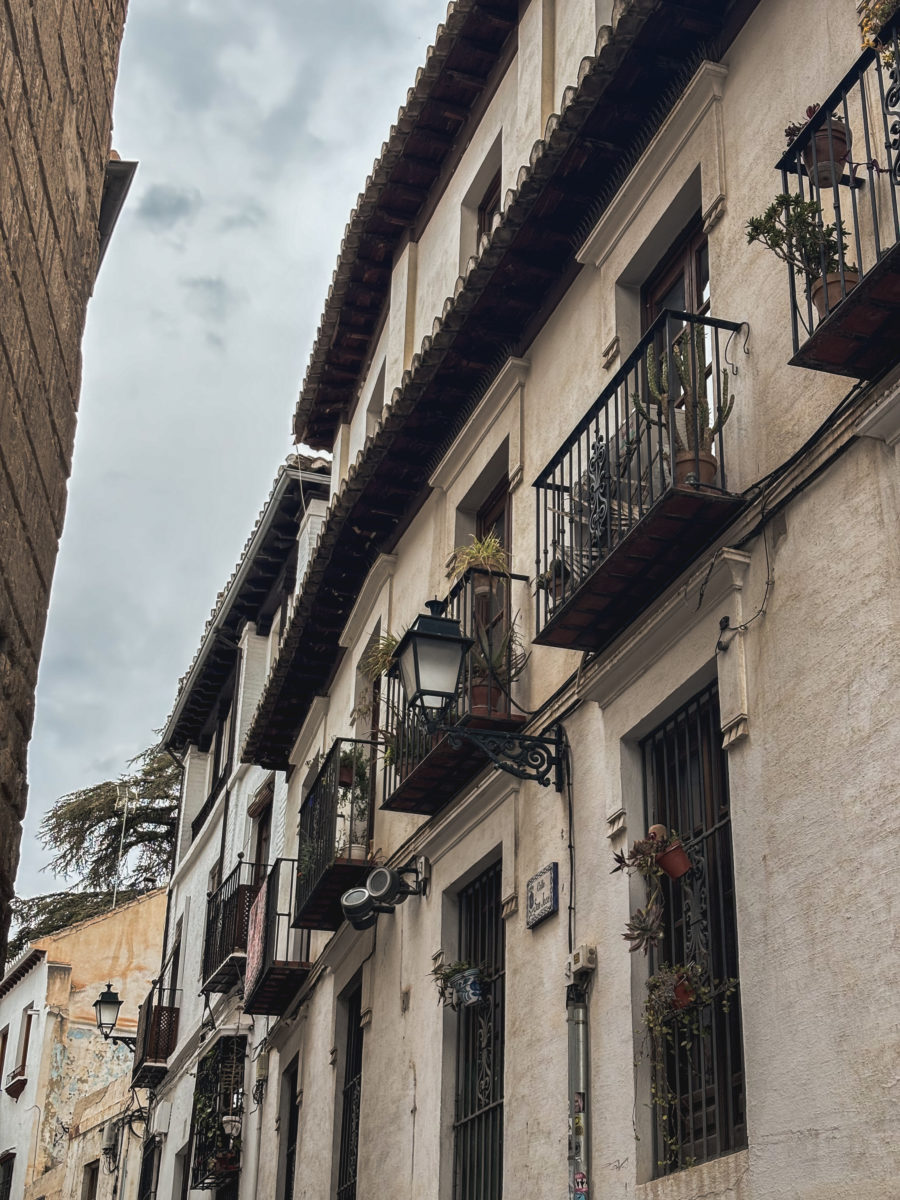
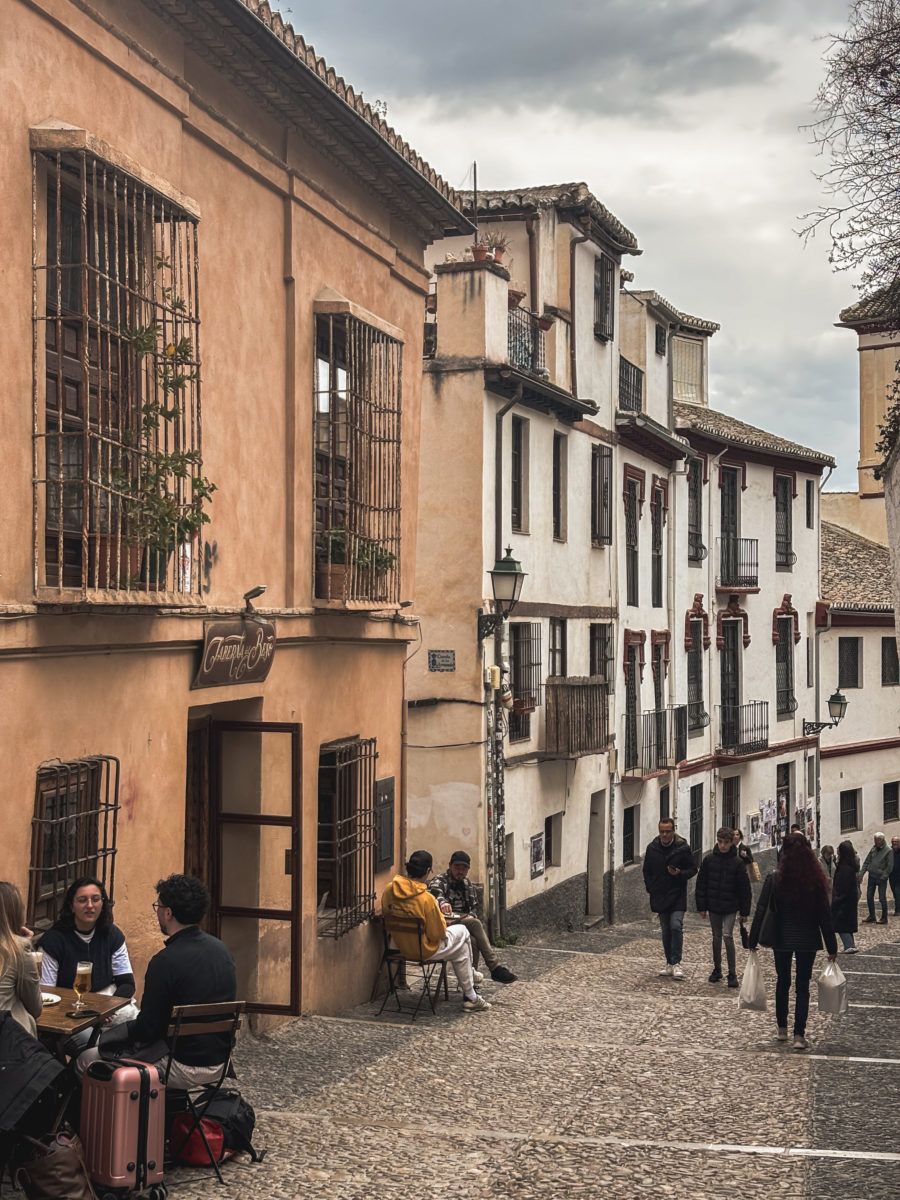
The neighborhood is also dotted with miradores, those spectacular viewpoints overlooking the Alhambra. Unfortunately, the weather wasn’t on our side, and the long-awaited spectacle eluded us. A ray of sunshine or a golden sunset would have revealed the full splendor of La Roja… but no, it rained. So, in the absence of golden light, we chose to savor the city differently, wandering from café to café, sheltered from the raindrops, in the vibrant heart of Granada.
VISITING GRANADA’S CITY CENTER
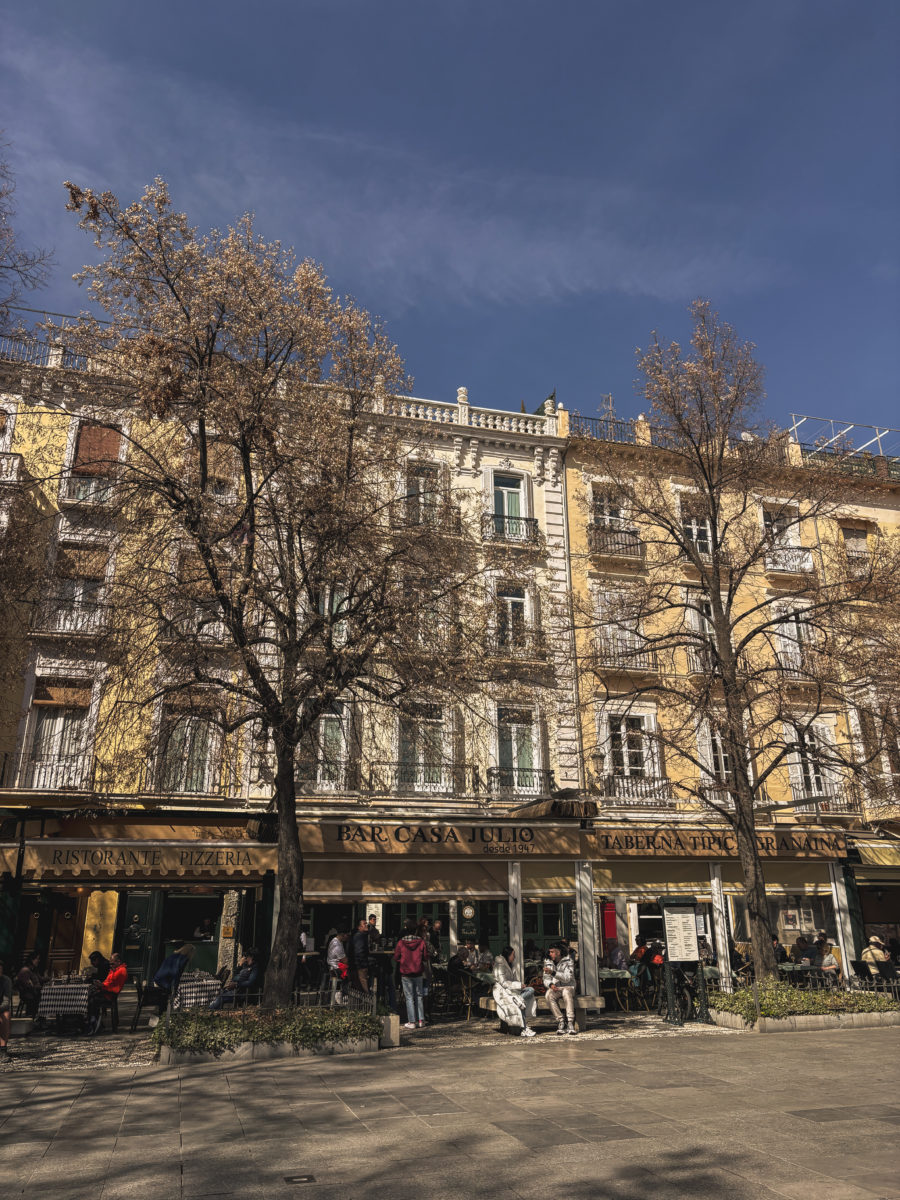
Granada’s city center gracefully blends modern vibrancy with historic charm.
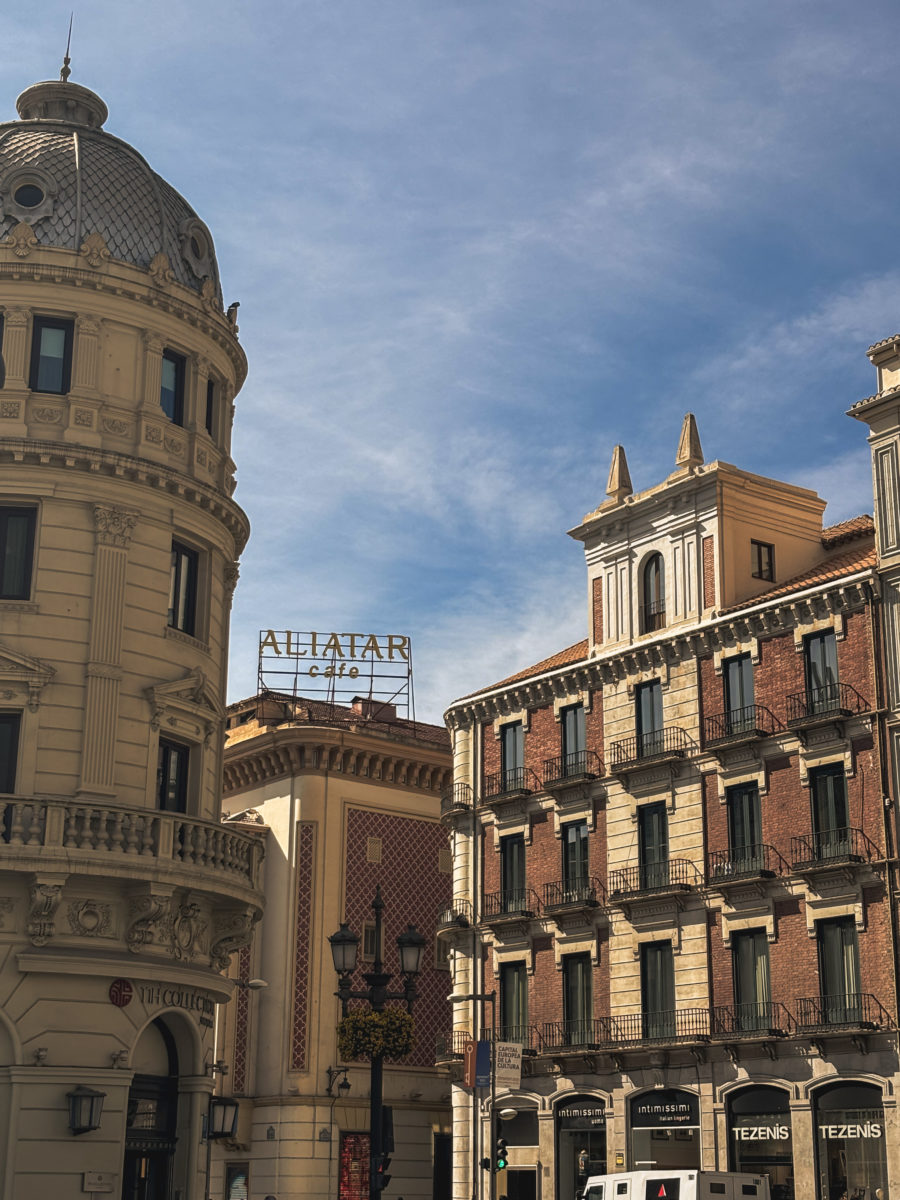
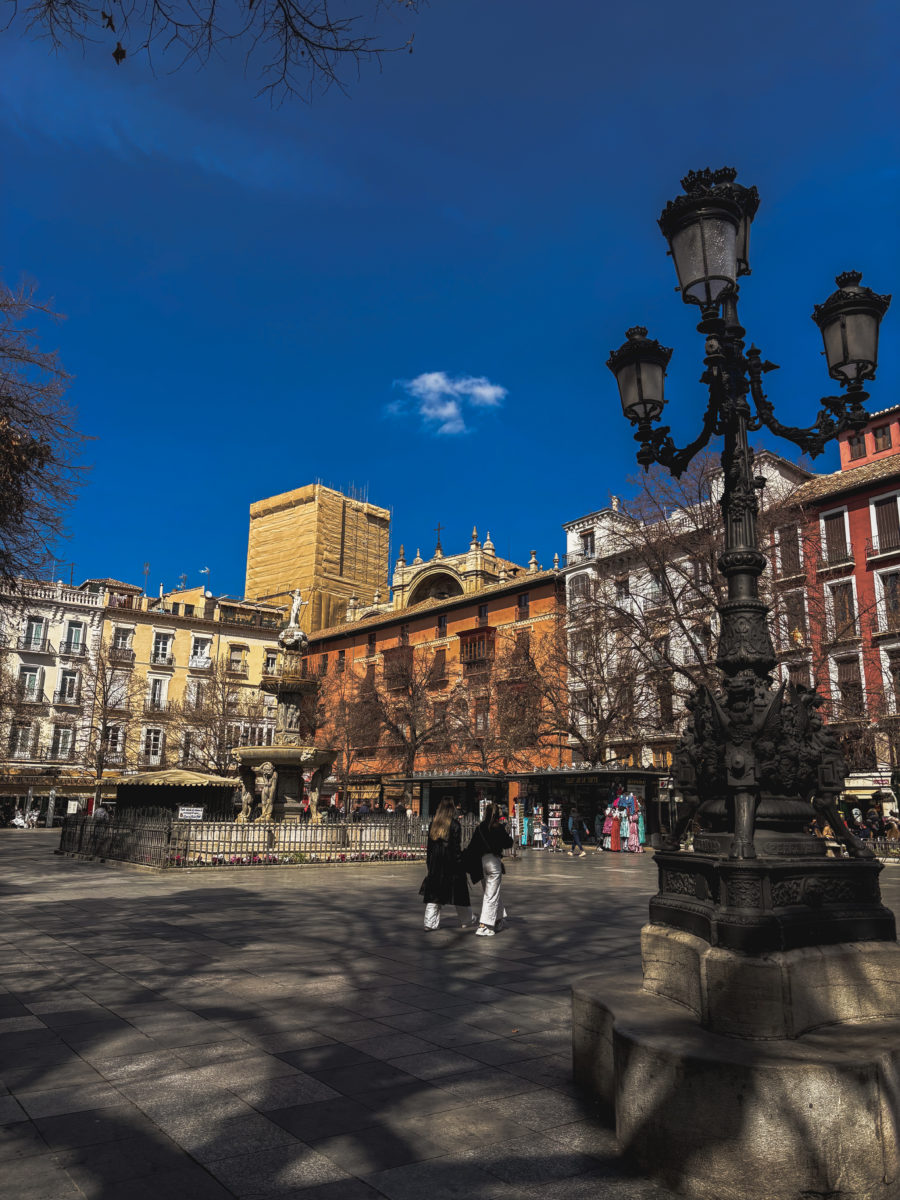
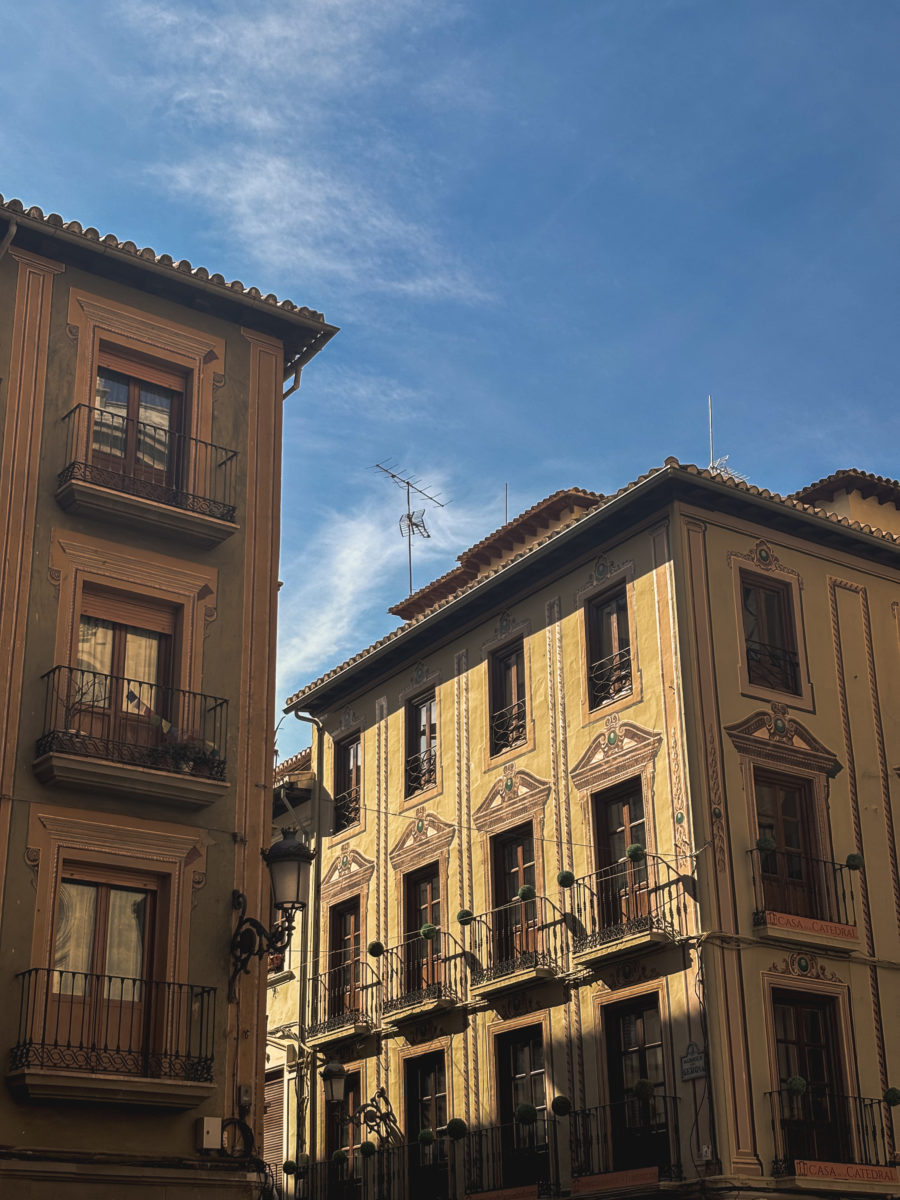
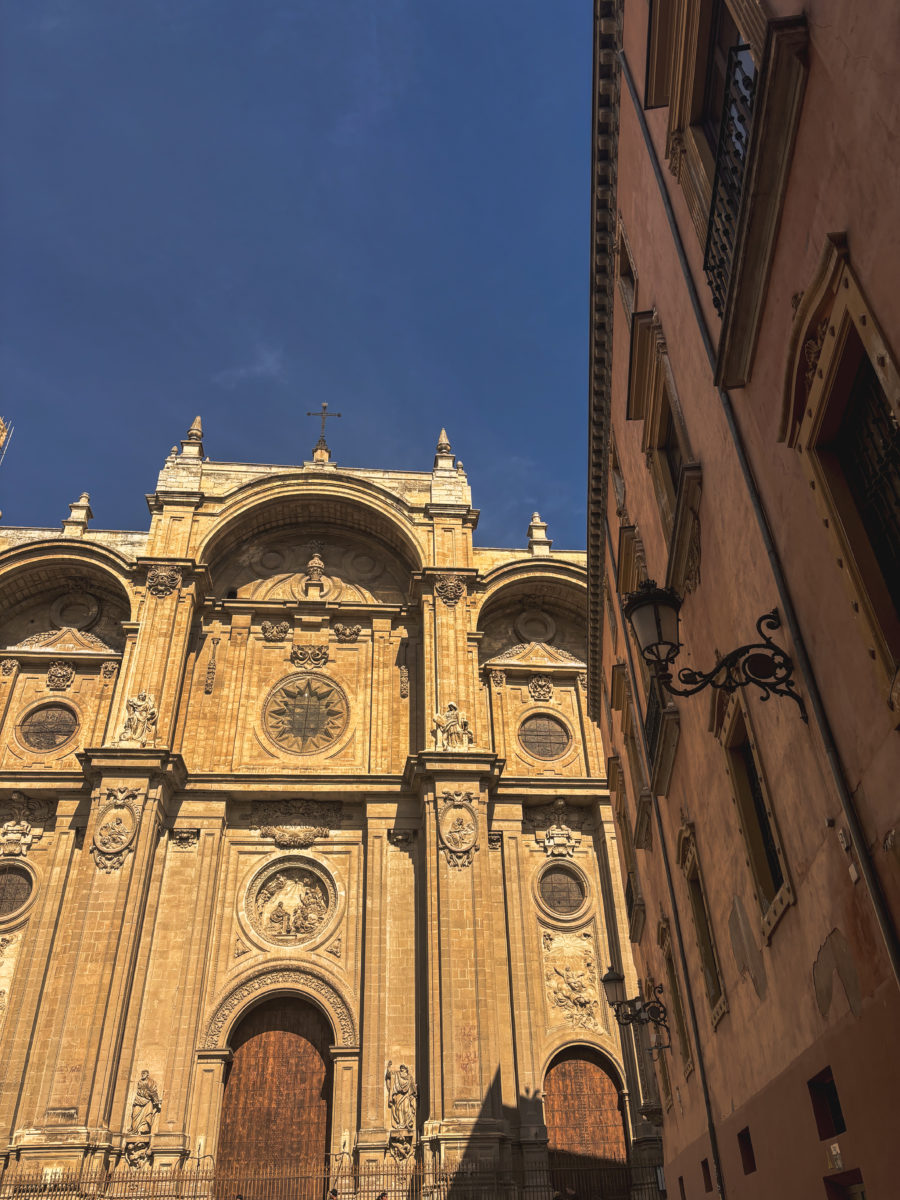
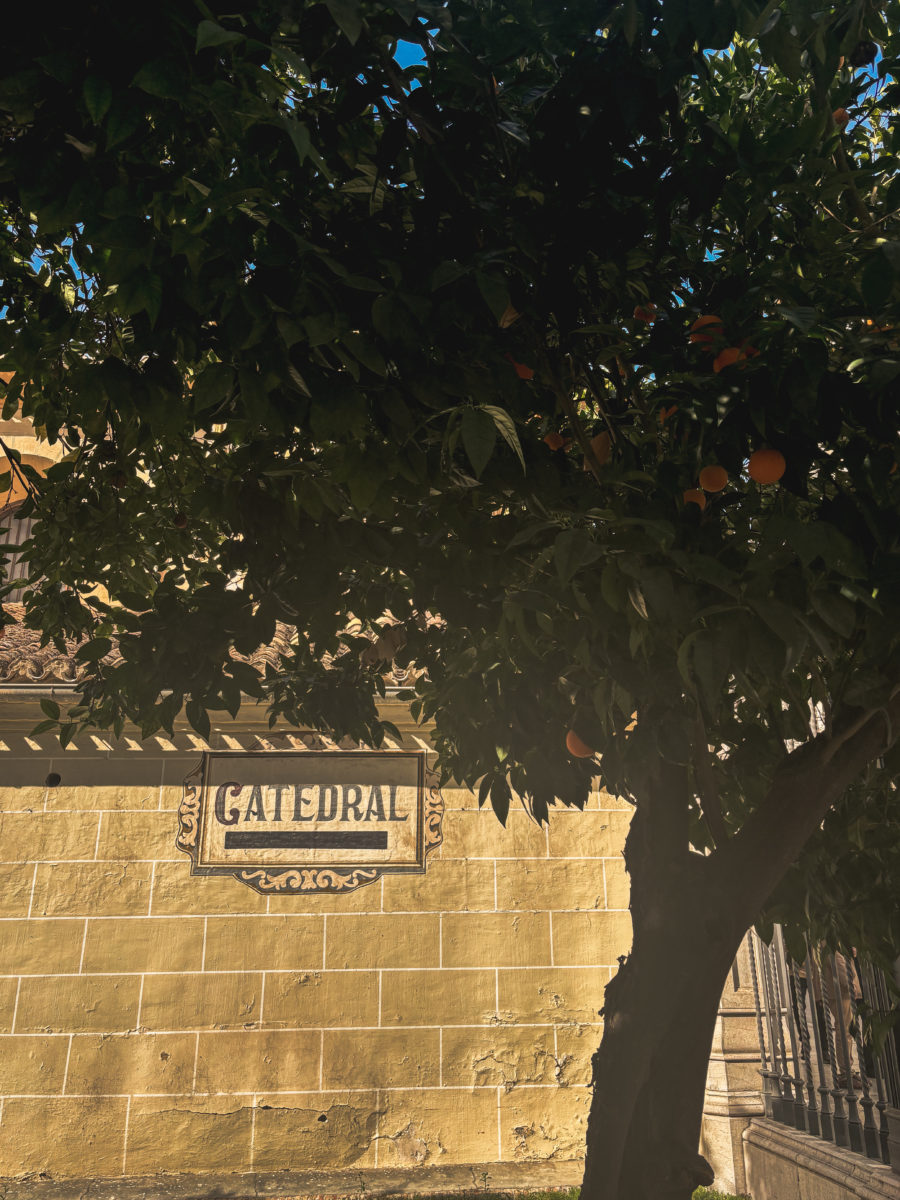
At the heart of the city stands the majestic Cathedral of Santa María de la Encarnación, with its Renaissance façade and light-filled interior. Built on the remains of an old mosque, it alone symbolizes the passage from one era to another.
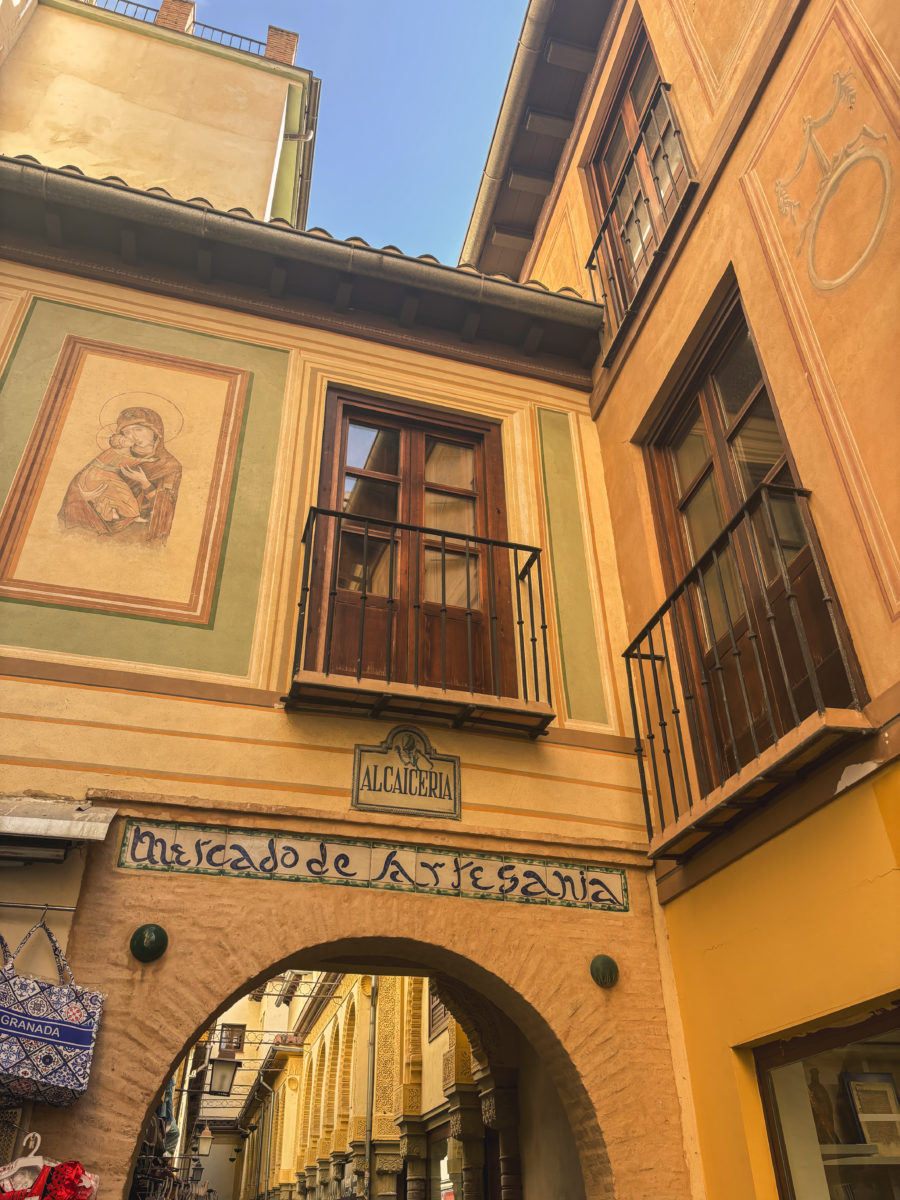
Just a few steps away, it’s easy to lose yourself in the alleys of the Alcaicería, a former Muslim souk transformed into an artisan market. Colorful ceramics, silks, jewelry, and Oriental lamps fill the space, creating a charming atmosphere. Further along, the San Agustín market delights the taste buds with its stalls of fresh produce: Iberian hams, local cheeses, fragrant olives, and sun-ripened fruits. You can grab a quick bite or sit down to enjoy tapas in a friendly, welcoming setting.
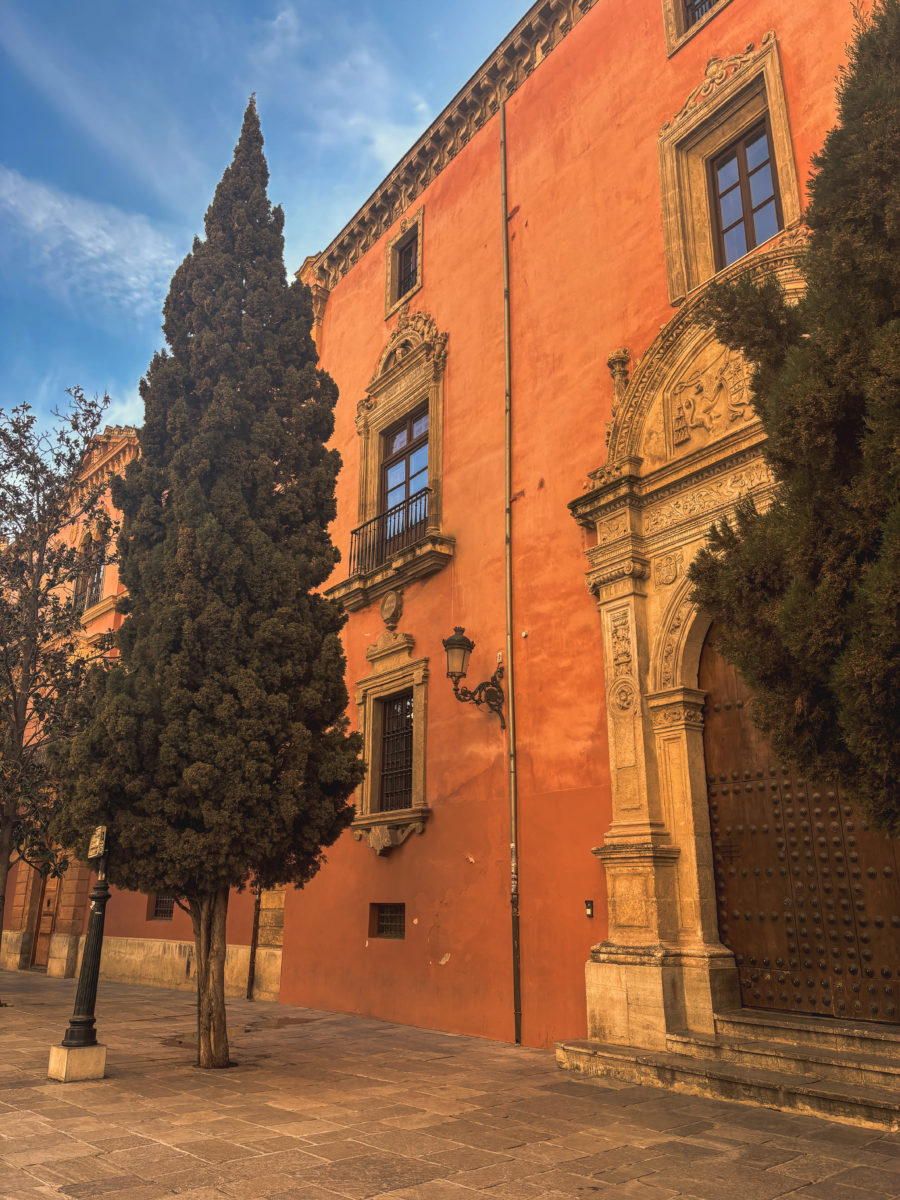

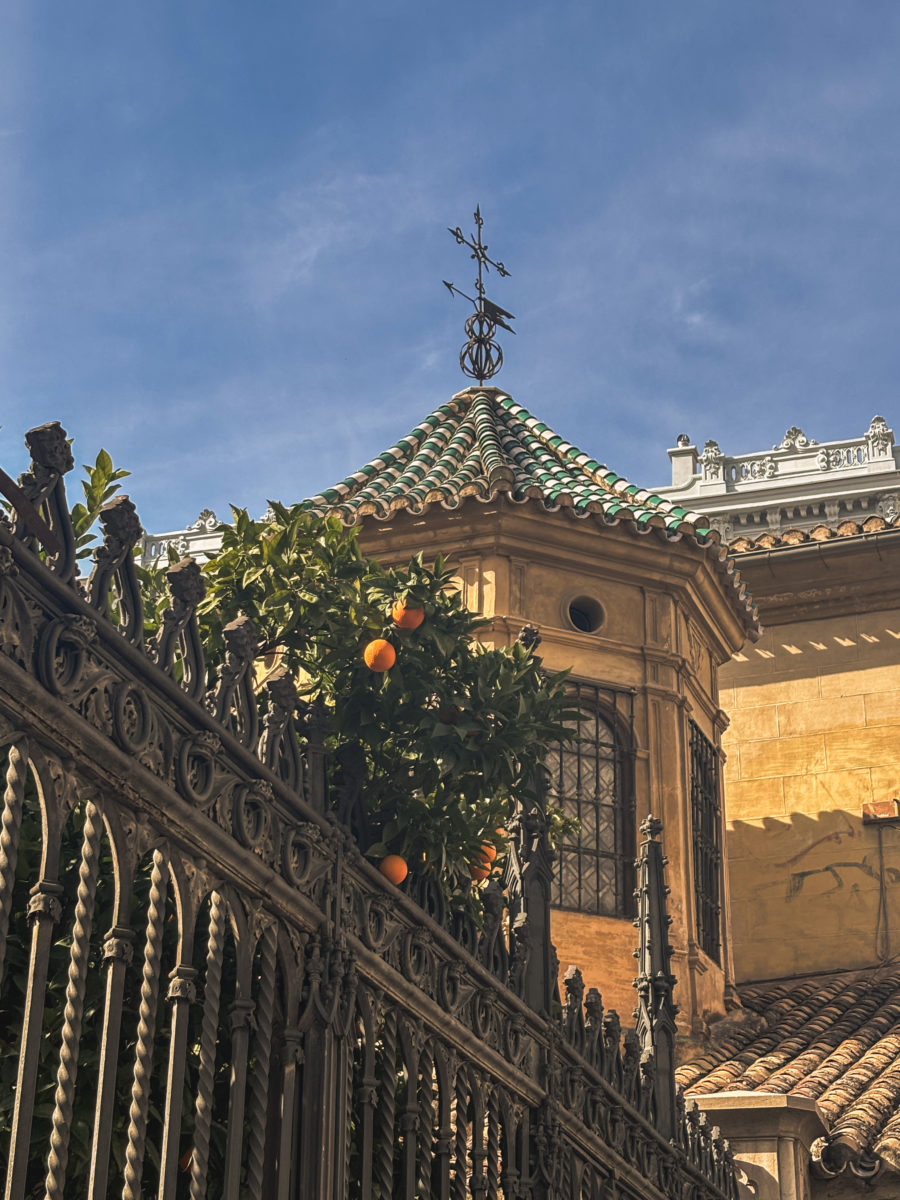
But the city center is also the perfect place to wander leisurely: between visits, you can linger in independent bookstores, browse through small boutiques, or treat yourself to a thick hot chocolate in an old tetería, those tea salons inspired by Arab tradition, typical of Granada. In the evening, the plazas come alive, tapas bars fill up, and the narrow streets softly light up, inviting you to extend your exploration, perhaps even to an impromptu flamenco performance in a nearby bar.
Granada lives as much by day as by night, and its center is the perfect reflection of that: vibrant, warm, and deeply rooted in its history.